OMFS805: Comprehensive Control of Pain and Anxiety Final Information (Does not Include Nitrous )
 Call Kai
 Learn
Learn Practice Test
 Spaced Repetition
 Match
Match Flashcards
 Knowt Play
1/109

There's no tags or description
Looks like no tags are added yet.
Name | Mastery | Learn | Test | Matching | Spaced | Call with Kai |
|---|
No analytics yet
Send a link to your students to track their progress
110 Terms
Psychogenic Pain
related to emotional, mental issues
Neuropathic Pain
nerve injury
Nociceptive Pain
somatic and visceral
Transduction
stimuli into nerve impulse
Pressure Nerve Fiber Susceptibility
A > B > C
Hypoxia Nerve Fiber Susceptibility
B > A > C
Local Anesthesia Nerve Fiber Susceptibility
C> B > A
Transmission
nociceptors pass to dorsal horn of spinal cord and synapse with spinal neurons which carry impulse to thalamus
Allodynia
pain due to stimulus that does not normally cause pain
Dysthesia
unpleasant abnormal sesnation which can be spontaneous or provoked
Hyperalgesia
increased response to stimulus that is normally painful
Paresthesia
lack of sensation to normal of painful stimuli
Specific Receptor Theroy
LA acts by binding to specific receptor binding site present on the sodium channels, specific receptor binding site are present on either the external or internal surface of the sodium channels
Membrane Expansion Theory
LA are highly lipid soluble and easily penetrate the lipid portion of the cell membrane.
This causes expansion of the nerve membrane and results in a decrease of the diameters of the sodium channel
This inhibits the influx of sodium and nerve impulse generation
Fibers in MANTLE BUNDLES
MOLAR
Fibers in CORE BUNDLES
CHIN, CANINE
Molars anesthetize ___ and more _______
first
easily
Canines and anterior teeth anesthetize ___ and with more ____
later
difficulty
Pharmacodynamics
action of a drug in the body "What the drug does to the body
Pharmacokinetics
manner in which the body manages a drug
Bupivacaine
Marcaine
Etidocaine
Duranest
Lidocaine
Xylocaine
Mepivacaine
Carbocaine
Prilocaine
Citanest
Articaine
Septocaine
pKA factor on LA
time to onset
Lipid Solubility
potency
Protein binding
duration
Vasoactivity
duration and potency
LA Overdose is _____
Biphasic
What is affected first in a LA overdose
CNS before CVS
Dilution of Vasoconstrictors is expressed as a dilution ratio of ___:_____
grams : milliliters
ex: 1:1000= 1 gram in 1000ml
1 gram = ____ mg
0.01
If you have a 1:100,000 what is the dilution ratio?
1 gram : 100,000 mL
= 0.01 mg: 100,000 mL
1 Carpule = ____ mL
1.7
Maximum Dosage of Vasoconstrictor in a Healthy Person
0.2 mg
11 cartridges @ 1:100,000
5 cartridges @ 1: 50,000
Maximum Dosage of Vasoconstrictor in an Immune Compromised Person
0.04 mg
2 cartridges @ 1: 100,000
Absolute Contraindications of LA/ Epi
uncontrolled hyperthyroidism
malignant HTN
Pheochrromocytoma
Lidocaine 2% 1:100,000 epi
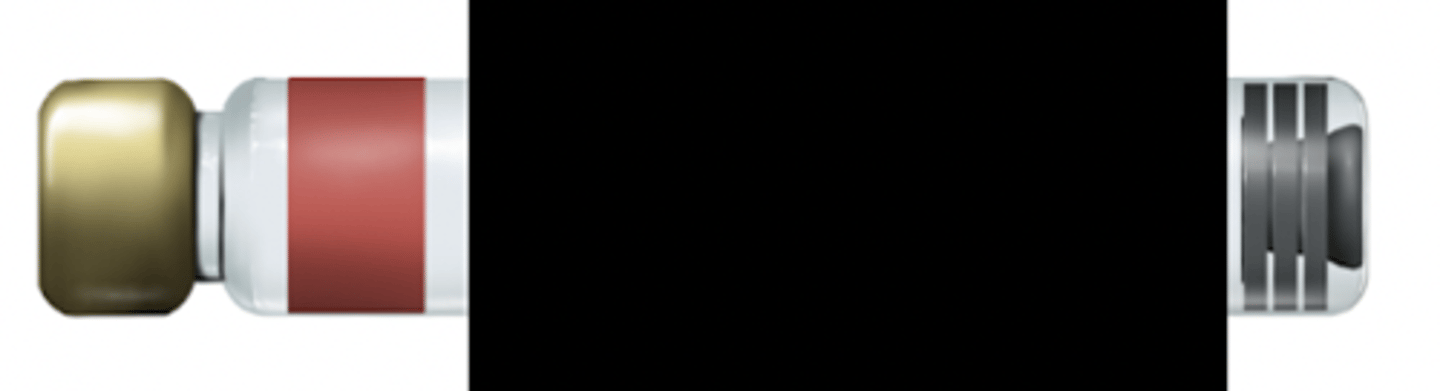
Lidocaine 2% 1:50,000 epi

Marcaine 0.5% 1:200,000 epi
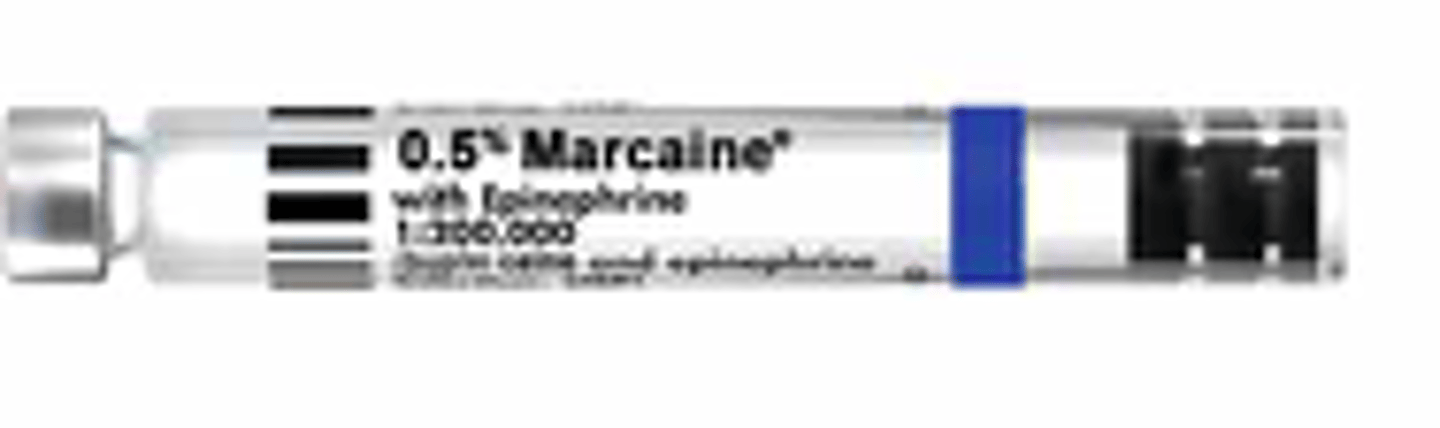
Articaine 4% 1:100,000 epi
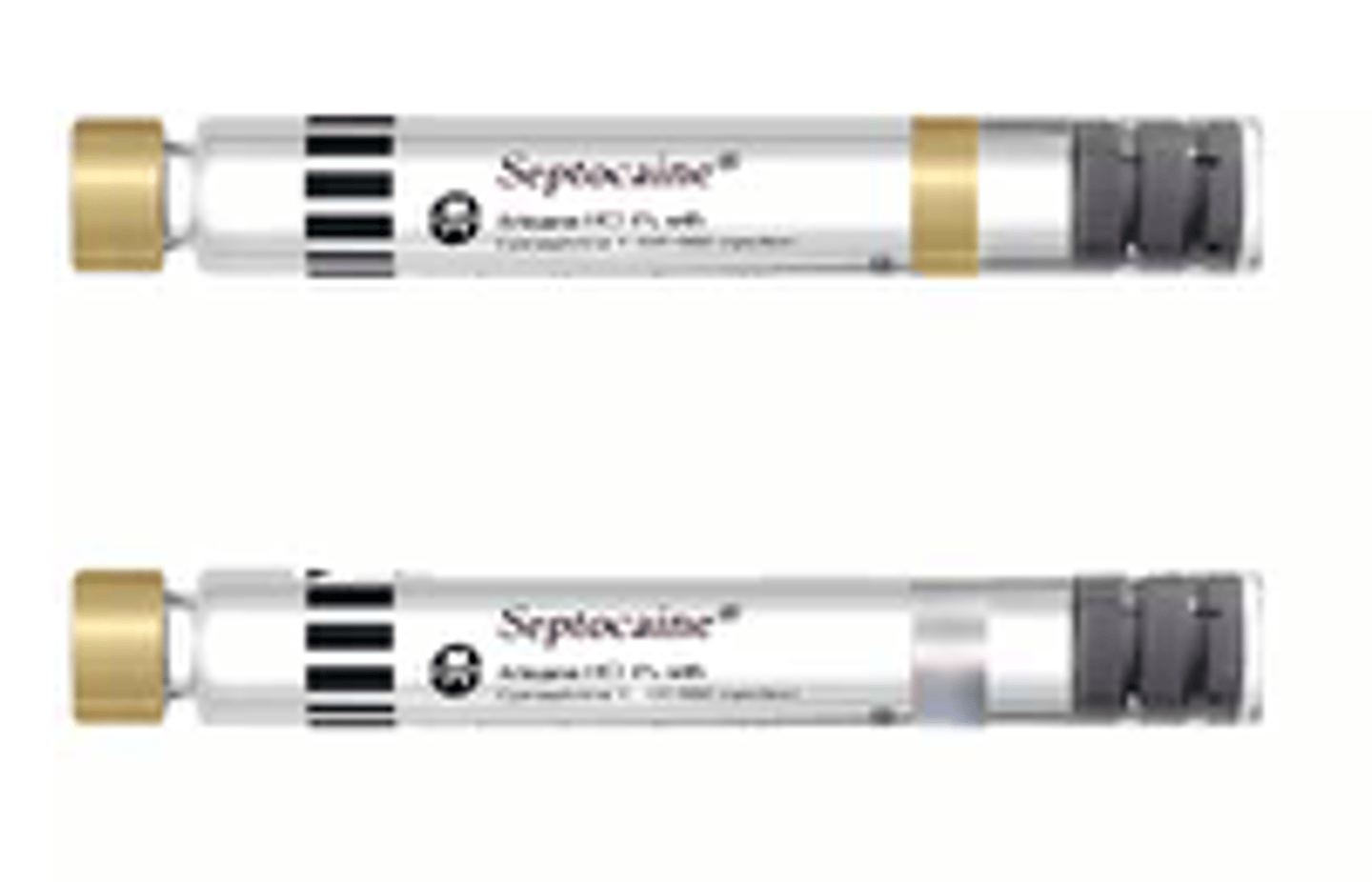
Articaine 4& 1:200,000 epi

Carbocaine 3% plain
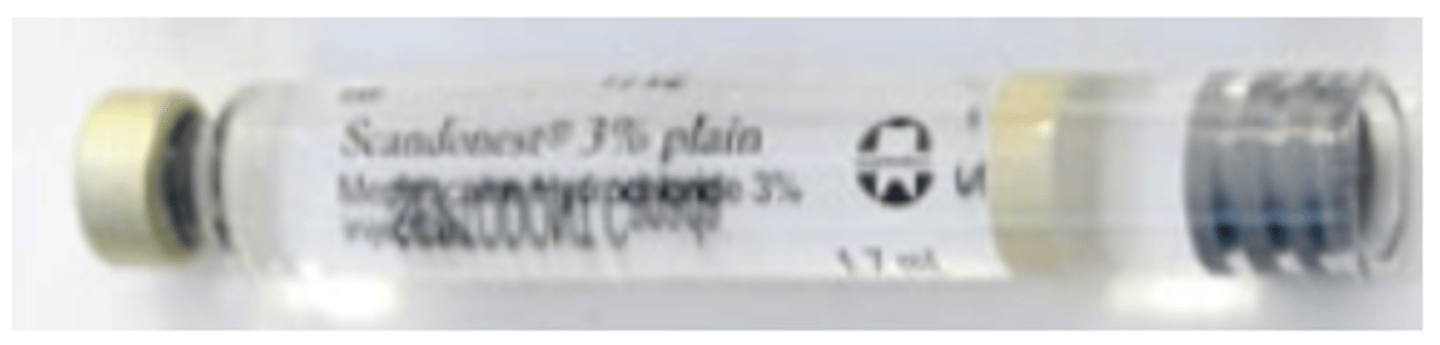
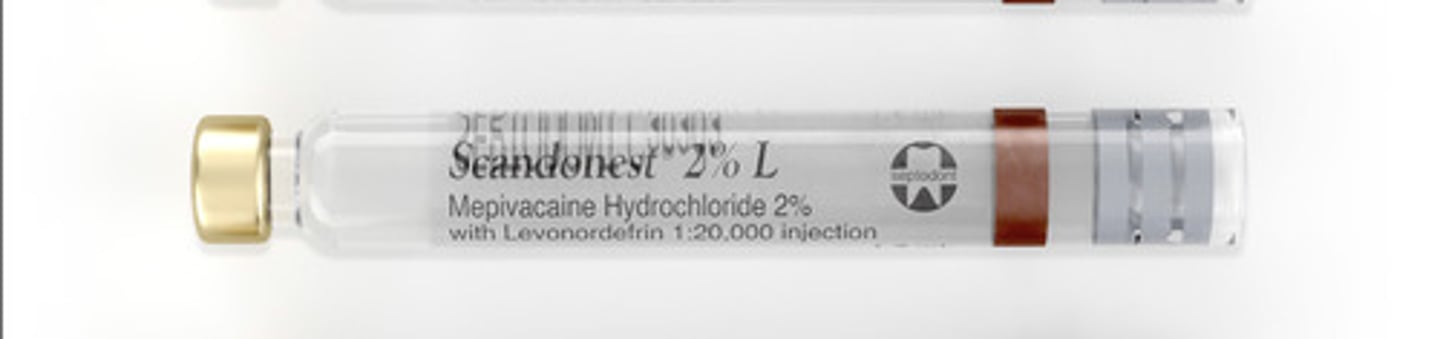
Carbocaine 2% with Levonordorfen
MRD Lidocaine (Xylocaine) for Adult
7 mg / kg
MRD Lidocaine (Xylocaine) for Kid
4.4 mg/kg
MRD Mepivacaine (Carbocaine, Polocaine)
5.7 mg/kg with/out epi
400 mg total
MRD Bupivacaine HCl (Marcaine )
2 mg/ kg
90 mg total
MRD Articaine (Septocaine)
7 mg/ kg
500 mg total
MRD Prilocaine (Citanest)
8.8 mg / kg with/out epi
600 mg total
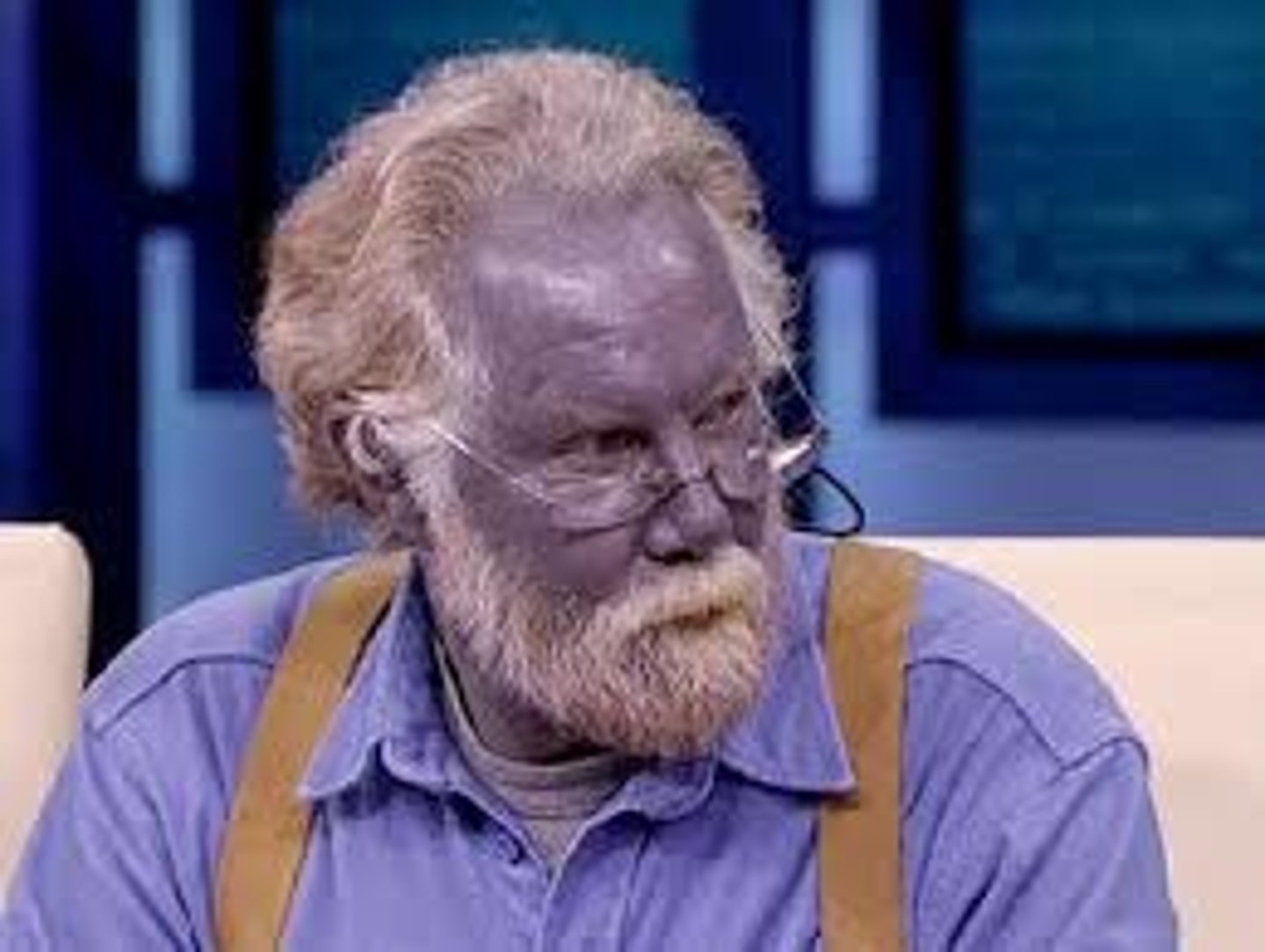
Methemoglobinemia
cyanosis like state that occurs as a result of too much methemoglobin
form of hemoglobin in which the ferric form of iron (Fe+++) is present
Nerve Block
depositing the LA solution within close proximity to a main nerve trunk
Field Block
depositing the LA in proximity to the larger nerve branches
Local Infiltration
small terminal nerve endings are anesthetized
Needle Gauges
25, 27, 30
Needle Lengths
long 40 mm
short 25 mm
Long Needle Uses
Nerve Blocks
Short Needle Uses
infiltration, isolated long buccal, PDL, intraseptal, intrapulpal
Dental Cartridges have about ___ cc / cartridge
1.7 cc (not marcaine 1.8)
How long do you leave benzocaine on for?
5 minutes
Supraperiosteal Injection
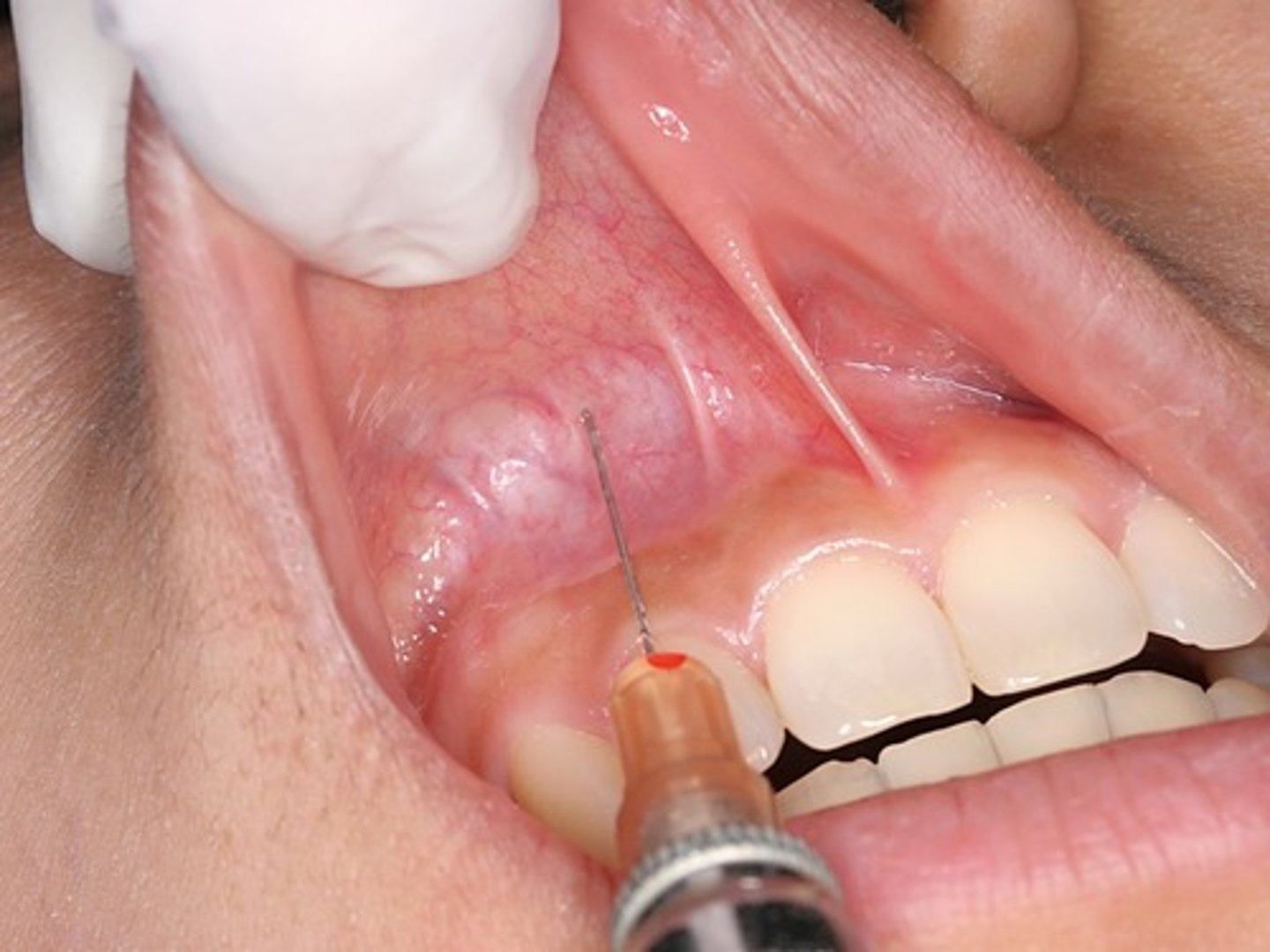
Posterior Superior Alveolar Nerve Block
1st molar ( not MB root), 2, and 3 rd molar
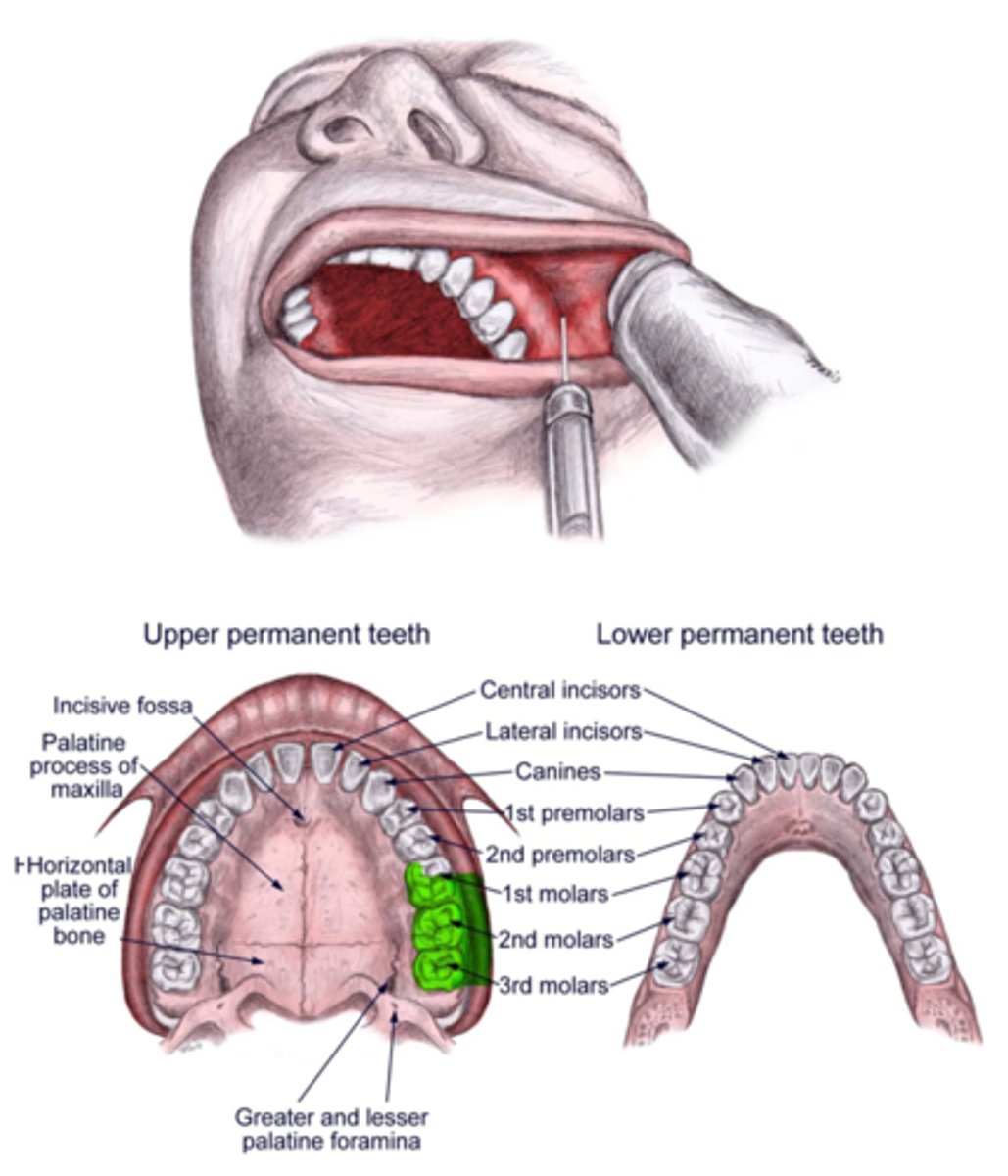
Middle Superior Alveolar Nerve Block
1st premolar, 2nd premolar, MB1 of 1st molar
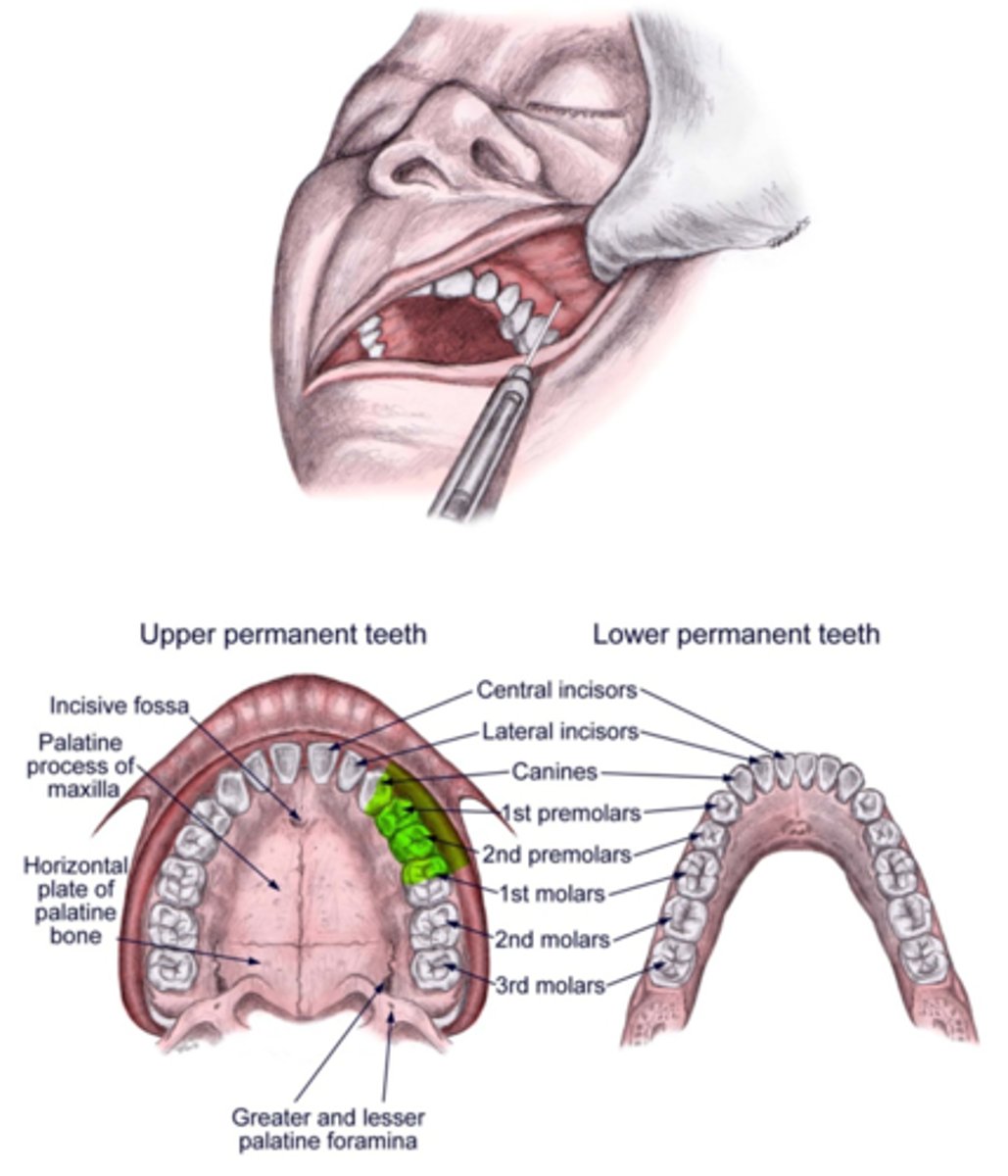
Anterior Superior Alveolar Nerve Block
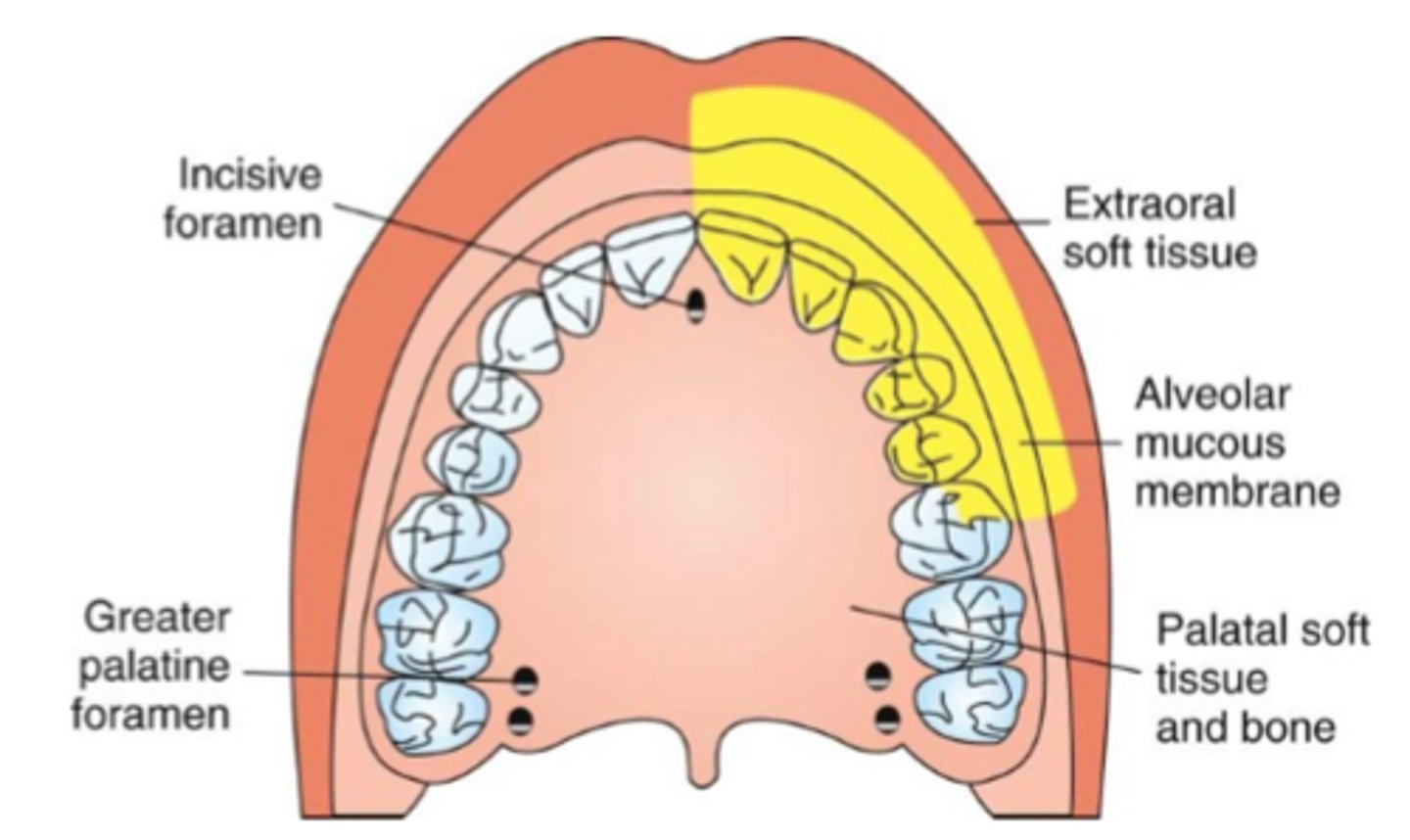
Infraorbital Nerve Block
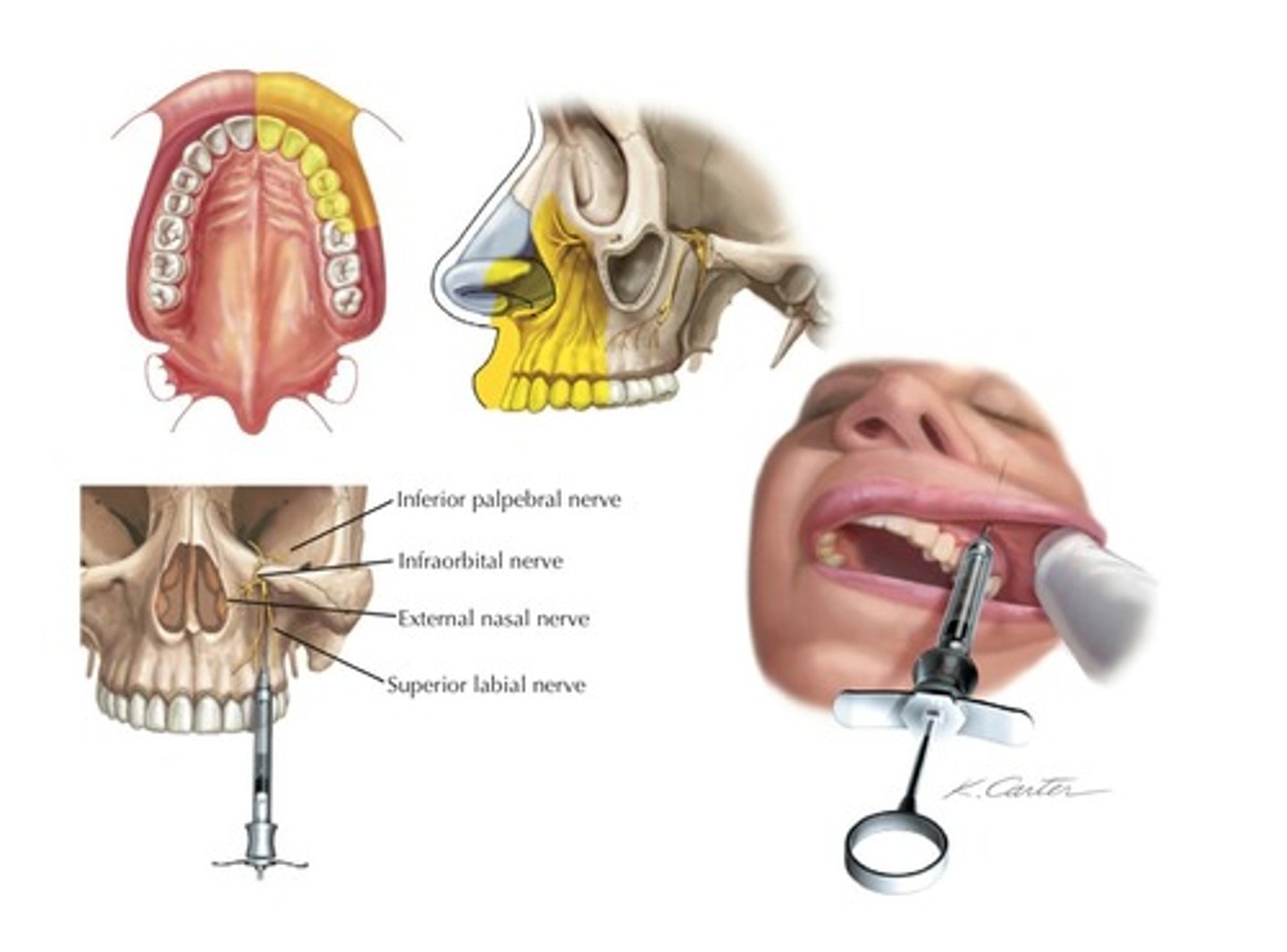
Greater Palatine Nerve Block
molars
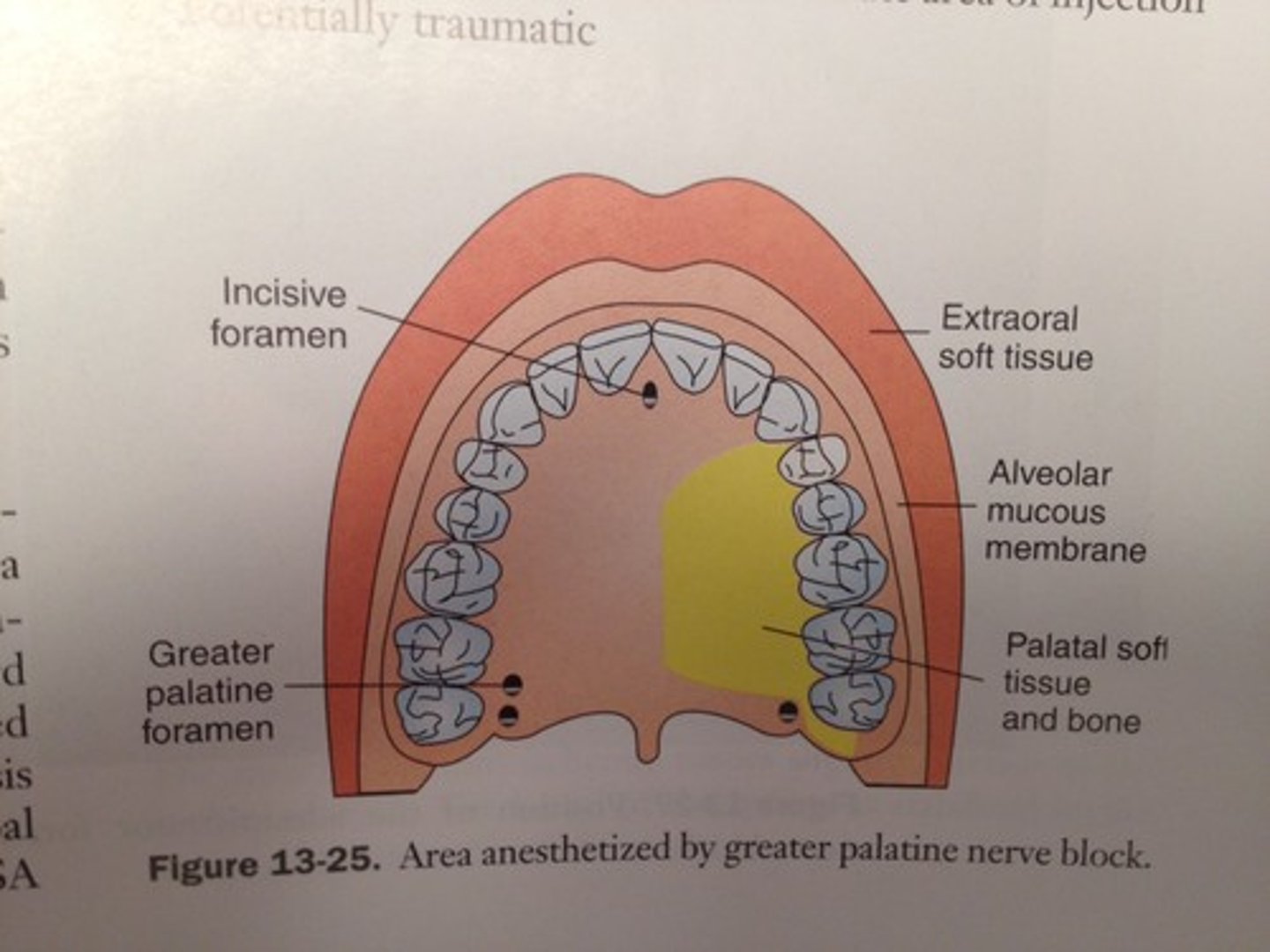
Nasopalatine Nerve Block
anterior
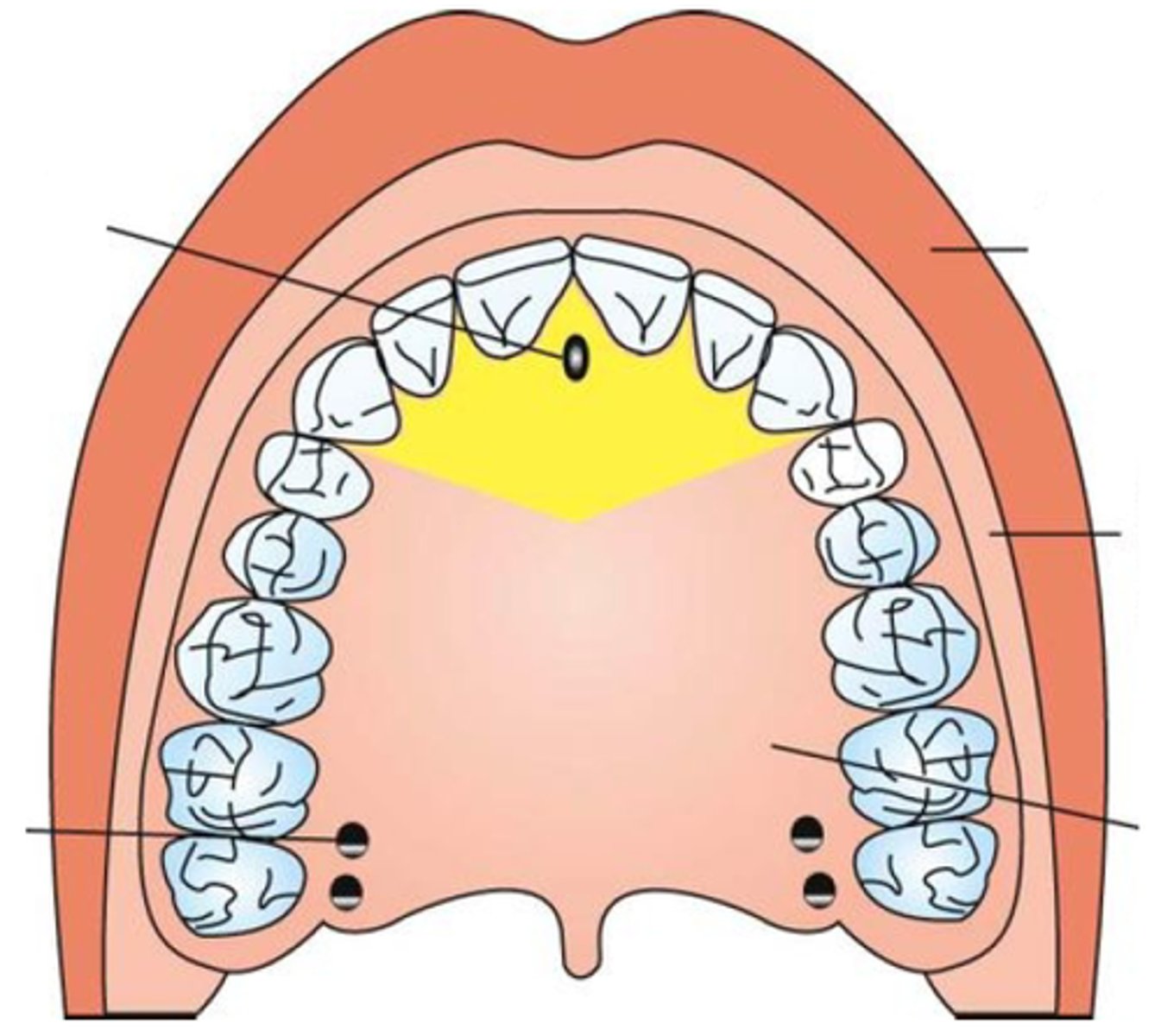
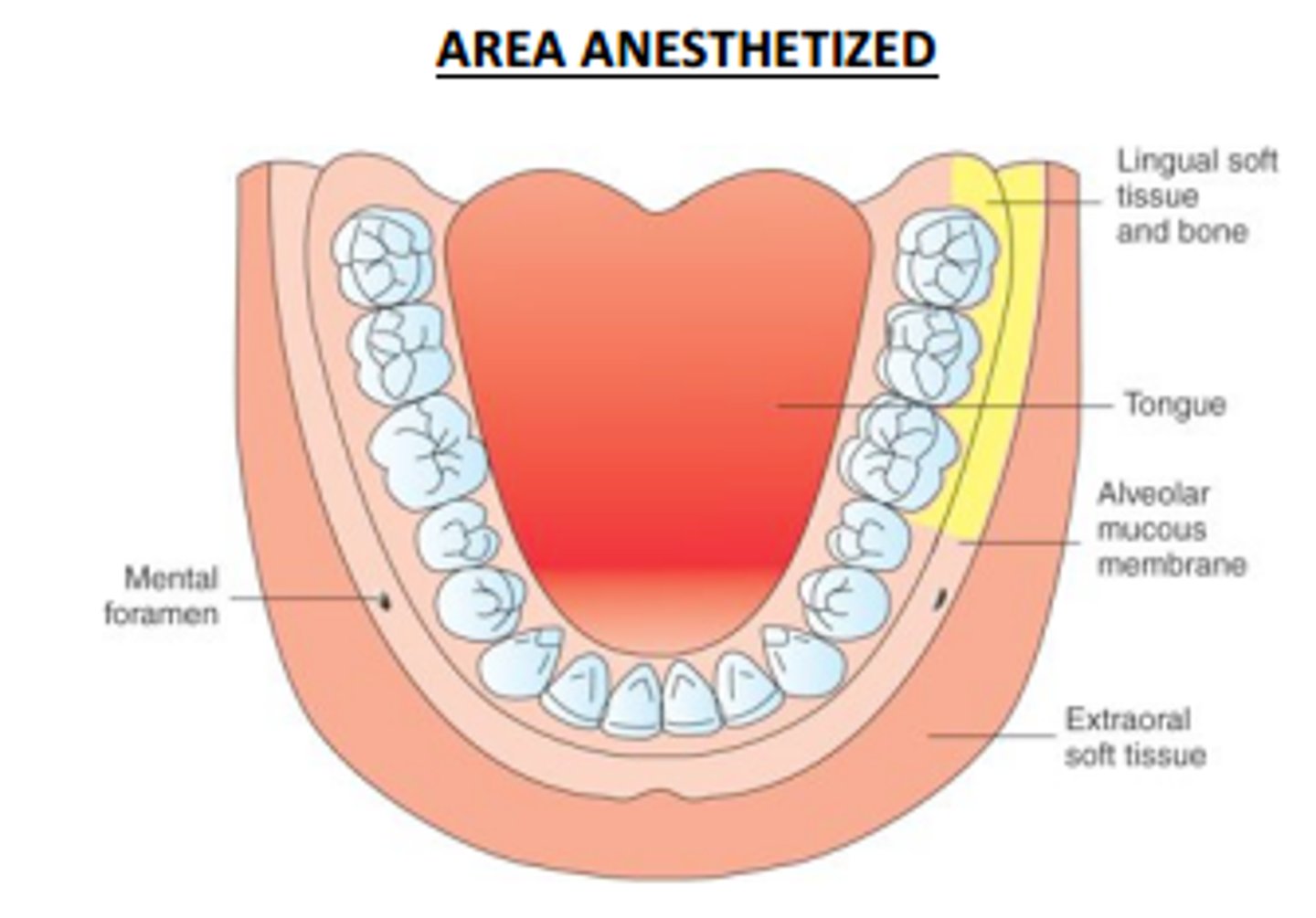
Inferior Alveolar Nerve Block
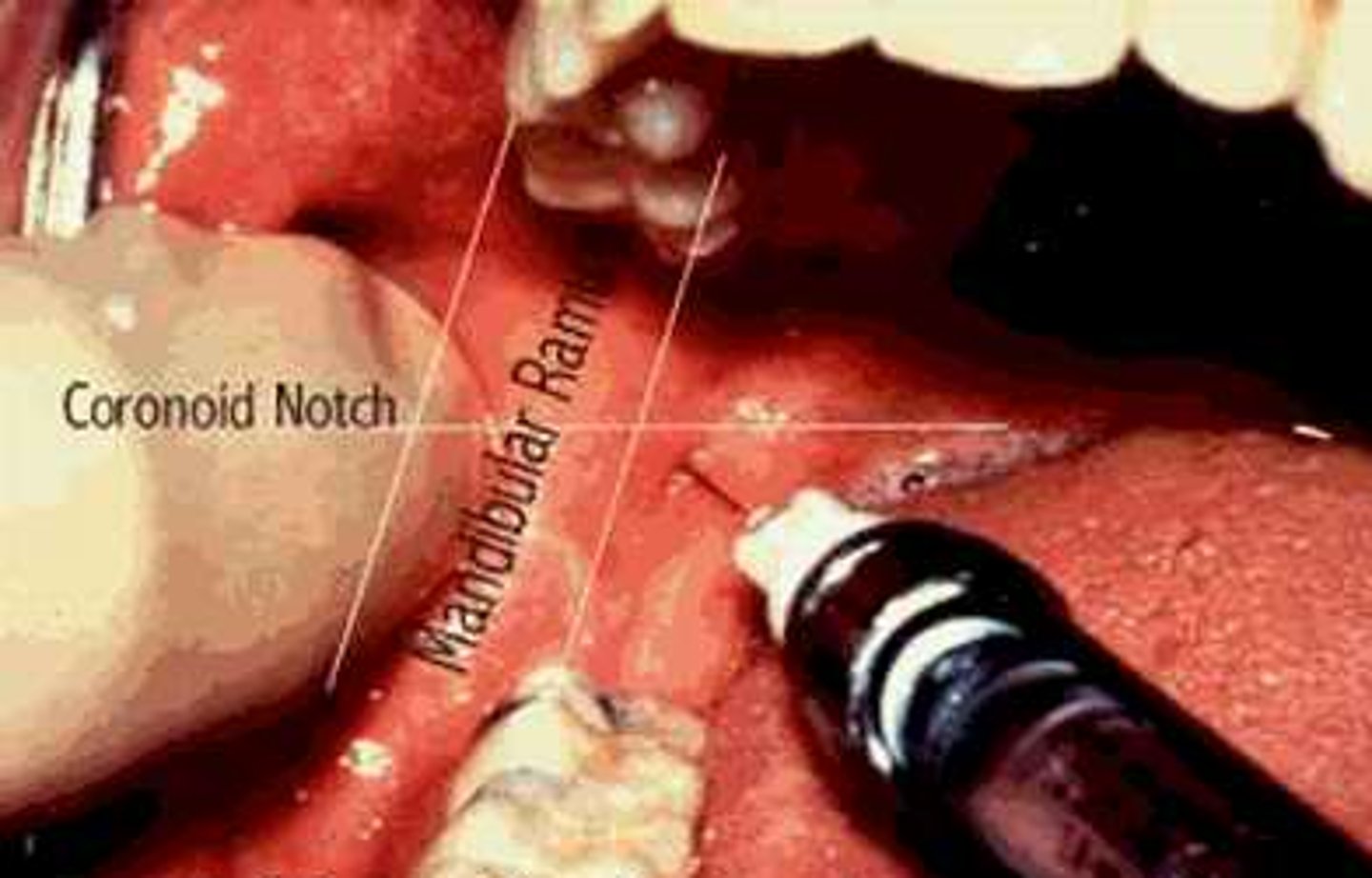
Buccal Nerve Block
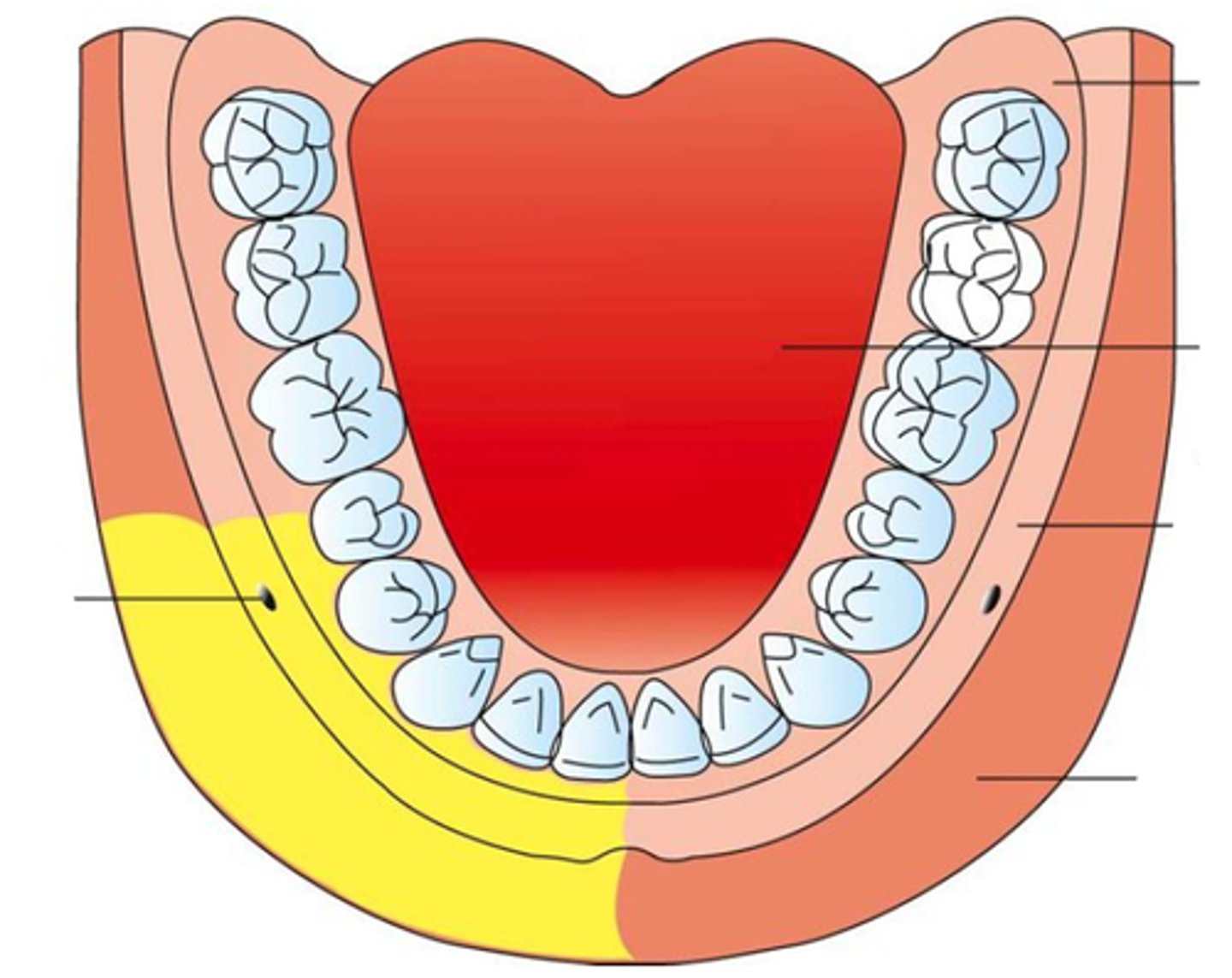
Mental Nerve Block
PDL Injection
anesthesia of a single tooth are localized raea through diffusion through soft tissue and bone adjacent to PDL
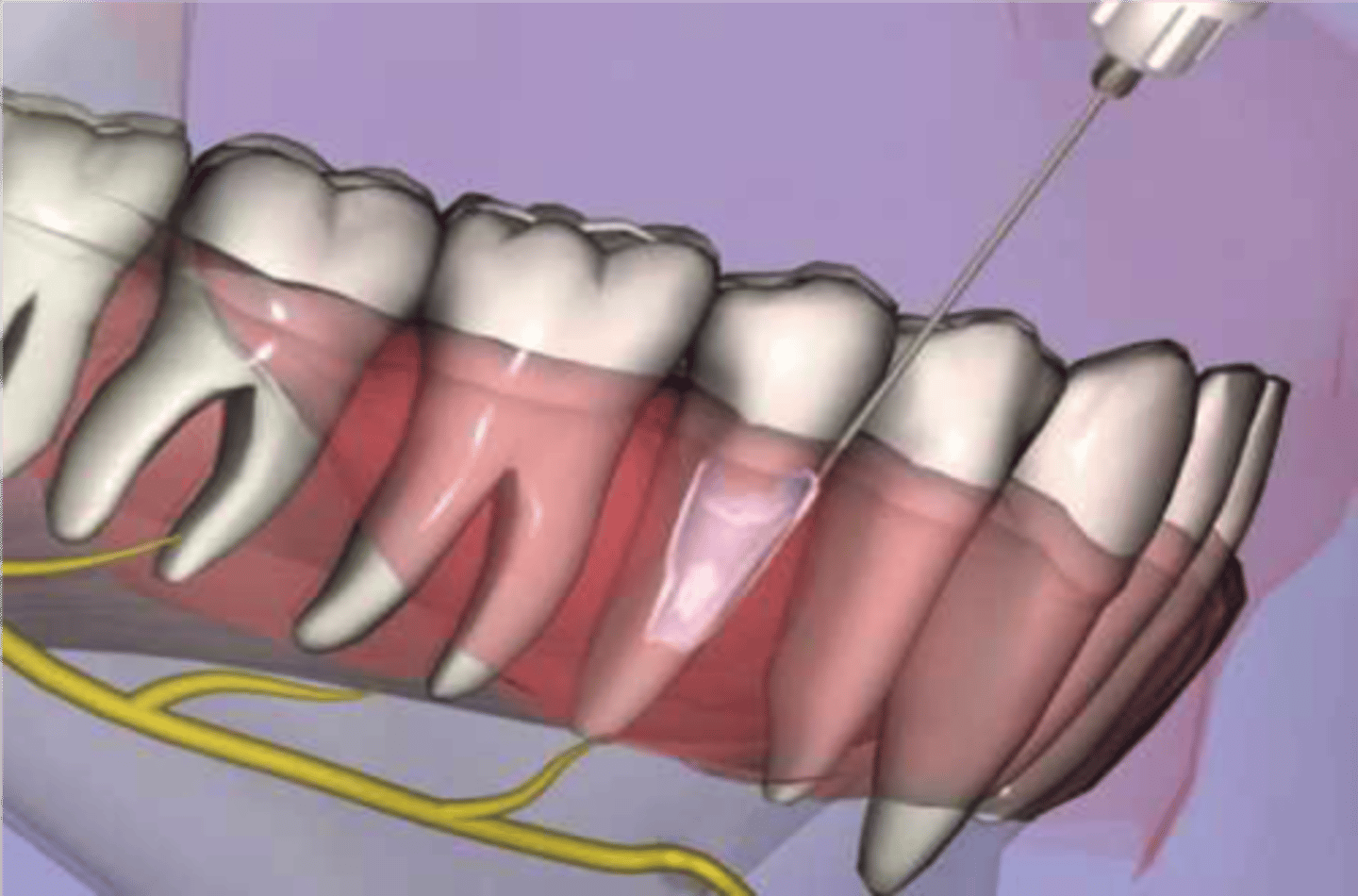
Intraosseous Injection
deposition of solution into the interproximal bone between two teeth
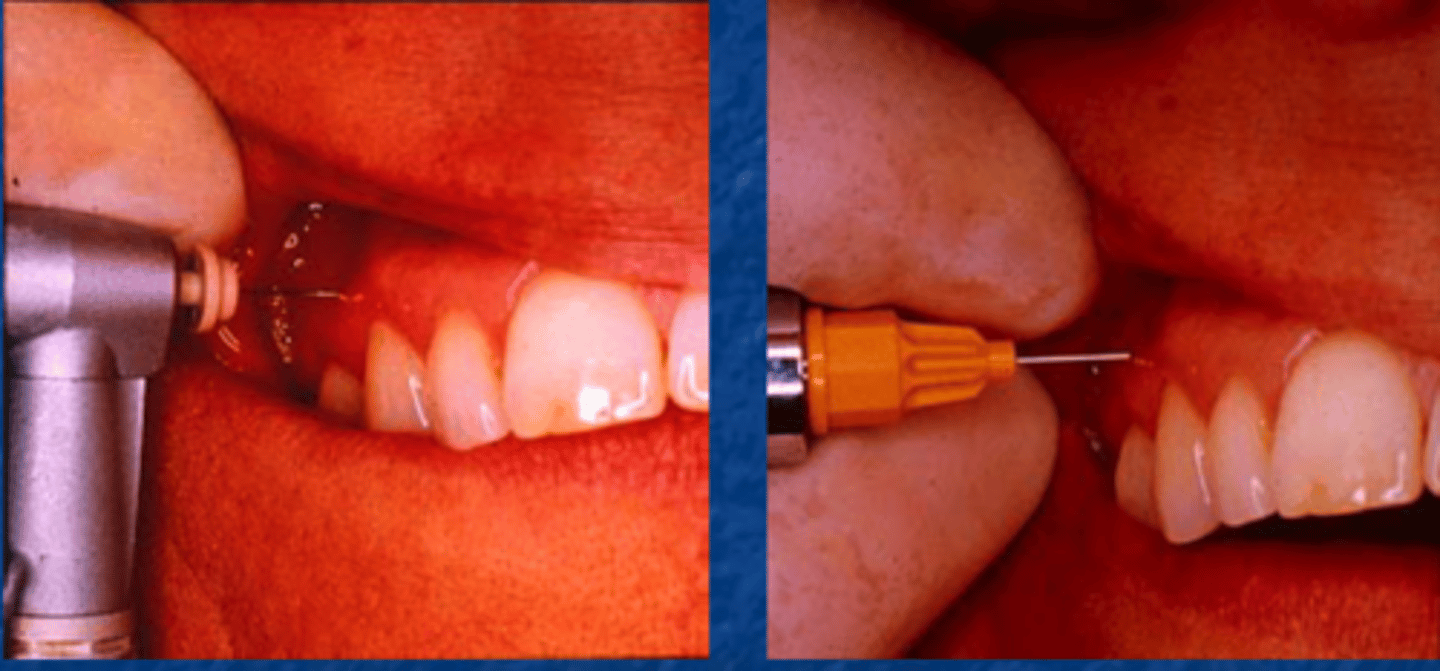
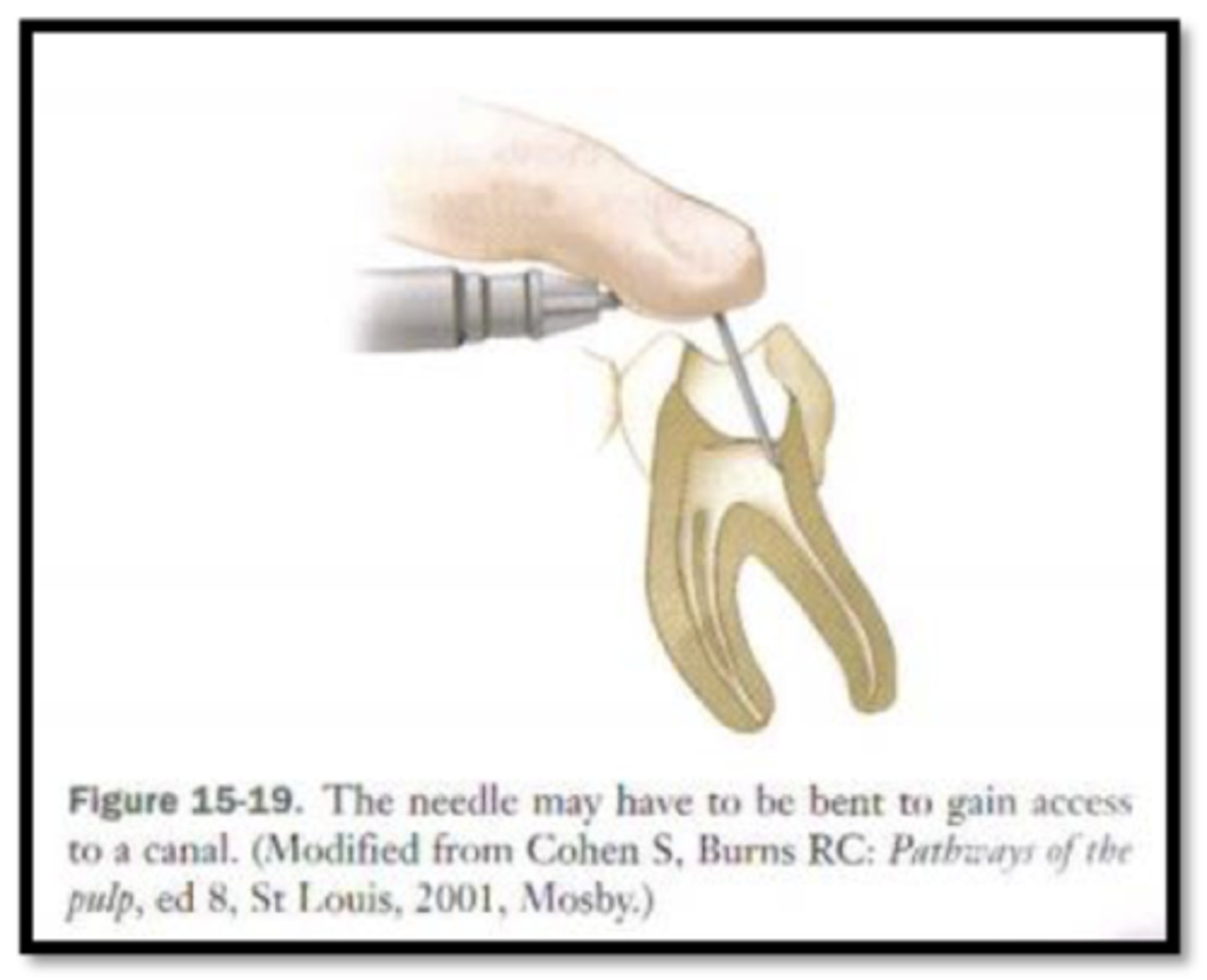
intrapulpal injection
injection directly into the pulp chamber or root of tooth after exposure surgically or pathologically
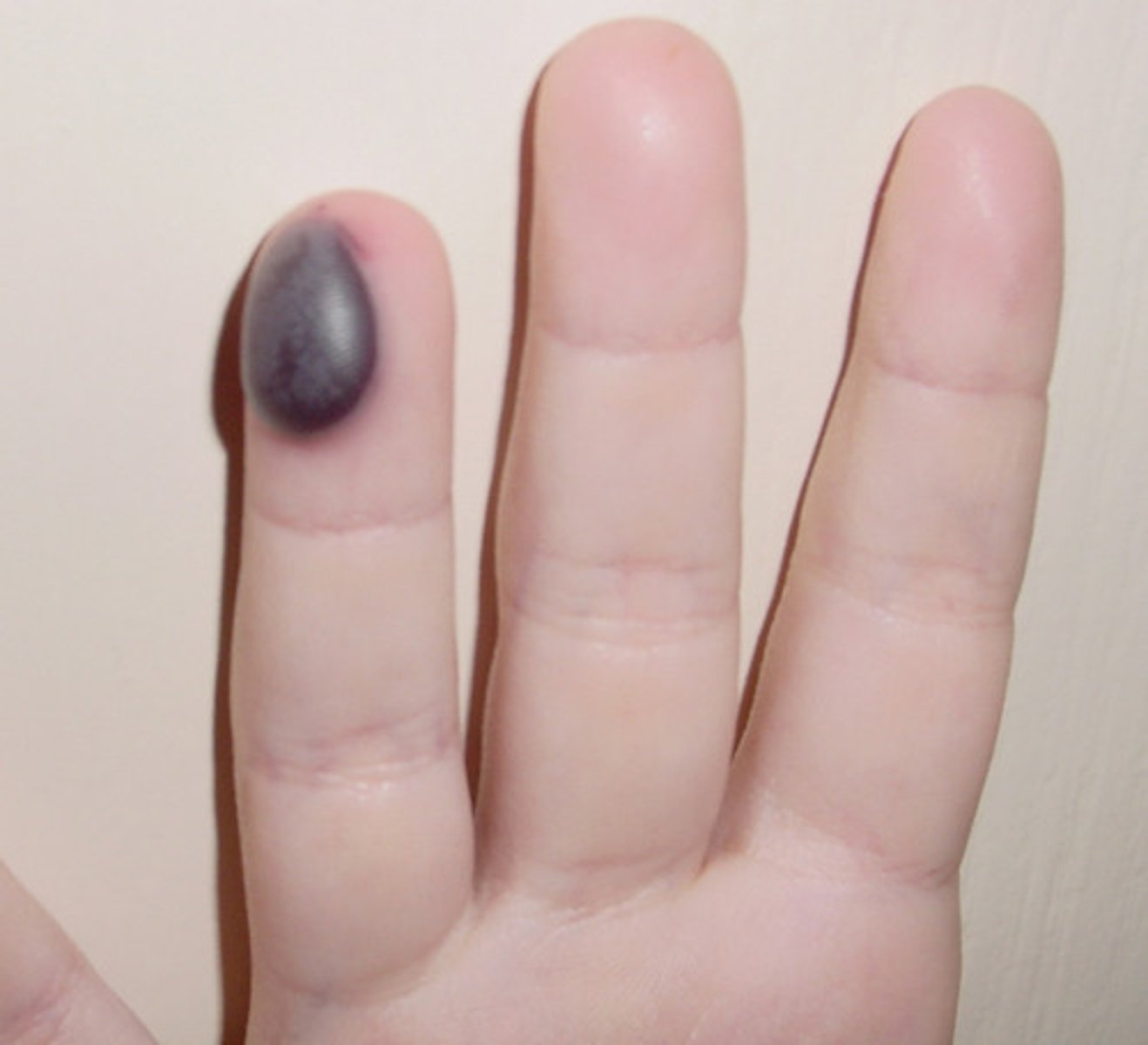
Hematoma
Syncope
decrease BP, HR, and cerebral perfusion
Management of Syncope
lay flat and bring the chair downward towards head
oxygen
vitals
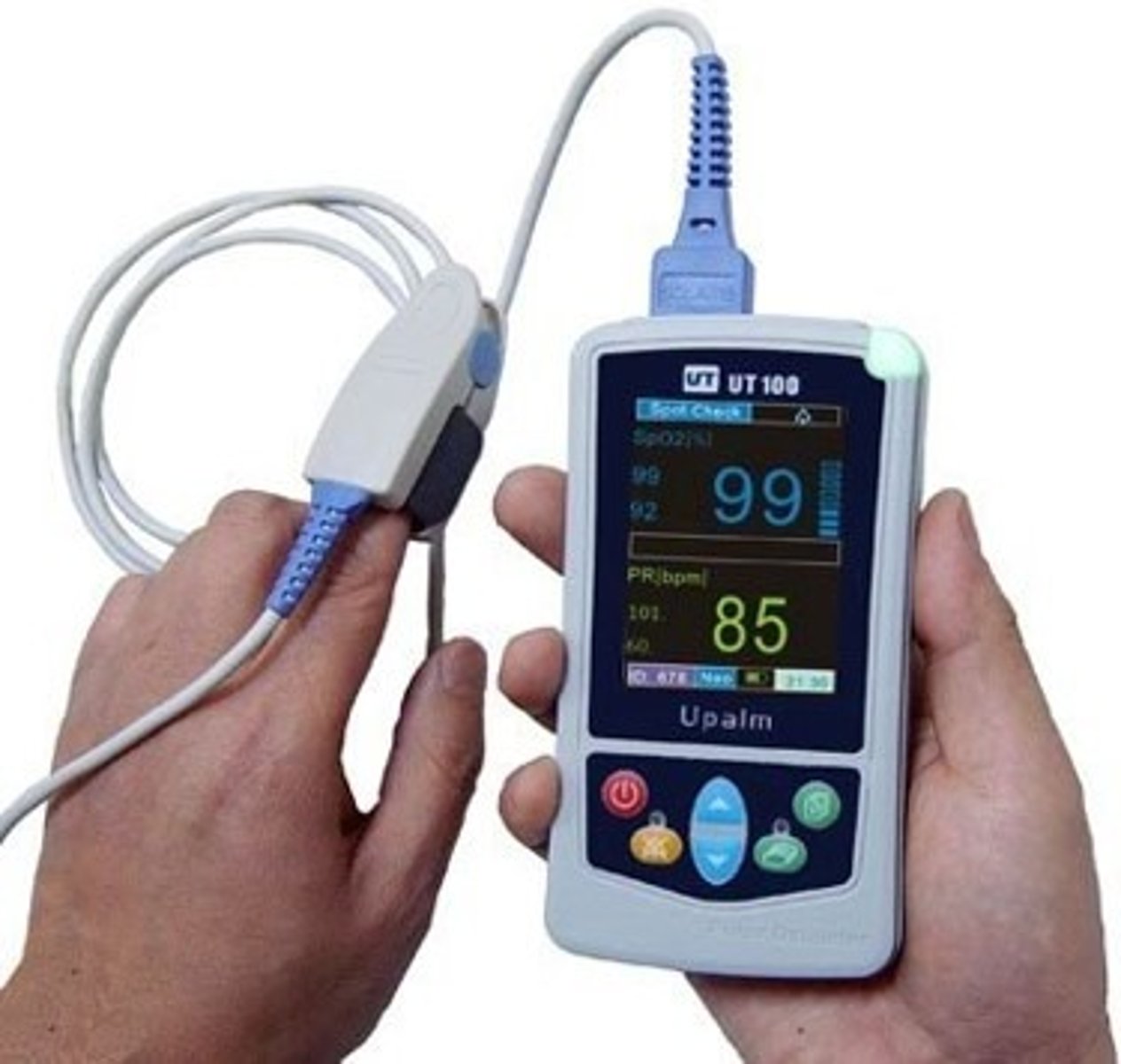
Pulse Oximetry
oxygen saturation and HR
EKG White on the __
Right
EKG Black on the __
left
"smoke above fire"
EKG Green on the __
bottom right below white
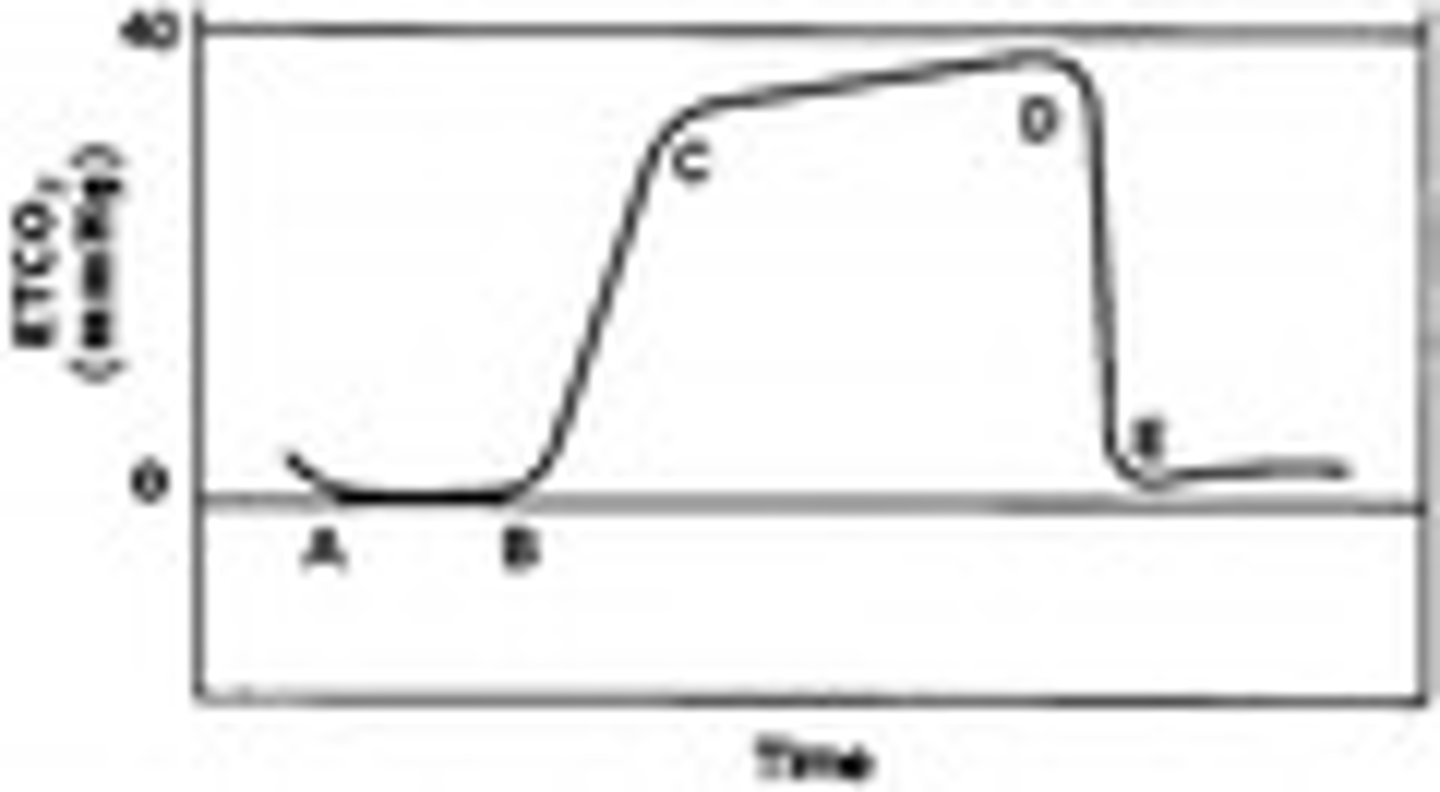
Capnography
exhaled oxygen
Short Acting LA
Procaine
Benzocaine
Proparacain
Intermediate LA
Lidocaine
Mepivacaine
Prilocaine
Articaine
Long Acting LA
Bupivacaine
Analgesic
acting to relieve pain
Anesthesia
insensitivity to pain
Intravenous Sedation
sedation obtained by giving medication directly into the venous circulation
IV sedation can be __, ___,__, or __
min
moderate
deep
GA
T/F: Local anesthesia is not necessary for IV sedation
FALSE
Venipuncture Placement Complications
vasospasm
hematoma
arterial puncture
Intraop Venipuncture Complications
air embolism
infiltration
extravascular drug administration
intra-artial injection of medicaiton
What do you do if a patient has an air embolism?
place pt on right side facing up
Post Op Venipuncture Complications
phebitis
phlebothrombosis
thrombophlebitis
What are common IV Sedation agents?
Benzodiazepines
Opiods
General Anesthetic Agents
Benzodiazepines
Diazepam
Midazolam
What is the main benzo used for sedation?
Midazolam
What is the reversal of Midazolam?
Flumazenil
Opiods
Morphine
Fentanyl

