AOC: Six Dynasties Narrative Painting, Stone Carving, Cliff Carvings & Sculpture
 Call Kai
 Learn
Learn Practice Test
 Spaced Repetition
 Match
Match Flashcards
 Knowt Play
1/6

There's no tags or description
Looks like no tags are added yet.
Name | Mastery | Learn | Test | Matching | Spaced | Call with Kai |
|---|
No analytics yet
Send a link to your students to track their progress
7 Terms
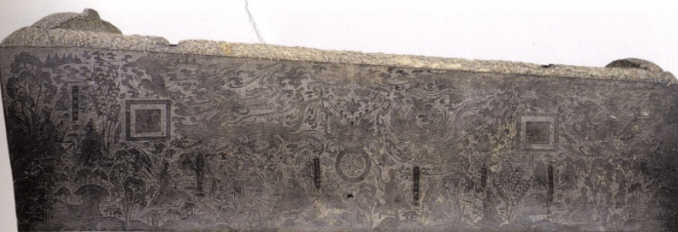
This sarcophagus from the Northern Wei shows how different spatial modes were used for symbolic purposes. Name each of the four “spaces” represented on the sarcophagus and describe the artistic modes used to differentiate each one.
4 spatial types: earthly, heavens, windows, central knocker
In the heavens, the figures are flat
In the earthly realm, figures are diagonal, implying depth
The afterlife is the black box
The knockers are positioned on top to signify illusion
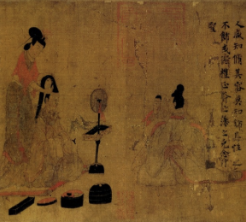
Describe what is meant by a binary mode of representation by referring to the work depicted below.
Depiction of a specific story with two different scenes from two different perspectives, one earlier and one later

Identify the scene depicted below. How does this work accord with the political context of the period?
This is a scene from the 7 worthies of the bamboo grave. This was created at a time in which intellectuals no longer went for government positions, and rather retired to the mountains and countrysides in order to explore the cosmos.
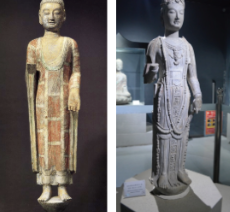
What is the difference between a Buddha and Bodhisattva in the Buddhist faith? Which one of the figures below is a bodhisattva? How do you know?
Te Buddha is a figure who has reached enlightenment and passed to nirvana. Bodhisattva’s are beings who have reached enlightenment but put off nirvana in order to teach others about Buddhism. The Bodhisattva is the figure that is finely dressed, while the Buddha has on the patchwork cloak.
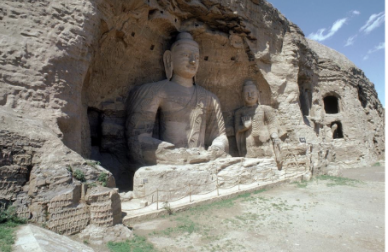
Identify the following site and its date. Who were the patrons of this site? What meanings was the project designed to convey? How did the style and composition of the site project those meanings?
This site is from the Yungang grottoes, specifically cave 20. This Buddha specifically symbolized the Emperors power.
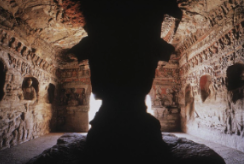
What kind of cave is this? How would it have been used?
Stuppa cave. The edifice in the middle would hold remains of past Bodhisattva’s
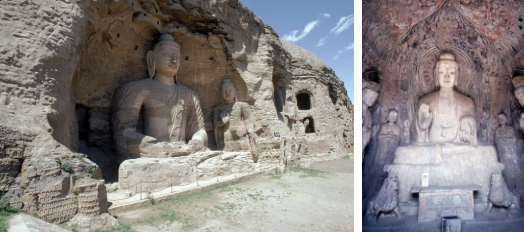
Identify the following two cave sites and then describe the differences in their figures’ clothing style. How have past scholars have explained this difference? How does Katherine Tsiang explain the transition in style instead?
The first object is cave 20 at Yungang. The clothing on this figure is foreign in nature
The second object is a Seated buddha from the Longmen caves and the clothing it adorns is more Chinese in origin.
This transition in style can be described by different cultural influences. Object B is a later piece, and was influenced by the Chinese controlled South.

