AP Bio Unit 4: Cellular Energetics Vocab

0.0(0)
studied byStudied by 3 people
0.0(0)
full-widthCall Kai
learnLearn
examPractice Test
spaced repetitionSpaced Repetition
heart puzzleMatch
flashcardsFlashcards
GameKnowt Play
Card Sorting

1/98

Study Analytics
Name
Mastery
Learn
Test
Matching
Spaced

No study sessions yet.

99 Terms

1
New cards

Energy is stored in ______ molecules.

Organic (carbs, lipids, proteins)

2
New cards

Endergonic

Energy enters the process

3
New cards

Exergonic

Energy exits the process

4
New cards

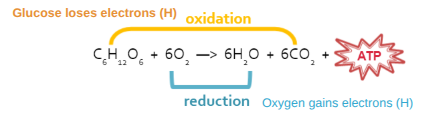
Oxidation

Loses electron

  • Adds O, removes H

  • Releases energy

  • Exergonic

<p>Loses electron</p><ul><li><p>Adds O, removes H</p></li><li><p>Releases energy</p></li><li><p>Exergonic</p></li></ul><p></p>
5
New cards

Reduction

Gains electron

  • Removes O, adds H

  • Stores energy

  • Endergonic

<p>Gains electron</p><ul><li><p>Removes O, adds H</p></li><li><p>Stores energy</p></li><li><p>Endergonic</p></li></ul><p></p>
6
New cards

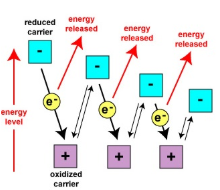
Electron Carriers

  • Moves electrons by shuttling H atoms around, creating a gradient

  • When electrons move down the gradient through ATP synthase enzyme, ATP is generated

  • A phosphate group is added to ADP, storing energy in ATP

  • Each carrier is more electronegative than the previous (think of stairs), and is oixdation/exergonic

7
New cards

In the Calvin Cycle, NADPH oxidize to ______.

NADP+

8
New cards

In the Calvin Cycle, ATP reduces to ______.

ADP

9
New cards

In the Krebs Cycle, NAD+ reduces to _____.

NADH

10
New cards

In the Krebs Cycle, FAD reduces to _____.

FADH2

11
New cards

Photosynthesis

Converts light energy to chemical energy of food

12
New cards

Photosynthesis Products

ATP & NADPH (P for photosynthesis)

13
New cards

NADPH (in photosynthesis)

The electron carrier for photosynthesis (stores energy)

14
New cards

Mesophyll

The middle of a leaf, chloroplasts are found here

15
New cards

Stomata

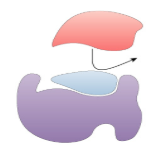
Pores in the leaf and site of gas exchange (CO2 enters & O2 exits)

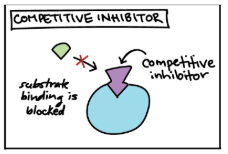
16
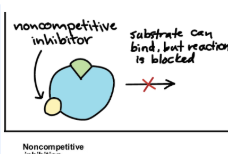
New cards

Thylakoids

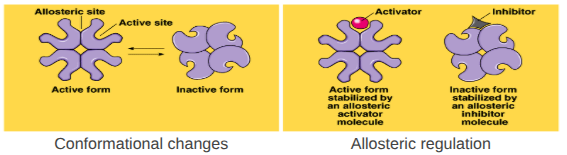
The flat green “pancakes”. Stores chlorophyll and collect sun energy for the first part of photosynthesis.

17
New cards

Grana

Stacks of thylakoids and helps increase surface area

18
New cards

Stroma

The fluid that surrounds the thylakoids and is the site for the second half of photosynthesis. Also contains ribosomes & chloroplast DNA.

19
New cards

Photosynthesis Equation

6CO2 + 6H2O + Light Energy → C6H12O6 + 6O2

20
New cards

Steps of Photosynthesis

LIGHT → Light reactions in thylakoids → ATP, NADPH → Calvin cycle in stroma → ORGANIC COMPOUNDS (carbs)
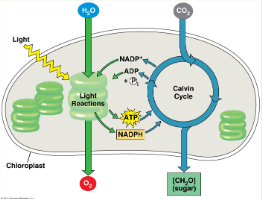
<p><mark data-color="#f9f8ae" style="background-color: rgb(249, 248, 174); color: inherit;">LIGHT</mark> → Light reactions in thylakoids → <mark data-color="#ffc79f" style="background-color: rgb(255, 199, 159); color: inherit;">ATP, NADPH</mark> → Calvin cycle in stroma → <mark data-color="#ffd6f6" style="background-color: rgb(255, 214, 246); color: inherit;">ORGANIC COMPOUNDS (carbs)</mark></p>
21
New cards

Light Reactions (Light Dependent)

Light energy converted into ATP & NADPH using electrons from H20
<p>Light energy converted into ATP &amp; NADPH using electrons from <span style="background-color: transparent;"><span>H</span><sub><span>2</span></sub><span>0</span></span></p>
22
New cards

Calvin Cycle (Light Independent)

Takes the ATP from the light Reactions to power chemical reactions (with the enzymes) to convert CO2 and the H from H2O into glucose. Produces ADP & NADP+.

6 cycles = 1 molecule of glucose
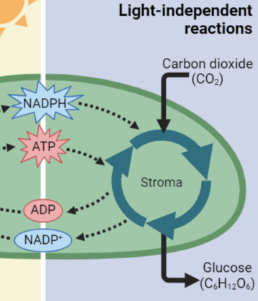
<p>Takes the ATP from the light Reactions to power chemical reactions (with the enzymes) to convert <span style="background-color: transparent;"><span>CO</span><sub><span>2</span></sub><span> and the H from H</span><sub><span>2</span></sub><span>O into glucose. Produces ADP &amp; NADP</span><sup><span>+</span></sup><span>.</span></span></p><p><span style="background-color: transparent;"><span>6 cycles = 1 molecule of glucose</span></span></p>
23
New cards

Calvin Cycle Products

ADP & NADP+

24
New cards

Carbon in the Calvin Cycle

R: 3 CO2 + 3 RuBP acceptors → P: 6 G3P

25
New cards

ATP in the Calvin Cycle

R: ATP → P: 9 ADP (6 in reduction, 3 in regeneration)

26
New cards

NADPH in the Calvin Cycle

R: 6 NADPH → P: 6 NADP+ (during reduction)

27
New cards

Rubisco

An enzyme in the Calvin Cycle that “fixes” the carbon dioxide into a carbohydrate during the Carbon Fixation stage

28
New cards

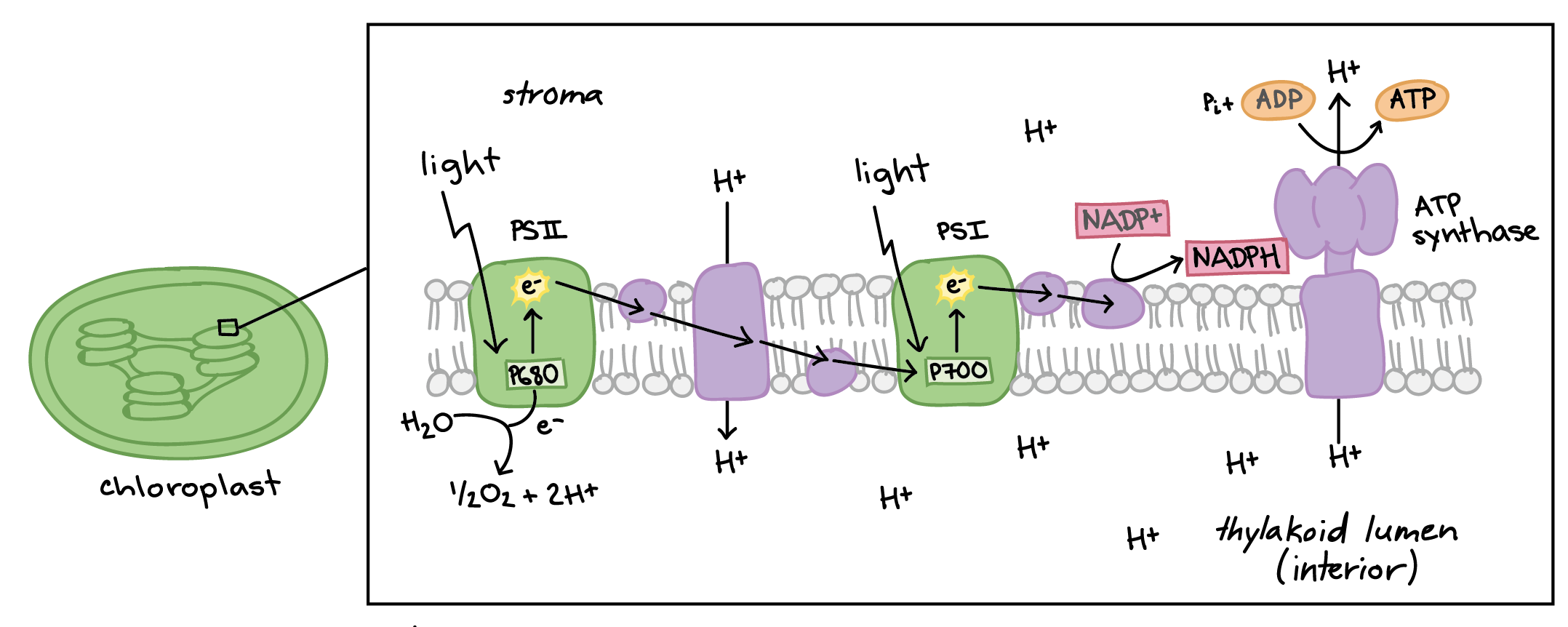
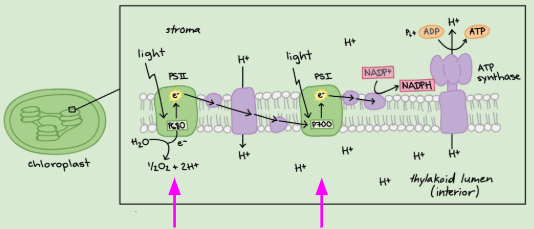
Photosystems (PS)

Large complexes of proteins and pigments (light-absorbing molecules) that are optimized to harvest light.

→ 2 types: PSI & PSII

29
New cards

PS II

  • Provides energy for ATP

  • Restored by splitting the water and releasing O2 & H+

  • First protein of the ETC

30
New cards

PS I

  • The second input of light re-energizes electrons

  • Provides energy to create NADPH

  • The third protein (after PSII & the cytochrome complex)

31
New cards

NADPH

Another form of stored energy (like ATP)

32
New cards

Electron Transport Chain (ETC in photosynthesis)

  • A cycle of oxidation & reduction to pass electrons on

  • Uses electrons’ energy to pump protons ( H+ ) into the thylakoid through active transport (against the gradient)

33
New cards

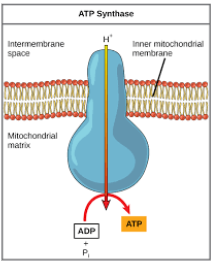
ATP Synthase (photosynthesis)

  • The enzyme in the ETC

  • Uses protein gradient (high H+ inside thylakoid & low H+ outside thylakoid) to make ATP

  • Passive diffusion of H+ provides energy to add phosphate back onto ATP
<ul><li><p>The enzyme in the ETC</p></li><li><p>Uses protein gradient (high <span style="background-color: transparent;"><span>H</span><sup><span>+</span></sup><span> inside thylakoid &amp; low H</span><sup><span>+</span></sup><span> outside thylakoid) to make ATP</span></span></p></li><li><p><span style="background-color: transparent;"><span>Passive diffusion of H+ provides energy to add phosphate back onto ATP</span></span></p></li></ul><p></p>
34
New cards

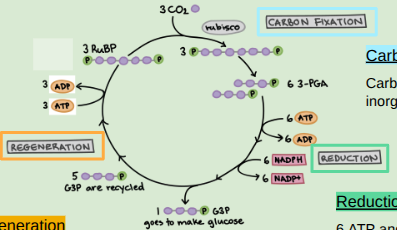
The three Calvin Cycle steps

Carbon Fixation, Reduction, & Regeneration
<p>Carbon Fixation, Reduction, &amp; Regeneration</p>
35
New cards

Carbon Fixation

Carbon dioxide is “fixed” into a carbohydrate by the enzyme Rubisco. Carbon dioxide is “fixed” from inorganic form into organic molecule

36
New cards

Reduction

  • 6 ATP and 6 NADPH are used to make 6 G3P molecules

  • ADP and NADP go back to the light reactions to be reused and re-energized

37
New cards

Regeneration

1 G3P leaves the cycle while the other 5 G3P use 3 more ATP to regenerate 3 RuBP to repeat the cycle and the carbon dioxide can be “fixed” into a carbohydrate.

38
New cards

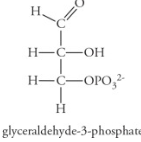
G3P (Glyceraldehyde-3-phosphate)

  • End product of the Calvin Cycle

  • Energy-rich, 3-carbon sugar

  • Exits chloroplast into cell’s cytoplasm and is an important intermediate to other molecules

  • 2 G3Ps = 6-carbon glucose molecule, 6x cycle = 1 glucose molecule
<ul><li><p>End product of the Calvin Cycle</p></li><li><p>Energy-rich, 3-carbon sugar</p></li><li><p>Exits chloroplast into cell’s cytoplasm and is an important intermediate to other molecules</p></li><li><p>2 G3Ps = 6-carbon glucose molecule, 6x cycle = 1 glucose molecule</p></li></ul><p></p>
39
New cards

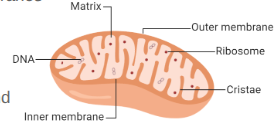
Mitochondria

Double membrane energy harvesting organelle


Structure:

  • Smooth outer membrane

  • Folded inner membrane (folds are the cristae, increasing surface area)

  • Intermembrane space: fluid-filled space between membranes

  • Matrix: inner fluid-filled space

  • DNA, Ribosomes

  • Enzymes: free & membrane-bound

<p>Double membrane energy harvesting organelle</p><div data-type="horizontalRule"><hr></div><p>Structure:</p><ul><li><p>Smooth outer membrane</p></li><li><p>Folded inner membrane (folds are the cristae, increasing surface area)</p></li><li><p>Intermembrane space: fluid-filled space between membranes</p></li><li><p>Matrix: inner fluid-filled space</p></li><li><p>DNA, Ribosomes</p></li><li><p>Enzymes: free &amp; membrane-bound</p></li></ul><p></p>
40
New cards

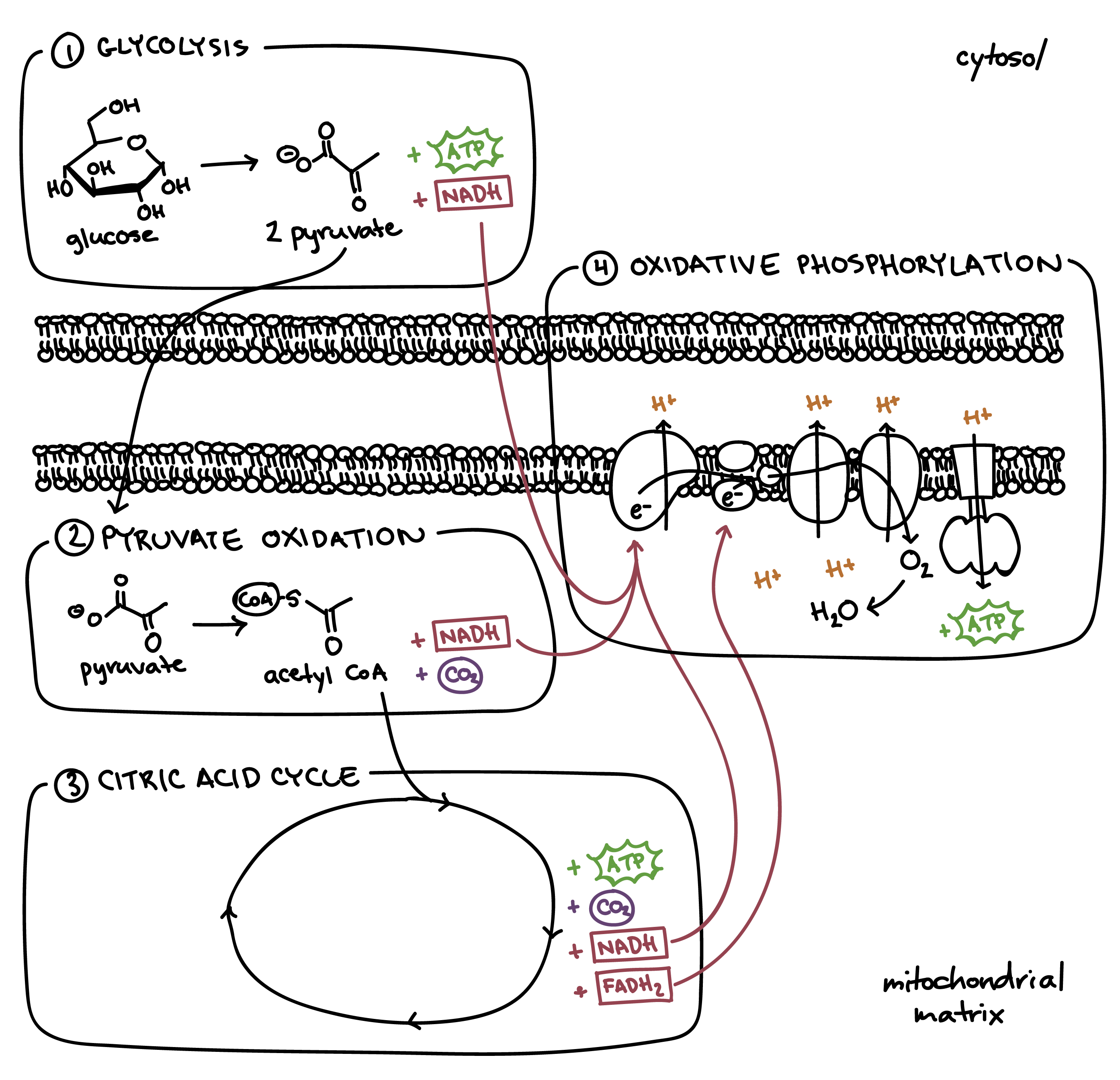
Cellular Respiration Stages

  1. Glycolysis

  2. Pyruvate Oxidation (link reaction)

  3. Krebs/Citric Acid Cycle

  4. Electron Transport Chain (oxidative phosphorlaytion)
<ol><li><p>Glycolysis</p></li><li><p>Pyruvate Oxidation (link reaction)</p></li><li><p>Krebs/Citric Acid Cycle</p></li><li><p>Electron Transport Chain (oxidative phosphorlaytion)</p></li></ol><p></p>
41
New cards

Aerobic

With oxygen

  • Pyruvate oxidation

  • Krebs cycle

  • ETC

  • Glycolysis

42
New cards

Anaerobic

Without oxygen

  • Fermentation

  • Glycolysis (can occur w/ or w/o)

43
New cards

NADH

The electron carrier used in cellular respiration (stores energy)

44
New cards

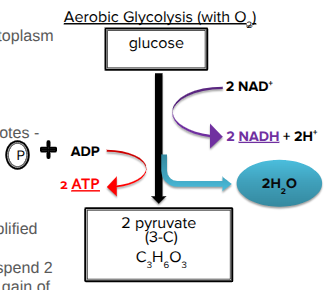
Glycolysis

  • Occurs outside of mitochondria in the cytoplasm

  • Can occur with or without O2

    • With: respiration

    • Without: fermentation

  • Partially oxidizes glucose (6C) to 2 pyruvates (3C)

  • Net gain: 2 ATP + 2NADH

  • Also makes 2H2O

<ul><li><p><span style="background-color: transparent;"><span>Occurs outside of mitochondria in the cytoplasm</span></span></p></li><li><p><span style="background-color: transparent;"><span>Can occur with or without O</span><sub><span>2</span></sub><span> </span></span></p><ul><li><p>With: respiration</p></li><li><p>Without: fermentation</p></li></ul></li></ul><ul><li><p><span style="background-color: transparent;"><span>Partially oxidizes glucose (6C)&nbsp;to 2 pyruvates (3C)</span></span></p></li></ul><ul><li><p><span style="background-color: transparent;"><u><span>Net gain</span></u><span>: </span><strong><span>2 ATP +</span></strong><span> </span><strong><span>2NADH</span></strong></span></p></li><li><p><span style="background-color: transparent;"><span>Also makes </span><strong><span>2H</span><sub><span>2</span></sub><span>O</span></strong></span></p></li></ul><p></p>
45
New cards

Glycolysis Steps: Energy Investment

  • Endergonic

  • Invest some ATP

  • Glucose is phosphorylated, rearranged, and split into 2 G3P molecules
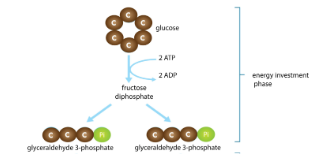
<ul><li><p><span style="background-color: transparent;"><span>Endergonic</span></span></p></li><li><p><span style="background-color: transparent;"><span>Invest some ATP</span></span></p></li><li><p><span style="background-color: transparent;"><span>Glucose is phosphorylated, rearranged, and split into 2 G3P molecules</span></span></p></li></ul><p></p>
46
New cards

Glycolysis Steps: Energy Payoff

  • Exergonic

  • Harvest a little ATP and a little NADH

  • G3P gives H (is oxidized) to NAD+ (is reduced) to make NADH

  • G3P is broken down into pyruvate

  • An intermediate molecule (PEP) donates a P to ADP to make ATP

    • Substrate level phosphorylation - an enzyme catalyzes the transfer of a P from a substrate (PEP) to ADP to make ATP
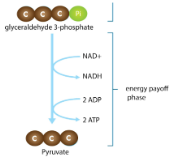
<ul><li><p><span style="background-color: transparent;"><span>Exergonic</span></span></p></li><li><p><span style="background-color: transparent;"><span>Harvest a little ATP and a little NADH</span></span></p></li><li><p><span style="background-color: transparent;"><span>G3P gives H (is oxidized) to NAD</span><sup><span>+</span></sup><span> (is reduced) to make NADH</span></span></p></li><li><p><span style="background-color: transparent;"><span>G3P is broken down into pyruvate</span></span></p></li><li><p><span style="background-color: transparent;"><span>An intermediate molecule (PEP) donates a P to ADP to make ATP</span></span></p><ul><li><p><span style="background-color: transparent;"><span>Substrate level phosphorylation - an enzyme catalyzes the transfer of a P from a substrate (PEP) to ADP to make ATP</span></span></p></li></ul></li></ul><p></p>
47
New cards

Pyruvate Oxidation

  • If oxygen is present, pyruvate enters the mitochondrial matrix

  • Pyruvate → Acetyl CoA 

  • Acetyl CoA =  Coenzyme; a molecule that attaches to an enzyme’s active site to help catalyze a reaction

  • CO2, NADH, a 2 carbon sugar are produced (x2 since we start with 2 pyruvates)
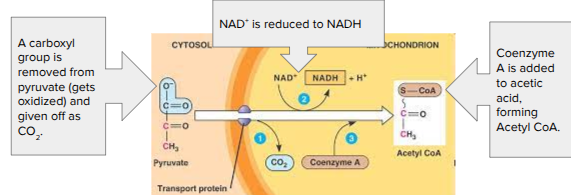
<ul><li><p><span style="background-color: transparent; font-family: &quot;Proxima Nova&quot;, sans-serif;"><span>If oxygen is present, pyruvate enters the mitochondrial matrix</span></span></p></li><li><p><span style="background-color: transparent; font-family: &quot;Proxima Nova&quot;, sans-serif;"><span>Pyruvate → Acetyl CoA&nbsp;</span></span></p></li></ul><ul><li><p><span style="background-color: transparent; font-family: &quot;Proxima Nova&quot;, sans-serif;"><span>Acetyl CoA =&nbsp; Coenzyme; a molecule that attaches to an enzyme’s active site to help catalyze a reaction</span></span></p></li><li><p><span style="background-color: transparent; font-family: &quot;Proxima Nova&quot;, sans-serif;"><strong><span>CO</span><sub><span>2</span></sub></strong><span>, </span><strong><span>NADH, </span></strong><span>a 2 carbon sugar are produced (x2 since we start with 2 pyruvates)</span></span></p></li></ul><p></p>
48
New cards

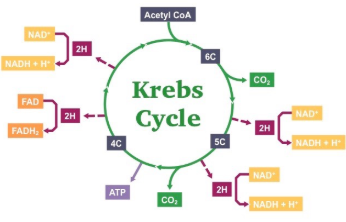
Krebs/Citric Acid Cycle

  • Occurs in mitochondrial matrix

  • Acetyl CoA (combines with oxaloacetate) —> Citrate —> many rxns —> CO2 + NADH + FADH2 released

  • Citrate is later broken down to make oxaloacetate so that it can combine with Acetyl CoA again (two Acetyl CoAs)

  • Glucose has been fully oxidized

Net gain

  • 2 ATP (produced by substrate-level phosphorylation)

  • 6 NADH, 2 FADH2 (electron carriers)

  • CO2 released

<ul><li><p><span style="background-color: transparent;"><span>Occurs in mitochondrial matrix</span></span></p></li><li><p><span style="background-color: transparent;"><span>Acetyl CoA (combines with oxaloacetate) —&gt; Citrate —&gt; many rxns —&gt;&nbsp;CO</span><sub><span>2</span></sub><span> + NADH + FADH</span><sub><span>2</span></sub><span> released</span></span></p></li><li><p><span style="background-color: transparent;"><span>Citrate is later broken down to make oxaloacetate so that it can combine with Acetyl CoA again (two Acetyl CoAs)</span></span></p></li><li><p><span style="background-color: transparent;"><span>Glucose has been fully oxidized</span></span></p></li></ul><p><span style="background-color: transparent;"><u><span>Net gain</span></u><span>:&nbsp;</span></span></p><ul><li><p><span style="background-color: transparent;"><strong><span>2 ATP</span></strong><span> (produced by substrate-level phosphorylation)</span></span></p></li><li><p><span style="background-color: transparent;"><strong><span>6 NADH</span></strong><span>, </span><strong><span>2 FADH</span><sub><span>2</span></sub></strong><span> (electron carriers)</span></span></p></li><li><p><span style="background-color: transparent;"><strong><span>CO</span><sub><span>2</span></sub></strong><span> released</span></span></p></li></ul><p></p>
49
New cards

Glucose is oxidized when

C6H12O6 → CO2

50
New cards

Single Cycle of the Krebs Cycle

2 x CO2

1 x ATP

1 x FADH2

3 x NADH + H+

51
New cards

Two Cycles of the Krebs Cycle

4 x CO2

2 x ATP

2 x FADH2

6 x NADH + H+

52
New cards

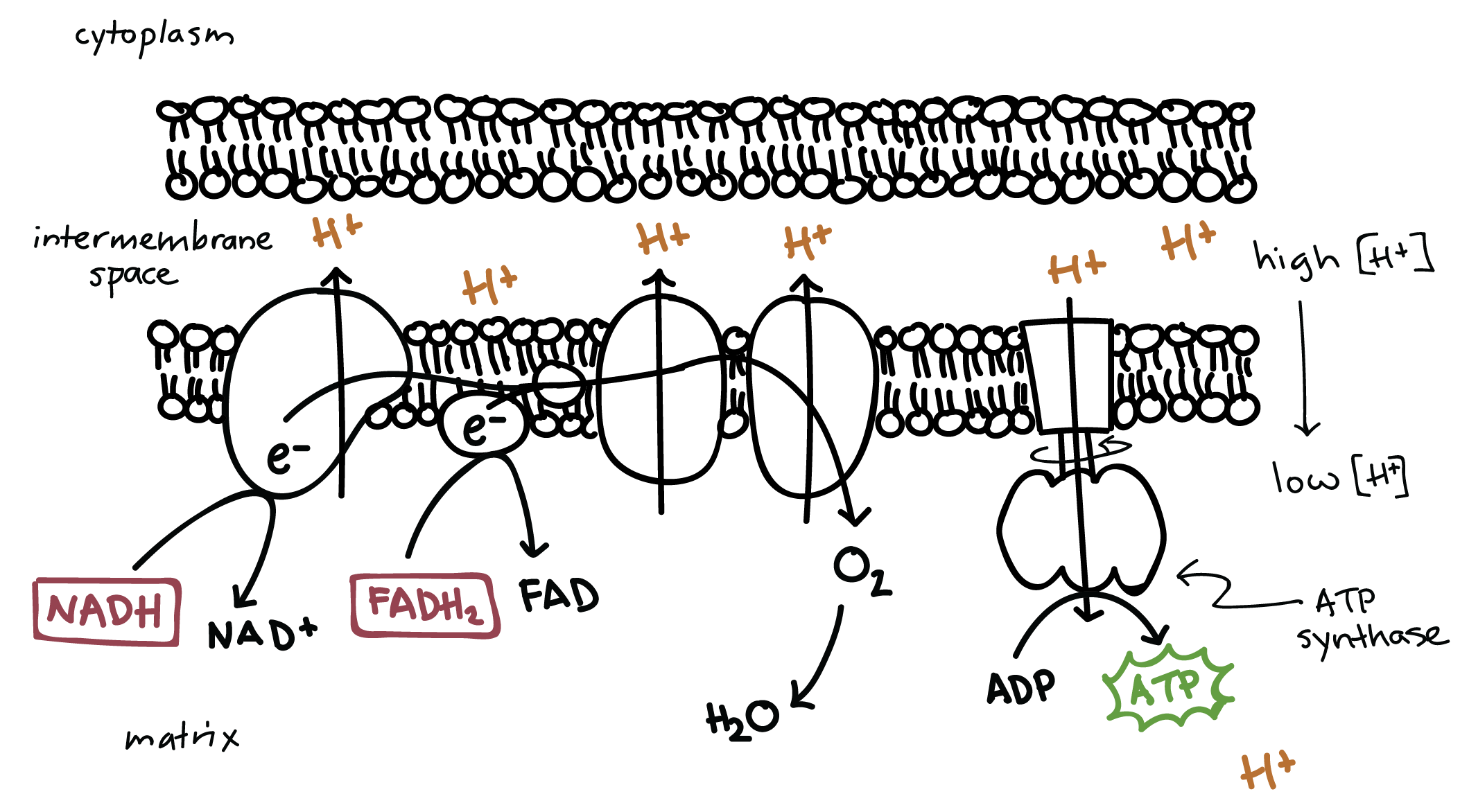
ETC (cellular resp)

  • Occurs along the cristae in the inner membrane of mitochondria

  • Produces 26-28 ATP

  • 2 FADH2 and 10 NADH molecules produced in glycolysis and the Krebs Cycle, donate high-energy electrons to energy carrier molecules

  • H+ ions pumped across inner mitochondrial membrane to the intermembrane space as the electrons pass from one carrier to another to create an H+ gradient

  • At the end, H+ diffuses down the gradient and through the ATP synthase (ADP → ATP) to the matrix, where they transfer their energy to ATP (chemiosmosis)

  • Oxygen is the final electron acceptor in the form of water
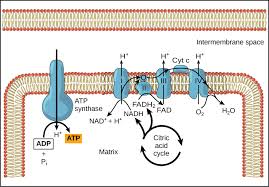
<ul><li><p><span style="background-color: transparent; font-family: &quot;Proxima Nova&quot;, sans-serif;"><span>Occurs along the cristae in the inner membrane of mitochondria</span></span></p></li><li><p><span style="background-color: transparent; font-family: &quot;Proxima Nova&quot;, sans-serif;"><span>Produces </span><strong><span>26-28 ATP</span></strong></span></p></li><li><p>2 FADH<sub>2</sub> and 10 NADH molecules produced in glycolysis and the Krebs Cycle, donate high-energy electrons to energy carrier molecules</p></li><li><p><span style="background-color: transparent; font-family: &quot;Proxima Nova&quot;, sans-serif;"><span>H</span><sup><span>+</span></sup><span> ions pumped across inner mitochondrial membrane to the intermembrane space as the electrons pass from one carrier to another to create an H</span><sup><span>+</span></sup><span> gradient</span></span></p></li><li><p><span style="background-color: transparent; font-family: &quot;Proxima Nova&quot;, sans-serif;"><span>At the end, H</span><sup><span>+</span></sup><span> diffuses down the gradient and through the ATP synthase (ADP → ATP) to the matrix, where they transfer their energy to ATP (chemiosmosis)</span></span></p></li><li><p><span style="background-color: transparent; font-family: &quot;Proxima Nova&quot;, sans-serif;"><span>Oxygen is the final electron acceptor in the form of water</span></span></p></li></ul><p></p>
53
New cards

Chemiosmosis

The movement/diffusion of ions (H+) across a selectively permeable membrane, down their electrochemical gradient

54
New cards

Chemiosmotic Theory

Explains the function of ETCs and how the transfer of electrons down an electron transport system through a series of oxidation-reduction reactions releases energy. The energy allows certain carriers in the chain to transport H+/protons across a membrane.
<p>Explains the function of ETCs and how the transfer of electrons down an electron transport system through a series of oxidation-reduction reactions releases energy. The energy allows certain carriers in the chain to transport H<sup>+</sup>/protons across a membrane.</p>
55
New cards

Oxidative Phosphorylation

A metabolic pathway that uses energy released by the oxidation of nutrients to produce adenosine triphosphate (ATP)

56
New cards

H+

H → e- + H+

57
New cards

ATP synthase (cellular resp)

As the H+ ions pass through the enzyme, part of the enzyme rotates. This causes the other part of the enzyme to shift into its active form so that ADP and P can fit at the active site and be joined to make ATP.

58
New cards

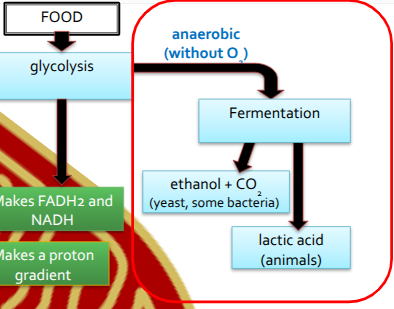
Fermentation

When glycolysis takes place without oxygen (anaerobic)

59
New cards

Fermentation is shown in two parts

Lactic Acid & Alcohol Fermentation
<p>Lactic Acid &amp; Alcohol Fermentation</p>
60
New cards

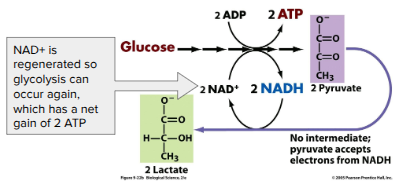
Lactic Acid Fermentation

  • (Glucose during glycolysis) → Pyruvate → Lactate

  • Ex. fungi, bacteria, human muscle cells

  • Used to make cheese, yogurt, acetone, methanol

  • Note: Lactate build-up does NOT causes muscle fatigue and pain (old idea)

  • Once oxygen is available, lactate is converted back to pyruvate by the liver
<ul><li><p><span style="background-color: transparent; font-family: &quot;Proxima Nova&quot;, sans-serif;"><span>(Glucose during glycolysis) → Pyruvate → Lactate</span></span></p></li><li><p><span style="background-color: transparent; font-family: &quot;Proxima Nova&quot;, sans-serif;"><span>Ex. fungi, bacteria, human muscle cells</span></span></p></li><li><p><span style="background-color: transparent; font-family: &quot;Proxima Nova&quot;, sans-serif;"><span>Used to make cheese, yogurt, acetone, methanol</span></span></p></li><li><p><span style="background-color: transparent; font-family: &quot;Proxima Nova&quot;, sans-serif;"><span>Note: Lactate build-up does NOT causes muscle fatigue and pain (old idea)</span></span></p></li><li><p><span style="background-color: transparent; font-family: &quot;Proxima Nova&quot;, sans-serif;"><span>Once oxygen is available, lactate is converted back to pyruvate by the liver</span></span></p></li></ul><p></p>
61
New cards

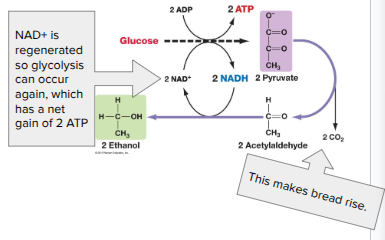
Alcohol Fermentation

  • (Glucose during glycolysis) → Pyruvate → Ethanol + CO2

  • Ex. bacteria, yeast

  • Used in brewing, winemaking, baking

  • Over time, the ethanol that is produced by this process kills the yeast and bacteria that do it
<ul><li><p><span style="background-color: transparent;"><span>(Glucose during glycolysis) → </span></span><span style="background-color: transparent; font-family: &quot;Proxima Nova&quot;, sans-serif;"><span>Pyruvate → Ethanol + CO</span><sub><span>2</span></sub></span></p></li><li><p><span style="background-color: transparent; font-family: &quot;Proxima Nova&quot;, sans-serif;"><span>Ex. bacteria, yeast</span></span></p></li><li><p><span style="background-color: transparent; font-family: &quot;Proxima Nova&quot;, sans-serif;"><span>Used in brewing, winemaking, baking</span></span></p></li><li><p><span style="background-color: transparent; font-family: &quot;Proxima Nova&quot;, sans-serif;"><span>Over time, the ethanol that is produced by this process kills the yeast and bacteria that do it</span></span></p></li></ul><p></p>
62
New cards

Metabolism

The set of chemical reactions that occur in the body’s cells to convert food into energy. Includes anabolic and catabolic reactions.

63
New cards

Anabolic Reactions

Forming bonds between molecules

  • Uses dehydration synthesis

  • Used to make macromolecules

64
New cards

Catabolic Reactions

Breaking bonds between molecules

  • Uses hydrolysis reactions

  • Used in digestion

65
New cards

Metabolic Pathways

Chemical reactions of life that are organized in complex pathways.

  • Divide chemical reactions into small steps

  • Increase efficiency, control, & options for intermediate branching points

66
New cards

ΔG

Change in free energy/ability to do work

67
New cards

Activation Energy

An initial input of energy required to break down large molecules

  • Large biomolecules are stable, so they must absorb energy for the bonds to be broken

68
New cards

Catalysts

Help reduce the amount of energy needed to start a reaction (activation energy)

69
New cards

Enzymes

Biiological catalysts

  • Generally made of proteins or RNA

  • Increases rate of reaction & reduces activation energy

  • Required for most biological reactions

  • Highly specific

70
New cards

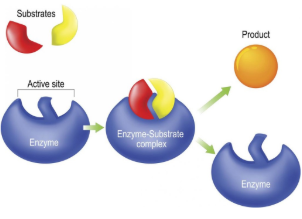
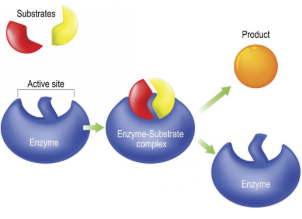
Substrate

Reactant that binds to an enzyme
<p>Reactant that binds to an enzyme</p>
71
New cards

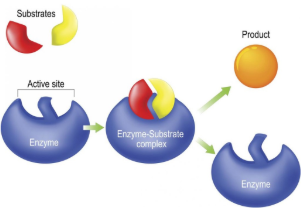
Enzyme-Substrate Complex

Temporary association when a substrate is bound to an enzyme
<p>Temporary association when a substrate is bound to an enzyme</p>
72
New cards

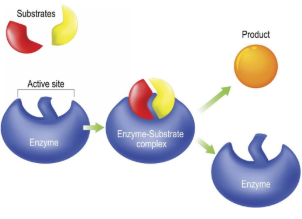
Active Site

Enzyme’s catalytic site; substrate fits into active site
<p>Enzyme’s catalytic site; substrate fits into active site</p>
73
New cards

Product

The end result of a reaction

<p>The end result of a reaction</p>
74
New cards

Properties of Enzymes: Reaction Specific

Each enzyme works with a specific substrate

75
New cards

Properties of Enzymes: Not consumed in reaction

Enzymes are unaffected by the reaction & can be used thousands of time per second

76
New cards

Properties of Enzymes: Affected by cellular conditions

Any condition that affects protein structure affects enzymes (pH, temp, etc)

77
New cards

Enzymes end in the suffix “_____”

-ase

78
New cards

Induced-Fit

Active site conforms to its substrate’s shape, bringing chemical groups in position to catalyze reactions.

<p>Active site conforms to its substrate’s shape, bringing chemical groups in position to catalyze reactions.</p>
79
New cards

Enzymes in Synthesis Reactions

  • Active site orients substrates in correct position for reaction

  • Enzyme brings substrate closer together

80
New cards

Enzymes in Digestion Reactions

  • Active site binds substrate & puts stress on bonds that must be broken, making it easier to separate molecules

81
New cards

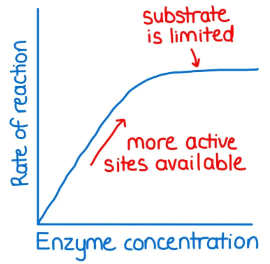
Enzyme concentration ______ (increases/decreases) reaction rate until all substrates are reacted.

Increases
<p>Increases</p>
82
New cards

Substrate concentration ______ (increases/decreases) reaction rate until all enzymes are saturated.

Increases
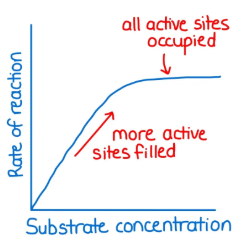
<p>Increases</p>
83
New cards
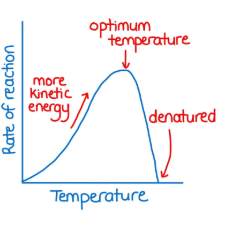
<p>Above optimal temperature impact on enzyme activity</p>

Above optimal temperature impact on enzyme activity

Activity decreases until the enzyme is denatured
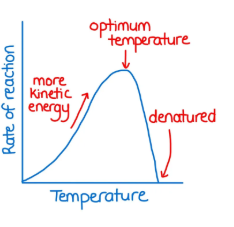
84
New cards
<p>Optimal temperature impact on enzyme activity</p>

Optimal temperature impact on enzyme activity

Maximum rate
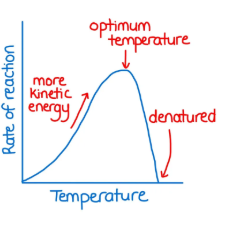
85
New cards
<p>Below optimal temperature impact on enzyme activity</p>

Below optimal temperature impact on enzyme activity

Molecules move slower (fewer collisions between substrate and enzyme) until enzyme becomes inactive or denatured

86
New cards

Above optimal pH impact on enzyme activity

Rate decreases; lower [H+] interferes with enzyme shape

<p>Rate decreases; lower [H+] interferes with enzyme shape</p>
87
New cards

Optimal pH impact on enzyme activity

Maximum rate
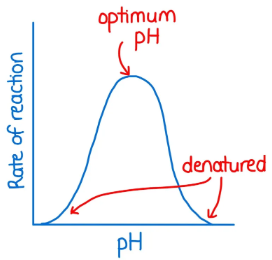
<p>Maximum rate</p>
88
New cards

Below optimal pH impact on enzyme activity

Rate decreases; higher [H+] interferes with enzyme shape (denatures)

<p>Rate decreases; higher [H+] interferes with enzyme shape (denatures)</p>
89
New cards

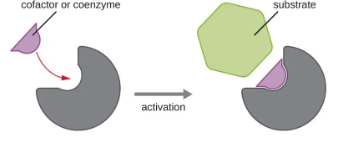
Activators

Increases enzyme’s activity - coenzymes & cofactors

  • changes enzyme’s shape so it works faster

  • helps enzyme bind to substrate

<p>Increases enzyme’s activity - coenzymes &amp; cofactors</p><ul><li><p>changes enzyme’s shape so it works faster</p></li><li><p>helps enzyme bind to substrate</p></li></ul><p></p>
90
New cards

Coenzymes

Non-protein, organic molecules that bind to the enzyme near the active site

91
New cards

Cofactors

Non-protein, small inorganic compounds & ions

92
New cards

Inhibitors

Decrease or block the activity of enzymes, slowing down reaction rates - competitive, noncompetitive/allosteric, & feedback inhibition
<p>Decrease or block the activity of enzymes, slowing down reaction rates - competitive, noncompetitive/allosteric, &amp; feedback inhibition</p>
93
New cards

Competitve Inhibitor

  • Inhibitor & substrate “compete” for active site

  • Can overcome inhibition by increasing substrate concentration so it out-competes the inhibitor for the active site on the enzyme
<ul><li><p>Inhibitor &amp; substrate “compete” for active site</p></li><li><p>Can overcome inhibition by increasing substrate concentration so it out-competes the inhibitor for the active site on the enzyme</p></li></ul><p></p>
94
New cards

Non-Competitive Inhibitor

  • Binds to site other than active site (allosteric site)

    • This causes conformational change that disrupts enzyme function even though substrate still binds
<ul><li><p>Binds to site other than active site (allosteric site)</p><ul><li><p>This causes conformational change that disrupts enzyme function even though substrate still binds</p></li></ul></li></ul><p></p>
95
New cards

Irreversible Inhibition

Inhibitor permanently binds to enzyme

96
New cards

Allosteric Regulation

  • Conformational changes by regulatory molecules 

    • Inhibitors - keeps enzyme in inactive form

    • Activators - keeps enzyme in active form
<ul><li><p><span style="background-color: transparent;"><span>Conformational changes by regulatory molecules&nbsp;</span></span></p><ul><li><p><span><span>Inhibitors </span></span><span style="background-color: transparent;"><span>- keeps enzyme in inactive form</span></span></p></li><li><p><span><span>Activators </span></span><span style="background-color: transparent;"><span>- keeps enzyme in active form</span></span></p></li></ul></li></ul><p></p>
97
New cards

Feedback Inhibition

  • Each product becomes the reactant for the next step.

  • When enough final product has been made, the cell needs a way to slow or stop production to avoid wasting energy.

  • The final product acts as an allosteric inhibitor of an enzyme early in the pathway.
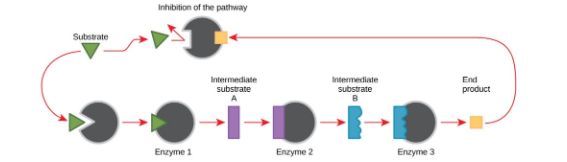
<ul><li><p><span style="background-color: transparent;"><span>Each product becomes the reactant for the next step.</span></span></p></li><li><p><span style="background-color: transparent;"><span>When enough final product has been made, the cell needs a way to slow or stop production to avoid wasting energy.</span></span></p></li><li><p><span style="background-color: transparent;"><span>The final product acts as an </span></span><span><span>allosteric inhibitor</span></span><span style="background-color: transparent;"><span> of an enzyme early in the pathway.</span></span></p></li></ul><p></p>
98
New cards

Photosynthesis ETC

99
New cards

Cellular Respiration ETC

Explore top flashcards

AP World Unit 1
Updated 258d ago
flashcards Flashcards (55)
BIO FINAL 7-9
Updated 734d ago
flashcards Flashcards (22)
3k lhp part 11
Updated 140d ago
flashcards Flashcards (84)
Spanish - Lesson 11
Updated 993d ago
flashcards Flashcards (53)
PGN Psi - Class
Updated 69d ago
flashcards Flashcards (34)
AP World Unit 1
Updated 258d ago
flashcards Flashcards (55)
BIO FINAL 7-9
Updated 734d ago
flashcards Flashcards (22)
3k lhp part 11
Updated 140d ago
flashcards Flashcards (84)
Spanish - Lesson 11
Updated 993d ago
flashcards Flashcards (53)
PGN Psi - Class
Updated 69d ago
flashcards Flashcards (34)