Archaic sculptures
 Call Kai
 Learn
Learn Practice Test
 Spaced Repetition
 Match
Match Flashcards
 Knowt Play
1/31

There's no tags or description
Looks like no tags are added yet.
Name | Mastery | Learn | Test | Matching | Spaced | Call with Kai |
|---|
No analytics yet
Send a link to your students to track their progress
32 Terms
What is a Kouros (plural: Kouroi)?
A standing, nude male youth figure, often used as a grave marker or offering.
What is a Kore (plural: Korai)?
A standing, clothed female figure.
What is the "Archaic smile"?
A subtle, unnatural smile found on faces during this period, indicating a transition towards more lifelike expression, peaking around 550–530 B.C.E.
What are the primary characteristics of Kouroi?
Rigid, frontal posture, one foot forward, arms at sides with clenched fists, long hair, and stylized muscularity.
What was the main material for these sculptures?
Marble, although they were originally painted in bright colors.
Early Archaic dates
640-600 BCE
Mid Archaic dates
600-540 BCE
Late Archaic dates
540-470 BCE
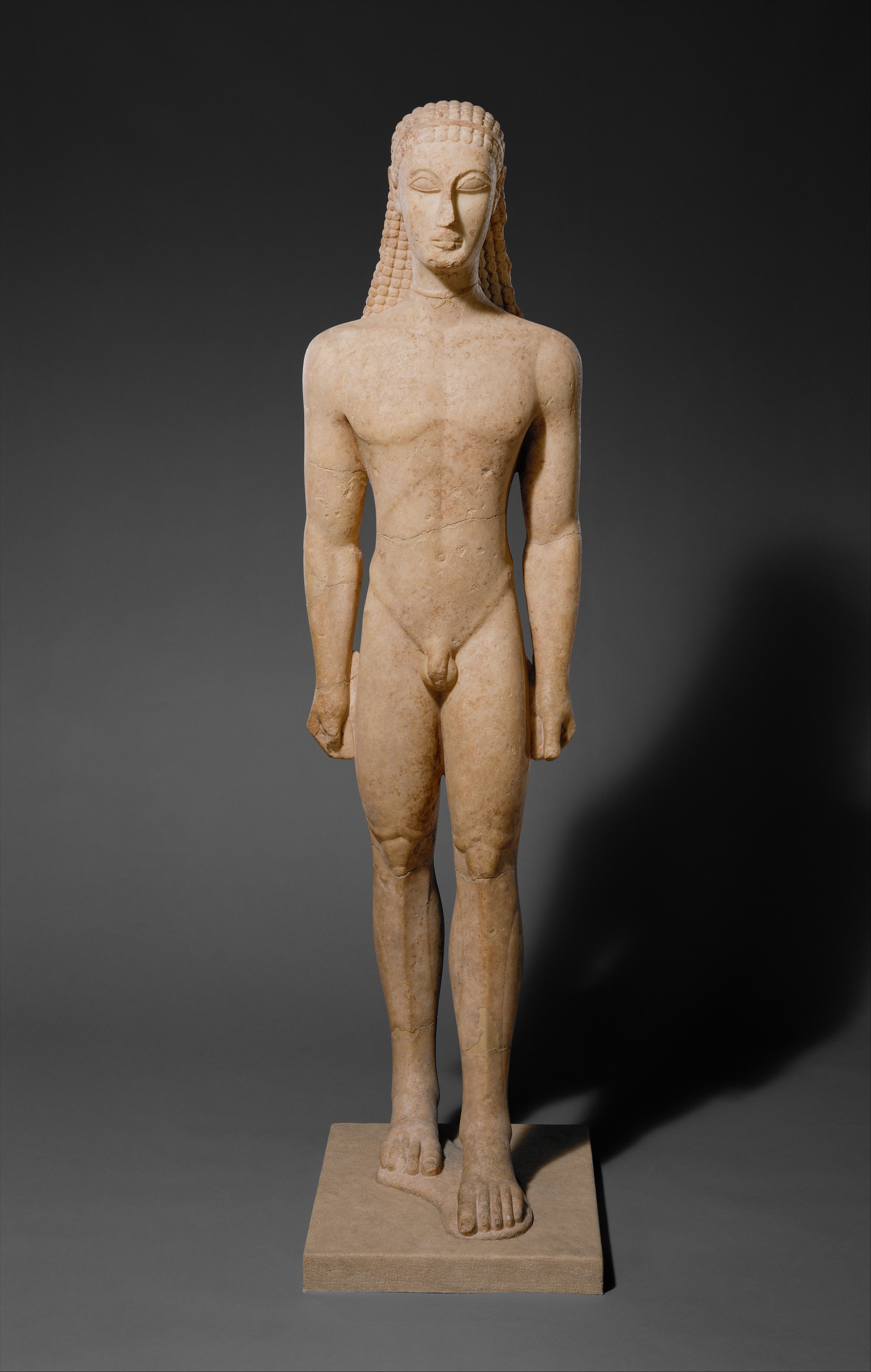
Early Archaic Characteristics (Kouroi)
Very rigid
Triangular torso/eyes
Flat face
Hair in stiff geometric braids
Muscles are Chiseled on
defined through patterns
Emphasis on patterning and symmetry
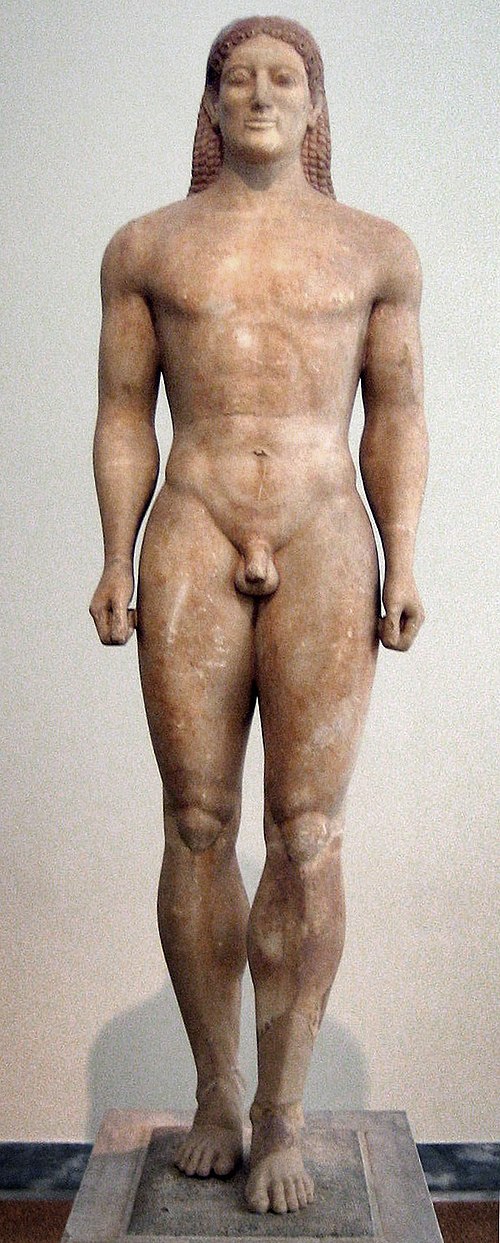
Mid Archaic Characteristics (Kouroi)
More anatomical detail
Archaic smile appears
Muscles more defined
Eyes are not triangles
More naturalistic
Still has the rigid beaded hair
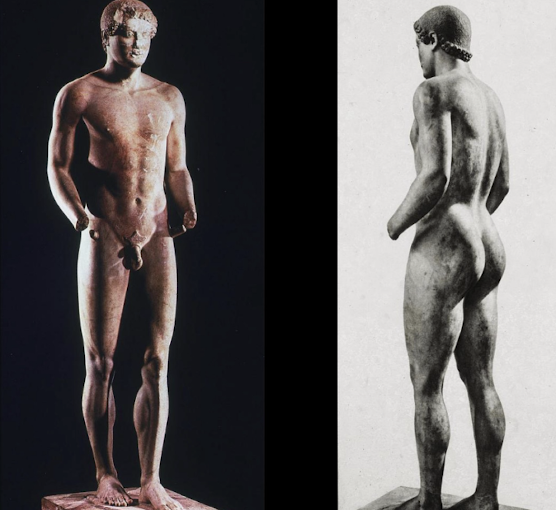
Late Archaic Characteristics (Kouroi)
More naturalistic
Softer/real looking muscles
no longer chiseled on/just a line
Better proportions
No more long hair
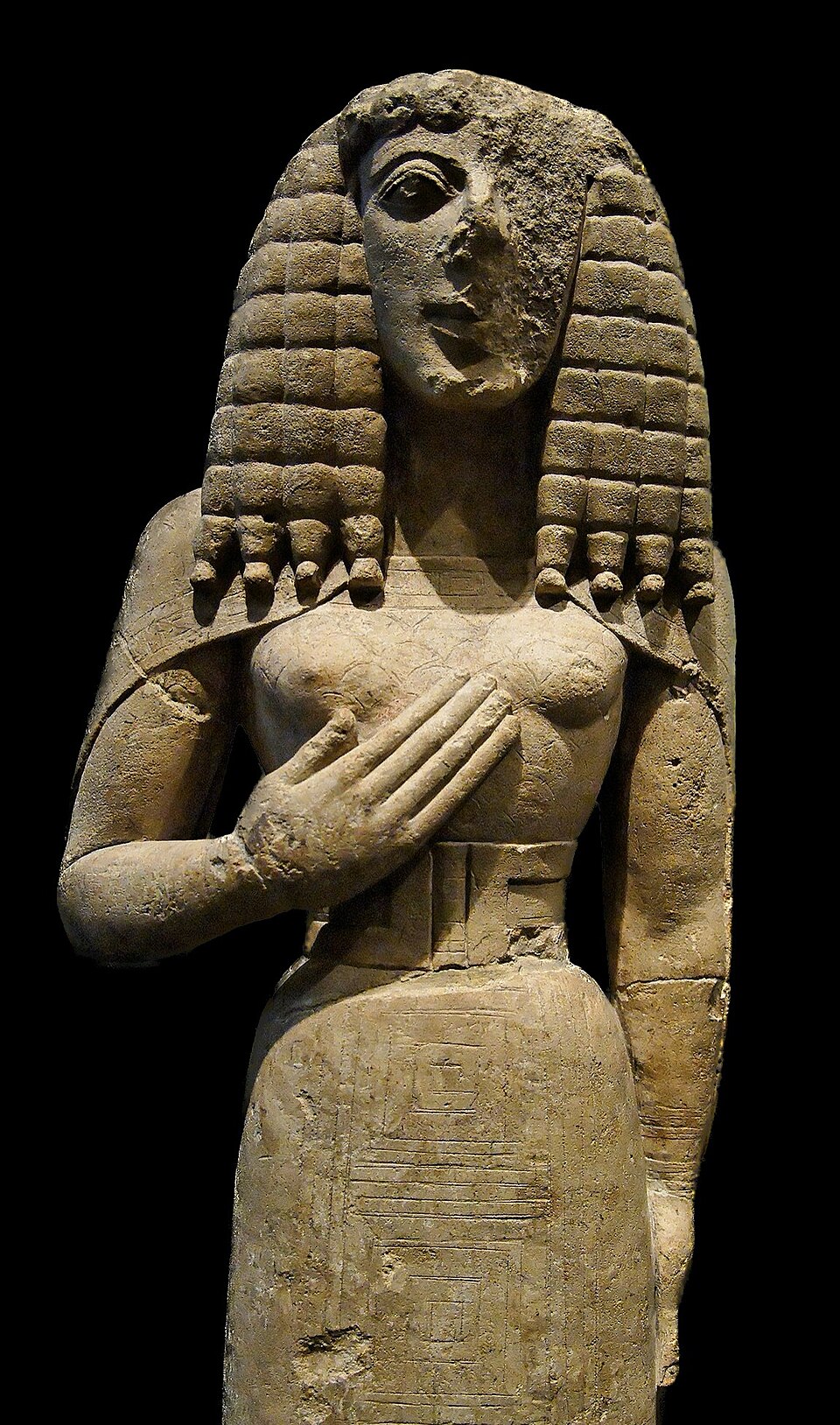
Early Archaic (Kore)
Rigid, block-like
Fully clothed (Minimal Drapery)
Braided hair (looks Egyptian)
Archaic smile
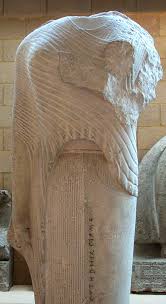
Middle Archaic (Kore)
More relaxed pose
More elaborate hair
Gentle rounded forms
Drapery more natural folds
Often wears peplos
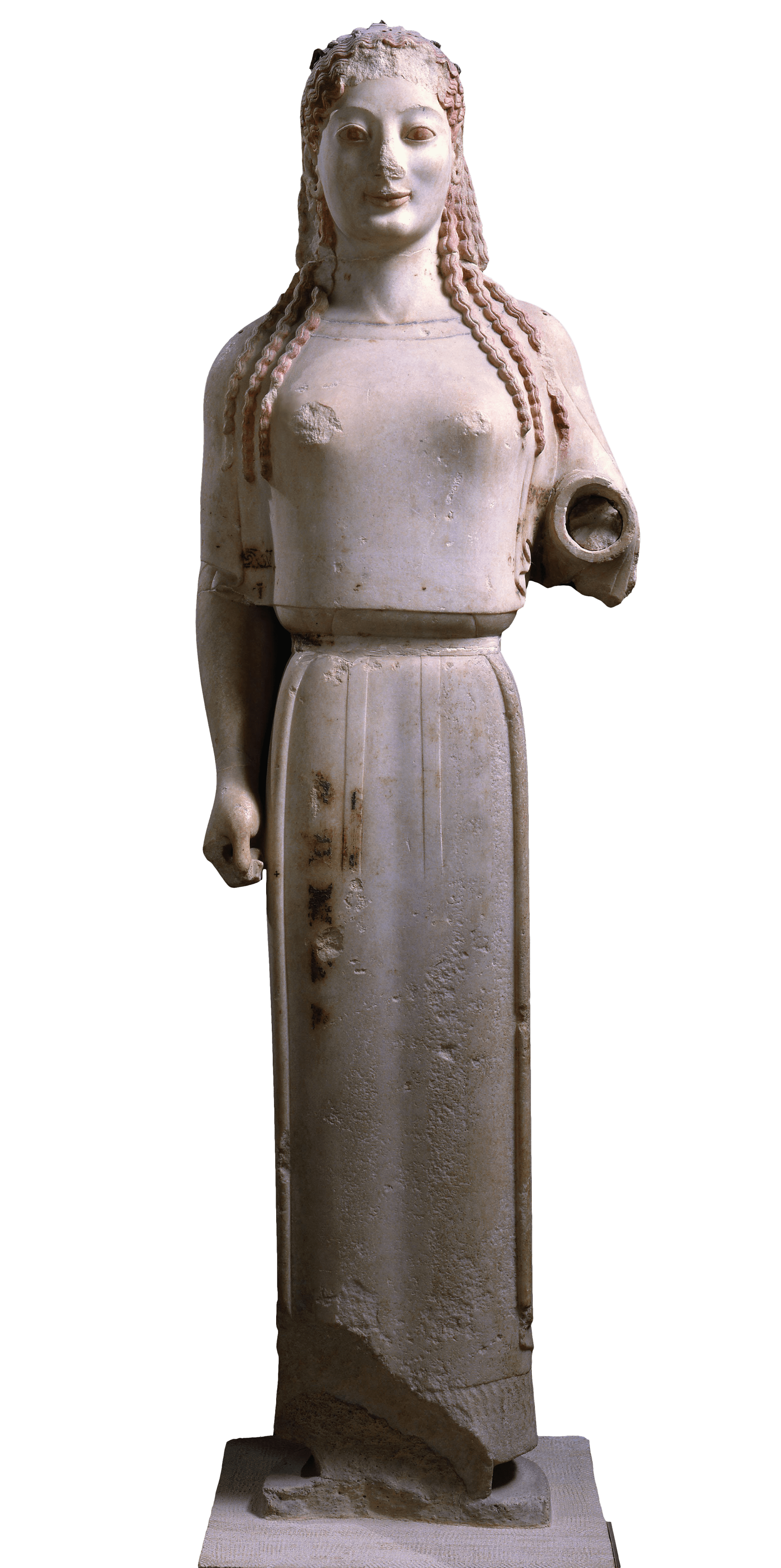
Late Archaic (Kore)
strong Archaic smile
Peplos Kore: heavy woolen doric peplos with simple folds
Antenor Kore: thin Ionian chiton with elaborate catenary
drapery becomes more elaborate
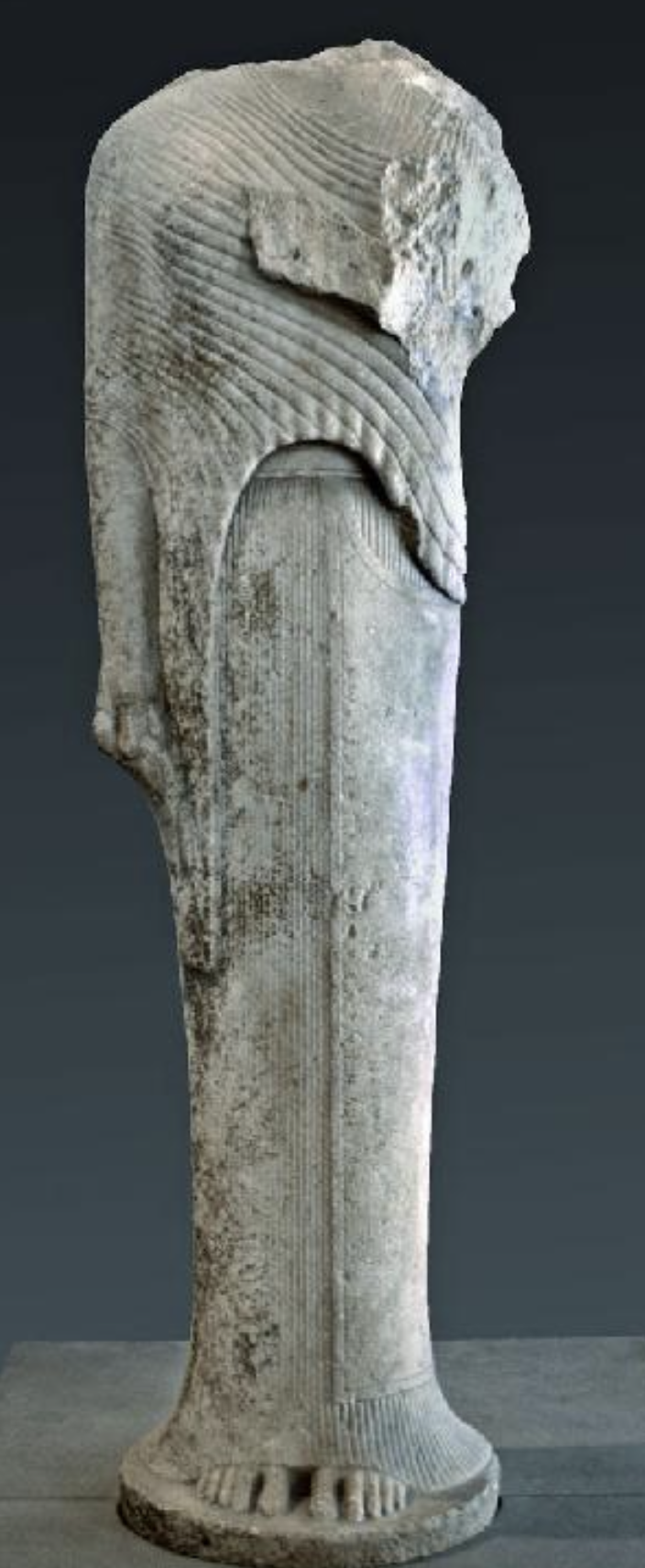
East Aegean Characteristics
Kore stand w/legs pressed together tightly
Right arm by side with epiblema
Bodies appear slender and elongated
Drapery extremely complex
Ionian Korai Typically wear: chiton, himation
Decorative, elegant.
Ornamental sculpture
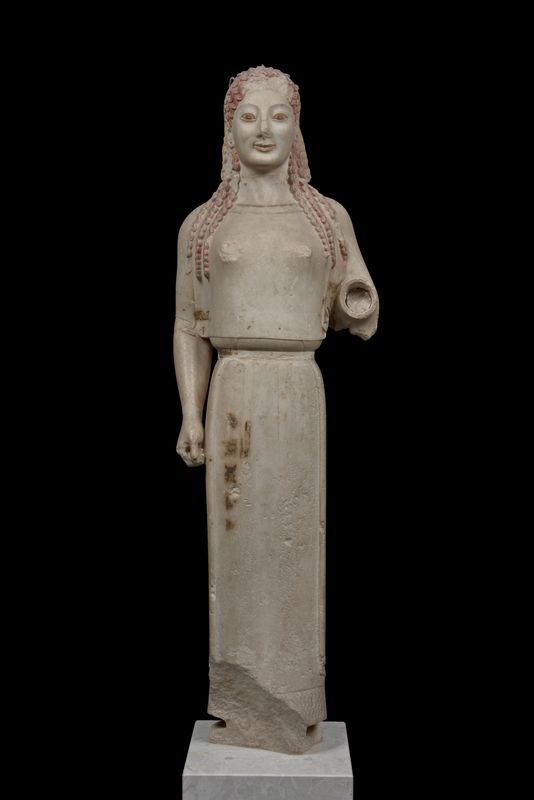
Attic (Athens) Characteristics
Naturalistic anatomy
Patterned Curls
Drapery:
Early: peplos
Ionian Chiton + Himation
Peloponnesian/Doric Mainland Style Characteristics
Very strong emphasis on musculature
Heavy, powerful bodies
Broad shoulders
Thick legs
Less elaborate folds
Powerful
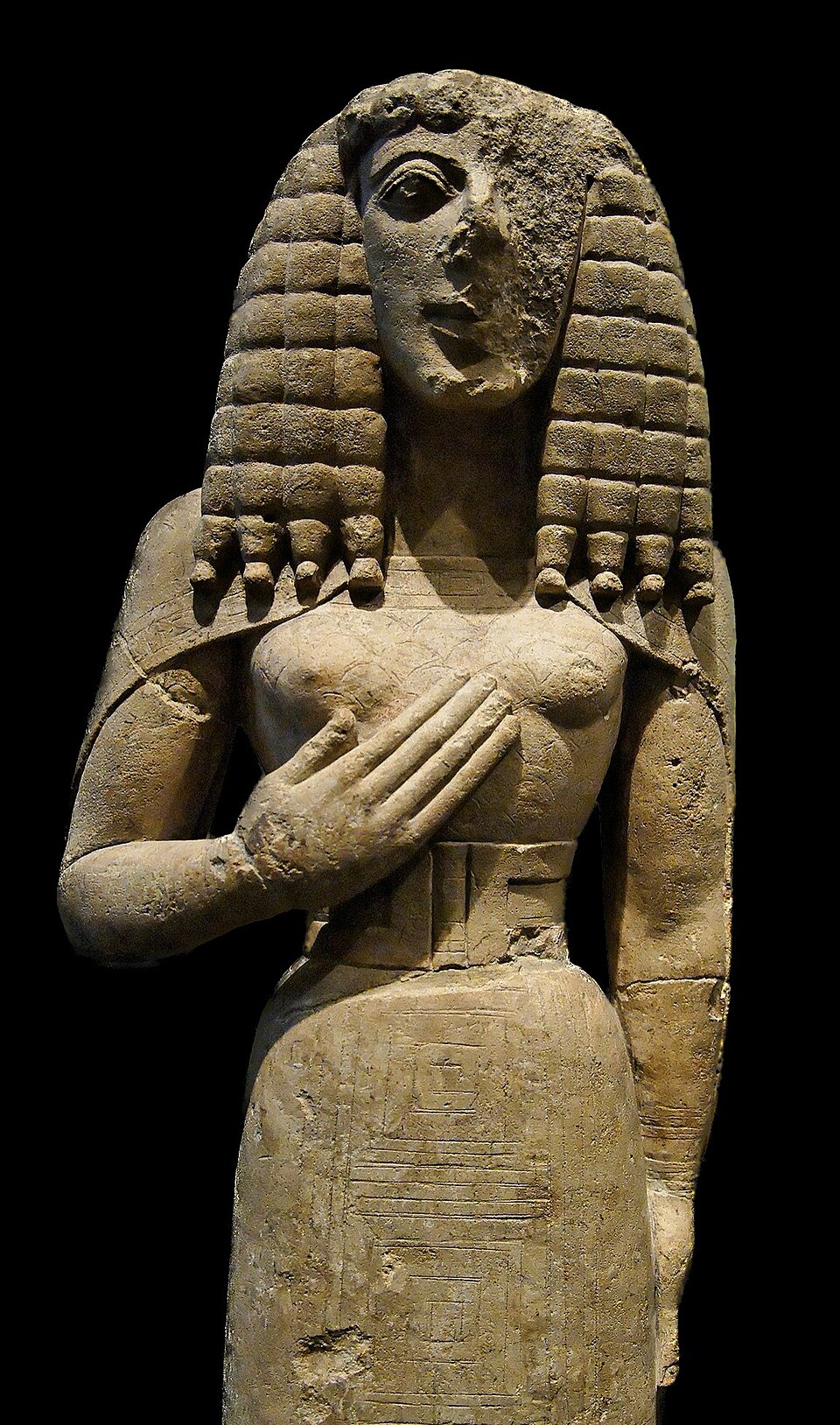
Cycladic Island (Naxos/Paros) Characteristics
Very geometric
Drapery as flat patterns
Very patterned and geometric
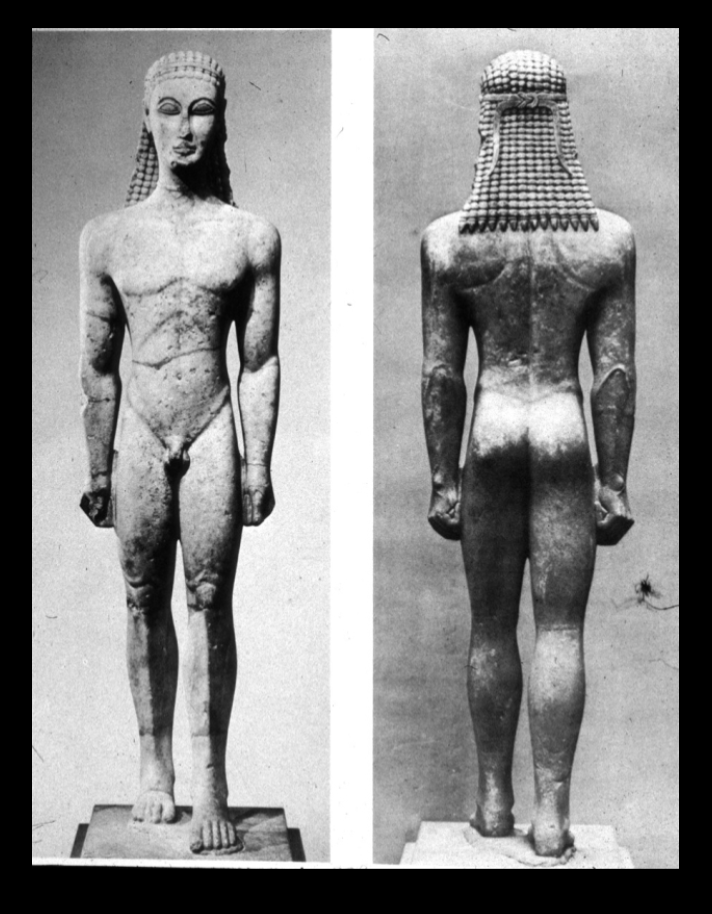
What Kouros is this?
New York Kouros
Attic. The earliest major kouros; highly schematic and formulaic.
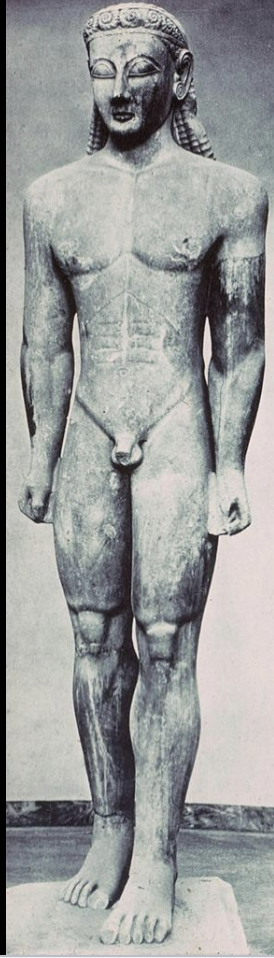
What Kouros is this?
Sounion Kourous
580 BCE. Island of Poseidon. Naxos. Early Archaic
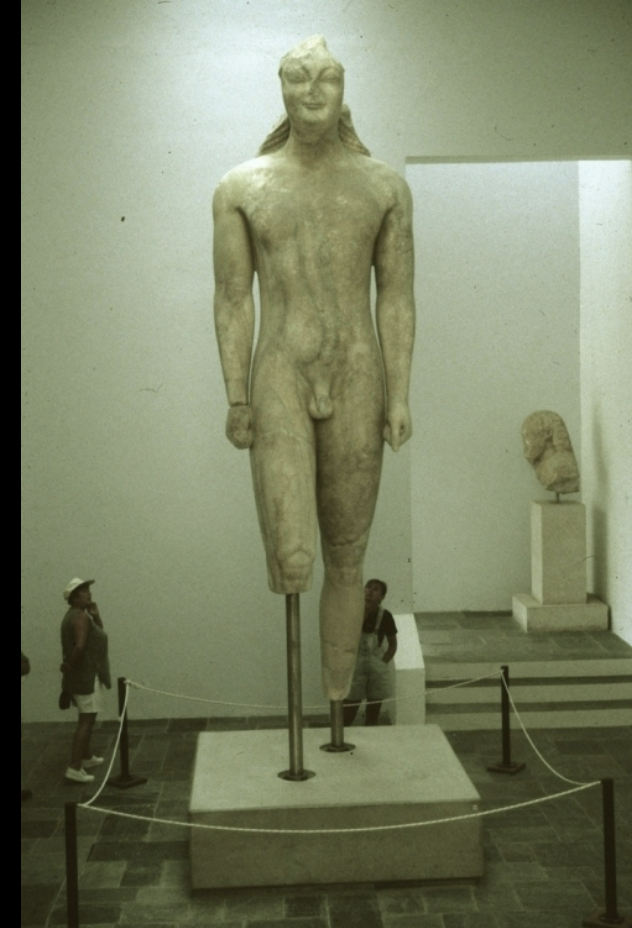
What Kouros is this?
Isches’ Kourous from Samos. Early Archaic.
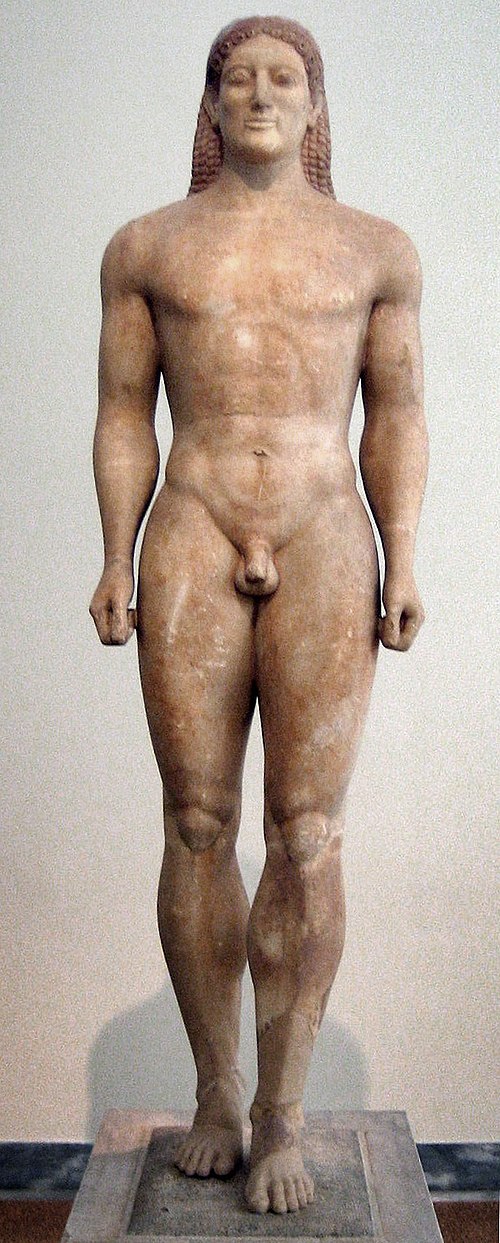
What Kouros is this?
Anavyssos Kouros.
c. 530 BCE. Mid Archaic.
Attic. Notably more naturalistic musculature.
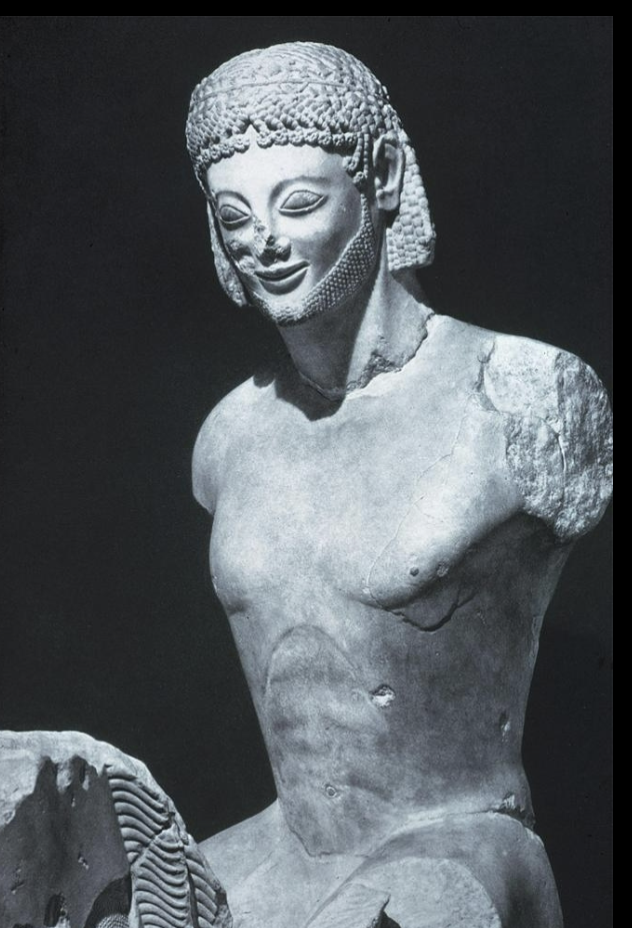
What Kouros is this?
Rampin Horseman. Athenian Acropolis. Late Archaic
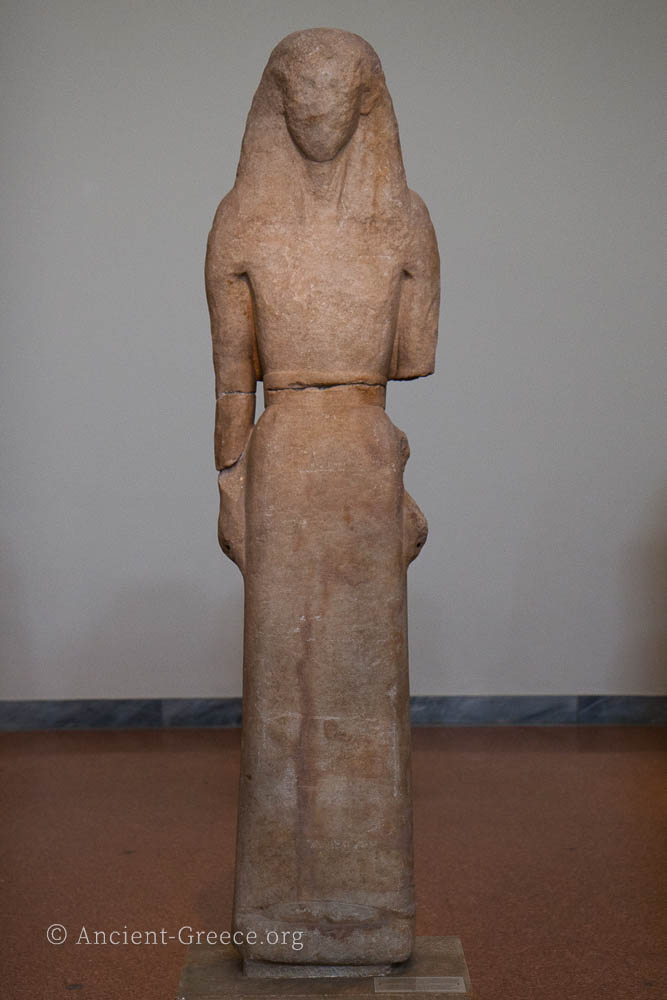
What Kore is this?
Kore dedicated by
Nikandre to Artemis on
Delos.
Early Archaic.
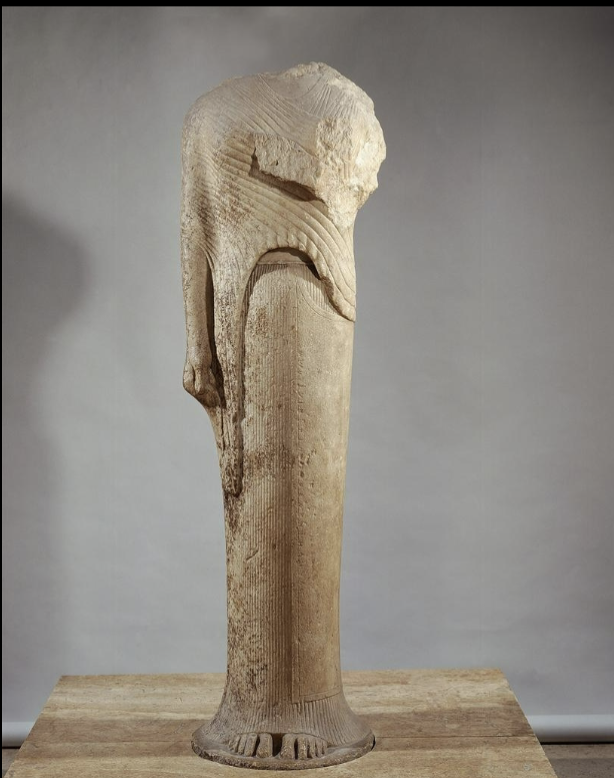
What Kore is this?
Samos Kore.
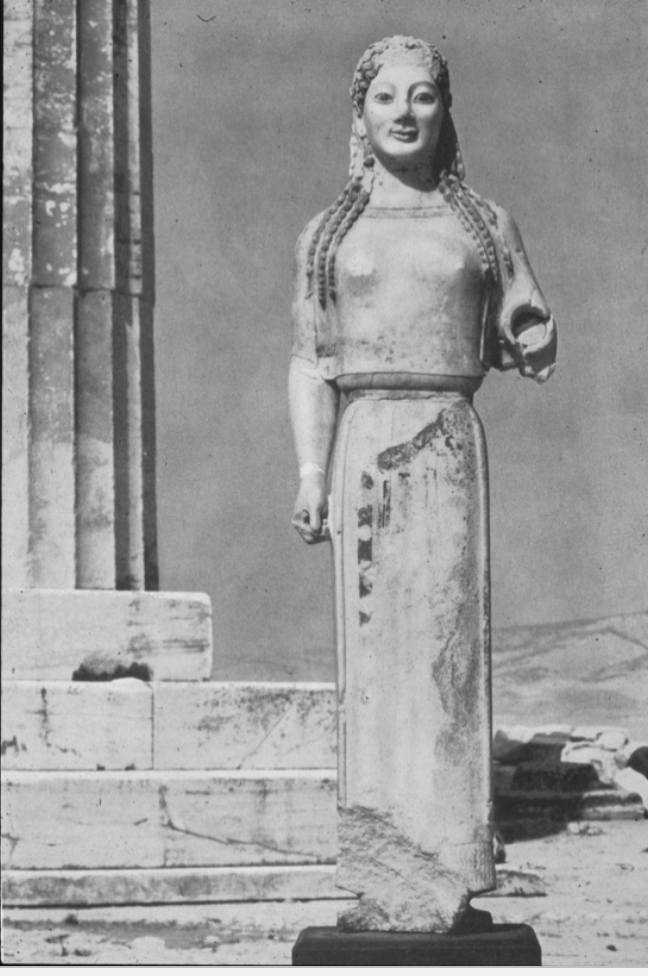
What Kore is this?
Peplos kore from the Athenian Acropolis. Attic.
Late Archaic.
Daedalic
(c. 650–600 BCE) represents the early Orientalizing period, characterized by strict, rigid, and frontal figures, often produced in Crete.
Ionic
(mid-6th century BCE) represents the subsequent Archaic period, originating in Ionia (Asia Minor), and is characterized by greater elegance, fluidity, and attention to drapery and form. East Greece.
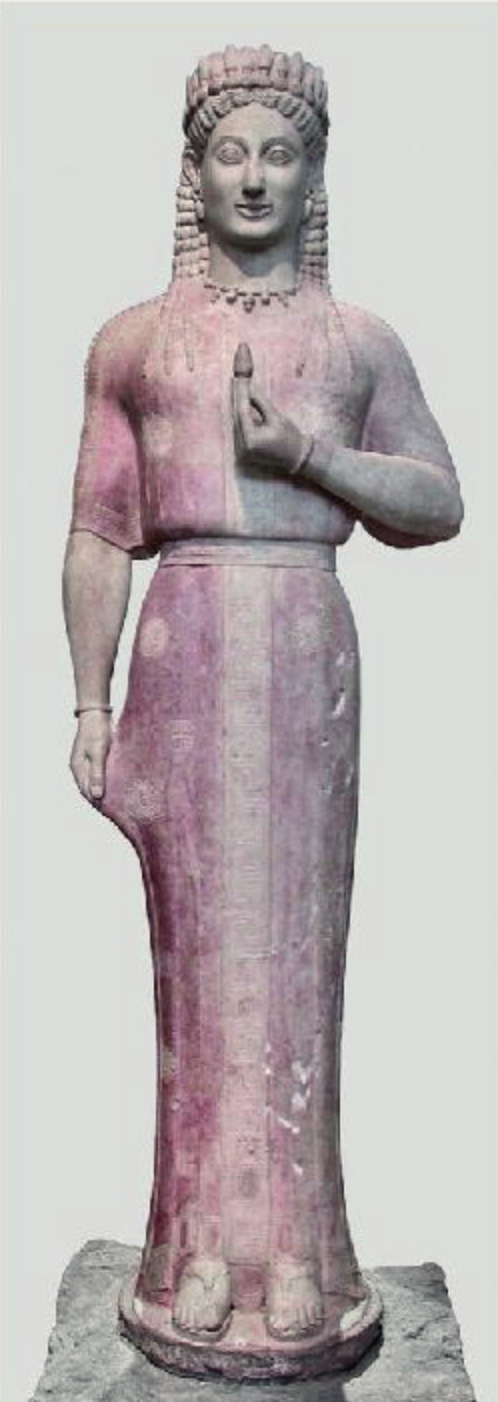
Attic Sculpture bodily differences (Kore)
grasp their garments with their left hands, thus creating a parabola of folds in thin chitons that consequently adhere tightly to the lower body”
right arms extended forward, they appear to make or receive an offering (they sometimes carry objects in their upraised hands, such as fruits, flowers, and small animals).”
Longer faces, less malleable features, smaller mouths, rounded bulbous eyes, sharply defined eyebrows.
Samos Sculpture bodily differences (Kore)
“kore stands with her legs pressed together tightly, and her right arm is by her side”
“right hand grasps the epiblema worn over the back of her himation, under which she wears a chiton cinched at the waist”
closed tapering cylinder
“small, elongated eyes, thin-lipped, wide mouths, and delicately articulated eyebrows”
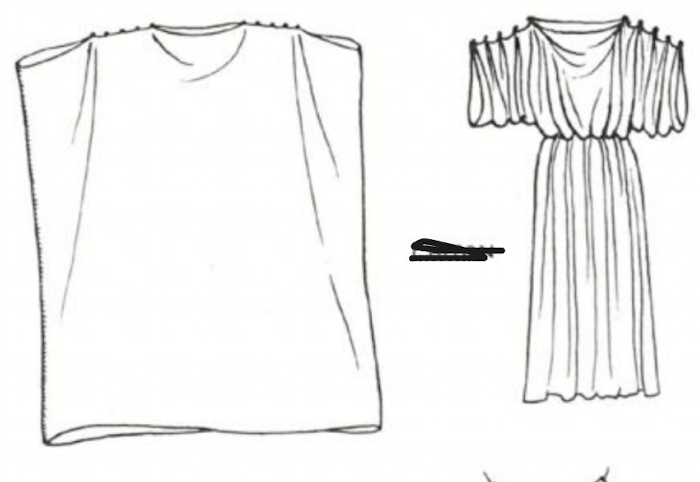
Chiton
“ a light, cotton, pleated garment that adheres to, and reveals, the form beneath”
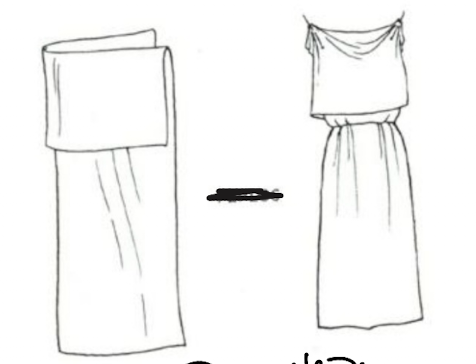
Peplos
Commonly worn by Attic Sculptures. tunic.

