BIOSCI 107
 Call Kai
 Learn
Learn Practice Test
 Spaced Repetition
 Match
Match Flashcards
 Knowt Play
1/146

There's no tags or description
Looks like no tags are added yet.
Name | Mastery | Learn | Test | Matching | Spaced | Call with Kai |
|---|
No analytics yet
Send a link to your students to track their progress
147 Terms
Epidermis
Part of the integumentary system, top layer of the skin
Dermis
Part of the integumentary system, includes sebaceous glands, hair follicles, hairs, sweat glands, nails, and sensory receptors. Middle layer of skin
Hypodermis
Fat stores and attatches the skin to deeper layers, bottom layer of the skin
Sebaceous glands
lubricates hair shaft and epidermis, part of the dermis in the integumentary system
Hair follicles
Sensation from innervation, part of the dermis in the integumentary system
Hairs
Offers protection, part of the Dermis within the integumentary system
Skeletal Muscles
Part of the Muscular system, responsible for all skeletal movement
Axial Muscles
Part of the skeletal system, provides support and positioning of the body and axial skeleton
Appendicular muscles
Part of the Muscular system, helps to support and move limbs
Tendon
Part of the Muscular system, a fibrous, rope-like connection between muscle and bone
Aponeuroses
Part of the Muscular system, a sheet like muscle to muscle (or muscle to bone) connection
Name the 6 levels of structural organisation in order
Chemical (atoms)
Cellular (muscle cells)
Tissue (muscle)
Organ
System
Organismal
Chemical Level
Made up of atoms C, H, O, N, P, and join to form molecules
Cellular level
Basic structural and functional units of the body, eg muscle cells
Tissue level
a group of cells that work together to form a particular function.
What are the four major classes of tissue?
Epithelial, connective, muscle, nerve
Organ level
Organs are structures with specific functions made from two or more types of tissue
System
Consists of related organs with a common function, eg cardiovasular
Organismal
All the parts of the body function together to constitute a living organism
What is the skeletal system made up of?
Bones, joints, cartilage and ligaments
What is cartilage?
Cartilage is bone interfacing, and has two types: hylaine (ribs, joints) and fibrous (discs). Part of skeletal system.
Axial Skeleton
Protects bran and spinal cord, sense organs and soft tissue of the thorax, as well as supporting body weight over lower limbs. Part of skeletal system.
Appendicular skeleton
Consists of limb bones, supporting cartilage and ligaments. Provides internal support and positioning of the external limbs. Enables muscles to move the axial skeleton. Skeletal system.
Bone
Stores minerals and bone marrow, part of skeletal system
Bone Marrow
Red- red blood cell production (flat bones)
Yellow- Stores of fat cells (found in medullary cavity of long bones, gained with age)
Central Nervous System (CNS)
Control Center, short term control over other systems, part of the nervous system.
Brain
controls voluntary and involuntary activities, part of the nervous system
Spinal Cord
Relays information to and from the brain, performs less complex integrative activities (Reflex arc), part of the nervous system
Special Senses
Sensory input to brain relating to hearing, smell and taste and equilibrium are Peripheral nervous system but processing is central nervous system.
Peripheral nervous system
Links the central nervous system with other systems and sense organs (taste etc.)
What are the five main components of the nervous system?
Central nervous system
Bran
spinal cord
Special senses
Peripheral nervous system
Pineal Gland
Day night ryhtym ( melatonin), part of the endocrine system.
Hypothalamus / pituitary gland
Controls many other endocrine glands, regulates growth and fluid balance. Endocrine system.
Thyroid gland
Metabolic rate (thyroxine). Endocrine system.
Parathyroid gland
calcium levels. Endocrine system.
Thymus
Maturation of lymphocytes. Endocrine system.
Adrenal Glands
Water and mineral balance, tissue metabolism (cortisol), cardiovascular and resipratory function (adrenaline). Endocrine system.
Kidneys
Red blood cell production, blood pressure up, calcium levels. endocrine system.
Pancreas
Glucose control. endocrine system.
Gonads
Sexual characteristics and reproduction. endocrine system.
Anterior pituitary gland
realeases growth hormone to grow bones and muscles, too much GH from childhood causes Gigantism, as an adult causes Acromegaly.
IGF
Insulin like growth factor
Lymphatic vessls
contractile vessles, carry lymph fluid (water and protein) and lymph ocytes from perihpheral tissues to veins of cardiovascular system. Lymphatic and immune system.
Lymphatic fluid
Lipids ( fats and fatty acids) from gut and fluid from tissues. Lymphatic and immune system.
B cells and T nodes
Cells that carry out immune responses. Lymphatic and immune system.
Lymph nodes ( including tonsils)
Monitor composition of lymph defence, engulf pathogens, stimulate immune response. Lymphatic and immune system.
Spleen
Monitors circulation blood cells, engulfs pathogens, recycle red blood cells, produces immune response. Lymphatic and immune system.
Thymus
Controls development and maintenance of the T cell lymphocytes. Lymphatic and immune system.
Heart
Propels blood and maintains blood pressure. Cardiovascular system.
Blood Vessels
Arteries, capillaries and veins
Arteries
Conduit from heart to capillaries. Cardiovascular system.
Capillaries
Diffusion between blood and interstitial fluid. Cardiovascular system.
Veins
Return blood from capillaries to heart. Cardiovascular system.
Blood
Transport of oxygen, carbon dioxide, nutrients and hormones. Removes waste, regulates temperature, defense against illness (immune cells), Acid Base balance (-HCO3). Cardiovascular system.
Nasal Cavity and paranasal sinuses
Filter, warm and humidify air and detect smells. Respiratory system.
Pharynx
Conducts air to Larynx. Respiratory system. Solid foods and liquids to the Oesophagus. Digestive System.
Larynx
Protects opening to trachea, vocal cords for vocalisation. Respiratory system.
Trachea
Conducts air (cartilage keeps it open).Respiratory system.
Bronchi
Conducts air between trachea and lungs. Respiratory system.
Lungs
Air movement, gas exchange of oxygen and carbon dioxide in alveoli, acid base control. Respiratory system.
Diaphragm
Muscle (skeletal) for chest and air movement. Respiratory system.
Salivary Glands
Buffers and lubricates, enzymes that begin digestion. Digestive System.
Oesophagus
Food to stomach. Digestive system.
Stomach
releases acid, enzymes and hormones. Digestive system.
Small Intestine
Enzymes for digestion, Buffers and hormones, absorbs nutrients
Liver
releases bile, regulates nutrients in the blood
Gallbladder
Concentrates bile
Pancreas
Digestive enzymes, buffers, endocrine cells
Large intestine and anus
pee, poop
Kidneys
Makes and concentrates pee, monitors ph and ions, blood pressure and volume. Urinary system
Ureters
Conducts pee to bladder
Bladder
Stores your pee
Urethra
Moves urine to pee
EPO
a glycoprotein hormine made by interstitial fibroblasts in kidneys, which promotes erythopoiesis in bone marrow
Howto make blood have a higher capacity for carrying oxygen?
When there is more activity from RBC stem cells, more RBC is produced, making blood able to carry more oxygen
Testes
Makes sperm and hormones. Male reproductive system.
Eepdidymis
Sperm maturation. Male reproductive system.
Ductus deferens
Sperm from epididymis. Male reproductive system.
Seminal Glands and prostate glands
Seminal fluid. Male reproductive system.
Urethra
Sperm out of body. Male reproductive system.
Penis
Reproduction and thermal. Male reproductive system.
Scrotum
Controls testes. Male reproductive system.
Ovaries
Makes Oocytes and hormones. Female reproductive system.
Uterine tubes (fallopian)
Delivers oocytes, place of fertilisation. Female reproductive system.
Uterus
Where embryo develops. Female reproductive system.
Vagina and external genitalia
Birth canal, lubrication, sperm reception. Female reproductive system.
Mammary glands
Milk for baby, Female reproductive system but also is modified sweat gland, so part of integumentary system too.
Where does epithelial tissue cover?
The surface of the body, lines the sides of hollow organs, cavities and ducts, makes up the bodies glands.
What are the key functions of epithelial tissue?
Selective barriers (limit or aid in a transfer), Secretory (onto a free surface), Protective (mostly from abrasions, scratches etc)
What is the general structure of epithelium cells?
Arranged in a continuous sheet, as either a single layer or multiple layers of cells, held together by junctions.
Whate are the 5 kinds of junctions between epithelium cells?
Tight Junction, adherens junction, gap junctions, Desmosomes, Hemidesmosomes.
What are the three surfaces of epithelial cells?
Apical / free surface, Lateral, Basal / attatched surface
What bridges the gap for each junction?
Tight- strands of transmembrane proteins
Adherens, Desomosome and hemidesmosome- plaque
Gap junction- Connexons
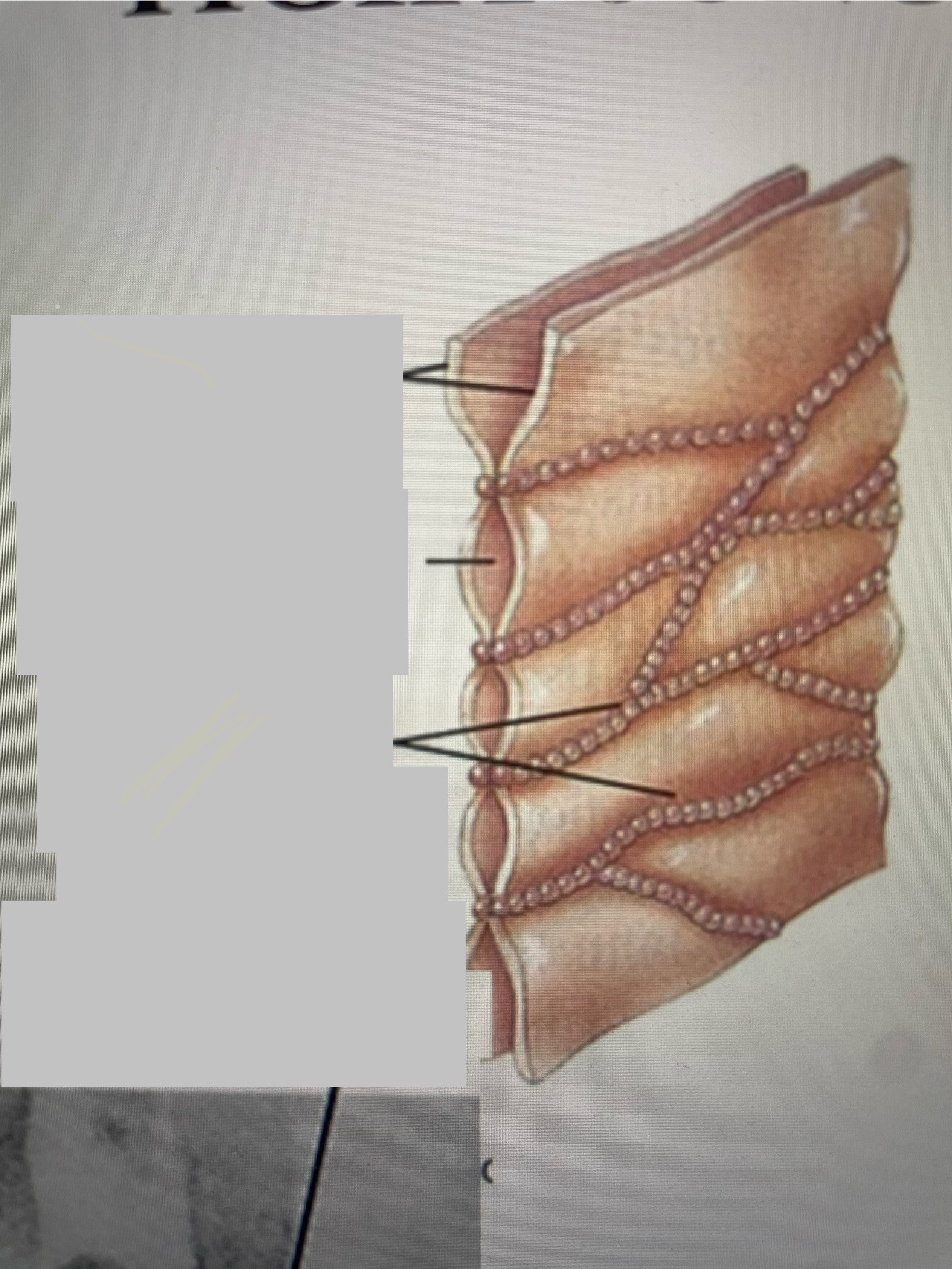
Name the junction and fill in the gaps
Tight, adjacent plasma membranes, intercellular space, strands of trans-membrane proteins
Where are tight junctions commonly found?
Stomach, intestines, bladder
Key proteins in a tight junction?
Claudins and occludins
How does a tight junction maintain cell polarity?
By preventing migration of the proteins between apical and basal surfaces.
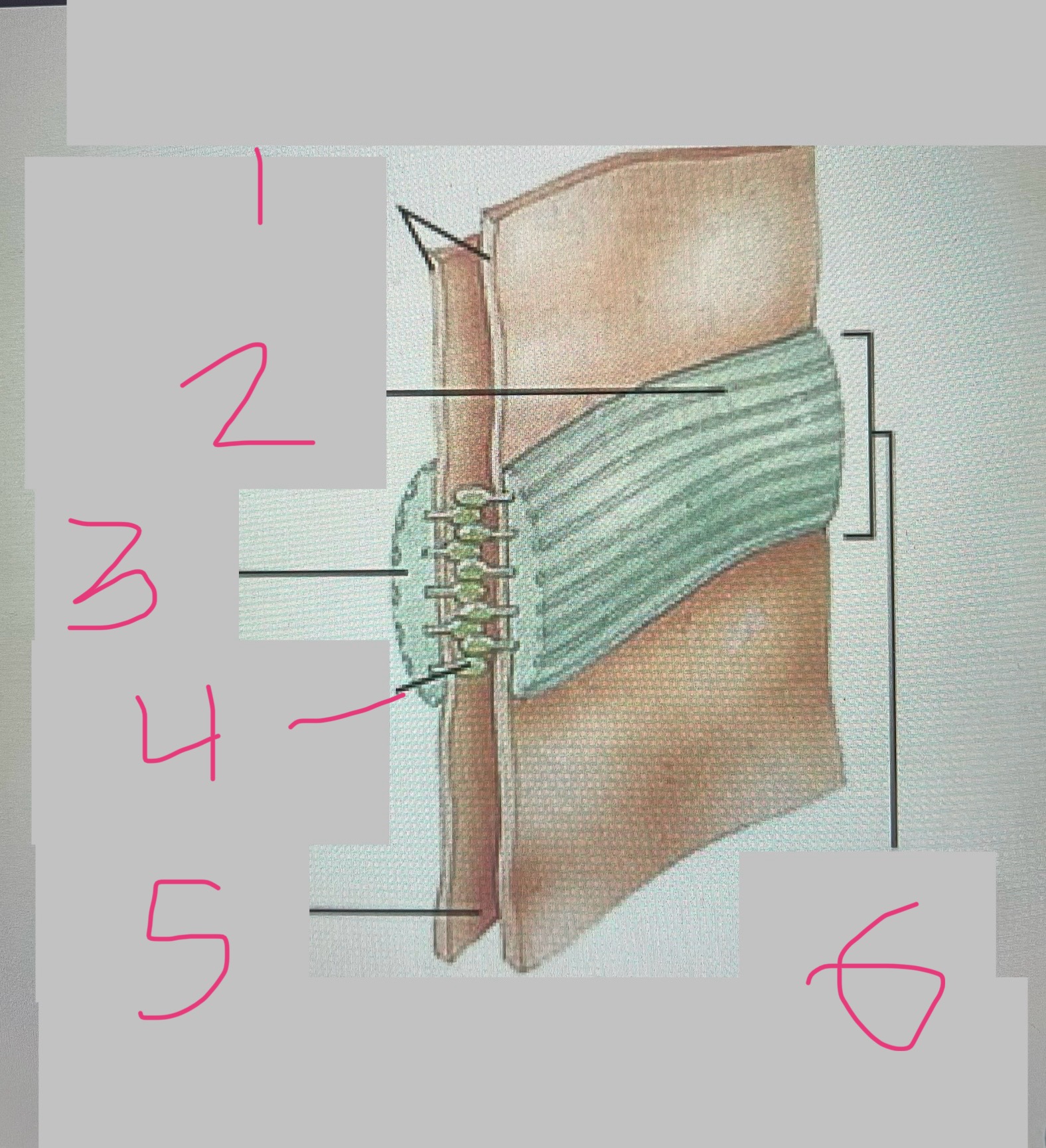
type of junction and name numbers
adherens, 1. Adjacent plasma membrane 2. Microfilament (actin). 3. Plaque. 4. Trans-membrane glycoprotein (cadherin). 5. Intercellular space. 6. adhesion belt
What do cadherins and catenins do in an adheren junction?
span the gap, link cadherins to actin.
What does an adheren junction prevent?
Cell seperation from tension forces, eg. contractions

