AP Art History Content Area 3 (Medieval and Romanesque)
 Studied by 0 people
 Call with Kai
 Learn
Learn Practice Test
 Spaced Repetition
 Match
Match Flashcards
 Knowt Play
1/14

There's no tags or description
Looks like no tags are added yet.
Name | Mastery | Learn | Test | Matching | Spaced | Call with Kai |
|---|
No analytics yet
Send a link to your students to track their progress
15 Terms
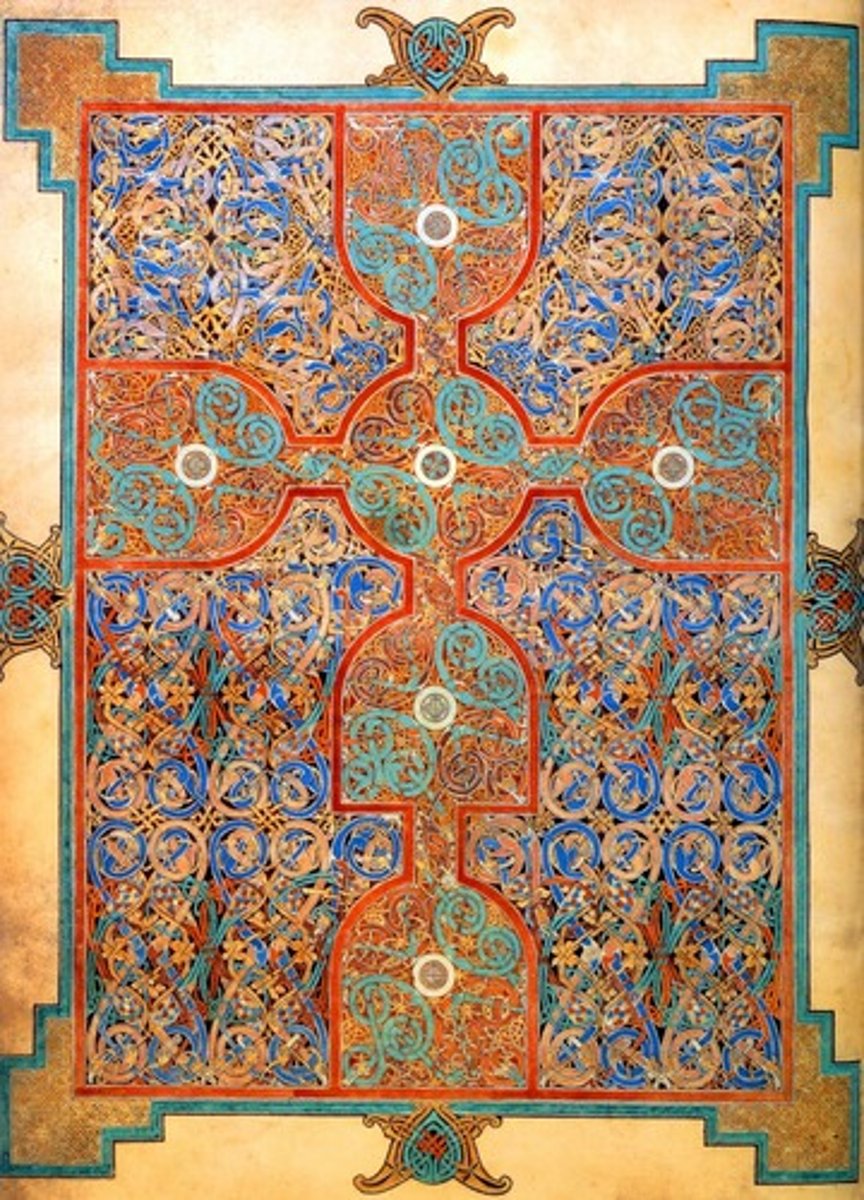
Lindisfarne Gospels (Cross-Carpet page)
Early medieval (Hiberno Saxon) Europe. 700 CE. Illuminated manuscript (ink, pigments, and gold on vellum).
Carpet page of St. Matthew; designed with vivid details like designs and patterns. Elaborate ornamentation indicates hows how much value was put into these rare copies of the disciple's accounts of Jesus's life. Many of the designs on this piece repeat. For example, the knotted shapes, spirals, and other intricate patterns. All together, it forms the "carpeted" aspect of this piece. On a closer look, most of the knot designs are made up of tiny intersecting snakes in bright sapphire, verdigris, and gold.
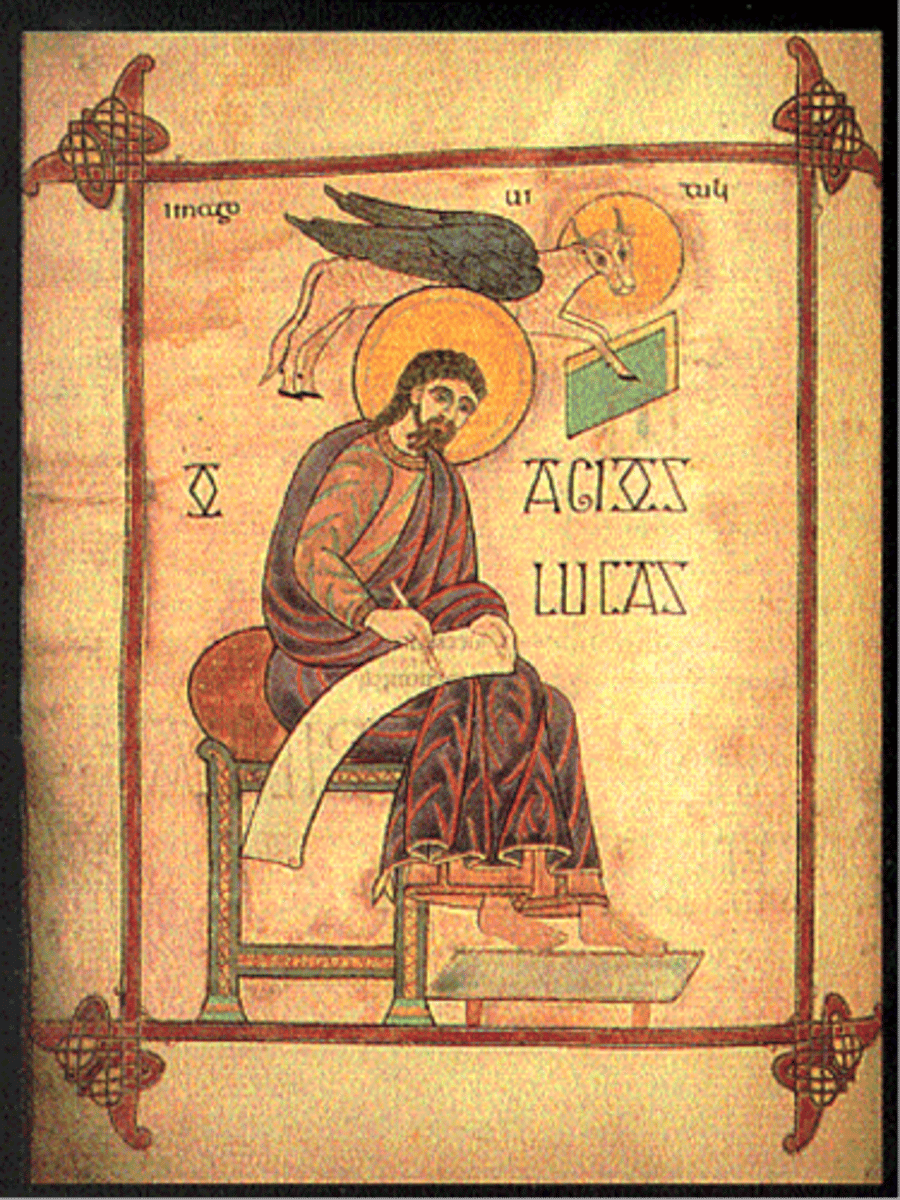
Lindisfarne Gospels (St. Luke portrait page)
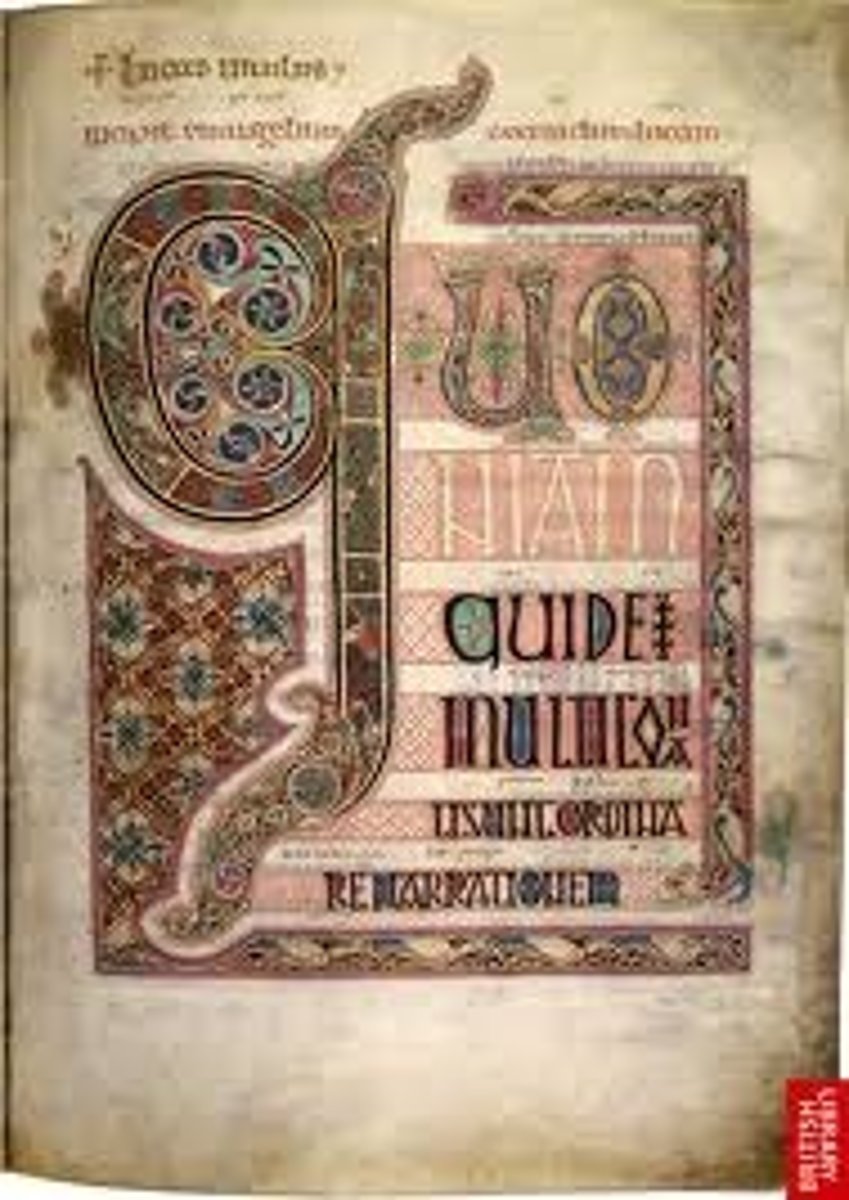
Lindisfarne Gospels (St. Luke incipit page)
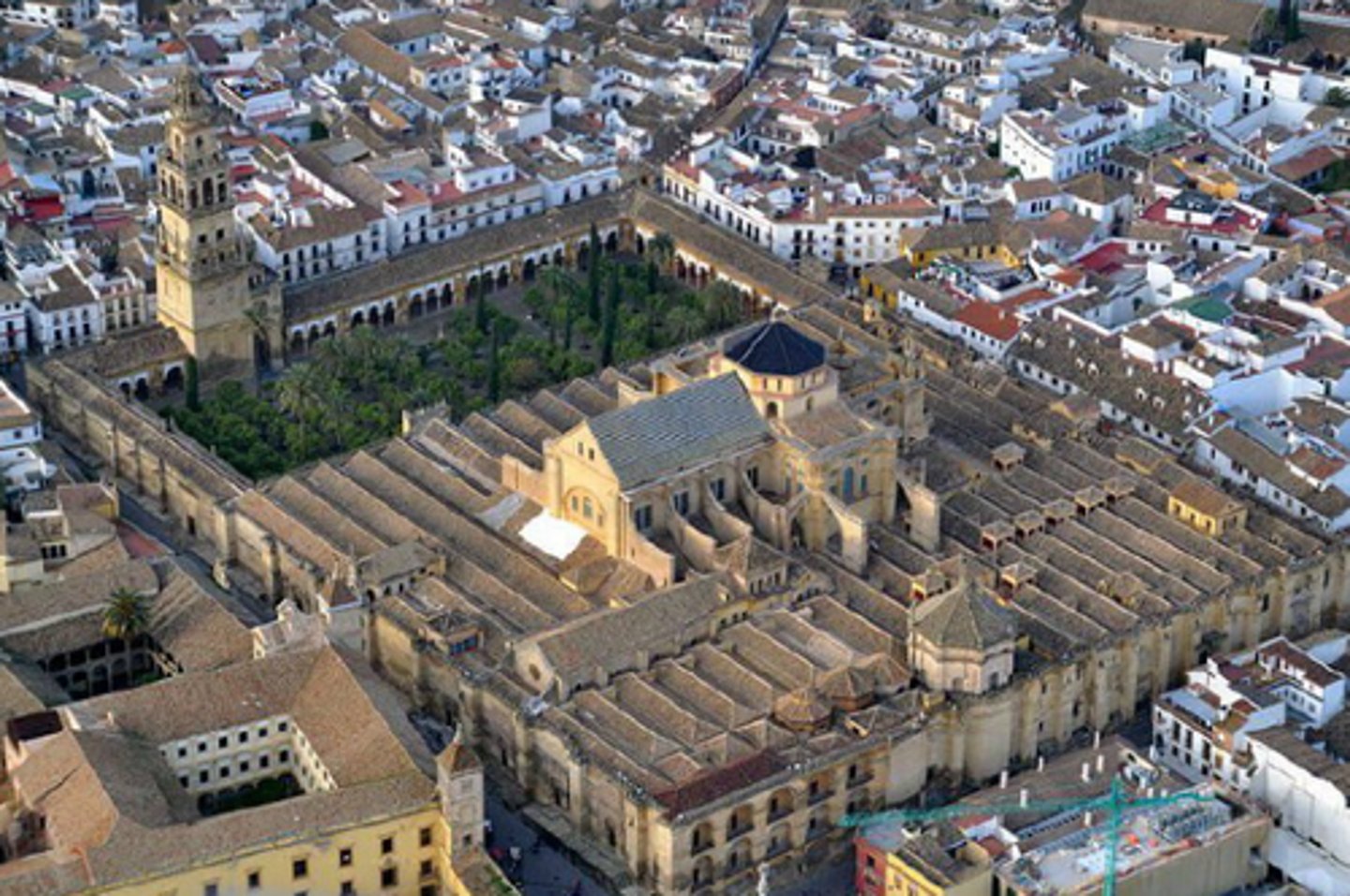
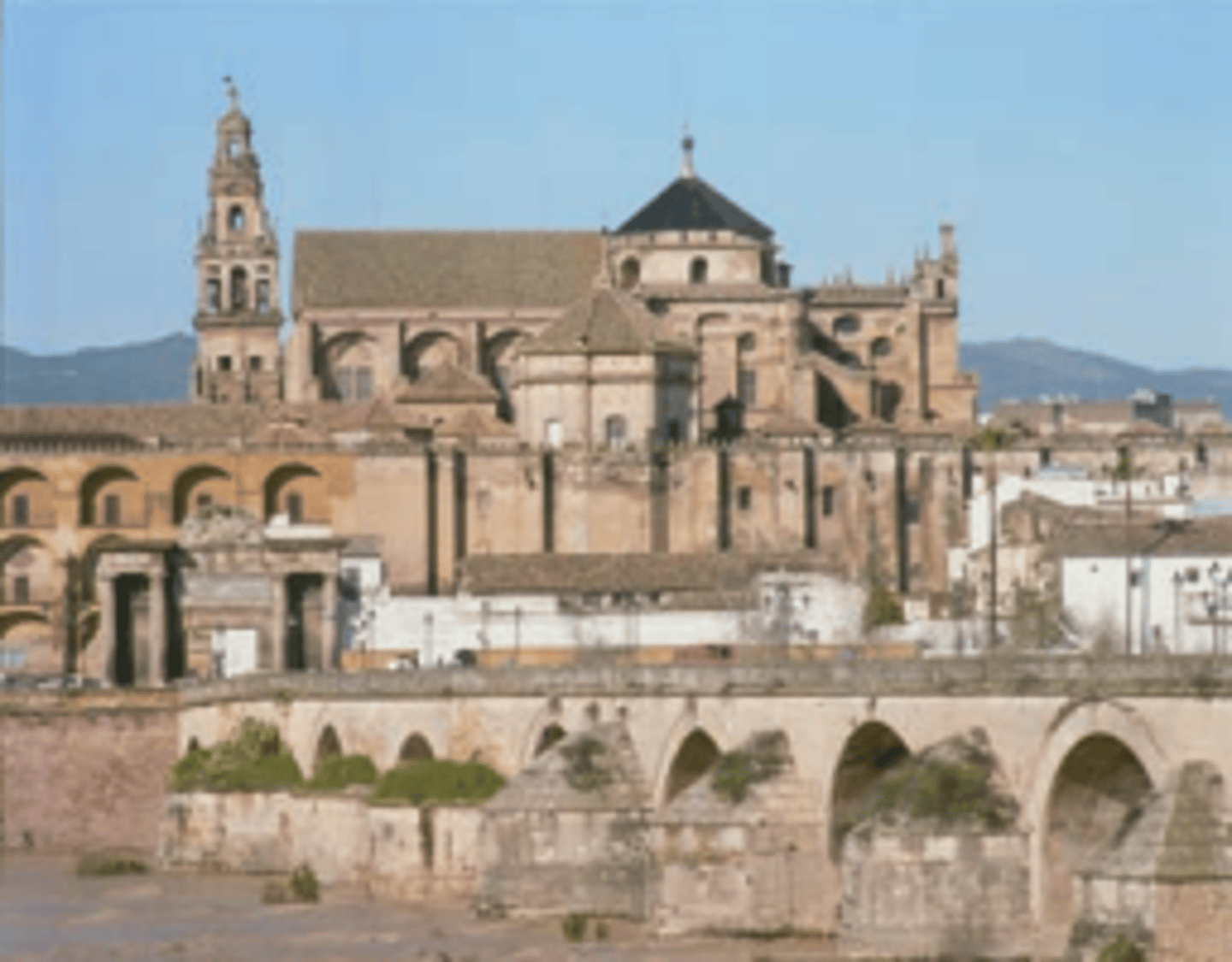
Great Mosque of Cordoba (aerial)
Date: 785-786 C.E.
Period/Style: Umayyad
Original Location: Cordoba, Spain
Material/Technique: Stonemasonry
Function: Religious functions as it was a place for Islamic worship.
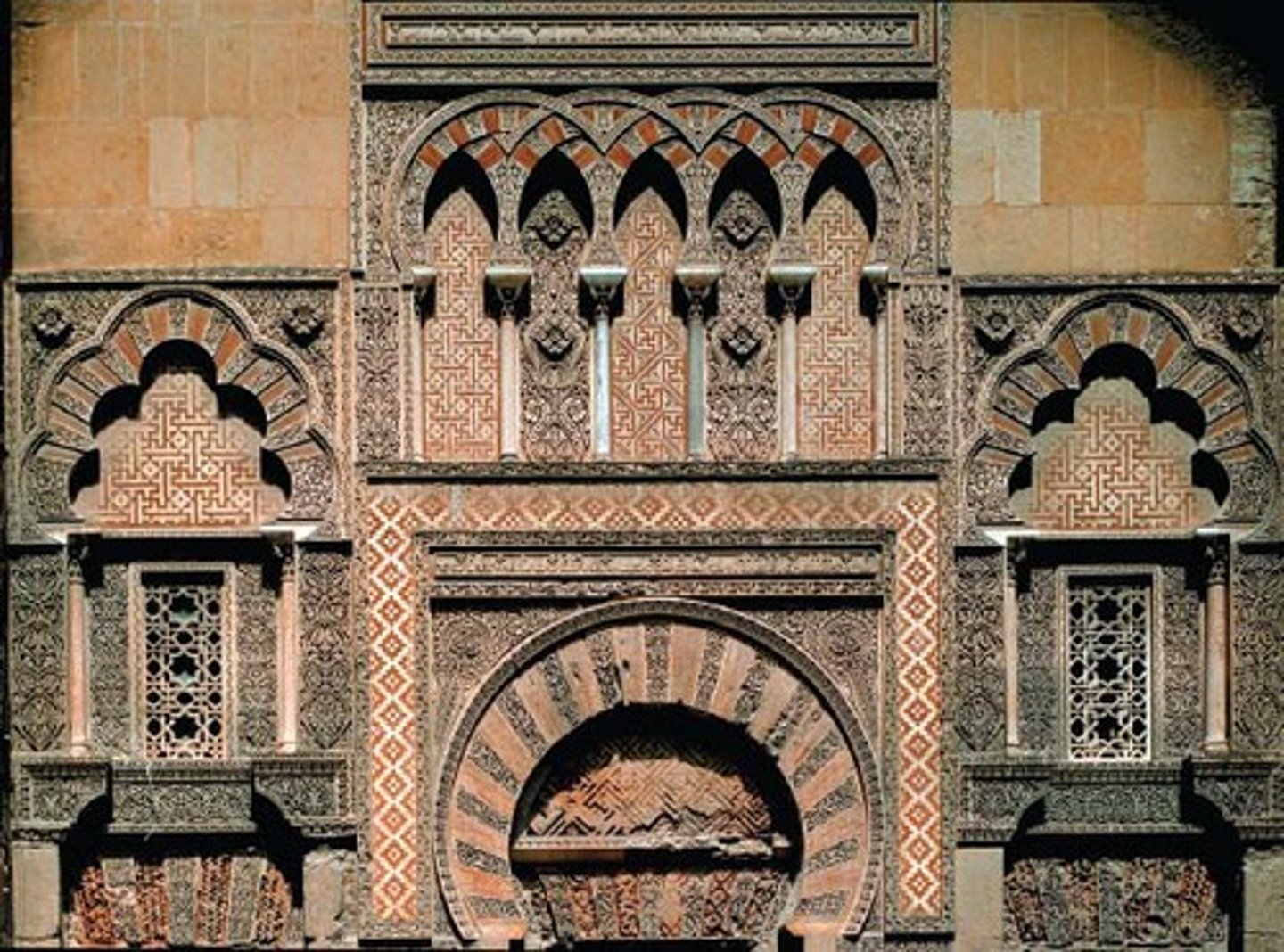
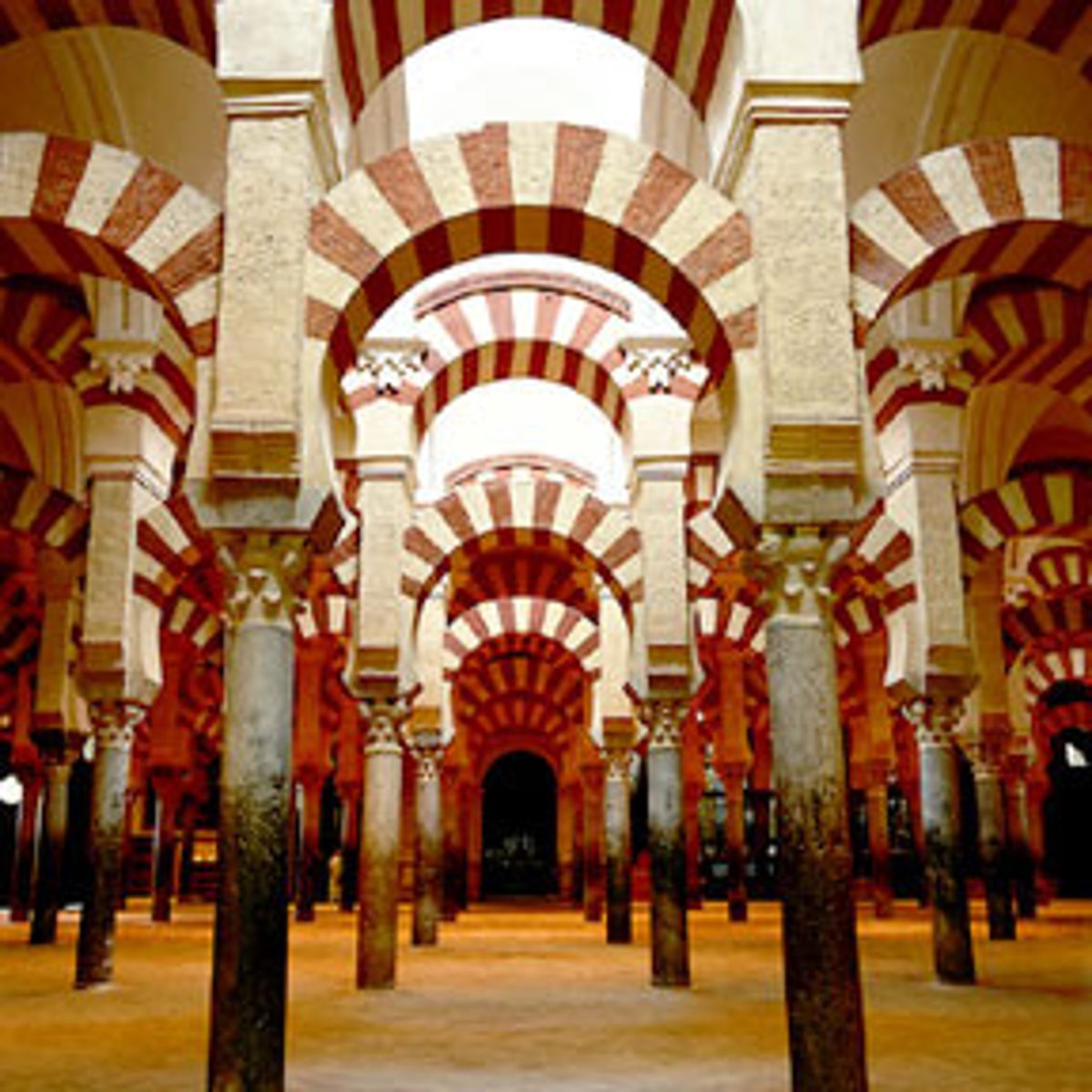
Context: At first, the temple was converted into a church. This occurred by the invading Visigoths who seized Corboba in 572. Then, the church was converted into a mosque and then completely rebuilt by the descendants of the exiled Umayyads. Two-tiered, symmetrical arches, formed of stone and red brick. Red and white striped patterns on the ceiling.
Great Mosque of Cordoba (exterior)
Great Mosque of Cordoba (detail)
Great Mosque of Cordoba (arches)
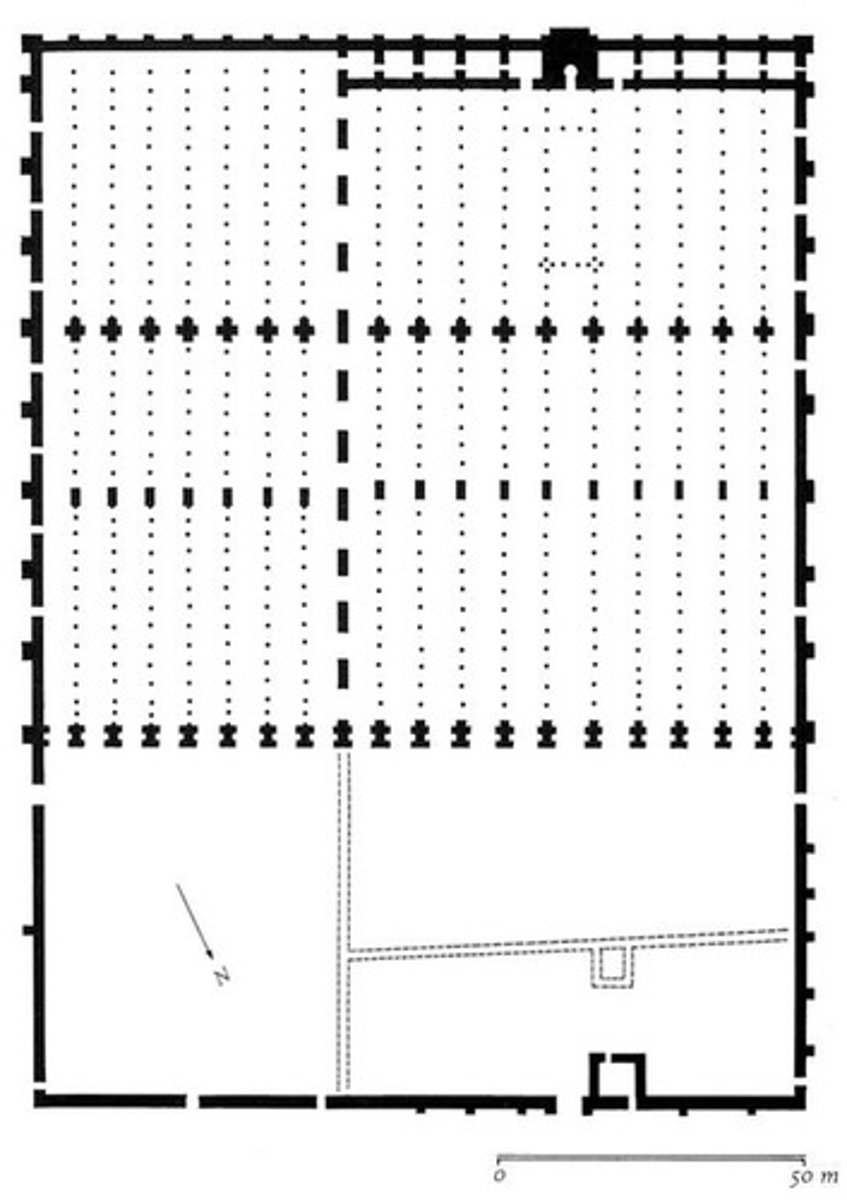
Great Mosque of Cordoba (plan)
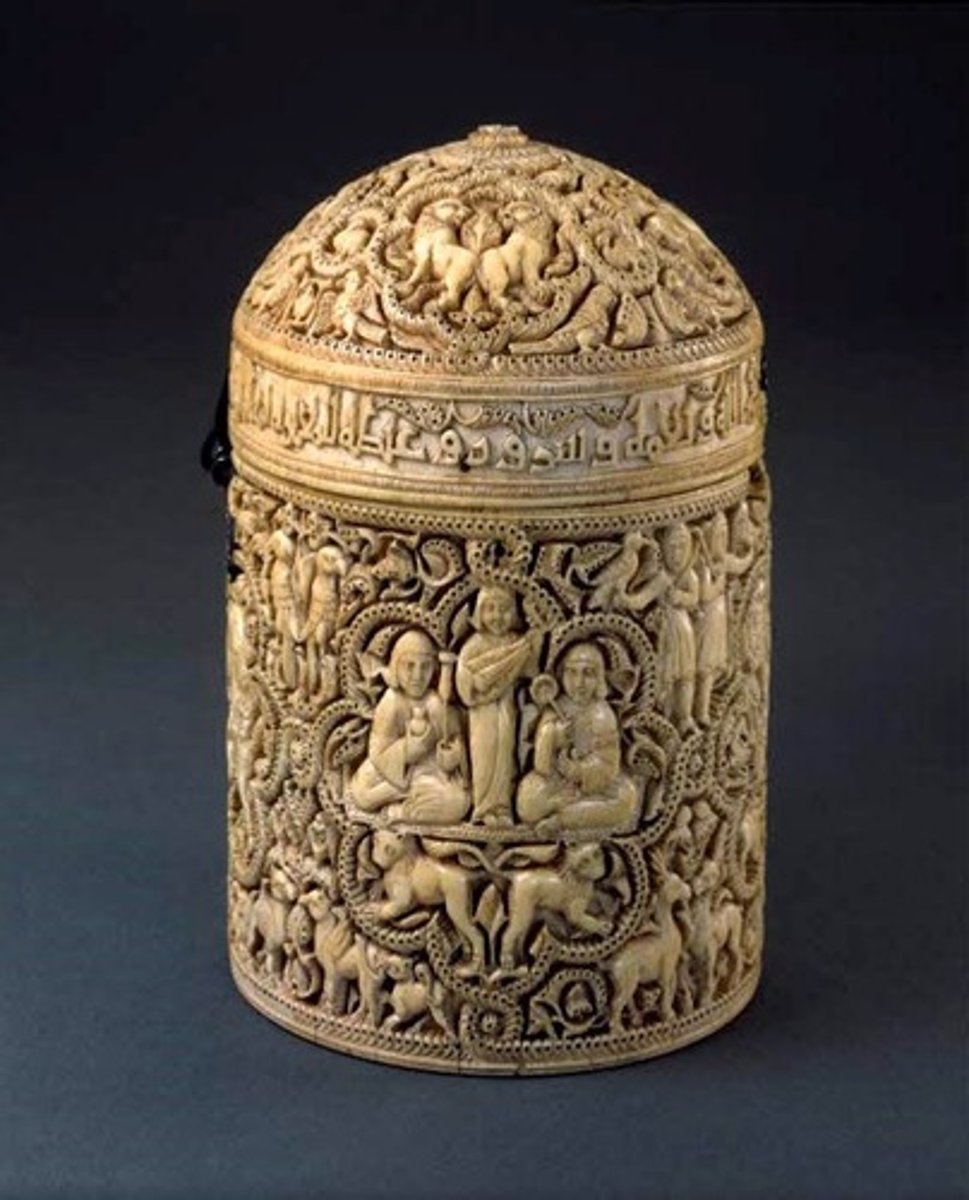
Pyxis of al-Mughira
Umayyad. c. 968 C.E. Ivory.
The Pyxis of al-Mughira is among the best surviving examples of the royal ivory carving tradition in Al-Andalus (Islamic Spain). It was probably fashioned in the Madinat al-Zahra workshops and its intricate and exceptional carving set it apart from many other examples; it also contains an inscription and figurative work which are important for understanding the traditions of ivory carving and Islamic art in Al-Andalus.
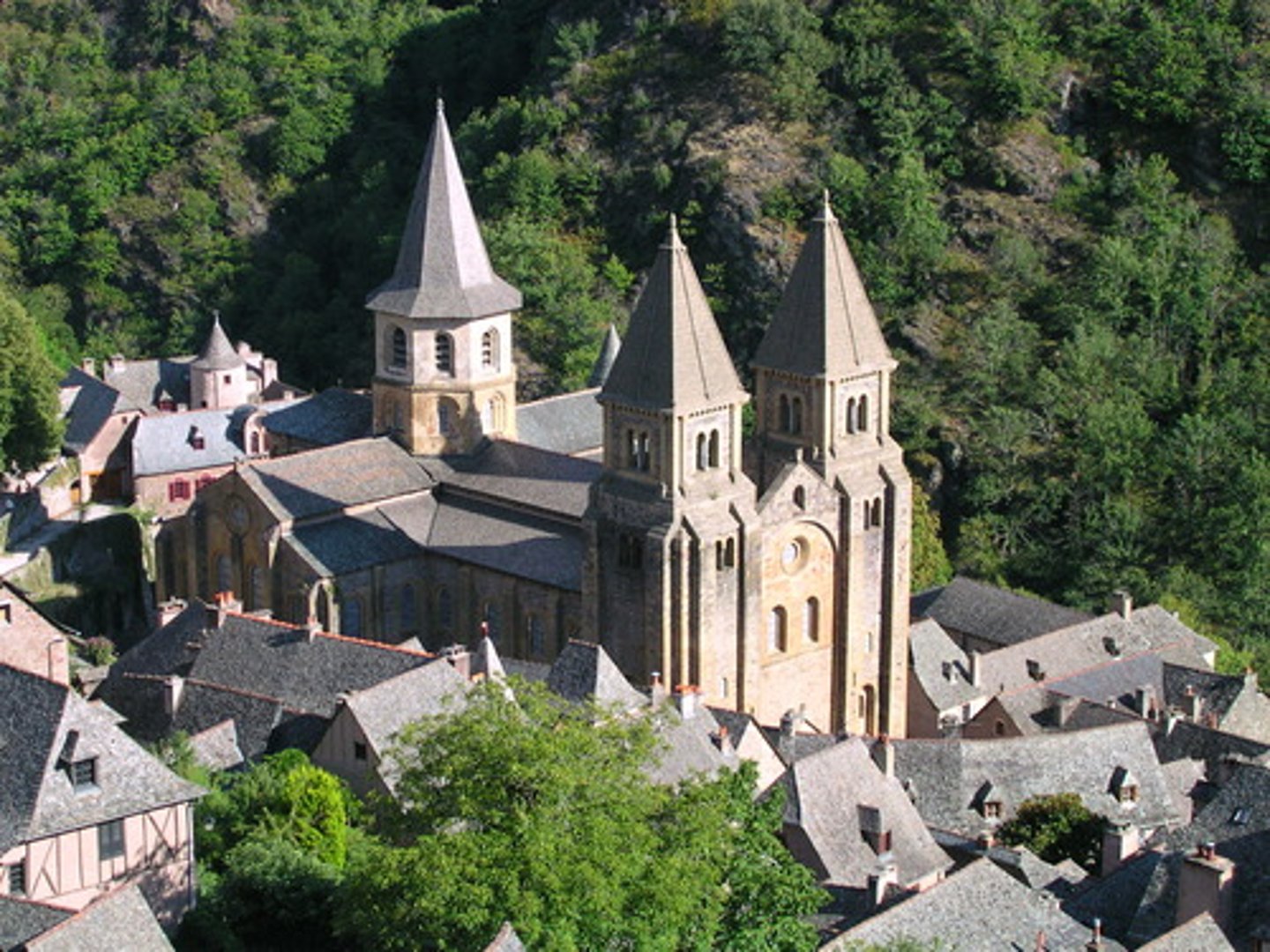
Church of Sainte-Foy
Conques, France. French Romanesque. Church built 1050-1130 CE. Stone (architecture). Stone and paint (tympanum). Gold, silver, gemstones.
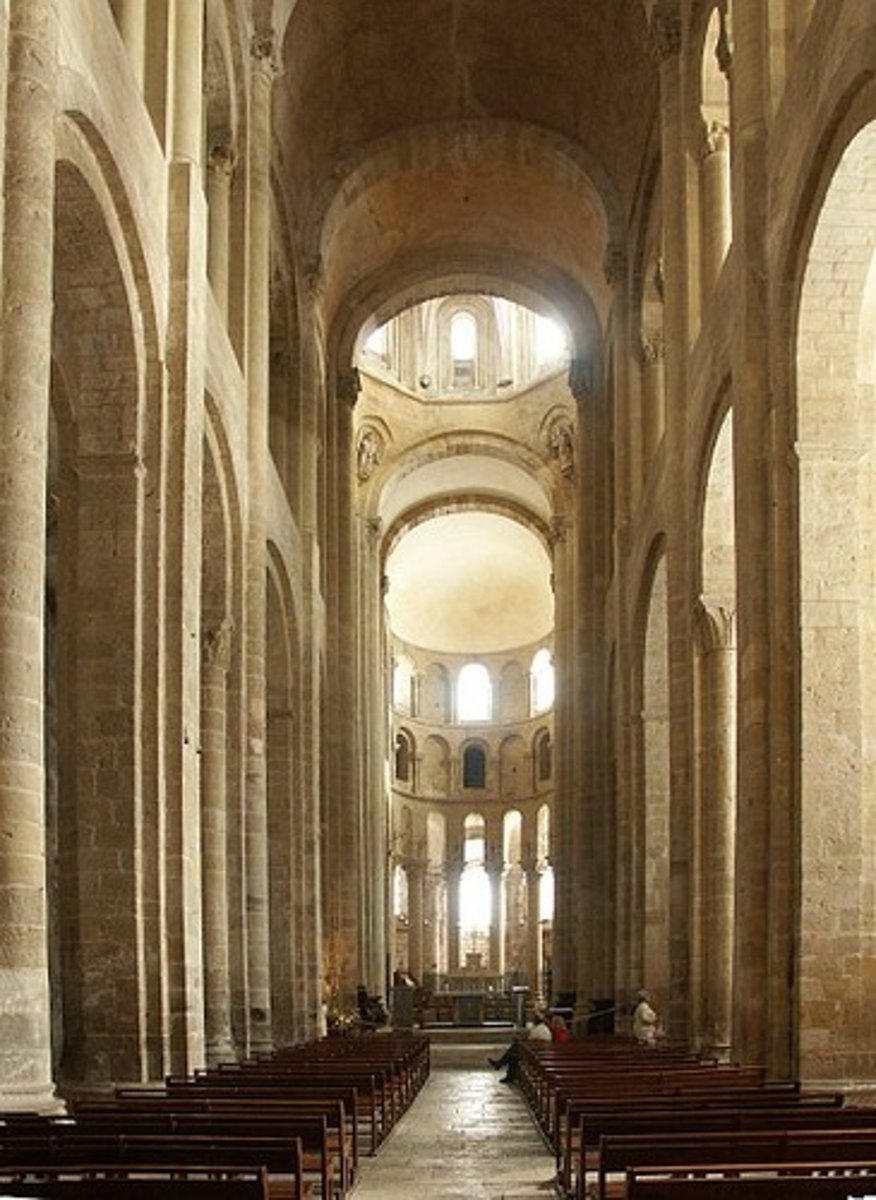
Cruciform plan with barrel-vaulted nave and arches. Radiating chapels. Pilgrimage church connected the crowd to apse and radiating chapels which held the reliquary figure. Located on the route to Santiago de Compostela in Spain.
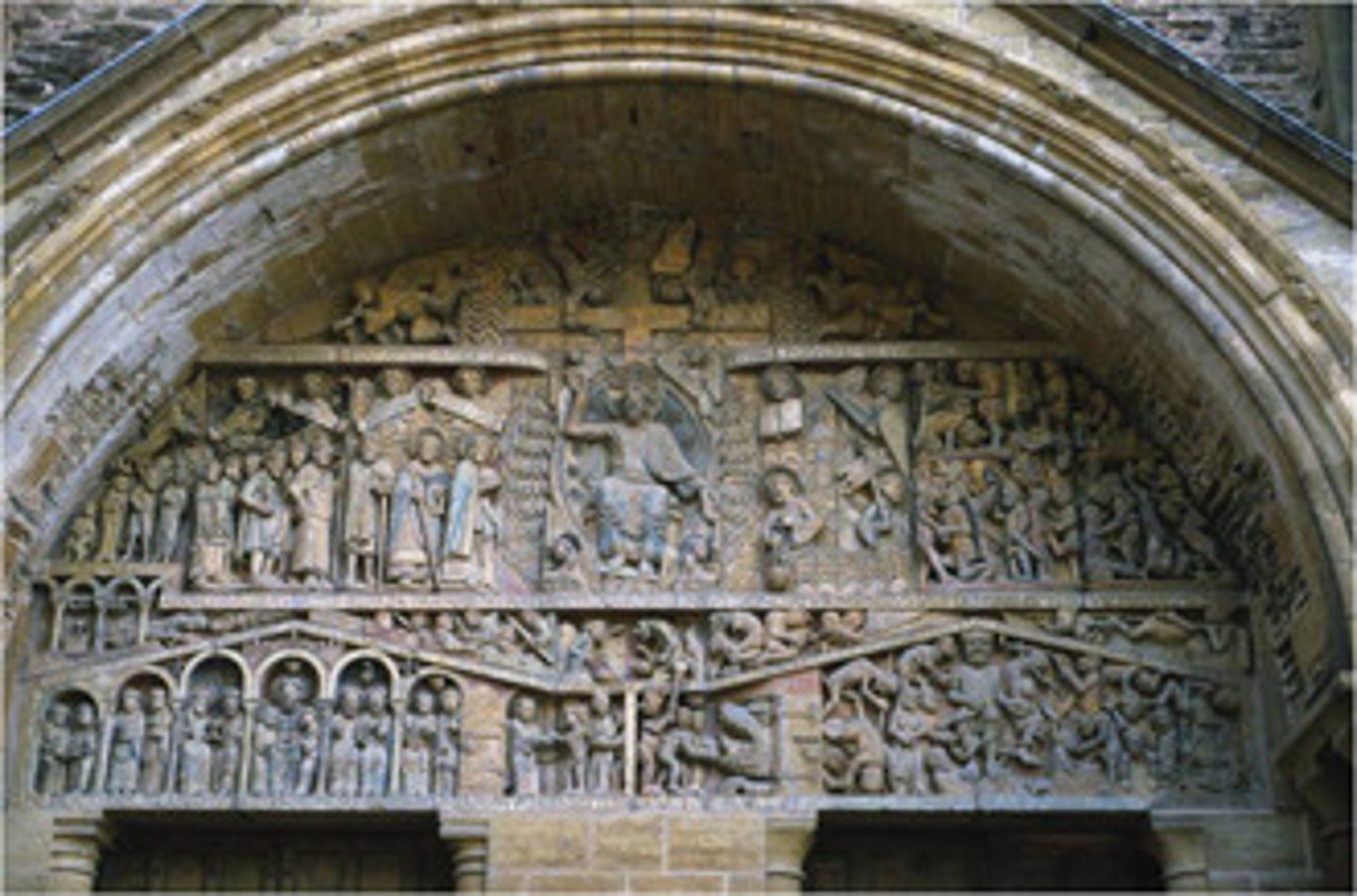
Sainte-Foy (The Last Judgment)
The Last Judgment tympanum: enthroned Jesus with Mary, Peter, and saints; right exit alludes to paradise while left entrance symbolizes hell.
Sainte-Foy (Interior)
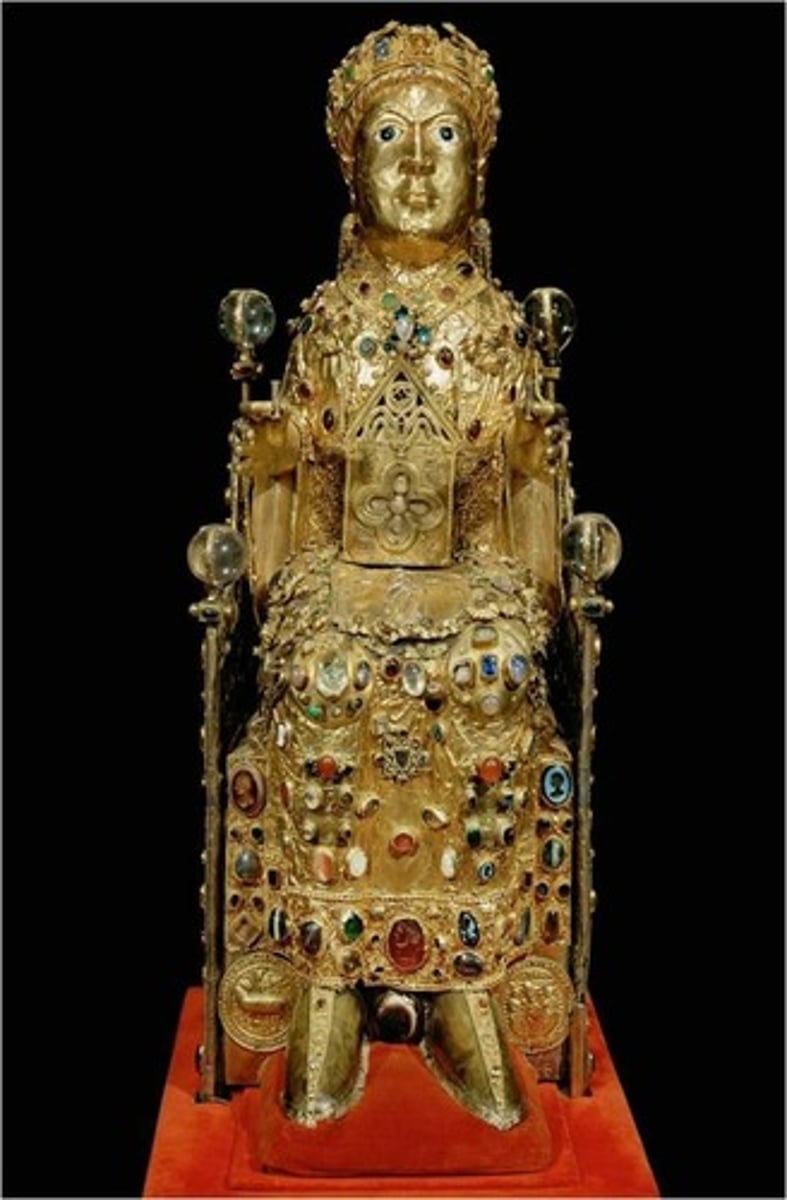
Sainte-Foy (Reliquary)
Conques, France. 9th century with later additions. Enamel over wood. Reliquary depicts young girl martyred for refusing to sacrifice to pagan gods. Smaller figures were approved of considering the association of large figures and Paganism.
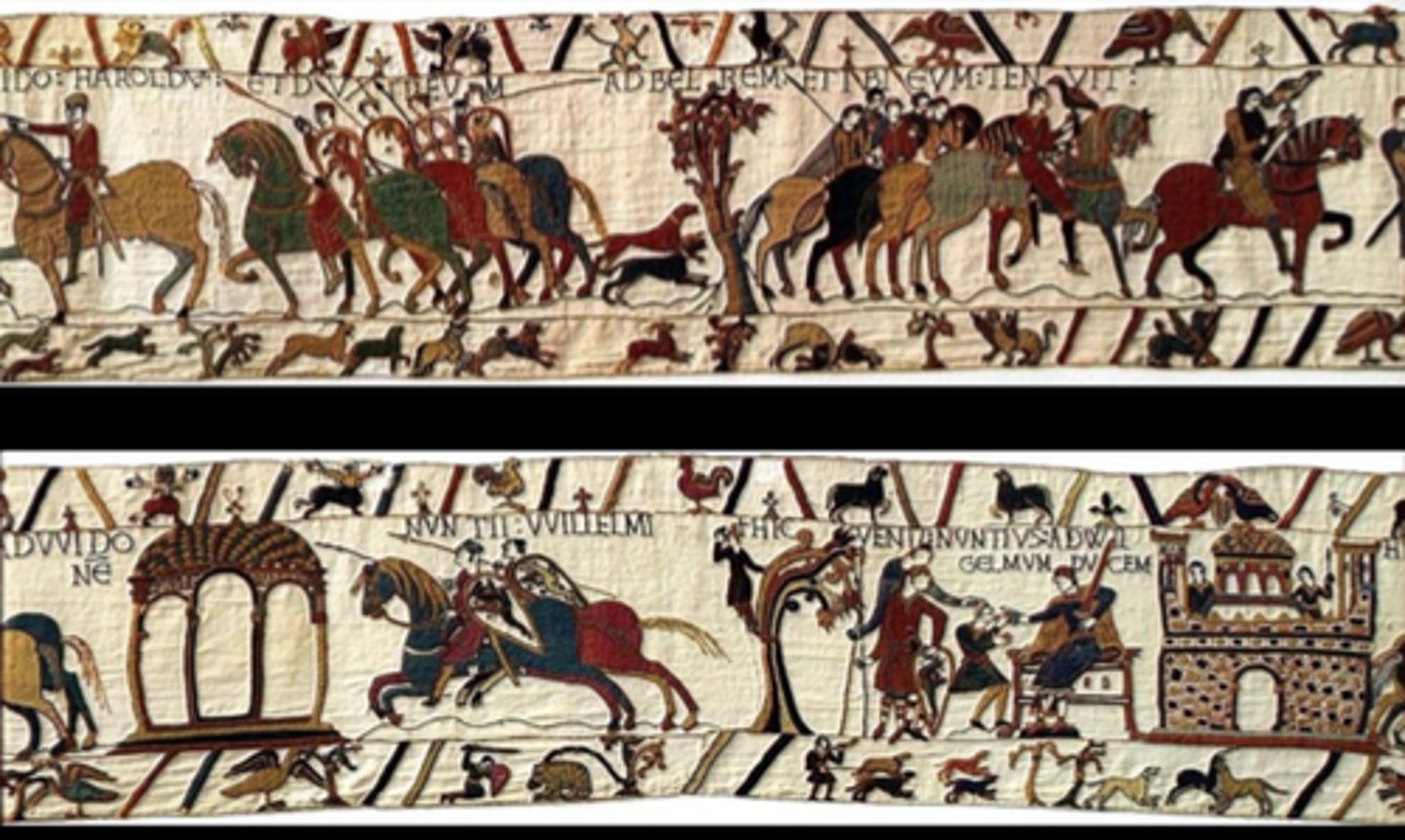
Bayeux Tapesty (Cavalry attack)
Romanesque Europe (English or Norman). 1066-1080 CE. Embroidery on linen.
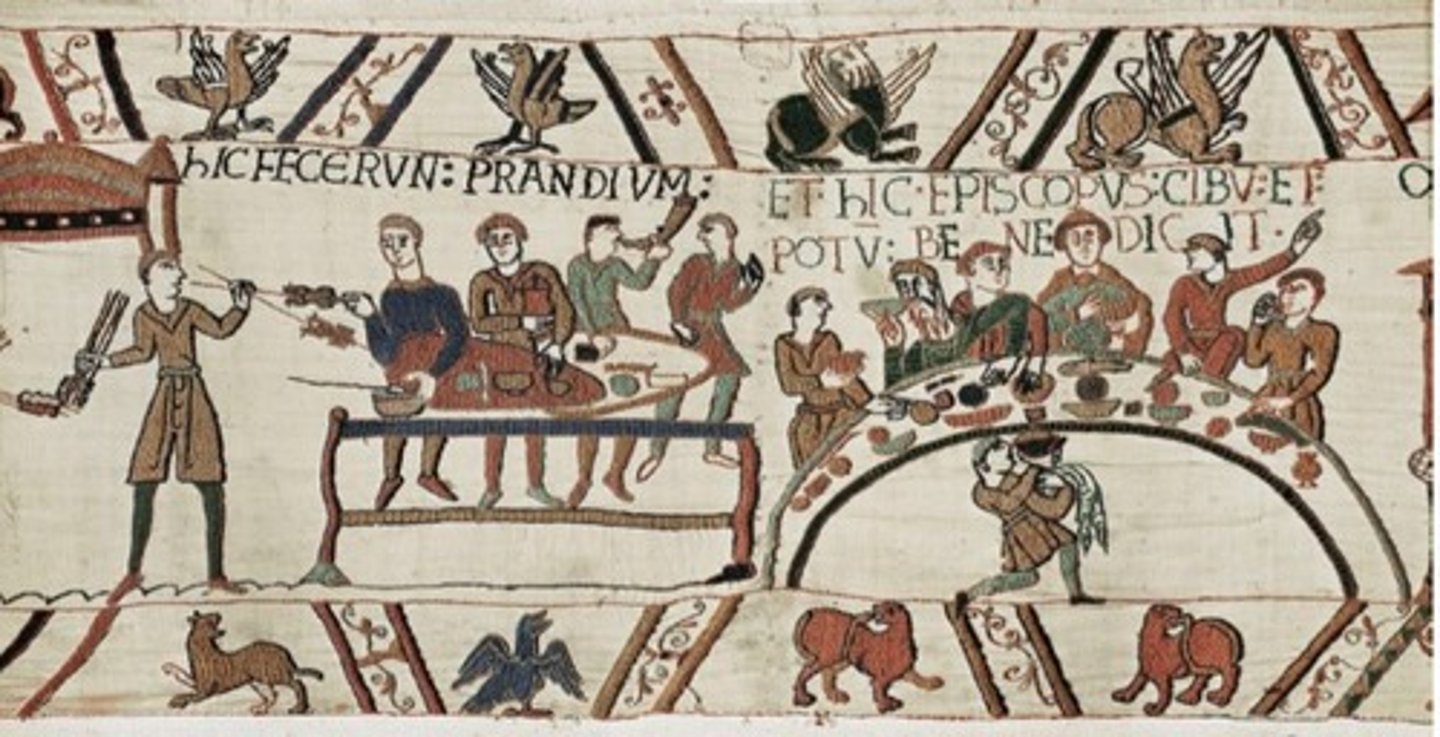
Tells the story of William the Conqueror and the Battle of Hastings in 1066. Considered the most accurate portrayal of medieval warfare, clothing, and customs.
Bayeux Tapestry (first meal)
 Note
Note  Flashcards (76)