M7+8 Maiden- The social microbe I: symbioses and origin of eukaryotes + II – interactions of microbes and macrobes + The antisocial microbe – introduction to pathogens
 Studied by 0 people
 Call Kai
 Learn
Learn Practice Test
 Spaced Repetition
 Match
Match Flashcards
 Knowt Play
1/11

There's no tags or description
Looks like no tags are added yet.
Name | Mastery | Learn | Test | Matching | Spaced | Call with Kai |
|---|
No analytics yet
Send a link to your students to track their progress
12 Terms
what do we predict luca was like?
anaerobic- all oxygen was reduced into water in the early world
CO2 fixing
H2 dependent
N2 fixing
thermophilic
dependent on transition metals
these traits are all consistent with a hydrothermal setting
why is the surface origin of life hypothesis not valid?
UV light, low pressures and the possibility of drying up makes them unstable and unfavourable environments for the origin of life
subsurface hydrothermal vents are actually ideal, they produce large temperature gradients, mineral gradients etc
what are the mitochondria early and mitochondria late hypotheses?
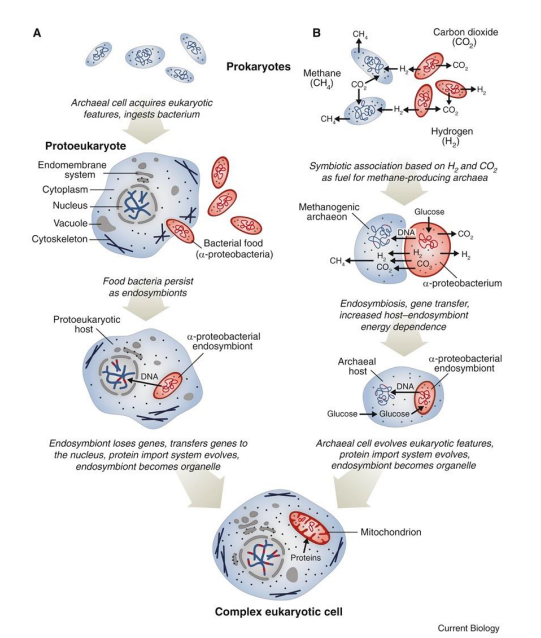
these are two hypotheses describing the endosymbiotic event introducing an aerobic bacterium into another host, resulting in a eukaryotic cell containing a mitochondrion
the mitochondrion late hypothesis (A) assumes that the host, a eukaryote, was already quite developed (endosymbiotic event occurred late in its development), as it had evolved the process of phagocytosis of the bacteria
however, in this theory, the host would have had to exist and evolve for a long period, solely living off of fermentation as its metabolism, which is very weak
the mitochondrion early hypothesis (B) assumes that the host, an archaeal cell, was not very developed (no nucleus yet), and instead it lived in a metabolic symbiosis with a bacterium
this bacterium would have produced CO2 and H2 in its metabolism, and this hydrogen provided vital fuel for the metabolism (methane-producing) of the archaea, in a highly dependent relationship, until eventually they merged
what are lichens and what are the roles of the symbionts?
lichens are mutualistic associations of a fungus with a cyanobacteria or algae
the mycobiont (fungus) is a macrobe, so it can form a large structure which protects the photobiont and absorbs minerals
the photobiont (bacteria or algae) photosynthesises, fixes nitrogen and synthesises organic nutrients
what are the roles of legumes and Rhizobium in their symbiosis?
the bacterium fixes nitrogen from the atmosphere into bioavailable nutrients
the plant provides the bacterium with carbohydrates, protects it within root nodule structures, and creates a specific microenvironment
it produces the leghaemoglobin protein, which buffers the free oxygen concentration- this keeps it high enough to allow for aerobic respiration, but low enough to allow the oxygen-sensitive nitrogenase enzyme to work
what are the three types of insect endosymbionts?
obligate mutualists:
these are domesticated within the host and can’t survive outside it (next best thing to an organelle/organ)
they are restricted in bacteriomes produced by the host
dependent on host-based mechanisms for transmission
facultative symbionts:
resemble pathogens as they invade cells in uninfected hosts (and can establish maternal inheritance) and are erratically distributed
not required for host reproduction but may confer benefits
reproductive manipulators:
parasites that spread by maternal inheritance, and manipulate proportions of female offspring to spread through a population
eg. infected males sterilise uninfected females, so that offspring from infected females individuals are more successful
what are two examples of a intracellular insect endosymbionts?
Buchnera are an obligate intracellular endosymbiont of aphids (mutualist)
these are vertically transmitted through the ovary cells
they live in specialised bacteriocyte cells (obligate- they are unculturable)
the host aphid supplies energy, carbon and nitrogen
the symbiont produces amino acids, especially tryptophan
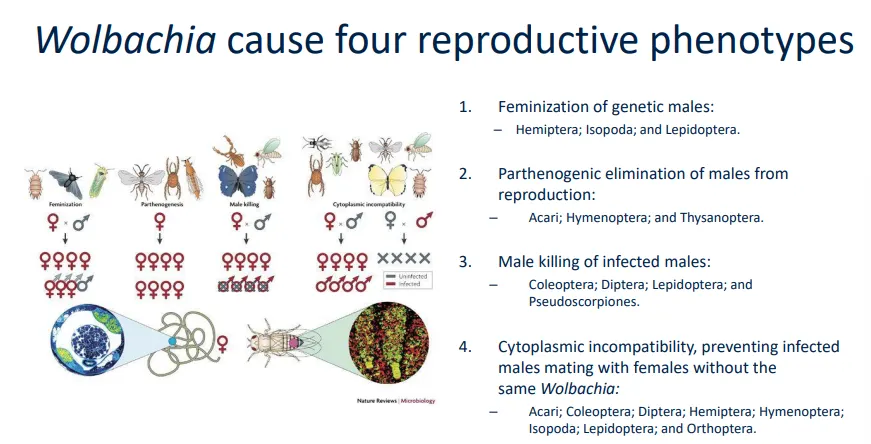
Wolbachia is a large and highly prevalent group of intracellular endosymbionts
in some cases (eg. nematodes) they are mutualists
often they are reproductive manipulators, altering host sex ratios
how do Wolbachia alter host sex ratios?
feminisation of genetic males from infected mothers
causing parthenogenesis (where only female offspring can be produced)
killing of infected males
cytoplasmic incompatibility so that infected males can’t mate with uninfected females
these methods all increase the proportion of infected females in the population, because vertical transmission can only occur through infected females
what are holobionts?
the macrobe and its microbiome combined comprise the holobiont (metaorganism)
how do the measles and varicella zoster viruses behave differently?
measles is an acute infection:
hosts infected with the measles virus develop life-long immunity to it, so it can only survive in large populations
otherwise it runs out of susceptible hosts and dies out as it has no other reservoir
chickenpox/shingles is a chronic infection:
hosts infected with the varicella zoster virus (VZV) develop chickenpox
the pathogen then remains in a quiescent state in the host
it can be reactivated to cause shingles
how can microbes cause cancers?
certain viruses and bacteria can cause cancers directly or indirectly eg. by the alteration of host cells or the production of toxic substances
eg. human papillomaviruses (HPV), which cause cervical cancer
eg. devil facial tumour disease (DFTD) and canine transmissible venereal tumour (CTVT)
what are prions?
 Note
Note  Flashcards (30)