18. Urbanization and Immigration (A18)
 Studied by 0 people
 Call with Kai
 Learn
Learn Practice Test
 Spaced Repetition
 Match
Match Flashcards
 Knowt Play
1/28

There's no tags or description
Looks like no tags are added yet.
Name | Mastery | Learn | Test | Matching | Spaced | Call with Kai |
|---|
No analytics yet
Send a link to your students to track their progress
29 Terms
old immigrants
1. Largely protestant group of immigrants from North and West of Europe = Britain, Germany, and Scandinavia. Also included in this wave of immigrants were the Irish Catholics who left Ireland largely due to the Potato Famine. Most of the immigrants of this period had high literacy rates and also were very skilled workers which made it easier to blend into the American society.
2. 1784-1850s (Before the Civil War)
3. Nativist Party was formed (Know-Nothings), Political Machines grew in power and strength by manipulating the immigrant votes.
Immigrants were able to adapt and assimilate quickly.
new immigrants
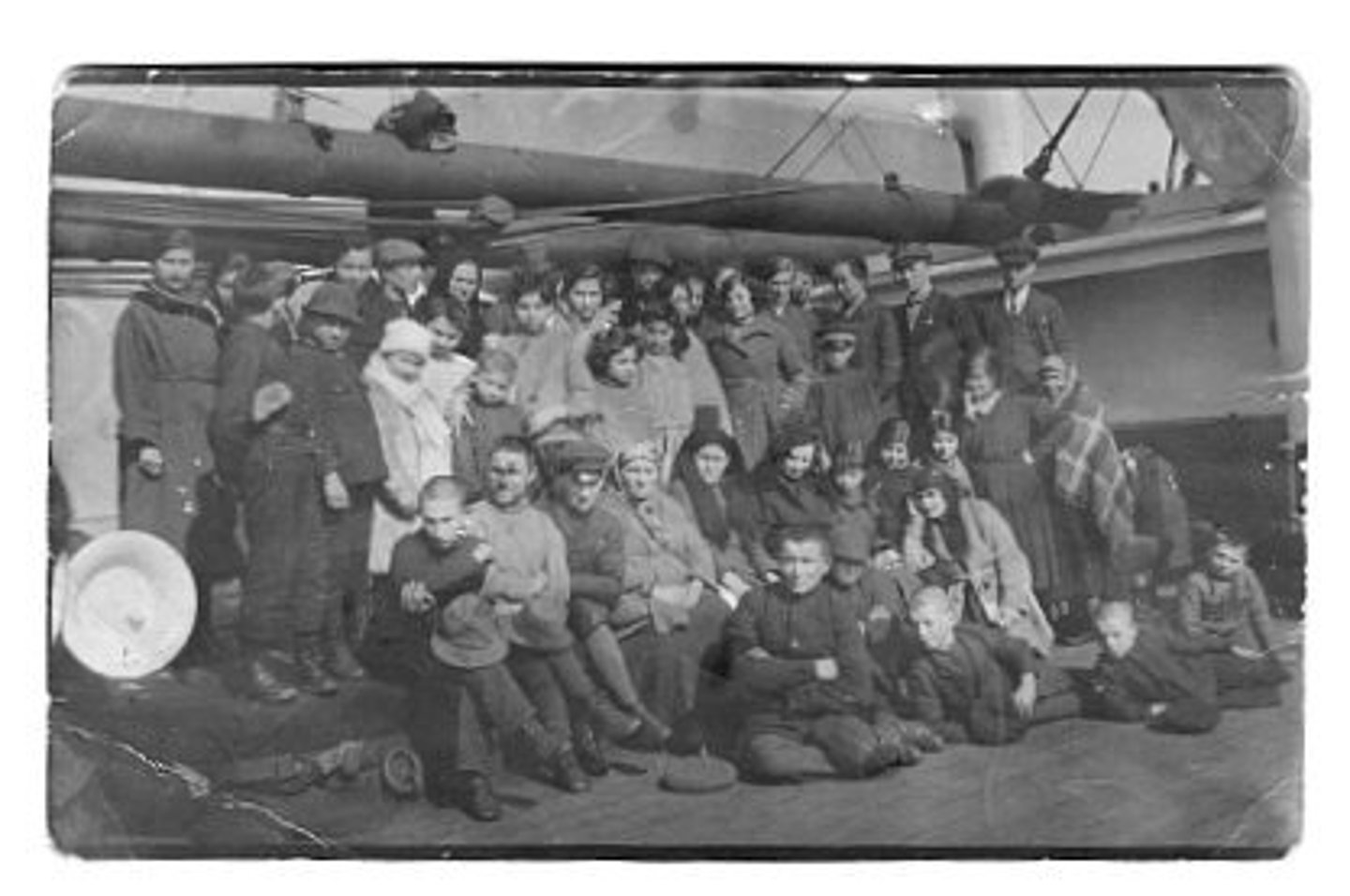
1. Immigrants mainly from Eastern and Southern Europe. (Ex: Italy, Poland, Russia, Greece, Latvia, Lituania etc.).
Often impoverished and illiterate in their native language. They were often escaping from autocratic governments seeking freedom and opportunity in America. New larger steam ships with steerage allowed this group to be able to afford the passage to America. When this group of immigrants arrived in the United States they often moved into ethnic neighborhoods in cities where they often were not exposed to English which caused them to assimilate slower than the immigrants before the Civil War (slower assimilation will make them targets of Social Darwinist and Nativists)
2. 1880s to 1920's After the Civil War to the Roaring 20s following WWI
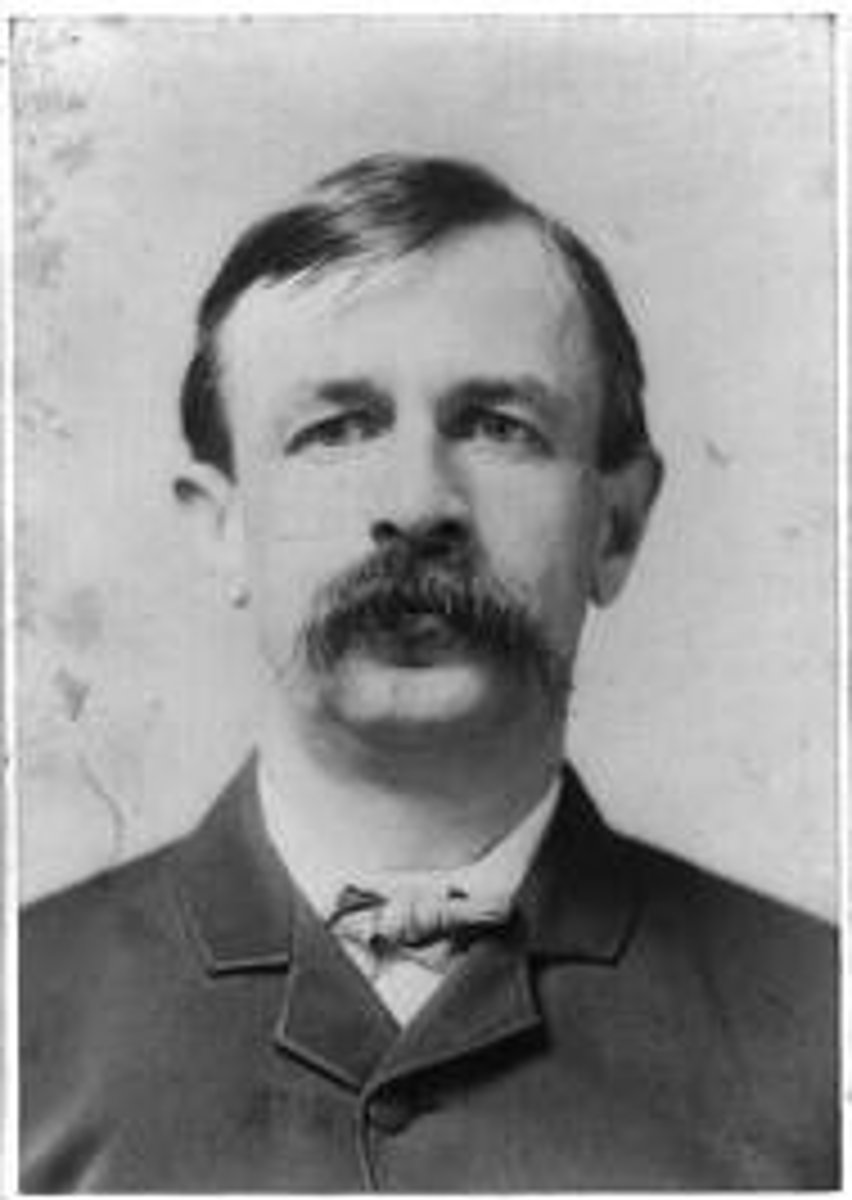
3. Did not assimilate as quickly and were often targets of Nativists such as the Social Darwinist and proponents of eugenics. This group also led to increased power of political machines who again manipulated the immigrant vote. In response, Jane Addams built the first settlement house, Hull House, in Chicago (1890) to help this group of immigrants to get settled and assist them with the assimilation process. (the success of Hull House and other settlement houses led to the decreased power of political machines)
Subject of Jacob Riis's photojournalism.
Also since they did not assimilate as quickly Social Darwinist claimed they were from cultures that were substandard and should not be allowed to intermix with the established "Anglo-Saxon" stock of America. If they did, Social Darwinist claimed, America would become weak and victims of natural selection in an age of imperialism. This thought will contribute to the Quota Acts passed in the 1920s.
American Protective Association
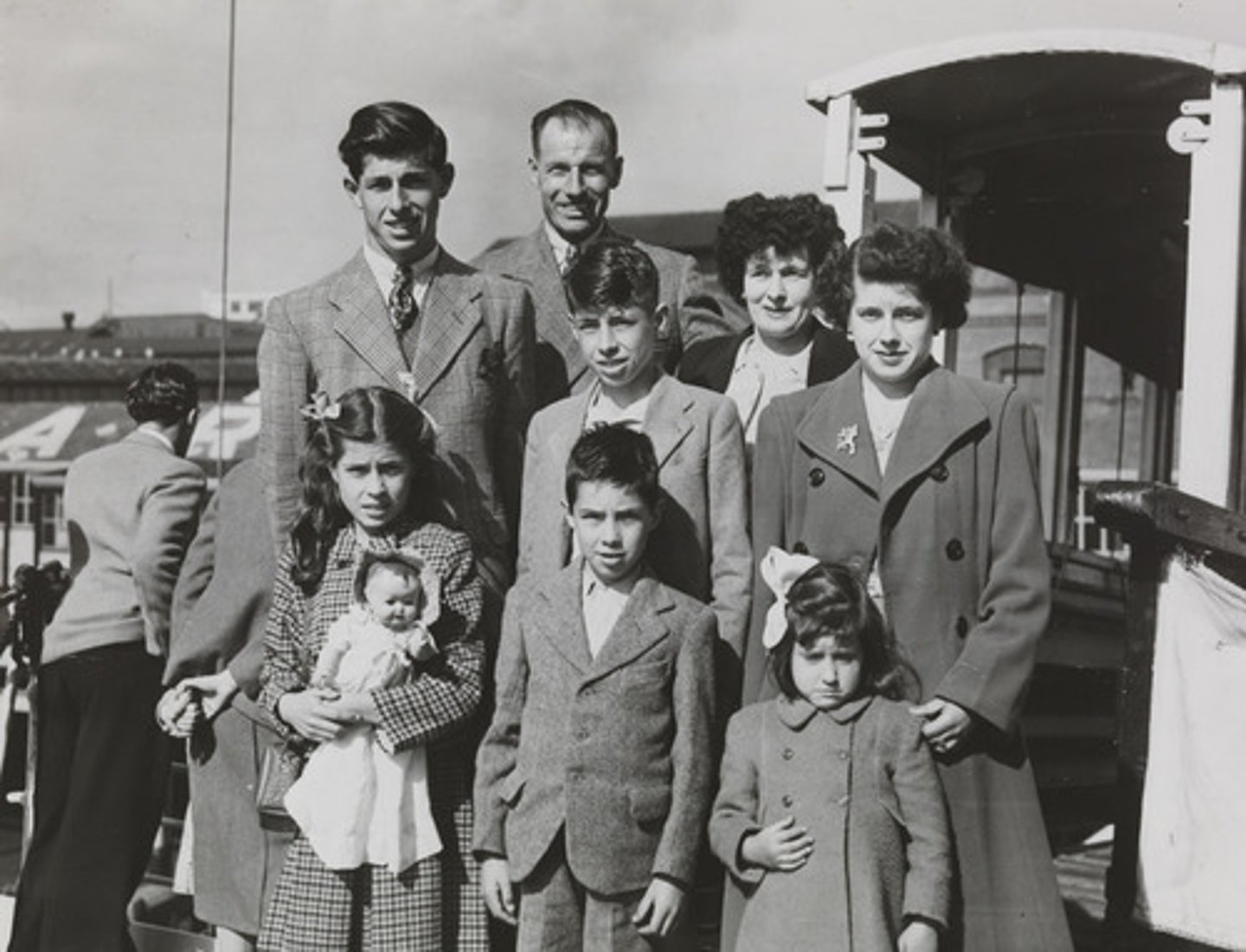
1. A Nativist society that saw the growing Catholic populations as a threat to American democracy. (Note the sarcasm: You know...that age old fear that somehow more Catholic immigrants would lead to rule by the Pope. Priests would magically brainwash their congregations and "snap" you have a bunch of "catholic zombies" highjacking Am. Democracy....Bunch of nonsense...but you know fear makes people do silly things. AND yet again...it was the political machines controlling the votes.... not the Pope...
2. Created in the 1880s and lasts into the early 20th Century.
3. Wanted immigration restrictions and a slower process for immigrants to become citizens. This organization showed the tensions between Protestants and Catholics.
Contributed to the increasing Nativist sentiment and will eventually lead to the Quota Acts in the 1920s.
Social Darwinists (to be reviewed)
1. The belief that Darwin's ideas of natural selection and survival of the fittest should be applied to the market place.
2. Late 1800s when Charles Darwin created his theory of evolution
3. Nouveau rich used this as an excuse of why they were eliminating competitions, because they and their industry were the most fit for survival in the market place. Leads to ridged class distinctions and that wealth should be concentrated in the hands of the rich. People argued that helping the poor would interfere with nature and weaken the human evolution.
Jacob Riis (to be reviewed)
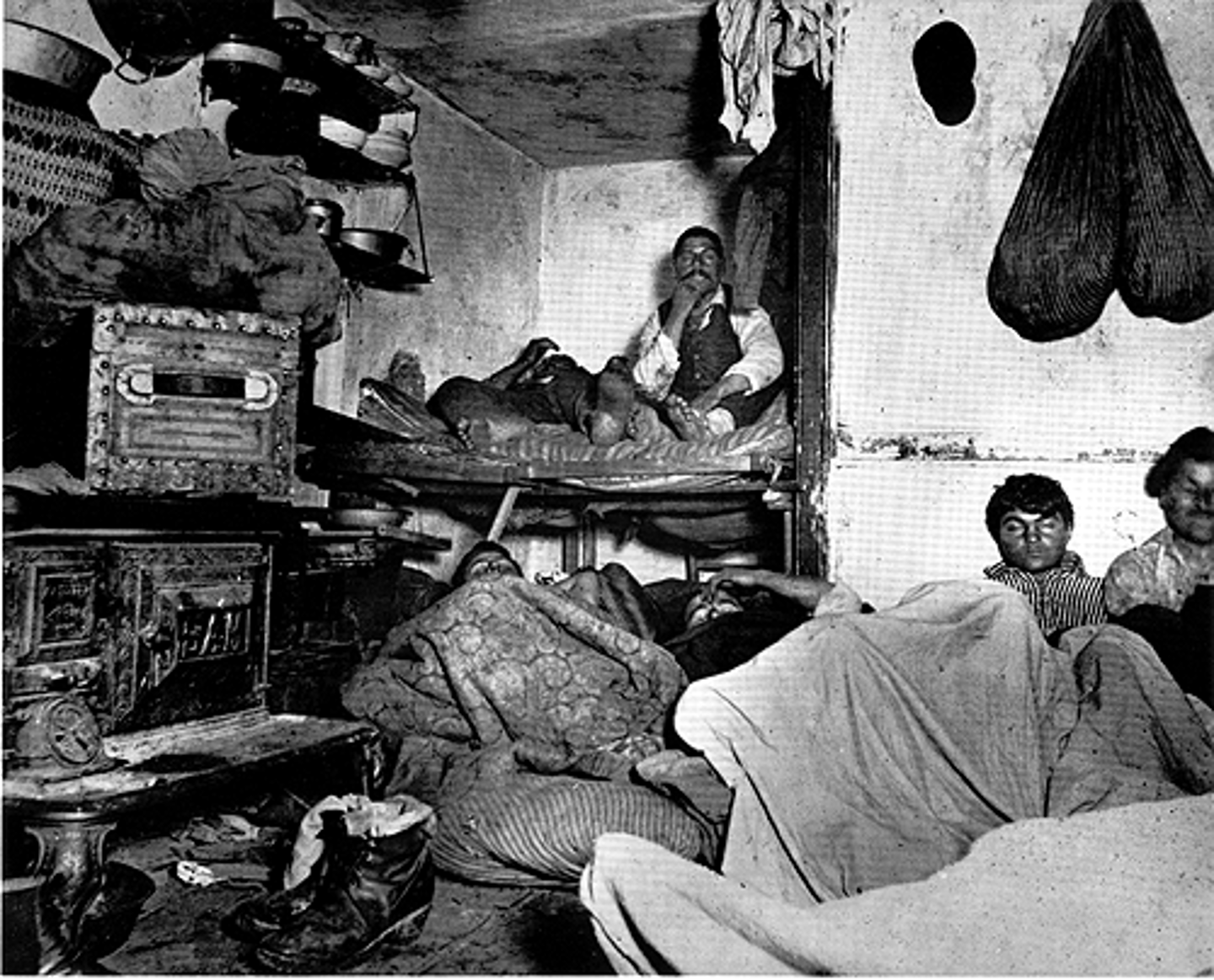
1. A Danish immigrant and New York newspaper reporter and photographer, shocked many middle-class Americans with his sensational descriptions and pictures of tenement life in his 1890 book, How the Other Half Lives.
2. During the 19th century, 2nd Industrial Revolution
3. His photojournalism led to a movement to improve the lives of the urban poor.
Tenements (to be reviewed)
1. It originally refers to a multiple-family rental building, but by the late 19th century it was being used to describe slum dwellings. It had been hailed as a great improvement in housing for the poor. ( Think, a person that rents something is called a tenant, so they live on tenements)
2. Late 19th century, during the second industrial revolution. First tenement was in New York, 1850
3. They were originated because of the population growth in the cities. These tenements were incredibly crowded, with many people in one small room, they were windowless rooms with no plumbing or central heating. People lived under terrible conditions and were often sick because of diseases from contaminated water.
Frederick Law Olmstead (to be reviewed)
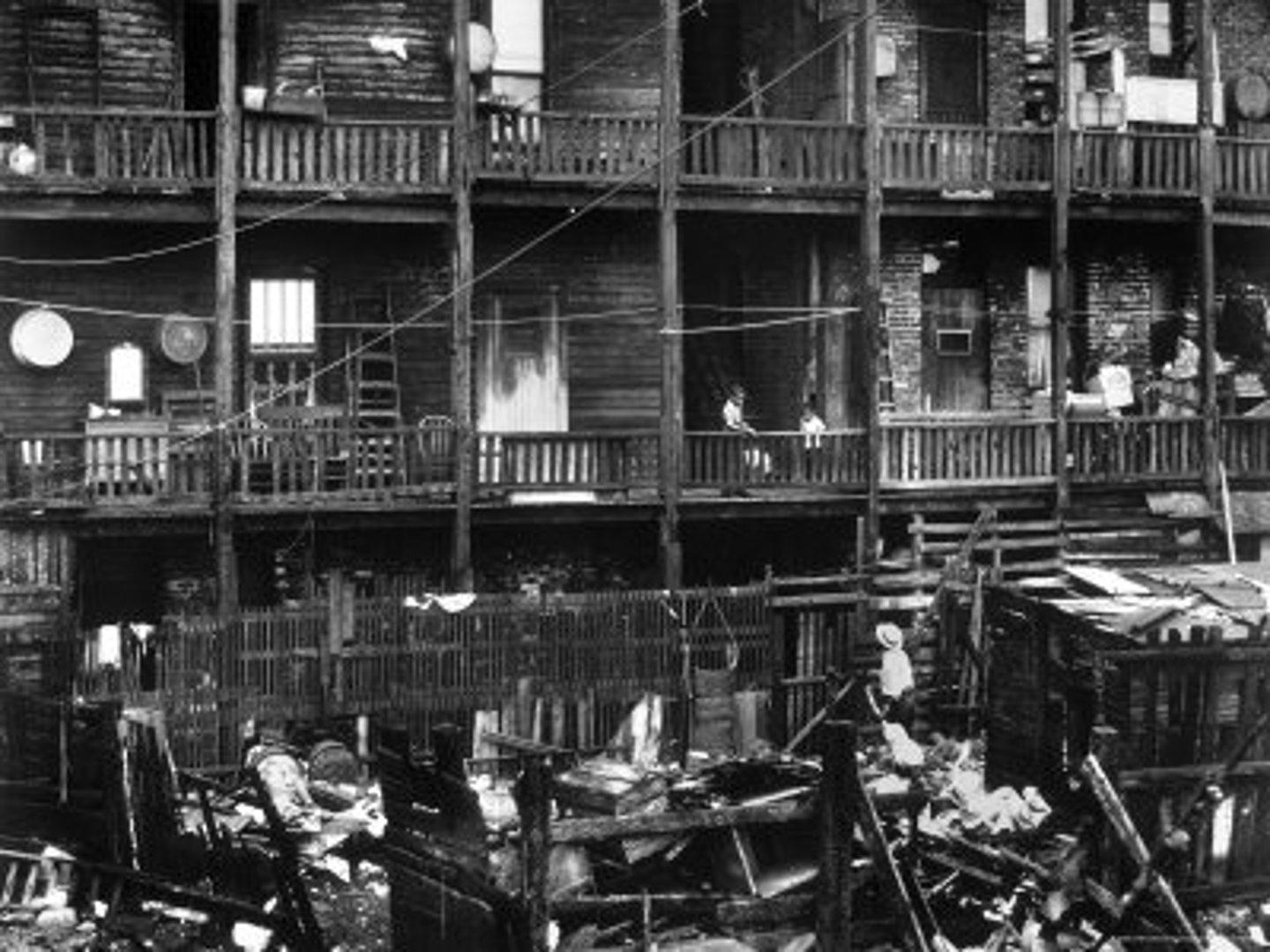
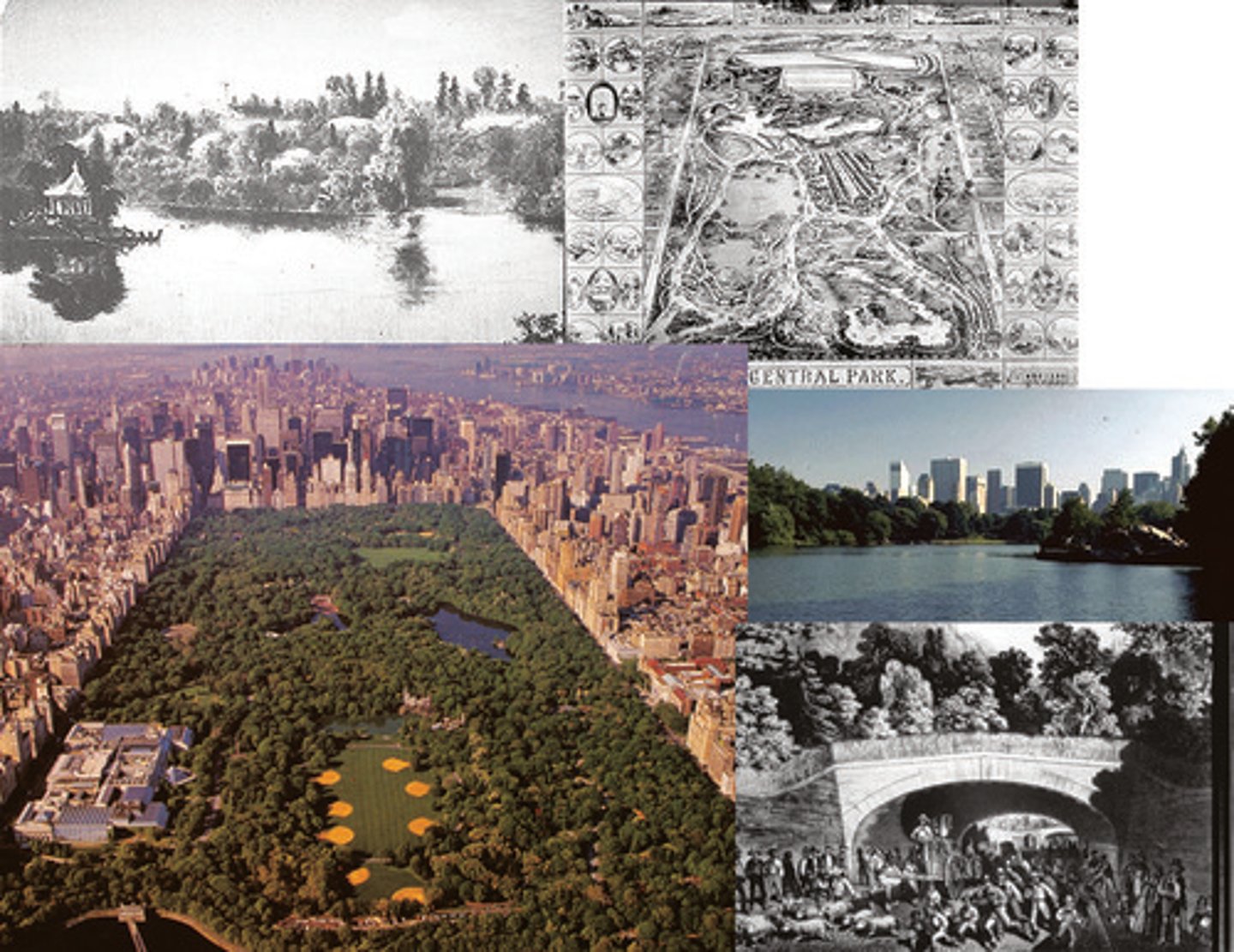
1. He is an American landscape architect. He is considered to be the father of landscape architecture. Along with his partner Calvert Vaux, they designed New York City's Central Park
2. 1850s, when Central Park was designed and created
3. Urban parks were one of the most important innovations in the 19th century, which reflected a growing dispute of urban leaders to have a place away from the city landscape. It provided a place to relax away from the city's busy life. Originally created for the enjoyment of the wealthy class, but soon became a public space for all, however there were still distinctions between them, like the rich were often quiet while lower classes were often running around. Central Park became the most admired public space in the world, resulting in Olmsted and Vaux being recruited to design public spaces in other cities.
Realism (to be reviewed)
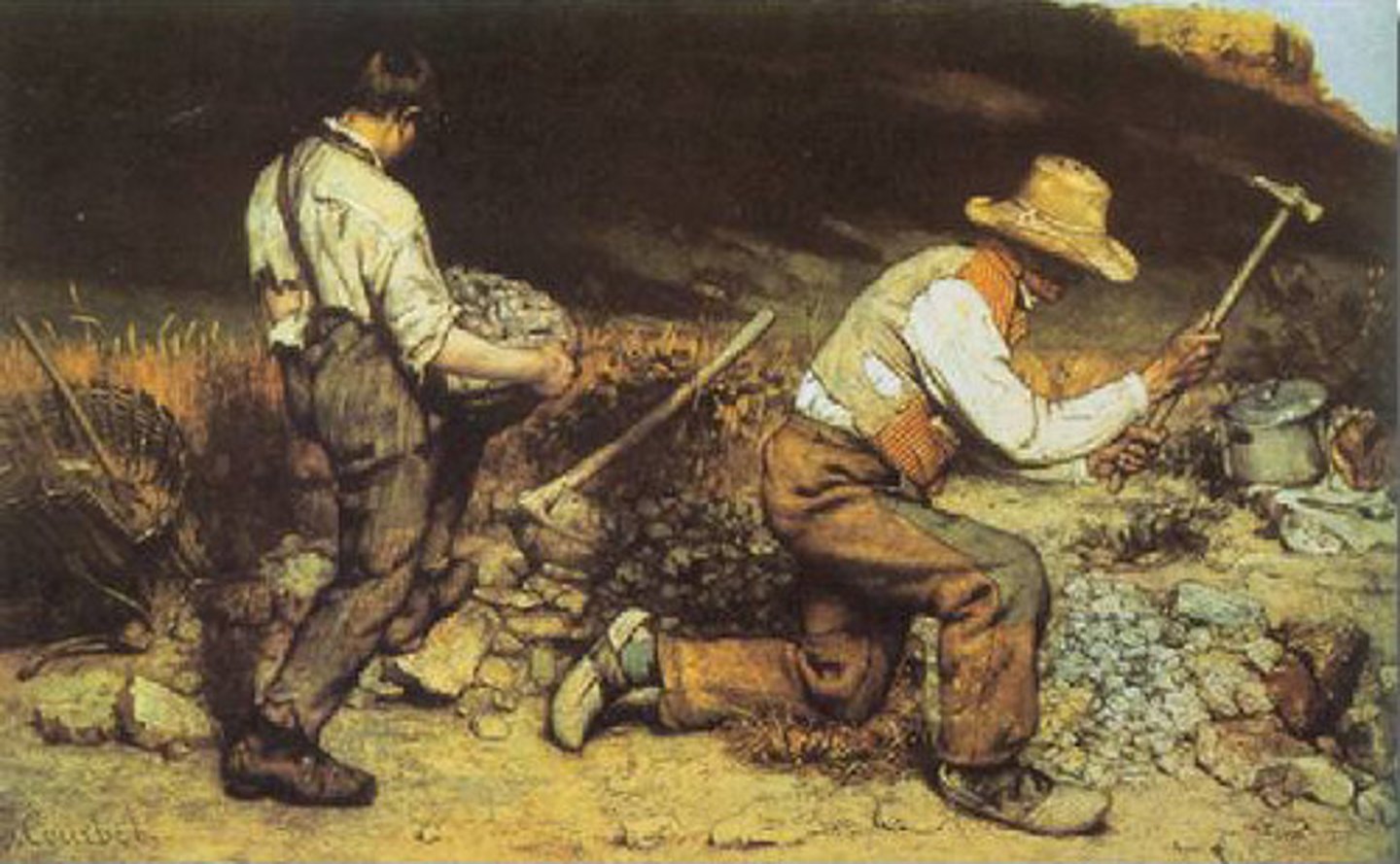
1. 19th century artistic movement characterized by subjects painted from everyday life in a naturalistic manner. Also described paintings painted in a realistic way, almost like a photograph.
2. 19th century, during an art movement
3. Beginning the movement of art by incorporating modern life and art together. It incorporated the lifestyle of many, showing other classes how people lived. Changed the style of paintings from landscapes (Hudson river schools) to modern life paintings.
Naturalism (to be reviewed)
1. A theory that relates scientific method to philosophy by showing that all beings and events in the universe are natural. Concept that nothing exists beyond the natural world. Focuses on explanations of laws of nature instead of spiritual explanations.
2. 19th century, along with realism
3. Naturalism has effected literary works, and has exposed the dark sides of life such as prejudice, racism and poverty. Showed many classes many aspects of the world that they did not see. Expanded the views of people on society.
Ashcan School of Art
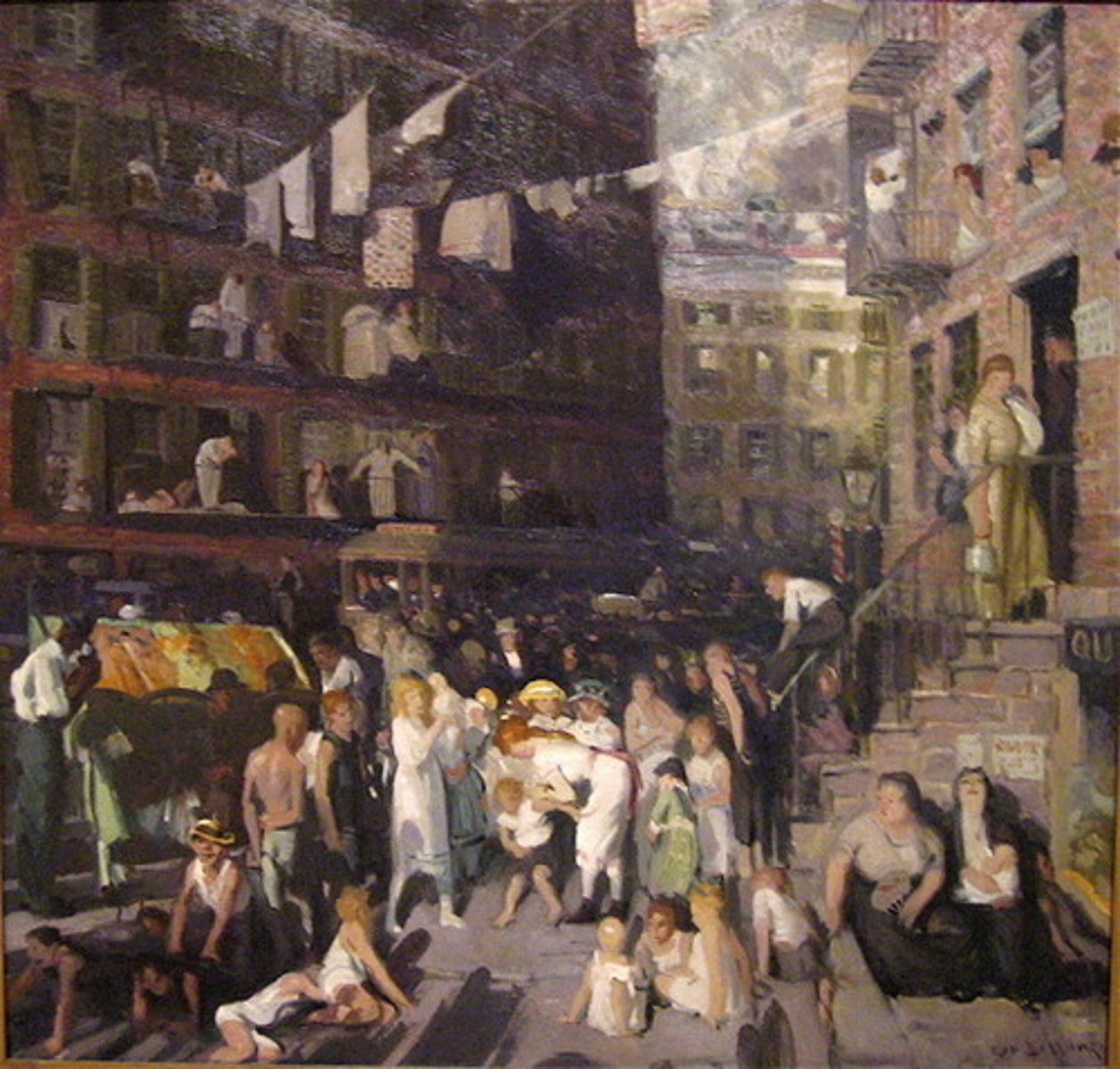
1. A realist artistic movement that came into prominence in the United States during the early twentieth century, best known for works portraying scenes of daily life in New York's poorer neighborhoods; the paintings were populist, expansive, and committed to a documentary realism
2. Early 1900s, USA
3. In the early 1900's focused on urban scenes of crowded tenements and boisterous barrooms.
Pragmatism
1- A philosophical idea supported by William James saying that modern society should rely for guidance not on inherited ideals and moral principles but on tests of scientific inquiry. No idea was valid unless it stood the test of experience.
2- Introduced in the 1870's in the U.S. Became popular during the same time as anthropology.
3- These ideas became popular after the idea of Social Darwinism. James wrote a book called "Pragmatism" in 1907. People started taking a practical approach to morals, ideas, and knowledge.
Anthropology (to be reviewed)
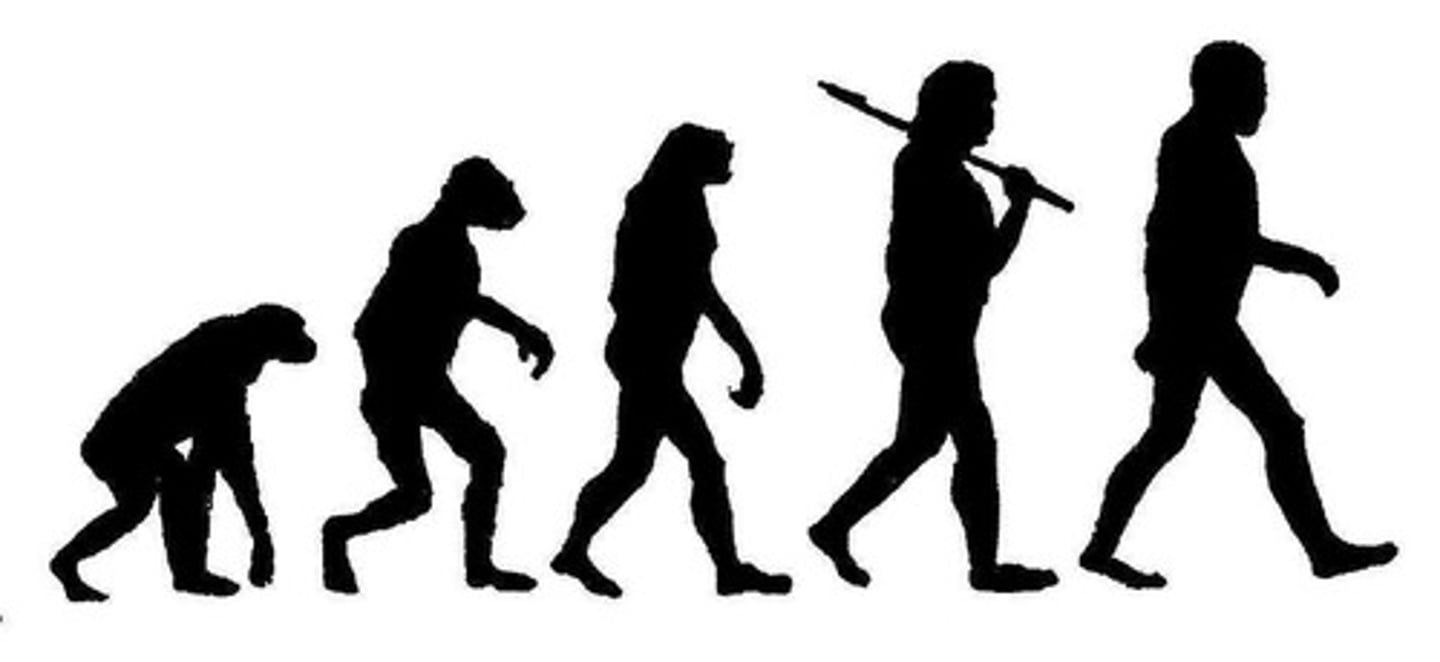
1. Is the study of what makes us human, it is concerning human behavior, biology, culture, society and more. Represents human species.
2. During the creation of social Darwinism
3. Darwinism promotes the growth of anthropology and encouraged scholars to study examine their culture in new ways. Caused whites to look at Indian societies as a coherent culture that had values worthy of respect, even though they were different from white values. However such ideas has little support.
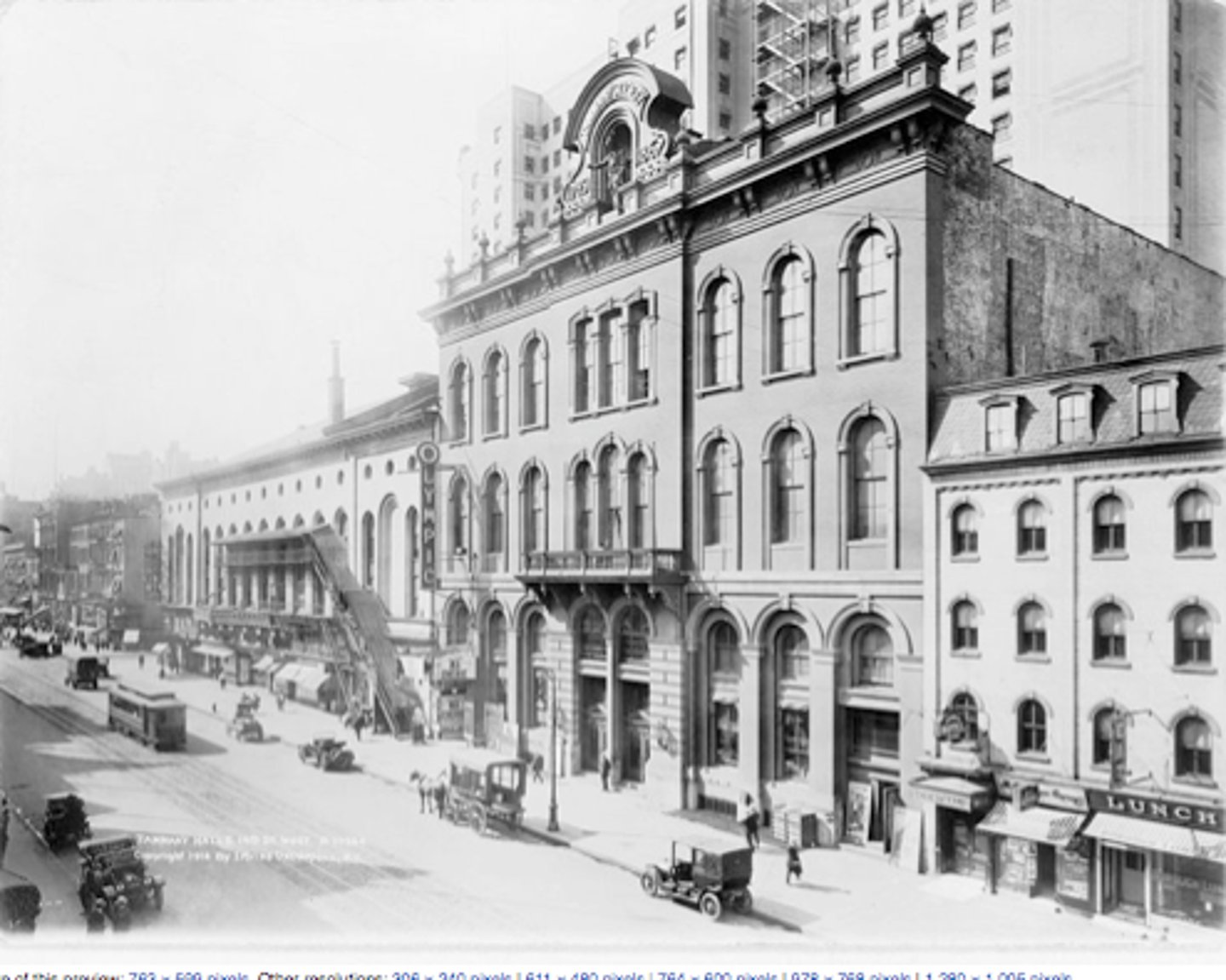
Tammany Hall
1. A name given to the Democratic political machine that dominated New York City politics, drawing high voter support from immigrants coming into the country. Developed into power centers to coordinate the needs of businesses, immigrants, and the underprivileged. These machines asked for people's votes on election day, in return.
2. Started around the mid 19th century, about 1860's, and lasted through the mid 20th century; New York City, New York; same time when immigrants were coming into the country in large numbers
3. Led to the enrichment of politicians from them drawing on this corruption, and was heavily managed by Boss rule. It is infamously known as one of the biggest scandals regarding political machines at this time period.
Boss Tweed (to be reviewed)
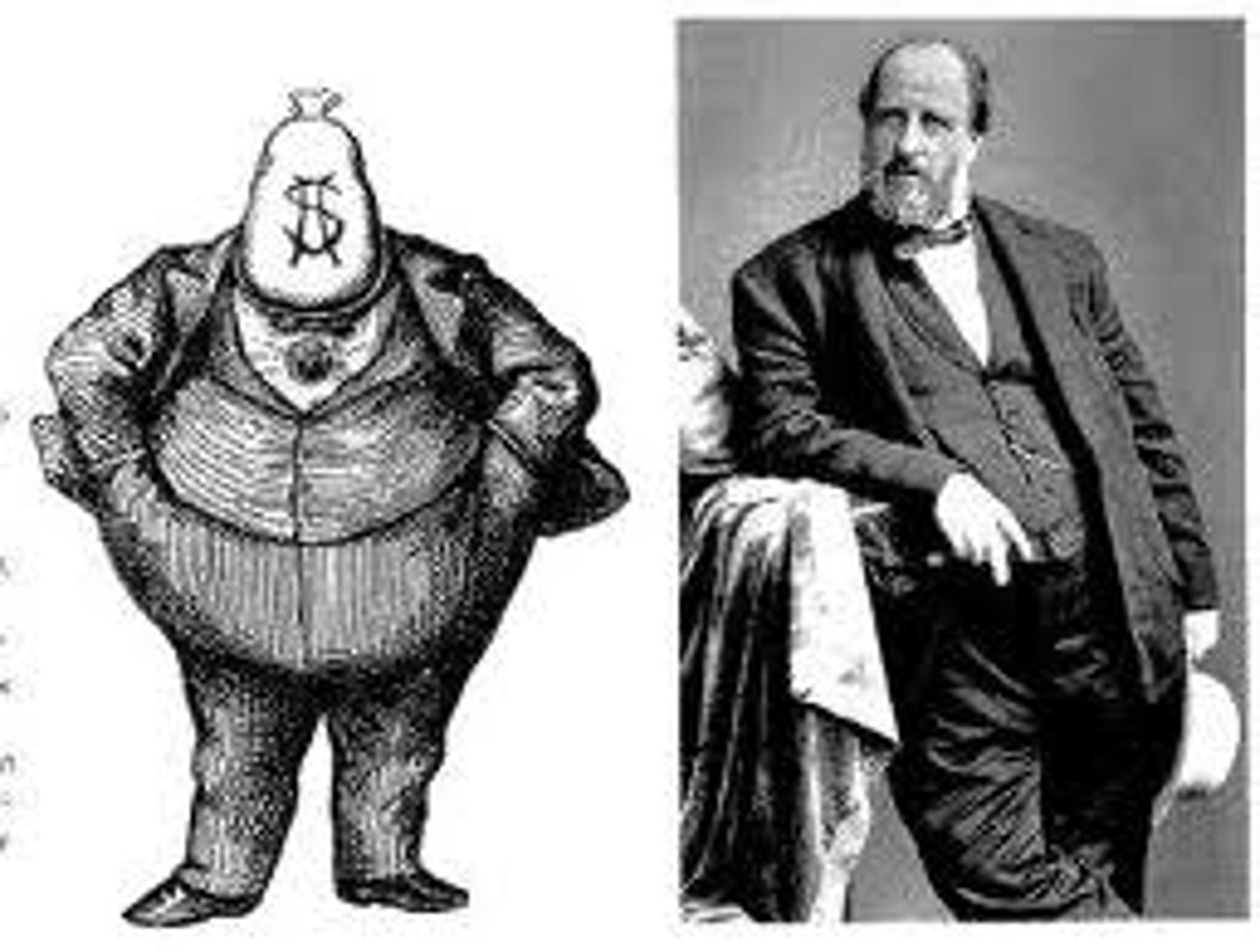
1. William Tweed, head of Tammany Hall, NYC's powerful democratic political machine in 1868. Between 1868 and 1869 he led the Tweed Reign, a group of corrupt politicians in defrauding the city. Like other bosses he stole millions from taxpayers in the form of graft or fraud.
2. 1860s, In NY
3. Political parties came under the control of organized groups of politicians in political machines, each political machine had its boss. Bosses would often win support of people by finding jobs and apartments for immigrants and showing up with food baskets at poor peoples houses. But they stole money from the people. Boss tweed for example stole 65% of public building funds and was responsible for the construction of the NY court house which actually costed $3million to build, but cost tax payers $13million.
Thomas Nast (to be reviewed)
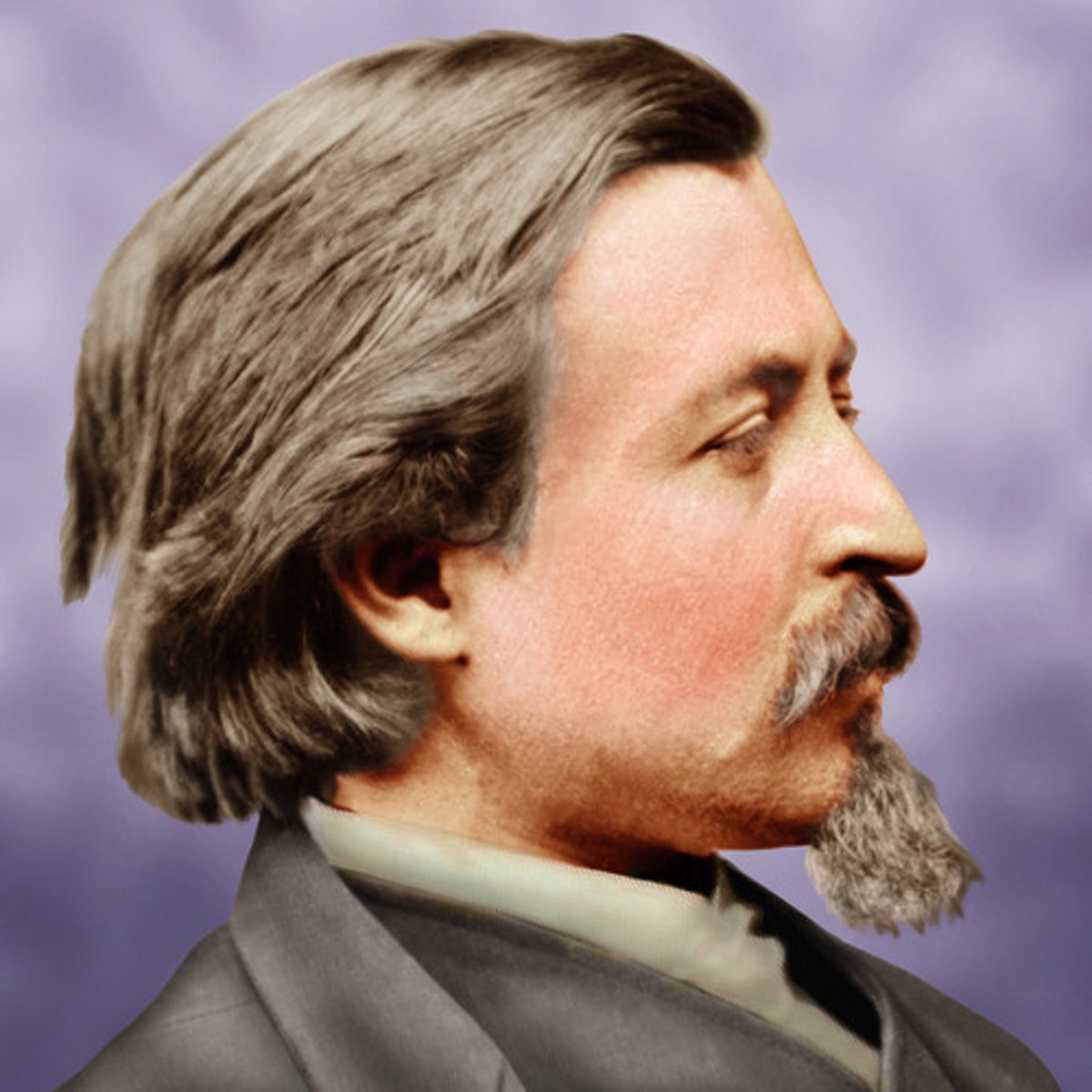
1. Was a German-born American and a famous cartoonists. He was a critic of Boss Tweed and Tammany Hall political machines, he made it his life's mission to take them down.
2. 1840-1902
3. He was also against labor union strikes and he did not like the Irish but sympathized for the way Americans treated the Chinese. He was also a champion for African American rights and rights of Chinese citizens.
What was the role of political machines?
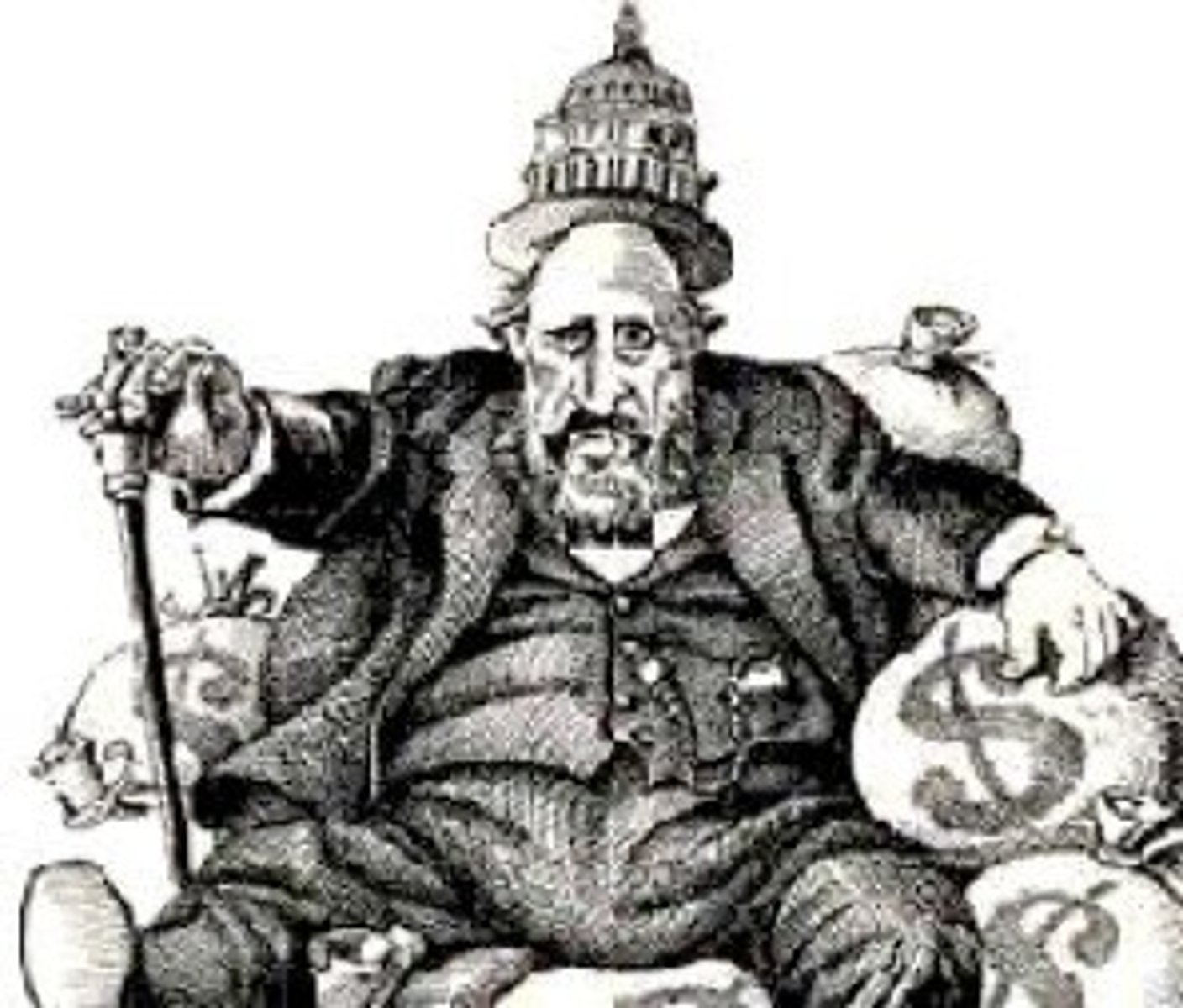
Political machines controlled municipal politics in major cities. This was sort of like a "club" that worked like a "well oiled machine." They got their "guys" elected and then "their politicians" in return did favors for the political machine. In the 19th Century and early 20th Century they were often corrupt. They gained their power from the use of the immigrant vote which also led to an increase of nativism.______________ The political machines capitalized on the incoming numbers of immigrants by providing them with services in return for votes (ie, they helped immigrants find jobs, places to stay and perhaps gave them food baskets to get them started). In turn the political machines were often corrupt and stole taxpaying money from people.
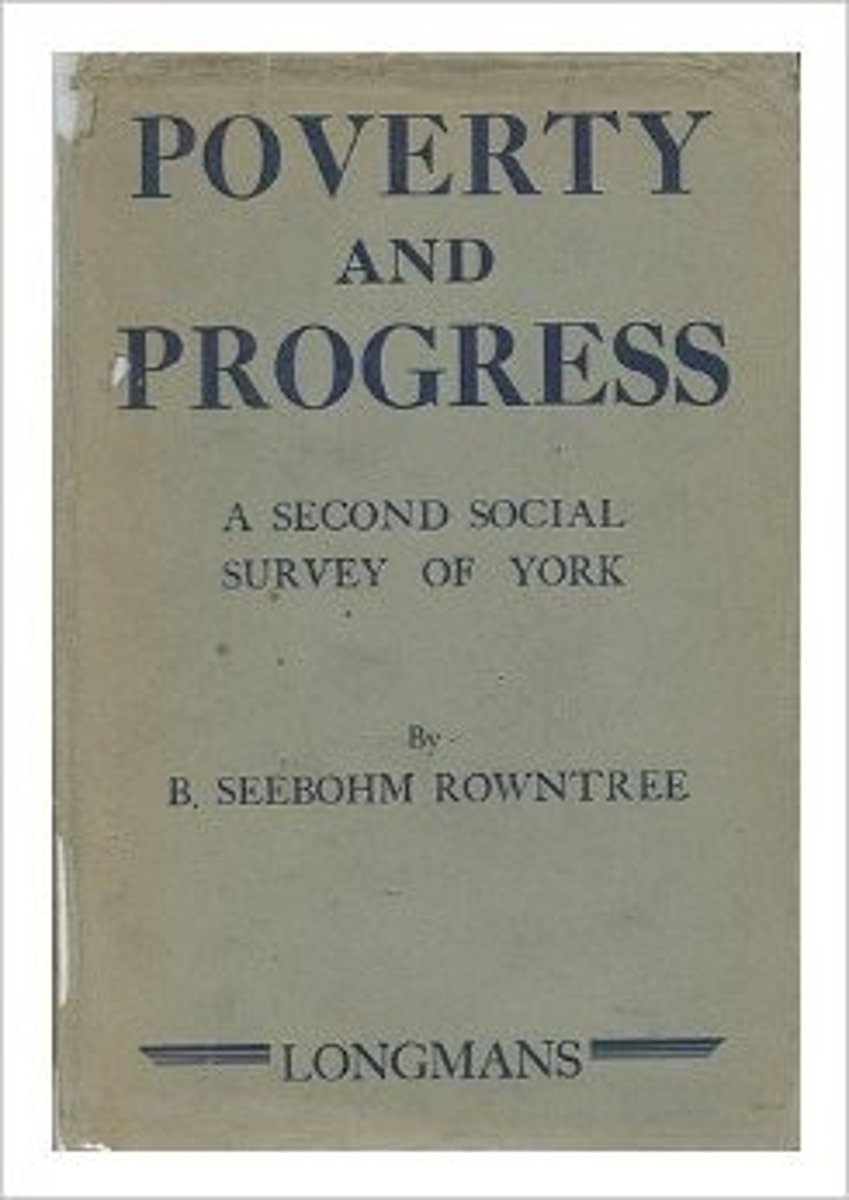
Progress and Poverty (to be reviewed)
1. Book written by Henry George, published in 1879 that became an instant best seller. In this book George proposed one innovative solution to poverty which was to replace all taxes with a single tax on land.
2. 1879, during 19th century reform movements
3. This book encouraged readers to look more critically at the effects of laissez-faire economics. Caused readers to create organizations to try to implement the author's ideas, and encourages a shift in American public opinion away from pure laissez-faire toward more government regulation
Looking Backward
1.Book written by Edward Bellamy that envisioned a future era in which a cooperative society had eliminated poverty, greed, and crime through the story of a young bostonian who slept in 1887 and woke up in 2000 to find a change in social order.
2. 1888, 1 year before jane addams created the chicago settlement house.
3. The readers of this and Progress and Poverty went on to join reforms and organizations in order to make the ideas of the books come into reality. It encouraged a shift in public opinion from laissez-faire to greater government regulation. Promoted nationalism.
Settlement Houses
1. The first settlement house was founded by Jane Addams in Chicago. They were often neighborhood centers in ethnic enclaves that offered education, recreation, and social activities (theaters), taught English to immigrants etc. It had the goal of helping the immigrant assimilate to American life.
2. 19th century, after tenements were created, effort to better the lives of poor people and immigrants
3. Settlements houses were often run by college educated middle class women who had often majored in the new social sciences. They provided the same services as the political machines (plus more), but instead of asking for votes they often asked for volunteer service when the immigrants "got on their feet". The services they provided helped to significanlty reduce the power of political machines. ----- IN ADDITION many Settlement House workers were often political activists who fought against child labor and were for women suffrage.
Jane Addams (to be reviewed)
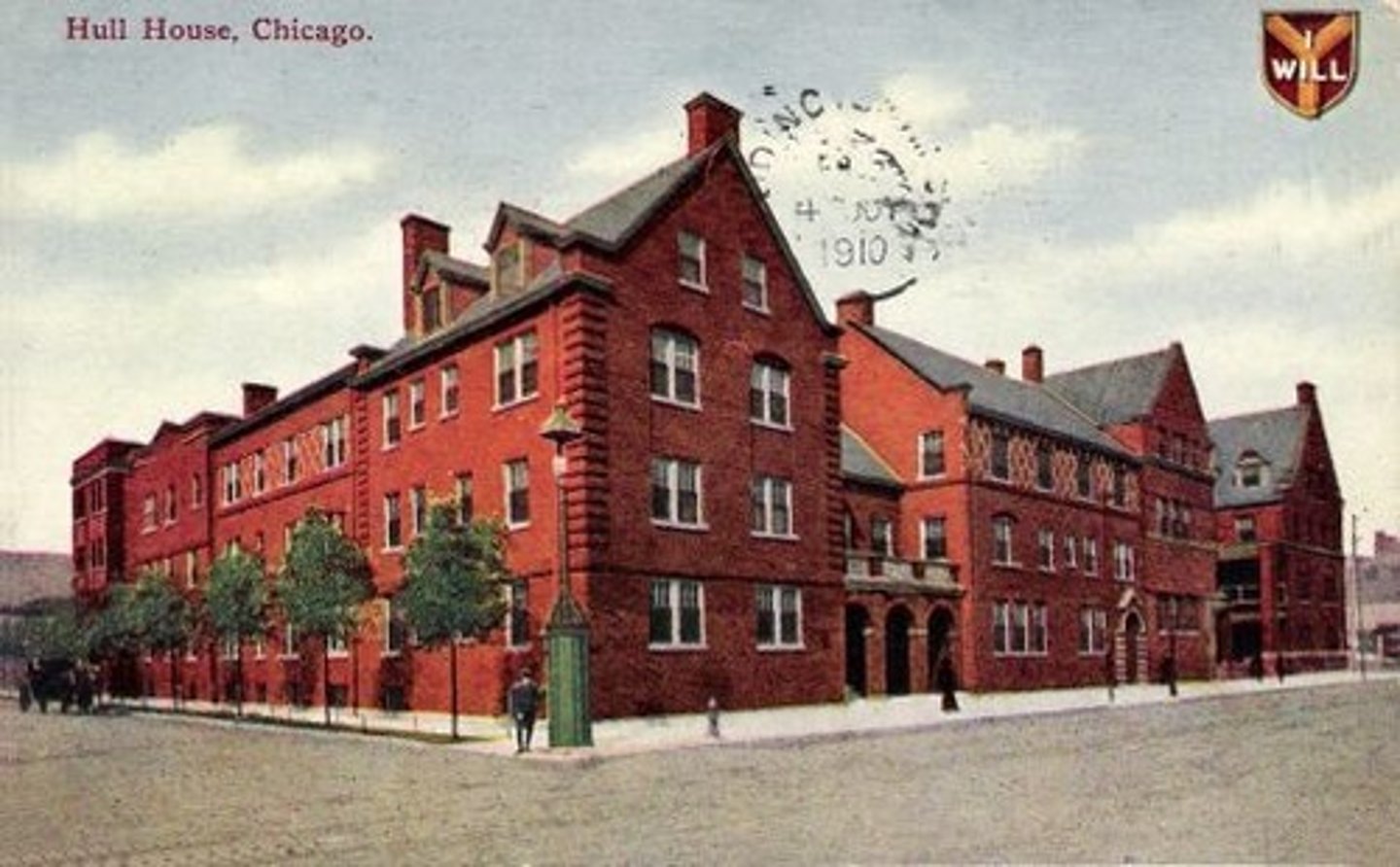
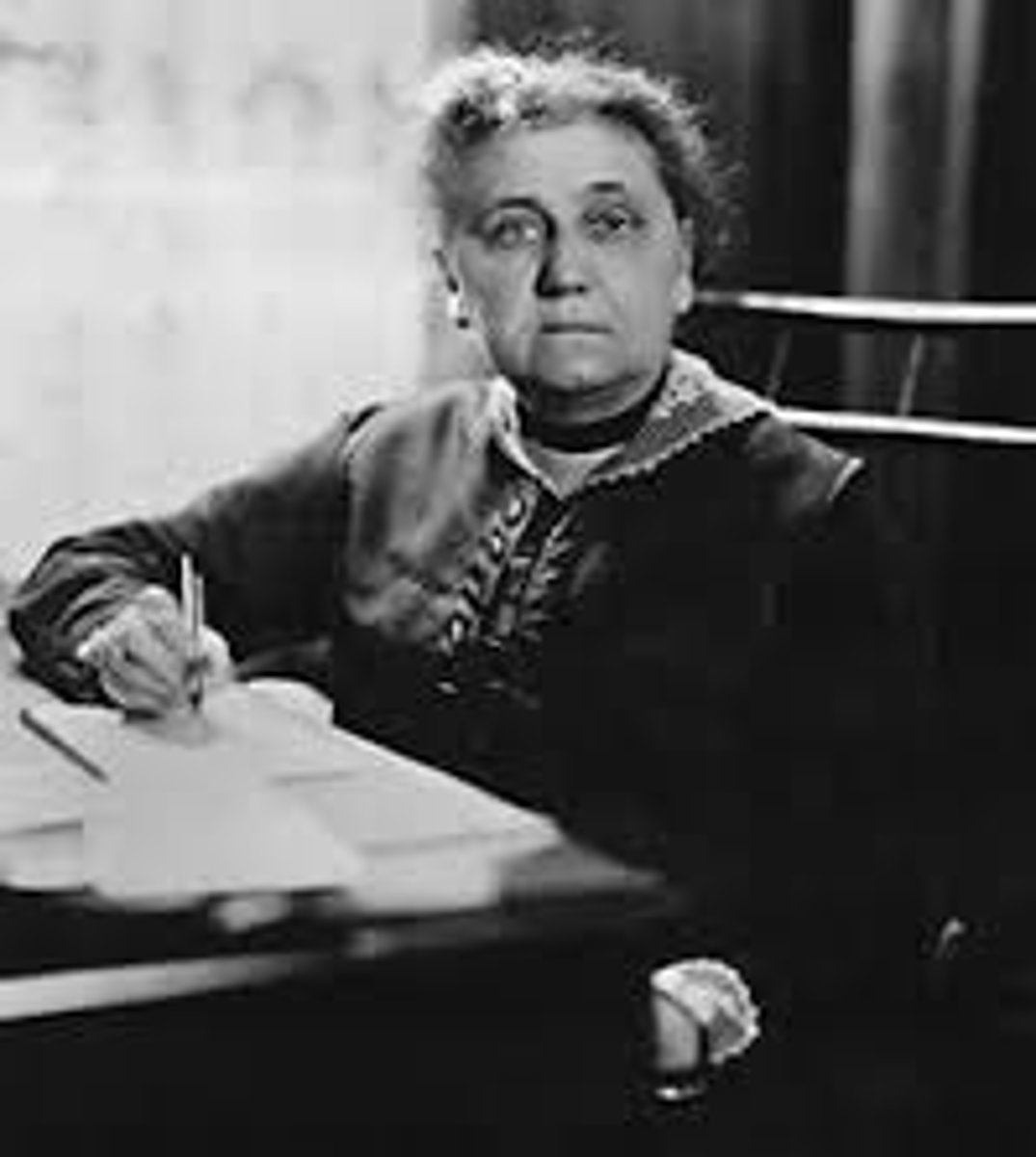
1. Founder of settlement houses. She was concerned about the lives of the poor, so she along with college classmates created Hull House in Chicago, a settlement house that gave assistance to poor immigrants. She lived and worked there.
2. Hull house was created in 1889
3. By 1910 there were more than 400 settlement houses in Americas largest cities. She had the goal of relieving the effects of poverty by providing social services for people in communities. She was also in favor of women's suffrage, as well as against child labor.
Social Gospel Movement (Review)
1. A religious movement lead that linked Christianity with progressive reforms and encouraged middle-class Protestants to attack urban problems and were against social darwinism. Believed that we should emulate the life of Jesus Christ.
2. 1880s and 1890s
3. Brought to light many social issues to the middle class attention that needed to be changed. Furthered the idea of child labor laws and many ideas from unions and platforms. Implemented numerous reforms ideals.
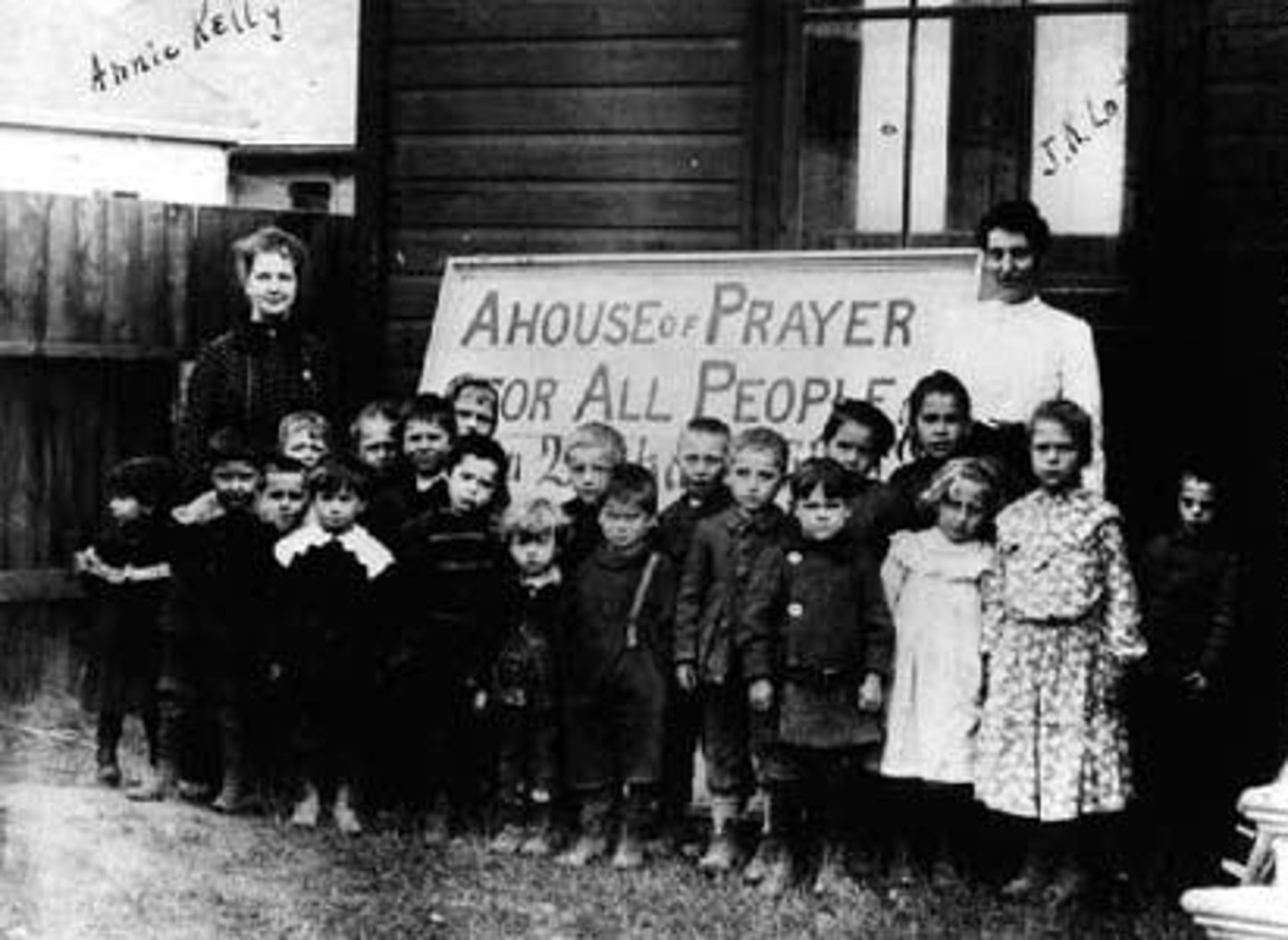
Walter Rauschenbusch (to be reviewed)
1. Leader of the Social Gospel Movement, was a Baptist Minister from New York, who worked in the poverty-stricken neighborhood of NYC called Hell's Kitchen. He wrote books urging organized religions to take up the cause of social justice.
2. 19th and 20th century
3. His social gospel preaching linked Christianity with the progressive reform movement and encouraged middle class Protestants to attack urban problems. He got a lot of people to join the movement.
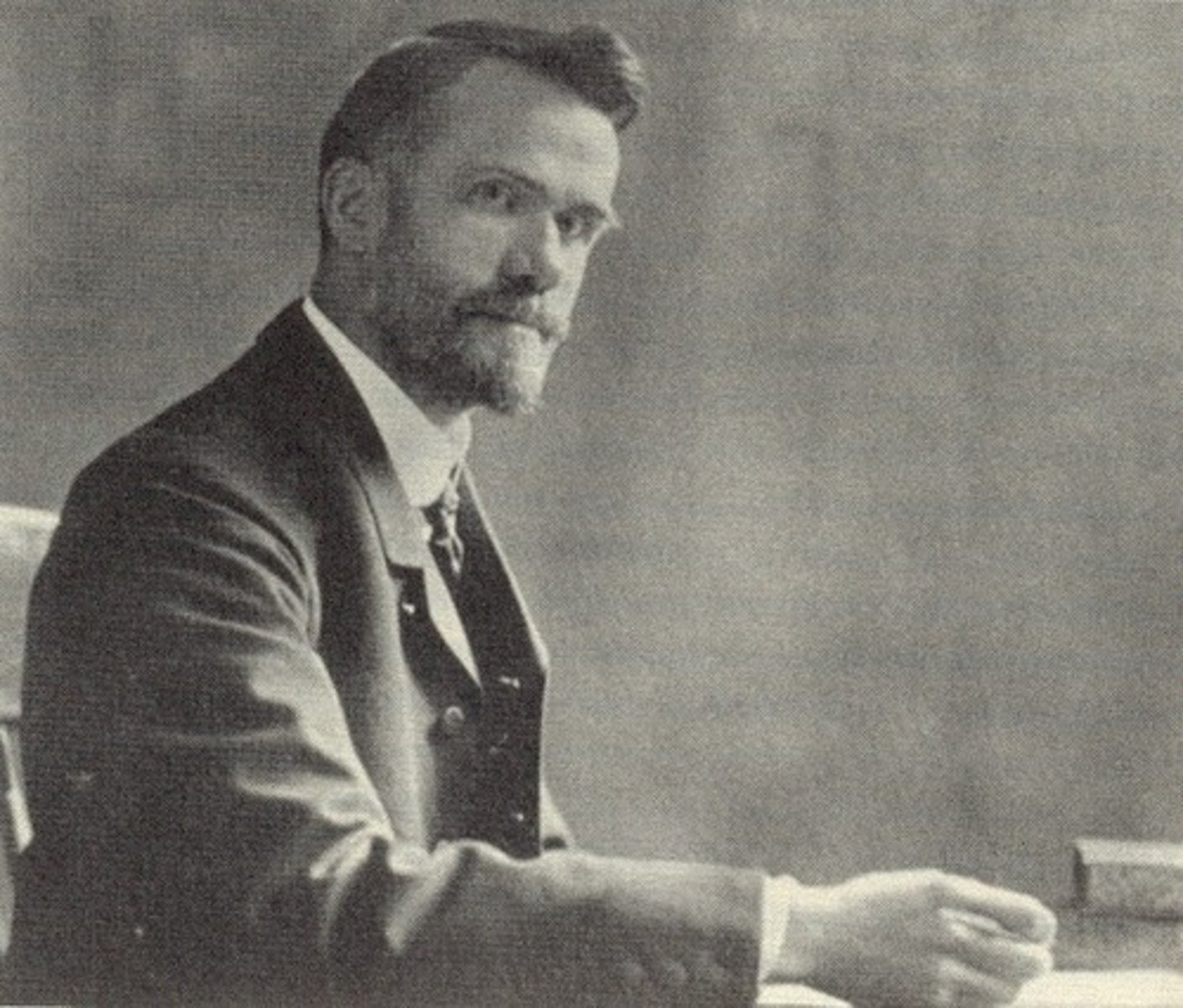
Salvation Army
1. An organization imported from England providing basic necessities for homeless and poor while preaching Christian Gospel. Concentrated more on religious revivalism than on relief of poor and homeless.
2. Founded in London's East End and began operating in the U.S. in 1879. Started before the Social Gospel Movement.
3. It shows the effects of the Social Gospel Movement how it was spread to America. Example of the fusion of religion with reform. Many left traditional parish work to work for Salvation Army and tensions rose between Protestants and Catholics. It still exists today running charities throughout the world.

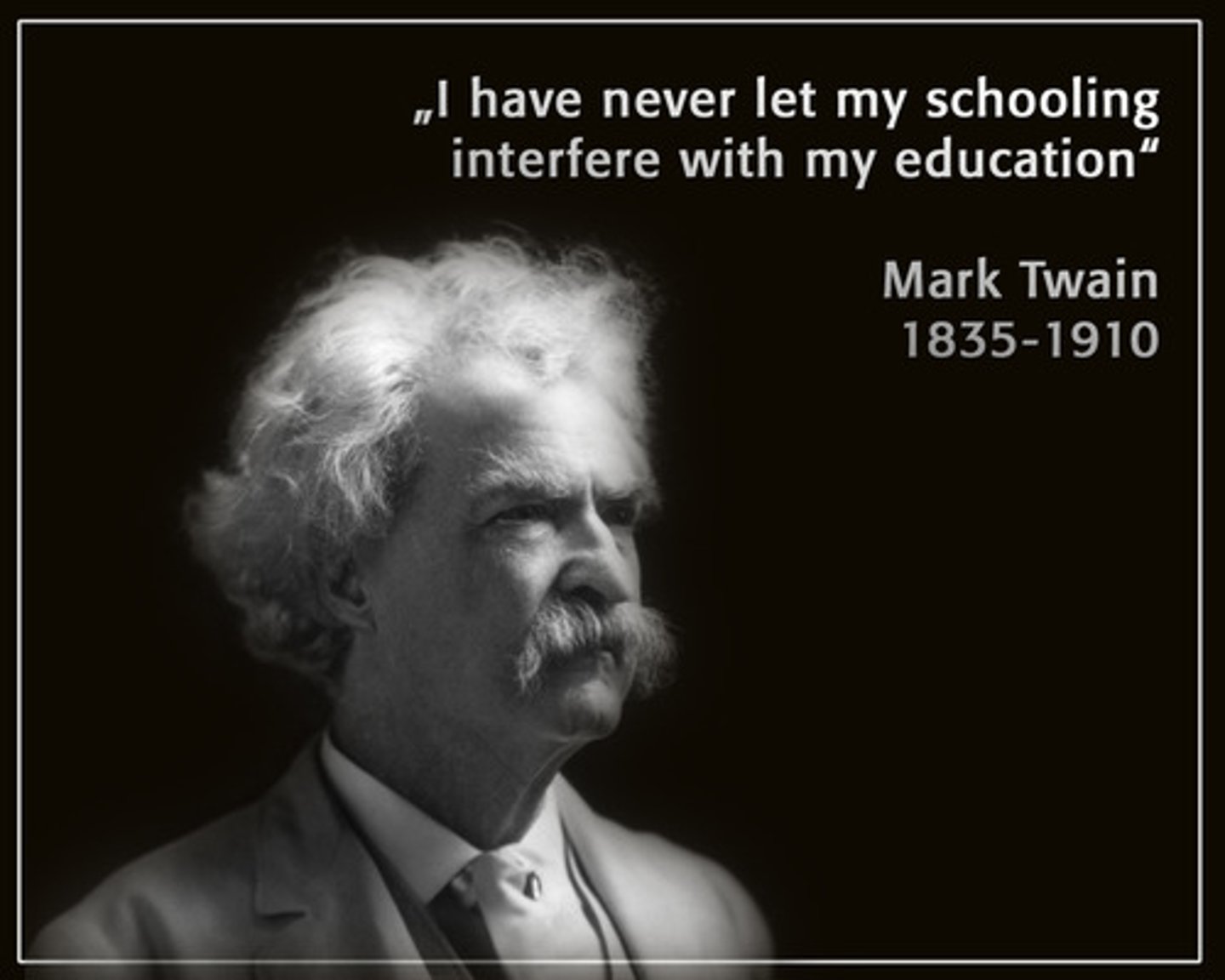
Mark Twain
1. Popular American writer who lived from 1835 to 1910. He used "romantic" type literature with comedy to entertain his audiences and is best known for his novels, The Adventures of Huckleberry Finn (1884) and Tom Sawyer. In 1873, he teamed up with Charles Dudney Warner and wrote The Gilded Age.
2. 1835-1910; Gilded Age
3. First literary voice that was distinctly American; typified a new breed of American authors in revolt against the elegant refinements of the old New England school of writing; made his most enduring contribution in recapturing frontier realism and humor in the authentic American Dialect
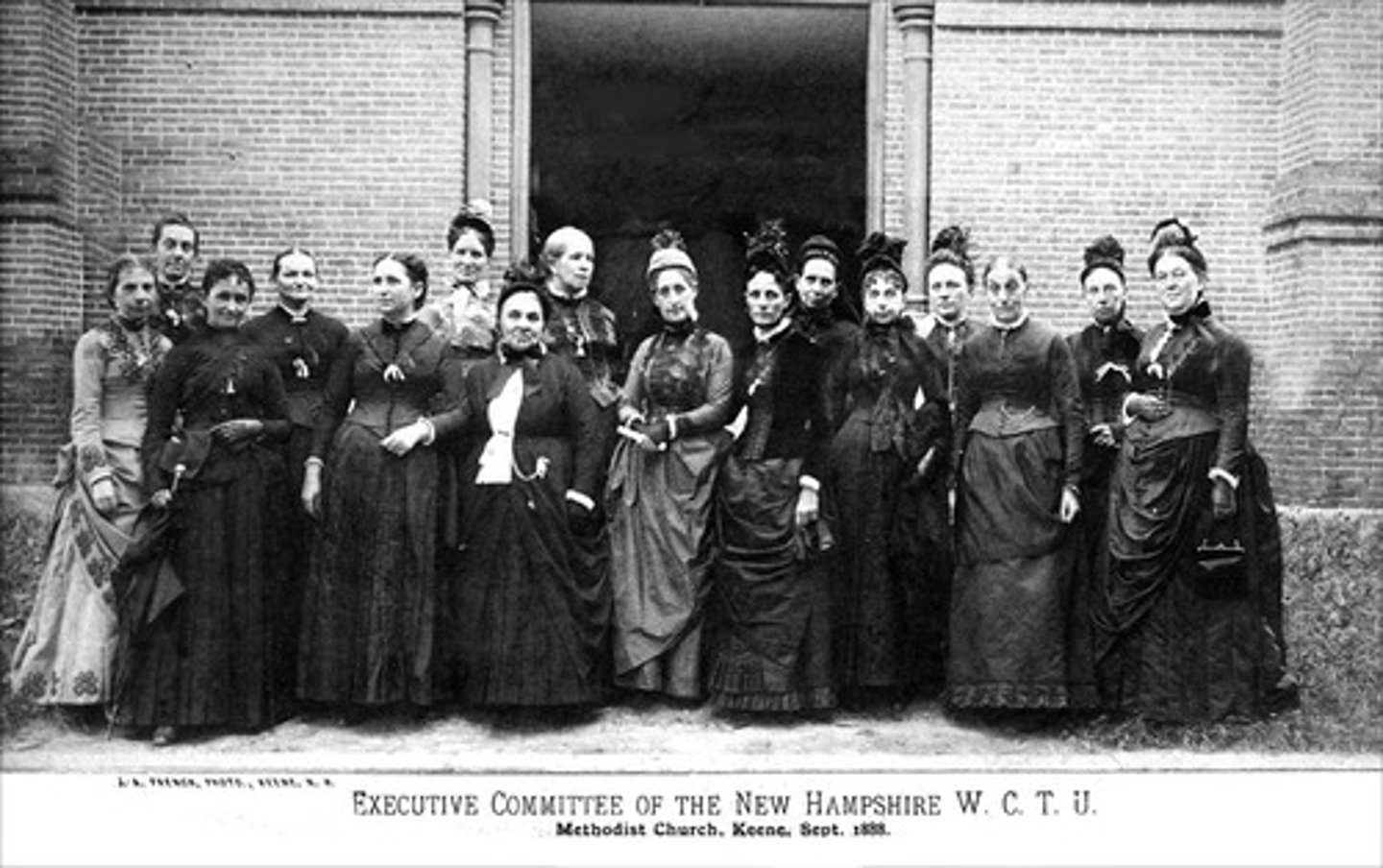
Women's Christian Temperance Union (WCTU) (to be reviewed)
1. Was formed by Frances E Willard of Illinois, it had 500,000 members by 1898. It was a women's organization that advocated total abstinence from alcohol during a time where excessive drinking by male workers was common
2. Created in 1874
3. Women started the temperance movement because of the violence that they suffered at home from drunk men. Immigrants and workers used to drink as a way to relieve stress from work and drinking was one of the most important leisure activities of the time. In 1913 the Antisaloon League was created and in 1916 they persuaded 21 states to close down all saloons and bars
Frances E. Willard (to be reviewed)
1. Leader of the Women's Christian Temperance Union. Her goal was to advocate the total abstinence from alcohol
2. 19th century temperance movement
3. She succeeded in raising the age consent for drinking in many states, and also succeeded at passing labor reforms including the 8-hour workday. Her vision included prison reform, temperance, Christian socialism and expansion of women's rights.
What were the changes in education?
1. New high schools, education should be the responsibility of the state, broadened curriculum, school year extended to 6 months, increased pay for teachers, teachers need prior training, first women's college, handicapped schools, institutions allowing african americans
2. Late 19th century, USA, after the civil war
3. More independence for women now that education is available to them, disabled sent to schools instead of prisons, more educated population
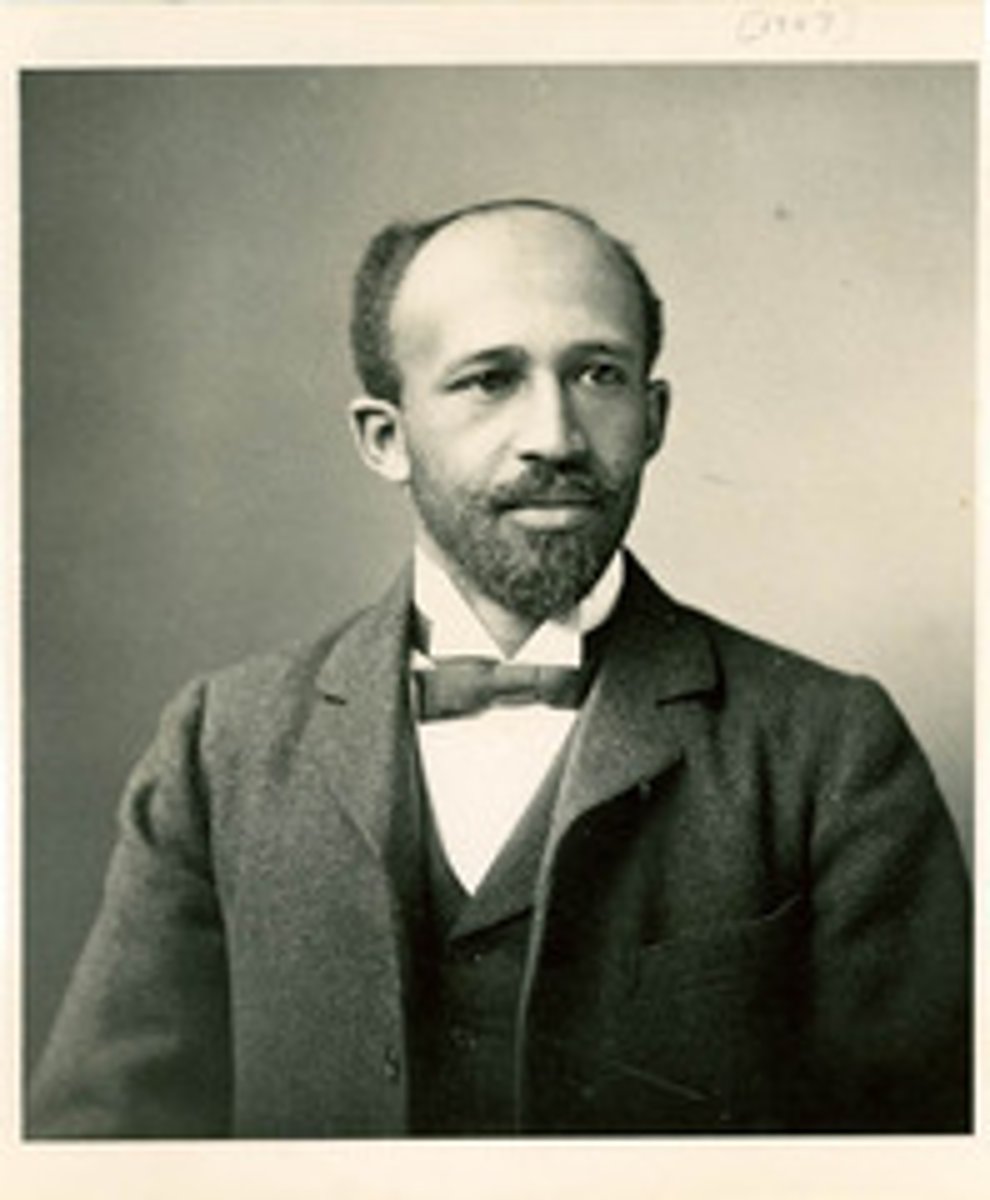
W.E.B. DuBois
1. A social scientist who fought for equal rights by founding the Niagara Movement and was the first African American to receive a doctorate from Harvard
2. Late 19th century and early 20th century; During the time of Booker T Washington
3. Advocated for black equality, integrated schools and equal access to higher education for the talented tenth; led to the establishment of the NAACP; led to protest among blacks; helped establish equal rights for blacks
Talented Tenth
1.) Was a term created by W. E. B. Du Bois to describe the small percentage of educated and upper middle class african americans who were high achievers in the face of racial prejudice.
2.) September 1903, after the salvation army.
3.) A concept espoused by black educator and author W.E.B. Du Bois, emphasizing the necessity for higher education to develop the leadership capacity among the most able 10 percent of black Americans.

 Note
Note  Flashcards (165)