Measles Virus: Pathology, History, and Vaccination Strategies
 Studied by 0 people
 Call Kai
 Learn
Learn Practice Test
 Spaced Repetition
 Match
Match Flashcards
 Knowt Play
1/26

There's no tags or description
Looks like no tags are added yet.
Name | Mastery | Learn | Test | Matching | Spaced | Call with Kai |
|---|
No analytics yet
Send a link to your students to track their progress
27 Terms
What is measles?
A respiratory disease caused by the measles (rubeola) virus.
What family does the measles virus belong to?
Paramyxoviridae family.
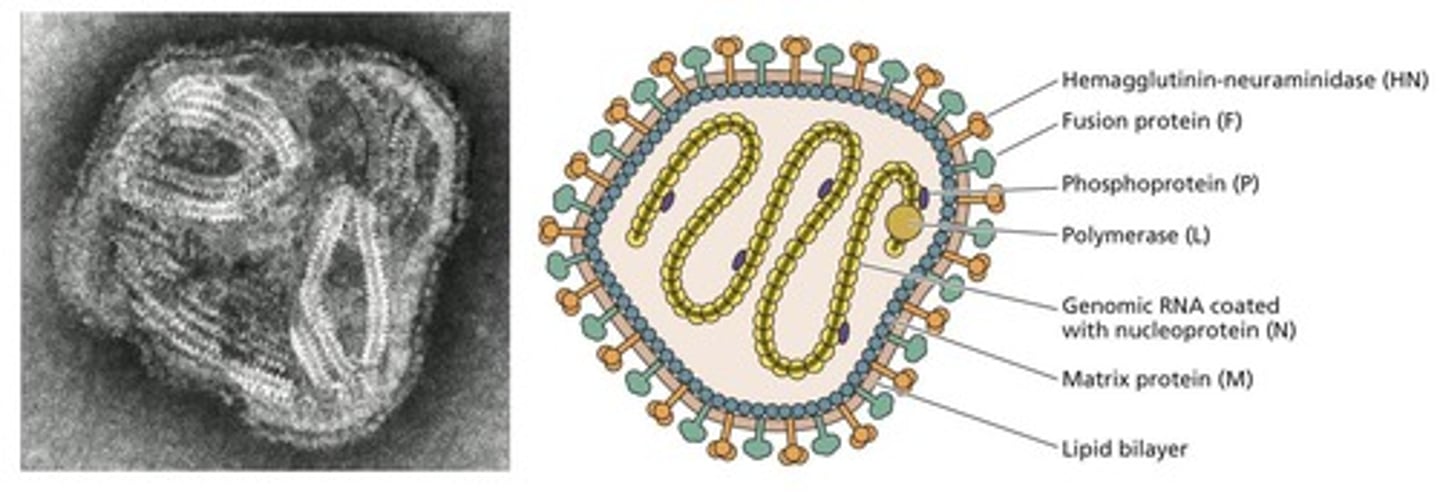
What type of genome does the measles virus have?
Enveloped, negative-sense single-stranded RNA genome.
How contagious is measles?
Measles is one of the most contagious human diseases.
How long has measles been known to exist?
Measles has been around for more than 1,000 years.
What are the initial symptoms of measles?
High fever, cough, runny nose, and red, watery eyes.
What are Koplik spots?
Tiny white spots that may appear inside the mouth 2 or 3 days after symptoms begin.
When does the measles rash typically appear?
3 to 5 days after symptoms begin.
Where does the measles rash start and how does it spread?
It starts as flat red spots on the face and spreads downward to the neck, trunk, arms, legs, and feet.
What historical figure first documented measles?
A Persian doctor in the 9th century.
What significant finding did Francis Home make in 1757?
He demonstrated that measles is caused by an infectious agent in the blood of patients.
When did measles become a nationally notifiable disease in the U.S.?
In 1912.
What was the average number of measles-related deaths reported yearly in the first decade of reporting?
6,000 deaths.
What was the impact of the measles vaccine introduced in 1963?
It drastically reduced the incidence of measles.
What is the role of Hemagglutinin (H) and Fusion (F) proteins in measles virus replication?
They mediate the transmission of the measles virus into human respiratory tract cells.
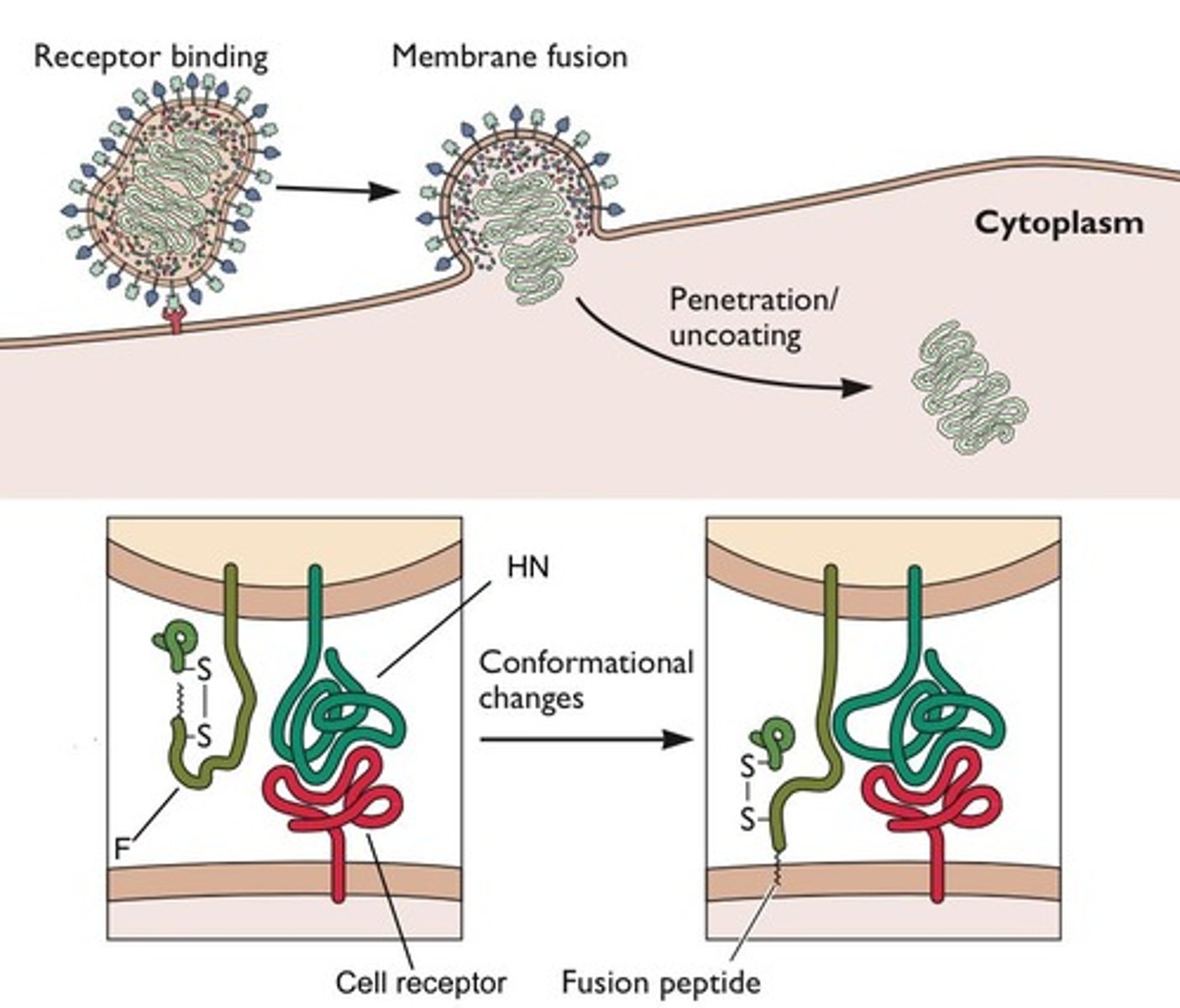
What happens to the measles virus once it enters a host cell?
RNA polymerase transcribes the viral RNA genome into 6 mRNAs, which are translated into 8 viral proteins.
What is SSPE?
Subacute sclerosing panencephalitis, a severe neurological complication of measles.
What year was the measles vaccine improved and distributed?
In 1968.
What was the CDC's goal regarding measles in 1978?
To eliminate measles from the United States by 1982.
What percentage of measles cases did the vaccine reduce in the U.S.?
>99% compared to pre-vaccine levels.
What is the effectiveness of one dose of the measles vaccine?
93% effective.
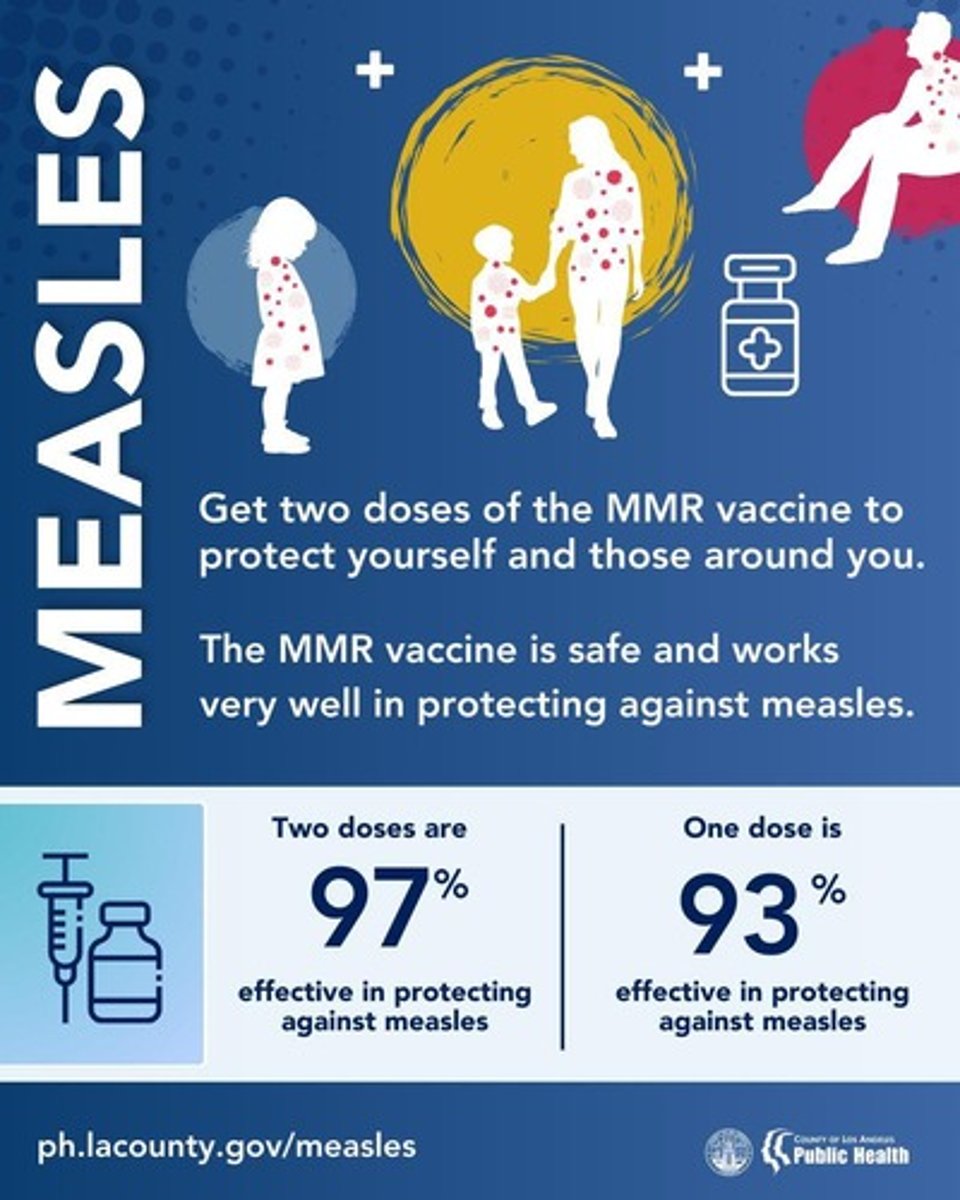
What is the effectiveness of two doses of the measles vaccine?
97% effective.
Who should receive the measles vaccine?
Children, college students, adults born after 1957, international travelers, and healthcare workers.
What is the first dose age recommendation for children receiving the measles vaccine?
12 to 15 months.
What is the second dose age recommendation for children receiving the measles vaccine?
4 to 6 years.
What complications are more likely in children under 5 and adults over 20?
They are more likely to suffer from measles complications.
What severe complications can arise from measles?
Pneumonia, encephalitis, and SSPE.

