ADM
 Call Kai
 Learn
Learn Practice Test
 Spaced Repetition
 Match
Match Flashcards
 Knowt Play
1/20

There's no tags or description
Looks like no tags are added yet.
Name | Mastery | Learn | Test | Matching | Spaced | Call with Kai |
|---|
No analytics yet
Send a link to your students to track their progress
21 Terms
Aeronautical Decision-Making (ADM)
Systematic Process (Evaluate Info / Assess Risk / Safest Action)
→ Maintains Safety Margins
→ ~70% Accidents = Human Factor (ICAO 2023 / IATA 2024)
→ Mitigates LOC-I / CFIT (loss of control in flight and controlled flight into terrain)
History and Evolution of ADM
Developed with Crew Resource Management (CRM)
after United Airlines Flight 173→Comm./Decision Failure
Emphasizing Comm., Leadership, Teamwork, Decision-Making,
later shaped by Glass Cockpit / Automation introducing; Automation Risks
Overreliance
Mode Confusion
Evolving from Pilot Error → Human Factors Approach, and
advancing to Human–Autonomy Teaming (AI) requiring
Trust
Transparency
Human–Machine Collaboration
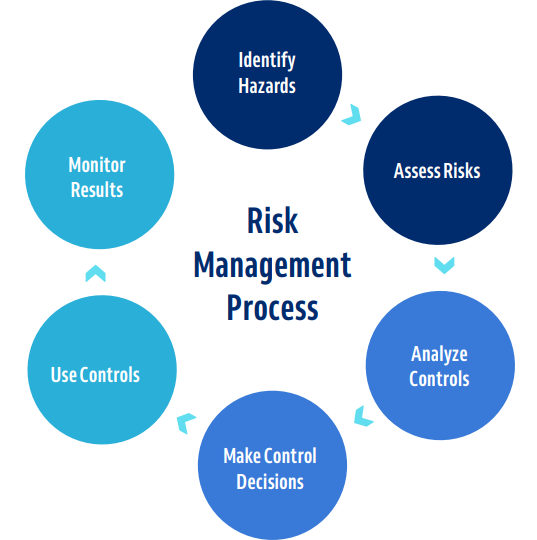
Crew Resource Management (CRM)
Optimal use of all available Resources;
human
hardware
informational resources
to enhance; Safety & Operational Effectiveness through;
Non-Technical Skills. Utilizing:
Situational Awareness,
Workload Management,
Communication within an Organizational Framework.
CRM provides→Framework
ADM provides→Integration of Cognitive Strategies (for safe decision-making)
Failure Indications: Breakdowns in communication, leadership, and decision-making.
CRM includes the entire crew and organization
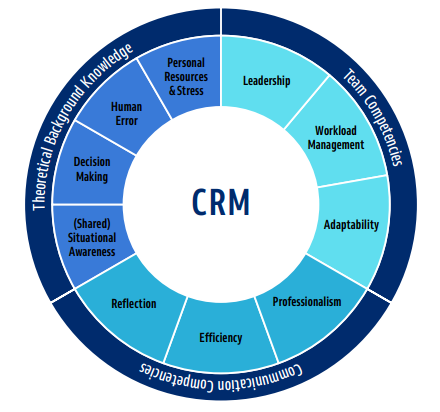
Hazardous Attitudes
FAA 5 Attitudes;
Anti-Authority→(Ignore SOPs)
Impulsivity→(Rush Checklists)
Invulnerability→(Underestimate Risks)
Macho→(Overconfidence)
Resignation→(Giving-Up)
These are Cognitive Biases affecting Decision-Making, leading to Poor Judgment occurring under Stress / Fatigue / Time Pressure,
Mitigated by Antidotes (Corrective Statements), Self-Awareness, and CRM to ensure Safe Flight Operations.
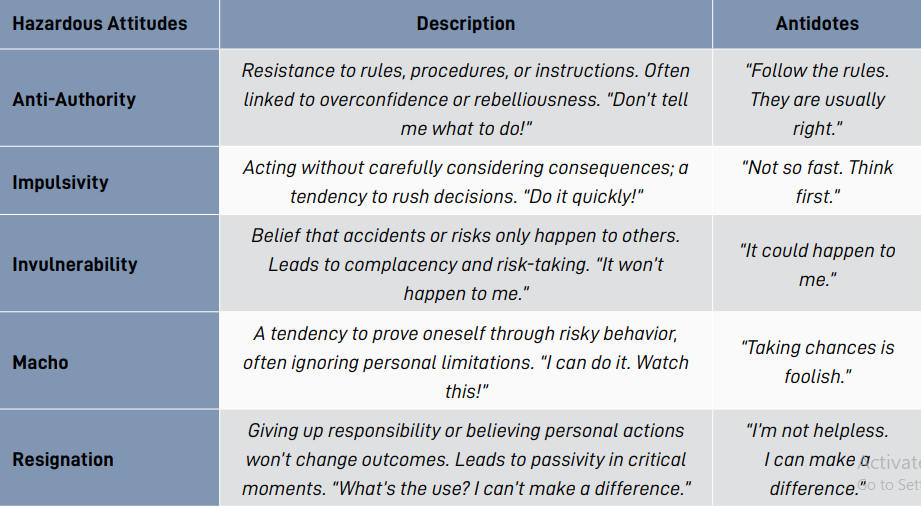
Operational Pitfalls
Common Traps / Unsafe Behaviors in flight caused by Human Factors:
Judgment Errors,
Cognitive Biases,
Overconfidence,
Fatigue,
Plan Continuation Pressure
Rather than Technical Skill, leading to Reduced Safety Margins and increased Accident / Incident Risk.
Failure Indications:
Duck-Under Syndrome (descending below minimums) ‘judgment error’
Scud Running,
VFR into IMC
Neglecting Checklists.
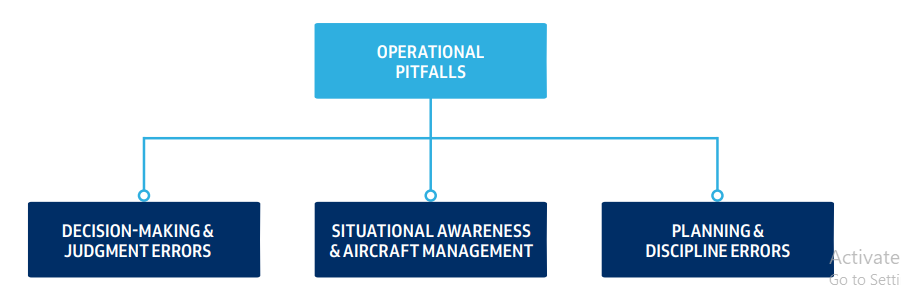
Risk Management (ADM)
Proactive Process to Identify Hazards and Mitigate Risks ensuring
Safe Flight Operations, using 6 Steps: From hazard identification→monitoring
Identify Hazards
Assess Risks,
Analyze Controls,
Make Control Decisions,
Use Controls,
Monitor Results),
⬆️Decision-Making Quality &⬇️Accident / Incident Probability
through
Knowledge,
Experience,
Structured Planning.
Risk Models
Structured Tools for Proactive Risk Management including;
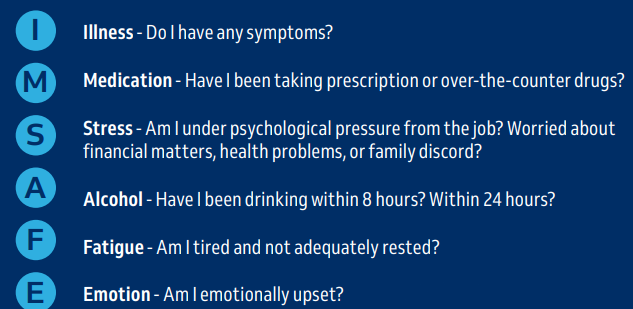
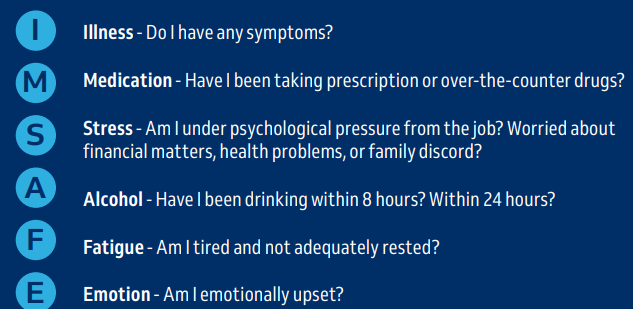
IMSAFE (Illness, Medication, Stress, Alcohol, Fatigue, Emotion)
Risk Assessment Matrix (Likelihood × Severity)
PAVE (Pilot, Aircraft, Environment, External pressures);for System-Wide Assessment,
5P (Plan, Plane, Pilot, Passengers, Programming) for Continuous Decision-Making during all Flight Phases. managing avionics/FMS to Prevent Distraction.(reassessment during key flight points).
IMSAFE
Illness,
Medication,
Stress,
Alcohol→(8-hour and 24-hour alcohol limits)
Fatigue→(Slows reaction times by up to 30%, equivalent to 0.05% blood alcohol)
Emotion
for Pilot Readiness
Data-driven risk management
Uses Digital Aviation Data with FOQA (Flight Operational Quality Assurance) from FDR / QAR (Quick Access Recorder) to detect Trends;
Exceedances,
Unstable Approaches,
Automation Mismanagement
+Predictive Analytics / Big Data (Weather, ATC, Maintenance, Biometrics) to
shift from Reactive→ Predictive / Prescriptive Safety,
⬇Operational Risk Events by ~40%
Threat & Error Management (TEM)
Safety Framework to Identify, Manage, Mitigate Threats (External Conditions) and Errors (Pilot Deviations),
recognizing they are Normal in Operations, and preventing Accidents by
Identifying Threats,
Avoiding/Mitigating Errors (CRM, Procedures),
Managing Undesired A/CStates (UAS); such as an unstable approach.
Decision Making Process (DECIDE & FORDEC)
Structured cognitive models (DECIDE and FORDEC) used to manage abnormal situations
Accedents Contributing Factors & Percentage:
13%→Inadequate SMS
22%→ Weather/Malfunctions.
35%→Non-Compliance with SOP ;
37%→Crew Response and Situational Awareness
39%→Manual Handling and Flight Control Errors
.– 6-Step Decision-Making Framework: (DECIDE)
Detect→(Problem)
Estimate →(Need to React)
Choose →(Objective)
Identify →(Solutions)
Do→(Action)
Evaluate→(Result)
used in Flight Training / CRM for Structured, Safe Decision-Making.
FORDEC:
Facts,
Options,
Risks/Benefits,
Decision,
Execution,
Check
Safety Management Systems (SMS)
Organization-Wide Safety Approach integrating Hazard Identification, Risk Assesm., Mitigation into operations, built on 4 Safety Components:
Policy & Objectives,
Risk Management (SRM),
Assurance (Monitoring, Audits, Improvement),
Promotion (Training, Communication, Safety Culture).
Resilience Engineering
Modern Safety Philosophy complementing Traditional Reactive Models,
focusing on System Ability to Adapt, Absorb, Recover
in Complex Environments, with 4 Capabilities:
Anticipate,
Monitor,
Respond,
Learn
to ensure Safe Operations despite Unexpected Disruptions.
Stress
– Acute & Chronic Stress affects Cognitive Readiness, Situational Awareness, Decision-Making,
caused by Stressors (Environmental, Physiological, Psychological) especially under High Workload, and peer support programs.
managed through:
CRM, Data-Driven Scheduling, Resilience Training, Peer Support, Positive Safety Culture.
Fatigue
Physiological State from Sleep Loss, Circadian Misalignment, Long Duty Hours reducing Performance→
Slows reaction times by up to 30%; equivalent to 0.05% blood alcohol
managed through FRMS (Fatigue Risk Management System) using Data-Driven, Scientific (Sleep / Circadian) Approach with
Monitoring, Reporting, Training, Roster Optimization to ensure Safety & Pilot Well-Being.
Fatigue cannot be overcome by willpower.
FRMS (Fatigue Risk Management Systems),
biomathematical modeling
fatigue reporting.
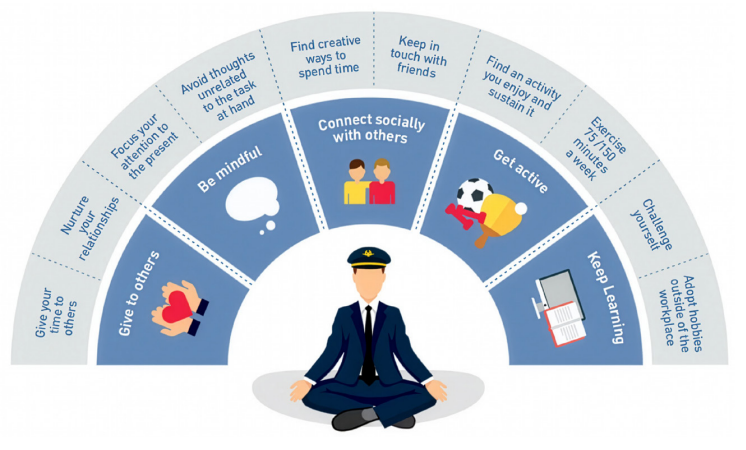
Mental Health and Resilience post-COVID
Physiological State (Sleep Loss / Circadian Misalignment / Long Duty Hours) Performance ↓ (Reaction Time ↓ up to 30%) → Not Overcome by Willpower.
Managed by FRMS(Fatigue Risk Management System) using:
Data-Driven, Scientific Sleep
Monitoring / Reporting / Training / Roster Optimization
To ensure Safety & Pilot Well-Being
Post-COVID Mental Health: Isolation / Anxiety / Return-to-Flight Stress
Organizational support
Peer programs
Structured procedural manuals.
Learning times ↓ by 65% and retention ↑ by 400% using VR training.
Grounding leads to:
loss of professional identity
reduced confidence.
Automation and Human-Autonomy Teaming
Analog / EFIS (1980s) → Glass Cockpit → AI-Enabled Teaming (2025)
Support Decision-Making
Reduce Errors during High Workload
Human = Final Decision-Maker → Machine = Team Member / Support
Automation Complacency + Over-Reliance = Main Risks
Manual Flying Practice (FAA AC 120-123) +
Human “On the Loop” (Active Monitoring & Override) + Mode Awareness Training
Air France 447 / Asiana 214 incedents→Mode Confusion / Skill Degradation
AI Assists in Taxi / Takeoff / Landing / Emergency Diversion Planning
“Human on the Loop” = Active Supervision (NOT Passive Monitoring)
Situational Awareness (SA)
3 Levels:
Perception of Environment +
Comprehension of Meaning +
Projection of Future Status
Maintain “Big Picture” → Prevent Tunnel Vision + Errors
Degraded by: Distraction / Fixation / Fatigue / Information Overload
Protections: Continuous Monitoring + Cross-Checking + Follow SOPs
Failure: Not Recognizing Worsening Conditions or Excessive Descent Rate
Over-Reliance on Automation → SA Degradation
Workload Management (WM)
Organization & Prioritization of Tasks based on Limited Human Capacity
Optimal Workload Balance → Maintain Performance + Decision-Making
Aviate → Navigate → Communicate + Task Delegation (CRM)
Underload (Cruise) → Complacency / High Workload → Cognitive Overload
Task Prioritization + Delegation + Time Management = Main Protections
Uneven Workload → Errors / Fatigue / Reduced Situational Awareness (SA)
Automation Reduces Workload but Must Maintain Engagement
Underload = Safety Risk (Reduced Vigilance)
External Pressures and Case Studies
Commercial / Environmental / Geopolitical Pressures influence Pilot Judgment
Balance: On-Time Performance + Fuel Efficiency with Safe Operations
157 Fatalities (Ethiopian 302)
38 Fatalities (Azerbaijan 8243)
100+ Flight Cancellations (Aeroflot Cyberattack)
Limitations: Conflict Zones / Geopolitical Tensions → Delays & Diversions
Protections: AI Flight Planning + Sustainable Aviation Fuels
Failure Examples: Certification Pressure (B737 MAX) + Communication Failure (JAL 516) + Fuel Stretching
Automation Pressure Example: MCAS (B737 MAX)
17.10 Emerging Frontiers (VR/AR)
AI / VR / AR Technologies transforming ADM & Flight Training
Accelerated Training + Improved Retention of Complex Procedures
Immersive / Risk-Free Scenario-Based Learning + Virtual Inspections
Learning Time ↓ 65% / Knowledge Retention ↑ 400% (VR)
Requires Regulatory Integration (e.g., A320 Type Rating Programs)
Real-Time AI Feedback + Personalized Adaptive Learning
Traditional Training Less Effective for High-Stress Scenarios
AI Simulators Adjust Scenarios in Real-Time to Pilot Performance

