Warfare in the Ancient World Weeks 1-3

0.0(0)
studied byStudied by 0 people
0.0(0)
call with kaiCall with Kai
learnLearn
examPractice Test
spaced repetitionSpaced Repetition
heart puzzleMatch
flashcardsFlashcards
GameKnowt Play
Card Sorting

1/25

encourage image

There's no tags or description

Looks like no tags are added yet.

Study Analytics
Name
Mastery
Learn
Test
Matching
Spaced
Call with Kai

No study sessions yet.

26 Terms

1
New cards
term image

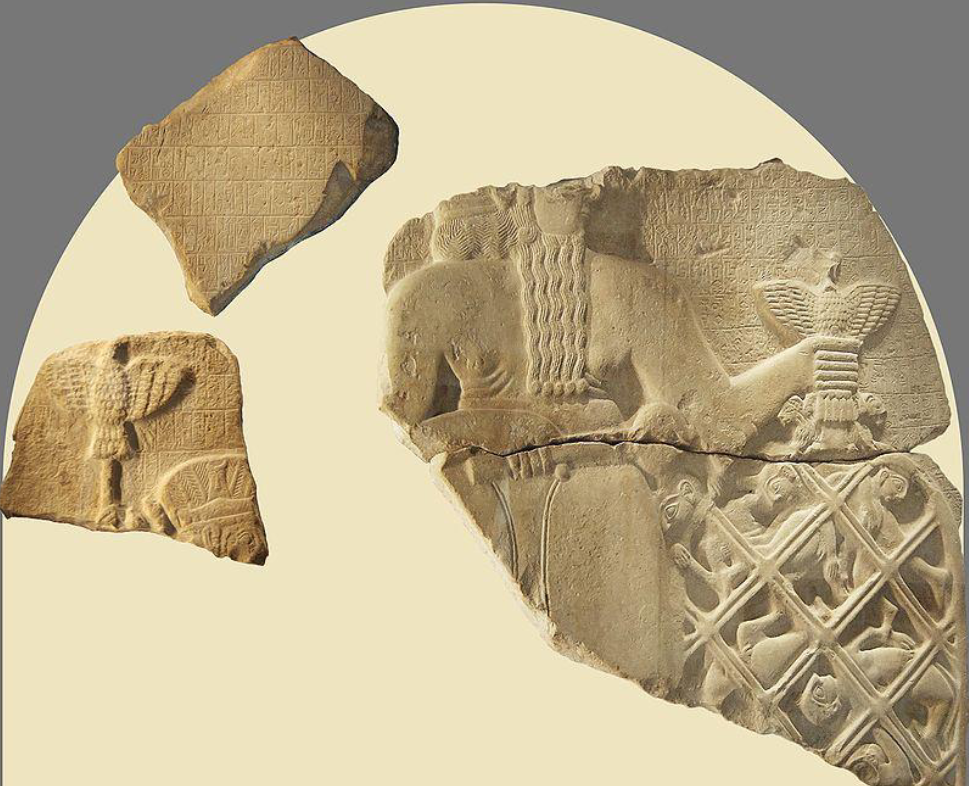
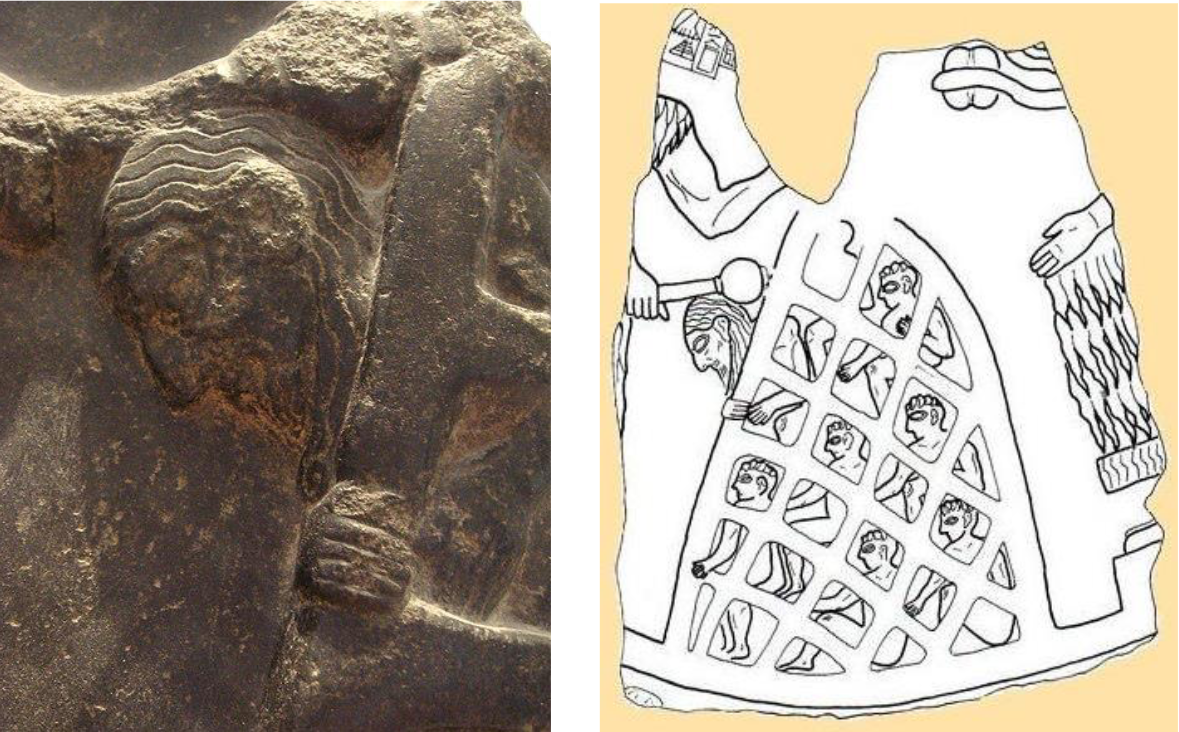
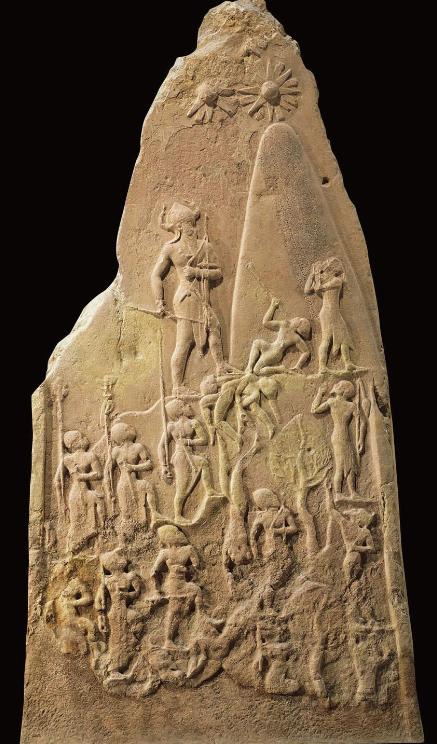
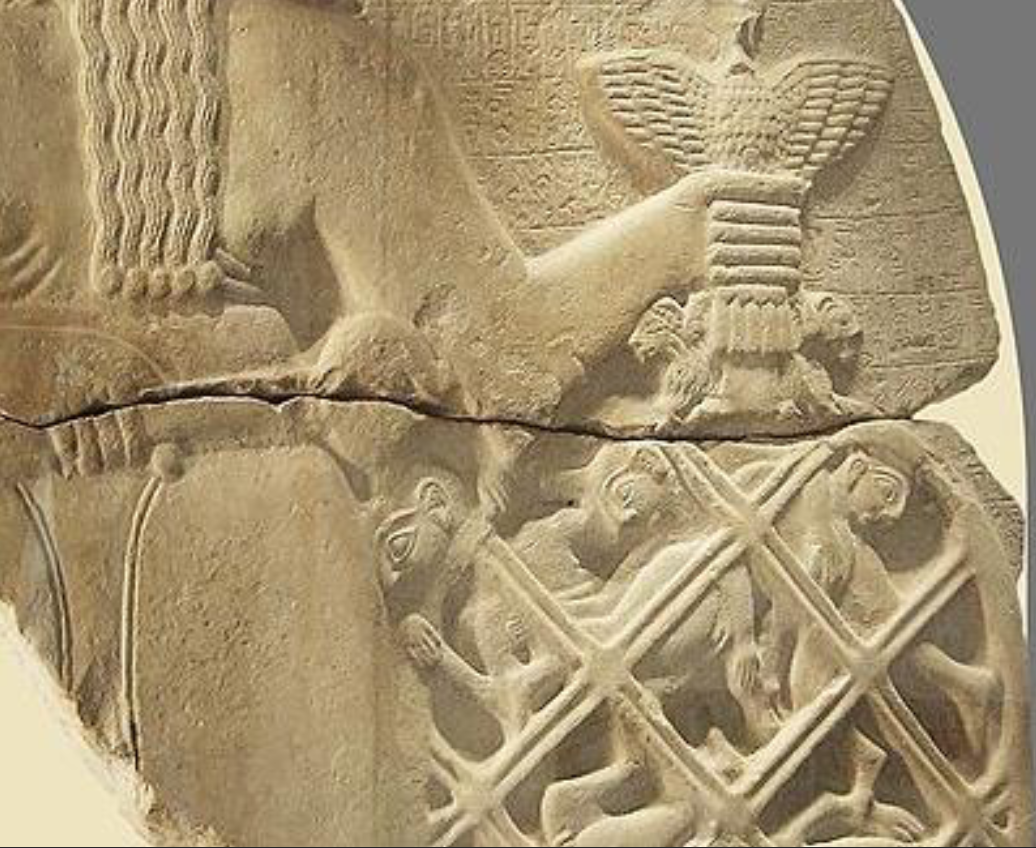
Stele of the Vultures: The earliest “historical” war; Inscriptions give a description of a border conflict between two city states, Lagash and Umma.  The motivation of the conflict, which lasted for a long time (c. 2500-2350 BCE), was the control of agricultural land. Each city blamed the other for illegal occupation of an area called Gu-Edina = “the edge of the plain.” It was also presented also as the conflict between the two main gods of the contenders, Ningirsu for Lagash and Shara for Umma. The documents from Lagash affirm that the boundary had been decided by the chief god Enlil, and then the people of Umma had crossed the line illegally. 

A victory stele erected near the contested territory, marking the site of battle. 

Originally: 

~1.8 meters tall 

Two Sides of the Stele 

Historical Side — Human action 

Divine Side — God’s intervention 

This Shows the Divine Side: Ningirsu’s Victory 

Ningirsu, Lagash’s chief god, is shown gigantic 

Enemies are trapped in a net 

Net handle shaped like an eagle-lion hybrid, a divine symbol 

Enemies are tiny, tangled, helpless 

One is executed with a mace 

Represents total destruction 

Text inscriptions explain the scene. 
2
New cards
<p><span style="background-color: rgba(0, 0, 0, 0);"><span>Stele of the Vultures: </span></span><span style="line-height: 20.925px;"><span>The earliest “historical” war; Inscriptions give a description of a border conflict between two city states, Lagash and Umma.&nbsp; The motivation of the conflict, which lasted for a long time (c. 2500-2350 BCE), was the control of agricultural land. Each city blamed the other for illegal occupation of an area called Gu-Edina = “the edge of the plain.” It was also presented also as the conflict between the two main gods of the contenders, Ningirsu for Lagash and Shara for Umma. The documents from Lagash affirm that the boundary had been decided by the chief god Enlil, and then the people of Umma had crossed the line illegally.&nbsp;</span></span></p><p></p><p><span style="line-height: 20.925px;"><span>A&nbsp;victory stele&nbsp;erected near the contested territory, marking the site of battle.&nbsp;</span></span></p><p class="Paragraph SCXW150932072 BCX0" style="text-align: left;"><span style="line-height: 20.925px;"><span>Originally:&nbsp;</span></span></p><p class="Paragraph SCXW150932072 BCX0" style="text-align: left;"><span style="line-height: 20.925px;"><span>~1.8 meters tall&nbsp;</span></span></p><p class="Paragraph SCXW150932072 BCX0" style="text-align: left;"><span style="line-height: 20.925px;"><span>Two Sides of the Stele&nbsp;</span></span></p><p class="Paragraph SCXW150932072 BCX0" style="text-align: left;"><span style="line-height: 20.925px;"><span>Historical Side&nbsp;— Human action&nbsp;</span></span></p><p class="Paragraph SCXW150932072 BCX0" style="text-align: left;"><span style="line-height: 20.925px;"><span>Divine Side&nbsp;— God’s intervention&nbsp;</span></span></p><p class="Paragraph SCXW150932072 BCX0" style="text-align: left;"></p><p class="Paragraph SCXW150932072 BCX0" style="text-align: left;"><span style="line-height: 20.925px;"><span>This Shows the Divine Side:&nbsp;Ningirsu’s&nbsp;Victory&nbsp;</span></span></p><p class="Paragraph SCXW217845620 BCX0" style="text-align: left;"><span style="line-height: 20.925px;"><span>Ningirsu, Lagash’s chief god, is shown gigantic&nbsp;</span></span></p><p class="Paragraph SCXW217845620 BCX0" style="text-align: left;"><span style="line-height: 20.925px;"><span>Enemies are trapped in a&nbsp;net&nbsp;</span></span></p><p class="Paragraph SCXW217845620 BCX0" style="text-align: left;"><span style="line-height: 20.925px;"><span>Net handle shaped like an&nbsp;eagle-lion hybrid, a divine symbol&nbsp;</span></span></p><p class="Paragraph SCXW217845620 BCX0" style="text-align: left;"><span style="line-height: 20.925px;"><span>Enemies are tiny, tangled, helpless&nbsp;</span></span></p><p class="Paragraph SCXW217845620 BCX0" style="text-align: left;"><span style="line-height: 20.925px;"><span>One is executed with a mace&nbsp;</span></span></p><p class="Paragraph SCXW217845620 BCX0" style="text-align: left;"><span style="line-height: 20.925px;"><span>Represents&nbsp;total destruction&nbsp;</span></span></p><p class="Paragraph SCXW217845620 BCX0" style="text-align: left;"><span style="line-height: 20.925px;"><span>Text inscriptions explain the scene.&nbsp;</span></span></p>

Stele of the Vultures: The earliest “historical” war; Inscriptions give a description of a border conflict between two city states, Lagash and Umma.  The motivation of the conflict, which lasted for a long time (c. 2500-2350 BCE), was the control of agricultural land. Each city blamed the other for illegal occupation of an area called Gu-Edina = “the edge of the plain.” It was also presented also as the conflict between the two main gods of the contenders, Ningirsu for Lagash and Shara for Umma. The documents from Lagash affirm that the boundary had been decided by the chief god Enlil, and then the people of Umma had crossed the line illegally. 

A victory stele erected near the contested territory, marking the site of battle. 

Originally: 

~1.8 meters tall 

Two Sides of the Stele 

Historical Side — Human action 

Divine Side — God’s intervention 

This Shows the Divine Side: Ningirsu’s Victory 

Ningirsu, Lagash’s chief god, is shown gigantic 

Enemies are trapped in a net 

Net handle shaped like an eagle-lion hybrid, a divine symbol 

Enemies are tiny, tangled, helpless 

One is executed with a mace 

Represents total destruction 

Text inscriptions explain the scene. 
3
New cards
term image

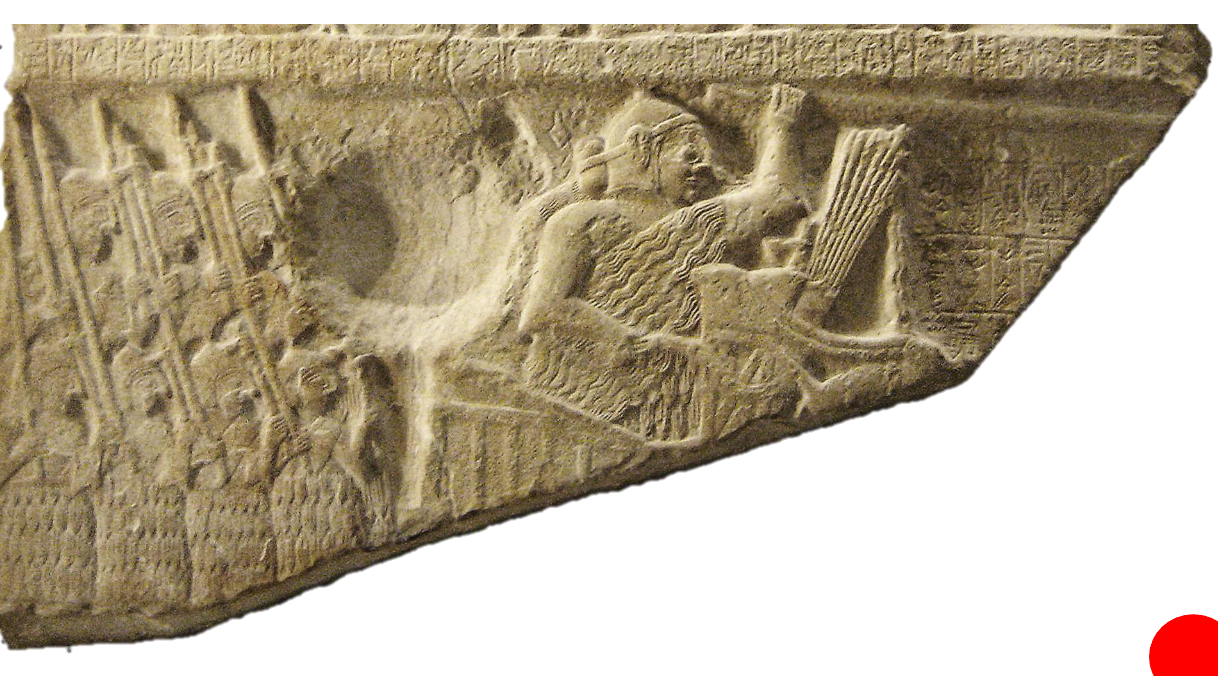
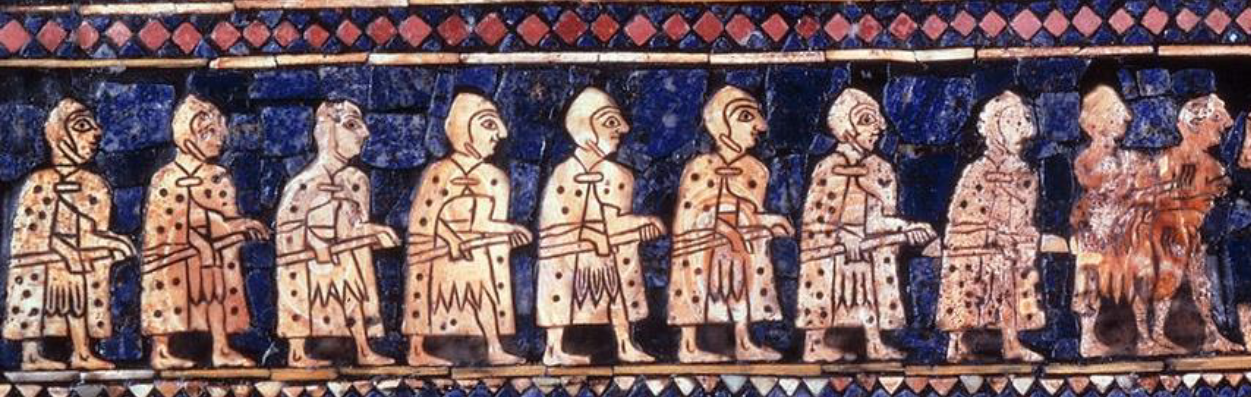
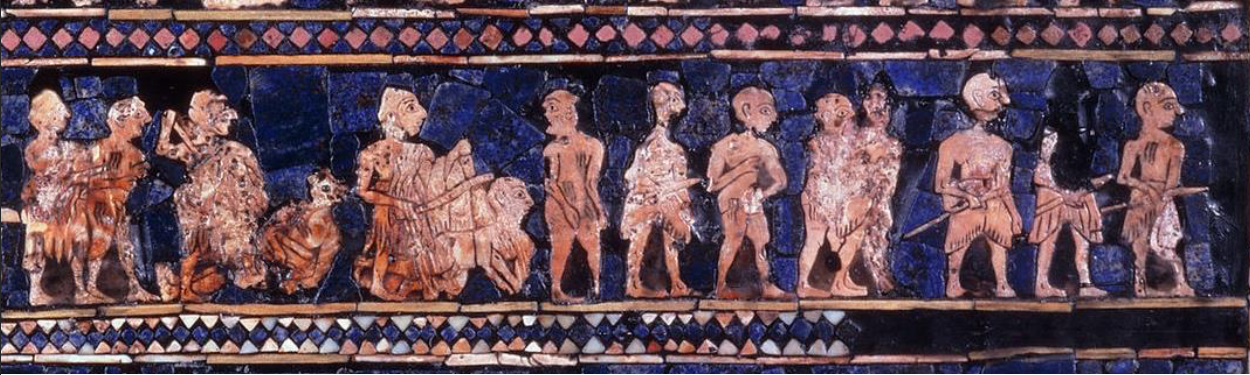
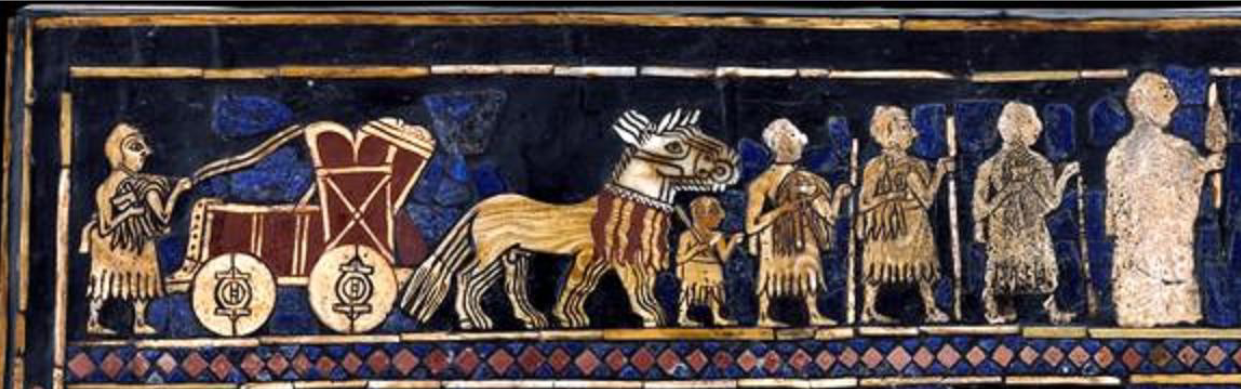
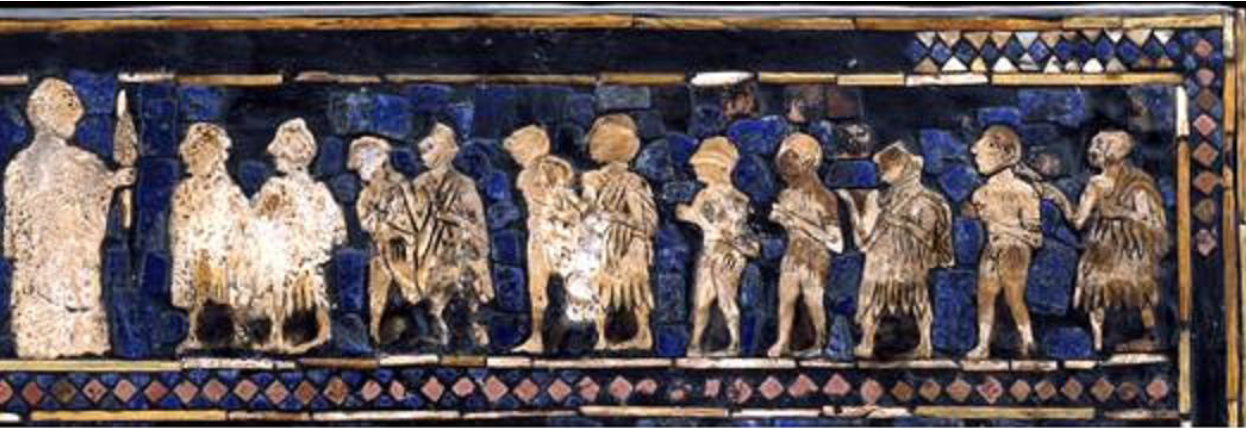
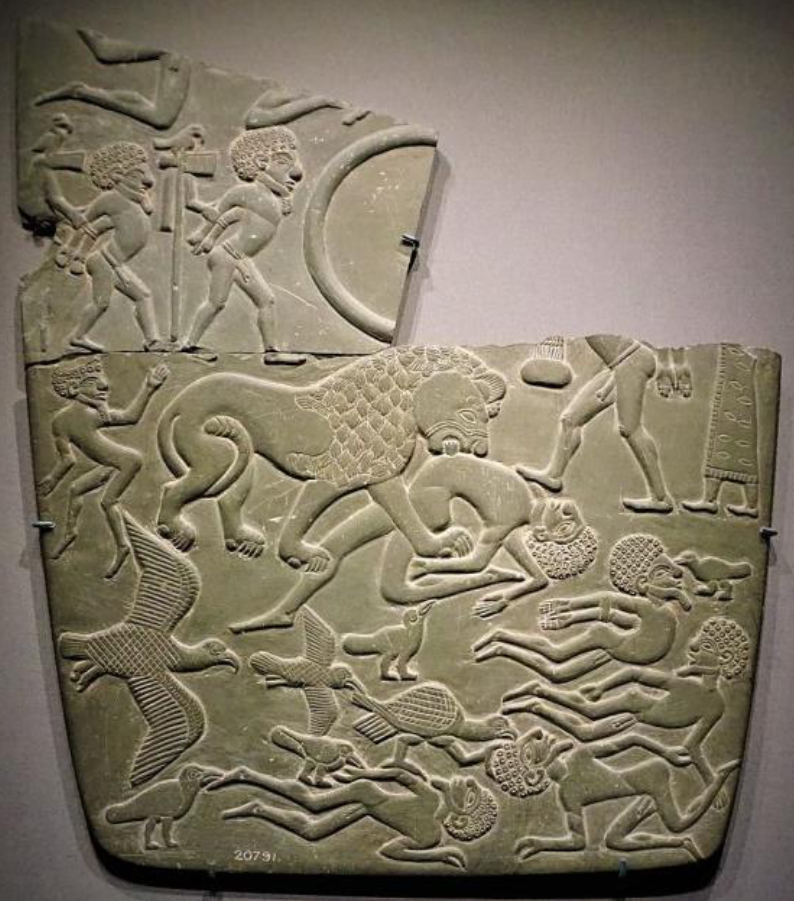
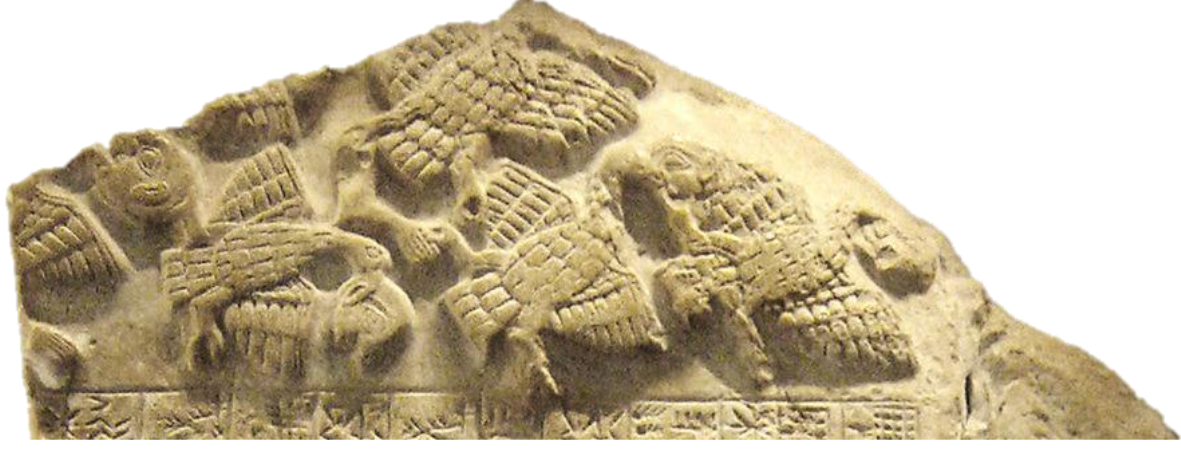
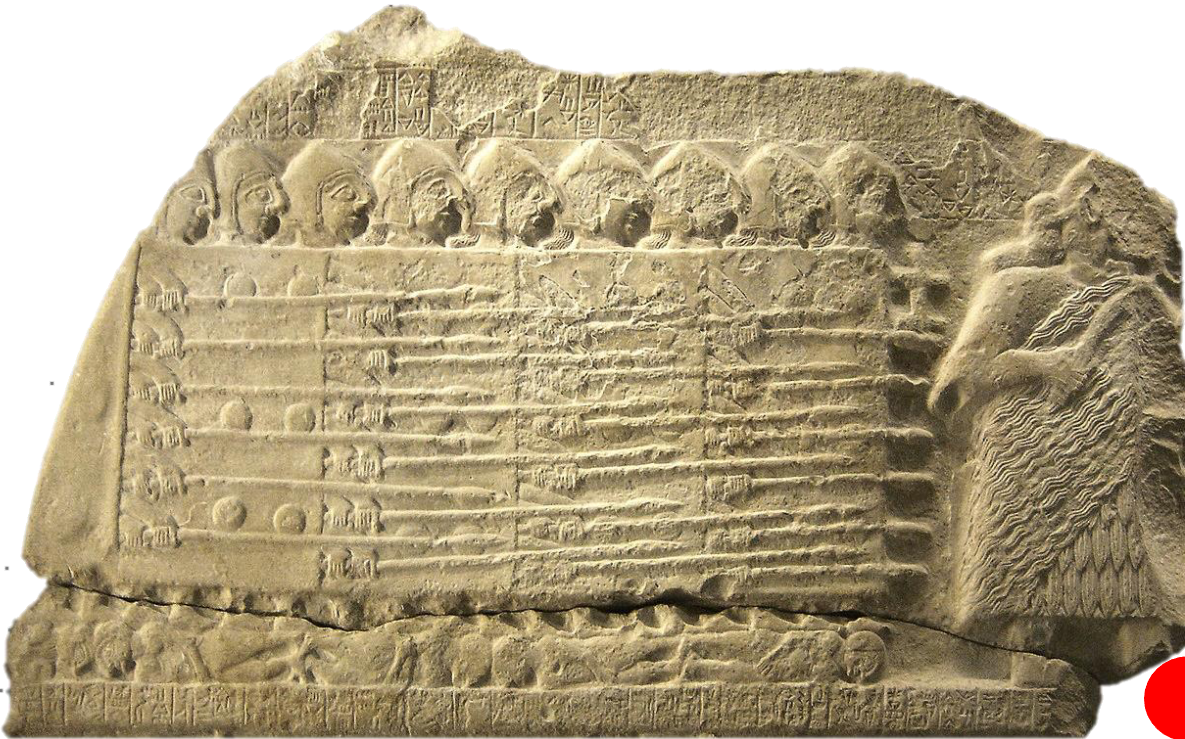
Stele of the Vultures:

Historical Side: Human Warfare 

Top Register 

Vultures carry severed heads and limbs 

Visual confirmation of victory 

Gruesome, unsanitized depiction of war 
4
New cards
term image
5
New cards
term image
6
New cards
term image
7
New cards
term image
8
New cards
term image
9
New cards
term image
10
New cards
term image
11
New cards
term image
12
New cards
term image
13
New cards
term image
14
New cards
term image
15
New cards
term image
16
New cards
term image
17
New cards
term image
18
New cards
term image
19
New cards
term image
20
New cards
term image
21
New cards
term image
22
New cards
term image
23
New cards
term image
24
New cards
term image
25
New cards
term image
26
New cards
term image