3.4.6 Monopsony
 Studied by 0 people
 Call Kai
 Learn
Learn Practice Test
 Spaced Repetition
 Match
Match Flashcards
 Knowt Play
1/16

There's no tags or description
Looks like no tags are added yet.
Name | Mastery | Learn | Test | Matching | Spaced | Call with Kai |
|---|
No analytics yet
Send a link to your students to track their progress
17 Terms
monopsony
occurs when there is a single buyer in the market
they have buying or bargaining power
monopsonies in real life
pure monopsonies rarely exist but many firms experience monopsony power
examples of monopsnies
E.g. Supermarkets in the UK buy the majority of milk supplied by dairy farmers and collectively act as a monopsony
E.g. The Ministry of Defence is often a dominant purchaser of war materials supplied by UK companies
E.g. The National Health Service is the dominant purchaser of nursing labour
example of consequences of monopsony
tesco demands supplier price cuts in discount battle
haribo stocks run low at tesco over price cut row
ore than 1,000 dairy farms in the UK have closed since 2013 as supermarkets have exercised their monopsony power reducing the price, they pay farmers per litre of milk
It is becoming increasingly difficult to recruit teachers and nurses as the Government continues to suppress wages. This is changing the education and healthcare industries
characteristics of monopsonist
They are wage makers: this is especially prevalent in industries where the government is the majority purchaser of labour e.g. doctors, nurses, teachers, emergency services staff, military personnel
They are profit maximisers: They aim to minimise their costs and maximise their profits by paying suppliers as little as possible
They purchase a large portion of the market supply provided by sellers
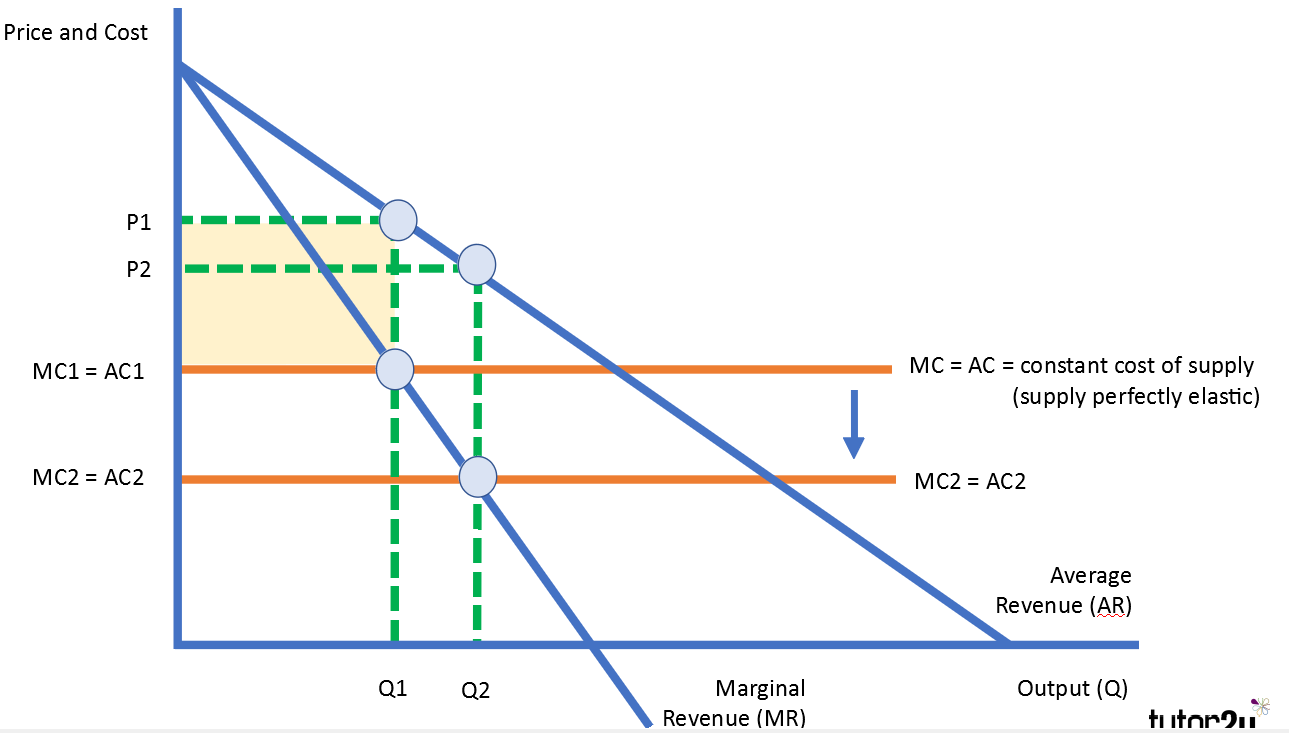
monopsony diagram
mc=ac decrease
pm output increase
pm price decrease
supernormal profit increase
benefits to firms of monopsony
Reduced costs of production lead to higher profits
more investment
costs to firms of monopsony
May experience some reputational damage for the way they treat their suppliers
The continual price pressure on suppliers often results in conflict, which can be difficult to manage
In the long-run, they may drive their suppliers out of business, causing supply chain issues
benefits of monopsony to employees
The higher profits often result in higher wages for the monopsonist's employees
costs of monopsony power to employees
Employees may find it difficult to reconcile their ethics/values with the way suppliers are treated
working fot the supplier being pused for lower prices can cause lower incomes for those employed
benefits of monopsony power to consumers
Lower average costs for the firm may result in lower prices for consumers and a higher consumer surplus
costs of monopsony power to consumers
The quality of the product may decrease as suppliers attempt to cut their own costs in response to the price pressure from the monopsonist
benefits of monopsony power to suppliers
Supplying to a large well-known monopoly may enhance the supplier's reputation and open up new opportunities
Supplying to a large, well-known monopoly may provide an opportunity to increase sales volume
costs of monopsony power to suppliers
Suppliers may seek to reallocate their resources to more profitable industries leading to less supply in the market (law of supply)
Suppliers may be driven out of business
nhs monopsony power in product market
the National Health Service (NHS) has significant monopsony power over pharmaceutical goods, which it uses to lower the cost of purchasing drugs - and can therefore offer patients the same drugs at much lower prices. This also explains why the prices of pharmaceutical drugs are much higher in the US than in the UK, as American hospitals are private and own smaller portions of the market share - so have less bargaining power over their suppliers.
supermarket onopsony power in product market
the Big 4 supermarket chains occupy more than 70% of the market share, and are the sole supplier of food from farmers. This means they can negotiate much lower prices for goods (milk, eggs, etc.), however this has sparked a number of protests by farmers, complaining that they have been exploited by these supermarkets.
apple monopsony example
US filed lawsuit against apple accusing tech giant of monopsonising smartphone market
alleges apple used its app review process to thwart development of so called super apps and streaming apps as was worried it would provide less incentive for customers to stick with iphones
hard to connect iphones to rival smart watches
blocked banks and othr financial firms from accessing tap to pay technology
social stigma-green bubbles messages from other non iphone
 Note
Note  Flashcards (24)