Workshop- Early Surgical Neutering in Dogs and Cats
 Call Kai
 Learn
Learn Practice Test
 Spaced Repetition
 Match
Match Flashcards
 Knowt Play
1/51

There's no tags or description
Looks like no tags are added yet.
Name | Mastery | Learn | Test | Matching | Spaced | Call with Kai |
|---|
No analytics yet
Send a link to your students to track their progress
52 Terms
Give 5 reasons why feline neutering is indicated.
Population Control: Neutering helps control the overpopulation of cats
Health Benefits for the Individual: Neutering can reduce risks associated with pregnancy, parturition, and lactation. It also helps in reducing the incidence of diseases like FIV and Feline Leukaemia.
Prevention of Certain Diseases: Neutering can lower the risk of developing mammary tumors, pyometras, and other reproductive system-related diseases.
Behavioral Benefits: reduces urine spraying and loud calling (particularly in males), leading to better behavior and more manageable pets.
Reducing Unplanned Litters: Neutering before puberty (around four months) is crucial to prevent unplanned litters
if something goes wrong in a flank spay what has to happen
convert to a midline
why lube eyes when using ket
Ket -> eyes central and open and cant blink -> extra ocular tone -> cornea damaged if dried out in surgery -> so lube eyes
why dont we starve long in young animals
bc of hypoglycaemia
why do early neutering
Earlier client bonding
Simple straightforward surgery
Lower operation costs per cat
Litters can be kept together
Preferred option for many pedigree owners -> cant go on and then breed
avoids overweight neutering so easier
At what age do cats become sexually active?
4 months
What's the Cats Protection definition of 'early neutering'
'early neutering' refers to neutering cats before they reach puberty, typically at around four months of age or younger.
What is in the 'Quad'?
medetomidine, buprenorphine, midazolam, ketamine
or
medetomidine, methadone, midazolam, ketamine
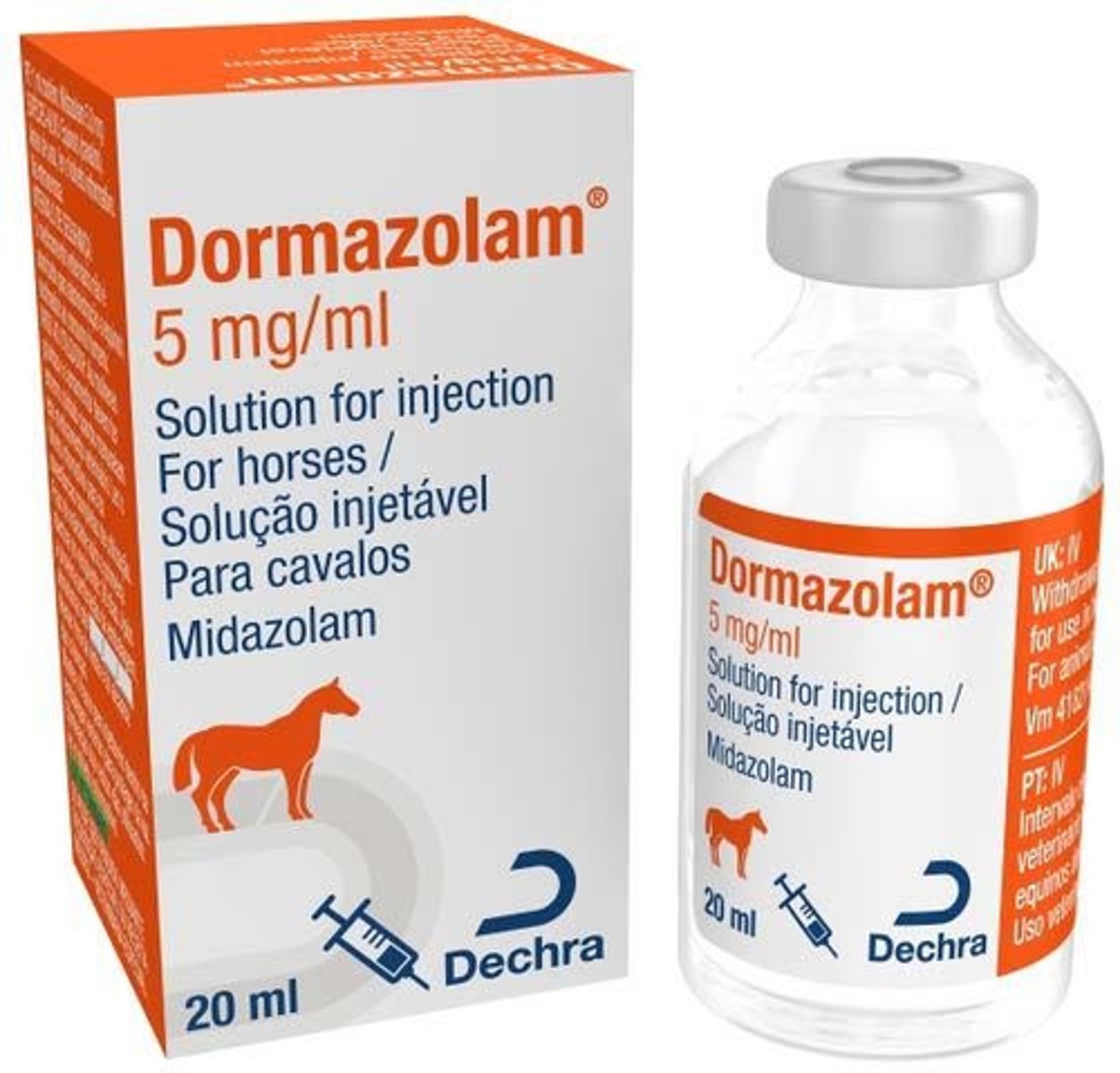
You have decided to use the opioid buprenorphine in the Quad, what volume of each component of the Quad would you draw up for a kitten weighing 1kg.
0.06ml
Why is the quad used?
Simplicity and Speed: The quad combination is a simple intramuscular (i.m.) injection, which is faster and easier to administer compared to other methods like intravenous injections. This is especially important for small kittens, where finding an IV can be more complicated and time-consuming.
Effective Anesthesia: The quad provides a good level of anesthesia with the drugs used, making it suitable for the procedure, particularly with the smaller volumes needed for young kittens.
Smaller Drug Volumes: The quad uses smaller volumes of each drug, which helps reduce the effects on blood pressure, which is beneficial for the kittens.
What is the benefit of having midazolam in the 'Quad'?
The inclusion of Midazolam not only helps with sedation but also has dose-saving effects, reduces the volume of Medetomidine needed, and can have amnesiac effects and appetite stimulation, which helps kittens recover more quickly after surgery.
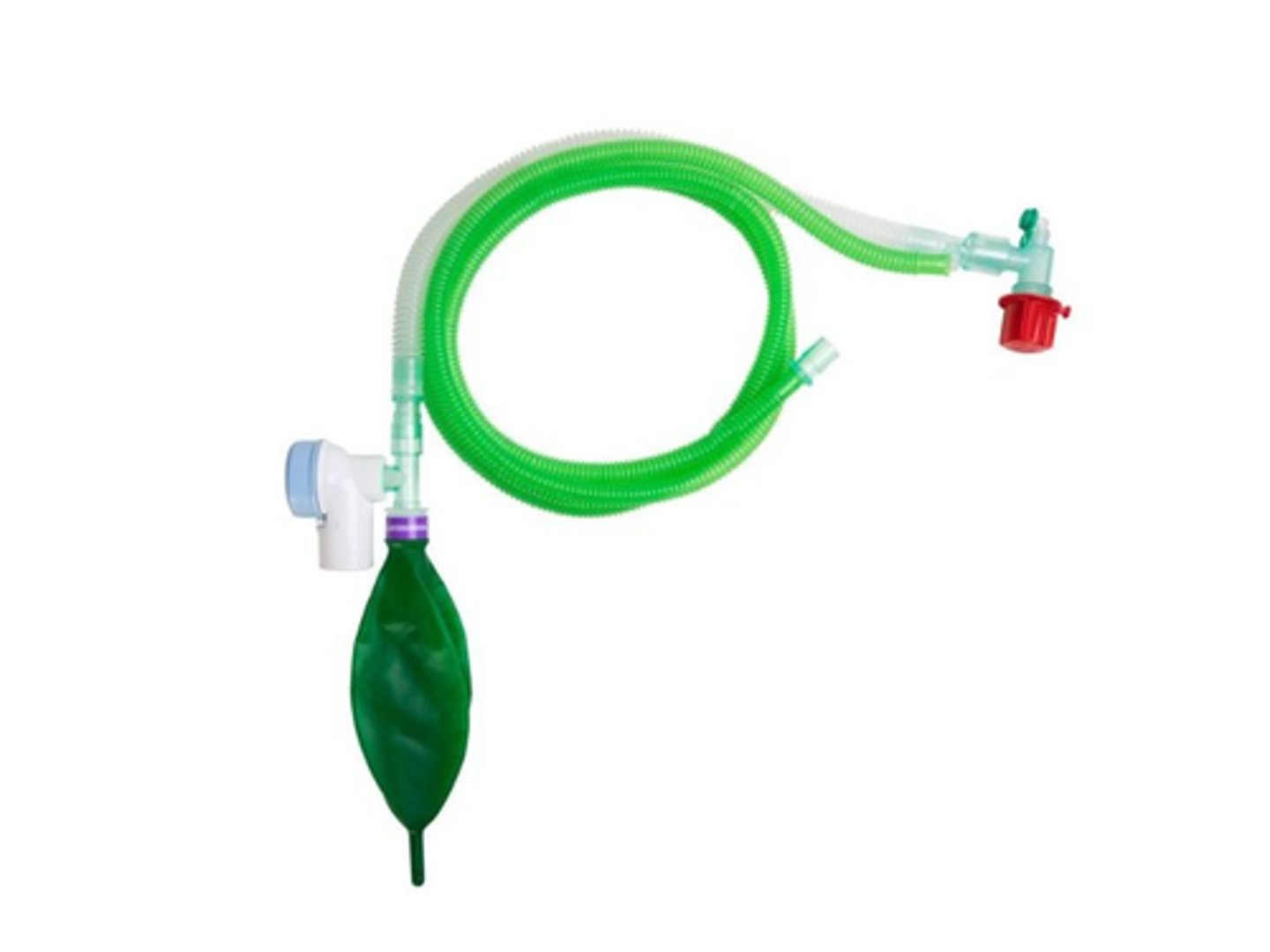
Calculate the fresh gas flow for a T piece for a cat weighing 1kg. Assume minute volume of the cat is 200ml.
0.5 L/min
What are the advantages of midline approach over flank?
midline - better visualisation
flank approach - provides less access to the reproductive organs, can be harder to close, longer healing times. - advantages, when a midline incision is not ideal or when working with feral cats where a more lateral approach might be preferred.
What are the landmarks for early spay neutering (midline)? Describe in words then find some diagrams to help you remember this.
Midline Approach:
Incision Location: The incision is made along the midline of the abdomen, usually just below the umbilicus (belly button) to allow access to the ovaries and uterus.
Landmarks: The incision is typically made on the midline at the midpoint between the umbilicus and anterior brim of the pubis.. The skin and muscle layers are carefully separated to reach the reproductive organs.
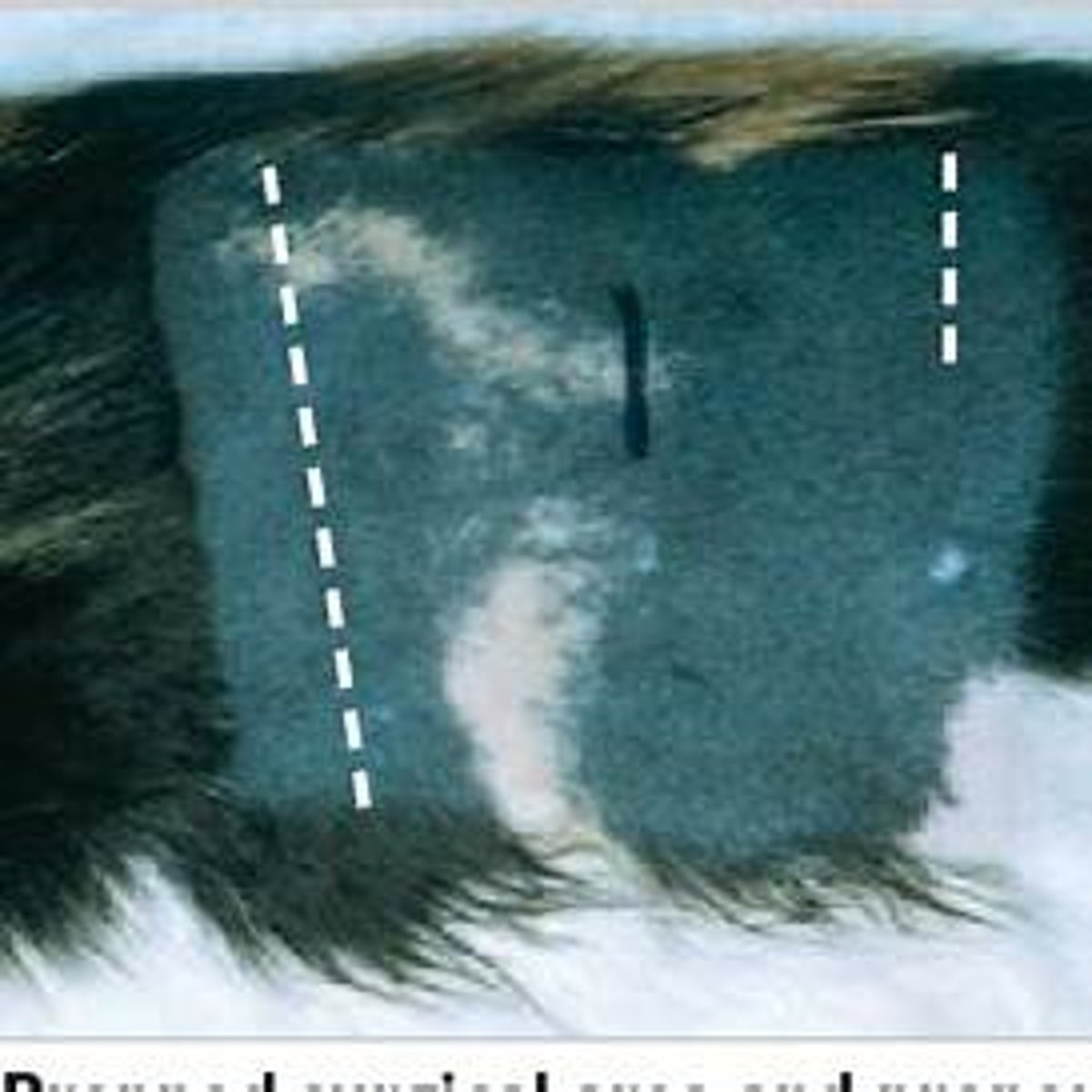
What are the landmarks for early spay neutering (flank)? Describe in words then find some diagrams to help you remember this.
Flank Approach:
Incision Location: The incision is made on the left side of the cat's abdomen
Landmarks: The incision is usually made along the lateral (side) of the cat’s body, between the last rib, cranial wing of the ilium and lumbar transverse process.
Comment on the muscle layer in the early neuters.
smaller patients - the muscle layers are handled with care to avoid excessive dissection.
reduces the risk of complications like wound dehiscence (wound reopening) and helps with faster recovery.
m layers are thinner too
Is the clear fluid in the abdomen indicative of a problem? Describe your response to observing it.
Small Amount: If the fluid is minimal and clear, it may simply be part of the body's normal response to the surgical procedure. I'd continue monitoring the kitten during recovery to ensure that no other complications arise.
Larger Amount or Persistent Fluid: If the amount of clear fluid is unusually large or doesn’t resolve quickly after the procedure, I would consider further investigation.
- abdominal ultrasound
- fluid analysis to check for signs of infection, inflammation, or other underlying health issues.
- check the cat's overall health history to rule out any systemic conditions.
Comment on the size of the ovary in early neutering
- the ovaries are relatively small compared to those of an adult cat.
- This makes the surgery easier, as the small size of the ovaries allows for quicker identification and removal with minimal disruption to surrounding tissues.
Are there any differences in the clamping technique?
The traditional technique for spaying usually involves clamping the ovarian pedicle (the tissue connecting the ovaries to the rest of the body) to stop blood flow before cutting and removing the ovaries.
In kittens, due to the small size of the organs, veterinarians may use smaller clamps or non-crushing techniques to minimize any damage to surrounding tissues and to prevent bleeding. Smaller clamps also help ensure that there is no excessive manipulation, which can help with faster recovery.
Based on what you have been taught and what you have seen - comment on the cat gut use?
While catgut was historically used in surgeries, it is not the best choice for modern early neutering procedures in cats.
The risk of premature breakdown, increased inflammatory response, and lesser tensile strength make it less suitable compared to more modern suture materials that offer greater control, better strength retention, and a lower risk of complications.
Therefore, synthetic absorbable sutures like Vicryl (polyglactin 910) or PDS (polydioxanone) are more suitable for early neutering surgeries in kittens. These materials ensure better healing, fewer complications, and enhanced safety for the animal.
What is stump pyometra
the infection of the uterine stump in a previously spayed female
What is the risk of stump pyometras in cats?
Low
Uncommon in early bc uterus hasn’t had any hormonal influence so unlikely to develop into pyo (stump pyo)
Are early neuters more prone to obesity? Explain your answer.
While some studies have shown that neutering (including early neutering) can be associated with weight gain in cats, it is not the neutering itself that directly causes obesity.
Rather, it's the result of dietary mismanagement, reduced physical activity, and increased caloric intake relative to energy expenditure.
Are cat's testicles descended at birth?
- no - At birth, male kittens' testicles are still located within the abdominal cavity,
- they descend into the scrotum during the first few weeks to months of life.
- the testicles begin to descend at around 2 to 3 weeks of age, and by 6 to 8 weeks, they should be fully descended and located in the scrotum.
- not descended by 6 months of age, = cryptorchidism, and it may require veterinary intervention.
Describe the ligation techniques for cat castrates. There are 3 possible methods.
- Double ligature (three-point ligation)
- Single ligature
- Clamp and cut method (alternative approach)
Double ligature (three-point ligation)
This method is described as the standard technique for male cat castrations:
Procedure: The spermatic cord is ligated (tied off) in three places:
The first ligature is placed around the spermatic vessels (the blood vessels carrying blood to the testes).
A second ligature is applied around the spermatic cord itself, which contains the vas deferens and other structures.
The third ligature is placed at the base of the testicle to ensure that the testicle is completely isolated and the blood supply is cut off.
This technique ensures that there is adequate blood supply control and a safe removal of the testicle.
what does the Single ligature do?
The spermatic cord is tied off (using one ligature) in one place to stop the blood flow, and the testicle is then removed. This method is less common in routine neutering because it might not provide as much security compared to the double ligature technique.
why is the Clamp and cut method (alternative approach) used?
The spermatic cord is first clamped to stop blood flow. The testicle is then removed/cut (by cutting the spermatic cord), and any bleeding vessels in the spermatic cord are carefully tied off. This method can be simpler but requires careful control of bleeding.
How long after the initial quad injection is the reversal/antagonist (atipamezole given) in this film? Can you explain why?
30 minutes
Atipam for med given too early means cat could trip on the ket and have an excitable recovery
Medetomidine is a sedative and analgesic agent in the quad combination. it can cause prolonged sedation or bradycardia (slow heart rate), reverse it once the procedure is over.
The effects of Medetomidine peak after about 20 to 30 minutes of administration, so waiting around this time ensures that the sedation is strong enough to require reversal but not too long, so the animal can wake up promptly after the procedure.
How do we care for the cats post op?
Warmth: Heated pads to maintain body temperature.
Pain management: Buprenorphine and Meloxicam for analgesia.
Feeding: Kittens are encouraged to eat and drink soon after waking up to prevent hypoglycemia.
Monitoring: Kittens are closely observed during the recovery period, ensuring they wake up safely from anesthesia.
What monitoring do you recommend for anaesthesia?
1. Regular Observation of the Animal’s Response:
2. Heart Rate and Respiration Monitoring:
3. Temperature Monitoring:
4. Blood Pressure Monitoring:
5. Reflexes and Muscle Tone:
6. Oxygenation and Ventilation:
why monitor oxygenation adn ventilation in anaesthetic
Good practice to use pulse oximetry or a capnograph to monitor the oxygen levels in the blood and the adequacy of ventilation. Ketamine and Medetomidine both have respiratory depressant effects, and oxygenation and ventilation need to be carefully observed during anesthesia.
why monitor reflexes and m tone
The absence of reflexes like the pedal reflex or palpebral reflex would indicate a proper anesthetic depth. If any reflexes persist, the anesthesia may need to be adjusted.
why monitor bp in anaesthetic
Blood Pressure: Sedatives like Medetomidine, which can cause fluctuations in blood pressure. Close attention to this can help avoid complications such as hypotension (low blood pressure).
why monitor temp in anaesthetic
Hypothermia Prevention.
why monitor hr and rr in anaesthetic
Heart Rate: Since Medetomidine (a component of the quad combination) can cause bradycardia (slow heart rate), it is important to keep track of the heart rate throughout the procedure.
Respiration: Anesthesia can depress respiratory drive, so it’s important to monitor for signs of shallow or irregular breathing and address any issues promptly.
why monitor Regular Observation of the Animal’s Response in anaesthetic
Sedation Depth: After the quad injection, they note the kitten's response and watch for signs that indicate the anaesthetic is working effectively, such as loss of consciousness, muscle relaxation, and absence of reflexes.
Recovery Status: Post-injection, as the kitten receives the reversal agent (Atipamezole), the recovery process should be carefully monitored.
What are the key advantages of surgical neutering?
Controls pet overpopulation, especially in shelters.
Prevents pyometra and uterine diseases in females.
Reduces risk of testicular tumors, perianal adenomas, and prostatic hypertrophy in males.
Lowers likelihood of mammary tumors in bitches.
Reduces roaming and mating-related aggression.
Prevents excessive sexual behaviors like mounting.
What are the potential disadvantages of surgical neutering?
Increased risk of certain cancers (e.g., osteosarcoma, hemangiosarcoma).
Higher likelihood of urinary incontinence in bitches.
Increased risk of obesity if food intake is not managed.
Higher chance of orthopedic conditions (e.g., cranial cruciate ligament rupture, hip dysplasia).
Surgical Procedures for Ovariohysterectomy (OHE) and Ovariectomy (OVE)
What are the key steps in performing an ovariohysterectomy (OHE)?
Preparation: The animal is anesthetized, clipped, and the surgical area is aseptically prepared.
Incision: A midline or flank incision is made.
Exteriorization: The uterine horns and ovaries are located and gently pulled out.
Ligation and Removal: window made in broad lig. Ovarian pedicles are ligated, the uterus is clamped and ligated at the cervix, and the entire uterus with ovaries is removed.
Closure: The abdominal wall and skin are sutured.
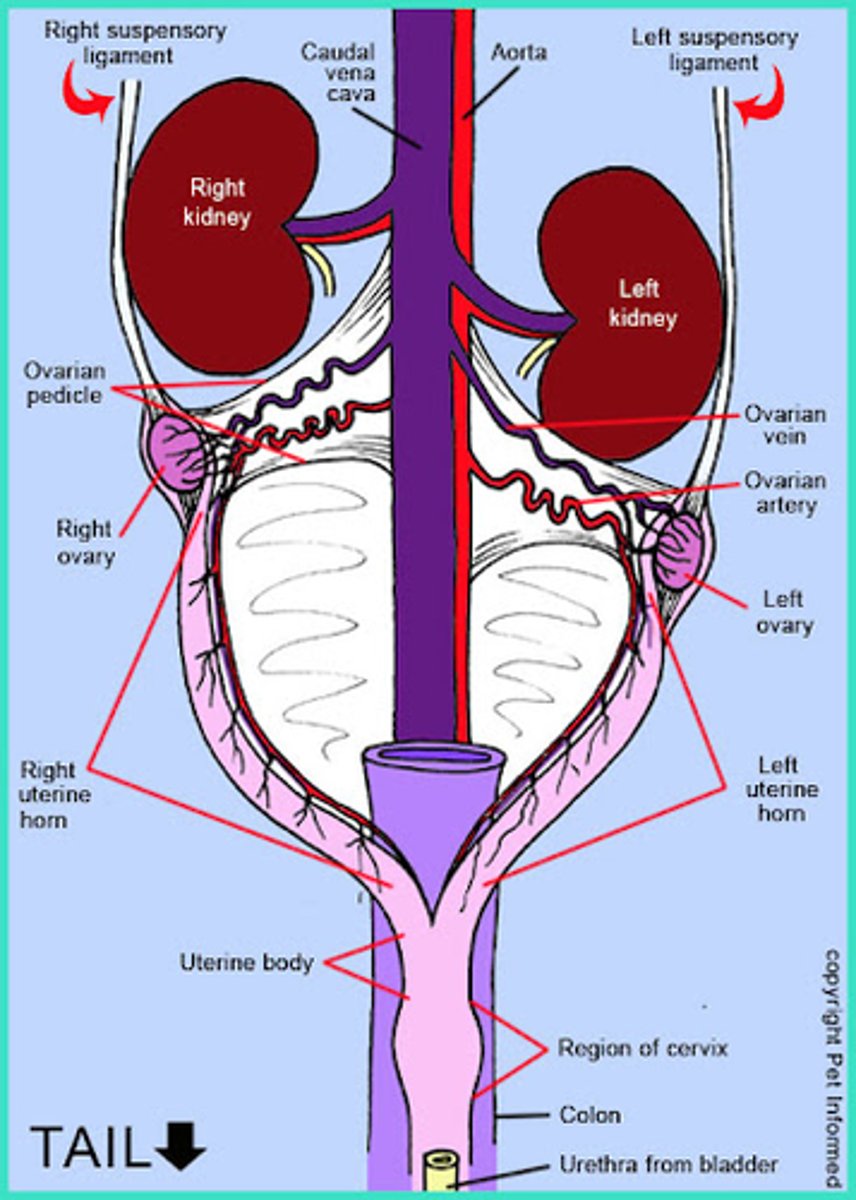
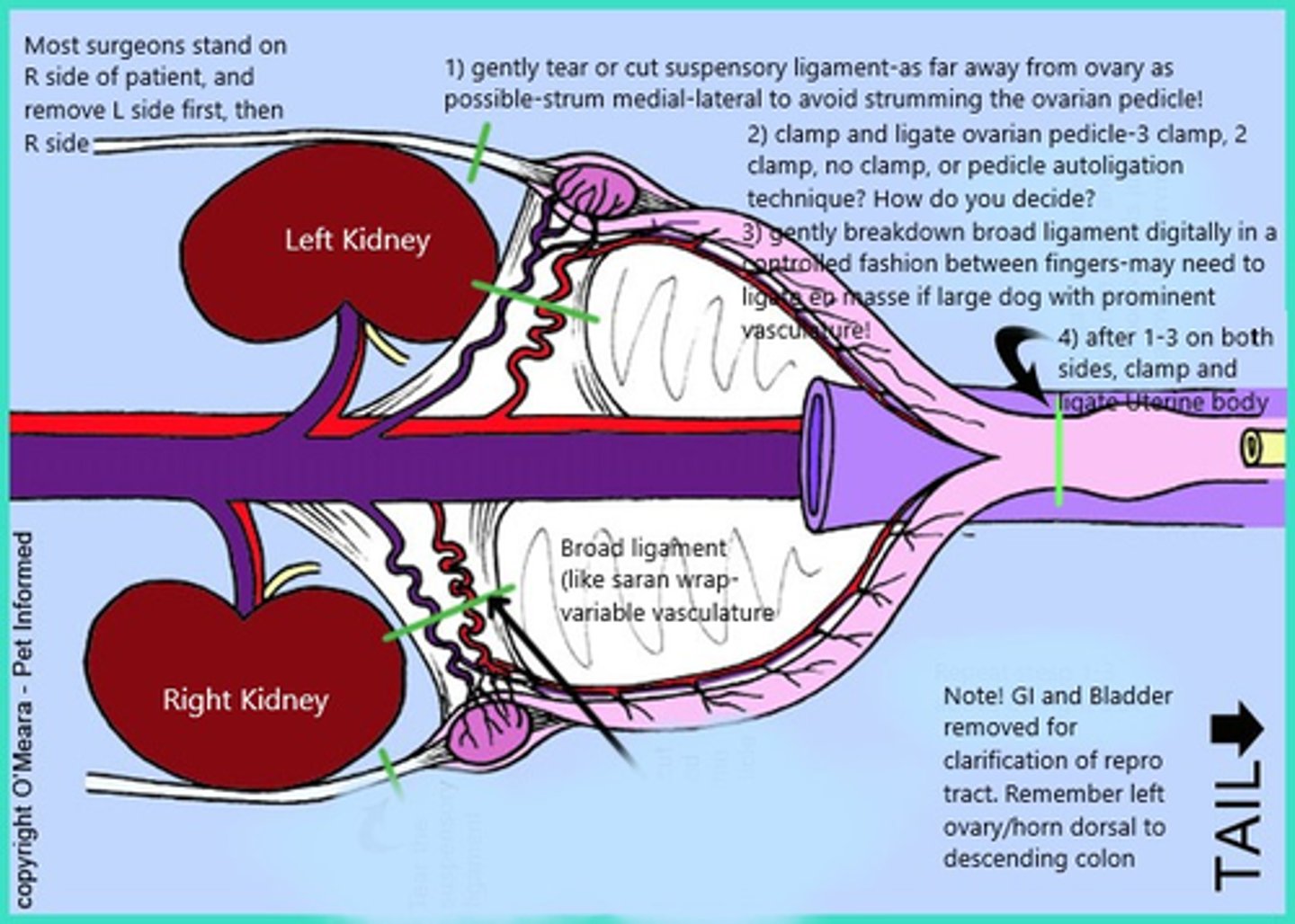
what are the differences between conventional neutering and prepubertal neutering
no complicating factors such as mammary development, pregnancy or a friable uterus, which may be seen in sexually mature queens that are in oestrus
in the left flank approach can things be left behind
may be unable to remove all of the uterine body via a left flank approach.
how do the landmarks differ in kittens less than 12 weeks of age for a midline ovariohysterectomy
move slightly caudally
How does an ovariectomy (OVE) differ from an OHE?
OVE removes only the ovaries, whereas OHE removes the ovaries and uterus.
OVE is less invasive, leading to reduced surgical time and fewer complications.
OHE eliminates the risk of uterine diseases such as pyometra and uterine neoplasia.
What are the advantages of prepubertal neutering?
Shorter surgical and anesthetic time due to smaller reproductive structures.
Eliminates risk of accidental breeding before neutering.
Shorter recovery period and lower risk of surgical complications.
May provide better protection against mammary tumors in females.
What are the disadvantages of prepubertal neutering?
Increased risk of orthopedic issues like cruciate ligament disease.
Potential for delayed growth plate closure, especially in large-breed dogs.
Increased risk of obesity if not managed properly.
What are the advantages of post-pubertal neutering?
May lower risk of orthopedic problems seen with early neutering.
Allows full hormonal development, which can positively influence growth and behavior.
What are the disadvantages of post-pubertal neutering?
Higher chance of mammary tumors in females.
Risk of accidental breeding before neutering.
More complex surgery due to larger reproductive organs.
Common Anesthetic Protocols and Monitoring for Small Animal Surgical Neutering
What is the recommended preoperative preparation for small animals undergoing neutering?
Perform a full clinical examination.
Minimize fasting (2-3 hours for young animals) to prevent hypoglycemia.
Administer preemptive analgesia using NSAIDs and opioids.
What are the common anesthetic agents used in neutering surgeries?
Induction: Propofol, alfaxalone, or ketamine-based protocols.
Maintenance: Isoflurane or sevoflurane via inhalation.
Adjuncts: Medetomidine, dexmedetomidine, and benzodiazepines for sedation.
What are the key monitoring parameters during neutering surgery?
Heart rate & rhythm: Monitored using an esophageal stethoscope or ECG.
Respiration: Observed via reservoir bag movement and capnography.
Oxygen saturation: Pulse oximetry is used to ensure adequate oxygenation.
Temperature: Monitored to prevent hypothermia, especially in small patients.

