Lecture 13 - Brain Development
 Studied by 0 people
 Call Kai
 Learn
Learn Practice Test
 Spaced Repetition
 Match
Match Flashcards
 Knowt Play
1/30

There's no tags or description
Looks like no tags are added yet.
Name | Mastery | Learn | Test | Matching | Spaced | Call with Kai |
|---|
No study sessions yet.
31 Terms

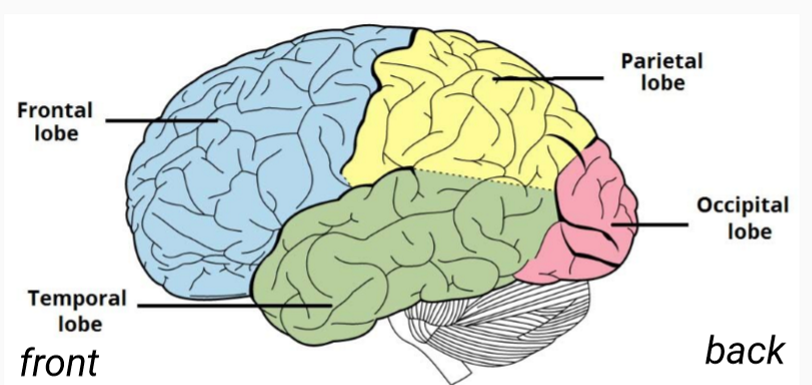
What and where are the 4 cortical lobes?
frontal lobe
temporal lobe
parietal lobe
occipital lobe
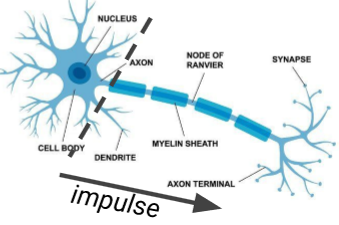
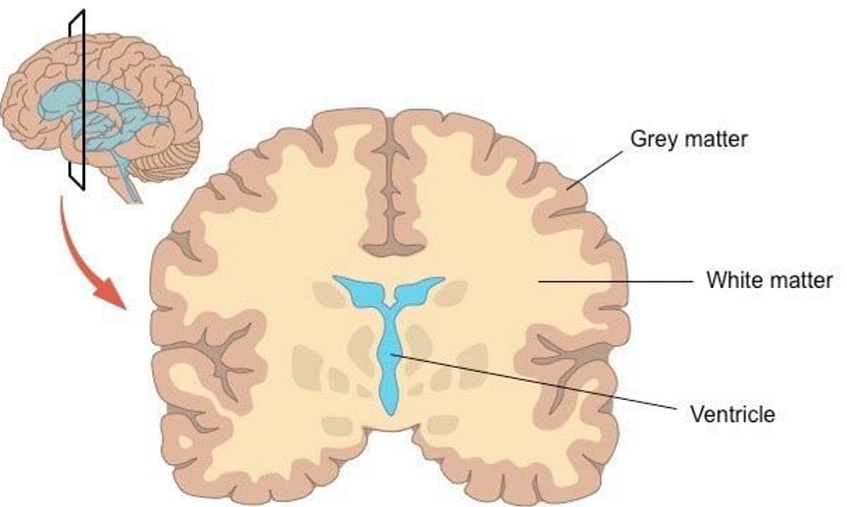
How are neurons oriented?
White matter = myelinated axons
Grey matter = cell bodies
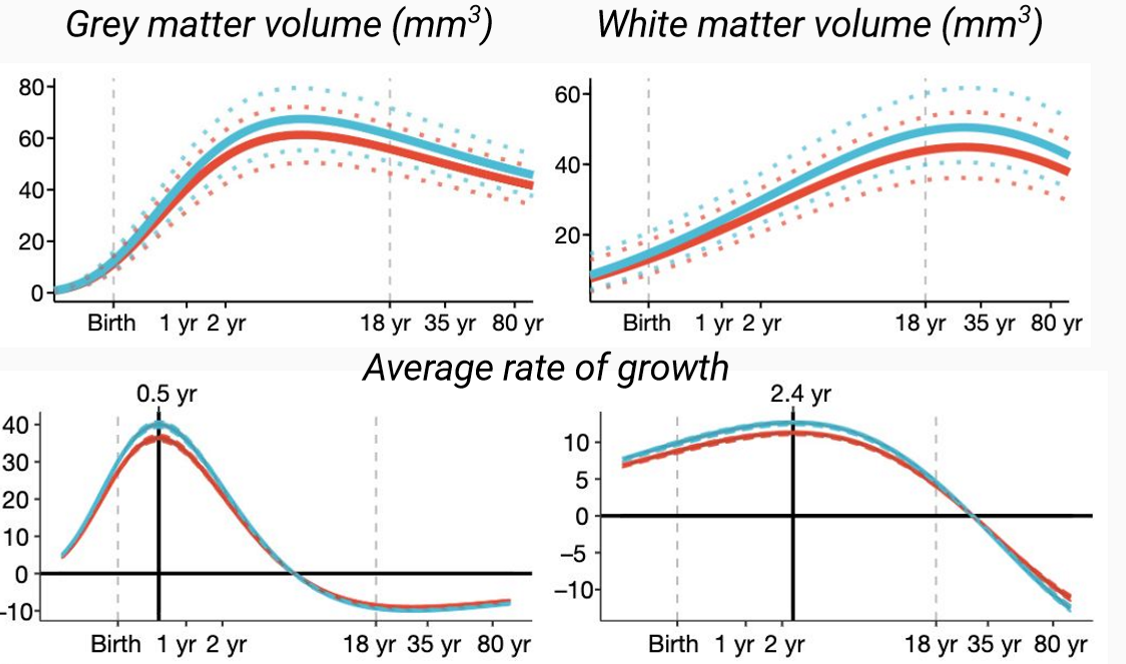
When does anatomical development peak?
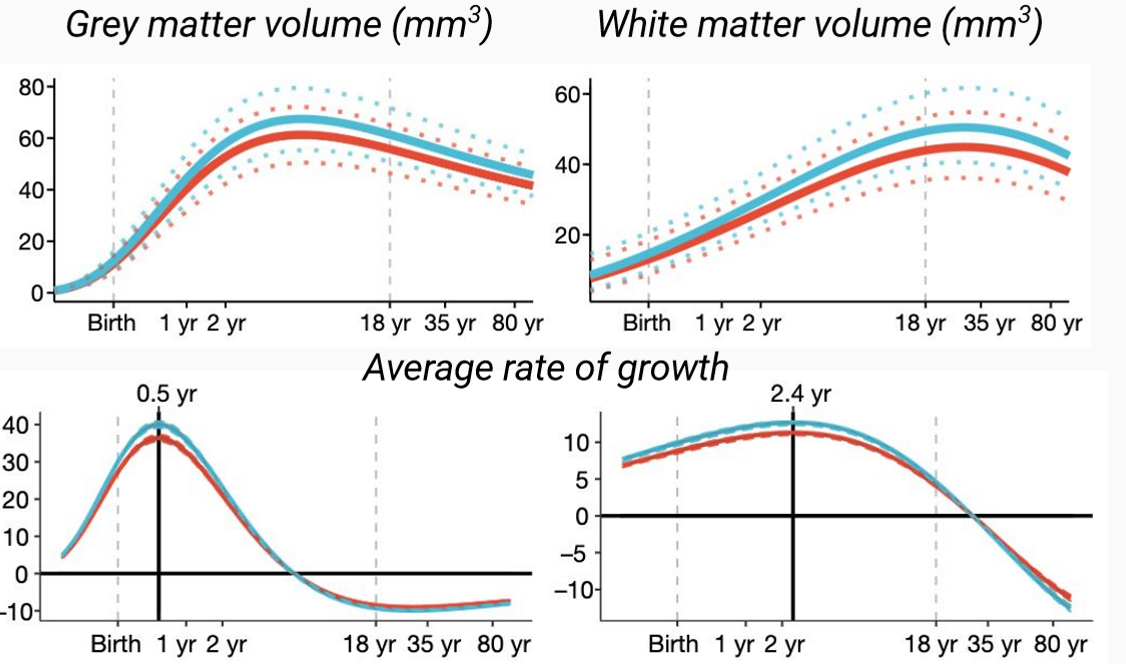
Average rate growth of grey matter greatest at 0.5 yr
Average rate growth of white matter greatest at 2.4 yr
decrease in grey/white matter around 18yr
Many changes in grey/white matter volume continuing into childhood and even young adulthood.
How to measure blood flow in the brain as a proxy for neural activity?
fMRI
fNIRS
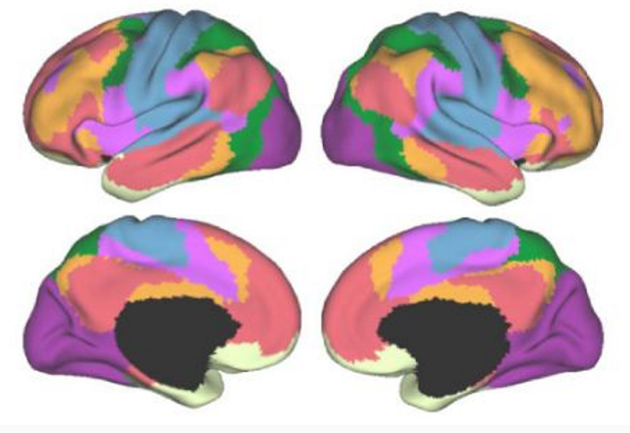
Define functional networks.
Regions of the brain whose activity rises and falls together, even “at rest”
much of this functional structure present from birth (before sensory experience)
How can infants do function without the mature structure?
Presence of change does not imply starting from 0
What do brain data add to learning about developing mind?
Difficult to learn about mind by measuring brain
All cognitive functions have neural origins (behavior implies neural mechanisms)
Brain responses do not always support behavior (response does not necessarily explain anything
Define Forward Inference.
Manipulating stimulus or the task, and measuring the brain
Question: What is the neural basis for [mental function]?
Answer: Brain areas X, Y, Z
Define Reverse Inference.
Measuring the brain and making inference about underlying mental function
Question: Is [mental process] involved in [task]?
Answer: Cognitive processes X, Y, Z
Is this forward or reverse inference: Which brain regions respond more to personal vs. impersonal moral scenarios?
forward
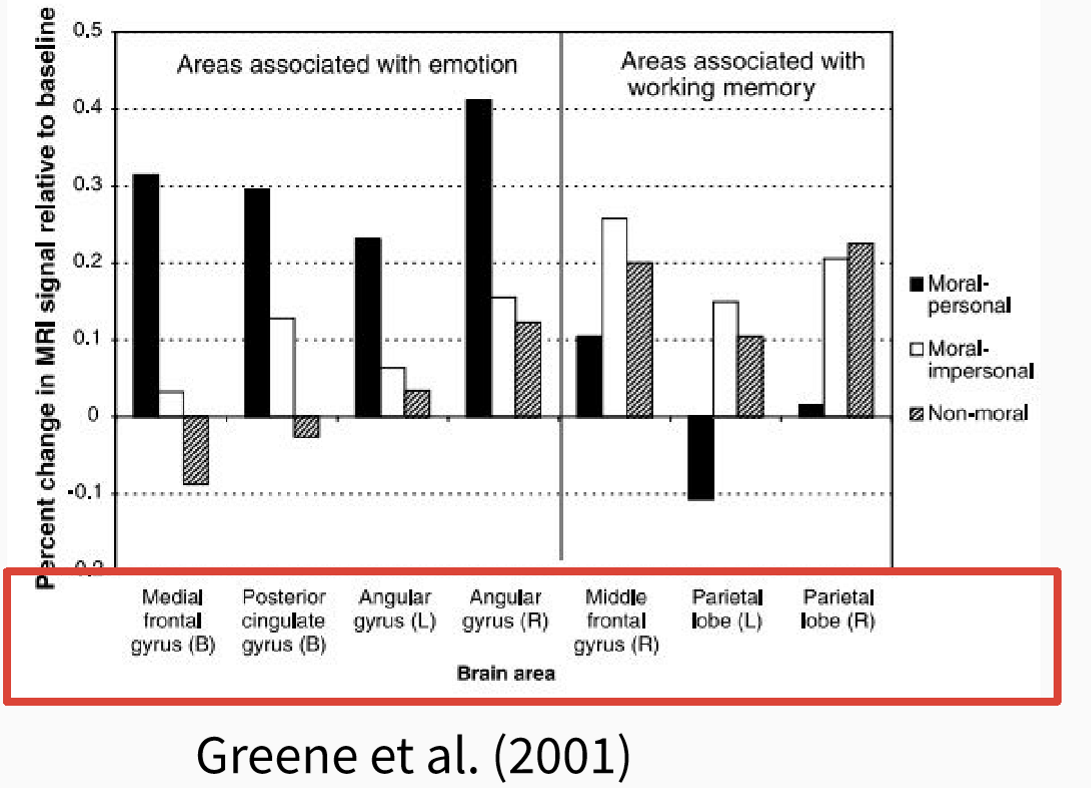
Is this forward or reverse inference: Given neural activation, what cognitive processes are likely involved in processing moral vs. impersonal moral scenarios?
reverse
“impersonal scenarios evoke calculated thinking more than personal”
“personal scenarios evoke emotional reasoning more than impersonal”
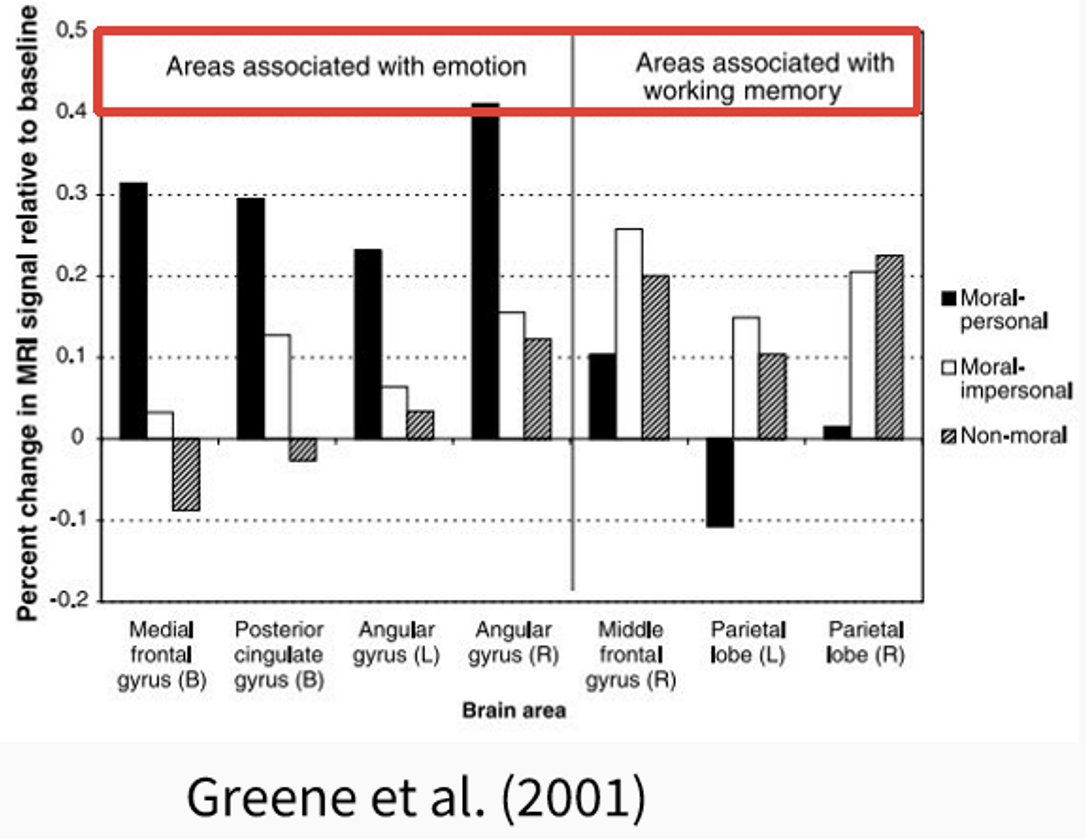
Why is using reverse inferences controversial?
Same region can be active during many different mental processes
What does “common mechanism” vs. “distinct mechanism” mean?
In adults and infants, the same mental process/behavior X is supported by the SAME vs DISTINCT neural mechanism
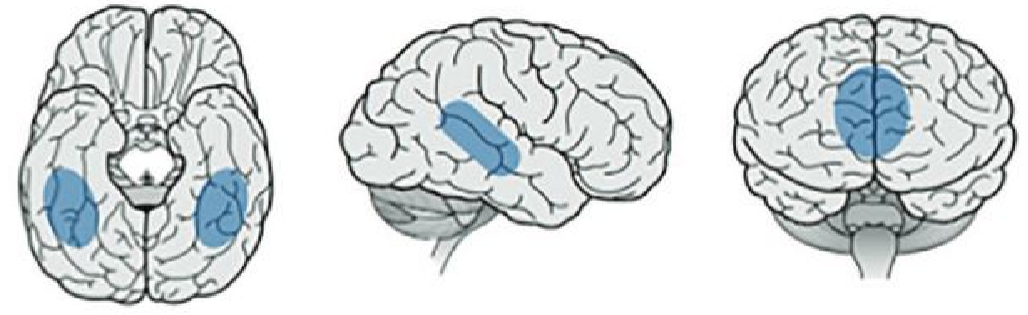
What are the face-selective regions in adults?
fusiform face area (FFA)
superior temporal sulcus (STS)
medial prefrontal cortex (MPFC)
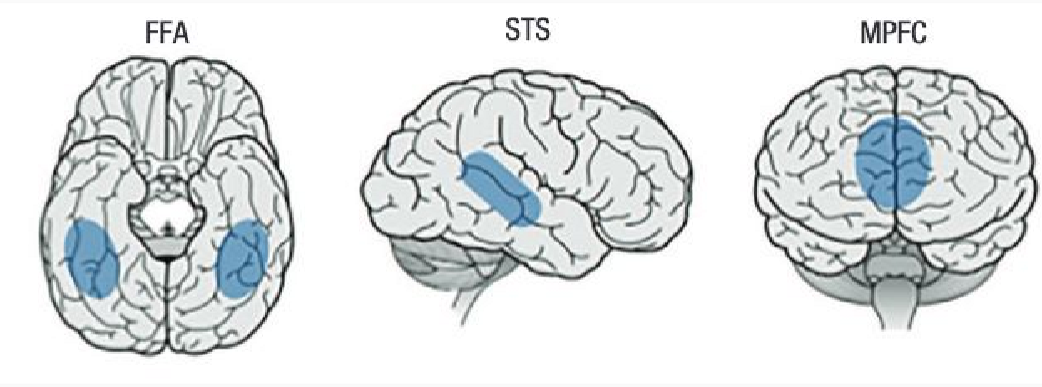
Define “face selective”.
Region responds more to faces than … Houses, objects, bodies, scenes.
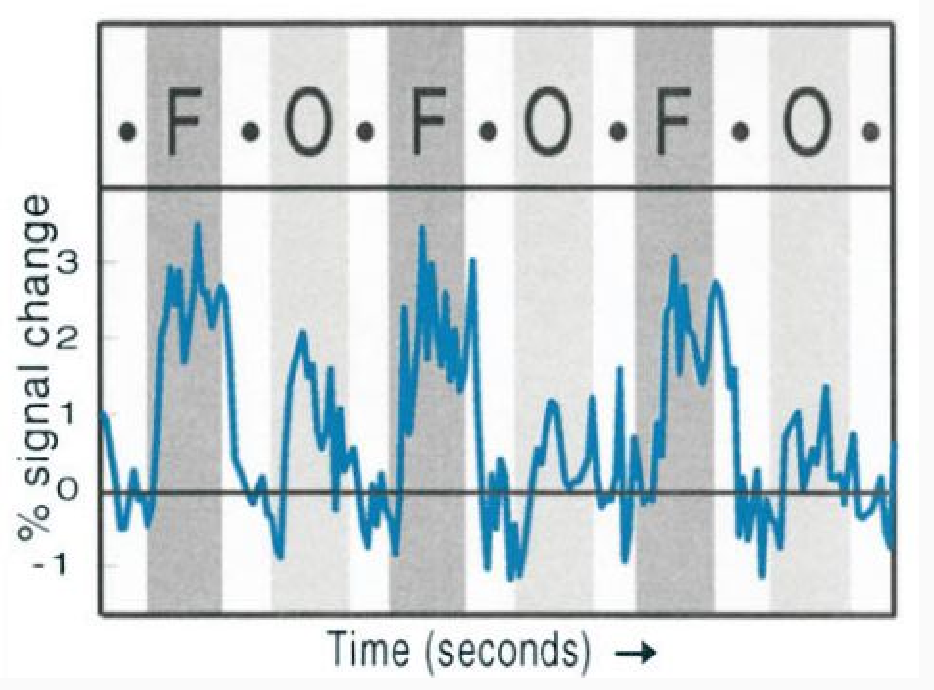
CASE STUDY: Is FFA involved in face processing in adults?
Step 1. Stimulate FFA
Step 2. Show object
Step 3. Face overlayed with object
Reverse inference
FFA does not merely respond to faces, but CAUSALLY involved in face perception.
Define Serial Hypothesis.
Face processing proceeds from concrete to abstract over development (front to back of brain).
Processing of face (FFA)
infants learn to identify a face
Processing of social interactions (STS)
learn to make sense of other people’s interactions
Processing of self-relevance and social value (MPFC)
attribute social value

What is consider a “selective response”?
Greater response (positive) to category X than any other
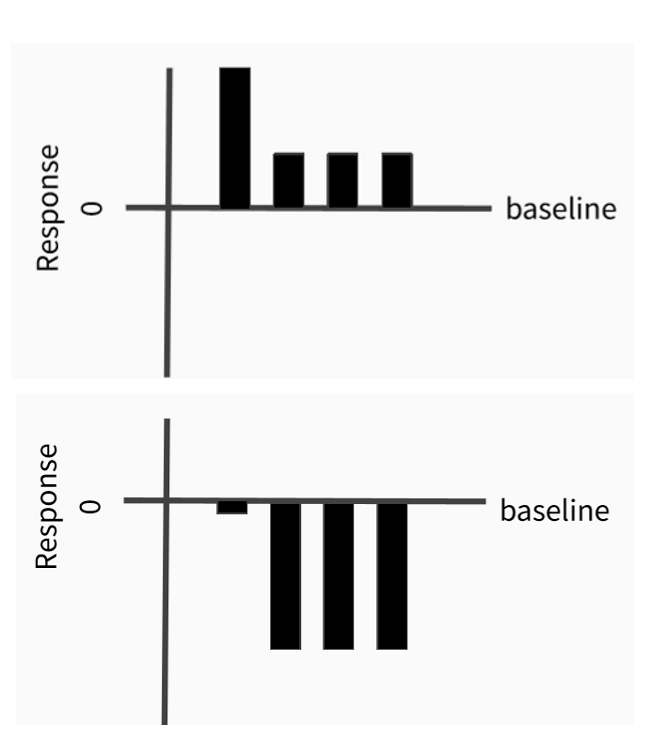
What brain areas respond to faces in infants?
infants FFA responds to faces as EARLY as we can measure
same for STS (social perception) and MFPC (social value)
VTC (ventral temporal cortex) = FFA
Is this forward or reverse inference: Infant FFA, STS, and MFPC show a face selective response, as early we can measure.
forward
Is this forward or reverse inference: Infant appreciate that faces are potentially valuable social partners, as early as they can perceive faces.
reverse
What hypotheses opposes Serial Hypothesis?
Forward inference: Face-selective responses emerge in parallel in these brain regions (FFA, STS, MPFC)
Reverse inference: Perceiving faces, social partners, and making social evaluations emerge in parallel.
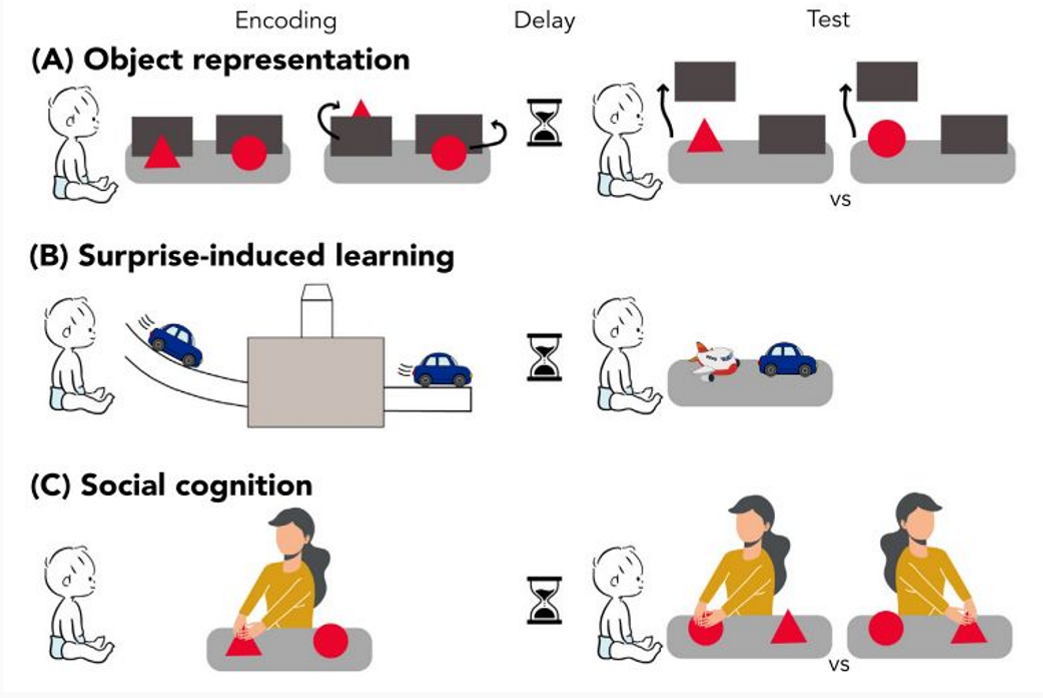
Define Short-term memory.
Information that is briefly stored so that it can be actively processed.
limited capacity
temporal scale = seconds
How is short term memory in adults?
Change detection = excellent performance with 1-3 items to track; lower performance as set +4
Capacity limit of ~3 items
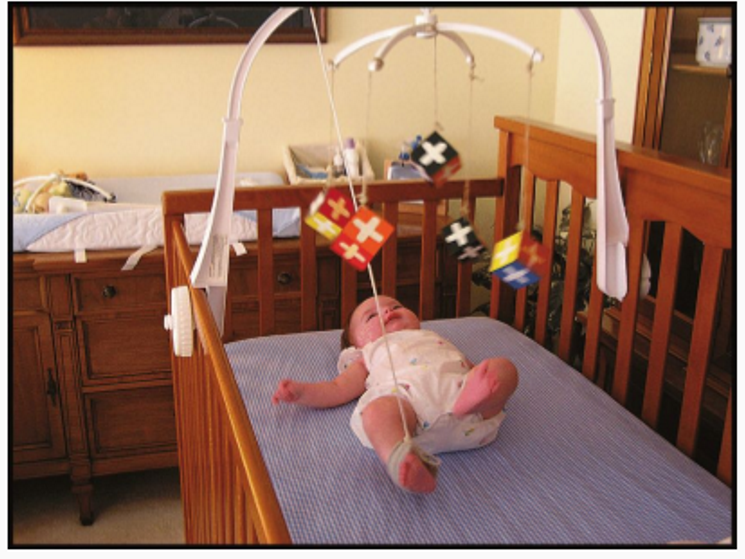
Define Long term memory.
Stored information that constitutes our general knowledge base
higher capacity
temporal scale: minutes to lifetimes
Evidence of short-term memory in infants.
object representation
surprise induced learning
social cognition
Evidence of long-term memory in infants.
conditioning
language development
Define Infantile Amnesia.
Inability of older children or adults to recall memories from early childhood
~3-4 yr
If developmental change in neural mechanisms for memory formation explains infant amnesia then …
… neural mechanisms for memory should differ between adults + infants.
In adults, HIPPOCAMPUS critical for memory, which matures into adolescence
maybe in infants, memory operates via different mechanisms that do not involve hippocampus
No support for distinct mechanisms during encoding in hippocampus
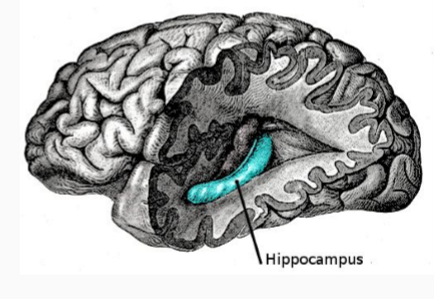
Experimental test for infantile amnesia.
Methods for adults: show participants pictures in lab and test later to see what they remember
Finding for adults: greater response in hippocampus to items that will be remembered vs. forgotten later
Method for infants: 4-24mo scanned using fMRI in similar task
Finding: preferential looking to the familiar item, after a delay
Result of Experimental test for infantile amnesia.
In infants, greater responses in hippocampus to items that will be remembered vs. forgotten
Evidence for common mechanisms for memory in infant and adults
No support for distinct mechanisms during encoding in hippocampus
 Note
Note  Flashcards (20)