Chapter 6 - Microbial Growth 2023
 Call Kai
 Learn
Learn Practice Test
 Spaced Repetition
 Match
Match Flashcards
 Knowt Play
1/32

There's no tags or description
Looks like no tags are added yet.
Name | Mastery | Learn | Test | Matching | Spaced | Call with Kai |
|---|
No analytics yet
Send a link to your students to track their progress
33 Terms
Psychrotrophs
Grow between 0°C and 20-30°C
Cause food spoilage
mesophiles
moderate temperature loving microbes (20-40C), most microbes grow at these temps
thermophiles
growth at higher temps, 50-60oC, hot springs
hyperthermophiles
Archaea, optimum growth temperature >80*C, volcanic vents, deep ocean vents
acidophiles
grow in acidic environments, 5.5 , pump out excess protons; or lower, most fungi and algae
Alkaliphiles (alkalophiles)
growth optimum between pH 8.5 and pH 11.5, pump in protons
psychrophiles
live at very cold temperatures, freezers, artic
Neutrophiles pH range
pH of 6.5-7.5, most organisms fall into this range
plasmolysis
A phenomenon in walled cells in which the cytoplasm shrivels and the plasma membrane pulls away from the cell wall; occurs when the cell loses water to a hypertonic environment.
obligate halophiles
salt-loving bacteria; require high osmotic pressure (dead sea)
facultative halophiles (osmotolerant)
tolerate high osmotic pressure
obligate aerobes
require oxygen
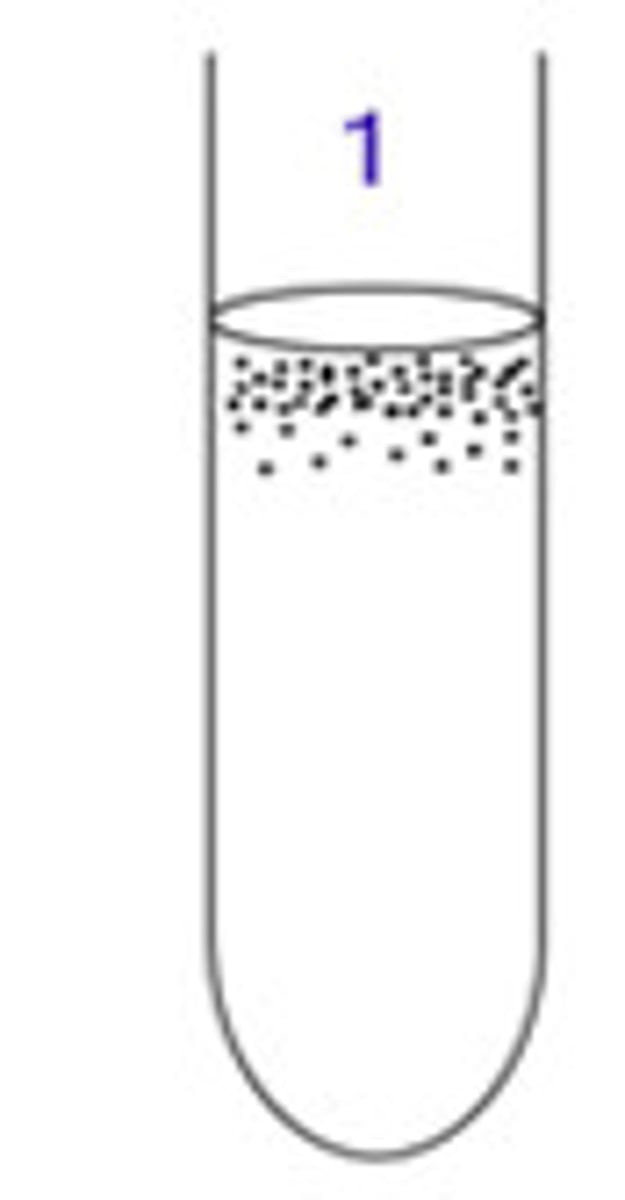
facultative anaerobes
can survive with or without oxygen, prefer to use aerobic respiration, however in the absence of oxygen, can use either fermentation or anaerobic respiration

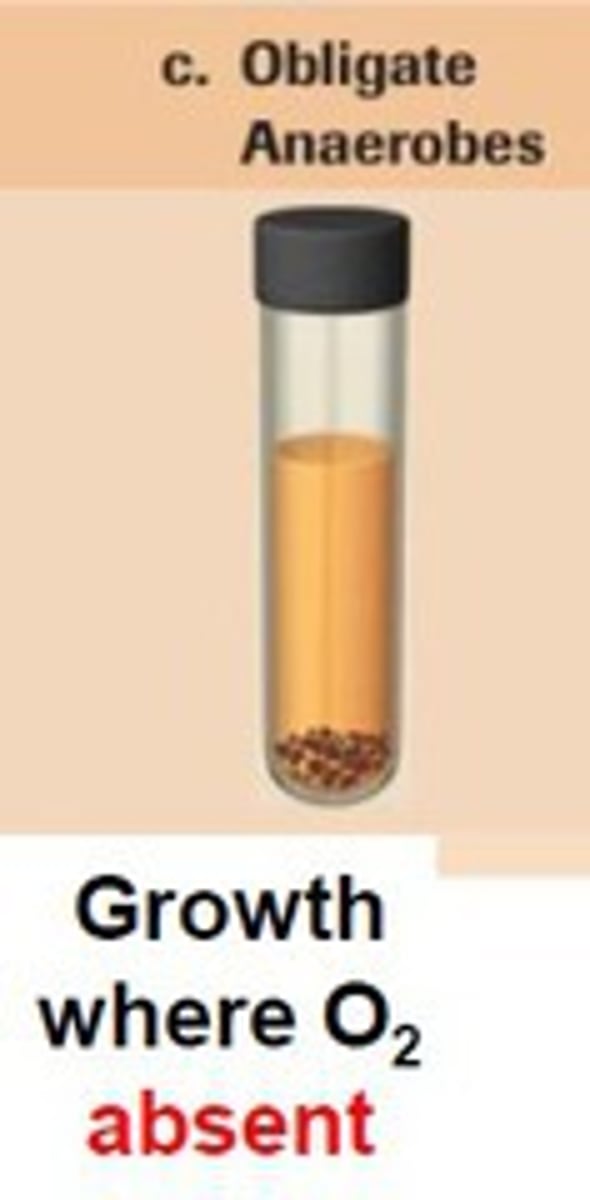
obligate anaerobes
unable to use oxygen, and oxygen is toxic due to lack of enzymes to break down toxic byproducts
aerotolerant aerobes
do not use oxygen but are not killed by it
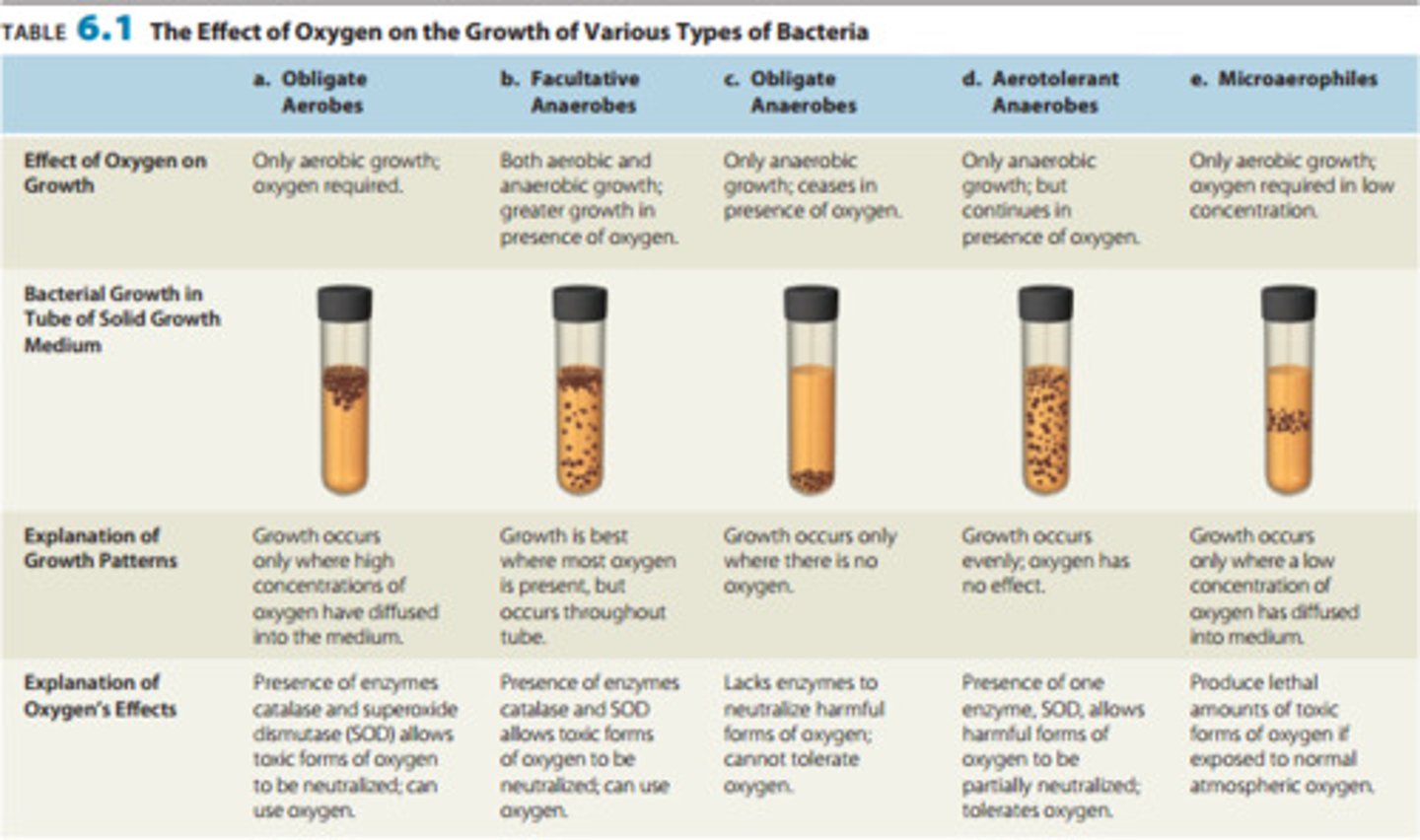
microaerophiles
require oxygen concentration lower than air concentrations

biofilms in microbial growth
microbial communities; form slime or hydrogels that adhere to surfaces; bacteria communicate cell-to-cell via quorum sensing; share nutrients; shelter bacteria from harmful environmental factors
1000x resistant to microbicides; involved in 70% of infections in hospital (catheters, heart valves, contacts, dental caries)
CFU
population of cells arising from single cell or spore or from group of attached cells; often called colony-forming unit (CFU)
bacterial division
do not go through mitosis; go through binary fission
increase number of cells, not size
budding
Conidiospores (actinomycetes)
Fragmentation of filaments
generation time
time required for cell to divide
20 minutes to 24 hours
binary fission doubles number of cells each generation
total number of cells = 2^number of generations
growth curves are represented logarithmically
lag phase of bacterial growth
The first phase of the bacterial growth curve, in which organisms acclimate to their surrounding; they grow in size but do not increase in number.
Log phase of bacterial growth
The second of the four phases of bacterial growth, in which cells divide at an exponential rate.
stationary phase of bacterial growth
The third of the four phases of the bacterial growth curve, in which new cells are produced at the same rate as the old cells die, leaving the number of live cells constant.
death phase of bacterial growth
as resources become insufficient, bacteria die off
direct measurement of microbial growth
direct measurements-direct count of microbial cells; plate count; filtration; most probable number (MPN) method; direct microscopic count
direct microscopic count
Volume of a bacterial suspension placed on a slide
Average number of bacteria per viewing field is calculated
Uses a special Petroff-Hausser cell counter; live and dead bacteria are included
MPN (most probable number)
a statistical determination of the number of bacter per 100ml , only live bacteria are included
turbidity method
- Indirect method
- Counts both live and dead cells
- uses spectrophotometer
serial dilution
take initial stock sample of bacteria, successive tubes, dilute down to smaller numbers
turbidity
measurement of cloudiness with a spectrophotometer
metabolic activity
amount of metabolic product is proportional to the number of bacteria
dry weight
bacteria are filtered, dried, and weighed; used for filamentous organisms
Still learning (6)
You've started learning these terms. Keep it up!
Explore top notes

