physics exam 2 - ch20
 Call Kai
 Learn
Learn Practice Test
 Spaced Repetition
 Match
Match Flashcards
 Knowt Play
1/38

There's no tags or description
Looks like no tags are added yet.
Name | Mastery | Learn | Test | Matching | Spaced | Call with Kai |
|---|
No analytics yet
Send a link to your students to track their progress
39 Terms
field model
how forces from charges transmit through empty spaces from one charge to another
source charge alters spaces around it
the alteration of space = electric field
the field exerts a force on other charges
alteration is everywhere in space
electric field
alteration of space around a charge
units = N/C
gravitational field
alteration of space around a mass
magnetic field
alteration of space around a magnet
E (N/C)
electric field strength (magnitude of the electric field)
E = Force on x,y,z ÷ q
q = charge
if charge q experiences an electric force
then an electric field exists to cause the force
electric field vector
exists at every point in space
positive probe charge
vector points the same direction as the force
negative probe charge
vector points in the opposite direction of the force
electric field only depends on
source charges
not dependent on magnitude of q
force on probe charge
F on q = (kqq/r², away or towards q)
electric field on a source charge
E = (kq/r², away or towards q)
away from q
if q > 0 because + charges push forces away from them
towards q
if q < 0 because - charges push forces towards them 2
electric field diagram
drawings of electric field vectors at a number of points around a charge
a positive charge would have all vectors going outwards from charge
a negative charge would have all vectors going towards the charge
field exists at all points but diagram only shows a few points
electric field vector
arrow = strength and direction of electric field at the point
length of vector is only significant relative to the lengths of other vectors
vectors do not stretch from 1 point to another
electric field vectors
only represent the force at the point
so if vectors appear to cross they don’t actually cross
only not possible if two directions of 1 point
electric field is stronger
when the electric field vectors are closer together
electric field of multiple charges
vector sum of the electric field from each of the charges
electric field at any point of an electric dipole
is by vector addition of the fields of the two charges
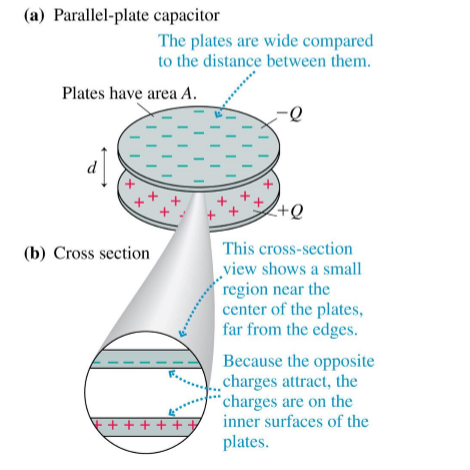
parallel plate capacitor
two electrodes
spaced closely
equal and opposite charges
horizontal components = cancel out
vertical components = add to give the electric field vector pointing from positive to negative plate
electrode
a conducting plate
uniform electric field
every point in the electric field has the same strength and direction
like in a parallel-plate capacitor
Eo permittivity constant (epsilon naught)
8.85 × 10^-12
electric field of a parallel plate capacitor depends on
Q/A = charge to area ratio charge density
closer the charges, larger the fields
shape is not relevant
spacing doesn’t affect
electric field lines
imaginary lines drawn through a region of space to visual the electric field
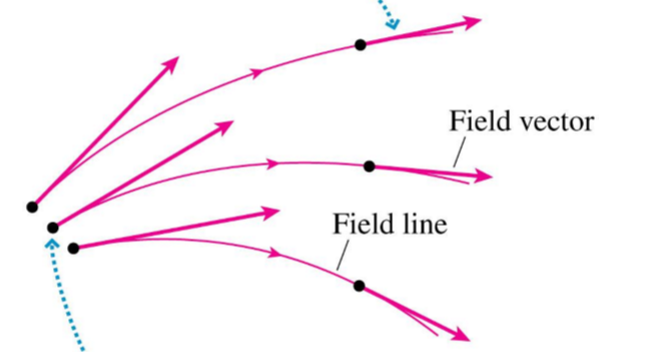
electric field vectors are
tangent to electric field lines
field lines closer together
are closer to the charge and where the field strength is the greatest
electric field in a parallel capacitor
travel from the positive to negative plate
constant field = evenly spaced field lines
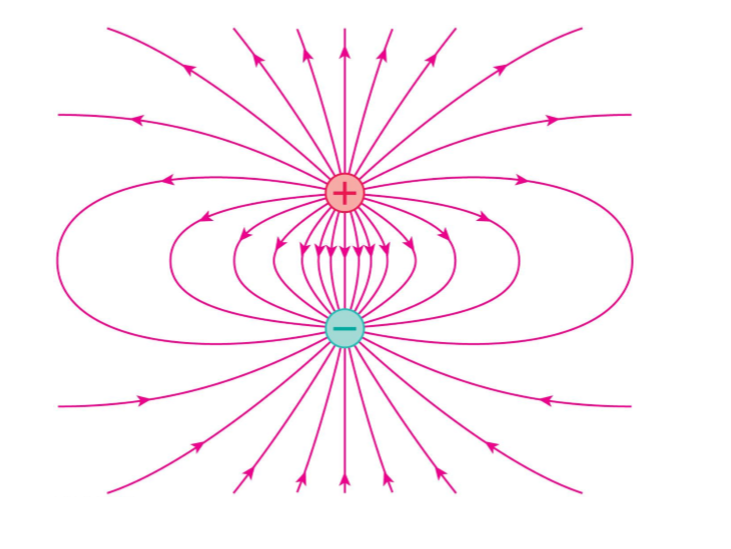
electric field lines
cannot cross
start at a positive charge and end on a negative charge
stronger field strength
higher acceleration at that point
heart
cell membrane insulator
surface of tissue on one side is polarized and other side isn’t
large electric dipole that can generate electric field throughout the body
conductor in electrostatic equilibirum
electric field is 0
no charges are moving
electrostatic equilibrium
excess charges in a conductor
lie at its surface because any interior charges would create an electrical field
forces are perpendicular to the charged surface
if tangent then a force would exert and then the forces would have to move
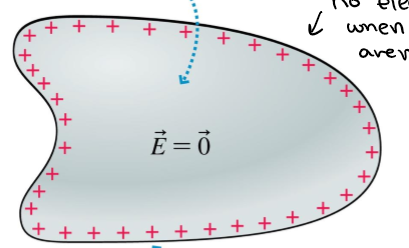
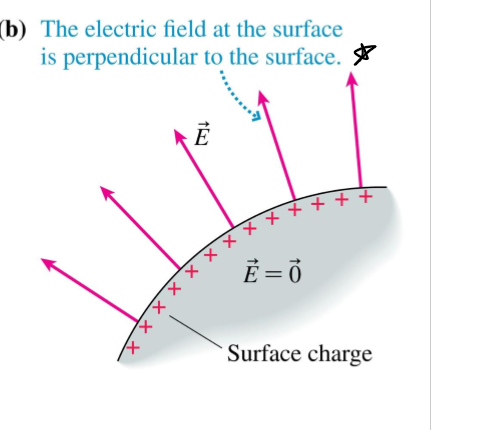
repulsive forces of charges in a conductor
cause them to move as far apart without leaving the conductor
perpendicular only not tangent
screening
using a conducting box to exclude electric fields in a region
helps create electric fields of 0
metal walls and wires can be used for screening
not uniform distribution of charge in a conductor
sharper point → excess charge accumulates = stronger electric field
ex: lightning rod can accumulate charge
Force on q =
q * E
q = force on charge
E = electric field
DNA gel electrophoresis
fragments have a negative charge
the electrodes create an electric field on the gel
the fragments then travel from the - to the + charge
fragments of different sizes travel at different rates

