HNSC 2170: Unit 6
 Studied by 0 people
 Call Kai
 Learn
Learn Practice Test
 Spaced Repetition
 Match
Match Flashcards
 Knowt Play
1/122

There's no tags or description
Looks like no tags are added yet.
Name | Mastery | Learn | Test | Matching | Spaced |
|---|
No study sessions yet.
123 Terms
What are the functions of water in the body?
Carries nutrients, maintains structure, helps in metabolic reactions, acts as solvent, maintains blood volume, regulates body temperature, acts as lubricant and cushion.
What is the process of water balance?
Regulated by intake and output (I&O), drinking behavior initiated by hypothalamus, intake via food/fluids, regulation of water intake based on blood concentration.
What are situations that can cause fluid and electrolyte imbalance?
Excessive sweating, vomiting, diarrhea, excessive urination, certain medications.
What are the main functions of minerals in the body?
Structural support, enzyme function, nerve transmission, fluid balance, energy production.
What are the food sources of minerals?
Varies depending on the mineral, but can include fruits, vegetables, whole grains, dairy products, meat, and legumes.
What are the deficiency symptoms of minerals?
Varies depending on the mineral, but can include muscle weakness, fatigue, impaired growth, bone loss.
What are the toxicity symptoms of minerals?
Varies depending on the mineral, but can include nausea, vomiting, diarrhea, organ damage.
What factors affect the absorption of minerals?
Presence of other nutrients, pH level of the digestive system, overall health status.
What is the nutritional management of hypertension?
Dietary changes to reduce sodium intake, increase potassium intake, and promote overall heart-healthy eating.
What is the DASH diet?
Dietary Approaches to Stop Hypertension, emphasizes fruits, vegetables, whole grains, lean proteins, and low-fat dairy products.
Who might benefit from the DASH diet?
Individuals with hypertension, individuals at risk for heart disease, individuals looking to improve overall heart health.
What are the characteristics of osteoporosis?
Decreased bone density, increased risk of fractures, loss of bone strength.
What are the risk factors for developing osteoporosis?
Age, gender (women at higher risk), family history, low calcium and vitamin D intake, sedentary lifestyle.
What is the availability of iron from animal and plant sources?
Heme iron from animal sources is more readily absorbed than non-heme iron from plant sources.
What dietary factors can affect iron absorption?
Presence of vitamin C can enhance iron absorption, while certain compounds like phytates and tannins can inhibit iron absorption.
What is diminished thirst?
Decreased sensation of thirst.
What is the increased risk for dehydration?
Higher chance of becoming dehydrated.
What is water intoxication?
Rare condition of excessive water consumption.
What can cause increased water consumption and kidney disorders that decrease urine production?
Factors such as high water intake and kidney problems can lead to reduced urine production.
What is hyponatremia?
A condition characterized by low sodium levels in the blood.
What are the signs and symptoms of hyponatremia?
Severe headache, confusion, convulsions, and even death.
How is water excreted from the body?
Water is excreted through urine, sweat, breath, and feces.
Which organs are involved in water excretion regulation?
The brain and kidneys are involved in regulating water excretion.
What is the role of the hypothalamus in water regulation?
The hypothalamus stimulates the pituitary gland to release ADH (antidiuretic hormone) when there is an increase in salts or a decrease in blood pressure/volume, leading to water reabsorption.
How do the kidneys regulate water excretion?
The kidneys release renin when there is a decrease in blood pressure/volume, which triggers the release of aldosterone, a hormone that helps the body retain more water.
What is the minimum amount of urine excretion per day?
Approximately 500mL/day.
What is the recommended daily water intake for adults?
2-3 liters (8-12 cups).
What is the AI (Adequate Intake) for total water intake in men?
3.7 liters.
What is the AI (Adequate Intake) for total water intake in women?
2.7 liters.
What are the signs and symptoms of dehydration?
Thirst, dry mouth, dry skin, sudden weight loss, rapid heart rate, low blood pressure, weakness, fainting, decreased energy and mental functioning, impaired kidney function, fever, and increased body temperature.
What are the signs and symptoms of severe dehydration?
Pallor, blue lips/nails, confusion, disorientation, rapid and shallow breathing, weak and rapid irregular pulse, thick blood, shock, seizures, coma, and death.
Why is fluid and electrolyte balance critical for health?
Fluid and electrolyte balance is important for maintaining appropriate body fluid distribution and acid-base balance.
What is the role of electrolytes in fluid balance?
Electrolytes help regulate the movement of fluids in and out of cells, maintaining the balance of sodium, chloride, and potassium.
How do the kidneys regulate sodium and water?
The kidneys play a role in regulating sodium and water levels in the body.
What situations can cause fluid and electrolyte imbalance?
Vomiting, diarrhea, heavy sweating, fever, burns, and wounds can lead to fluid and electrolyte imbalances.
What are major minerals?
Minerals that are present in the body in amounts greater than 5g.
What are trace minerals?
Minerals that are present in the body in amounts less than 5g.
What is the function of sodium?
Maintain volume of fluid outside cells and acid-base balance.
What are the food sources of sodium?
Salt, soy sauce, and processed foods.
What are the deficiency symptoms of sodium?
Muscle cramps, mental apathy, and loss of appetite.
What are the toxicity symptoms of sodium?
Hypertension (high blood pressure) and increased risk for cardiovascular disease and cerebral hemorrhage.
What is the function of chloride?
Maintain fluid and electrolyte balance, accompany sodium, maintain acid-base balance, and part of stomach acid (HCl).
What are the food sources of chloride?
Salt, soy sauce, and large amounts of processed food.
What are the toxicity symptoms of chloride?
Harmless, may cause vomiting.
What is the function of potassium?
Maintain fluid and electrolyte balance, transmission of nerve impulses, muscle contraction (including heart), and support cell integrity.
What are the food sources of potassium?
Fresh, whole foods, meats, vegetables, fruit, legumes, and grains.
What are the deficiency symptoms of potassium?
Dehydration, increased blood pressure, increased salt sensitivity, increased kidney stone risk, arrhythmias, muscle weakness, and glucose intolerance.
What are the toxicity symptoms of potassium?
Muscle weakness and vomiting.
What is the function of calcium?
Stored in bones and teeth, normal muscle contraction and relaxation (including heart), nerve functioning, regulate transport of ions across membranes, clotting, and blood pressure regulation.
What are the food sources of calcium?
Milk, dairy products, some leafy green vegetables, canned sardines, salmon, almonds, calcium-set tofu, calcium-fortified juices, fortified soy drinks, and fortified nuts/rice based drinks.

What happens to bones when calcium is robbed?
Bones lose calcium, not blood = normal calcium blood levels
What condition is associated with osteoporosis in adults?
Osteoporosis.
What condition is associated with stunted growth in children?
Stunted growth.
What is the function of phosphorus in the body?
Mineralizes bones and teeth, important in cell's genetic material, phospholipids in cell membranes, energy transfer, buffers.
What are the food sources of phosphorus?
Dairy, animal foods (beef, fish), some legumes.
What are the toxicity symptoms of phosphorus?
Calcification of non-skeletal tissues, especially in chronic kidney disease (CKD).
Why do many people not meet the DRI recommendations for magnesium?
Many people do not consume enough magnesium.
What is the function of magnesium in the body?
Bone mineralization, over half of magnesium is stored in bones, building protein, enzyme action, normal muscle contraction, transmission of nerve impulses.
What are the food sources of magnesium?
Nuts, legumes, whole grains, dark green vegetables, seafood, chocolate.
What are the deficiency symptoms of magnesium?
Rare, body gets magnesium from bone stores.
Symptoms include uncontrollable muscle contractions, hallucinations, confusion, difficulty swallowing, growth failure, and are related to cardiovascular disease, heart attacks, and hypertension.
What are the toxicity symptoms of magnesium?
Toxicity symptoms occur from non-food sources such as supplements and magnesium salts. Symptoms include diarrhea, nausea, abdominal cramps, acid-base imbalance, and potassium depletion.
What are the functions of sulfate in the body?
Sulfate is a part of certain amino acids, stabilizes protein shape via sulfur bridges, and is found in vitamins biotin and thiamine, as well as insulin.
What are the food sources of sulfate?
All protein-containing foods such as meats, fish, poultry, eggs, milk, legumes, and nuts.
What are the deficiency symptoms of sulfate?
None.
What are the toxicity symptoms of sulfate?
Toxicity symptoms occur only if sulfur amino acids are eaten in excess, leading to decreased growth.
Where is iron stored in the body?
Iron is stored in the bone marrow and is sent to the liver to be packed into red blood cells (RBCs).
What happens to iron when RBCs die?
When RBCs die, iron is kept in the spleen and liver and sent back to the bone marrow for storage.
Why are the DRI recommendations for iron higher for menstruating individuals and vegetarians?
DRI recommendations for iron are higher for menstruating individuals and vegetarians due to increased iron needs.
What are the two forms of iron?
The two forms of iron are heme and nonheme.
Where is heme iron found and how is it absorbed?
Heme iron is found in hemoglobin and myoglobin in meat, fish, and poultry, and is readily absorbed. About 23% of heme iron from animal sources is absorbed.
Where is nonheme iron found and how is it absorbed?
Nonheme iron is found in plant foods and meat, and is absorbed less efficiently. The absorption of nonheme iron can range from 2-20% depending on body stores and dietary factors.
How can nonheme iron absorption be increased?
Nonheme iron absorption can be increased by consuming it with vitamin C or other organic acids, consuming it separately from calcium-rich foods, and cooking foods in cast-iron cookware.
Substances that inhibit Fe absorption
Tannins, Ca & P, phytates
Functions of iron
Oxygen transport, energy utilization
Deficiency symptoms of iron
Anemia, fatigue, weakness, pallor
Toxicity symptoms of iron
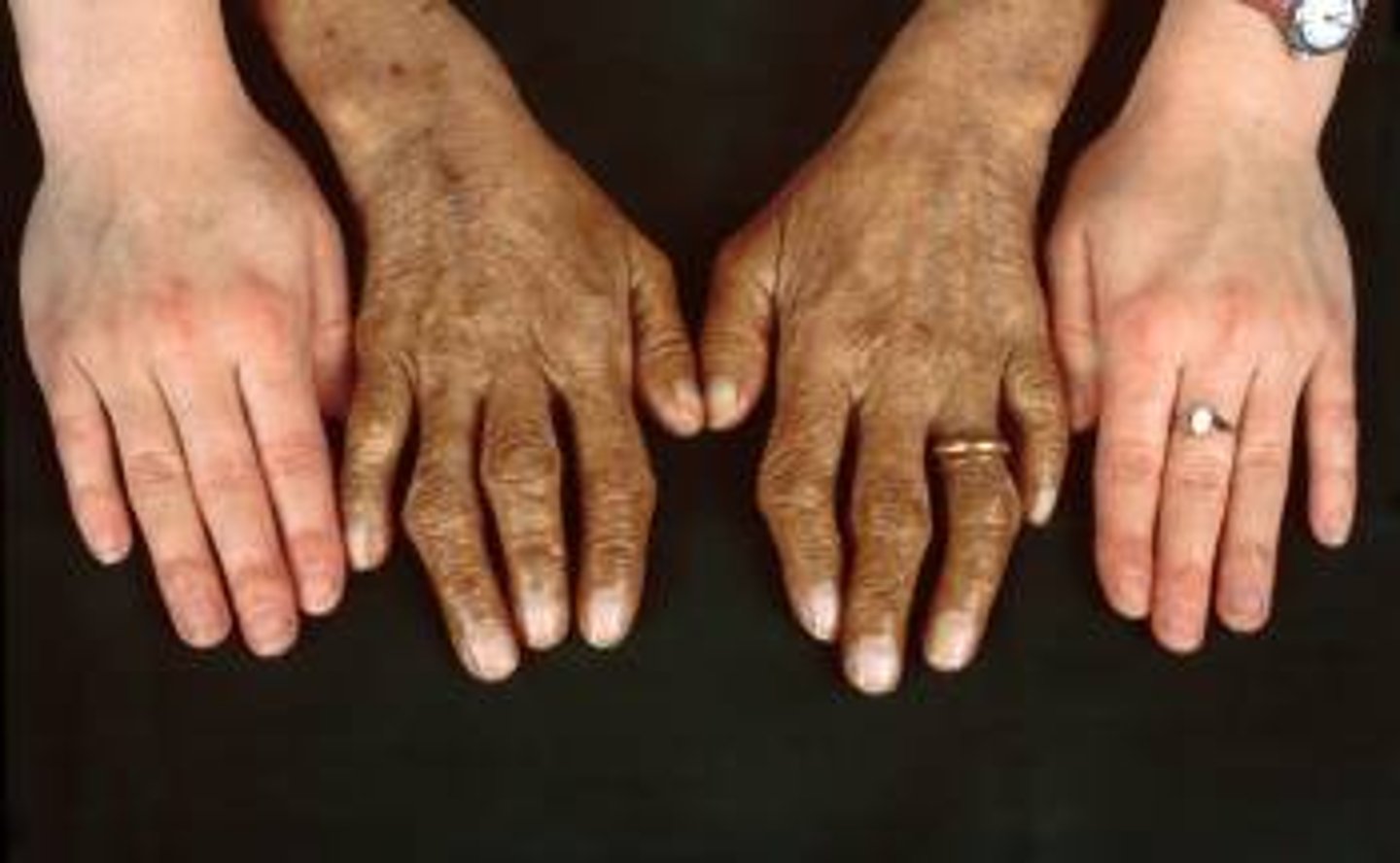
Hemochromatosis, fatigue, mental depression
Food sources of substances that inhibit Fe absorption
Milk, tea/coffee, whole grains, legumes
Functions of zinc
Enzyme activation, immunity, wound healing
Food sources of zinc
Meats, fish, shellfish, poultry, grains, vegetables
Deficiency symptoms of zinc
Growth impairment, loss of taste, impaired immunity
Toxicity symptoms of zinc
Decreased appetite, impaired immunity
Functions of selenium
Antioxidant, enzyme cofactor, thyroid hormone synthesis
Food sources of selenium
Seafood, organ meats, whole grains, vegetables
Deficiency symptoms of selenium
Increased risk of CVD
Toxicity symptoms of selenium
Nausea, abdominal pain, nerve damage
Functions of iodine
Thyroid hormone synthesis, metabolic regulation
Food sources of iodine
Iodized salt, seafood, bread
What are deficiency symptoms of iodine?
Goiter, sluggishness, weight gain
What is cretinism?
Extreme and irreversible mental and physical impairment in infants
What are toxicity symptoms of iodine?
Decreased thyroid activity, goiter, deadly
What are the functions of copper?
Enzymes for wound healing, collagen production, nerve sheath maintenance
What are food sources of copper?
Organ meats, seafood, legumes, nuts, seeds, whole grains
What are deficiency symptoms of copper?
Anemia, bone abnormalities
What are toxicity symptoms of copper?
Vomiting, diarrhea, liver damage
What are the functions of manganese?
Facilitates cell processes, bone formation
What are food sources of manganese?
Nuts, whole grains, leafy vegetables, tea
What are toxicity symptoms of manganese?
Nervous system disorders
What are the functions of fluoride?
Bone and teeth formation, increased teeth resistance to decay
What are food sources of fluoride?
Water, tea, seafood
What are deficiency symptoms of fluoride?
Increased risk of tooth decay (dental caries)
 Note
Note  Flashcards (32)