Vasari’s Third Period in Papal Rome
 Studied by 1 person
 Call Kai
 Learn
Learn Practice Test
 Spaced Repetition
 Match
Match Flashcards
 Knowt Play
1/18

There's no tags or description
Looks like no tags are added yet.
Name | Mastery | Learn | Test | Matching | Spaced | Call with Kai |
|---|
No study sessions yet.
19 Terms
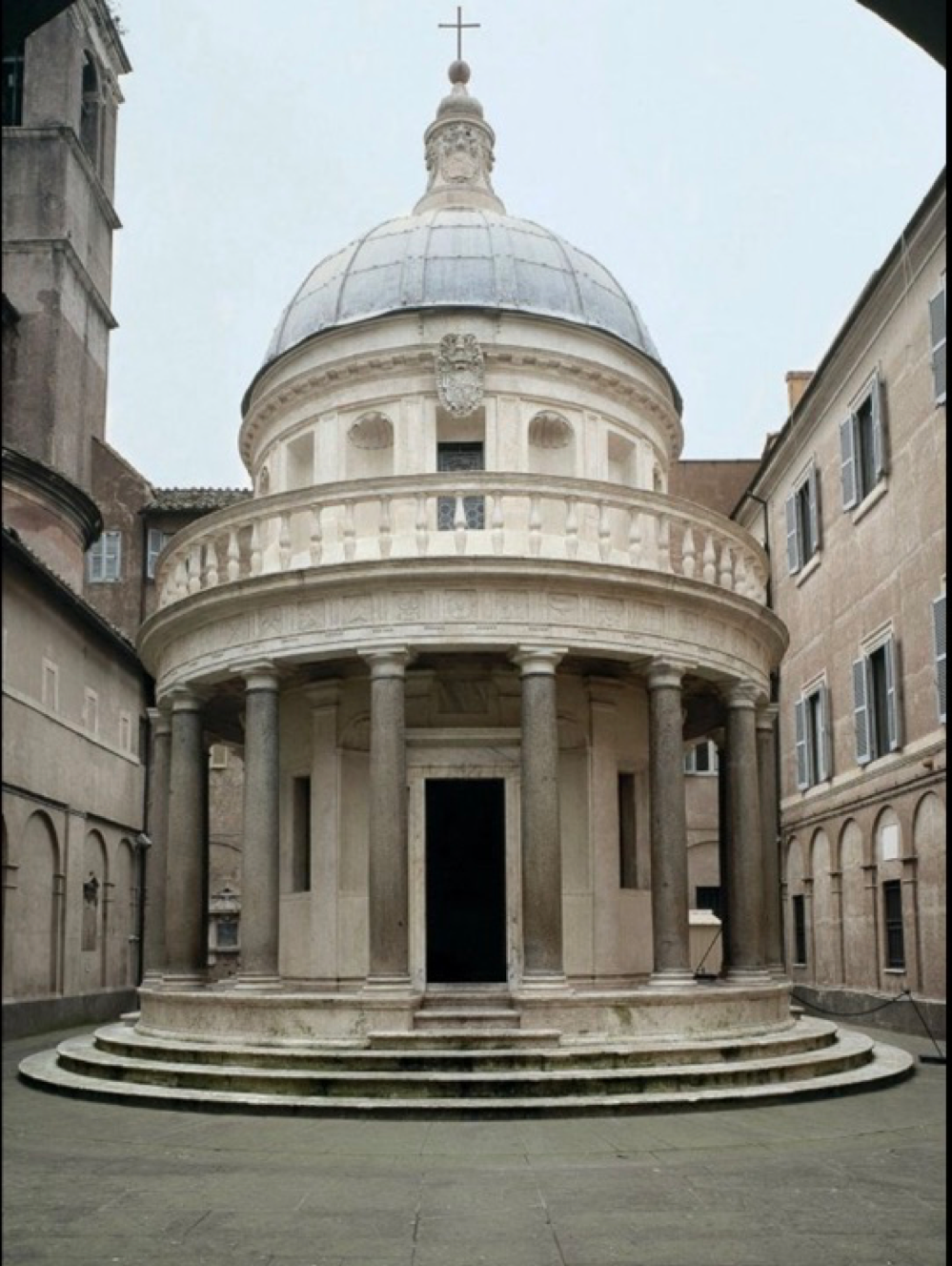
Donato Bramante (1444-1514)
Tempietto, 1502–1512, patron: Ferdinand and Isabella of Spain, at S. Pietro in Montorio, Rome
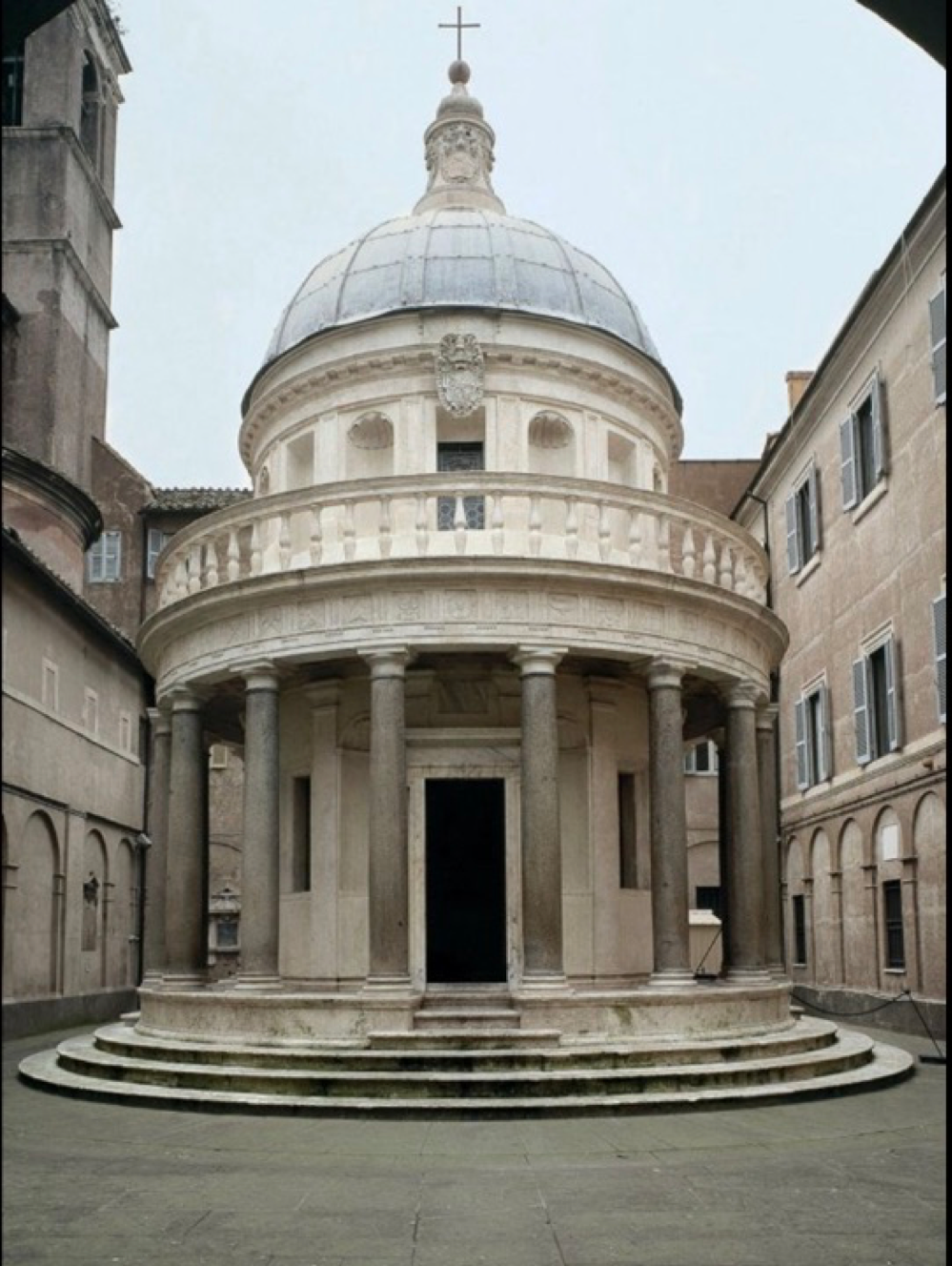
Describe the architecture and context of Tempietto and its significance
doric=to antiquity, small building which is a reliquary, relic: hole where upside down crucifix of St.Peter is, perfectly round with dome, where he was crucified. Doric order for manly god= St.Peter is manly saint. Doric frieze: liturgical instruments like chalice and plate.
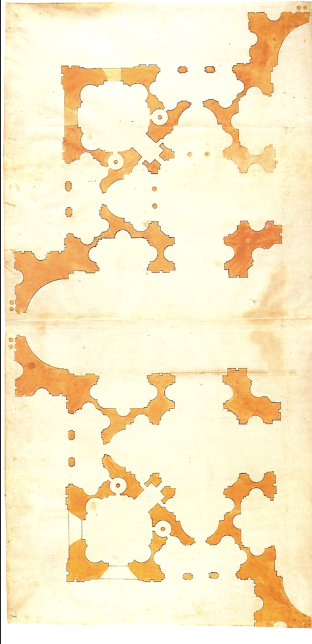
Donato Bramante (1444-1514) Plan (Uffizi 1A; red chalk on paper) and Bronze Foundation Medal (cast by Caradosso) for New St. Peter’s Basilica, begun 1506 Patron: Julius II della Rovere
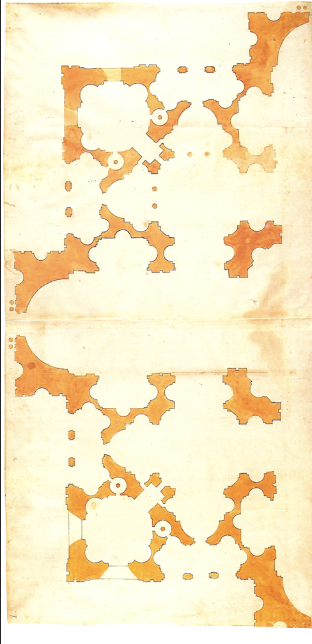
describe the Plan Uffizi and its significance
half a drawing, square, centralized plan (#4), circular dome of Pantheon, 3 crosses integrated: the cross of christ who died for our sins
Michelangelo Buonarroti (1475–1564)
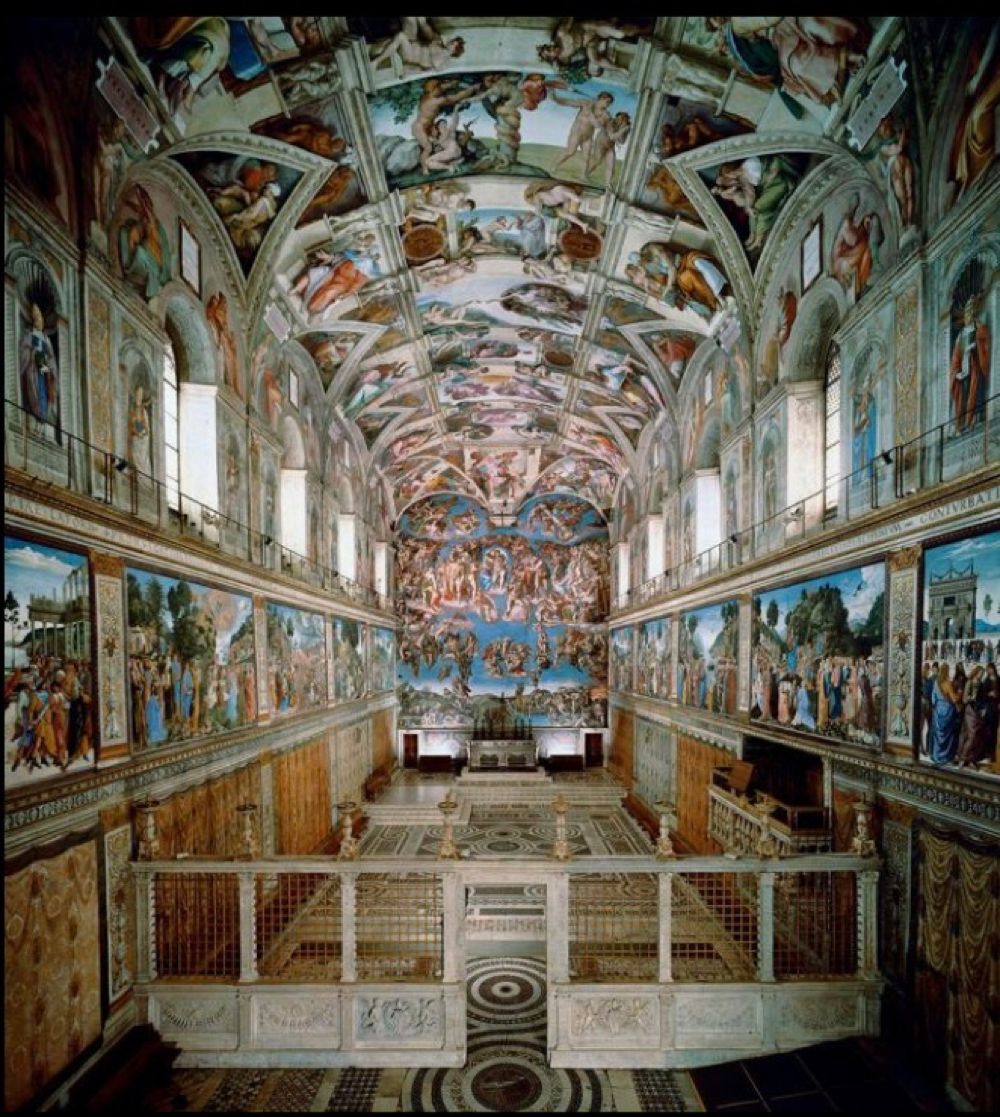
Sistine Ceiling, frescoes, 1508–1512; Patron: Julius II della Rovere (in Sistine Chapel, Vatican, Rome)
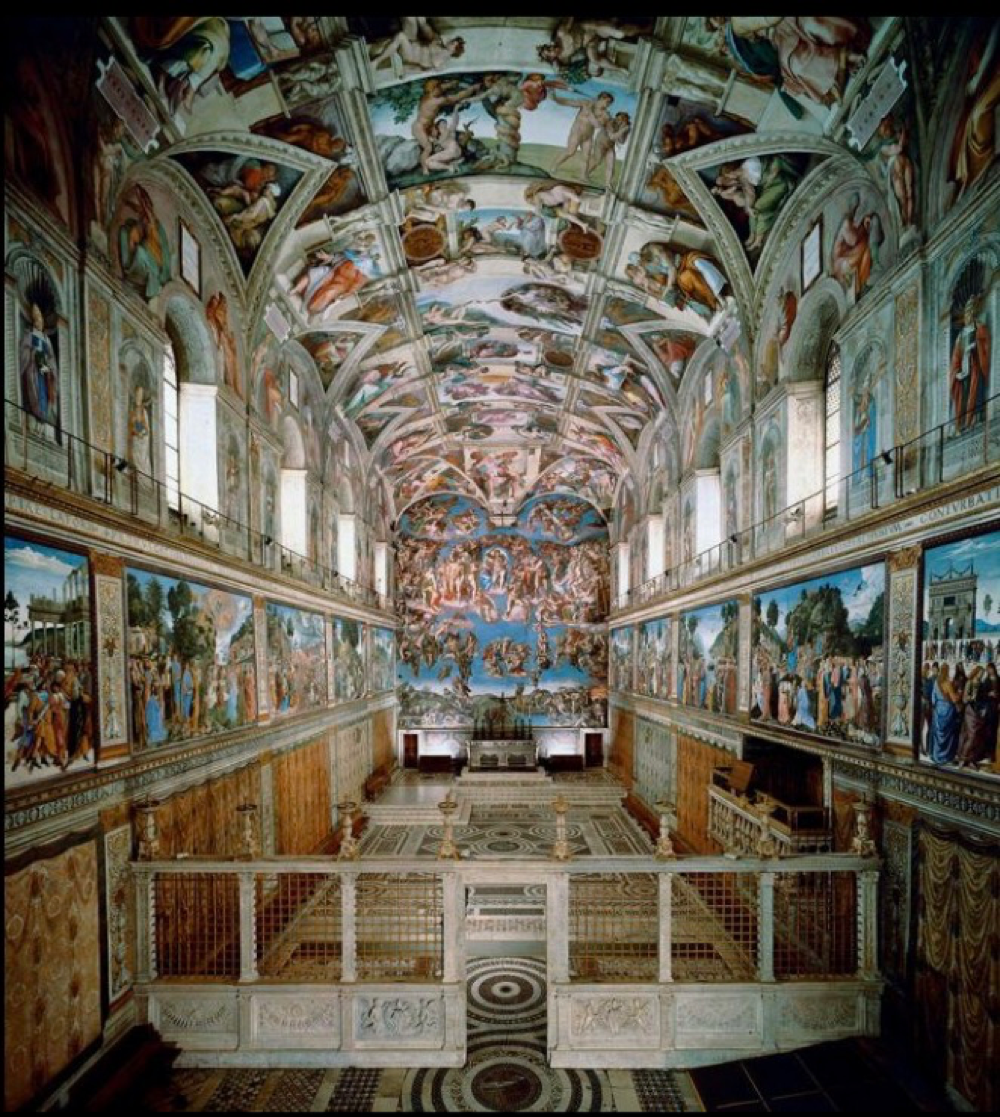
what do the Sistine Chapel Frescoes represent
inclusion: embrace all of humanity under christian church, convert many people, optimistic, universal. Church dedicated to Mary
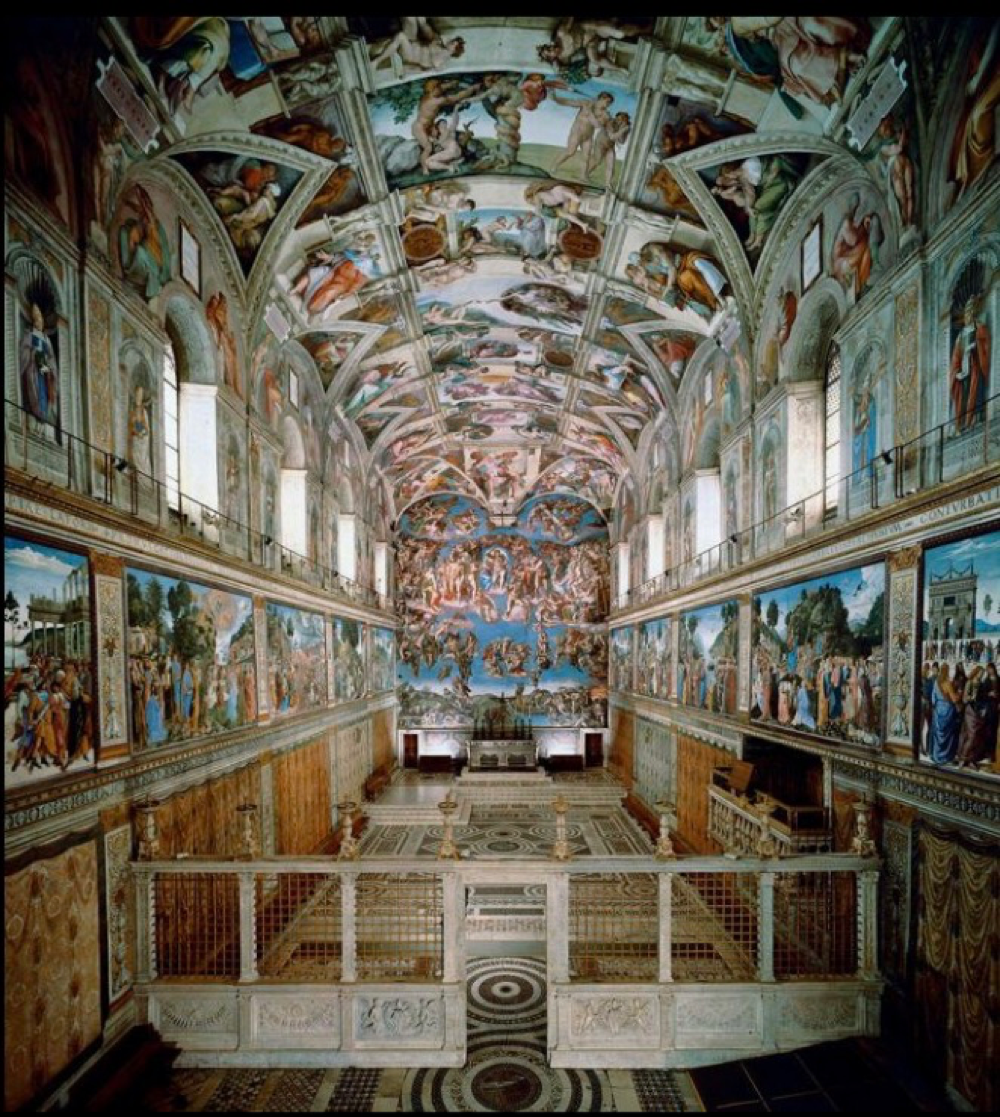
Describe the composition of the sistine chapel frescoes
narrative top to down: start with narrative genesis then prophets in thrones then life of Christ then life of St.Peter. Trinitarian ceiling: narrative genesis, narrative Adam and Eve, narrative Jonah, alternate small scenes with large, tension with large scenes and triangles, prophets in thrones, illusion of vertical wall. On lintel is vision of old testament story
Michelangelo Buonarroti (1475–1564)
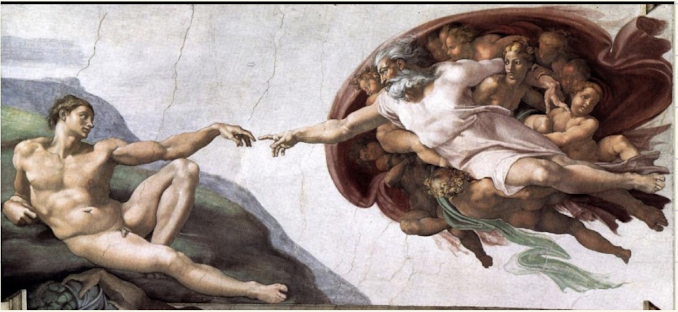
Sistine Ceiling, frescoes, 1508–1512; Patron: Julius II della Rovere (in Sistine Chapel, Vatican, Rome), Old Testament Narratives: The Creation of Adam
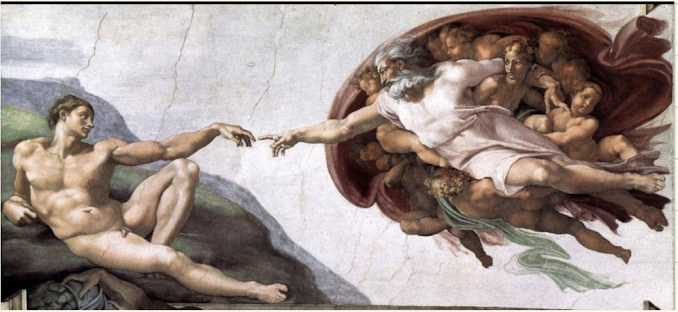
Describe the composition of the creation of Adam and its significance
engaged landscape, body of Adam contained within the landscape. Shows God as original artist, fingers don’t touch: hands on parr: Adam=to God, spark about to be made. God’s left arm embracing young woman, probably Eve. God touching large baby: Christ yet to come. Cloth of Heaven around God
Michelangelo Buonarroti (1475–1564)
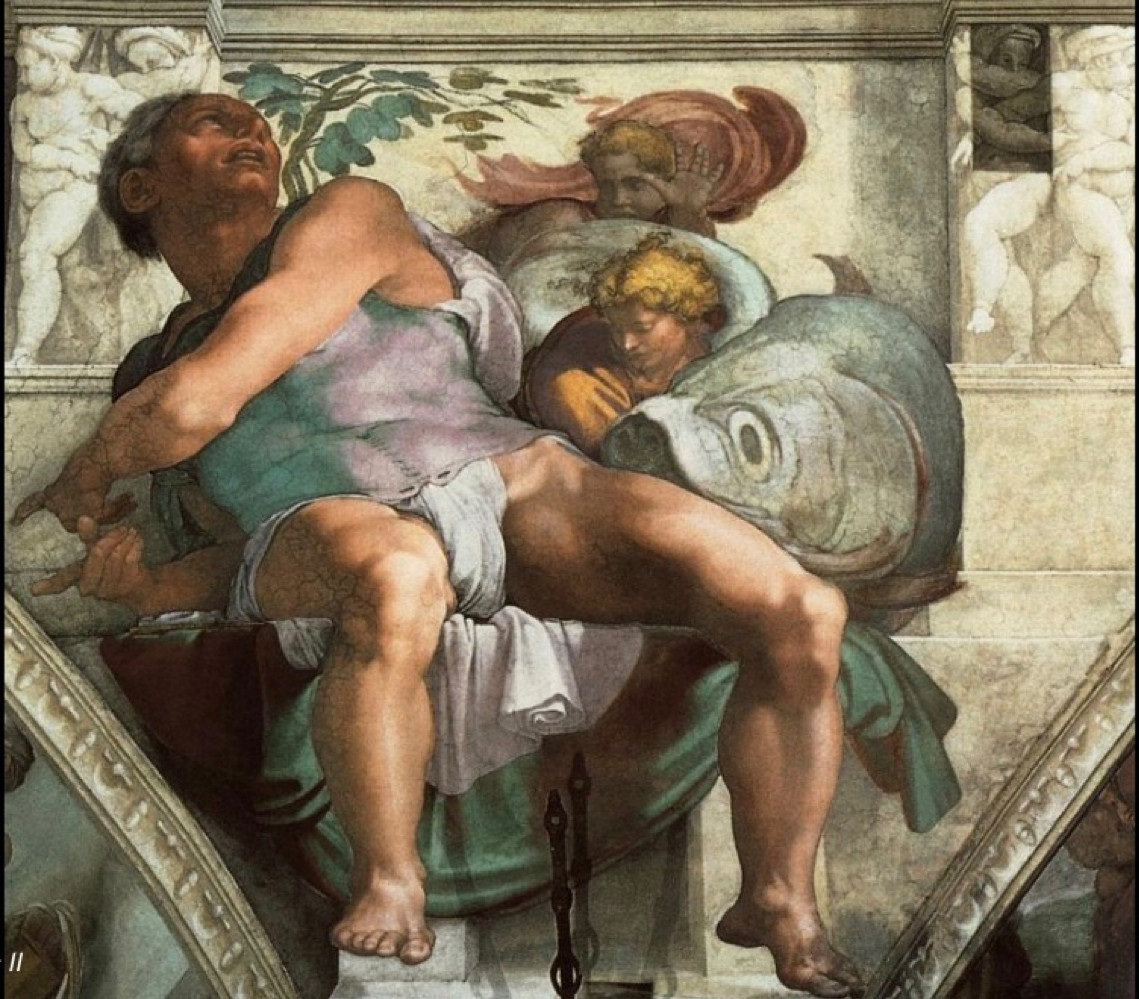
Sistine Ceiling, frescoes, 1508–1512; Patron: Julius II della Rovere (in Sistine Chapel, Vatican, Rome), Prophets and Sybels
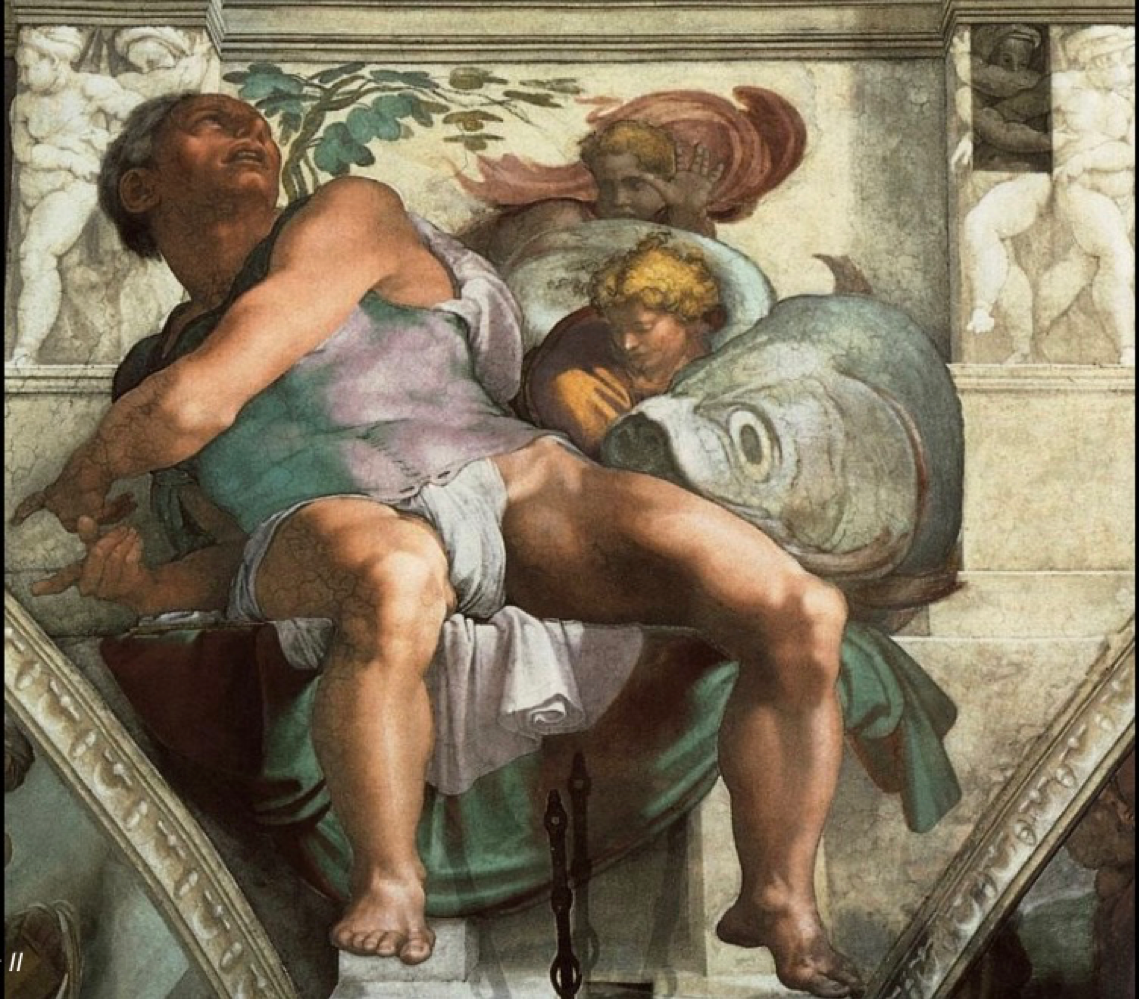
Describe the composition of the Prophets
thrones are the same size, the men are not. Zachariah: contained in throne with gold. Jonah: huge, big muscles
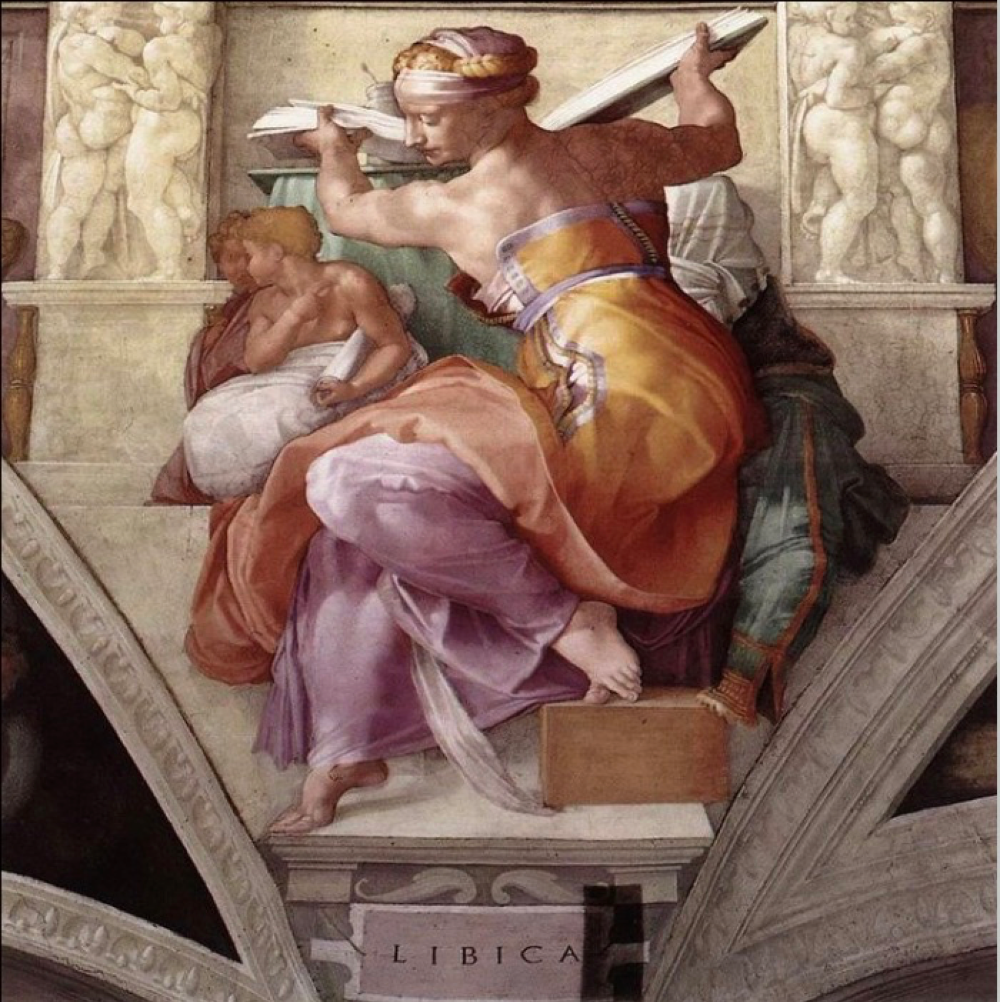
Describe the composition of Sibyls and its significance
puts women on parr with men, squirming and muscular
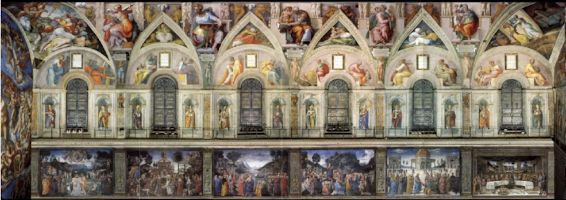
Michelangelo Buonarroti (1475–1564)
Sistine Ceiling, frescoes, 1508–1512; Patron: Julius II della Rovere (in Sistine Chapel, Vatican, Rome), The Ancestors of Christ
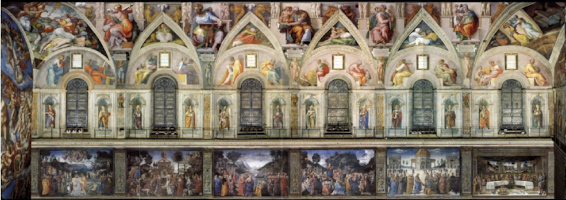
Describe the composition of the Ancestors of Christ
beginning of book of Matthew, name 5 women, genre scenes, women nursing women: women active vs. men tired
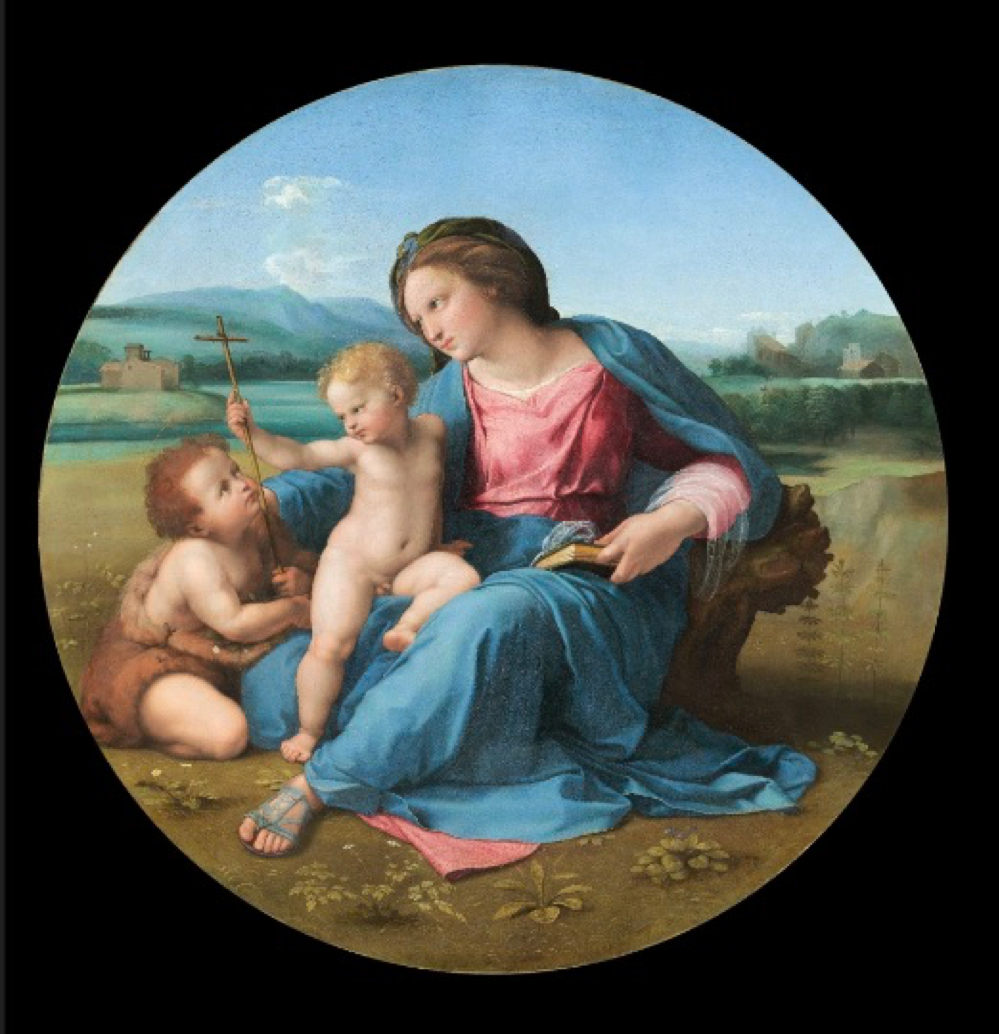
Raphael Sanzio (1483–1520)
Alba Madonna, Oli on panel (later transferred to canvas), c. 1510; Patron: Paolo Giovio (National Gallery, Washington DC)
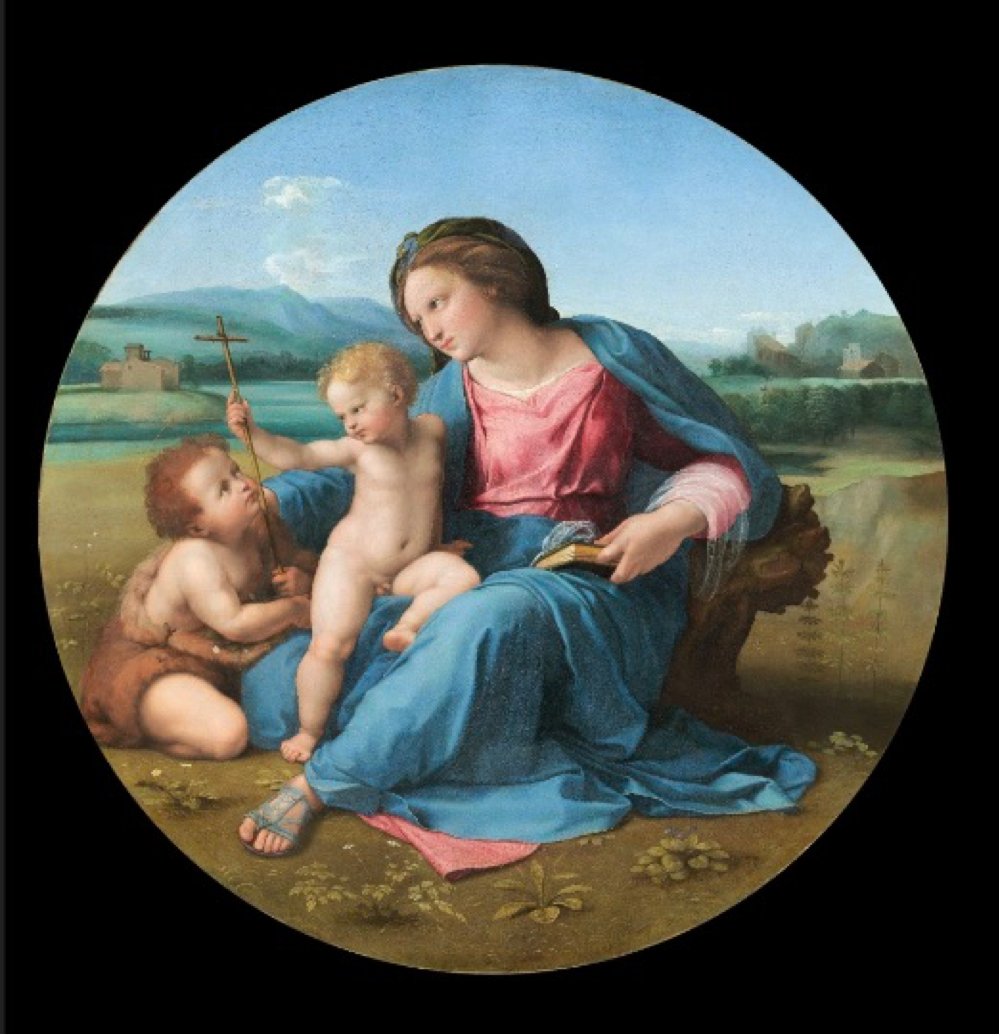
Describe the composition of Alba Madonna and its significance
Tondo, atmospheric perspective, Christ within her embracing cross of St.John, push and pull with Christ
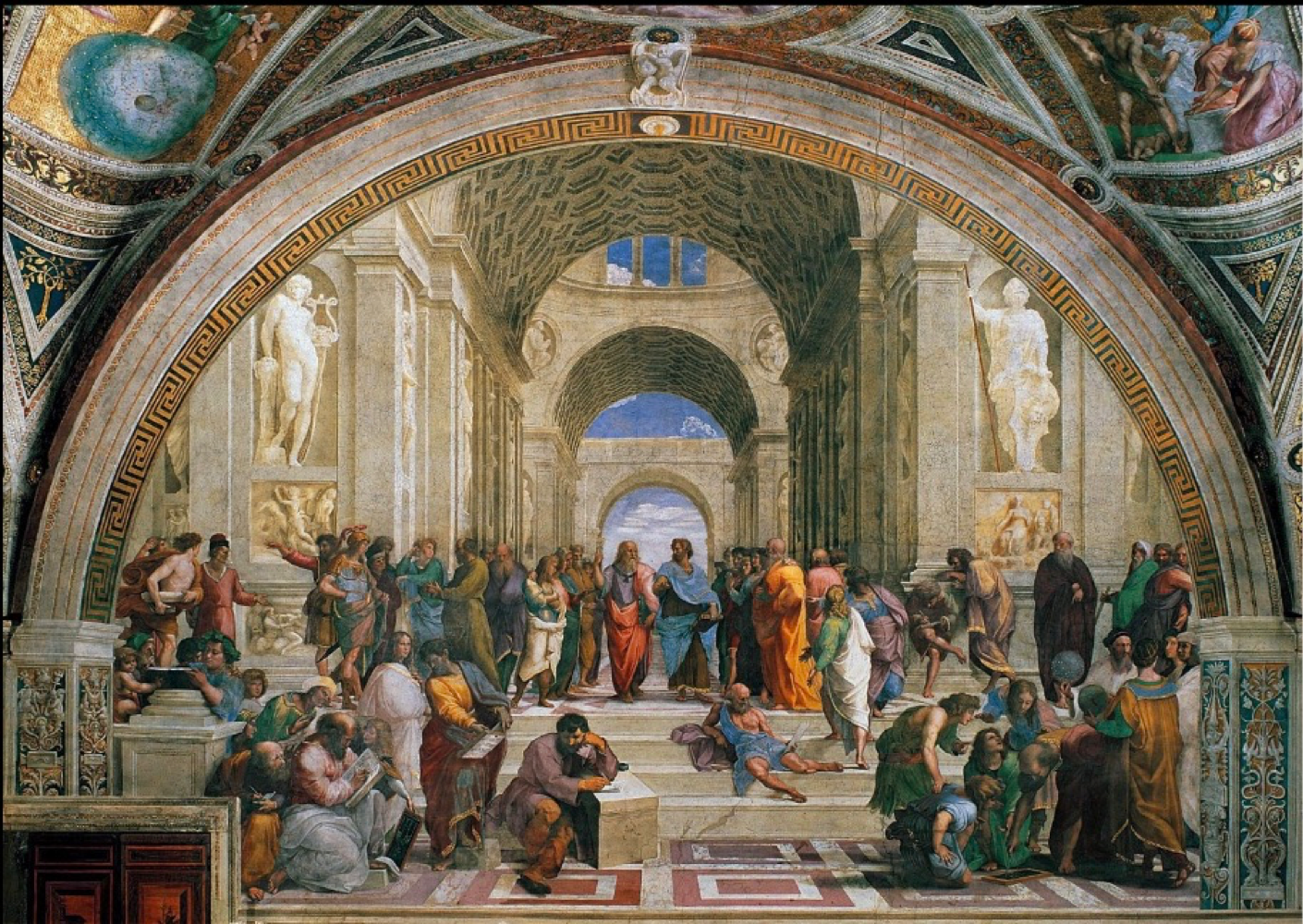
Raphael Sanzio (1483–1520) Stanza della Segnatura, fresco, in the Vatican Palace, Patron: Julius II, 1510-11 School of Athens, Disputà
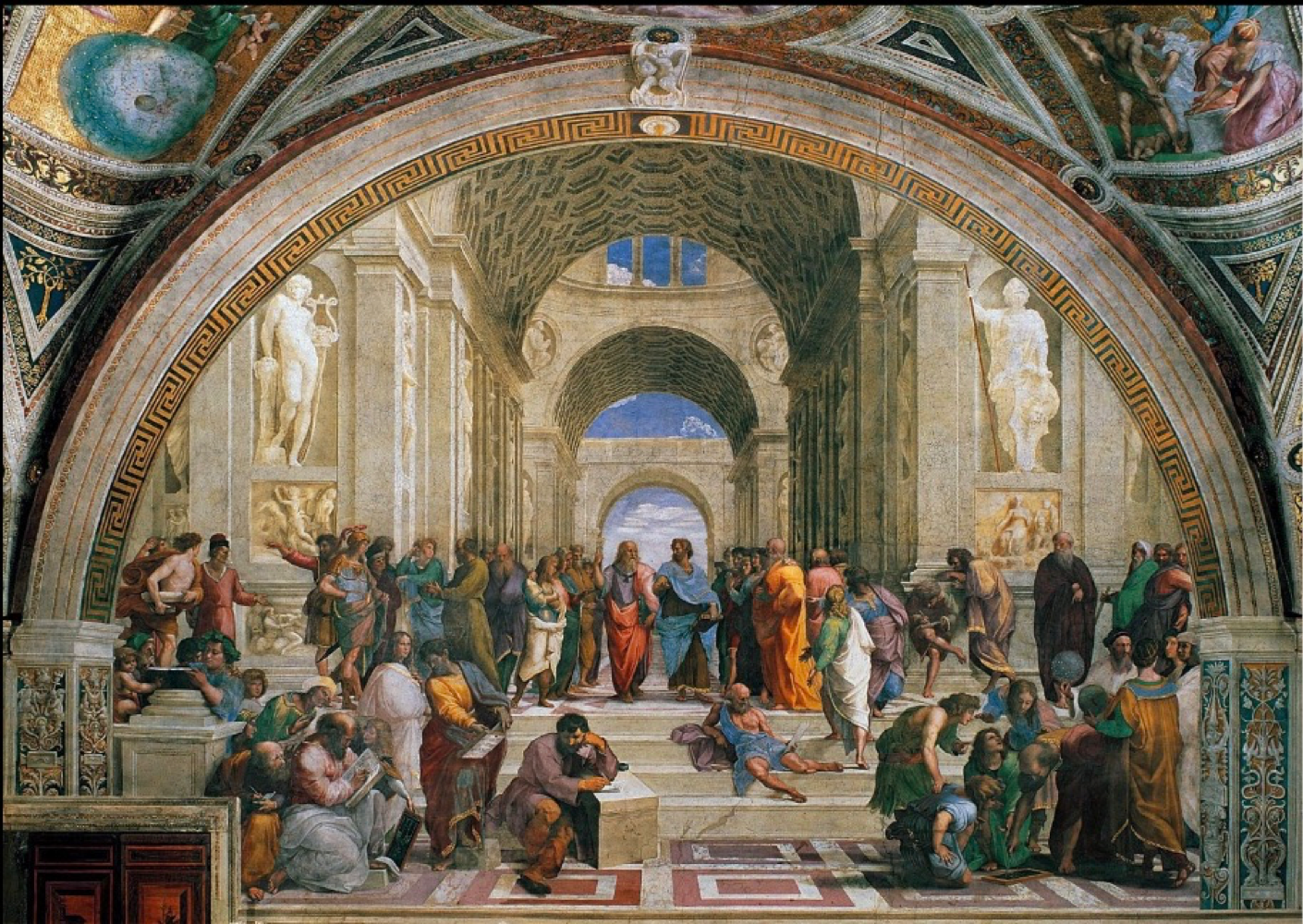
Describe the composition of the School of Athens
Binary nature/division of philosophical knowledge: Plato with arm up toward heaven vs. Aristotle with arm out towards earth. Columns, learning of ancient Greece, Michelangelo on carving block. Unitary nature of divine knowledge, axis of divinity, perfect rectangle. grid on floor: cite one point perspective and enter into composition. Perspectival entrance and subjection with vertical sand horizontals
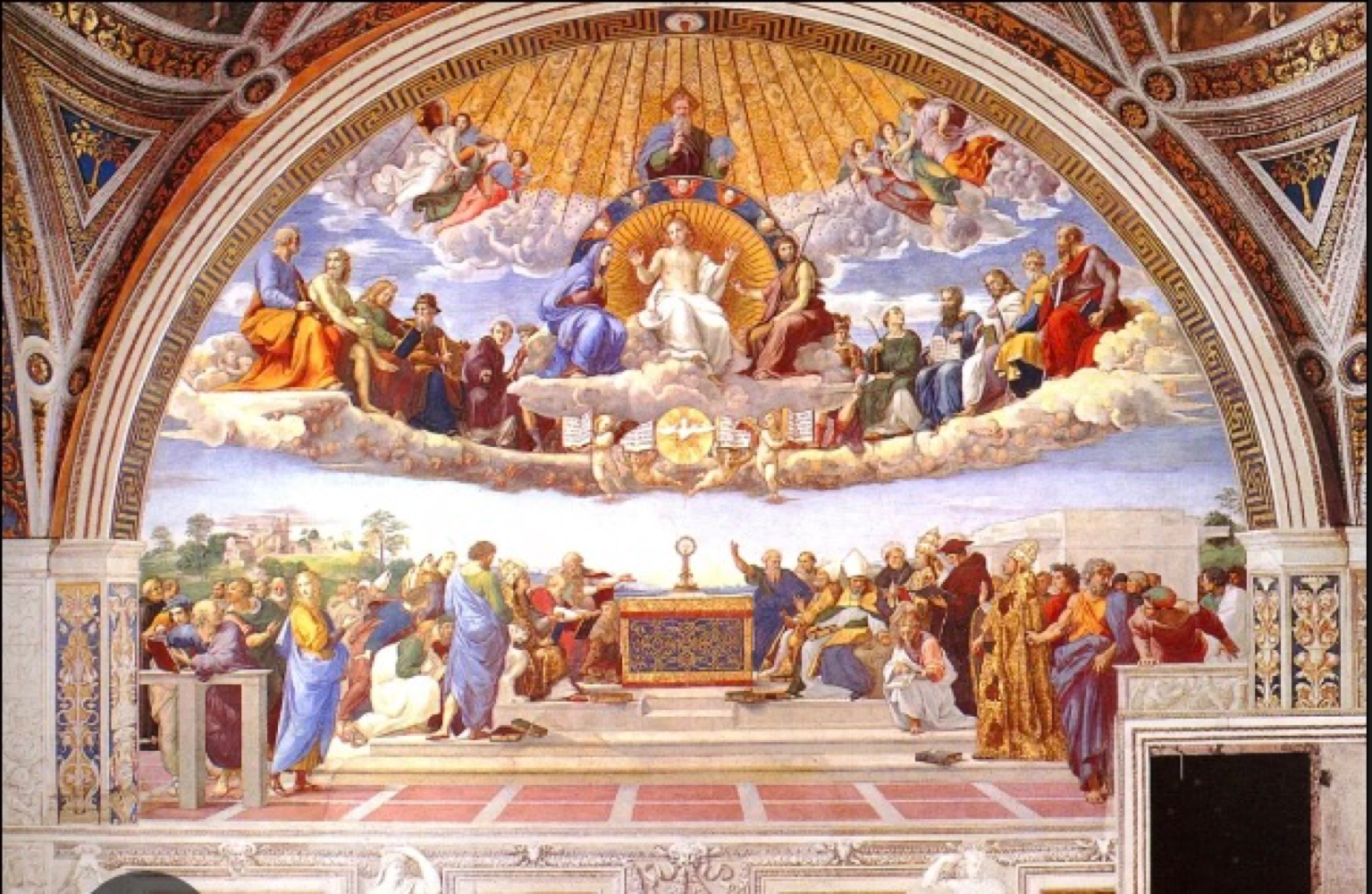
Describe the composition of the Disputa
Symphony of circles convey philosophy, 4 square: earthly realm. One central Axis of divinity: rectangle recede in space except for altar which is divine and not subject to perspective, host of Christ has no perspective and its a perfect circle, saints recede in space because they were of earth, Christ in perspective but circle not=divine and was man
 Note
Note  Flashcards (20)