1.2.1 (e. Distributed, embedded, multi-tasking, multi-user and Real Time operating systems)
 Call Kai
 Learn
Learn Practice Test
 Spaced Repetition
 Match
Match Flashcards
 Knowt Play
1/16

There's no tags or description
Looks like no tags are added yet.
Name | Mastery | Learn | Test | Matching | Spaced | Call with Kai |
|---|
No analytics yet
Send a link to your students to track their progress
17 Terms
What is a distributed operating system?
- Can coordinate the processing of a single job across multiple computers:
allowing the load to be spread across multiple computer processors when a task is run.
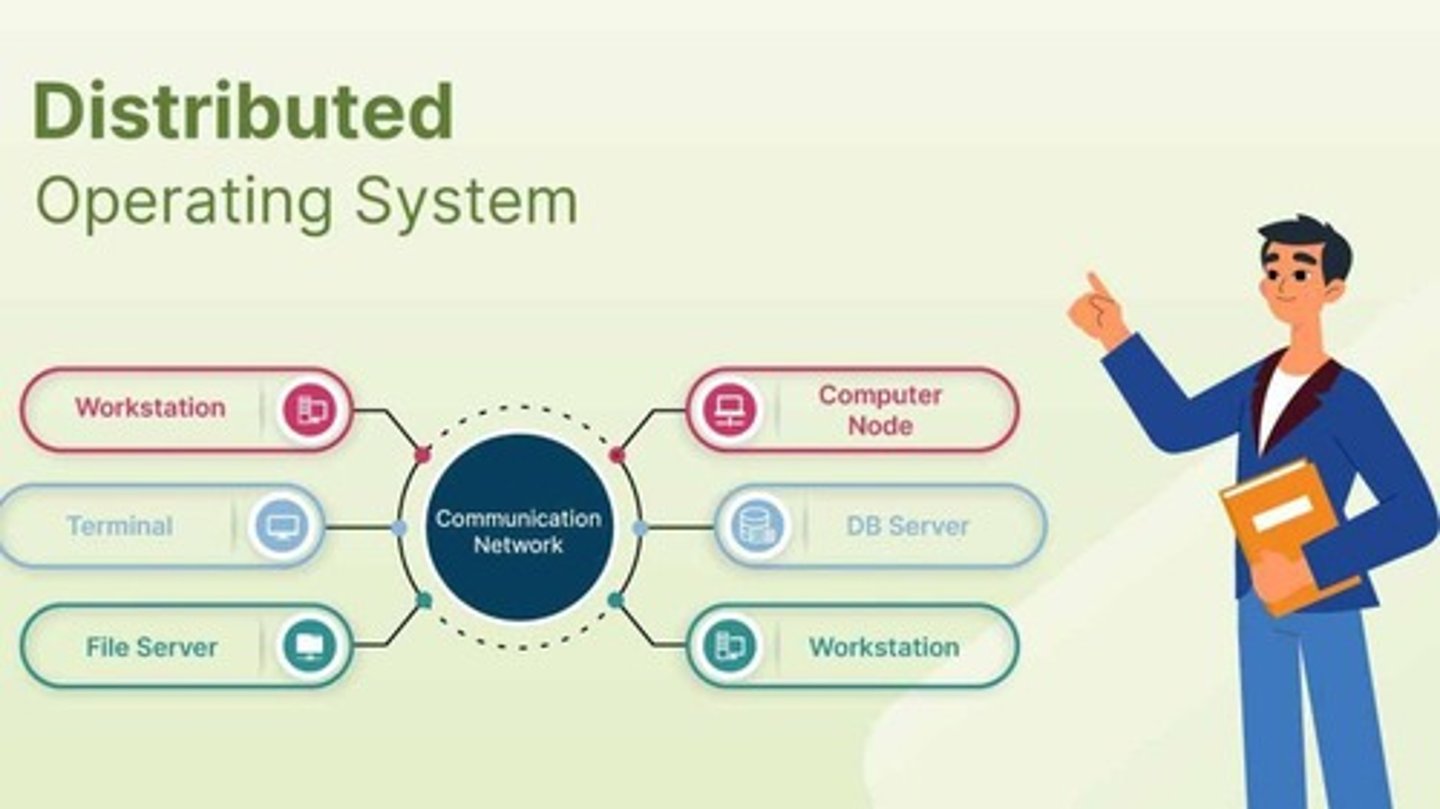
How does a distributed operating system work?
- A program can be run by the user that uses data or resources(eg. processor time and memory) from any other computer
- The distribution of tasks is coordinated by the OS passing instructions between computers
What are pros and cons of a distributed operating system?
PROS:
- The user can access more computational power with the illusion of working with a single processor
-
No need for training or writing programs differently
CONS:
- The programmer has no control over the task distribution as this is entirely handled by the OS
What is a multi-tasking operating system?
One that can appear to do more than one task simultaneously on a single processor
What is a multi-user, multi tasking operating system?
- Allows multiple users with their own terminals to use a computer system by allocating each one a slice of processor time
- Each terminal is running multiple processes
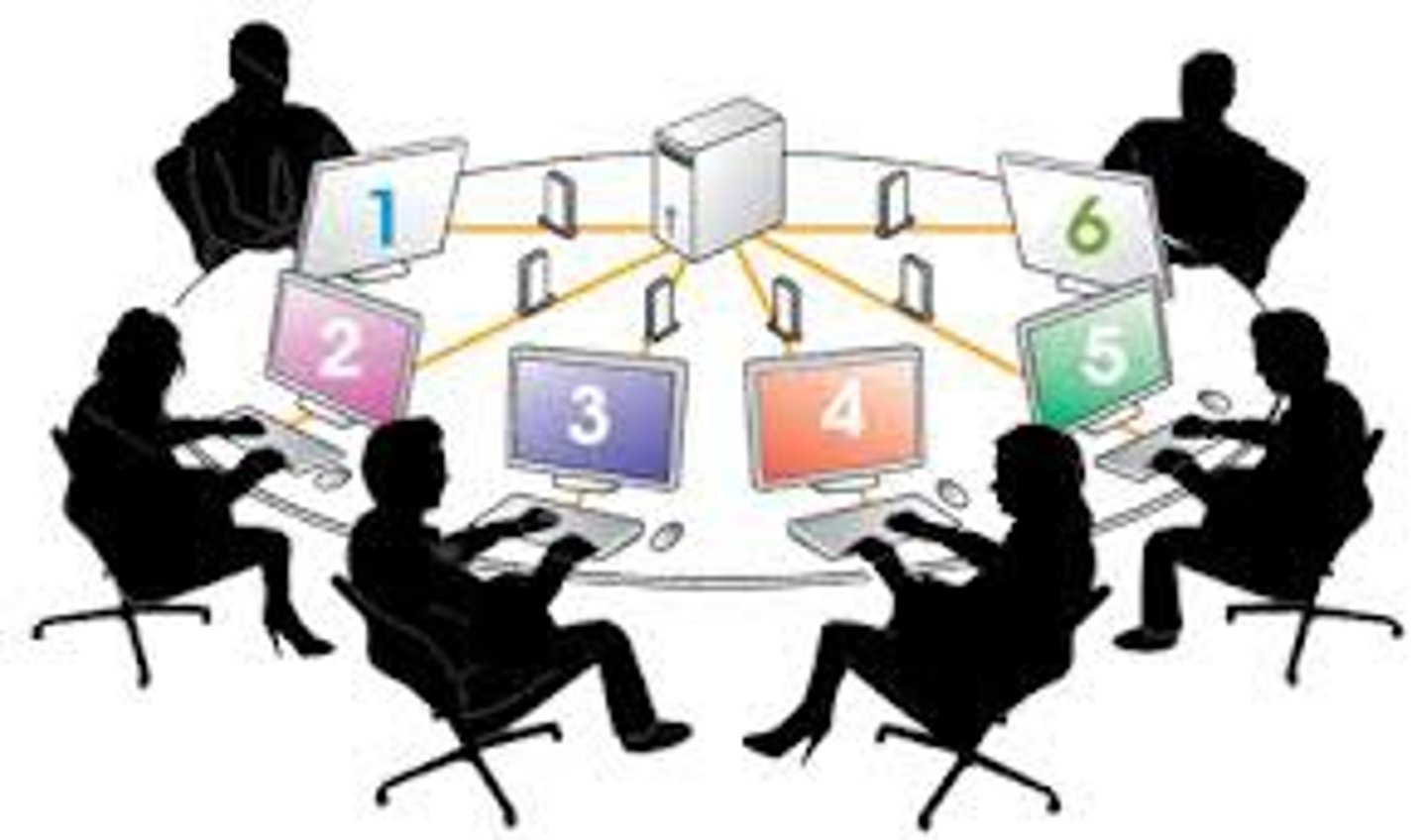
What is an example of this?
Operating systems on mainframe
What are mobile operating systems made up of?
A smart phone is a computer with a multi-tasking Operating System
-Mobile operating systems are linked to specific hardware
-A low level proprietary OS is used for handling the hardware and special features eg. wifi
-Meanwhile, the main OS handles the user interface and running applications
In mobile operating systems, why do you think underlying hardware is handled by a low level proprietary OS, made and owned by the hardware manufacturer, and the user interface and applications are handled separately?
This separation allows the hardware manufacturer to control the hardware's performance and ensure compatibility with a low-level, proprietary OS
What is an open source operating system?
One whose source code is freely available for anyone to view, modify, and distribute under a specific license
What is an example?
Android that is owned by Google:
-used by major device manufacturers like Samsung
-allows for major customisation
What is an proprietary operating system?
Software that is owned and controlled by a specific company, with its source code kept private and not accessible to the public
What is an example?
Microsoft Windows, which is developed, owned, and sold by Microsoft, with users purchasing a license to use it.
What is an embedded operating system?
- Built to perform a small range of specific tasks
- Catered towards a specific device.
- In another device eg household devices
- They are limited in their functionality and hard to update
- Consume significantly less power than other types of OS.
What are characteristics of household devices?
- The embedded OS has minimal features
- Application programs are held in ROM
- There is a limited amount of RAM
- The user interface is simple and minimal
What are real-time operating systems?
Operating systems that must operate in real time and respond extremely quickly to inputs and many simultaneously
-If a hardware component fails a Real-time OS must have a fail-safe to detect this and respond appropriately
-There is hardware redundancy where crucial components are duplicated in case one fails
When are real time operating systems seen?
In safety-critical environments
Case study - Therac-25
1980s radiation therapy machine with a real time embedded operating system:
- Patients were treated for cancer through exposure to targeted beams of radiation
- Programming errors meant the machine responded incorrectly to certain real time inputs
- Several people died as a result of accidentally being hit by massive radiation overdoses
Explore top notes

