BIOSCI 107 Lecture 4: Muscle and Nerve Tissue
 Call Kai
 Learn
Learn Practice Test
 Spaced Repetition
 Match
Match Flashcards
 Knowt Play
1/19

There's no tags or description
Looks like no tags are added yet.
Name | Mastery | Learn | Test | Matching | Spaced | Call with Kai |
|---|
No analytics yet
Send a link to your students to track their progress
20 Terms
Muscle Tissue
Consists of elongated cells (muscle cells; or muscle fibres or myocytes) that use energy from the hydrolysis of ATP (adenosine triphosphate) to generate force. As a result of contraction, muscle tissue produces body movements, maintains posture and generates heat.
Skeletal Muscle
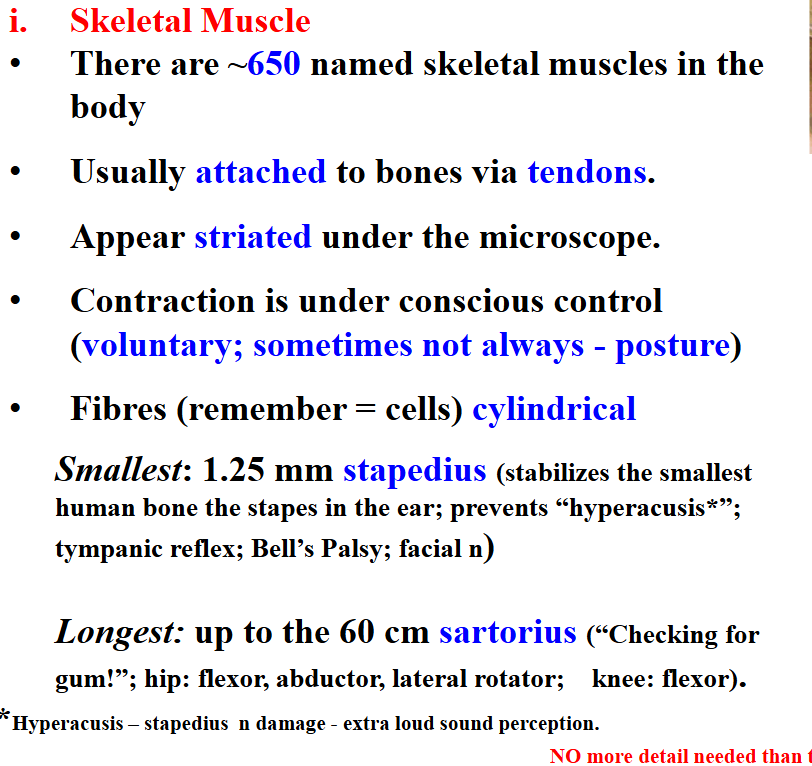
Skeletal muscle is multi-nucleated
Functions: Motion, Posture, Heat, Protection
Muscle Fibre Striations
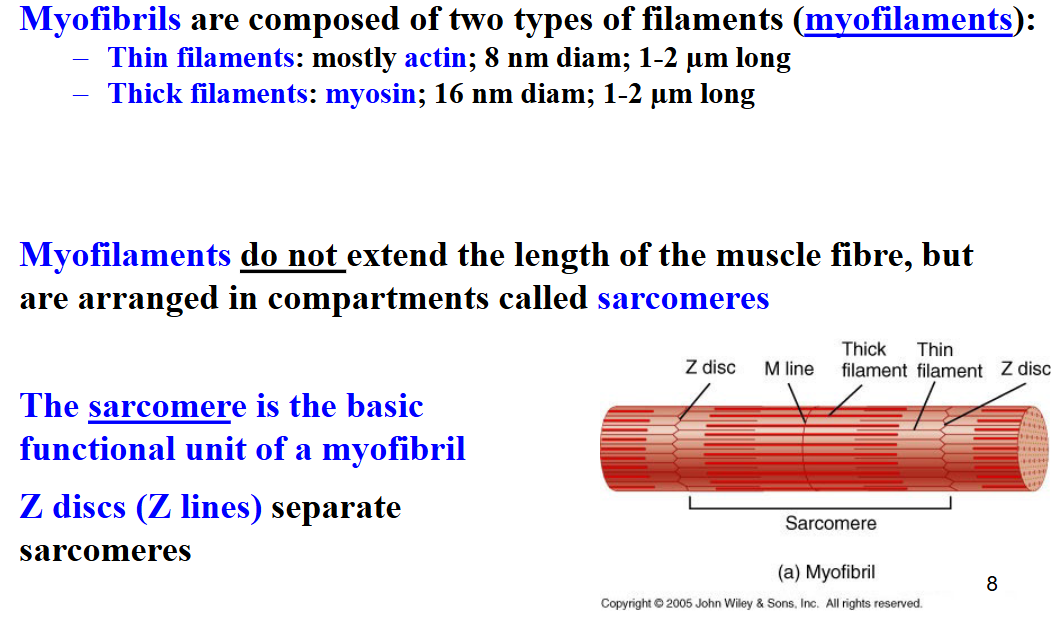
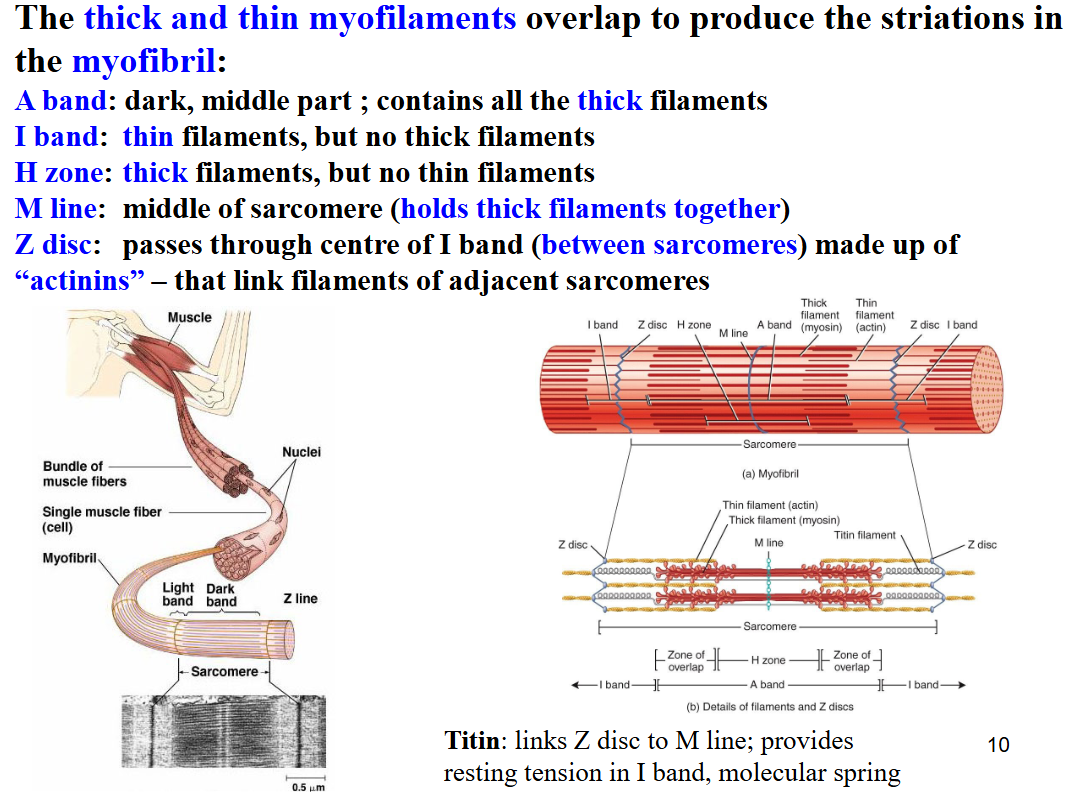
The striations of skeletal muscle fibres (cells) are due to the highly organised arrangement of myofibrils within the cells
Myofibrils (2 μm diam) more or less fill the cytoplasm (sarcoplasm) of the muscle fibre and extend its entire length within the cell
Myofibrils
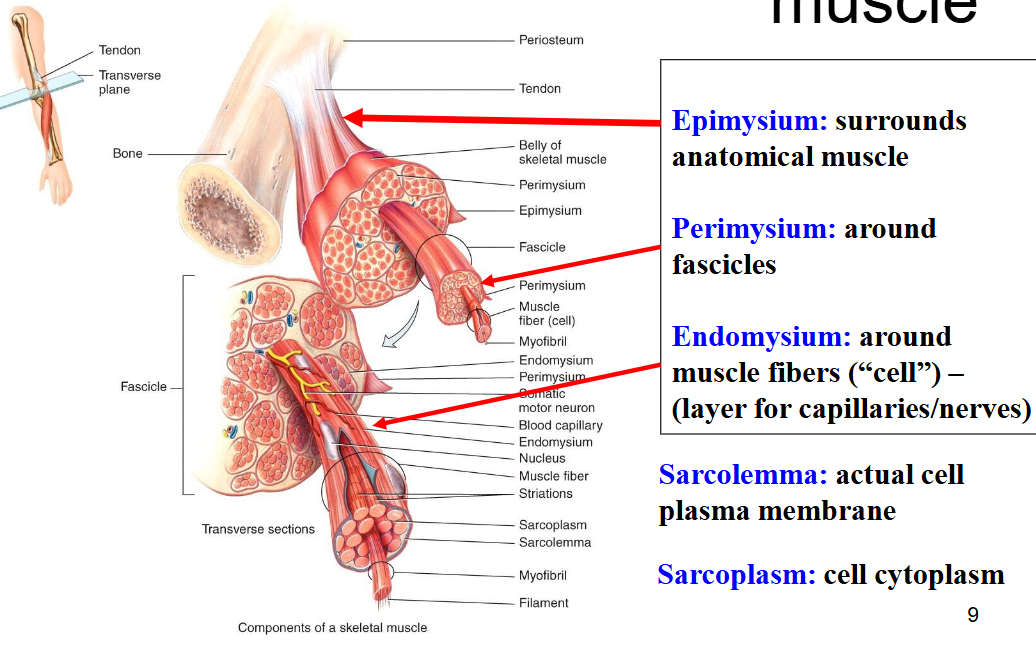
Connective tissue of skeletal muscle
Sarcomeres
Cardiac Muscle
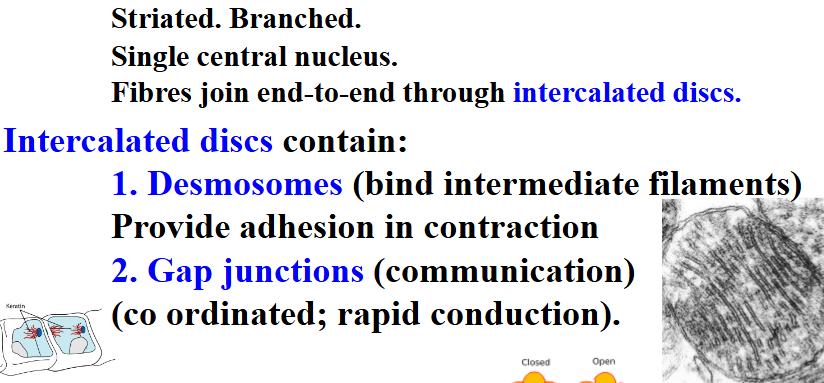
“Purkinje fibres” are specialised muscle cells that conduct electrical activity around the heart. They have less myofibrils and more specialised “connexins”
(gap junctions).
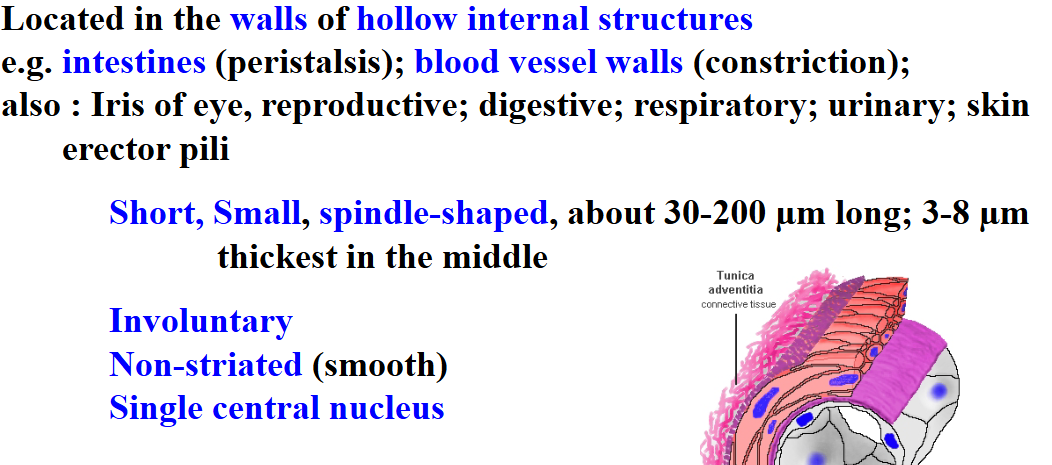
Smooth Muscle
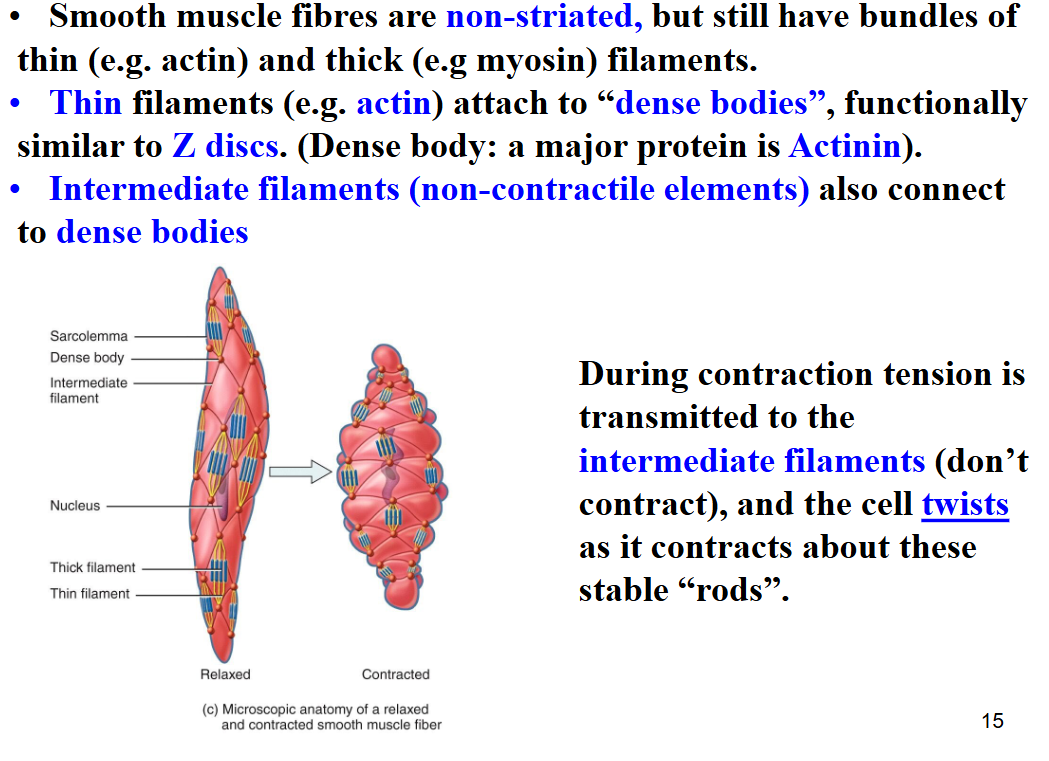
Contraction of Smooth Muscle
Nervous Tissue
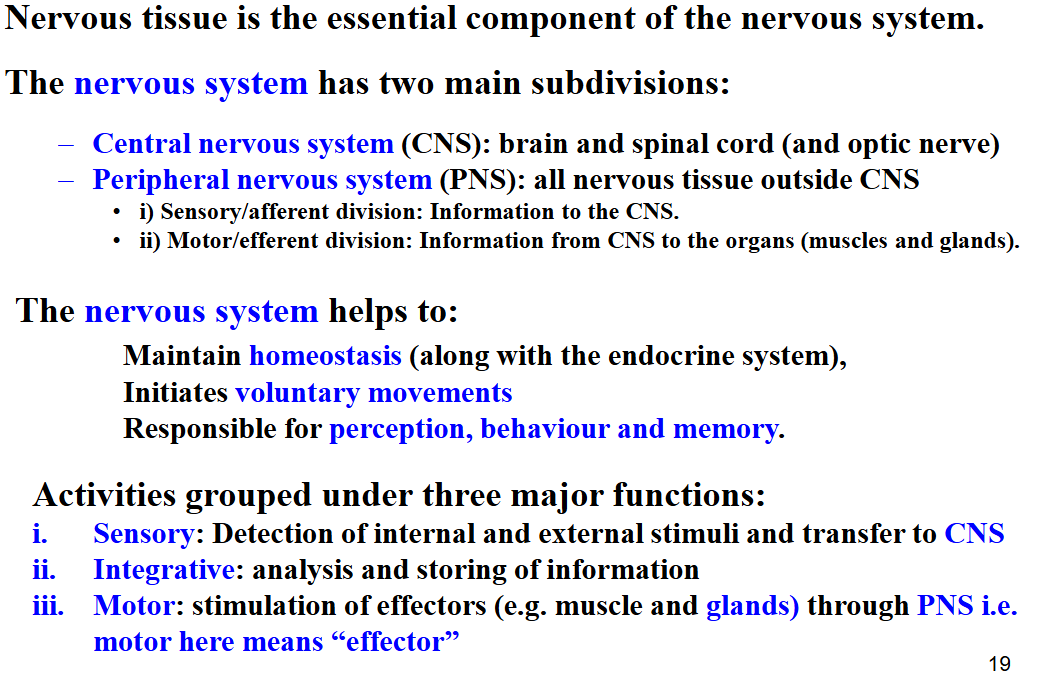
Nervous tissue consists of two types of cells:
• neurons (nerve cells that can be very large)
• neuroglia (supportive cells – usually small).
Neurons are longest cells in body (up to 1m – spinal cord to
toe)
Conscious and unconscious control
Neurons
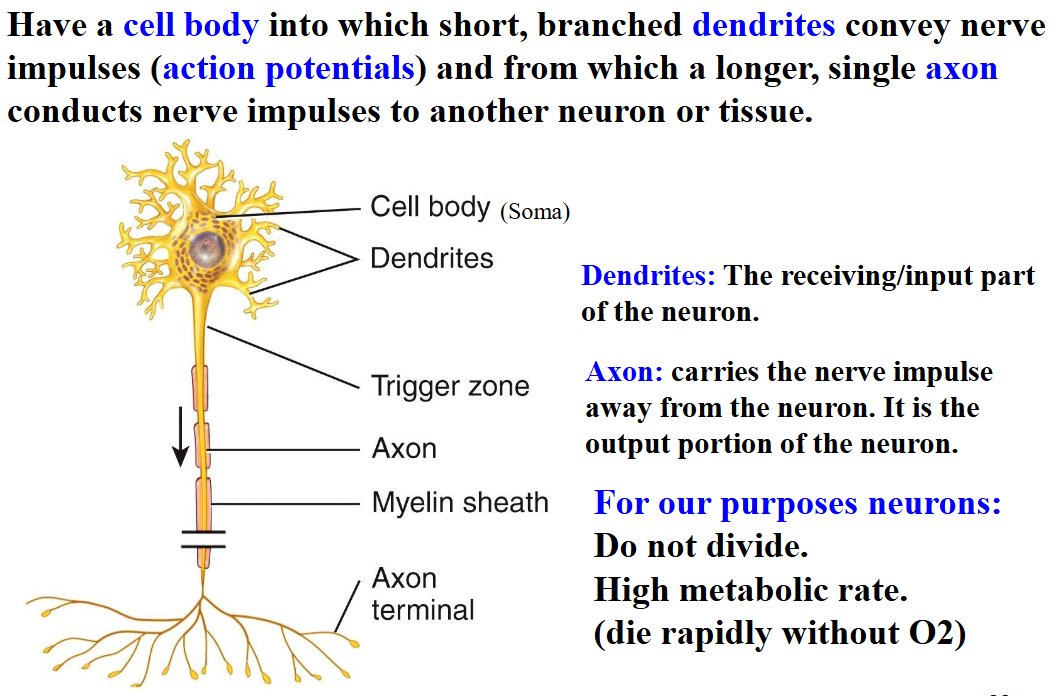
Multipolar Neurons
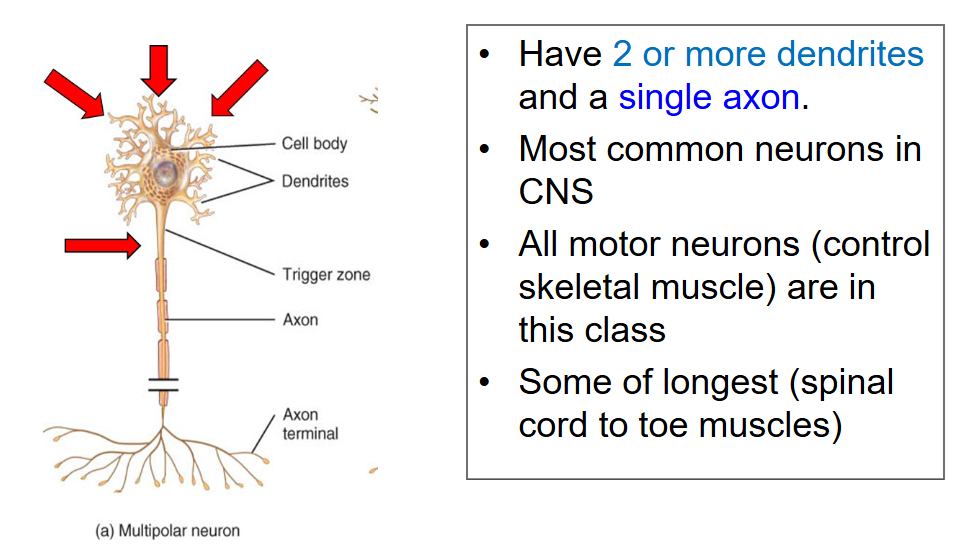
Bipolar Neurons
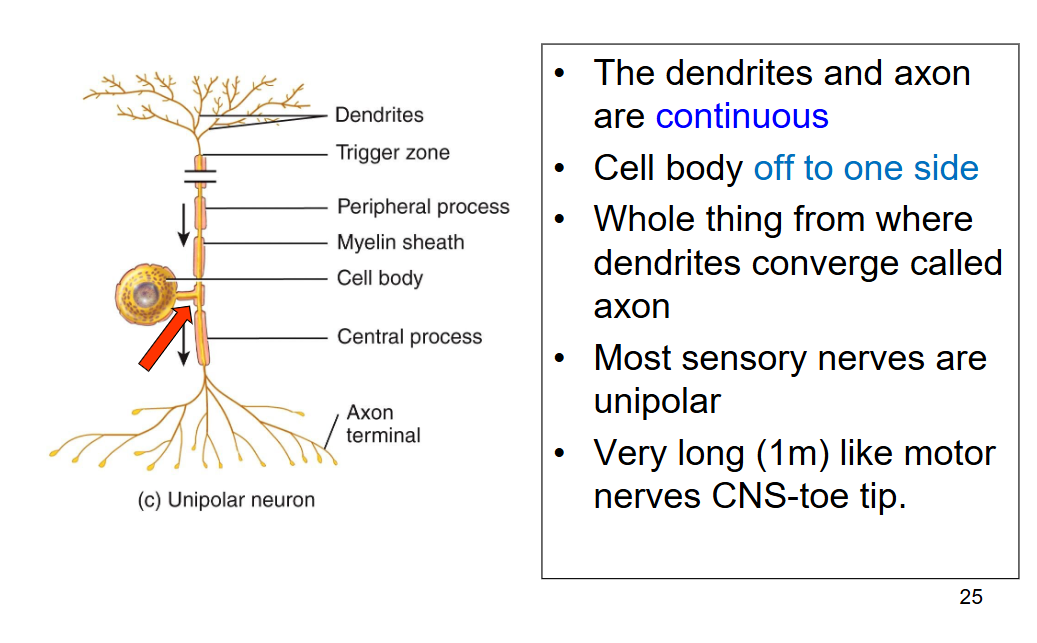
Unipolar Neuron
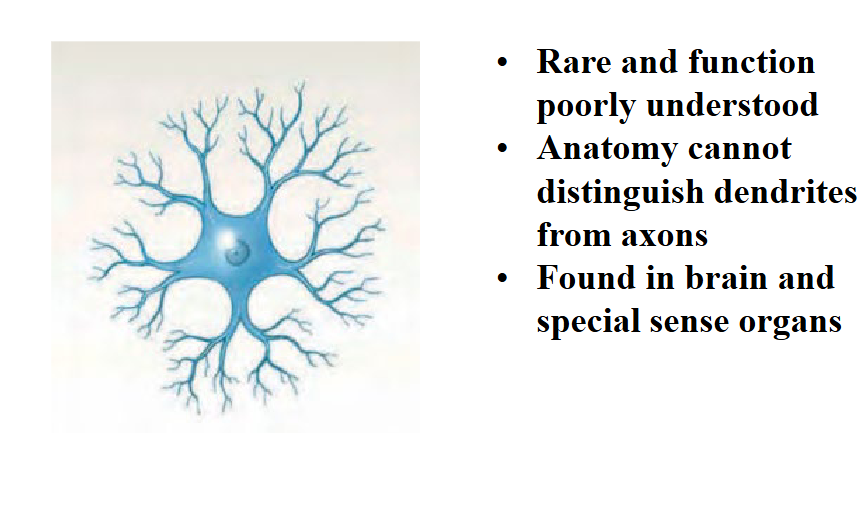
Anaxonic neuron
Neuroglia
Astrocytes
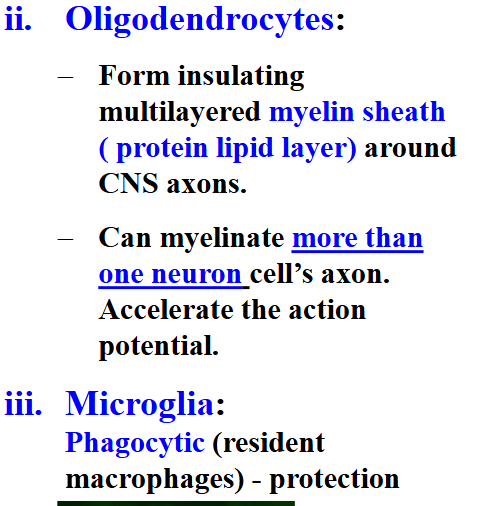
Oligodendrocytes and Microglia
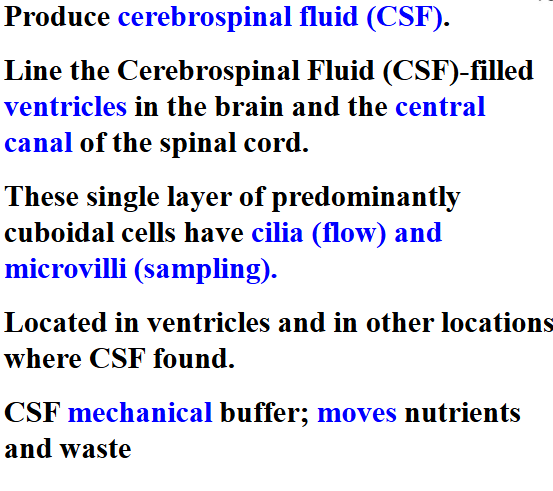
Ependymal cells
Peripheral Nervous System Neuroglia