Toca Final Review
 Studied by 48 people
 Call Kai
 Learn
Learn Practice Test
 Spaced Repetition
 Match
Match Flashcards
 Knowt Play
1/38

There's no tags or description
Looks like no tags are added yet.
Name | Mastery | Learn | Test | Matching | Spaced | Call with Kai |
|---|
No analytics yet
Send a link to your students to track their progress
39 Terms
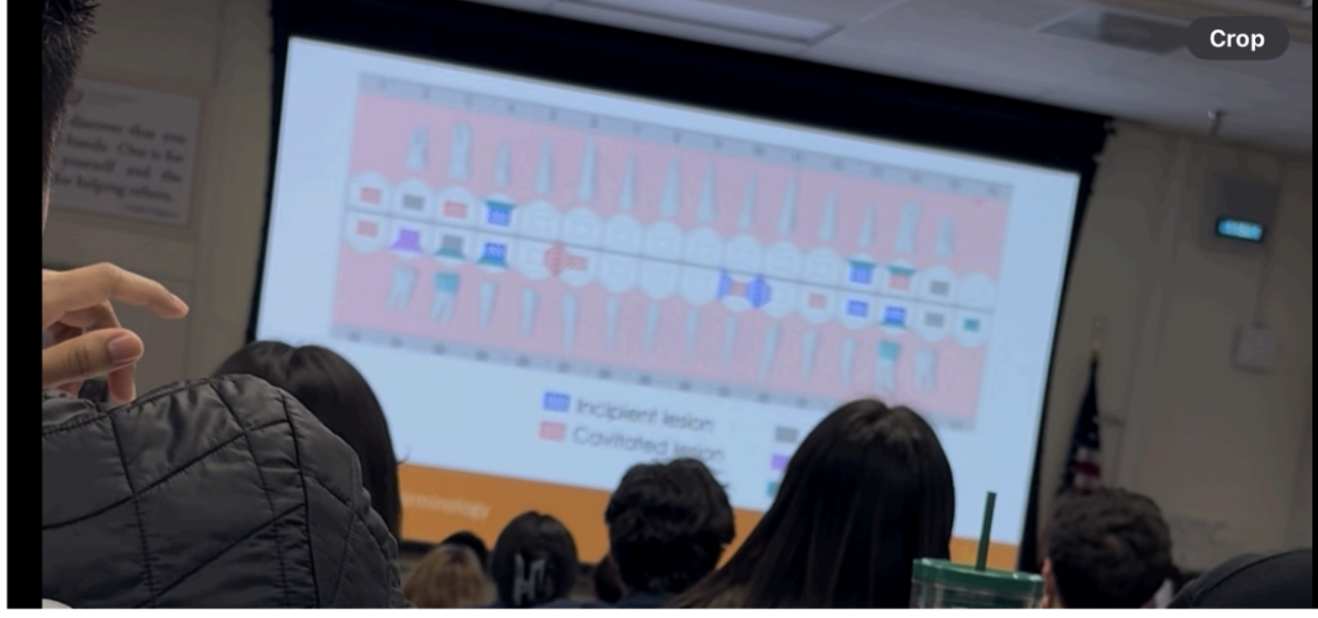
Count DMFT
12
Be sure to count one per tooth (no double dipping). Exclude sealants, third molars, and incipient caries For DMFS you can double dip and count surfaces and for DMFS don't count incisal edge
Composition of Calcium Hydroxyapatite:
Ca10(PO4)6(OH)2
w/ Fluoride Ca10(PO4)6F2
Crystals are organized in Rods and prisms
Statement 1: The basic organization units of dentin are the rod and interrod dentin
Statement 2: Enamel is built from closely packed and long, ribbon-like
carbaonoapitite crystals which are 60-70 nm in width and 25-30 nm in thickness
and have hexagonal symmetry.
Statement 2 only
Statement 1 would be correct if it were ENAMEL
Dentin’s basic organization would be dental tubules
What is Marsh Ecological Plaque Hypothesis?
Microbiome imbalance due to ecological stress
Note: Shift from symbiosis to dysbiosis
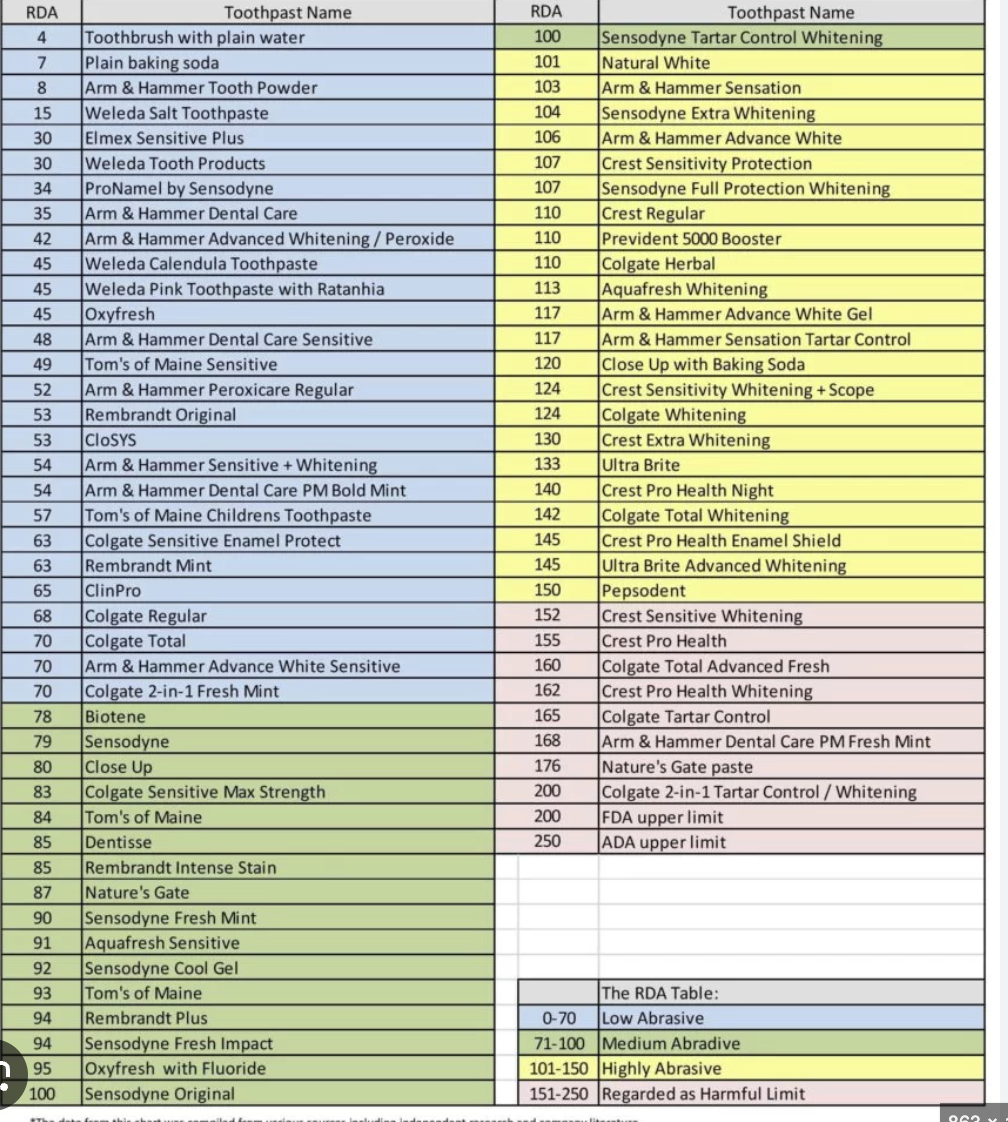
Which of the following statements about the Relative Dentin Abrasivity of toothpastes is
TRUE?
Statement A: Toothpastes with an RDA value of above 250 are considered safe for daily use
Statement B: Lower RDA value indicates a more abrasive toothpaste
Statement C: The maximum RDA value allowed for a toothpaste is 150
Statement D: Toothpastes with RDA below 70 are classified as low
Answer: D Low Abrasive
Low Abrasive 0-70 RDA
Medium Abrasive 71-100 RDA
Highly Abrasive 101-150 RDA
Regarded as a harmful limit 151-120
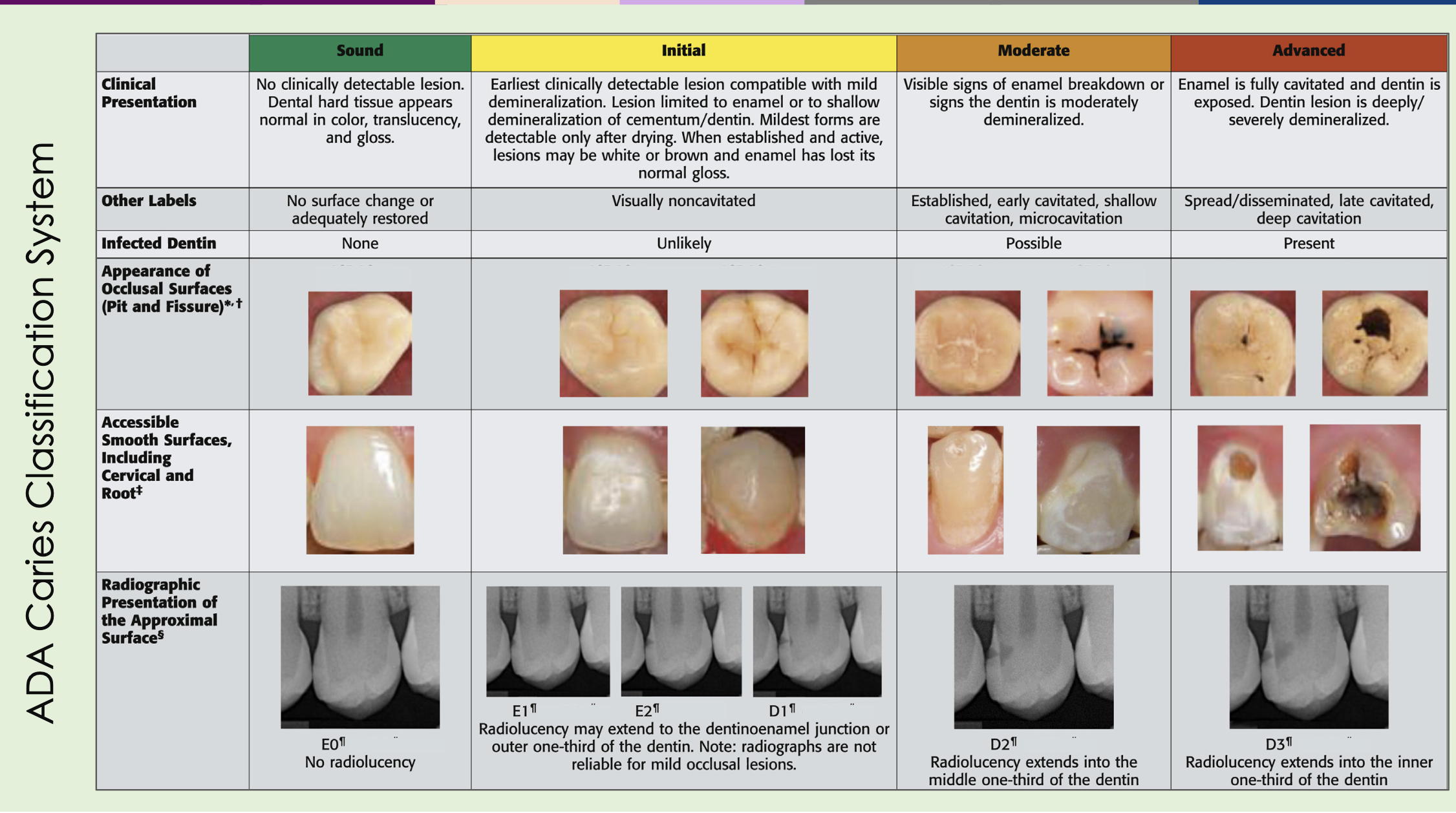
According to the ADA caries classification system, initial caries lesions are the earliest
detectable lesions with net mineral ___radiographic presentation of these caries in the proximal surface can include:
E1, E2, D1
Notes:
Advanced Lesion through the Dentin
Moderate Lesion through D2
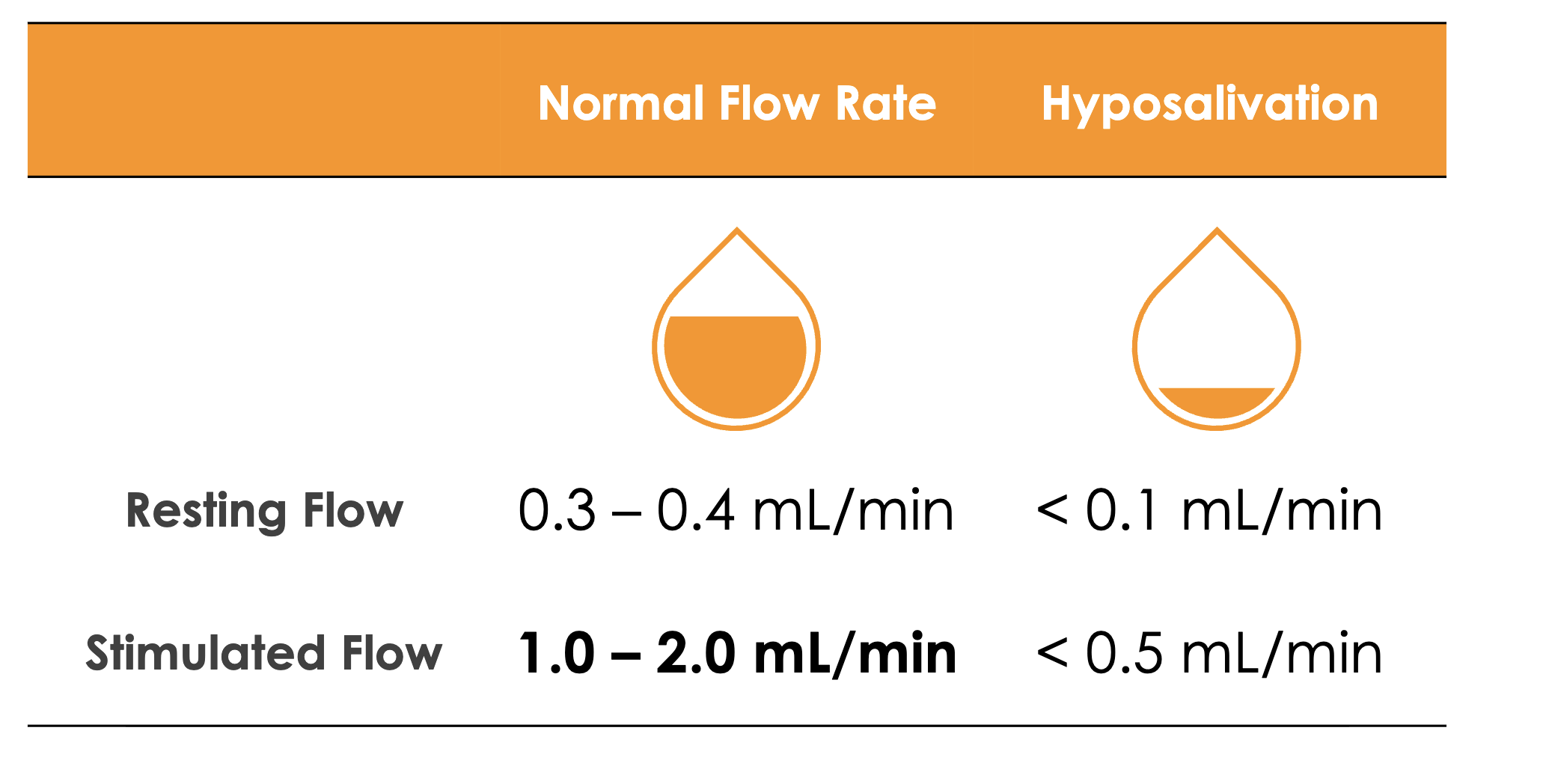
You conduct a comprehensive oral exam and caries susceptibility test after providing chewing gum to the patient and collecting saliva for 5 min, and gather a total of 4 ml. Based on this result, determine the rate of saliva collected and assess the salivary rate.
The type of saliva collected was stimulated because they were chewing gum, and it was below the normal stimulated flow rate because it should be between 1-2 ml/min
Note: Divide ml collected by Minute
What bridges early colonizing and late stage pathogens?
Fusobacterium nucleatum
List the stages and timelines for biofilm development.
a. Pellicle formation (1 um thick, forms w/ salivary proteins)
b. Attachment of early colonizers (0-24 hrs)
c. Formation of microcolonies (4-24 hrs)
d. Diversification of microcolonies (1-7 days)
e. Mature biofilm (1 week)
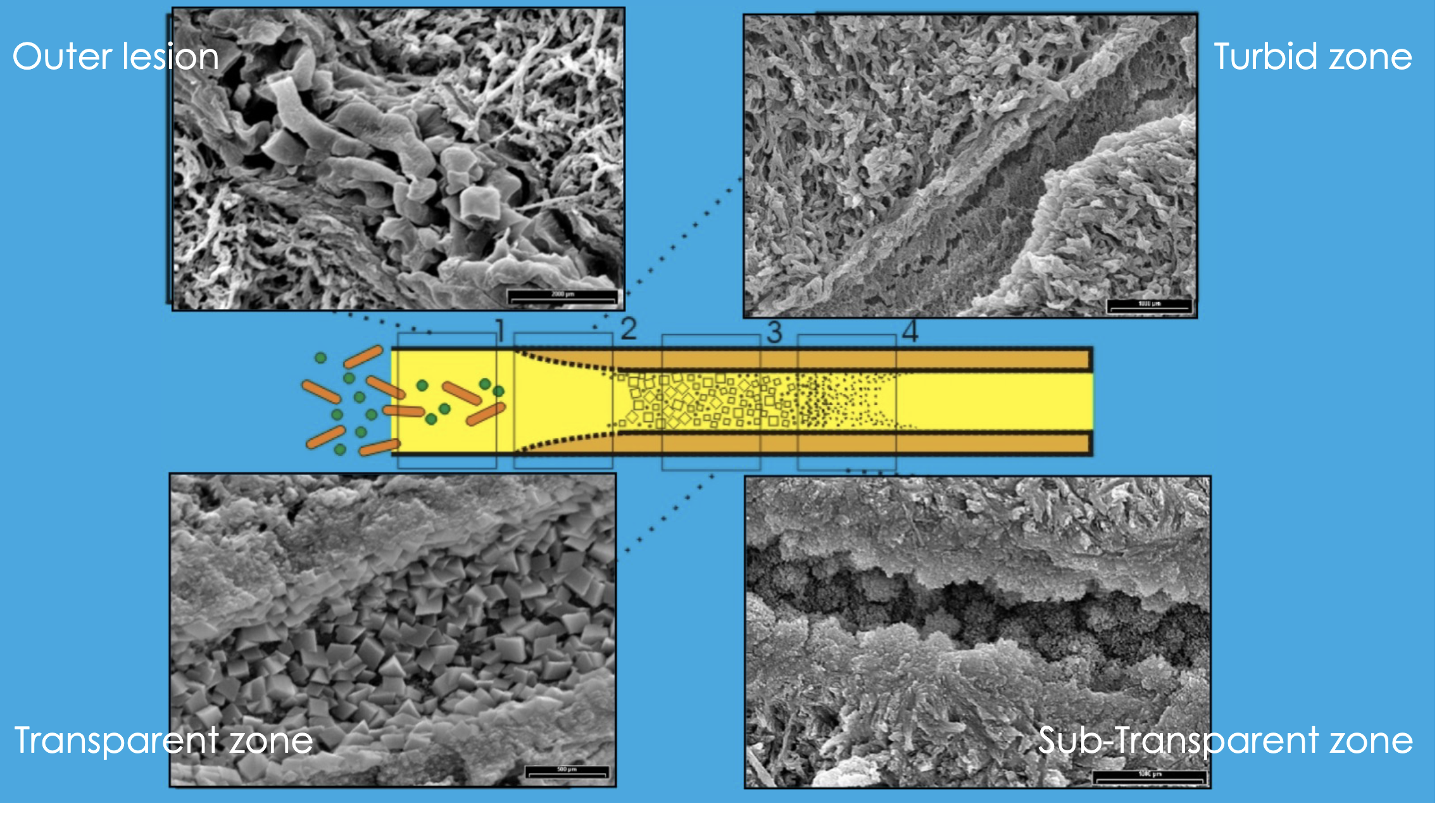
****Statement 1: Outer caries layers are the infected dentin bacteria, and most of the infected structure (intertubular and peritubular dentin) is demineralized
Statement 2: The subtransparent zone presents granular-shaped crystals in normal dentin is found beneath the transparent zone?
Both Statements are true
Which ducts drain mostly mixed saliva
Wharton’s Duct
Notes:
Serous gland - Parotid gland - Stensen’s duct
Mixed gland - Submandibular gland - Wharton’s duct
Mucoid gland - Sublingual gland - Rivinus ducts
Xylitol causes bacteria to…..
form intracellular vacuoles and cell degradation
The composition of enamel by weight is…
a. Enamel (critical pH - 5.5)
i. 95% : inorganic
ii. 4% : organic
iii. 1% : water
Note:
Volume 97% Mineral and 3% by volume
The composition of Dentin by Weight is…
Dentin (critical pH- 6.2)
i. 70%: inorganic
ii. 20% : organic
iii. 10% : water
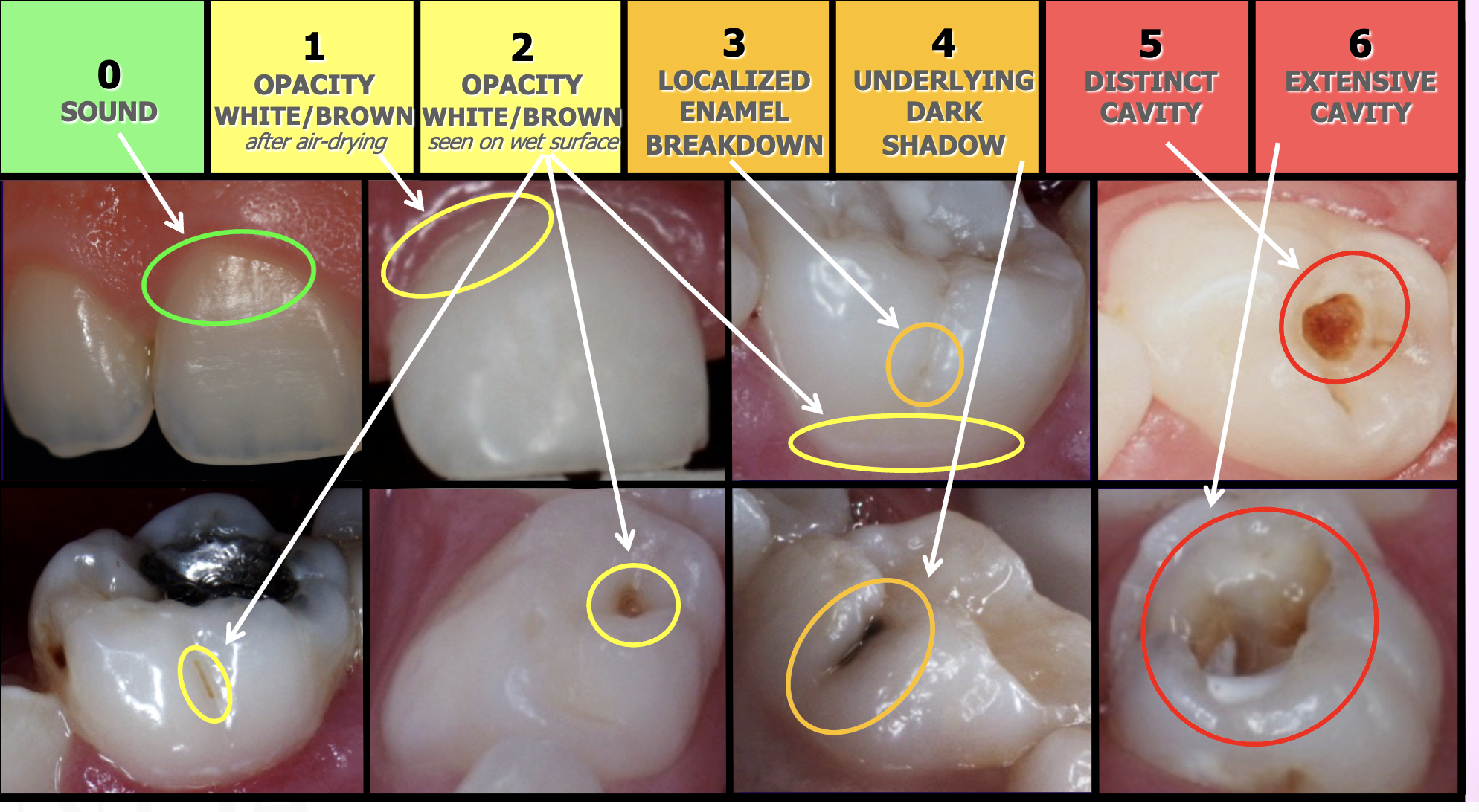
Tooth has a birthday on September 12, what is its ICDAS?
Mandibular Canine, 5
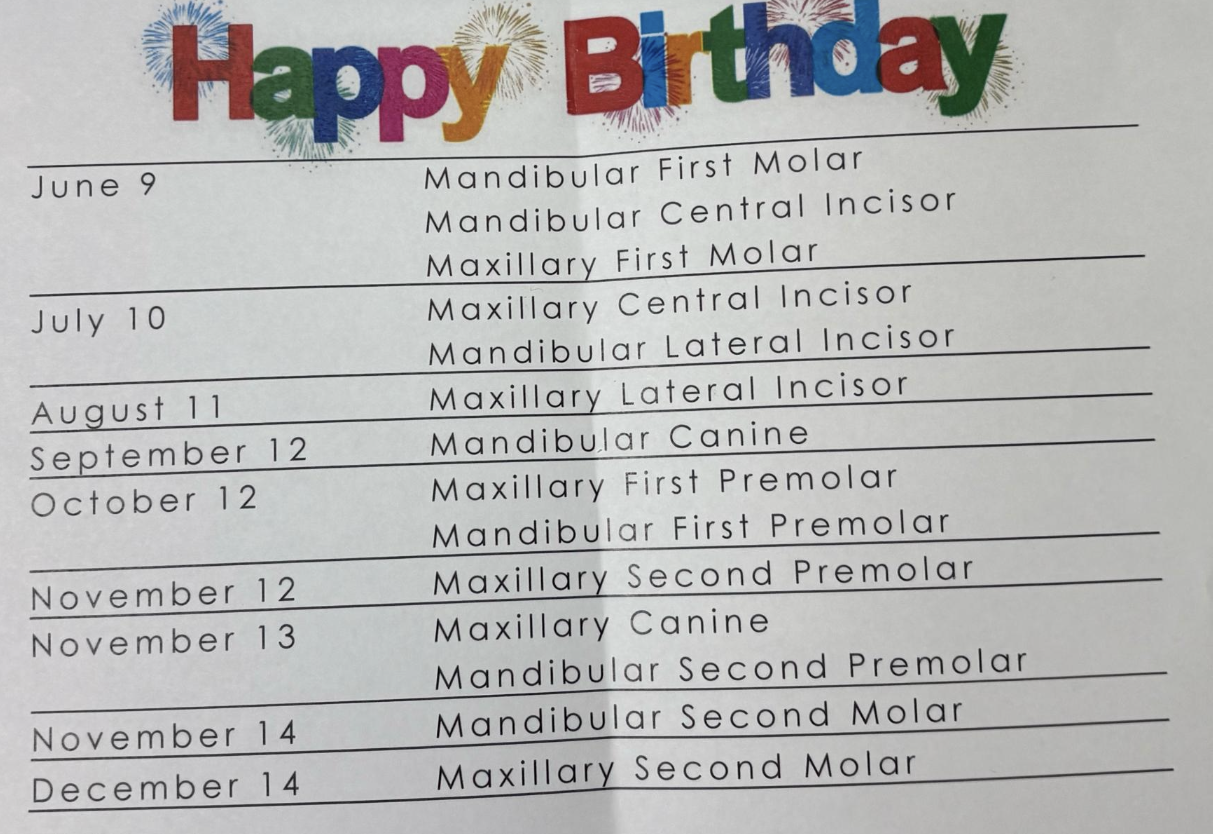
Birthdays of all teeth
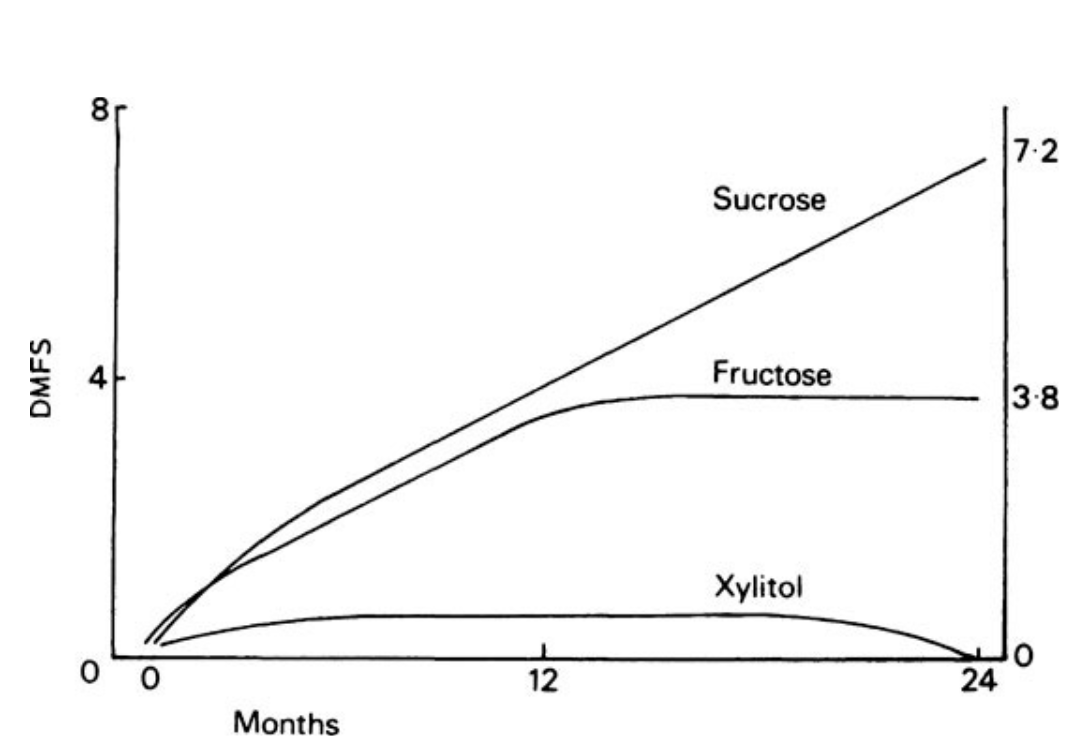
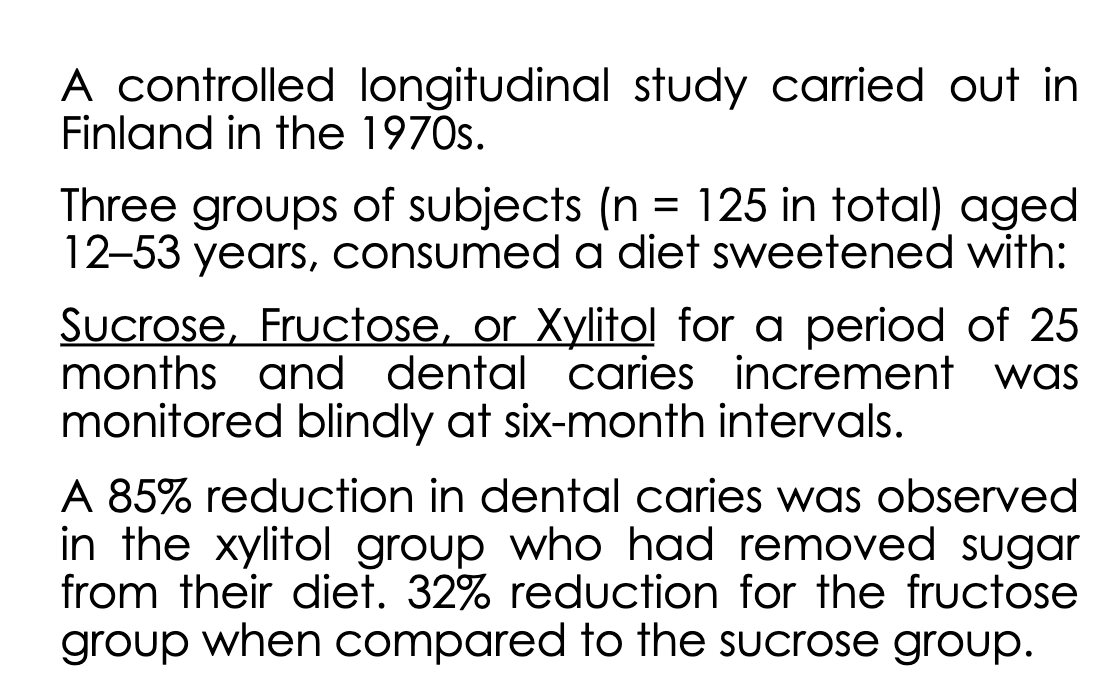
What is this Study?
Turku Study from Finland
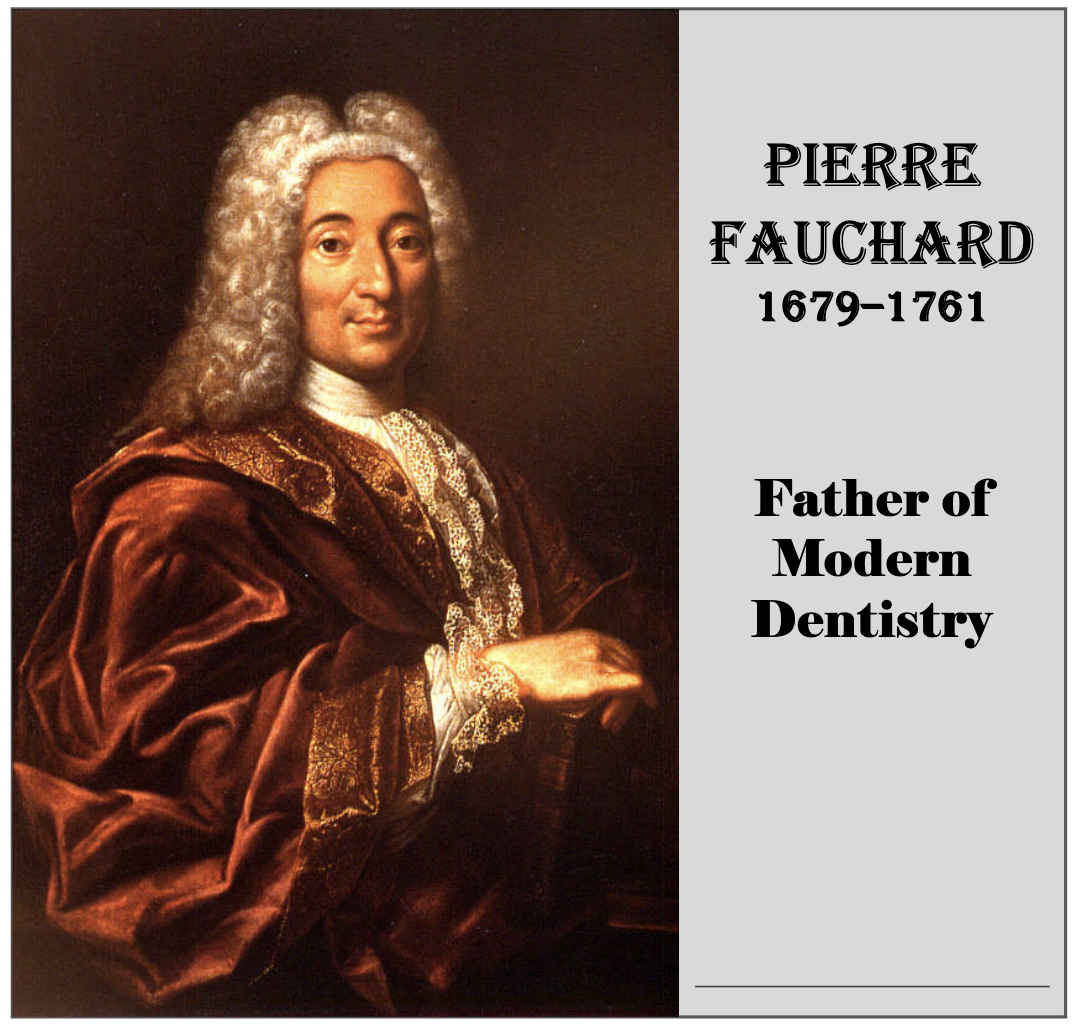
Who is this guy?
Pier Fauchard
Father of Modern Dentistry
Disagreed with the worm hypothesis
Wrote Surgeon Dentist
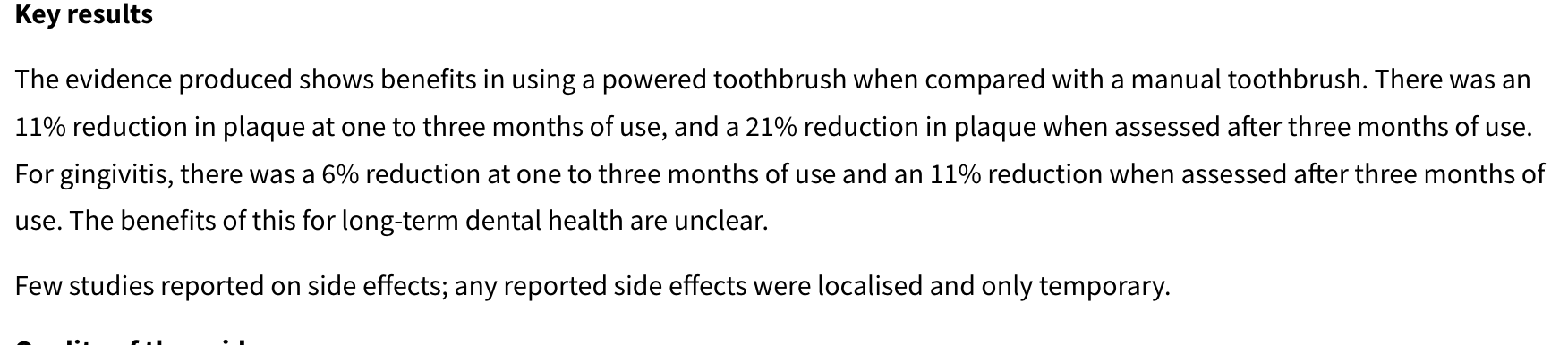
Which toothbrush is better, manual or electric tooth in terms of reducing plaque and gingivitis?
Electric is better in reducing both
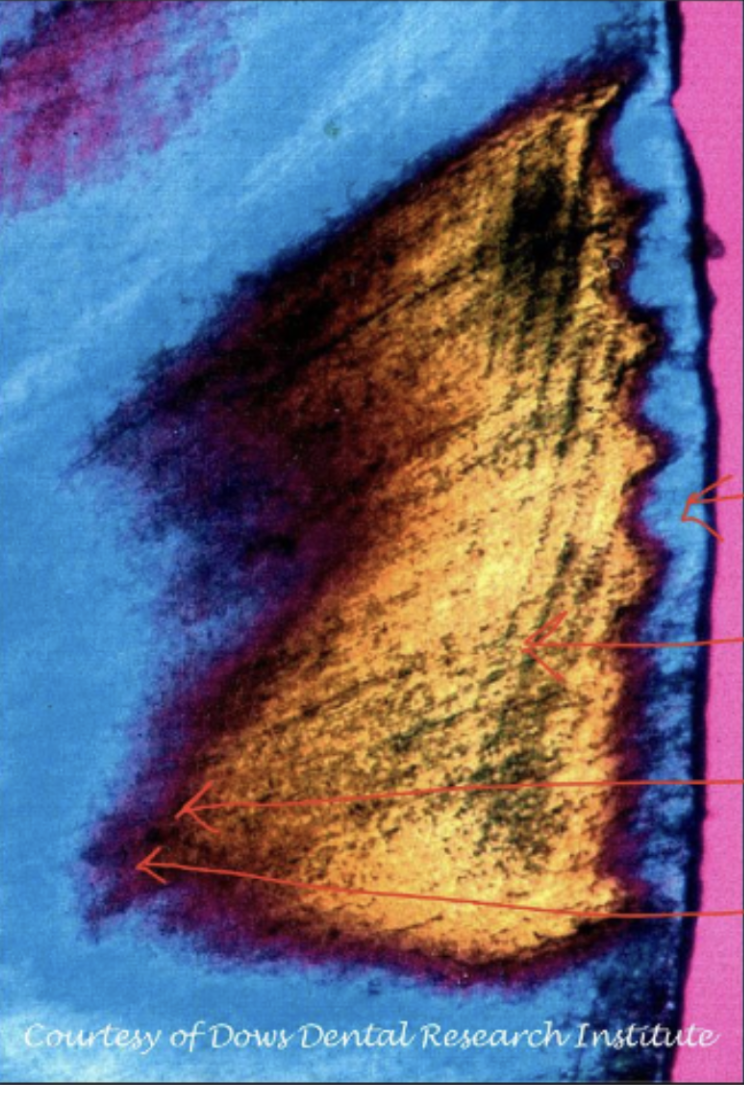
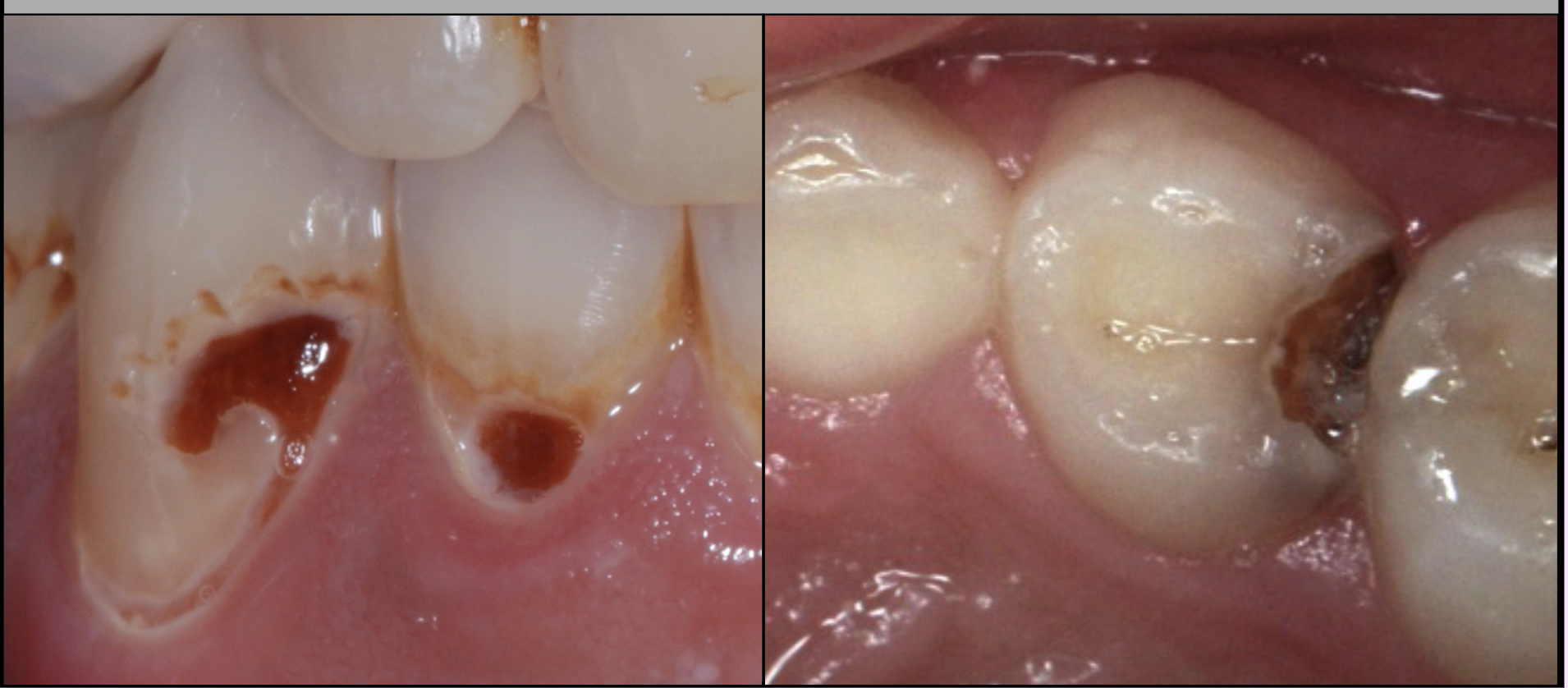
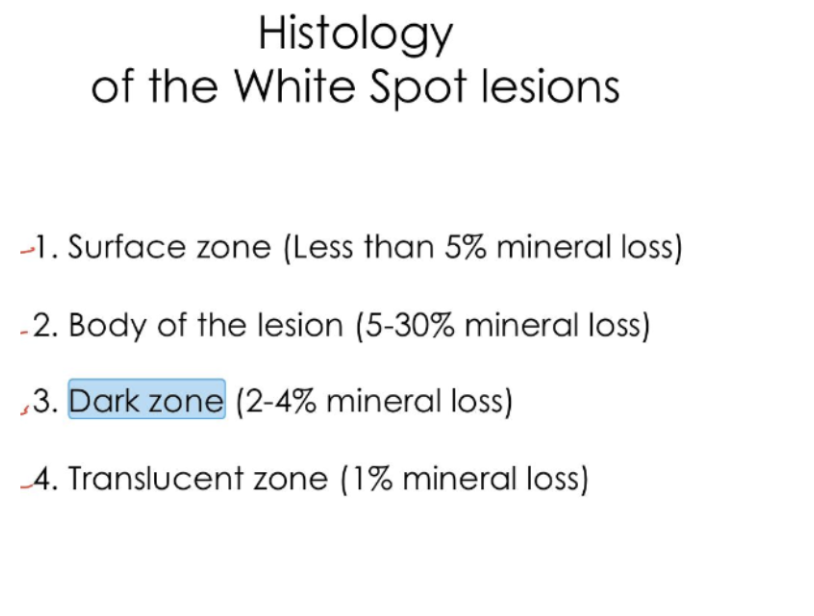
What is the lesion’s name in the picture where the arrow is pointed at?
Note: White spot lesion is under the tooth so the surface is still intact
What scale is used for dry mouth
Challacombe Index
1. List the 10 items evaluated with the Challacombe Scale
a. Mirror sticks to buccal mucosa
b. Mirror sticks to tongue
c. Saliva frothy
d. No saliva pooling in the floor of mouth
e. Tongue shows generalized shortened papillae
f. Altered gingival architecture
g. Glassy appearance of oral mucosa/palate
h. Tongue lobulated/fissured
i. Cervical cavitations on more than two teeth
j. Debris on palate or sticking to teeth
Note:
1-3 Mild
4-7 Moderate
8-10 Advanced
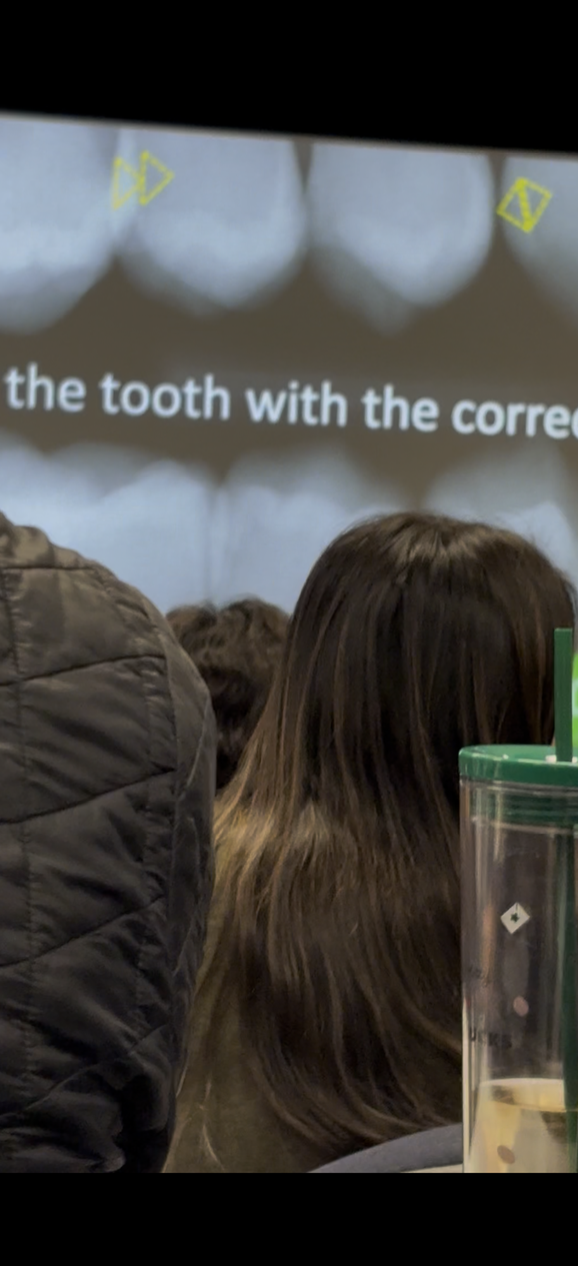
Which tooth on the radiograph has the right development of caries, and what is its birthday?
Maxillary second premolar 11-12
What buffer contributes the most at a pH of 5-7?
Bicarbonate buffering system- excreted at higher flow rates (pH 5-7)
Note:
Phosphate buffering system- concentration decreases w increasing flow (pH 6-8)
Bicarbonate buffering system- excreted at higher flow rates (pH 5-7)
Protein buffer system- isoelectric point pH 5-9, major contribution below pH 5
Extra Stuff that she mentioned that could be on the exam
Smear Layer
Usually forms on dentin after a procedure
CaF 2 layer forms almost immediately following exposure to fluoride, such as brushing teeth, and slowly dissolves within a period of two hours.
Vipeholm’s Study
One of the large-scale research study done in Sweden that showed relationships between
diet, sugar intake, and frequency of caries (controversial study)
Hopewood House Study
Orphan Children in Australia were put on a diet of nutritious food and they had a DMFT score of 0.58 compared to Sydney’s 9.5
Takeuchi Japan Study
During WW2,
Less access to sugar so less cavities in solidiers. Shows relationship between sugar consumption and caries
Tristan Da Cunha
An isolated island where residents had low levels of dental caries then when a volcano hit they got exposed to refined and thus higher levels of sugar, leading to an increase in dental caries. .
Kikuyu Tribe vs Masai Tribe
Kikuyu (K=Karbs) rich diet vs Masai Tribe had a protein rich diet
Willoughby d Miller
Nonspecific plaque theory, plaque was main caused of caries from bacteria in GENERAL
Fluoride Toothpaste of different concentrations for preventing dental caries
Fluoride toothpaste is better should be used in balanced for children
Fluroide Mouthrinses, Gels, Varnishes, and Supplements
All are factors that have evidence in caries reduction
Fluoride Toxicity
Toxic Vs Lethal Dose
Adult Acute Lethal Dose 5-10 NaF (2.5 - 5 g) F
Children = 36 mg/kg NaF (15m g F/kg)
Outer Lesion of Carious Dentinal Tubule
Outer carious layers or infected dentin: Bacteria have penetrated this region. Most of the structure lost due to demineralization produced by bacterial acid
Turbid Inner Lesion (Affected Dentin)
Turbid Zone has lost the peritubular dentin and the intertubalar dentin is most demineralized. NO BACTERIA PRESENT
Transparent Inner lesion (Affected Dentin)
Transparent zne retains its peritubular dentin, and tubule may be partially filled with mineral.
Minerals are whitlockite crystal that have a lower hardness and content of calcium than apatite
can be left untouched in dental procedure
Subtransparent Inner lession Affected dentin
The subtransparent zone presents granular shaped crystals and normal dentin is found beanth
 Note
Note  Flashcards (78)