MSE 175 Exam 1 Combined
 Studied by 1 person
 Call Kai
 Learn
Learn Practice Test
 Spaced Repetition
 Match
Match Flashcards
 Knowt Play
1/37

There's no tags or description
Looks like no tags are added yet.
Name | Mastery | Learn | Test | Matching | Spaced | Call with Kai |
|---|
No analytics yet
Send a link to your students to track their progress
38 Terms
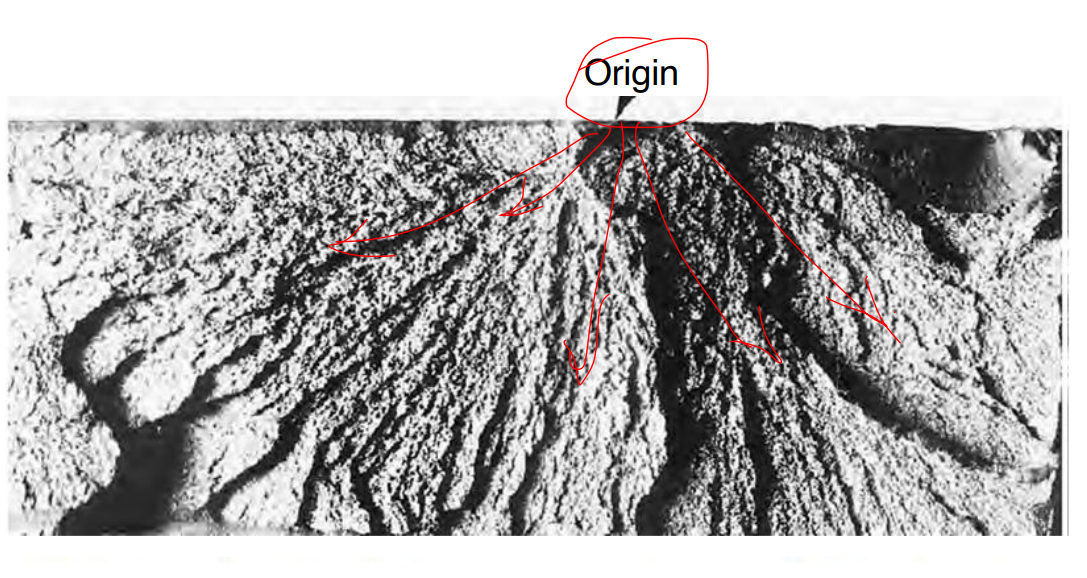
radial cleavage, macro
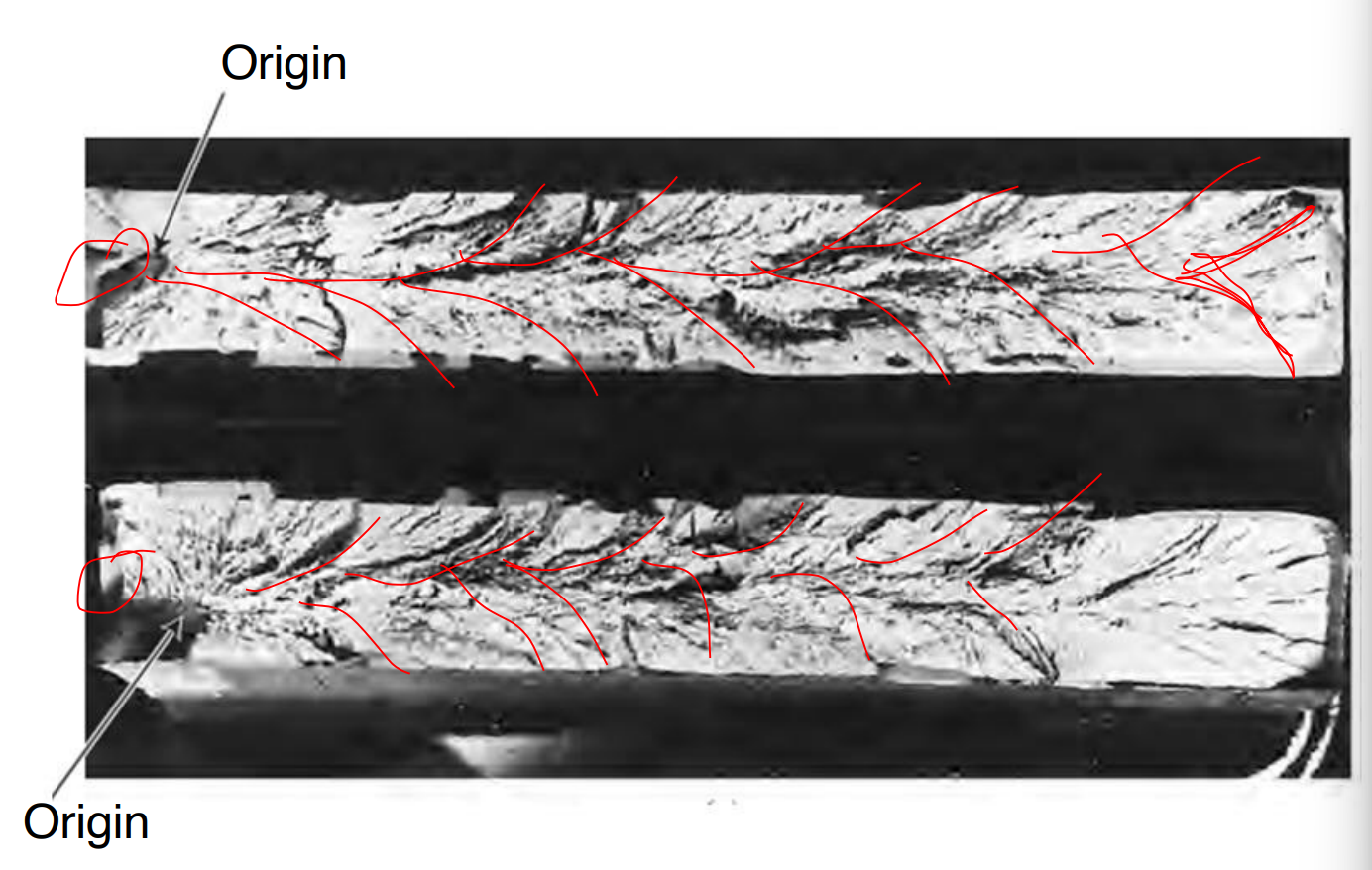
chevron cleavage, macro
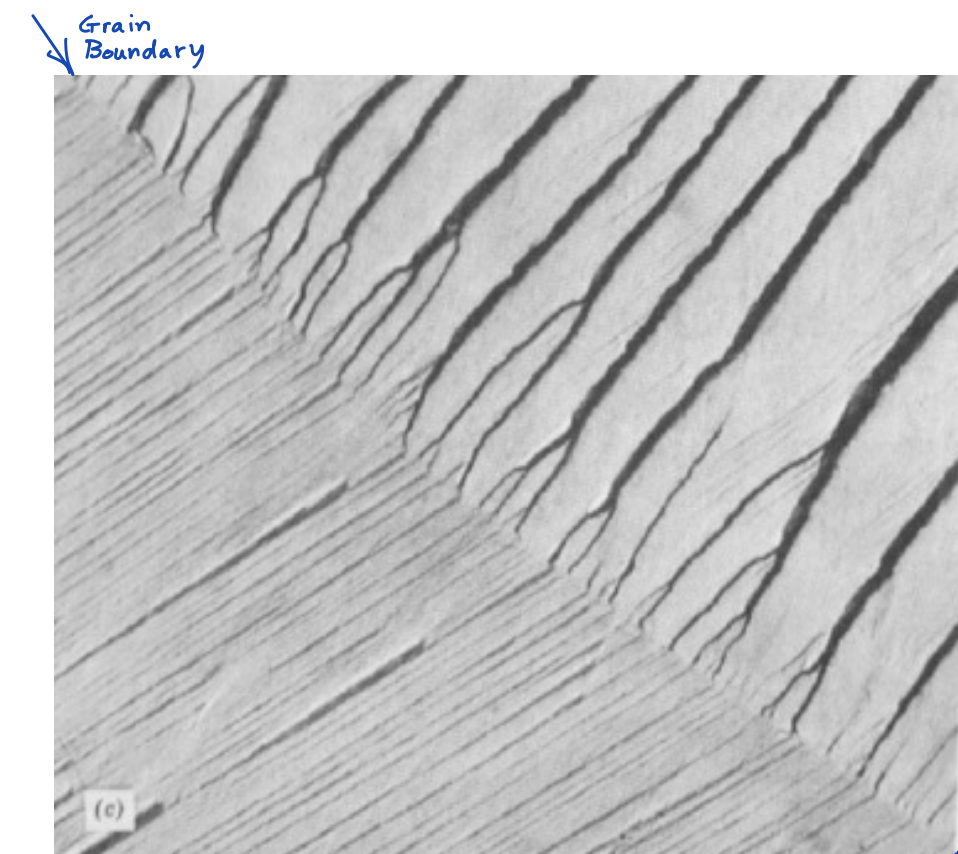
river cleavage, micro
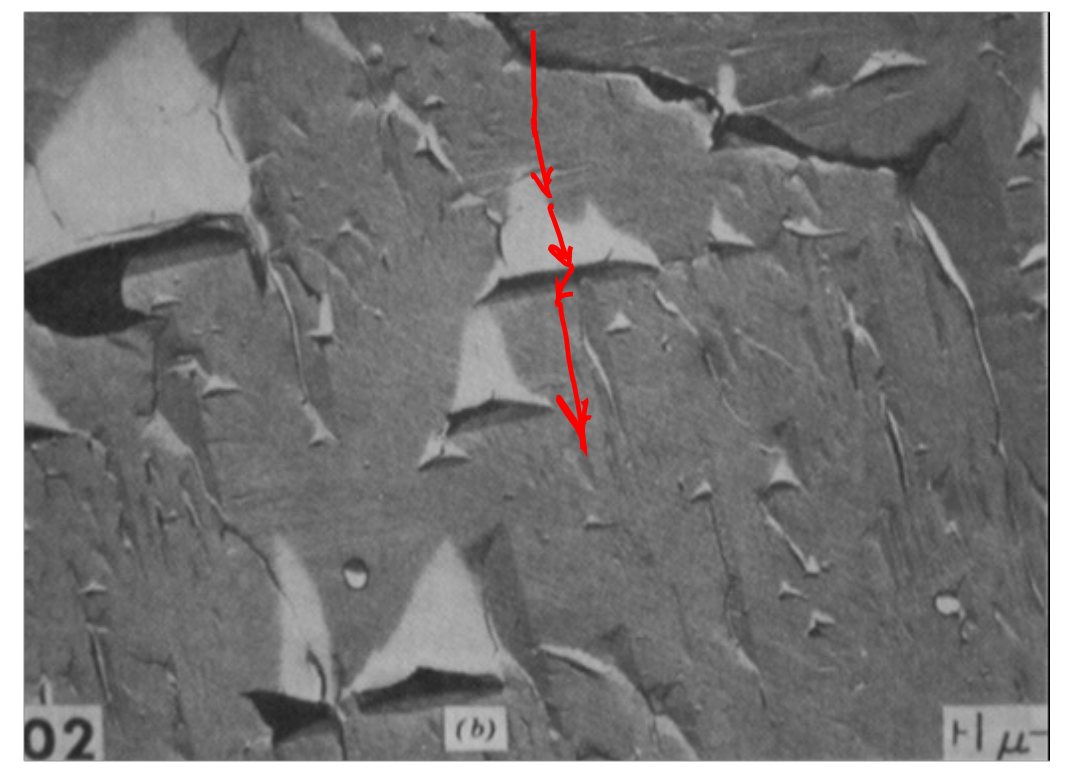
tongue cleavage, micro
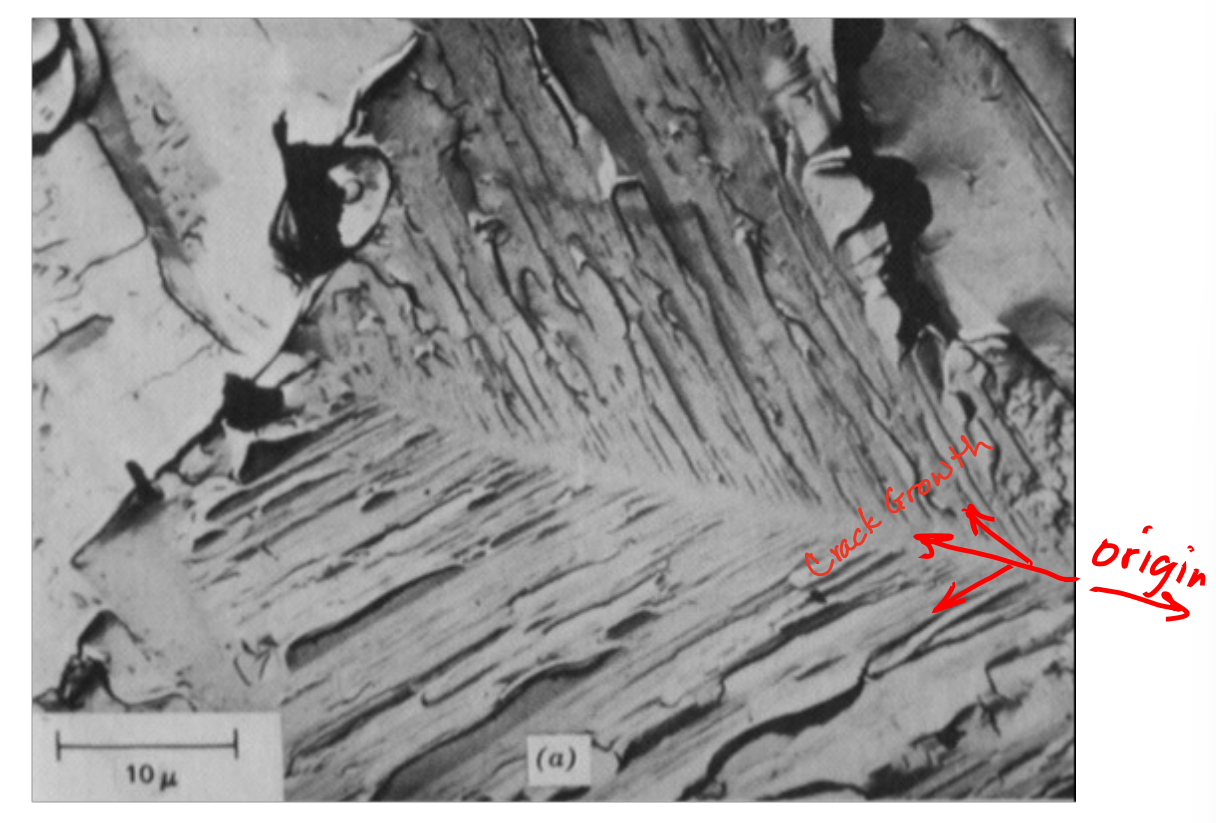
feather cleavage, micro
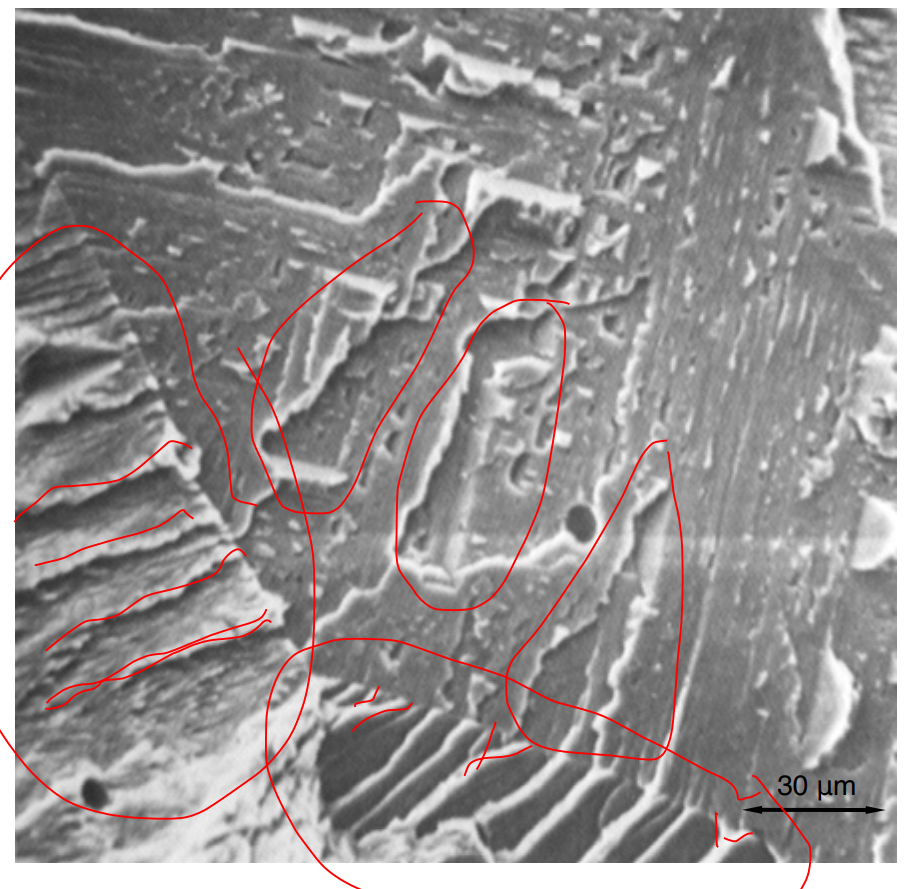
river cleavage & deformation twins
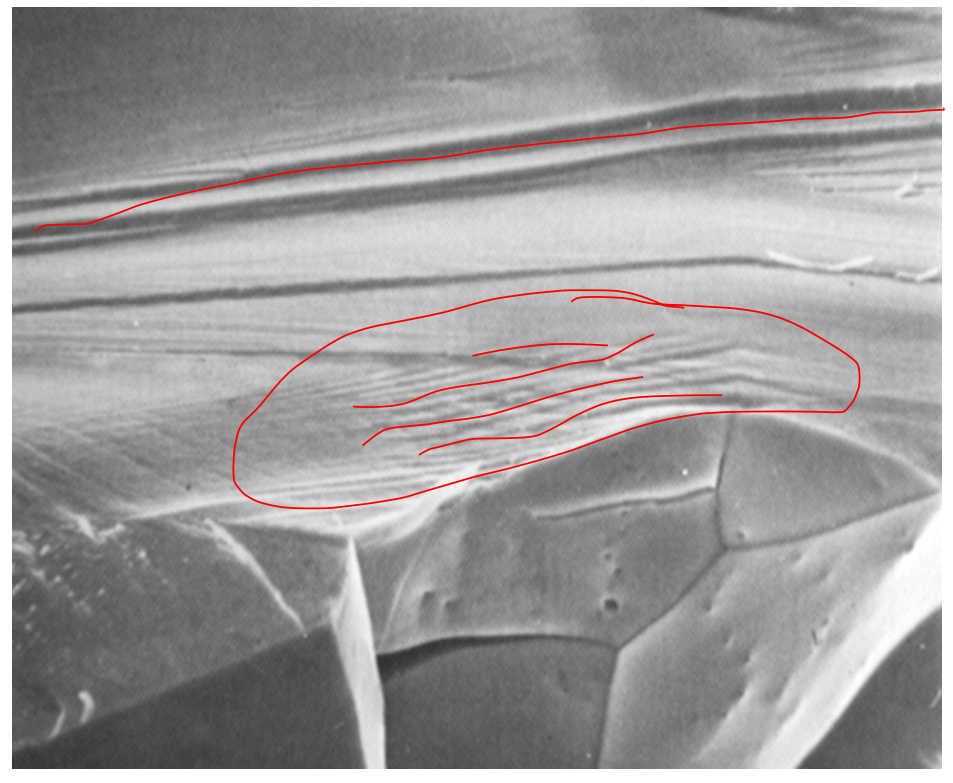
wallner cleavage, micro
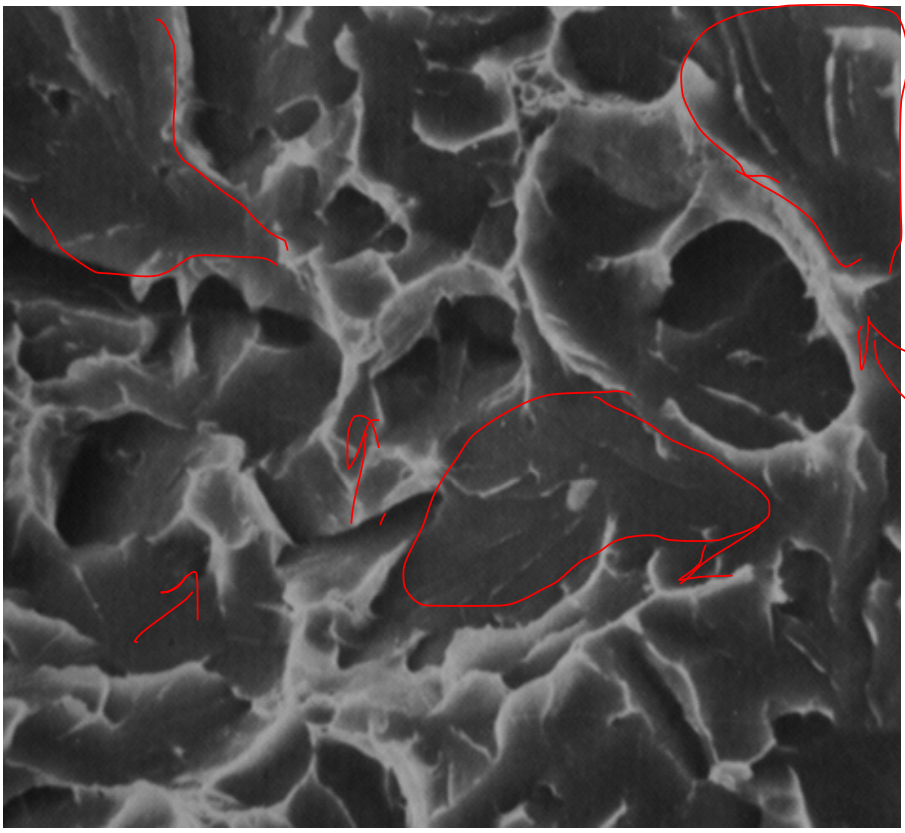
quasi-cleavage
transgranular interaction with grains?
goes through the grain
intergranular interaction with grains?
goes along grain boundaries
faceted fracture surface
usually because impurity segregation
weakened forces at grain boundaries
brittle intergranular fracture
crack growth along favored crystallographic planes
(river, feather, tongues, wallner, herring)
brittle cleavage/transgranular fracture
macroscopically flat
fracture surface is shiny to the naked eye (metals)
fracture supersedes any sizable plastic deformation
brittle fracture
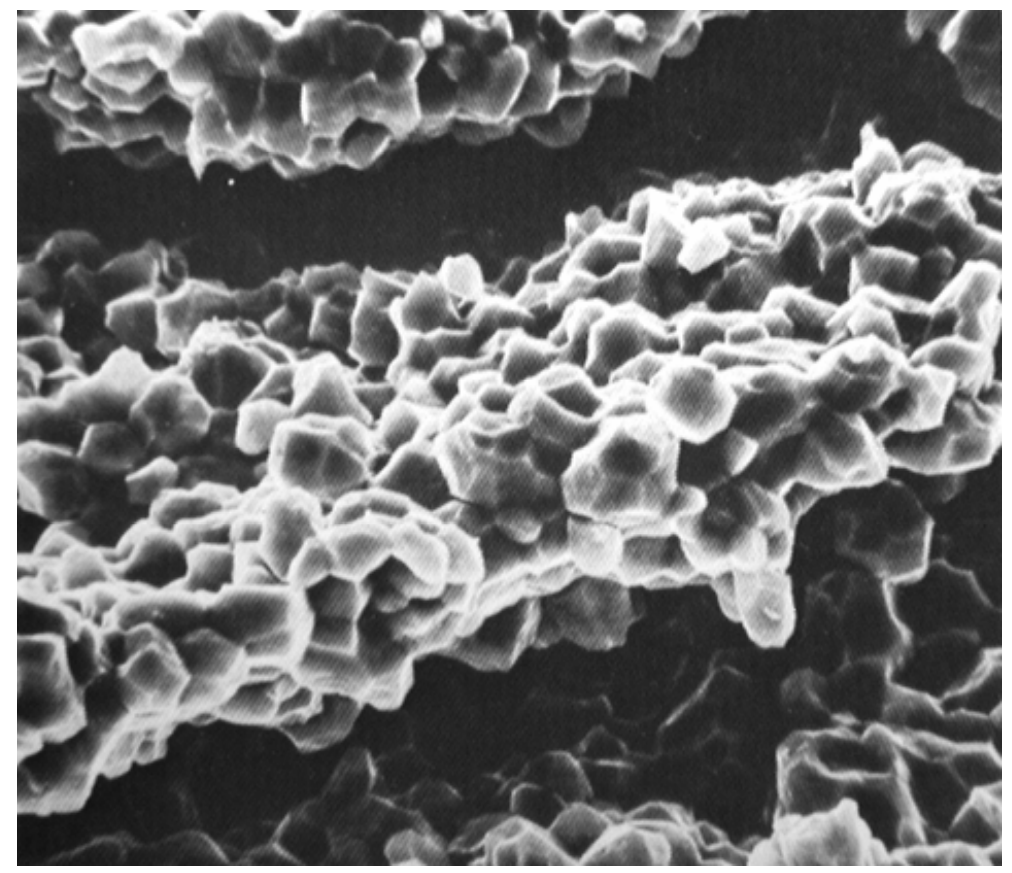
intergranular fracture by impurity segregation
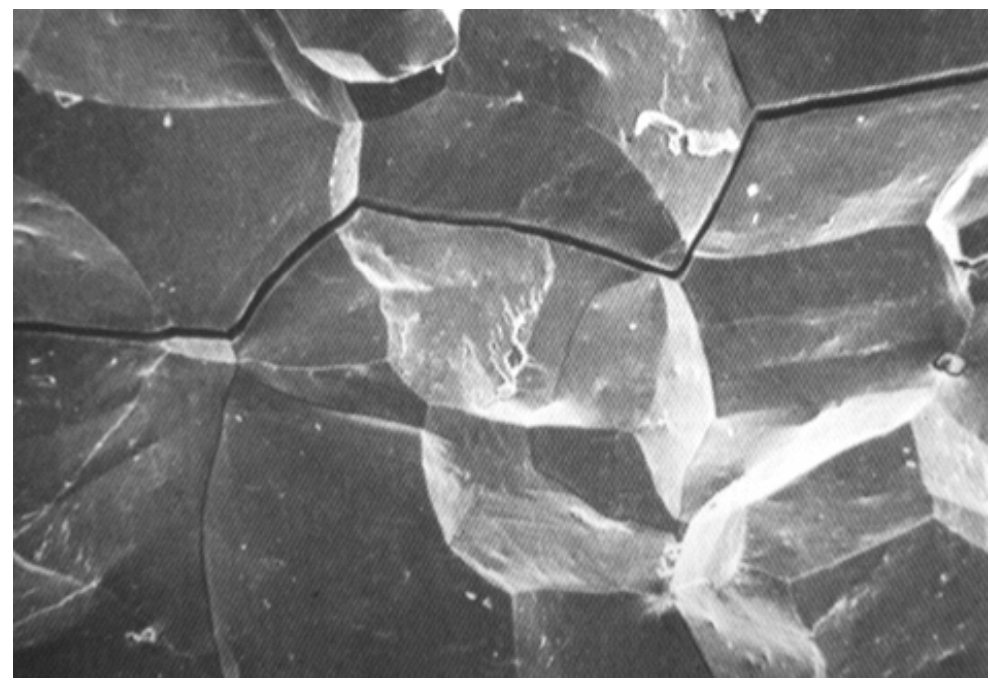
intergranular fracture by over heating
What is K_IC?
fracture toughness, material property
What is K_I?
Stress intensity factor
Brittle fracture occurs when..
K_I >= K_IC
Modes of fracture mechanics
Opening
Shear
Tearing / aAnti-plane sheare
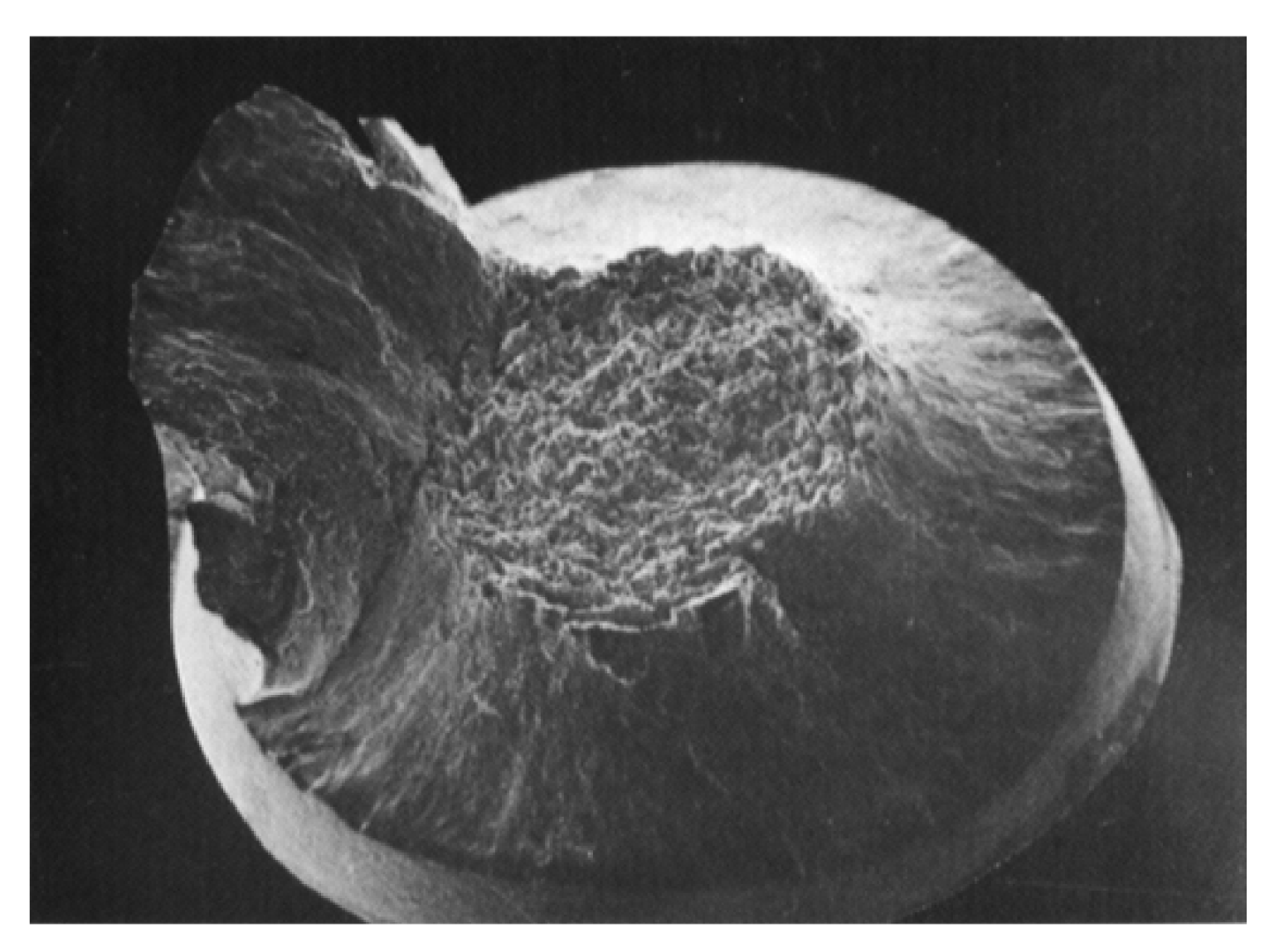
Cup-and-Cone Ductile Rupture
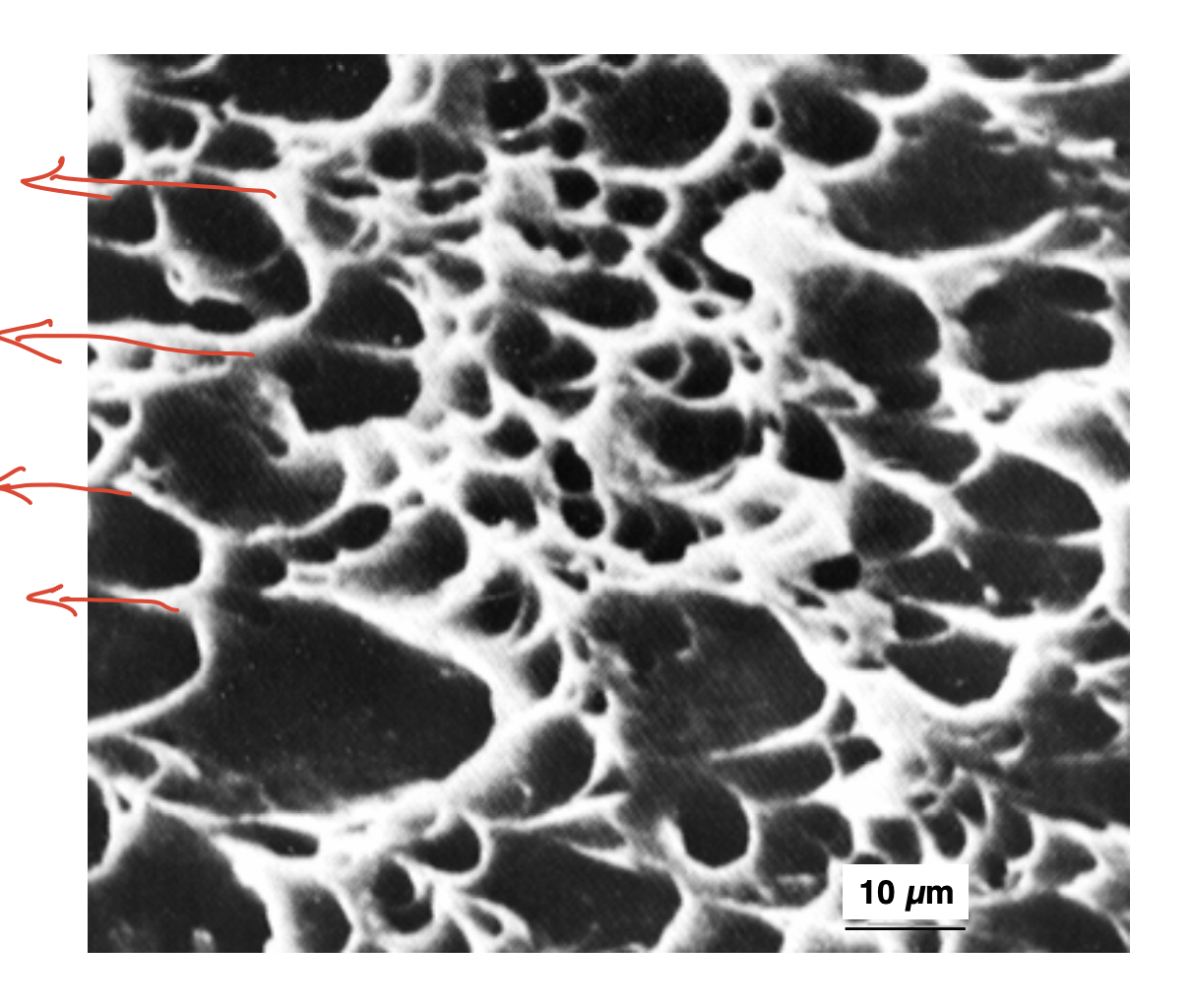
Ductile Rupture - Skewed Dimples
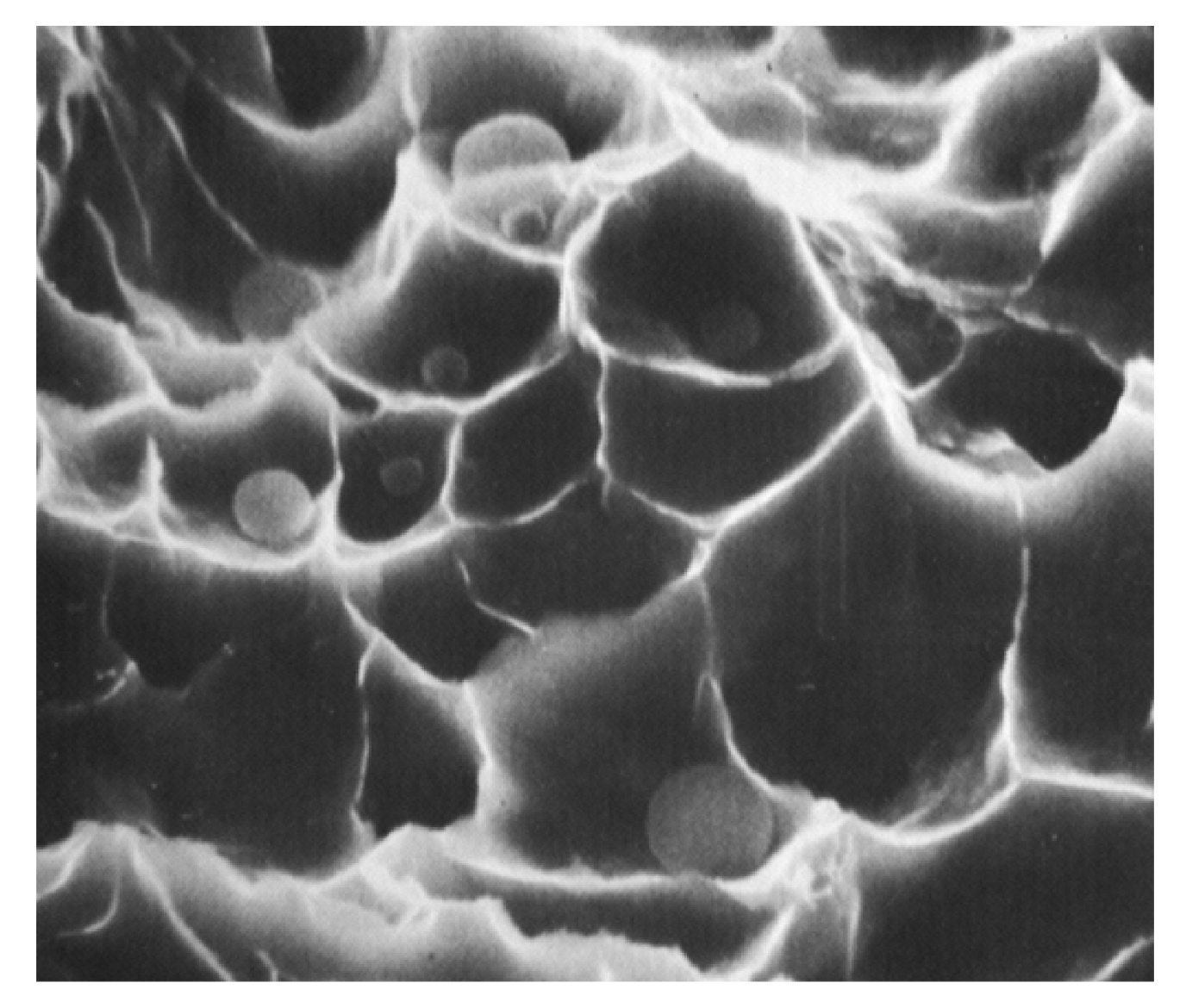
Silicate Inclusions in Carbon Steel
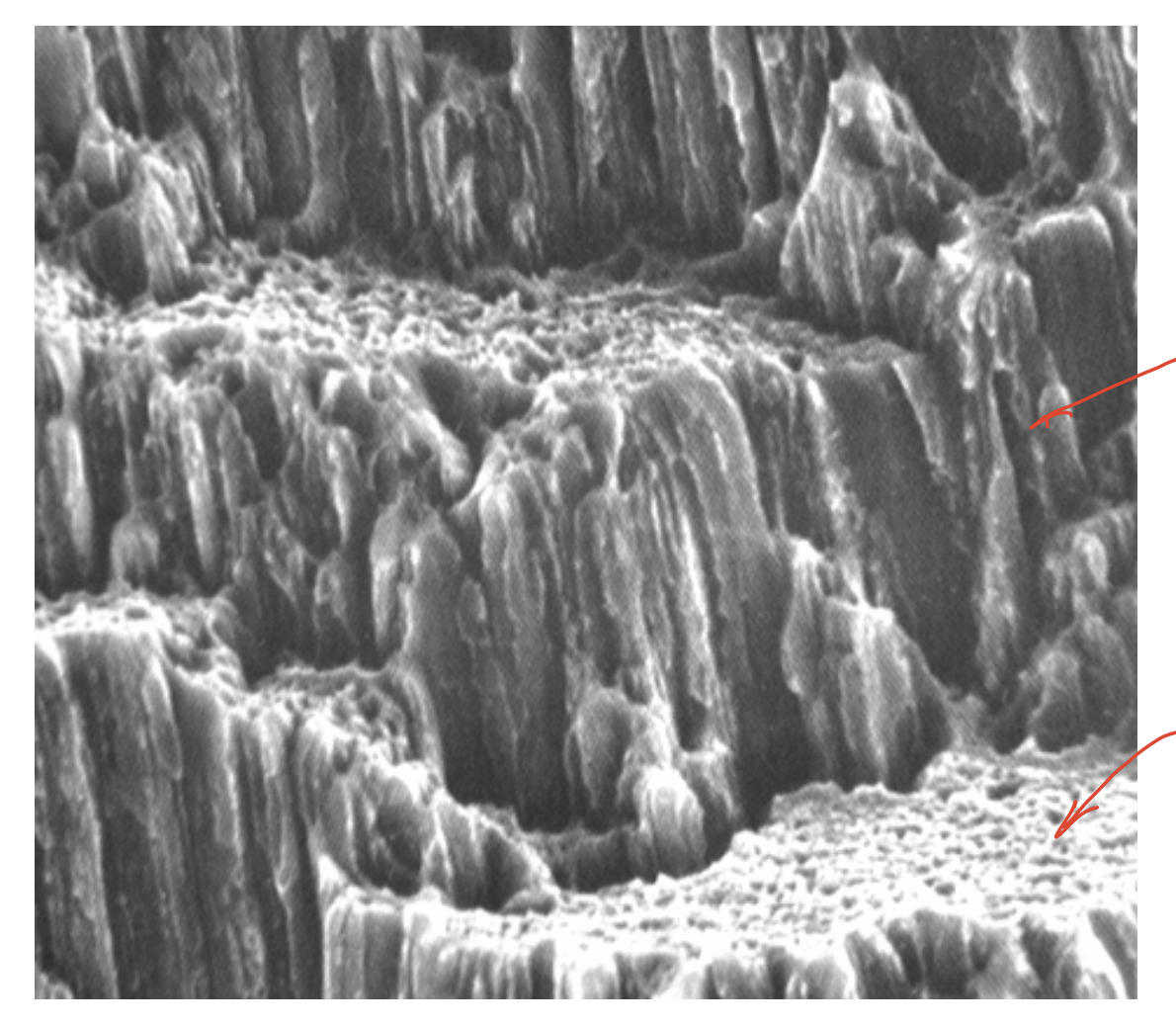
Ductile Rupture (Steel Wire, Fibrous Fracture) —> On the flat horizontal surface (dimples) & vertically the elongated grain boundaries are visible
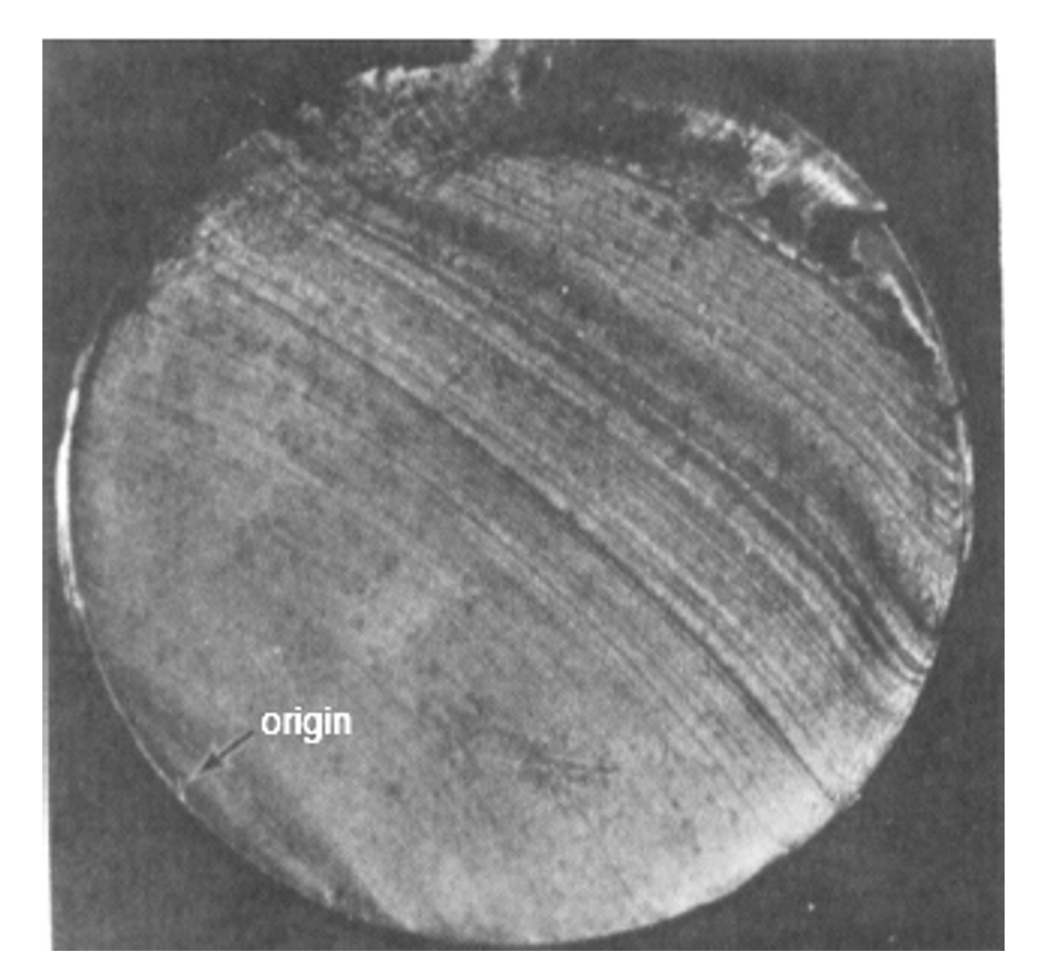
Fatigure - Macroscopic Beach Marks
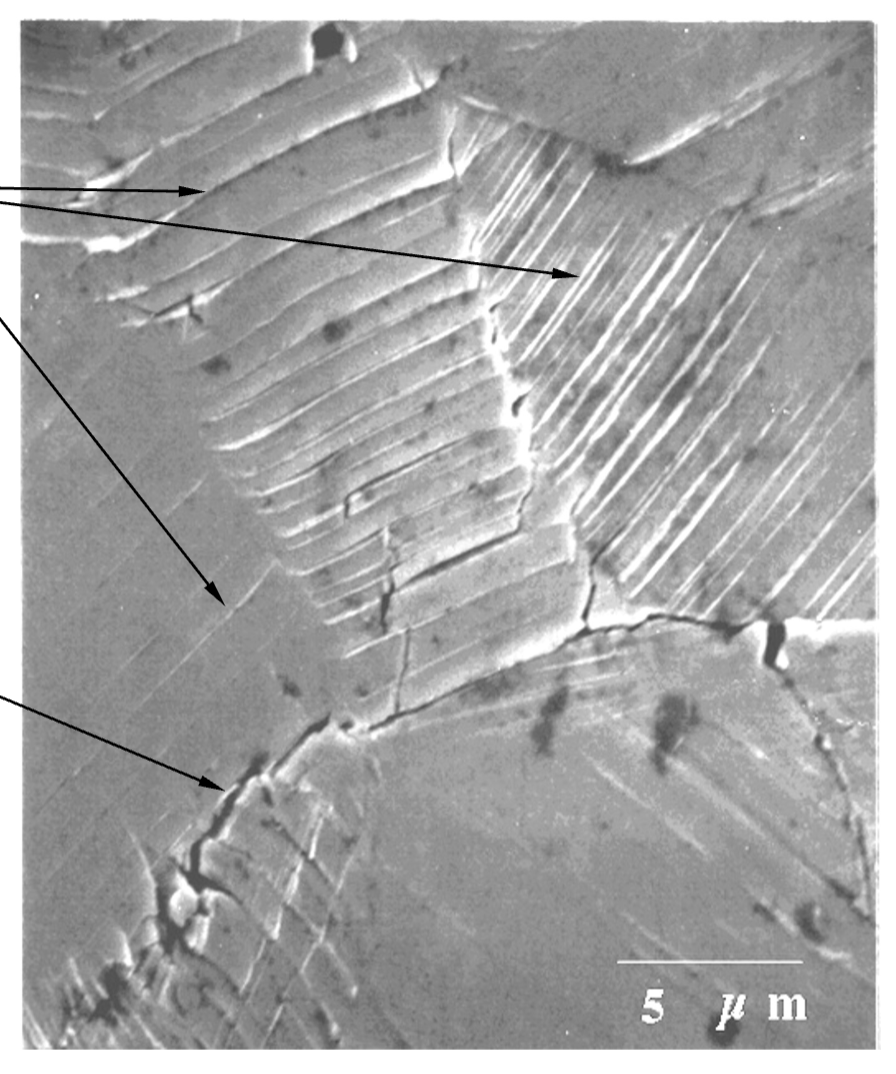
Low Cycle Fatigue - Microcracks in the External Surface (Microcracks & Slip Bands - extrusion/ intrusion pairs)
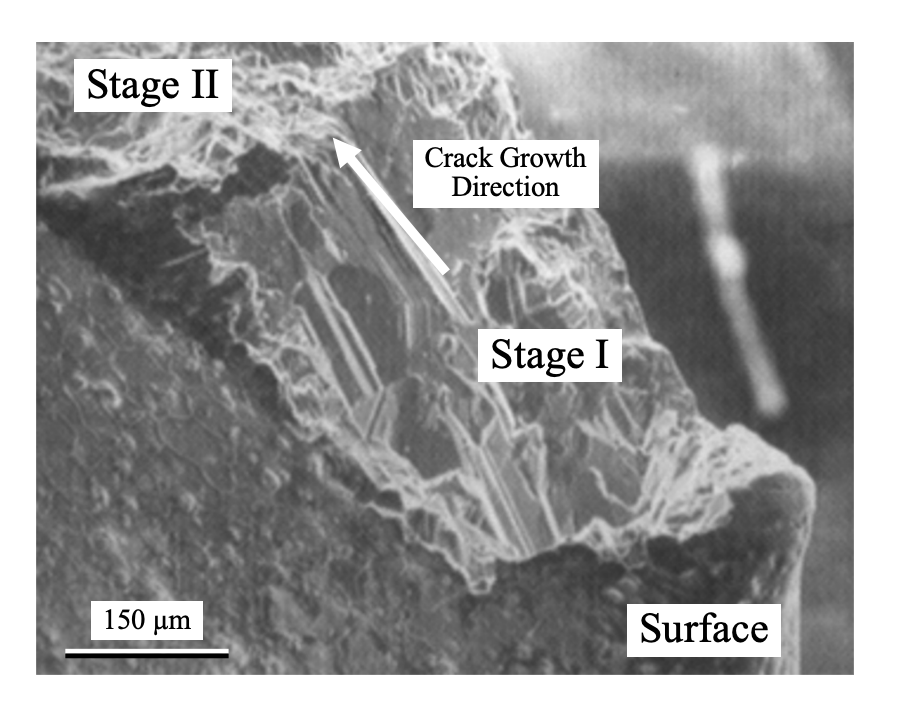
Fatigue: Crack Origin
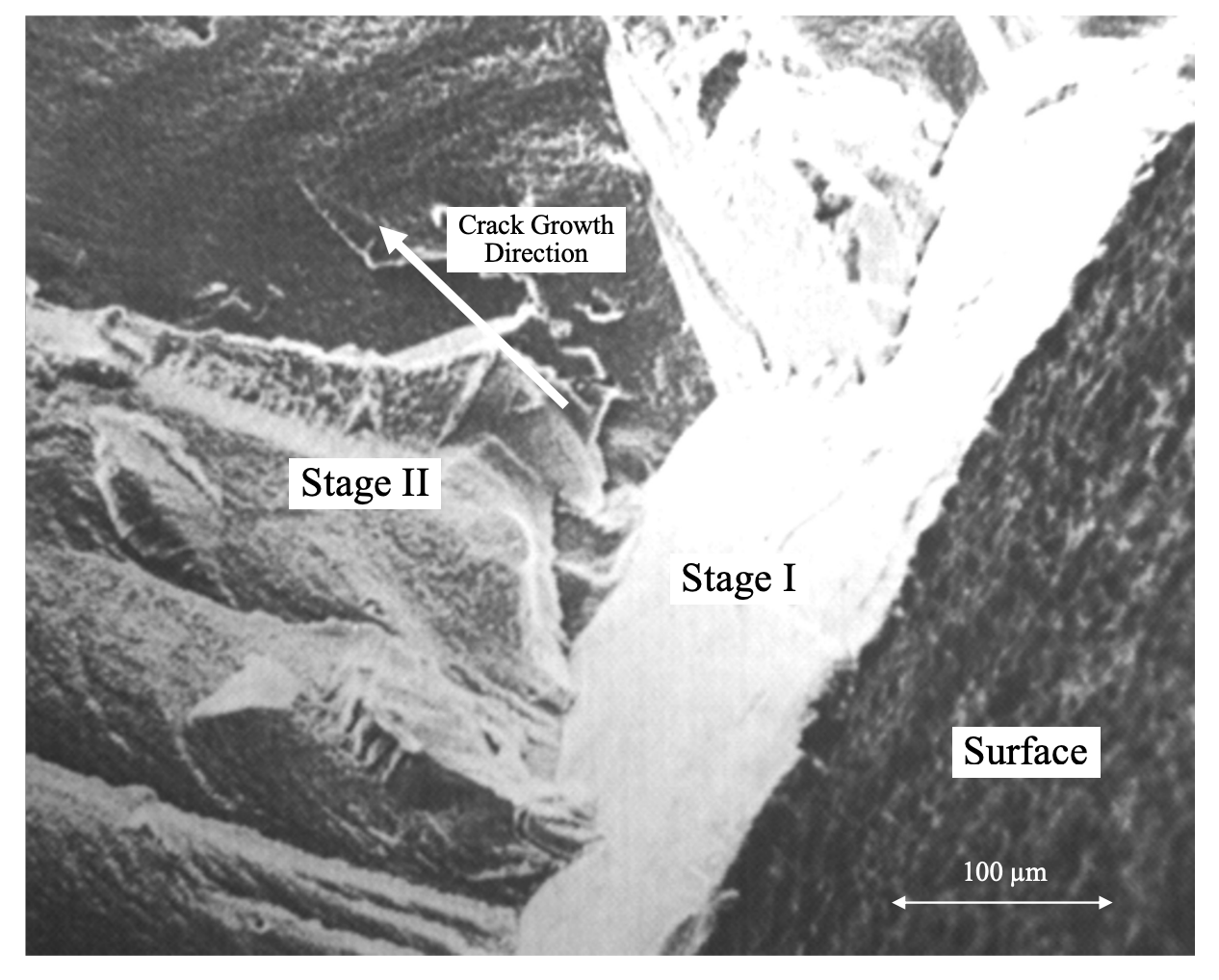
Fatigue: Crack Origin
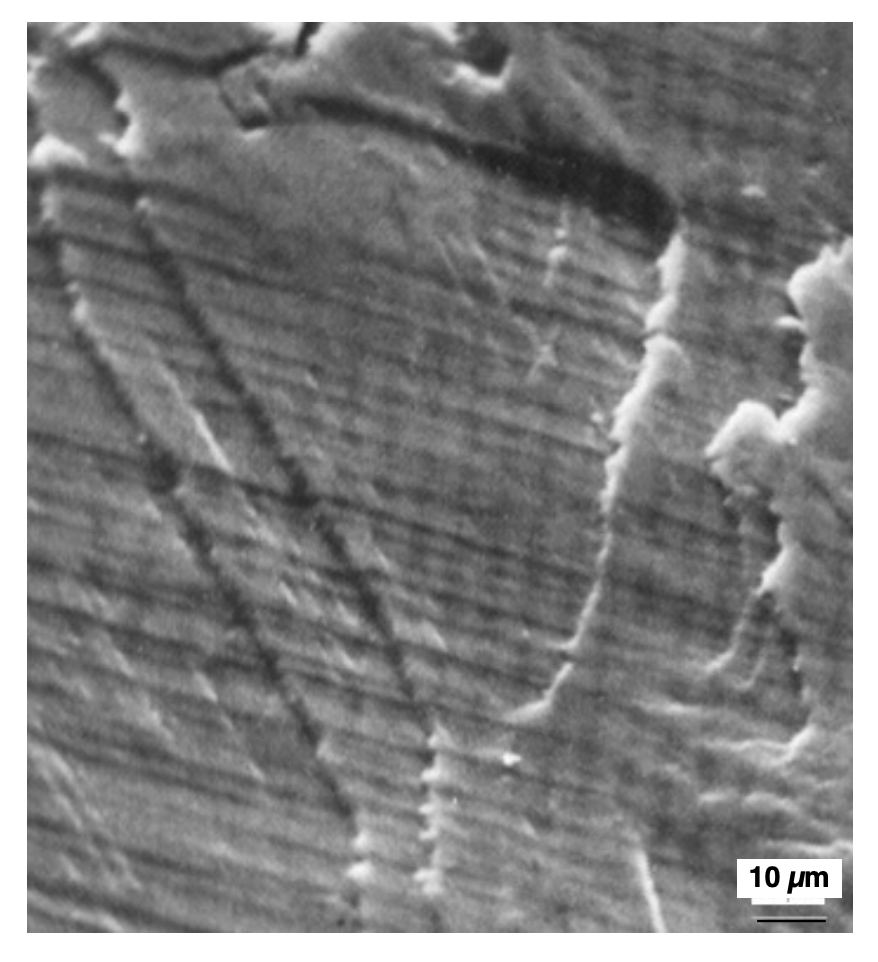
Fatigue: Slip Lines
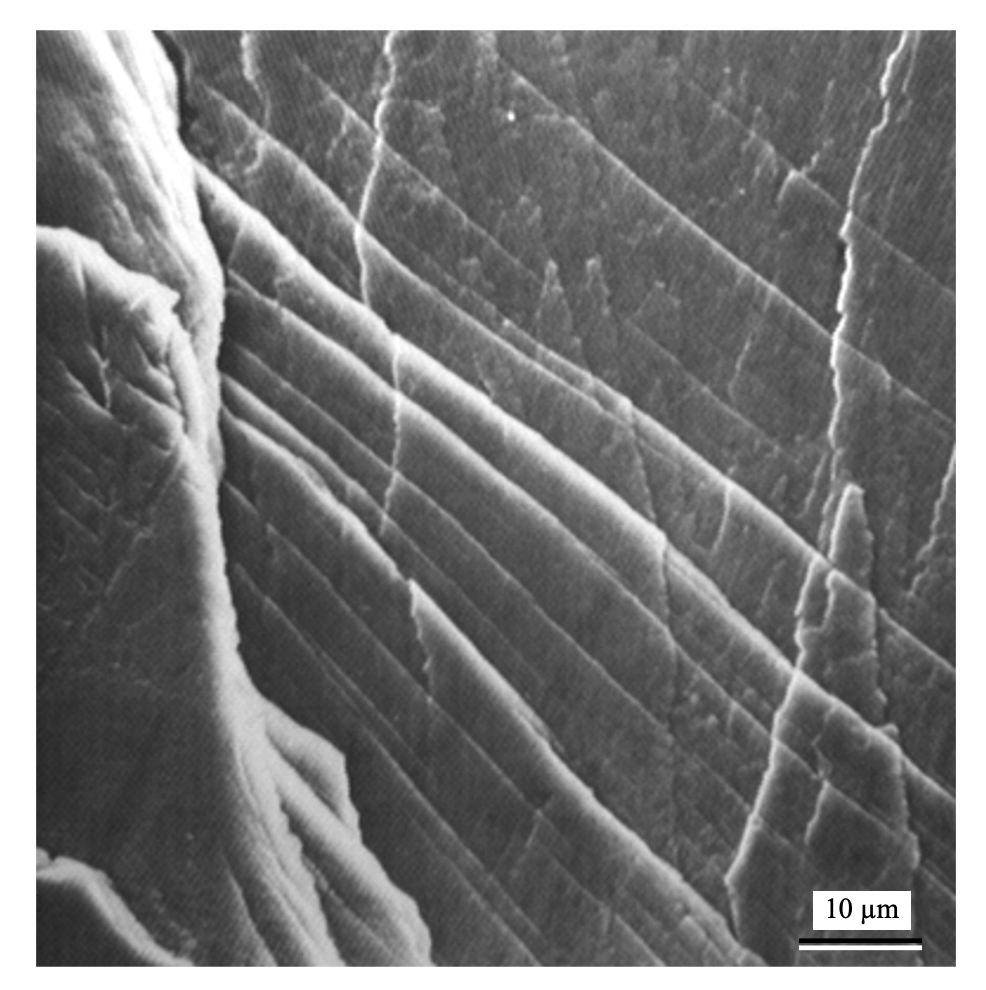
Fatigue: Slip Lines
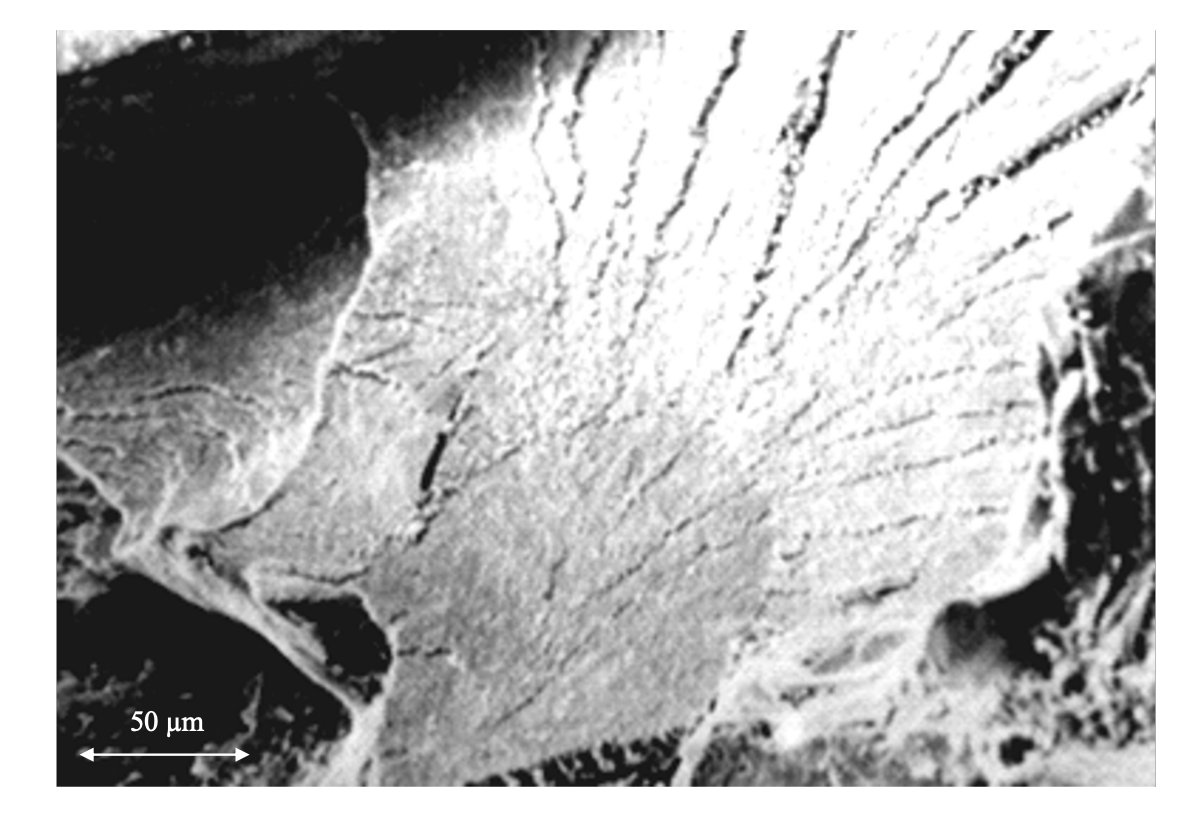
Fatigue: Feather Pattern
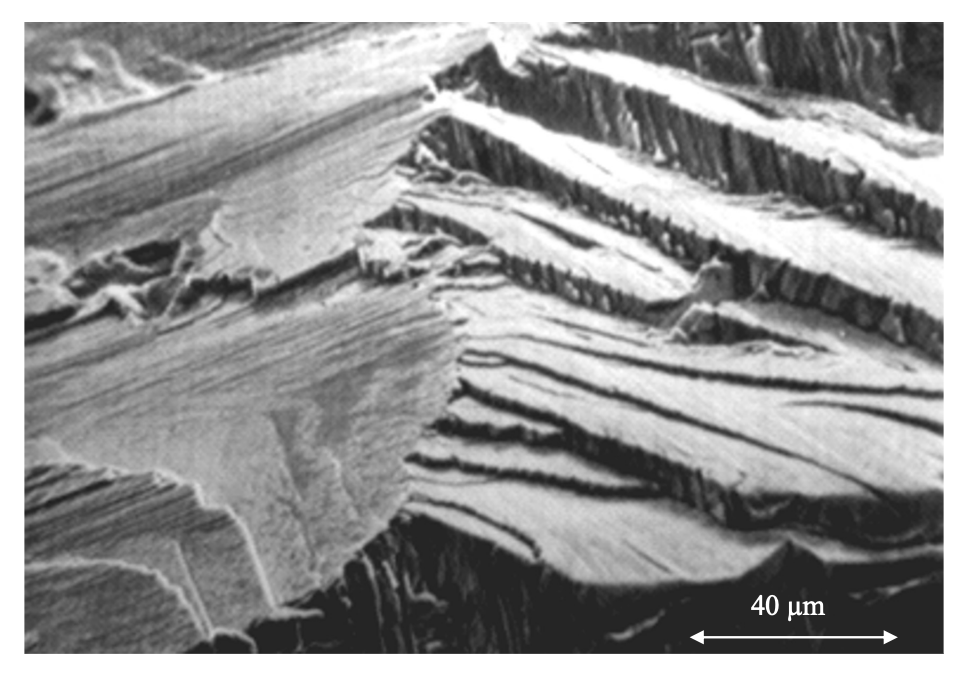
Fatigue: River Pattern
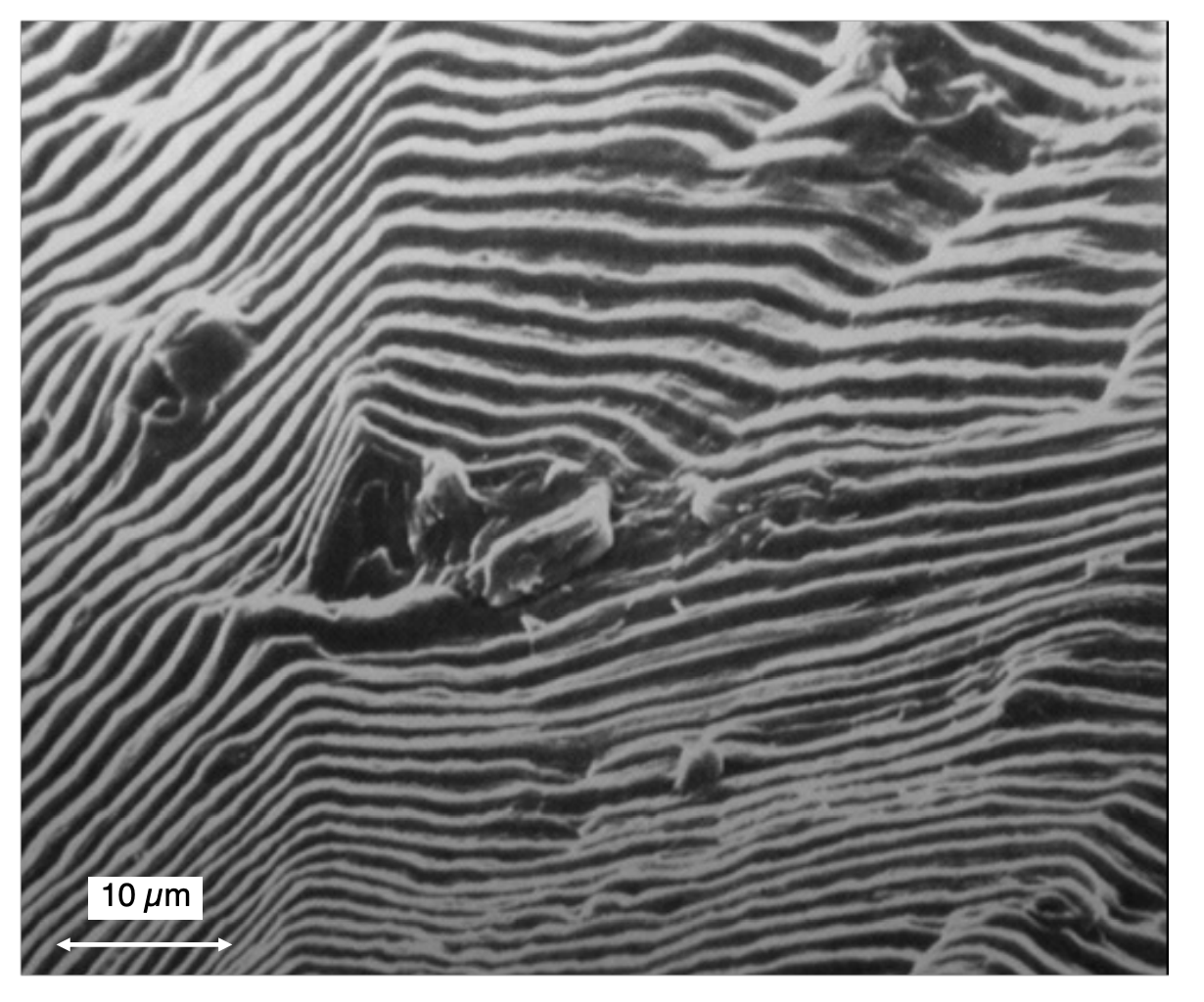
Fatigue: Striations
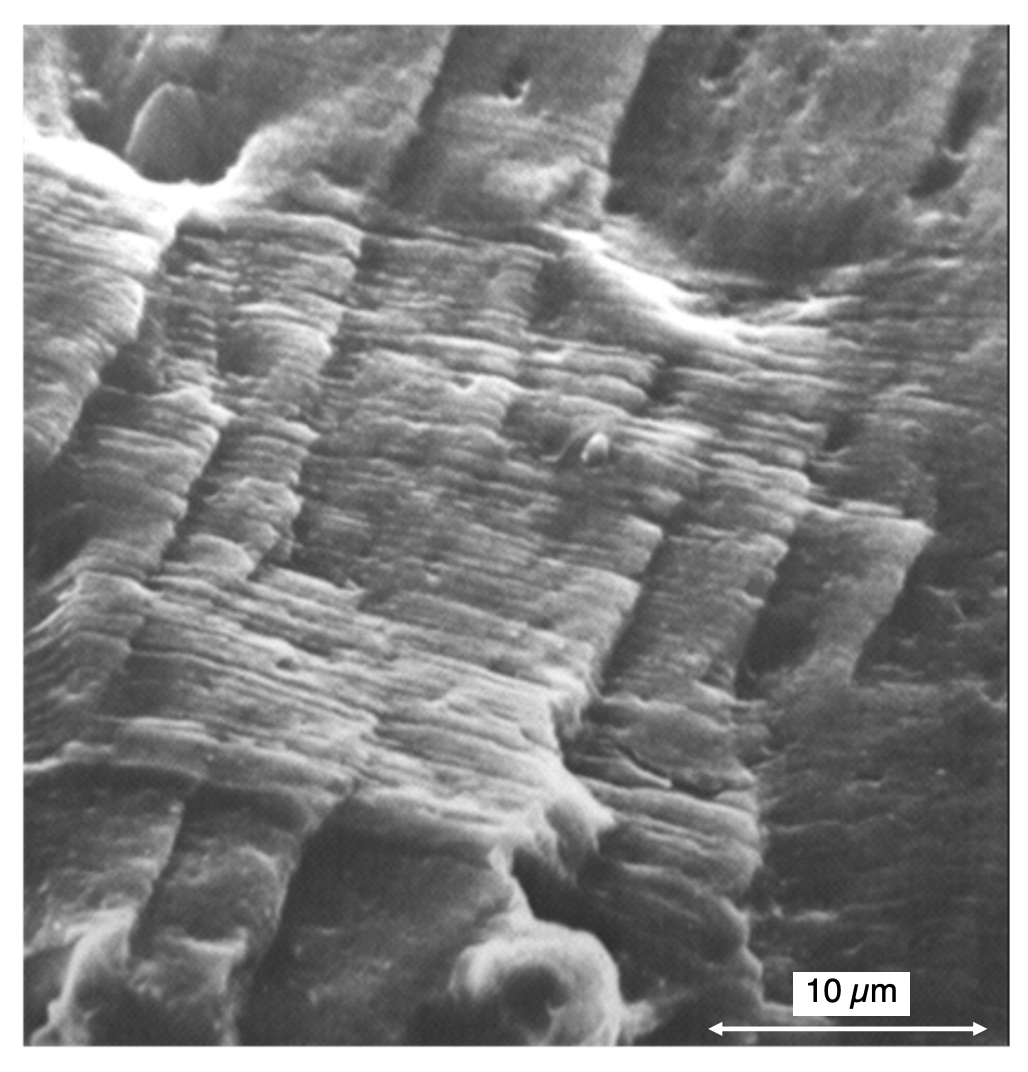
Fatigue: Striations (transitions in load amplitude)
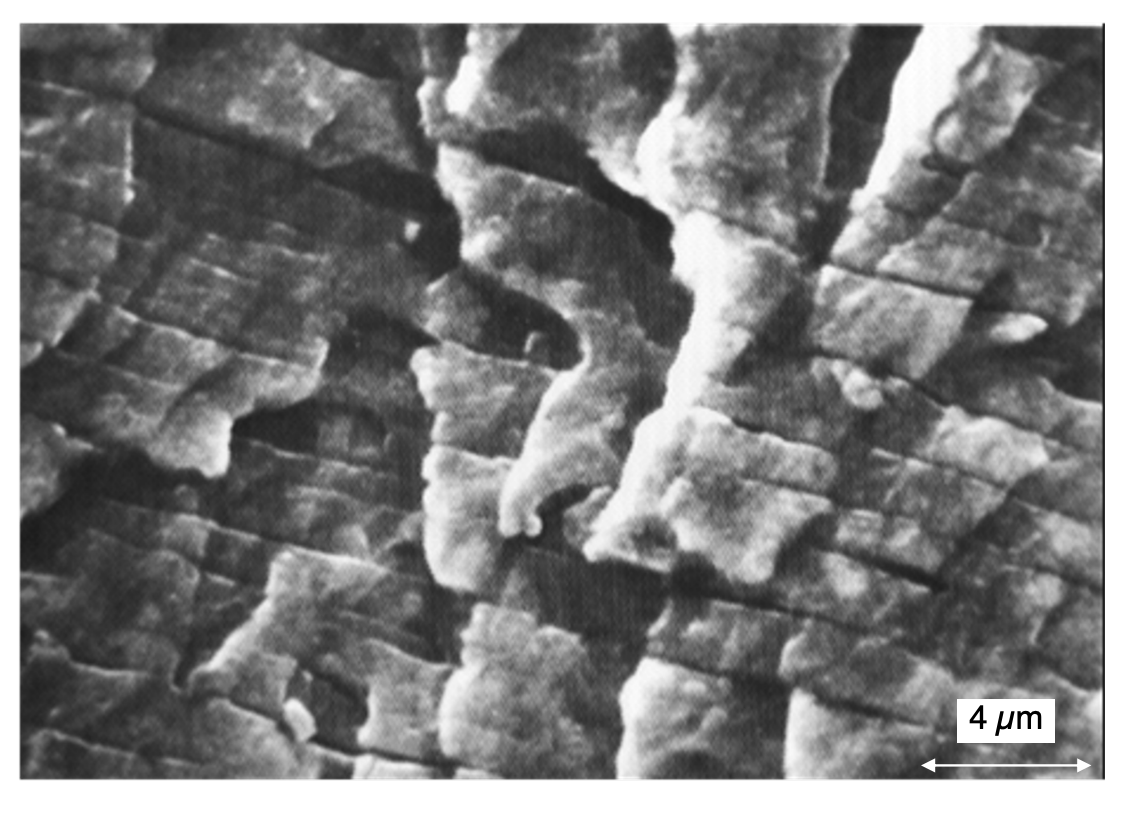
Fatigue: Brittle Cracking (titanium alloy casting)
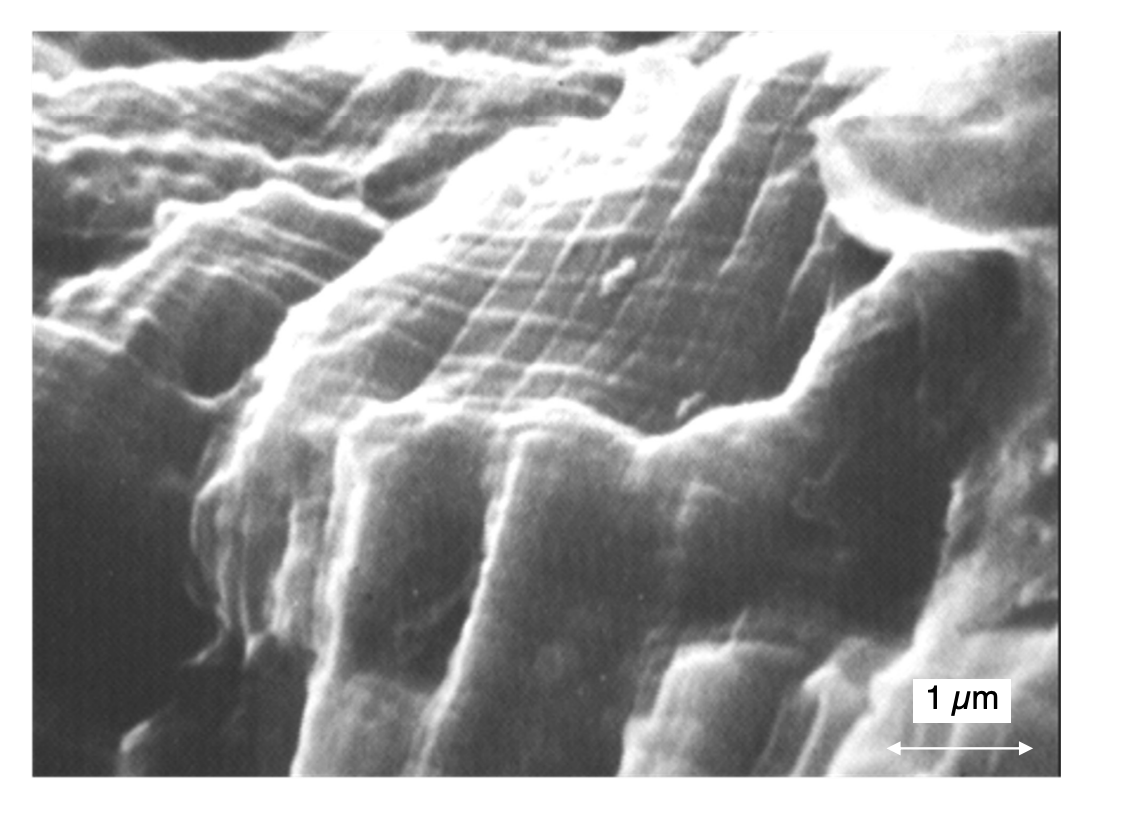
Fatigue: Brittle Cracking (pearlitic cast iron)
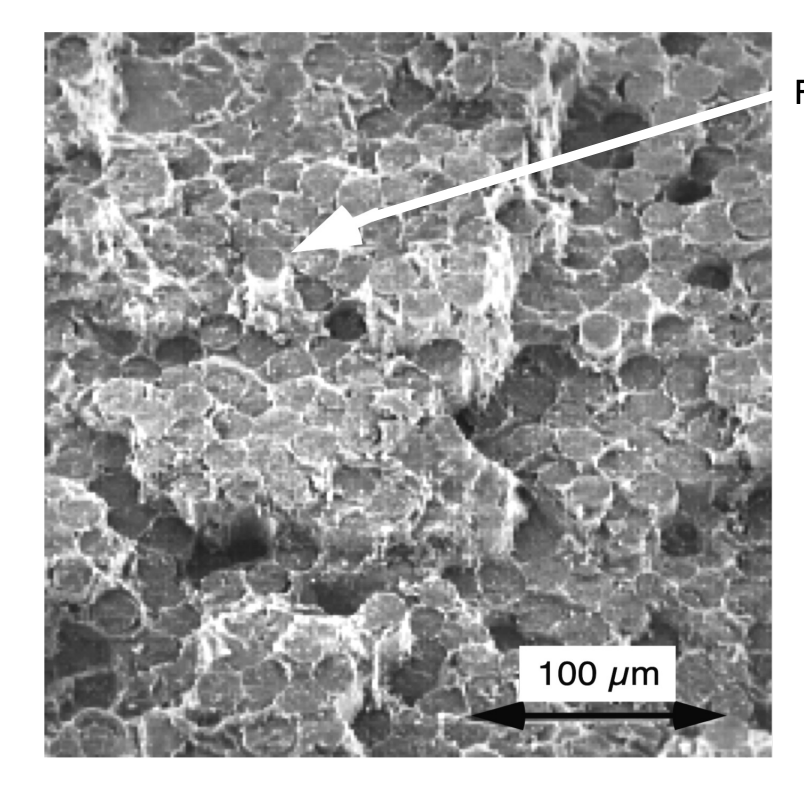
Fatigue: Brittle Cracking (continuous alumina fiber reinforced Mg alloy) & Visible Fiber Pullout
Ductile Rupture
• Facilitated by microvoid growth and coalescence
• Microvoids tend to nucleate at particulates
• Fracture surface is characterized by dimples with shear ridges
• Height of the ridges is indicative of the ductility of the material
• Orientation of the ridges is indicative of the stress state
Fatigue Failure
Four stages:
1) crack initiation (may be circumvented by preexisting defect)
2) Stage I crack growth along a slip band (may be circumvented by pre-existing defect)
3) Stage II crack growth by alternating slip that produces striations.
4) Catastrophic fracture (ductile rupture or quasi- cleavage)
 Note
Note  Flashcards (21)