The Nucleus Cell Bio 330
 Studied by 0 people
 Call with Kai
 Learn
Learn Practice Test
 Spaced Repetition
 Match
Match Flashcards
 Knowt Play
1/59

There's no tags or description
Looks like no tags are added yet.
Name | Mastery | Learn | Test | Matching | Spaced | Call with Kai |
|---|
No study sessions yet.
60 Terms
What are the main components that enter the nucleus?
Histones, transcription factors, DNA polymerase, and RNA polymerase.
What is the primary function of ATP synthase in mitochondria?
To synthesize ATP.
What is the role of photoreceptors in chloroplasts?
To capture light energy for photosynthesis.
What type of molecules can pass through the nuclear pore complex by passive diffusion?
Small particles less than ~25 kDa.
What are importins and exportins?
Nuclear transport receptors that mediate the translocation of cargo molecules into (importins) or out of (exportins) the nucleus.
What is the nuclear localization signal (NLS)?
A sequence that targets proteins for import through nuclear pores into the nucleus, typically K-K/R-X-K/R.
What is the significance of the FG-NUPs in the nuclear pore complex?
They are involved in liquid-liquid phase separation (LLPS) and contribute to the selective barrier of the nuclear pore complex.
What happens to the cargo/importin complex at the nuclear side of the envelope?
Ran/GTP binds to the importin, disrupting the complex and releasing the cargo protein into the nucleus.
What is the size exclusion limit for proteins passing through the nuclear pore complex?
About 25 kDa.
What is the difference between monopartite and bipartite nuclear localization signals?
Monopartite consists of a single stretch of amino acids, while bipartite consists of two segments separated by a few amino acids.
What is the role of Ran GAP in nuclear transport?
It stimulates the hydrolysis of GTP to GDP, releasing the importin from the Ran/GTP complex.
What is the function of DICER in the cytosol?
Involved in RNA processing and regulation.
What is the process of protein export through the nuclear pore complex?
Cargo proteins with nuclear export signals (NES) form complexes with exportins and Ran/GTP in the nucleus.
What experimental method was used to study the chemical properties of the nuclear pore complex?
In vitro gelation assays.
What was the outcome when phenylalanine residues in the FG-repeat domain were mutated to serine?
The mutant domain did not gelate and remained liquid.
What is the role of ribosomes in the endoplasmic reticulum?
They synthesize proteins and lipids.
What is the nuclear lamina?
A dense fibrillar network inside the nucleus that provides structural support.
What is the nuclear pore complex (NPC)?
A large protein complex that regulates the transport of molecules between the nucleus and cytoplasm.
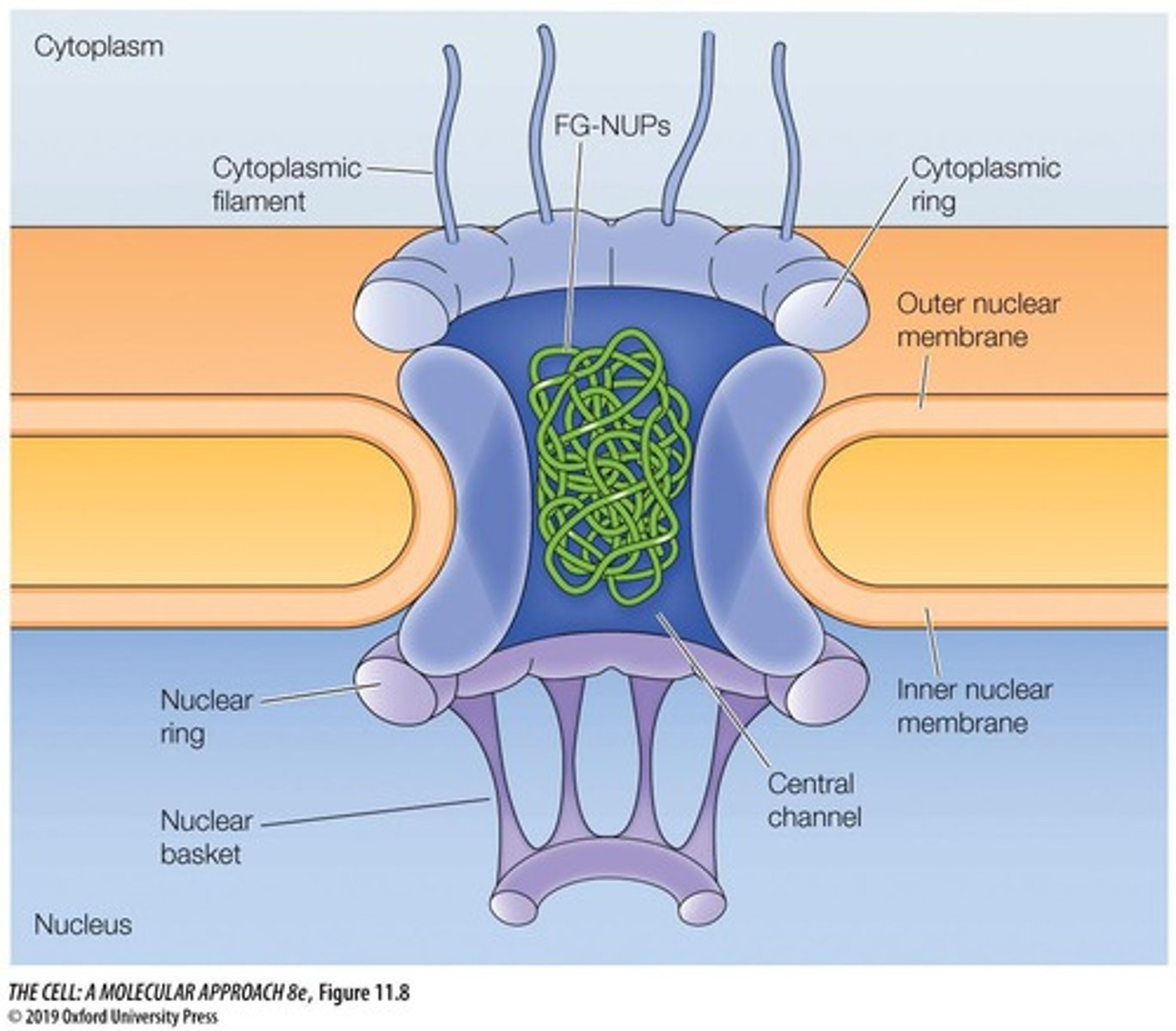
How do small molecules pass through the nuclear pore complex?
By passive diffusion.
What happens to Ran/GDP after it is transported back to the nucleus?
It is converted to Ran/GTP, maintaining a high concentration of Ran/GTP within the nucleus.
What is the significance of the chimeric pyruvate kinase experiment?
It demonstrated that the nuclear localization signal is sufficient to traffic a protein to the nucleus.
What role does Ran GAP play in nuclear transport?
Ran GAP stimulates the hydrolysis of bound GTP, leading to the formation of Ran/GDP and the release of the cargo protein and exportin into the cytoplasm.
What is regenerated by Ran GEF in the nucleus?
Ran GTP is regenerated by Ran GEF bound to chromatin.
What signals direct proteins out of the nucleus?
Nuclear-Export Signals (NESs) direct proteins out of the nucleus.
How are mRNAs exported through the nuclear pore complex?
mRNAs are bound by an exporter complex that mediates their transport through the nuclear pore complex, with a helicase releasing the mRNA into the cytoplasm.
How is NF-κB activated for nuclear import?
NF-κB is maintained as an inactive complex with IκB, which masks its nuclear localization sequence (NLS). IκB is phosphorylated and degraded, allowing NF-κB to enter the nucleus.
What mechanism regulates the localization of the yeast transcription factor Pho4?
Pho4 is maintained in the cytoplasm by phosphorylation near its NLS, and regulated dephosphorylation exposes the NLS for transport to the nucleus.
What is the significance of the TATA-Box Binding Protein (TBP) in gene expression?
TBP is crucial for binding to the TATA box in promoters, facilitating the initiation of transcription.
What does the sequence K-K/R-X-K/R represent?
It represents a nuclear localization signal (NLS) recognized by importins for nuclear transport.
What happens to TBP-GFP recombinant protein?
TBP-GFP contains an NLS and is recognized by importins, allowing it to be transported to the nucleus.
What is the outcome for TBPnoNLS-GFP recombinant protein?
TBPnoNLS-GFP lacks an NLS and is not recognized by importins, preventing its import into the nucleus.
What is site-directed mutagenesis?
Site-directed mutagenesis is a technique used to create specific, intentional changes to the DNA sequence of a gene.
What is the purpose of using primers in PCR for site-directed mutagenesis?
Primers are used to anneal to the template DNA and allow for the incorporation of mutations during PCR cycles.
What is the significance of the forward and reverse primers in the context of mutagenesis?
Forward and reverse primers are designed to flank the mutation site, enabling the amplification of the mutated gene during PCR.
What does the term 'NLS' stand for?
Nuclear Localization Sequence.
What is the role of helicase in mRNA export?
Helicase is associated with the cytoplasmic face of the nuclear pore complex and releases mRNA into the cytoplasm.
What is the effect of IκB phosphorylation on NF-κB?
Phosphorylation of IκB leads to its degradation, allowing NF-κB to translocate to the nucleus.
What is the role of exportin in nuclear transport?
Exportin binds to cargo proteins and facilitates their transport out of the nucleus.
What is the function of importins?
Importins recognize nuclear localization signals (NLS) and mediate the transport of proteins into the nucleus.
How does phosphorylation affect Pho4's localization?
Phosphorylation keeps Pho4 in the cytoplasm, while dephosphorylation allows it to enter the nucleus.
What is the significance of manipulating protein sequences?
It can provide insights into the biological function of proteins.
What does the term 'recombinant protein' refer to?
A recombinant protein is a protein that has been genetically engineered, often incorporating sequences from different sources.
What is the function of the TATA box in gene regulation?
The TATA box is a DNA sequence that indicates where a genetic sequence can be read and decoded, serving as a binding site for TBP.
What are the main components of the nuclear envelope?
The nuclear envelope consists of inner and outer membranes joined at nuclear pore complexes (NPCs).
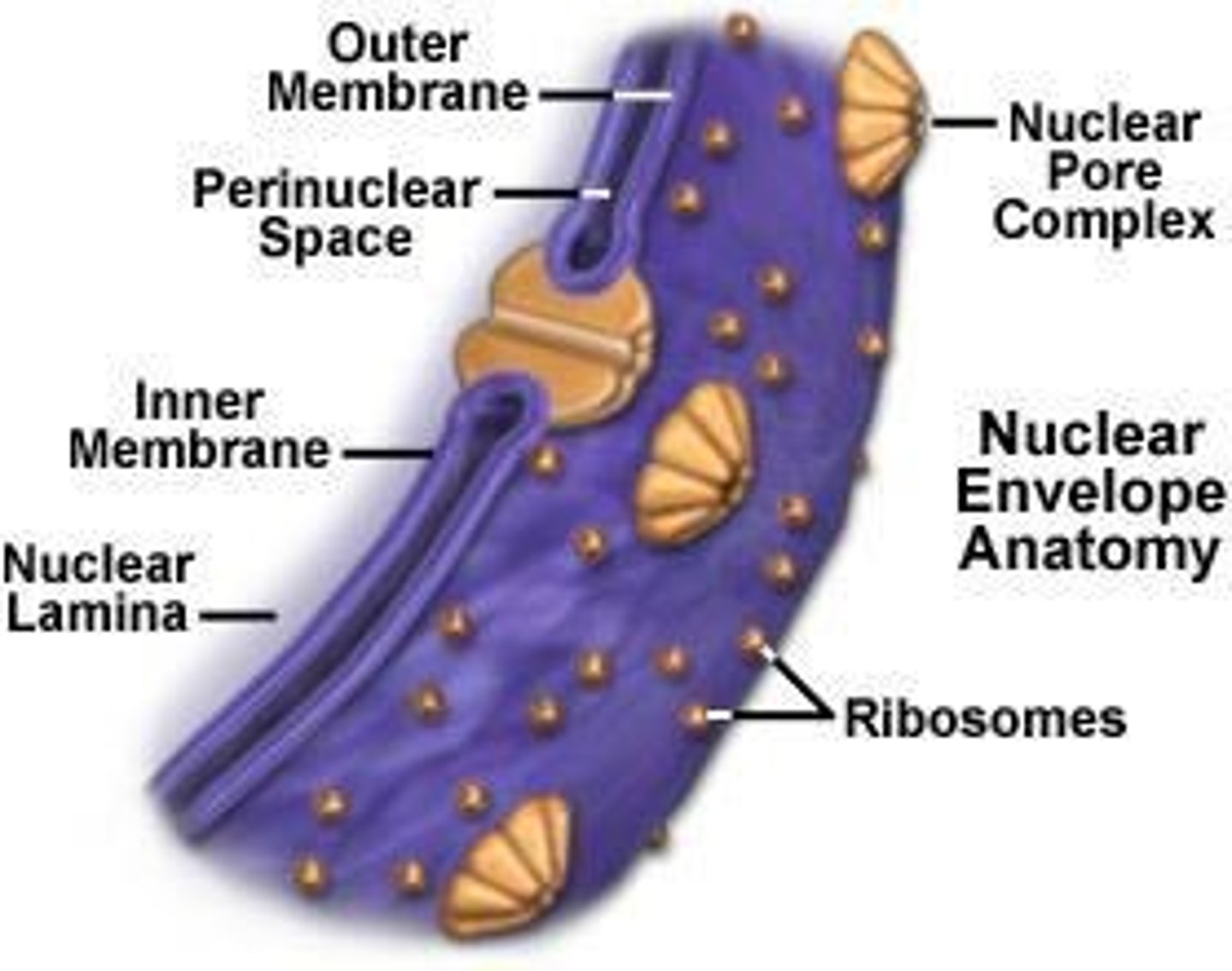
How is the outer membrane of the nuclear envelope related to the endoplasmic reticulum?
The outer membrane is continuous with the rough endoplasmic reticulum (ER), and the perinuclear space connects to the ER lumen.
What is the function of the nuclear envelope?
It acts as a selective barrier between the nucleus and cytoplasm, allowing only small nonpolar molecules to pass freely.
What is the nuclear lamina and its function?
The nuclear lamina is a meshwork of intermediate filaments (lamins) beneath the inner membrane that provides mechanical support and anchors chromatin and nuclear pores.
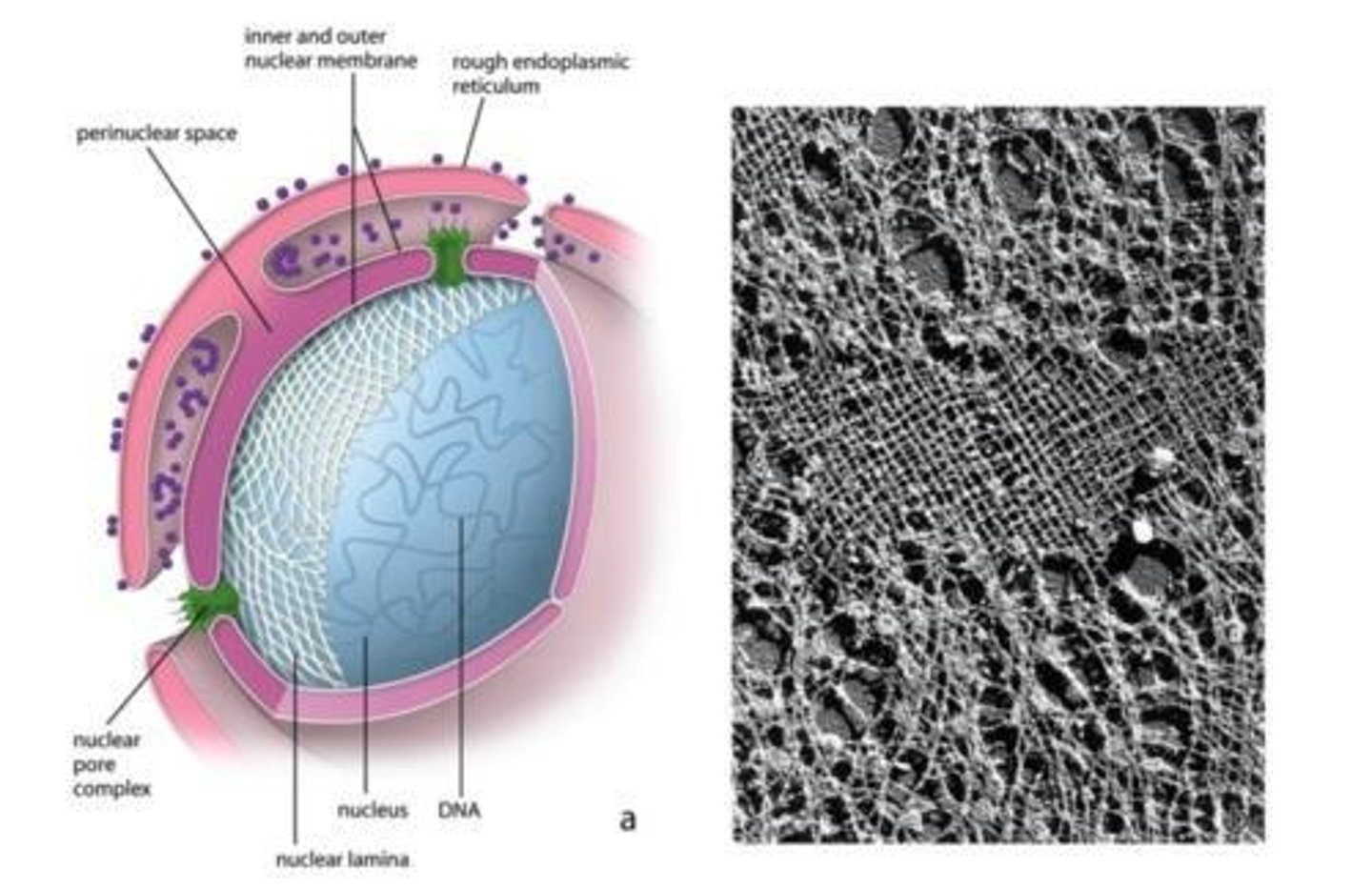
What are the two types of lamins found in the nuclear lamina?
A-type lamins (A & C) are expressed in differentiated cells, while B-type lamins (B1 & B2) are constitutive and present in all cells.
What are laminopathies?
Laminopathies are diseases caused by mutations in lamins, examples include muscular dystrophy, progeria, ALS, and Alzheimer's.
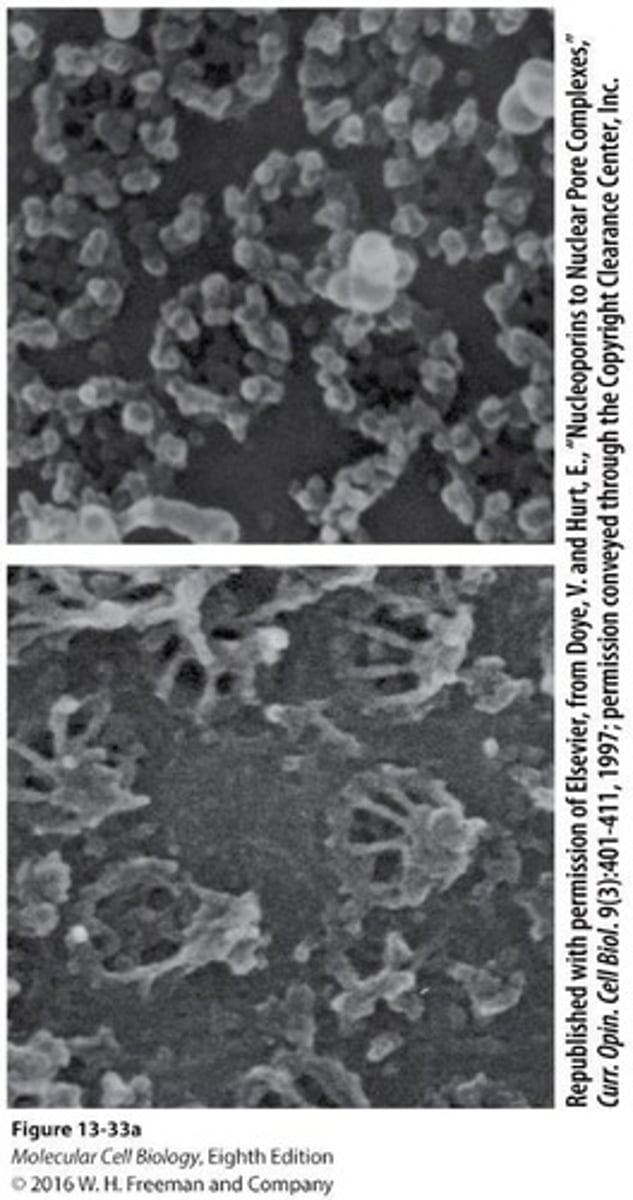
What is the size and composition of the nuclear pore complex?
The NPC is approximately 120 MDa, composed of about 1000 subunits and around 30 proteins called nucleoporins (NUPs).
What are nuclear localization signals (NLS)?
NLS are short stretches rich in basic residues that direct proteins from the cytoplasm into the nucleus.
What is the role of importins in nuclear transport?
Importins are nuclear transport receptors that recognize NLS and carry cargo proteins into the nucleus.
How is the directionality of nuclear import controlled?
Directionality is controlled by Ran-GTP, which binds importin in the nucleus to release cargo, while Ran-GDP binds importin again in the cytoplasm.
What is the mechanism of nuclear export?
Proteins with nuclear export signals (NES) are recognized by exportins, which bind Ran-GTP and cargo to form a complex that moves through the NPC.
What are karyopherins?
Karyopherins are a family of proteins that include both importins and exportins, mediating bidirectional transport across the nuclear pore complex.
What is the significance of RNA transport in the nucleus?
RNA transport is directional and selective, primarily moving from the nucleus to the cytoplasm, involving various types of RNAs and specific exportins.
How is mRNA exported from the nucleus?
mRNA binds to a 20-protein exporter complex during processing and moves through the NPC, where it is released into the cytoplasm.
What regulates nuclear protein import?
Regulation of import/export controls gene expression, often involving transcription factors and protein kinases.
How does the NF-κB pathway regulate nuclear import?
NF-κB is inactive in the cytoplasm when bound to IκB, which masks its NLS. Phosphorylation of IκB leads to its degradation, exposing the NLS for nuclear import.
What happens to the Pho4 transcription factor in response to phosphate levels?
High phosphate levels lead to phosphorylation of Pho4, blocking its import, while low phosphate allows dephosphorylation and nuclear entry.
 Note
Note  Flashcards (76)