Early Elizabethan England (1558-1588)
 Studied by 1 person
 Call with Kai
 Learn
Learn Practice Test
 Spaced Repetition
 Match
Match Flashcards
 Knowt Play
1/262

There's no tags or description
Looks like no tags are added yet.
Name | Mastery | Learn | Test | Matching | Spaced | Call with Kai |
|---|
No analytics yet
Send a link to your students to track their progress
263 Terms
What house was Queen Elizabeth I from?
the House of Tudors
How long had the Tudor family ruled England?
-since Henry VII became king
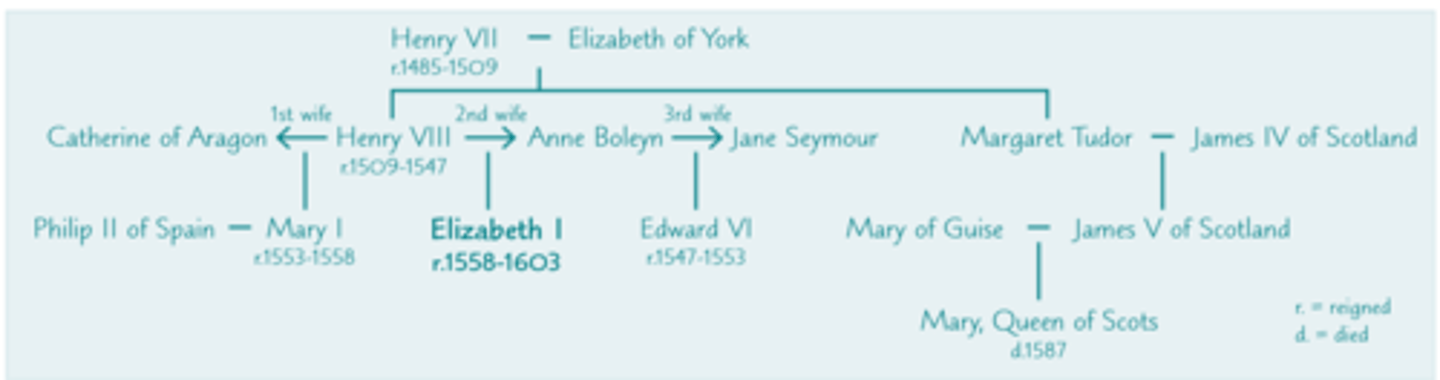
Who was Henry VII wife and children?
-his wife was Elizabeth of York
-Henry VIII and Margaret Tudor were his children
Who was Margaret Tudor's husband and children?
-her husband was James IV of Scotland
-her child was James V of Scotland
Who was James V of Scotland's wife and children?
-his wife was Mary of Guise
-his child was Mary, Queen of Scots
When did Henry VII reign?
1485-1509
When did Elizabeth I reign?
-after Mary I
-1558-1603
Who was Henry VIII third wife?
-Jane Seymour
-they had a son together (Edward VI)
When did Edward VI reign?
-after Henry VIII
-1547-1553
Who was Henry VIII first wife?
-Catherine of Aragon
-they had a daughter (Mary I)
When did Henry VIII reign?
-after Henry VII
-1509-1547
Who was Henry VIII second wife?
-Anne Boleyn
-they had a daughter together (Elizabeth I)
What was the Privy Council?
-a group of ~20 of the Queen's most trusted counsellors
-they advised her on all aspects of govenment and ensure her wishes are carried out
-they were expected to obey her orders even if they disagreed with herrders even if they disagreed with her
What was the Parliament?
-made up of members of the nobility and the gentry
-The Queen needed Parliament's consent to pass new laws or raise taxes
-Parliament only met when the Queen summoned it, and Elizabeth tried to avoid using it
How many times did Elizabeth summon Parliament during her 45 year reign?
only 13 times
How long did Elizabeth I reign for?
45 years
How did the Queen enforce law and order throughout the country?
-relied on members of the nobility and gentry to enforce law and order
-Local government posts like Justice of the Peace and Sheriff were unpaid
-many men voulenteered in order to increase their local power and influence
What did Justices of the peace do?
-enforce law
-provided for the poor
-ensured roads and bridges were maintained
How did Elizabeth ensure the support of the nobility and gentry?
-used patronage
-often involved handing out titles and offices that gave the holder a source of income
-Elizabeth distributed patronage widely to ensure no one felt left out (helped to ensure political stability)
What was the economy dominated by?
-agriculture
-the export of woollen cloth to Europe was very important to the economy
-merchants were also starting to explore trade to the Americas and Asia
What was happening to the population since ~1500?
-rising steadily
-most lived and worked in rural areas, but towns and cities were growing rapidly
Who was the gentry?
-part of the social elite in Elizabethan England (below the nobility)
-members were people who owned land and lived off the income it provided (they didn't have to work)
Who was Elizabethan society dominated by?
-a small, land owning aristocracy of nobility and gentry
-also a growing number of wealthy men who earned their living as lawyers or merchants
Which 4 monarchs ruled England before Queen Elizabeth?
-Henry VII (1485-1509)
-Henry VIII (1509-1547)
-Edward VI (1547-1553)
-Mary I (1553-1558)
What was Elizabeth I's relationship with Henry VIII?
-his second child
-daughter of his second wife (Anne Boleyn)
What was Elizabeth I's childhood like?
-3rd in line to the throne (no-one expected her to become Queen)
-she had a difficult upbringing and sometimes feared for her life
What happened in 1554?
accused of conspiring against her half-sister (Queen Mary I) and put under house arrest for almost a year
What was Elizabeth I like?
-very cautious and only trusted a few close advisors
-could be indecisive (reluctant to make decisions without carefully considering possible outcomes)
-she was intelligent, confident and well educated
-despite having little training on how to govern, she became a powerful and effective leader
When did Henry VIII divorce his first wife?
-1533
-Catherine of Aragon
Why was Elizabeth I declared illegitimate?
-Henry VIII divorced his first wife and married Anne Boleyn
-divorce was forbidden in the Catholic church, so many believed Henry's marriage to Anne wasn't valid, and Elizabeth illegitimate
-When Henry's marriage to Anne Boleyn was dissolved and Anne executed , Henry declared Elizabeth illegitimate (although later Henry changed his mind, some protestants still questioned Elizabeth's legitimacy
When was Anne Boleyn executed?
1536
Why did people think it unnatural for a woman to be in charge?
-In 16th century, most people thought the monarch should be a man
-the violence and chaos of Mary I's reign reinforced people's beliefs that women couldn't rule successfully
-most expected Elizabeth to act as a figurehead (without any real power, with a husband/male advisors to rule)
Why was Elizabeth expected to marry and produce an heir?
-as people though women couldn't rule effectively, there was pressure for Elizabeth to find a husband to rule for her
-there were also concerns about the succession (if Elizabeth died without an heir, there would be risk of civil war, with different groups competing for the throne)
Why was Elizabeth reluctant to marry?
-women had to obey their husbands, so she would lose her power and freedom if she married
-because she never married, she became known as the virgin Queen
Why did Elizabeth inherit enormous debts when she became queen?
-King Edward VI had spent huge sums of money on wars in Scotland
-Queen Mary I also spent too much money
How did Elizabeth face financial difficulties?
-inherited enormous debts
-Mary sold lots of land owned by the Crown
-taxation system was ineffective
-there was high levels of inflation in England
Why was it bad that Mary sold lots of land owned by the Crown?
-though it covered her debts, and raised money in the short term
-long term it reduced the monarch's income from rent
Why was the taxation system bad?
-old fashioned and ineffective
-while ordinary people faced high taxes, it was common for the nobility/gentry to pay less tax than they owned
What was meant by inflation?
-prices were rising
-wages stayed the same/fell
-the poor/those living in urban areas were hit hardest
Why was ELizabeth reluctant to reform the tax system/raise taxes?
-feared it would upset the nobility and gentry who supported her government
What happened in 1557?
-Mary I took England to war with France
-she did it to support her husband (Philip II of Spain) who was already fighting the french
What happened with the war between England and France in 1557?
-was not successful
-In January 1558, the French conquered Calais (England's last remaining territory on the European mainland)
-This made it more difficult for the English to control the channel (and an increased risk of French invasion)
When did ELizabeth become Queen?
-Elizabeth became Queen in November 1558
What was Elizabeth's first act as Queen?
-she wanted to end war with France as quickly as possible (peace agreed in 1559)
Why did Elizabeth avoid foreign wars throughout her rule?
she feared that raising taxes to fund a war would be unpopular and would fuel opposition to her rule
Who controlled Scotland when Elizabeth became Queen?
-Scotland was controlled by France's Catholic royal family
-there was many troops in the country
-french rule was very unpopular with many scots
What happened in April 1558?
-Mary, Queen of Scots married the heir to the French throne
-As Catholics, the French royal family disliked Elizabeth (a protestant) and wanted England to be ruled by a Catholic
-Mary's marriage increased the risk the French might invade Scotland to try to put her on the English throne
What happened in the late 1550s?
-Scottish Protestants (lead by preacher John Knox) rebelled against French rule
-They appealed to England for support, and in 1560 English troops and ships were sent to help them
-The French were defeated and forced to leave Scotland
What factors greatly reduced the risk of invasion?
-the departure of the French
-the death of Mary's husband in December 1960
-the French wars of religion
When were the French wars of religion?
-1562 till 1598
How did the French wars of religion benefit Queen Elizabeth?
this civil war between Catholics and Protestants weakened France and largely removed the threat of French invasion
Why did Elizabeth fear French invasion so much?
-there were many Catholics in England who wanted to be ruled by a Catholic monarch
-If the French invaded, there was a risk the Catholics would betray Elizabeth (a Protestant) and support the french
When was the Protestant reformation?
-began in Germany (gradually spread across Europe)
-early 16th century
What did the Protestant reformers believe?
-believed Christians were saved by the faith, not by good deeds
-questioned the authority of the pope
-translated the bible from latin into languages that ordinary people could understand
-thought churches should be plain and simple (unlike highly decorated Catholic churches)
What were the religious changes from the 1530s?
-Henry VIII broke away from the Roman Catholic Church
-Edward VI tried to make England more Protestant
-Mary I restored Catholicism and persecuted Protestants
What was England's religion until the 1530's?
-Catholic (most people were Catholic)
How did Henry VIII break away from the Roman Catholic church?
-the Pope refused to accept the first divorce, so Henry broke away from the Roman Catholic church
-he rejected the Pope's authority and made himself head of the Church of England
-He didn't support the Protestant reformation, and didn't try to reform the English church (so Catholic beliefs and practices remained largely unchanged)
How did Edward VI try to make England more Protestant?
-Edward VI was a strong supporter of Protestantism and tried to reform the English church
-He made churches and church services simpler
What changes did Edwars VI introduce to make churches/church services simpler?
-statues and decorations removed
-Priests weren't allowed to wear their elaborate Catholic vestments
-A new Protestant prayer book was issued
-Church services were held in English (not Latin)
How did Mary I restored Catholicism and persecuted Protestants?
-she was a devout Catholic
-she restored the Pope as the head of the English church
-she removed Edward's Protestant reforms and brought back Catholic beliefs and practices
-under Mary I, Protestants were harshly persecuted (280+ executed)
What were Marian Exiles?
-because of the harsh prosecution of Protestants under Mary I's reign, hundreds of Protestants fled to Protestant countries in Europe
What did Elizabeth I want religiously?
-Elizabeth was concious of the turmoil caused by Edward VI's extreme Protestant reforms, and the violence of Mary's Catholic restoration
-she wanted to end constant religious changes by creating a stable and lasting religious settlement
What religion was Elizabeth I?
-raised a protestant
-though she hid her beliefs during Mary's reign to avoid being imprisoned
-deeply religious and a committed Protestant
what was the religious settlement composed of?
-the act of supremacy
-the act of uniformity
-the royal injunctions
When was the Religious settlement passed?
1559
Why was Elizabeths alterating her religious title significant?
-Henry VIII and Edward VI had used the title "supreme head of the church of England"
-in her Act of Supremacy, Elizabeth altered this title to make herself the "Supreme Governor of the English Church"
What did the Act of Supremacy require?
-churchmen and people holding public office to swear the oath of supremacy
-they had to recognise Elizabeth as supreme Governor and promise to be loyal to her
How did people react to the act of supremacy?
-most parish priests took the oath
-however, all but one Catholic bishops refused and lost their posts
-they were replaced by protestant bishops, some of whom were Marian Exiles
What did the Act of Supremacy grant Elizabeth?
-gave Elizabeth control of the English Church, without explicitly describing her as "head"
-this compromise satisfied those who believed a woman couldn't lead the Church
What did the act of uniformity and the royal injunctions do?
-imposed moderate Protestant reforms on the English church
-it also made some concessions to English Catholics
What were some Protestant reforms in the act of uniformity?
-going to church was compulsory (there were fines for missing a church service)
-a new book of common prayer was issued (had to be used in all churches)
-all parishes had to have a copy of the bible in English
What were some Catholic concessions in the act of uniformity?
-the wording of the communion service was kept deliberately vague, so it could be accepted by both Protestants and Catholics
-churches were allowed to keep some decorations
-Priests had to wear Catholic vestments
How did Elizabeth make sure the acts of injunctions were being carried out?
royal commisioners were ordered to visit churches throughout the country to ensure the Acts and Injunctions were being enforced
How was the Elizabethan religious settlement so successful?
-made England a Protestant country, but allowed some elements of Catholic belief and practice to continue
-this clever "middle way" was designed to satisfy the majority of the population, who held moderate religious beliefs and were willing to make some compromises for the sake of peace and stability
How did the church play an important role in English society?
-senior churchmen were involved in government
-all bishops held a seat in the House of Lords
-the Archbishop of Canterbury was usually a member of the Privy council
-Parish priests were respected and influential figures
-the church helped promote national unity and obedience to the queen
How were Parish priests respected/influencial figures?
as well as providing religious guidance, parish priests gave advice, helped to resolve disputes, and played an important role in providing charitable support for the poor/elderly
How did the church help promote national unity and obedience to the Queen?
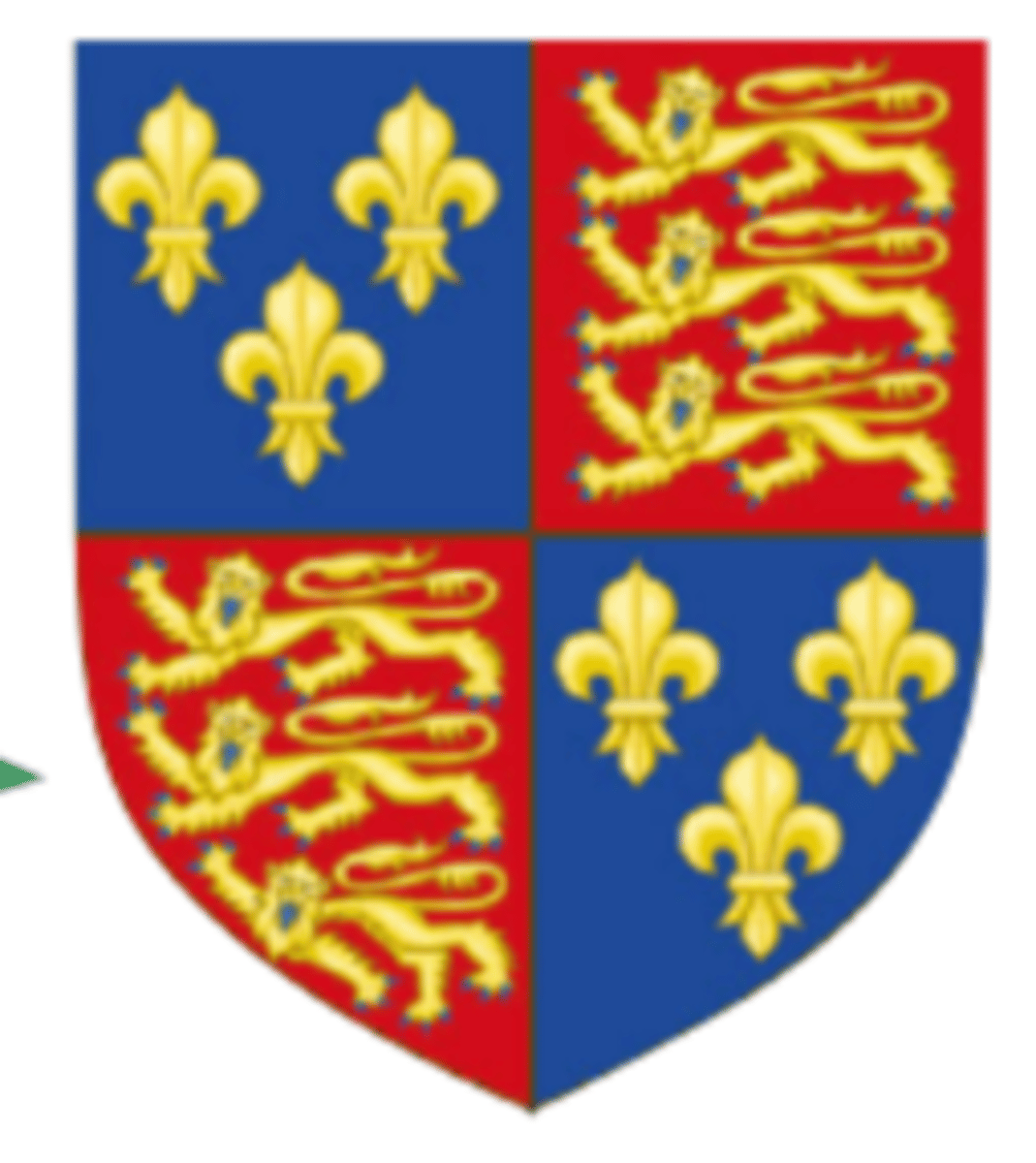
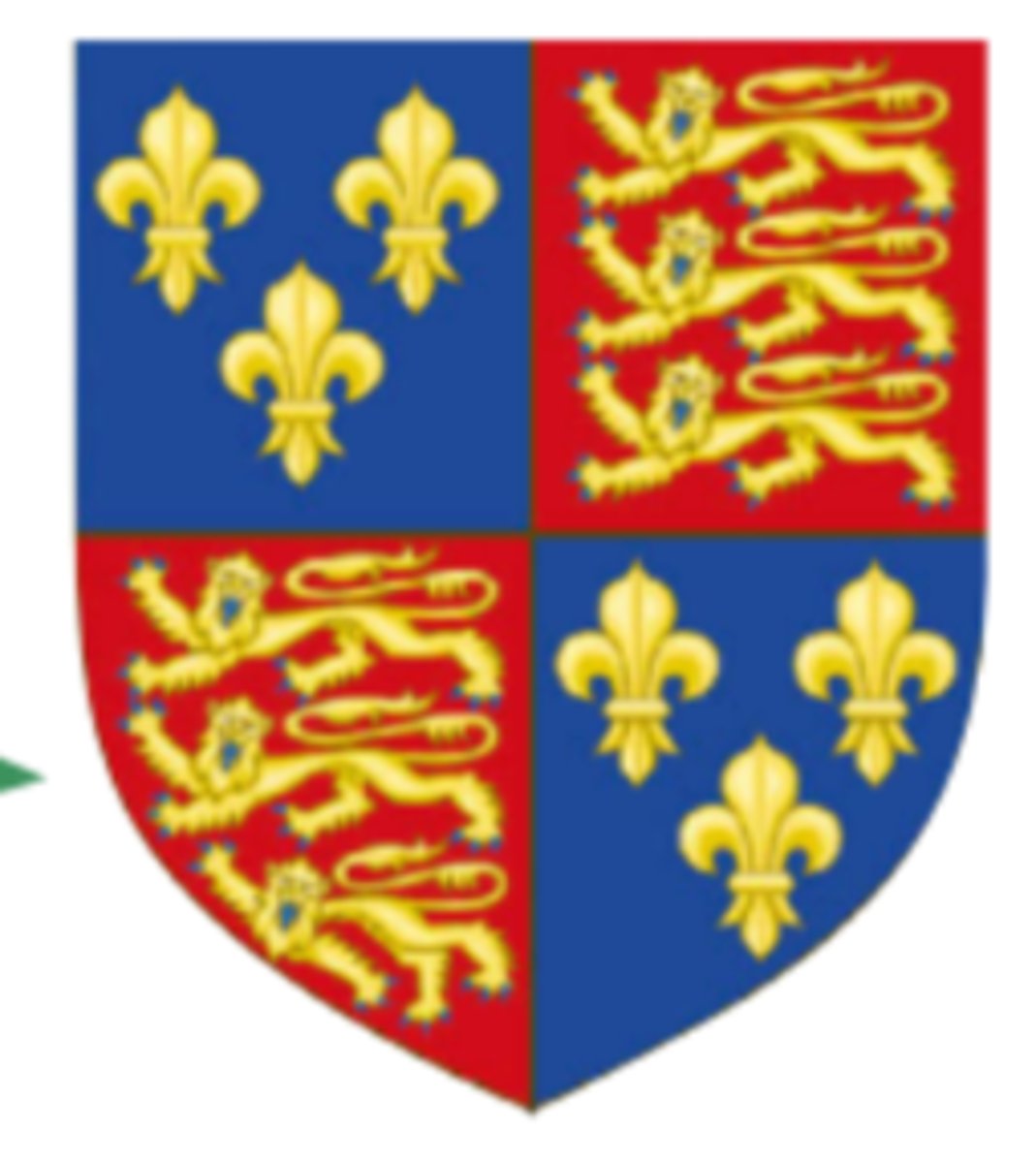
-Queen's coat of arms often displayed In churches
-church services included prayers for the Queen and her councillors
Why did Puritans dislike the religious settlement?
-for them, Elizabeth's religious settlement was just a first step
-they wanted to make further reforms to remove all traces of catholicism from the English church
-many Protestant bishops appointed from 1559 supported the Puritans and wanted further reforms
Who helped Elizabeth uphold the "middle way" of her religious settlement?
-the Archbishop of Cantebury, Matthew Parker
-he was a moderate
Why had many become more strongly Puritan/protestant?
-many puritans had been Marian exiles
-while in exile in Protestant parts of europe, some had come into contact with the teachings of leading reformers such as Martin Luther and John Calvin
What was the vestment controversy?
-1560s
-a serious Puritan challenge to the religious settlement
-Puritan priests refused to wear the surplice which the royal injunctions had made compulsory
What was the result of the vestment controversy?
-Elizabeth tolerated it at first but in 1565, she ordered the Archbishop of Cantebury to ensure all priests wore the surplice
-those Puritans who still refused lost their jobs/ were imprisoned
What were recusants?
-a large proportion of the nobility were still catholics
-the compromises in the religious settlement won some of them round, but others refused to attend church services (recusants)
Where was the Catholic nobility influencial?
-areas outside the south-east (especially Lancashire)
-used their strong local power bases to protect Catholics and maintain their traditional religious practices
Why were the Catholic nobles a threat to Elizabeth?
-they posed a potential threat to the religious settlement
-they may have tried to overthrow liz and restore Catholicism
-became more serious when Mary Queen of Scots arrived in England in 1568
How did Elizabeth minimise the threat of catholic nobles overthrowing Elizabeth?
-she didn't force the Catholic nobility to attend church services
What distracted France from invading England and replacing Elizabeth?
-was serious in the early years of Elizabeth's reign
-but faded with the start of the Wars of Religion in 1562
What distracted Spain from invading England and replacing Elizabeth?
-in 1560's, Spain was facing a growing revolt in the Netherlands
-to prevent an alliance forming between England and the Protestant Netherlands, Spain tried to stay on good terms with Elizabeth and avoided challenging her religious settlement
How did the Catholic aspects of the religious settlement help reduce foreign invasion risks?
-the Catholic aspects of the settlement encouraged Catholic countries and the Pope to think Elizabeth may eventually return to Catholicism
Why was the papacy significant to Elizabeth?
-the Pope had the power to excommunicate Elizabeth
-this could encourage Catholic countries to invade England
-this could also encourage rebellion at home by releasing Elizabeth's Catholic subjects from their duty of loyalty to her
Why was the papacy not significant to Elizabeth?
-neither France or Spain had the military resources to invade England
-there was no clear support for a revolt against Elizabeth at home
-so the Pope took no action against her in the 1560s
What is excommunicating?
expelling someone from the Catholic Church
What were the 4 major plots against Elizabeth?
-The revolt of the Northern Earls
-The Ridolfi plot
-The Throckmorton plot
-The Babington plot
Why did Mary, Queen of Scots have a strong claim to the English throne?
-her grandmother was Margaret Tudor
-she was Catholic, so was supported by many English Catholics.
What was Mary, Queen of Scots upbringing like?
-became Queen in 1542 when she was just 6 days old
-her mother acted as regent while Mary was raised in France
When was Mary, Queen of Scots first married?
-1558 (Mary was 15)
-she married the heir to the French throne
-however, he husband died suddenly in 1560, and Mary returned to Scotland
Why did Elizabeth not name Mary, Queen of Scots, heir?
-she feared making Mary heir would encourage Catholic plots to overthrow her and make Mary Queen
Who (and when) was Mary, Queen of Scots second husband?
-Lord Darnley
-1565
Why was Mary, Queen of Scots and Lord Darnley's marriage unhappy?
-Darnley hated Mary's personal secretary, David RIzzio, and became convinced that the two were having an affair
-in 1566, a group of Scotish nobles, accompanied by Darnley, stabbed Rizzio to death
What was an outcome of the death of David Rizzio?
-In 1567, Darnley was murdered
-many believed that Mary and the Earl of Bothwell (her close friend) were behind the murder
-their suspicions seemed confirmed when Mary married Bothwell a few months later
 Note
Note  Flashcards (76)