Comprehensive Guide to Universal Values and Moral Development
 Studied by 0 people
 Call Kai
 Learn
Learn Practice Test
 Spaced Repetition
 Match
Match Flashcards
 Knowt Play
1/42

There's no tags or description
Looks like no tags are added yet.
Name | Mastery | Learn | Test | Matching | Spaced | Call with Kai |
|---|
No analytics yet
Send a link to your students to track their progress
43 Terms
What is the basic definition of moral character according to philosophy?
The moral dimension of a person.
What does the term 'universal' refer to in the context of universal values?
It pertains to a whole arrangement of things, both physical and metaphysical.
According to Confucian traditions, what are the four beginnings every person is born with?
Compassion, righteousness, propriety, and wisdom.
What is the significance of universal values in moral development?
They are constant across all times and places.
What are the stages of Kohlberg's moral development?
Preconventional, Conventional, and Postconventional morality.
What characterizes the Preconventional level of moral development?
Moral code is shaped by the standards of adults and consequences of actions.
What is the focus of Stage 1 in Kohlberg's moral stages?
Obedience and punishment orientation.
What is the focus of Stage 2 in Kohlberg's moral stages?
Individualism and exchange.
What is emphasized in Aristotle's view of universal values?
Temperance, courage, and wisdom.
What does Aristotle mean by Eudaimonia?
The Good for Man, representing human flourishing and happiness.
What is the greatest commandment according to Jesus Christ?
Love the Lord your God with all your heart, soul, and mind.
What is St. Thomas Aquinas's view on man's ultimate happiness?
It consists in contemplating God.
What is the focus of Stage 3 in Kohlberg's moral stages?
Developing good interpersonal relationships.
What is the focus of Stage 4 in Kohlberg's moral stages?
Maintaining social order.
What characterizes the Conventional level of moral development?
Internalization of moral standards from valued adult role models.
What is the focus of Stage 5 in Kohlberg's moral stages?
Social contract and individual rights.
What is the focus of Stage 6 in Kohlberg's moral stages?
Universal principles.
How do feelings affect moral decision-making?
Actual emotional states can influence moral reasoning and judgments.
What are the characteristics of acts of human according to the note?
They are involuntary actions performed without conscious control.
What is the role of family in moral character development?
It is the primary factor influencing an individual's moral character.
What is the advantage of emotional decision-making?
It is faster than rational decision-making and can enhance response selection.
What dilemma illustrates the conflict between moral laws and individual rights?
Heinz's dilemma, where protecting life may conflict with the law against stealing.
What role do emotions play in decision-making?
Emotions may drive decisions that conflict with self-interest, particularly when options are nearly equal.
What is a disadvantage of emotional decision-making?
Intensity of emotions can override rational decision-making, leading to mistakes and biases.
What characterizes a Human Act?
A Human Act is done consciously and freely, involving knowledge, freedom, and voluntariness, and can be morally judged.
What is ethical subjectivism?
Ethical subjectivism asserts that morality is based on individual feelings and opinions, lacking universal standards.
What is the significance of impartiality in moral reasoning?
Impartiality requires detachment from biases to ensure fair and equal treatment in moral decisions.
What is the 7-Step Moral Reasoning Model?
A structured approach to ethical decision-making that includes stating the problem, checking facts, identifying factors, developing options, testing options, making a choice, and reviewing the process.
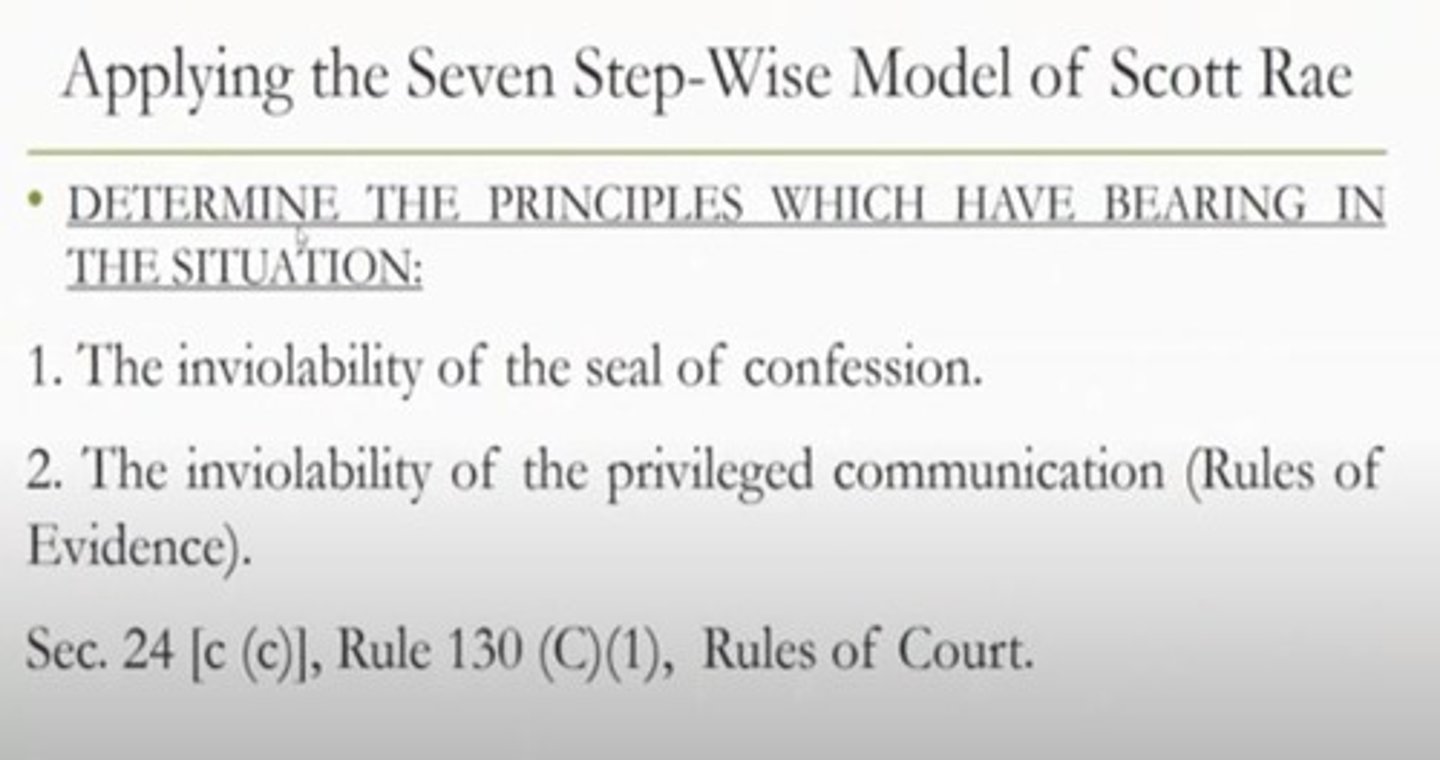
What is the first step in the 7-Step Moral Reasoning Model?
State the problem: Identify the main issue at stake.
What should you do in the second step of the 7-Step Moral Reasoning Model?
Check facts: Gather and assess relevant facts in the case.
What is meant by 'testing options' in the moral reasoning model?
Testing options involves evaluating alternatives using criteria like harm, publicity, defensibility, and reversibility.
What is an example of ethical subjectivism in personal taste?
A statement like 'Country music is the best genre because I love it' reflects personal preference rather than an objective claim.
How does ethical subjectivism relate to moral relativism?
Ethical subjectivism can lead to moral relativism, where individual feelings dictate personal moral codes without external standards.
What does the harm test evaluate in decision-making?
The harm test assesses whether an option does less harm than any alternative.
What is the virtue test in the moral reasoning model?
The virtue test asks what a person would become if they consistently chose a particular option.
What does the publicity test consider?
The publicity test considers whether one would want their choice to be publicly known.
What is the purpose of the reversibility test?
The reversibility test asks if the decision would still be chosen if the individual were affected by it.
What is the challenge posed by ethical subjectivism?
It creates difficulties in determining objective moral standards when individuals have conflicting moral beliefs.
What is an example of a moral judgment grounded in subjective feelings?
A belief that capital punishment is morally wrong because it feels like state-sanctioned murder reflects a subjective moral judgment.
What is the role of reason in moral decision-making?
Reasoning involves using rationality rather than emotion or authority to justify moral judgments.
What are universal principles in moral development?
Universal principles are moral guidelines that apply to everyone, such as human rights and justice, and may conflict with societal norms.
What is the importance of knowledge in making a Human Act?
Knowledge is essential as it allows individuals to be aware of the moral implications of their actions.
What does the term 'voluntariness' imply in moral actions?
Voluntariness implies that actions are performed freely and without coercion, making them subject to moral evaluation.
 Note
Note  Flashcards (30)