MCB exam 3 mitochondria ch 14, bits of 3 and 13
 Call Kai
 Learn
Learn Practice Test
 Spaced Repetition
 Match
Match Flashcards
 Knowt Play
1/54

Earn XP
Description and Tags
all done
Name | Mastery | Learn | Test | Matching | Spaced | Call with Kai |
|---|
No analytics yet
Send a link to your students to track their progress
55 Terms
how does burning of sugar happen?
stepwise, with activated carriers ATP and NADH, this way it captures useful energy unlike the simple burning of the same fuel molecule
how is direct burning of sugar in nonliving conditions?
releases a large amount of energy all at once, too large to be captured by any carrier molecule, all energy is released as heat
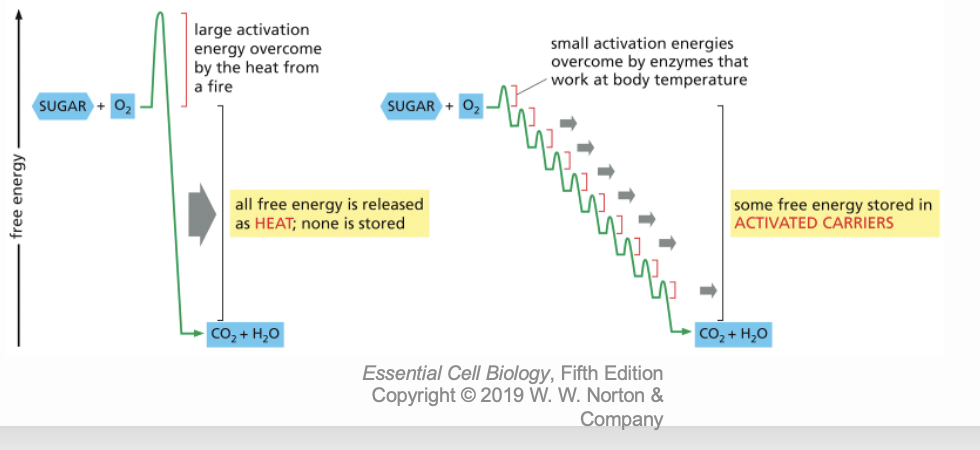
what is left n right
direct burning of sugar in nonliving system, stepwise oxidation of sugar in cells
(both are the same amount of total energy though)
what is each step in burning of sugar catalyzed by?
an enzyme that lowers the activation energy barrier that must be surmounted by the random collision of molecules at the temperature of cells, so as to allow the reaction to occur
essentials of digestion- 3 steps
(1) mouth- breakdown of large food molecules, (2) breakdown of simple subunits to acetyl CoA - starts intracellularly with glycolysis in cytosol and ends with conversion of pyruvate to acetyl groups on acetyl CoA in mitochondrial matrix, limited amounts of ATP and NADH produced (3) citric acid cycle in mitochondrial matrix and ends with oxidative phosphorylation in mitocondrial inner membrane, NADH from stage 2 +3 drives production of large amounts of ATP by oxidative phosphorylation
essential of digestion on molecular level
glycolysis converts glucose to pyruvate (releasing ATP and NADH), then pyruvate is inserted into mitochondria where acetyl CoA ends up forming NADH and ATP
roles of mitochondria (3)
energy production, fat metabolism, calcium storage
How do mitochondria duplicate
like bacteria, with their own DNA, through fission
where are mitochondria located, 2 egs of that
near sites of high ATP utilization, eg muscle cells, like in cardiac muscle cells they’re located close to the contractile apparatus where ATP hydrolysis provides the energy for contraction, in sperm found in tail so flagellum can use ATP for movement
4 compartments of mitochonria + descr. + examples (1 + 3; 1 + 4; 2; 2)
Matrix: highly concentrated mixture of enzymes, inc. for oxidation of pyruvate and fatty acids and for the citric acid cycle
Inner membrane: folded into numerous cristae, contains proteins that carry out oxidative phosphorylation, inc. ETC and ATP synthase, also contains transport proteins
outer membrane: contains large channel forming proteins (porins), is permeable to all molecules of 5000 Daltons or less
Intermembrane space: contains enzymes that use the ATP passing out of the matrix to phosphorylate other nucleotides, contains proteins released during apoptosis
net yield of glycolysis (from glucose to pyruvate)
2 ATP, 2 NADH (required 2 ATP and then 2 produced)
where is acetyl CoA produced, from what, what happens to them after
mitochondria (from pyruvate and fatty acids, after usage both are oxidized to CO2)
function of NADH
donated high energy electrons to ETC (from hydride ion that is removed from NADH and is converted into a proton and 2 electrons)
what is movement of electrons coupled to
Pumping of protons
what happens if electrons are transferred from activator carriers to oxygen
Protons are pumped across the inner mitochondrial membrane (stage 1 of chemiosmotic coupling)
essential processes of mitochondria (6)
-Pyruvate and fatty acids enter cell, converted to acetyl CoA, Citric acid cycle delivers NADH, NAD+, H+ pump is fuelled, this fuels than ATP synthase, ADP naturally flows back in the mitochondrium, ATP surplus leaves mitochondrion and is used up elsewhere for cellular processes.
what do mitochondria do to produce ATP
Catalyze a major conversion of energy- energy released by oxidation of NADH to NAD+ is harnessed (through energy conversion processes in the inner mitochondrial membrane) to drive energy requiring phosphorylation of ADP to form ATP, smaller amount of ATP is similarly generated from energy released by oxidation of FADH2 to FAD
What do electrons pass through in the inner mitochondrial membrane
3 large enzyme complexes: NADH dehydrogenase complex, cytochrome c reductase complex, cytochrome c oxidase complex
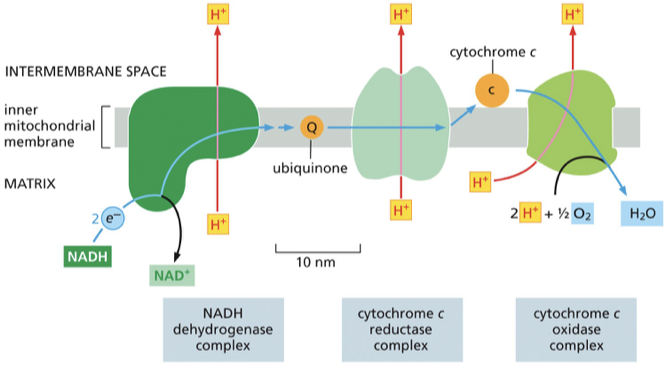
What does the image show?
High energy electrons are transferred through three respiratory enzyme complexes in the inner mitochondrial membrane
how do the 3 respiratory enzyme complexes in the inner mitochondrial membrane work? (2)
during transfer of electrons from NADH to oxygen, protons derived from water are pumped across the membrane from the matrix into the intermembrane space by each of the complexes, ubiquinone and cytochrome serve as mobile carriers that ferry electrons from one complex to the next
function of proton pumping across the inner mitochondrial membrane
produces a steep electrochemical proton gradient
what is the energy stored in the electrochemical proton gradient used for (2)
APT synthase to produce ATP, to drive transport across the inner mitochondrial membrane
what maintains a high ATP/ADP ratio in cells?
rapid conversion of ADP to ATP in mitochondria
how efficient is cell respiration
quite!
ATP synthase how it works, structure (4 parts)
acts like a motor to convert the energy of protons flowing down their electrochemical gradient to chemical-bond energy in ATP, multisubunit protein: stationary head (F1ATPase) and rotating portion called F0, central stalk, peripheral stalk
why is F1ATPase named that way?
It can carry out the reverse reaction- the hydrolysis of ATP to ADP and Pi- when detached from the F0 portion of the complex
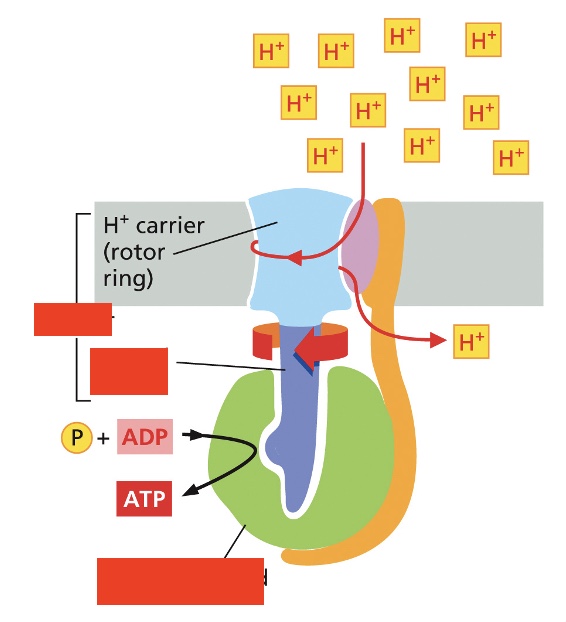
What is this? Label top to bottom, then orange, name functions
ATP synthase- F0 rotor (proton carrier + central stalk, spins rapidly within stationary head of F1ATPase causing it to generate ATP), central stalk, F1 ATPase head, peripheral stalk (secures stationary head to inner membrane)
is ATP synthase reversible?
yeah! it is a reversible coupling device, can either synthesize ATP by harnessing proton gradient or pump protons against this gradient by hydrolyzing ATP
what does the direction of ATP synthase depend on?
the net free-energy change (delta G) for the couples processes of H+ translocation across the membrane and the synthesis of ATP from ADP and P, eg if proton gradient falls below a certain level it will flip and rebuild the gradient
features of mitochondria (3)
they are dynamic in structure, location and number
parts of a mitochondrion (3)
outer membrane, inner membrane, 2 internal compartments
What does the citric acid cycle do?
generates high energy electrons required for ATP production
what is the movement of electrons coupled to?
pumping of protons
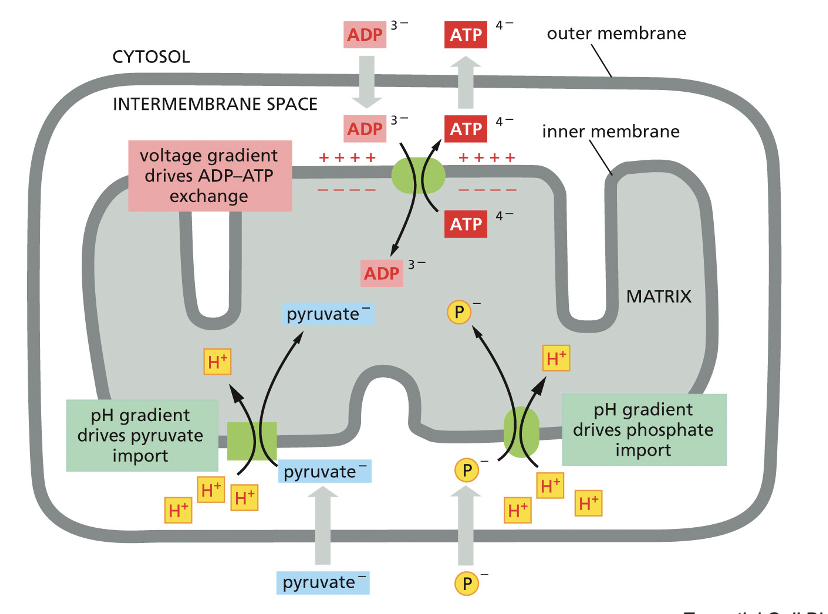
what does this image show?
The electrochemical proton gradient across the inner mitochondrial membrane is used to drive some coupled transport processes
what coupled transport processes are driven by proton gradient across inner mitochondrial membrane? (3)
pyruvate and Pi are moved into matrix along with protons as protons move down their electrochemical gradient (both are negatively charged so their movement is opposed by the negative membrane potential but nevertheless it works), ADP is pumped into the matrix and ATP is pumped out (antiport process that uses voltage gradient)
how permeable is the outer mitochondrial membrane and why
freely permeable to all these compounds (ATP, Pi, pyruvate, etc.) due to the presence of porins in the membrane
total ATP yield per glucose
30
total ATP yield per glucose: in cytoplasm then mitochondria
cytoplasm- glycolysis- 5 ATP
mitochondria- pyruvate oxidation to acetyl CoA- 5 ATP
complete oxidation of the acetyl group of acetyl CoA- 20 ATP
what are the direct products of glucose oxidation that end up being ATP (4)
NADH, ATP, FADH2, GTP
molecular mechanisms of electron transport and proton pumping (5)
protons are readily moved by the transfer of electrons, redox potential is a measure of electron affinities, electron transfer releases large amounts of energy, metals tightly bound to proteins form versatile electron carriers, cytochrome c oxidase catalyzes the reduction of molecular oxygen

what does this image show? (2 points)
redox potential increases along the mitochondrial ETC, biggest increases in redox potential occur across each of the 3 respiratory enzyme complexes which allows each of them to pump protons
what do complexes I, III and IV do?
directly pump protons from matrix to intermembrane space
what does complex II do?
helps facilitate pumping in complex III and IV
how do the complexes get energy for pumping protons?
by transferring electrons through a series of coupled reactions
what does the ETC comprise of
4 complexes: I, II, III and IV
Complex I: more detail how it works (6)
NADH deposits two high energy electrons there where they are passed along a chain of redox centers, it goes from low affinity to high affinity, distance between them is ideal for an electron jump to occur (so there are usually no skips), small amount of energy is released each time an electron is passed between redox centers, the complex harnesses this energy across all redox centers and uses it to pump protons, last redox center donates two electrons to a co-enzyme Q molecule which brings it to complex III
Complex II: more in detail how it works compared to complex I
Similarities: high energy electrons enter via byproduct of sugar metabolism (FADH2 though), transfers electrons between several redox centers before donating them to coenzyme Q
BUT does not use the energy built up to pump protons
Complex III more detail
has electrons donated from complex I and II, redox centers, goes to cytochrome C which caries the electron to complex IV
complex IV more detail
molecule of oxygen converted to two molecules of water - strengthens proton gradient (4 protons from matrix incorporated into water molecule, 4 pumped into intermembrane space)
what happens in the absence of oxygen
electron transfer comes to a halt, ATP synthesis also stops (O2 is the final electron acceptor)
what are redox centers?
clusters of atoms that have different affinities for electrons based on their unique atomic configurations
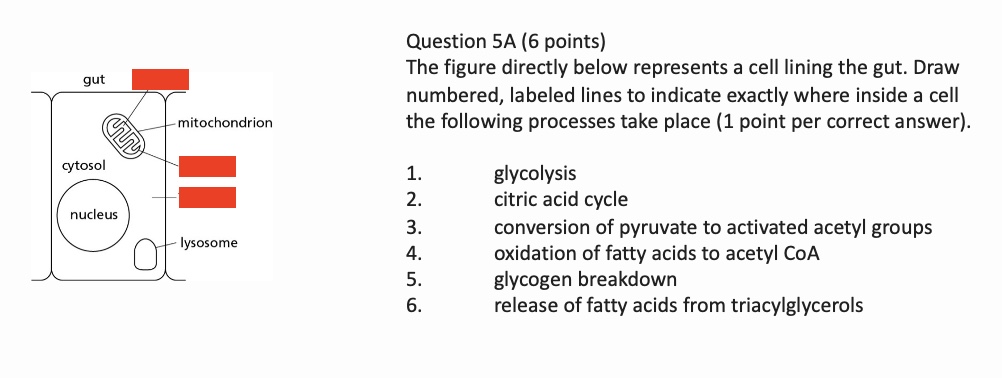
label top to bottom
2, 3, 4
7
1, 5, 6
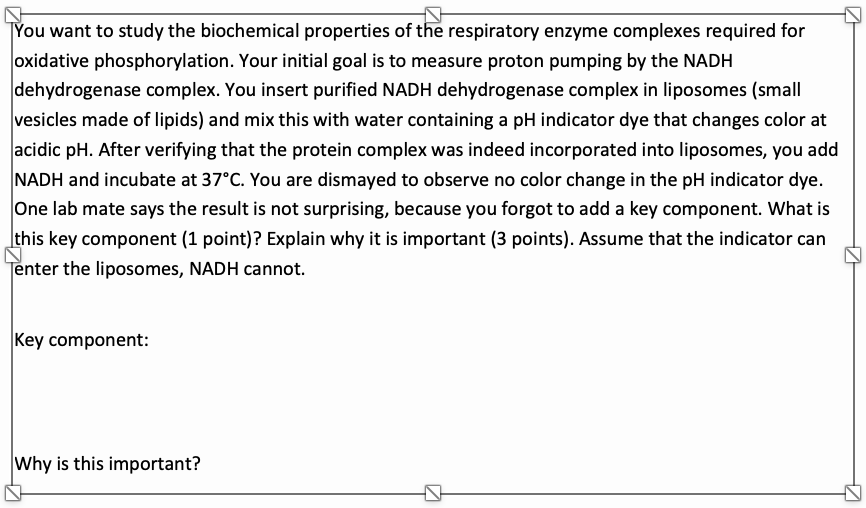
ubiquinone is the key component which normally accepts electrons from the NADH dehydrogenase complex, because there was no compound to accept electrons from the NADH dehydrogenase complex the complex became reduced by NADH but could not be oxidized, cycling between the reduced and oxidized states is necessary for protein pumping by NADH dehydrogenase complex
key role of inner mitochondrial membrane
to act as a barrier for protons to allow for the proton gradient to be maintained (intermembrane space should have more protons than matrix)
what happens if there is no proton gradient across mitochondrial membrane?
ATP synthase pump stops working, cell becomes starved of energy and dies

