Surgery L2 - Wound Healing and Closure
 Studied by 0 people
 Call with Kai
 Learn
Learn Practice Test
 Spaced Repetition
 Match
Match Flashcards
 Knowt Play
1/40

There's no tags or description
Looks like no tags are added yet.
Name | Mastery | Learn | Test | Matching | Spaced | Call with Kai |
|---|
No study sessions yet.
41 Terms
Inlammatory, Proliferative, Remodeling
What are the main 3 phases of wound healing?
Inflammatory Phase
Activation of macrophages
Which phase of wound healing has generalized or non-specific inflammation around the wound wedges and lasts about 3 days if there is little to no contamination.
What indicates the start of the next phase?
Epithelization (Proliferative)
Which phase of wound healing is characterized by fibroblasts and collage production, fibroblasts synthesize collagen and are active for 6 weeks?
Fibroplasia and Contraction (maturation)
Which phase of wound healing involves remodeling of collagen by formation of intermolecular cross links, lasts 6-12 mos and results in a paler, flatter scar?
Primary
Primary, Secondary or Tertiary intention?
Recent, clean wounds closed by sutures.
Typically irrigated and debrided
Tissues brought close for optimal healing
Secondary
Primary, Secondary or Tertiary intention?
Wounds are left open to heal without surgical intervention.
Prolonged inflammatory phase
Wounds heal from edges to central aspect and from bottom up. Heal about 1mm per day.
Indicated in severe infections and contaminated wounds.
Tertiary
Primary, Secondary or Tertiary intention?
Closure of wound that was initially left open or not repaired.
Indicated in wounds with high bacterial content (dog, human bites)
usually 3-5 days for closure
1. Decreasing bacterial load
2. Good preparation of wound edges
3. Debridement of foreign material
In tertiary intention, good results depend on what 3 things?
1. Inhibit inflammatory response
2. Inhibit wound healing
3. Stop granulation tissue formation
4. Increased inflammatory response
What are 4 local and system factors that affect healing?
Steroid use, Immunosuppressants, Chemotherapy
What are the 3 things that inhibit inflammatory response?
Vitamin A def, Zinc Def, Malnutrition (acute worse than chronic)
What are 3 things that inhibit wound healing?
Excessive inflammatory response (toxins, septic shock, gram neg infections)
What can stop granulation tissue formation?
Massive trauma (cytokine release, increase lactate production)
What can increase inflammatory response?
Cardiac failure, Hypoxia, poor tissue perfusion, vasoconstriction
What are post-op factors for wound healing?
failure to maintain proper temp
hypovolemia
fear
beta blockers
cigarette smoking (including nicotine patches)
hypoxemia
What are causes of vasoconstriction?
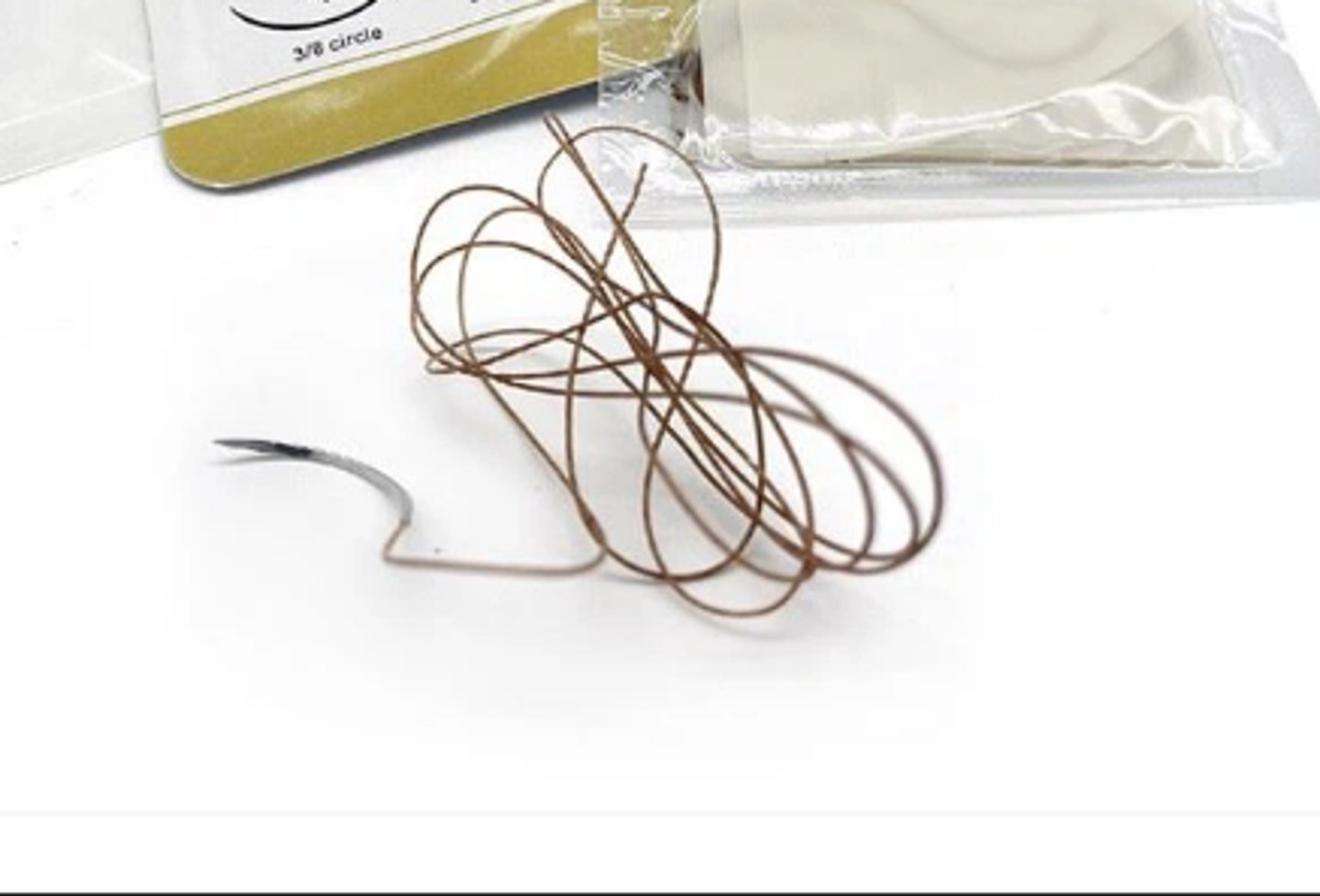
Chromic Gut
Which suture type?
absorbable
made from bovine intestines
used in OB/Gyn, Plastics, Oral Surg
Loses tensile strength in 14-21 days
Complete absorption 90-120 days
Outlawed due to concerns of Mad Cow Disease
Risk of inflammatory reaction d/t foreign protein nature
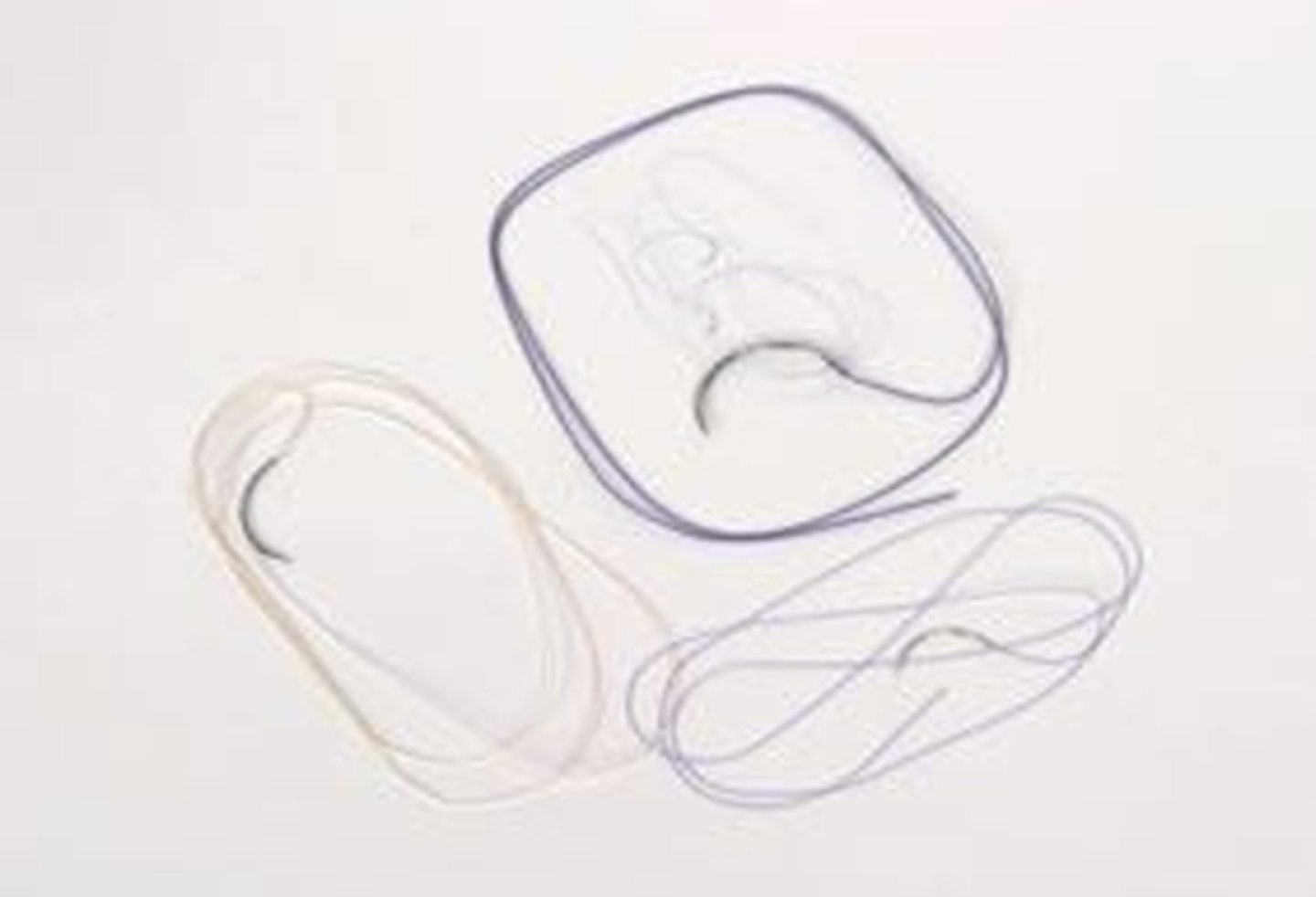
Vicryl
Which suture type?
absorbable
braided
used for subcuticular approximation and ligation of vessels
Tensile strength 14-21 days
absorption in 8-10 weeks
Risk of potentiating infections (draws moisture)
Made from polyglycolic acid
Dyed (purple) vs undyed (white)
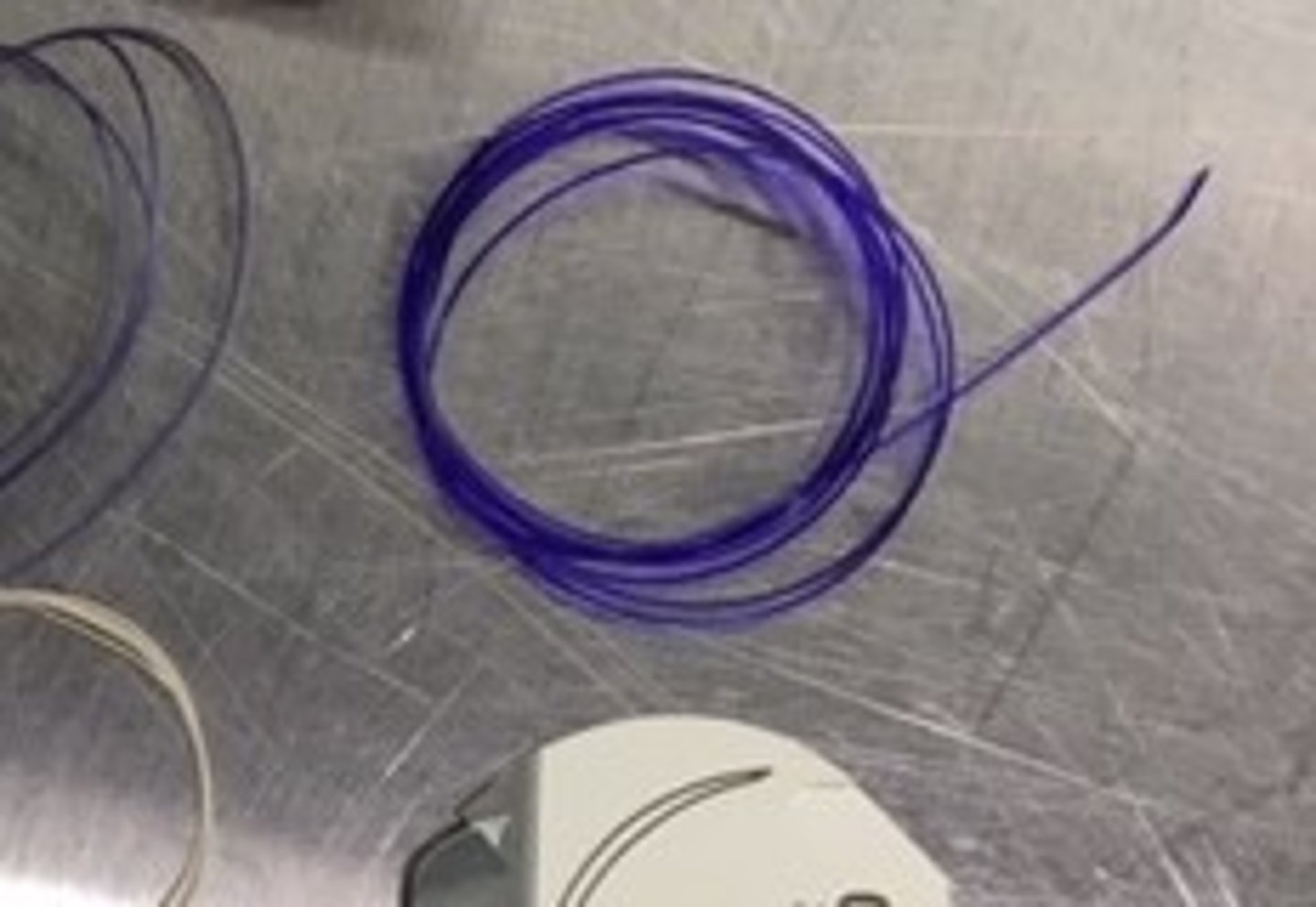
PDS
Which suture type?
synthetic
absorbable
monofilament
poor knot security, difficulty to tie
tensile strength decreases 25% every 2 weeks
Used in "tissue under tension" and contaminated wounds
SILK suture
Which suture type?
Braided or entwined from silkworm larva
Non-absorbable
Treated with silicone to increase strength
High risk for suture abscess "spit stitches"
Cannot use for grafts or prosthetic cardiac valves
Used in ocular, neural, closure of oral mucosa and CV surgery
Monocryl
Which suture type?
synthetic
monofilament
high tensile strength that decreases within 1-2 weeks
absorbable within 12 days
Subcuticular closures - less scar risk
Used in face, eyes, ears, neck and abdomen
Prolene
Which suture type?
nonabsorbable
monofilament
typically dyed
wound closures - infected, contaminated
lack of tissue adherence
used in wounds with high tension
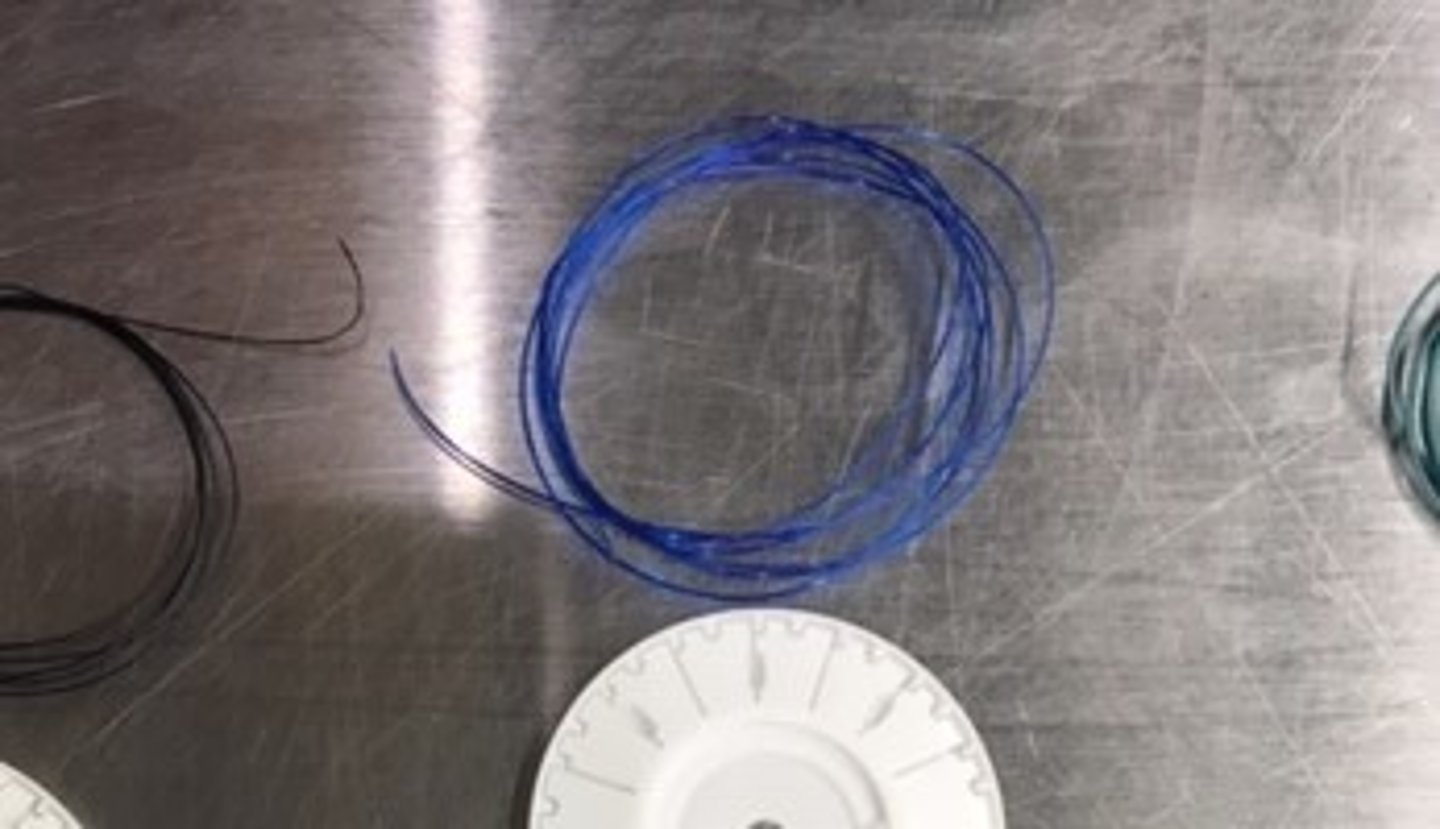
Nylon
Which suture type?
Monofilament
nonabsorbable
low skin reactivity
good tensile strength
lower risk of knot issues compared to PDS and Prolene
used in laceration repair, surgical incision closures
Simple Interrupted
Which suture technique?
Mostly used in lacerations and incision closures
Safer than running due to multiple separate sutures and knots
infection, scarring, ischemia and/or necrosis from excessively tight sutures
Potential complications of simple interrupted technique?
Vertical Mattress
Which suture technique?
used in incision or wounds that are under tension
greater closure strength and distribution of tension
allows skin edges to evert
good in areas with convex surfaces (posterior neck)
suture is thrown far to far then near to near, knot tied on side of incision when first throw is made
Scarring - railroad tracks
Complications of vertical mattress technique?
Horizontal Mattress
Which suture technique?
used in incision or wounds under tension
early removal limits scarring/railroad tracks
anchoring stitch for skin flap closure
promote skin eversion which limits scarring
Can use alternating horizontal mattress and simple sutures to prevent wound dehiscence with early removal of horizontal mattress sutures.
Deep Dermal
Which suture technique?
used when closing large or gaping wounds
helps reduce tension over course of wound
pass suture from deep to superficial, then superficial to deep (buries knot)
Good for deep wounds/incisions
usually require another layer of closure
use monofilament if laceration
use vicryl (braided) in surgical setting
Subcuticular
Which suture technique?
Placed into epidural layer
Running stitch most common
absorbable vs nonabsorbable
nylon vs monocryl
easy to bend needle and dull/break tip so be gentle and don't force needle where to go.
Running Stitch
Which suture technique?
Used in longer incisions/wounds with minimal tension
faster closure
can use to hold skin grafts in place
only requires failure of one knot to allow for dehiscence (use aberdeen to prevent this)
nylon most common
Staples
Type of wound closure?
Quick, secure with low risk of failure
can be an irritant - inflammation
quick removal but possibly painful
concern for skin overgrowth if not removed timely
avoid inversion to avoid wound breakdown/slower healing
possible allergic reaction
Basic surgical knot
Type of knot?
Square
Two throws make the knot
anywhere from 4-8 throws for complete tie
watch for airballs
Surgeon's Knot
Type of knot?
How you start tying every stitch
requires two loops in the first throw, then one loop thereafter
good for incisions/wounds under tension
prevents loosening and locks in stitch for second throw
prevent making initial knot too tight and prevents strangulation of tissue
One hand knot
Type of knot?
Faster
Tension difficult to control
potentially less secure
better for tight spaces
Two hand knot
Type of knot?
Better control of knot
more consistent tension
slower
6-0
Monofilament, non-absorbable
3-5 days
What is the suture size, material and removal time for face/lip?
3-0, 4-0
Monofilament, non-absorbable
7-10 days
What is the suture size, material and removal time for the scalp?
3-0, 4-0
Monofilament - may be absorbable or non-absorbable
10-14 days
What is the suture size, material and removal time for chest/abdomen/back?
3-0 to 5-0
Monofilament - may be absorbable or non-absorbable
10-14 days
What is the suture size, material and removal time for the limbs?
4-0 or 5-0
Monofilament - usually non-absorbable
10-14 days
What is the suture size, material and removal time for hands?
6-0
Braided, rapidly absorbable
Absorbable
What is the suture size, material and removal time for the nailbed?
 Note
Note  Flashcards (28)