ANT 175 EXAM 3 (copy)
0.0(0)
 Studied by 0 people
 Call Kai
 Learn
Learn Practice Test
 Spaced Repetition
 Match
Match Flashcards
 Knowt Play
Card Sorting
1/139

Earn XP
Description and Tags
Last updated 7:47 PM on 11/15/22
Name | Mastery | Learn | Test | Matching | Spaced | Call with Kai |
|---|
No analytics yet
Send a link to your students to track their progress
140 Terms
1
New cards
Highlands - Agricultural Techniques, Settlements, & Environments
- intensive agriculture
- fertile volcanic soils
- use of dry-season irrigation
- dense/nucleated populations
- fertile volcanic soils
- use of dry-season irrigation
- dense/nucleated populations
2
New cards
Lowlands (tropical forest) - Agricultural Techniques, Settlements, & Environments
- extensive agriculture
- poor/organic soils
- slash & burn-sifting agriculture
- dispersed populations
- poor/organic soils
- slash & burn-sifting agriculture
- dispersed populations
3
New cards
Mesoamerica climate
Tropical to subtropical with only rainy & dry seasons in a year (no winters)
4
New cards
Mesoamerica
- Small but very diverse region with a vertical & horizontal resource distribution
- Most of the region is covered by mountain formations while the lowlands tropics are in green
- Tropical to subtropical with only rainy & dry seasons in a year (no winters)
- Most of the region is covered by mountain formations while the lowlands tropics are in green
- Tropical to subtropical with only rainy & dry seasons in a year (no winters)
5
New cards
The Highlands
- one of the four nuclear/primary centers of agriculture in the world (the development of civilization, expensive ceremonies, and a market economy)
- diverse environments & resources
- volcanic formations which inclu
de obsidian & basalt
- supports large dense population concentrations - Characterized by rich & deep topsoils for intensive farming year-round
- Irrigation to extend farming in the dry season since prehistoric times
- diverse environments & resources
- volcanic formations which inclu
de obsidian & basalt
- supports large dense population concentrations - Characterized by rich & deep topsoils for intensive farming year-round
- Irrigation to extend farming in the dry season since prehistoric times
6
New cards
The Lowlands
- Tropical rainforest region, also known as the jungle
- Organic topsoils are poor & shallow & the only rock is limestone
- Extensive farming requires slash & burn agriculture, leading to small & dispersed populations
-
- Organic topsoils are poor & shallow & the only rock is limestone
- Extensive farming requires slash & burn agriculture, leading to small & dispersed populations
-
7
New cards
The Lowlands - Slash & Burn Agriculture
- continues today because of shallow & poor soil -accumulated ash temporarily increases soil fertility
- small & dispersed populations - large amounts of land needed
- small & dispersed populations - large amounts of land needed
8
New cards
Highland Mesoamerica = nuclear area in the world where plants & animals were
domesticated for the first time without outside influence
9
New cards
other three nuclear centers (aside from Mesoamerica)
- other three centers are: Andes-Peru, Southwest Asia, and near east(?)
- rest of world considered secondary
- rest of world considered secondary
10
New cards
agriculture began _________ after the __________ , replacing hunting slowly
in Mexican highlands - Pleistocene
11
New cards
Native American domesticates
Several plants still highly important today:
Maize
Bean
Potato
Squash
Avocado
Tomato
Cacao
Tobacco
Maize
Bean
Potato
Squash
Avocado
Tomato
Cacao
Tobacco
12
New cards
Relative Chronology & Example of sites: Food collecting-incipient agriculture
- 1st
- Tamaulipas
- Tamaulipas
13
New cards
Relative Chronology & Example of sites: Olmec
- 2nd
- San Lorenzo, beginning of the 4 cycles of destruction
- San Lorenzo, beginning of the 4 cycles of destruction
14
New cards
Relative Chronology & Example of sites: Classic Maya
- 3rd
- City of Tikal
- City of Tikal
15
New cards
Relative Chronology & Example of sites: Teotihuacan
- 3rd
- City of Teotihuacan
- City of Teotihuacan
16
New cards
Relative Chronology & Example of sites: Aztec Empire
- 4th
- Capital City of Tenochtitlan
- Capital City of Tenochtitlan
17
New cards
Relative Chronology & Example of sites: Spanish Conquest
- 5th
18
New cards
Definition of Plant & Animal Domestication
- process of adapting plants & animals for human use (food, work work, clothing, medicine) by selecting genetic traits & characteristics through selective breeding over hundreds of generations
19
New cards
Unlike wild flora & fauna human-created varieties ...
Have to be cared by farmers, agriculture economy becomes the main source of food to support larger populations or civilizations - such changes permanent & detectable
20
New cards
Robert Bradwood's Human Nature Theory
Based on two preconditions in nuclear areas
1) Technological preconditions - use of temporary base camps leading to the beginning of sedentism, early surplus storage pits using the miling/grinding tool to process & preserve food
2) Environmental Preconditions - small and diverse areas with abundant wild plant & animal resources available for domestication
1) Technological preconditions - use of temporary base camps leading to the beginning of sedentism, early surplus storage pits using the miling/grinding tool to process & preserve food
2) Environmental Preconditions - small and diverse areas with abundant wild plant & animal resources available for domestication
21
New cards
Two main theories about why agriculture began in the world
1) Robert Bradwood's Human Nature Theory
2) Lewis Binfords Population Pressure
2) Lewis Binfords Population Pressure
22
New cards
population pressure
the sum of factors within a population that reduce the ability of an environment to support the population, therefore resulting in migration or population decline
23
New cards
Bone Stress
- archaeologists have discovered that following the adoption & intensification of agriculture, severe nutritional stresses began to appear in human bones
- lead to further studies to understand reasons and disadvantages of agriculture
- lead to further studies to understand reasons and disadvantages of agriculture
24
New cards
Disadvantages of Agriculture
1) Not the most reliable type of subsistence because of unpredictable droughts, floods, frost, land pests/disease
2) Nutritional studies show that domesticate foods are not more nutritious than wild plants & animals - also less variety of domestic plants & animals than in the wild
3) Demands more time than hunting & gathering
2) Nutritional studies show that domesticate foods are not more nutritious than wild plants & animals - also less variety of domestic plants & animals than in the wild
3) Demands more time than hunting & gathering
25
New cards
Six nutrients
carbohydrates, proteins, fats, vitamins, minerals, water
26
New cards
Soon after domesticated plants & animals became widespread sources of food...
ceramic vessels were developed & used to cook, soak, and fry foods
27
New cards
cooked, soaked, and fried foods led to
- further reduction of nutrients
- easier consumption for infants & toothless elders
- easier consumption for infants & toothless elders
28
New cards
Agriculture vs Hunting & Gathering a. - Unlike farmers who work every day, hunter-gatherers work an average of
3-4 days to obtain food for one week
29
New cards
Agriculture vs Hunting & Gathering c. - Hunter gatherers move constantly following the seasons, while farmers have to
stay & tend to crops
30
New cards
Agriculture vs Hunting & Gathering d.- Hunter-gatherers share everything and do not
accumulate goods and have no concept of private property nor social classes/inequalities
31
New cards
Large Scale Mechanized Farming
largest quantities of production only a few domesticated varieties
32
New cards
Agriculture vs Hunting & Gathering b. - Hunter-gatherer populations are _________ while agricultural societies are _________-
- small, mobile, and healthy
- sedentary & exposed to parasites & infectious diseases due to crowded living conditions
- sedentary & exposed to parasites & infectious diseases due to crowded living conditions
33
New cards
Chronic Illness or Disease of Civilization
1) Atherosclerosis
2) Adult onset diabetes
3) Types of cancer
4) Hypertension
5) Emphysema
6) Obesity
2) Adult onset diabetes
3) Types of cancer
4) Hypertension
5) Emphysema
6) Obesity
34
New cards
35% of hunter gatherer diet
meat
35
New cards
65% of hunter gatherer diet
vegetables
36
New cards
Benefits of Agriculture
1) Agriculture increased the carrying capacity of land & supports larger populations
2) Development of and reliance on long-distance trade by full-time specialists
3) Accumulation of huge surpluses to support diverse specialists (people who specialize in jobs other than farming), social stratification, complex societies/civilizations
4) Allows full-time sedentism, and major increases in population and material culture
2) Development of and reliance on long-distance trade by full-time specialists
3) Accumulation of huge surpluses to support diverse specialists (people who specialize in jobs other than farming), social stratification, complex societies/civilizations
4) Allows full-time sedentism, and major increases in population and material culture
37
New cards
Lewis Binfords Population Pressure
At the end of the ice age, a temporary basecamp was used with some sedentism and increases in population
Eventually, overpopulation, malnutrition, and starvation forced them to migrate outside base camps into poor areas with more dispersed resources - taking with them some of the wild plants & animals of the base camps. Hence, domestication occurred in an attempt to recreate the natural abundance in previous base camps
Eventually, overpopulation, malnutrition, and starvation forced them to migrate outside base camps into poor areas with more dispersed resources - taking with them some of the wild plants & animals of the base camps. Hence, domestication occurred in an attempt to recreate the natural abundance in previous base camps
38
New cards
Classic Maya Civilization Terrain
Tropical Forest & some in the E. Highlands
39
New cards
Five Major Characteristics of Civilizations/States/Complex Societies
1) Major laws, regulations, and decisions, made under a centralized authority
2)
3) states associated w/ urbanism, which refers to planned cities w/ blocks of houses along streets administrative & religious architecture, and large sedentary populations of non-food products
4) Centralized authority of the state controls/supports a large # of full time specialists
5) States usually develop as a result of agricultural economy
2)
3) states associated w/ urbanism, which refers to planned cities w/ blocks of houses along streets administrative & religious architecture, and large sedentary populations of non-food products
4) Centralized authority of the state controls/supports a large # of full time specialists
5) States usually develop as a result of agricultural economy
40
New cards
Olmec means
Rubber (rubber people)
41
New cards
What material did the Olmecs "invent"?
rubber
42
New cards
Most important & abundant Olmec export
Jade
43
New cards
Jade used for
- trading
- burial
- religious use (masks)
- burial
- religious use (masks)
44
New cards
Obsidian common in Mesoamerican
- Highlands
- Teotihuacan
- Teotihuacan
45
New cards
Teotihuacan Jade goods were _________ compared to that of Olmecs
- simple/less intricate
- After overthrowing Olmecs they were not accustomed to working with Jade
- After overthrowing Olmecs they were not accustomed to working with Jade
46
New cards
Olmec rainforest required
Slash & burn agriculture
47
New cards
Colossal heads
Olmec artwork; Likely used in rituals, served as alters; Political representations of power
- Made from Jade
- represent down syndrome features
- Made from Jade
- represent down syndrome features
48
New cards
First sports invented by
- Olmecs
- rubber balls
- rubber balls
49
New cards
Olmec hieroglyphics
Haven't been able to translate until recently
First writing in New World
First writing in New World
50
New cards
Olmec Religious Traditions, etc.:
Deeply religious and bulit pyramids, played games with rubber balls, built temples and pyramids to worship and remember their gods, mummified and buried kings, worshipped sun god.
51
New cards
Olmec Religious Centers
They were the first Mesoamericans to build large religious and ceremonial centers.
52
New cards
Olmec domesticates
beans, squash, chilis, maize (later staple), tomatoes
53
New cards
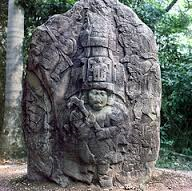
Olmec stelae
depict rulers in elaborate ritual garb, often surrounded by "flying" figures
54
New cards
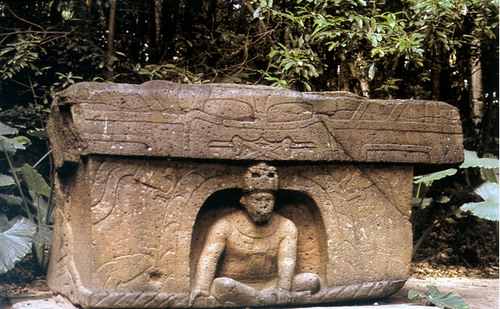
Olmec Altar
Primarily made of basalt
55
New cards
Earliest Olmec settlement
San Lorenzo
56
New cards
Olmec Calendar
- The Olmecs combined the solar and ritual calendars. They combined these calendars to keep the king lists and historical events in chronological order.
- Long count - for periods longer than 52 years
- 260 Sacred round calendar
- 365-day Vague Year, or haab
- Long count - for periods longer than 52 years
- 260 Sacred round calendar
- 365-day Vague Year, or haab
57
New cards
Olmecs - Long Count Calendar
5,125 year period of time, based on the combination of Religious and Solar calendars.
58
New cards
Olmecs - Sacred Round Calendar
- 260 days
- ritual calendar, with 20 months of 13 days
- ritual calendar, with 20 months of 13 days
59
New cards
Olmecs - 4Vague Year (Haab)
-365 days
- used for agriculture and had 18 months of 20 days and 5 "nameless" days
- used for agriculture and had 18 months of 20 days and 5 "nameless" days
60
New cards
Olmec - Four Cycles of Destruction
- deliberately destroyed four major religious centers (smashing artifacts, burning down areas)
- Began with San Lorenzo
-Had to do with religious beliefs pertaining to life & death
- Began with San Lorenzo
-Had to do with religious beliefs pertaining to life & death
61
New cards
The Olmec people first appeared around
12,000 BC
62
New cards
12 Key Native Mesoamerica Domesticates
1. maize
2. bean
3. Squash
4. Gourd
5. Chili Pepper
6. Avocado
7. Amaranth
8. Tomato
9. Chocolate
10. Cotton
11. Turkey
12. Dog
2. bean
3. Squash
4. Gourd
5. Chili Pepper
6. Avocado
7. Amaranth
8. Tomato
9. Chocolate
10. Cotton
11. Turkey
12. Dog
63
New cards
Changes in Domesticated Plants & Animals
1. Become larger
2. Have more variability
3. Can grow outside their native environment
4. Become dependent on people for survival
2. Have more variability
3. Can grow outside their native environment
4. Become dependent on people for survival
64
New cards
Mayan government
City-states ruled by a king. The king, "halach uinic" or "ahaw" was believed to have been given the right to rule by the gods.
65
New cards
Maya number & writing system
expansion of the hieroglyphic writing system to include events, names of places & rulers. Revising Olmec bar and dot for numbers and dots - developed concept of zero
66
New cards
Olmec Number System
- bar and dot system - A value of 5 is represented by a bar, and a value of 1 is represented by a dot
- large numbers & fractions written using 3 symbols and value depends on the location of numbers
- large numbers & fractions written using 3 symbols and value depends on the location of numbers
67
New cards
Other civilization that developed concept for zero
India
68
New cards
What percentage of Mayan hieroglyphs have been translated?
85%
69
New cards
Mayan calendar system
Ceremonial Calendar:
- Days: 20x
- Numbers: 13
- Days/Year: 260
Solar Calendar:
Months: 18x
Days: 20
Total: 360 + 5 days = 365
Calendar Round:
It takes a 52 year cycle to arrive at starting point of the two calendars
- Days: 20x
- Numbers: 13
- Days/Year: 260
Solar Calendar:
Months: 18x
Days: 20
Total: 360 + 5 days = 365
Calendar Round:
It takes a 52 year cycle to arrive at starting point of the two calendars
70
New cards
The Mayan government was primarily a what?
monarchy
71
New cards
Mayan Farmers lived
- the Yucatán Peninsula
- the slopes of the volcanic mountains
- the slopes of the volcanic mountains
72
New cards
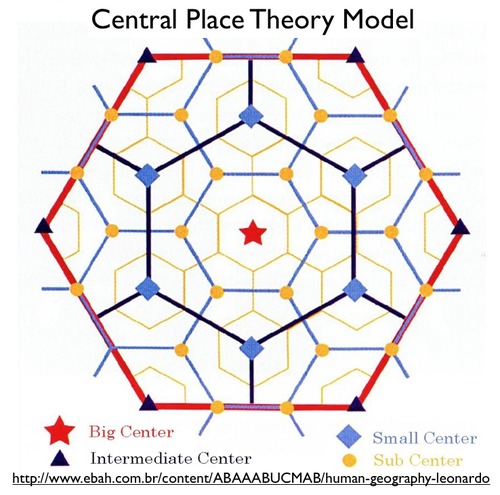
mayan central place model
73
New cards
Mayan populations were
dispersed
74
New cards
Ceremonial calendar + solar calendar =
Calendar round and Long Count Calendar
75
New cards
Mayan solar calendar
- Used to measure time with 365 days, divided into 18 months with 20 days with an extra five days at the end
- Based on astronomical knowledge
- Based on astronomical knowledge
76
New cards
Alternatives for Agriculture in Mayan Lowlands
1) Shorten follow a period of 10-20 years - a decline of soil potential
2) Use of raised in small unproductive swampy areas by raising land in rows surrounded by water
3) Partial return of collecting nuts - domesticated breadnut - Bottle Gourd used to store them
2) Use of raised in small unproductive swampy areas by raising land in rows surrounded by water
3) Partial return of collecting nuts - domesticated breadnut - Bottle Gourd used to store them
77
New cards
Reasons for the Mayan collapse
Ecological: Drought - not enough agricultural production to support the constantly increasing populations
Social: Agricultural failures lead to conflicts between the elite & peasants including uprisings as a result of increasing demands
Social: Agricultural failures lead to conflicts between the elite & peasants including uprisings as a result of increasing demands
78
New cards
The Mayan civilization lasted _____ longer than contemporary Teotihuacan civilization
200 years
79
New cards
Teotihuacan
A powerful city-state in central Mexico highlands (7000ft) w/ intense farming (using irrigation) Its population was about 300,000 at its peak. Oriented east of north
80
New cards
Teotihuacan remains
- preserved badly due to humidity in highlands & lowlands
81
New cards
Teotihuacan farming
used irrigation
82
New cards
Teotihuacan burials
Almost absent - majority of population was cremated
83
New cards
Reasons for growth in Teotihuacan
- was an important economic, political, & religious center
- presence of 400 obsidian workshops in the city
1) The export multiplier effect
2) The import replacement effect
- presence of 400 obsidian workshops in the city
1) The export multiplier effect
2) The import replacement effect
84
New cards
Teotihuacan Features
- full-time specialists
- upper-class ceremonial architecture w murals
- Upper & lower residential areas
- public & private ceremonial pyramids
- Ethnic neighborhoods (including embassy of lowland Maya)
- upper-class ceremonial architecture w murals
- Upper & lower residential areas
- public & private ceremonial pyramids
- Ethnic neighborhoods (including embassy of lowland Maya)
85
New cards
Teotihuacan primary export
- Obsidian (tools, axes, weapons, swords)
- Also exported by the Mayans
- Also exported by the Mayans
86
New cards
Reasons for growth in Teotihuacan - 1 - The Export Multiplier Effect
- more exports = more imports
- Highland exports of obsidian tools & objects into the Maya lowlands
- Import additional tropical foods from the lowland Maya area to support a large number of specialists
- Highland exports of obsidian tools & objects into the Maya lowlands
- Import additional tropical foods from the lowland Maya area to support a large number of specialists
87
New cards
Reasons for growth in Teotihuacan - 2 - The Import Replacement
- eventually replaced import of jade masks by controlling sources and producing masks in the city, creating more jobs, more food imports, and a larger population
88
New cards
Reasons for decline of Teotihuacan
1) Competition from other highland centers for obsidian tools production
2) Decrease in labor force & subsistence/food imports
3) Deforestation need for farming & wood for cooking, causing erosion of top soil
2) Decrease in labor force & subsistence/food imports
3) Deforestation need for farming & wood for cooking, causing erosion of top soil
89
New cards
The Aztec Empire
- The last major Mesoamerican empire prior to the Spanish. It was centered in the Valley of Mexico in Tenochtitlan. It was known for widespread human sacrifice and aggressive military conquest of those who didn't submit
- dispersed provinces paid tribute
- 11 million people
- Multi-ethnic state
- Highlands and lowlands
- dispersed provinces paid tribute
- 11 million people
- Multi-ethnic state
- Highlands and lowlands
90
New cards
Spanish first contacted Aztecs in the year
1518
91
New cards
How many Aztec cities paying tribute/taxes
489
92
New cards
Aztec capital city
Tenochtitlan (now called Mexico City)
93
New cards
Tenochtitlan
- Capital of the Aztec Empire, located on an island in Lake Texcoco.
- Its population was about 300,000 (in 20 square miles)
- Mexico City was constructed on its ruins
- featured libraries, zoos, markets & embassies for other nations
- Its population was about 300,000 (in 20 square miles)
- Mexico City was constructed on its ruins
- featured libraries, zoos, markets & embassies for other nations
94
New cards
Aztec Economy
- Widespread irrigation agriculture generated surpluses to support large & dense populations in the highlands
- conquered nations were required to pay tribute in products
- Aztec empire is the only society to use money (cocoa, small cotton textiles, & porcupine quills filled with gold dust) - counterfeit money also produced
- conquered nations were required to pay tribute in products
- Aztec empire is the only society to use money (cocoa, small cotton textiles, & porcupine quills filled with gold dust) - counterfeit money also produced
95
New cards
Aztec Social Structure
Social stratification well marked & more complex than previously, including:
1) Absolute & Semi-Devine ruler
2) Nobility (rulers relatives) working as imperial administrators
3) Soldiers in special military ranks - often received land and were exempt from tribute
4) Pochteca/traveling merchants - also served as spies
5) Artisans & other specialists
6) Farmers
7) Some conquered people used as slaves (serfs) - could not be resold without consent, were treated well & achieved considerable prosperity
1) Absolute & Semi-Devine ruler
2) Nobility (rulers relatives) working as imperial administrators
3) Soldiers in special military ranks - often received land and were exempt from tribute
4) Pochteca/traveling merchants - also served as spies
5) Artisans & other specialists
6) Farmers
7) Some conquered people used as slaves (serfs) - could not be resold without consent, were treated well & achieved considerable prosperity
96
New cards
Aztec Social Structure - Nobility
- 2
- rulers relatives
- working as imperial administrators
- rulers relatives
- working as imperial administrators
97
New cards
Aztec Social Structure - Soldiers in special military ranks
- 3
- Seen as honorable
- often received land and exempt from tribute
- Seen as honorable
- often received land and exempt from tribute
98
New cards
Aztec Social Structure - Pochteca
- 4
- traveling merchants
- also served as spies
- traveling merchants
- also served as spies
99
New cards
Aztec Social Structure - Artisans & other specialists
- 5
100
New cards
Aztec Social Structure - Farmers
- 6
- Irrigation
- Irrigation
 Note
Note  Flashcards (20)