body systems
 Call Kai
 Learn
Learn Practice Test
 Spaced Repetition
 Match
Match Flashcards
 Knowt Play
1/212

There's no tags or description
Looks like no tags are added yet.
Name | Mastery | Learn | Test | Matching | Spaced | Call with Kai |
|---|
No analytics yet
Send a link to your students to track their progress
213 Terms
important functions of human body
support
collection and evaluation of information
transportation of oxygen and nutrients
protection of internal organs
obtaining nutrients from food
maintenance of constant body temperature
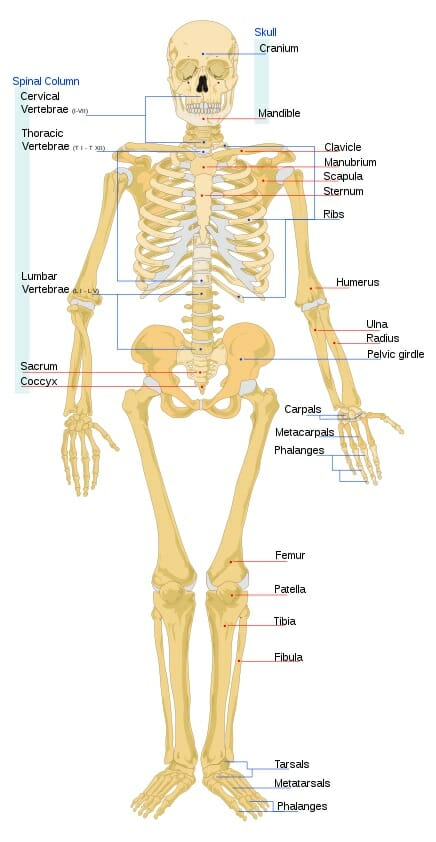
endoskeleton
support
nervous system
collection and evaluation of information
in a closed system
transportation of oxygen and nutrients
coelem
fluid filled cavity that protects internal organs and allows muscles to contract without harming internal organs
coelem (function)
protection of internal organs
digestion
obtaining nutrients from food
homeostasis
maintenance of constant body temperature
organization of body
cell → tissue → organ → organ system
totipotent
able to produce a new organism
pluripotent
able to produce many cell types
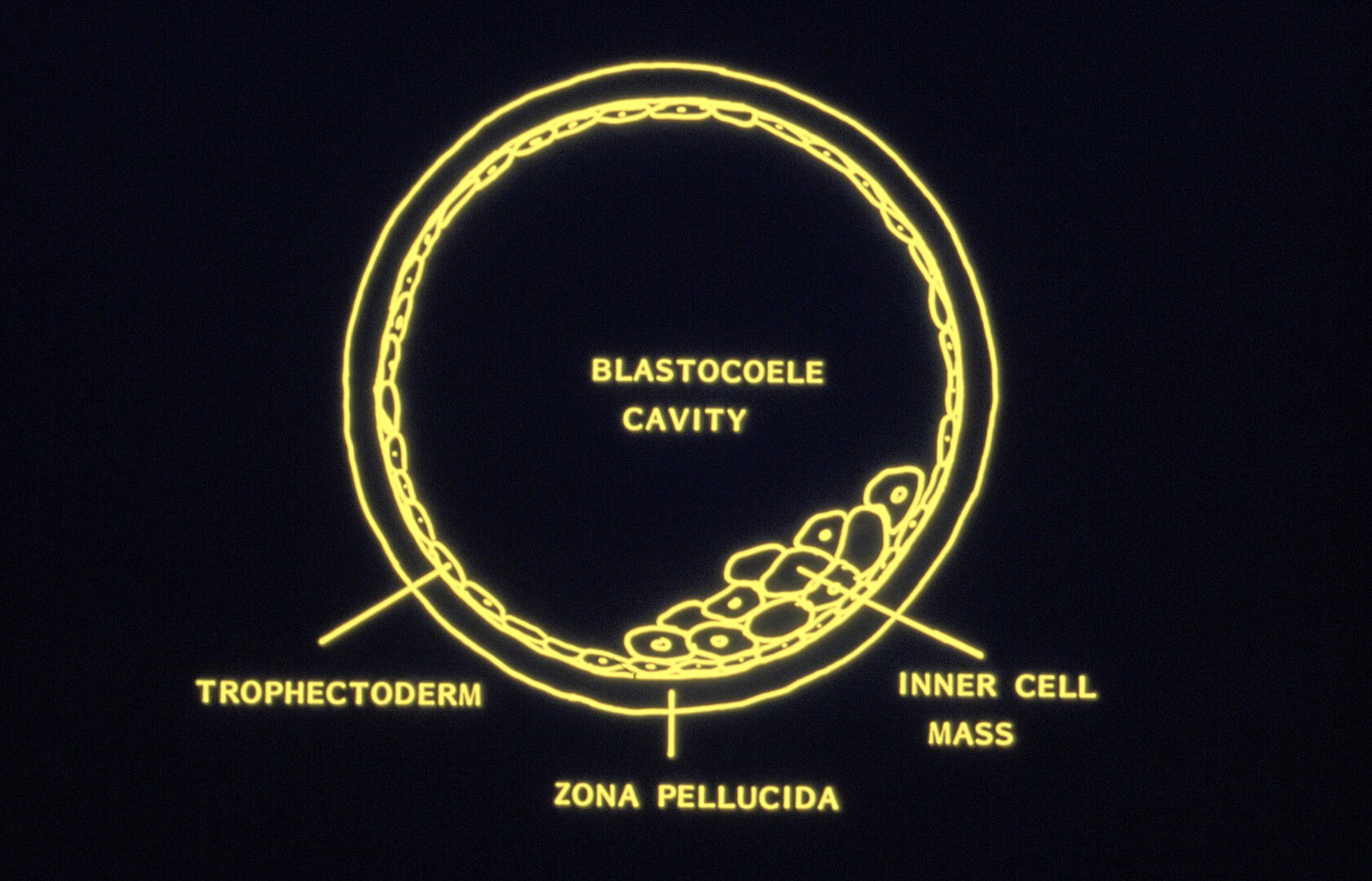
blastocyte
specializes into outer and inner cell mass and layer
outer cell layers
embryonic support structures
inner cell mass
specializes into specialized stem cells and multipotent stem cells
specialized stem cells
specific cell types
multipotent cell types
multiple cell types
stem cells
differentiate into different cell types
four types of tissue in the human body
muscle, nervous, epithelial, connective (MENC)
epithelial tissue
glands and tissues on interior or exterior body surfaces
protects from dehydration and physical damage
controls what enters and leaves cells in layers underneath it
layer can be one or a few cells thick
very regenerative
three types of epithelial tissue
simple, stratified, glandular
simple epithelial
single layer
stratified epithelial
multiple layers
glandular epithelial
secrete a product
squamous
flat
cuboidal
square
columnar
column
connective tissue
defends the body (white blood cells), cartilage and bone, accumulates and transports materials
macrophages
engulf and digest microbes—connective tissue
lymphocytes
make antibodies, attack virus-infected cells and cancer cells—connective tissue
adipocytes
fat cells—connective tissue
leucocytes
white blood cells—connective tissue
erythrocyte
red blood cells—connective tissue
nervous tissue
conducts signals rapidly, includes neurons (nerve cells)
muscle cells
permits movement, 3 kinds of muscles—smooth, cardiac, skeletal
importance of homeostasis
provides stable environment so chemical reactions can occur, feedback of information maintains homeostasis—hypothalamus in brain is important in regulation
negative feedback
prevents deviation from set point; not normal back to normal (ex: maintaining blood pressure)
positive feedback
increases deviation from initial value (ex: blood clotting, sweating)
electrical signals
neurons, fast communication
chemical signals
hormones and other chemicals, slower but longer lasting response
organs and organ systems
made of combinations of four types of tissues
integumentary, muscular, skeletal
cover, support, or produce movement
endocrine, nervous, reproductive
regulate body functions
circulatory, immune
transport or protect
respiratory, digestive, urinary (excretory)
involved in metabolism or excretion
hypothalamus
important for for regulation (homeostasis)
integumentary system
includes skin, hair, and nails
barrier against infection and injury
regulates body temperature
removes waste from the body
protection uv light
epidermis
outer layer, mostly dead cells
cells make keratin protein
melanocytes make melanin—skin protein
dermis
inner layer
contains blood vessels, nerve endings, glands, smooth muscles, hair follicles
regulates body temperature—sweat glands
sebaceous glands—make sebum (oil)
subcutaneous layer (hypodermis)
contains mostly fat (adipose cells)
cinomas
skin cancers that occur in non-pigmented cells; usually high cure rate
malignant melanoma
occur in pigmented cells; usually low cure rate
acne
from clogged oil duct and infection
psoriasis
inherited rapid growth of epidermal cells causing scaly white skin
hair
protects scalp from uv light
prevent particles from entering the body (nose, ear, eyes)
nails
protects fingertips
contain a lot of keratin
grow from nail root
skeletal system
supports the body
protects internal organs
provides movement
stores minerals
site of blood cell formation
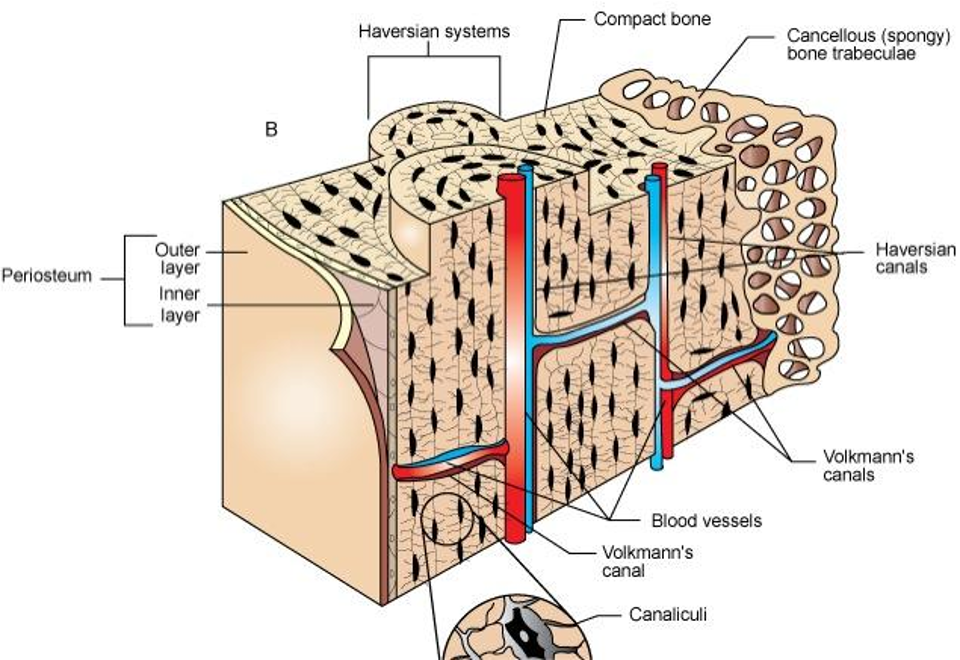
bone structure
solid network of living cells surrounded by calcium salt deposits
haversian canals
bone marrow
periosteum
ossification
osteocytes
mature bone cell
osteoblasts
build bond
osteoclasts
break down bone
haversian canals
contain blood vessels and nerves
bone marrow
red marrow produces blood cells
periosteum
tough layer of connective tissue
ossification
formation of bone tissue; most bone ossifies from cartilage
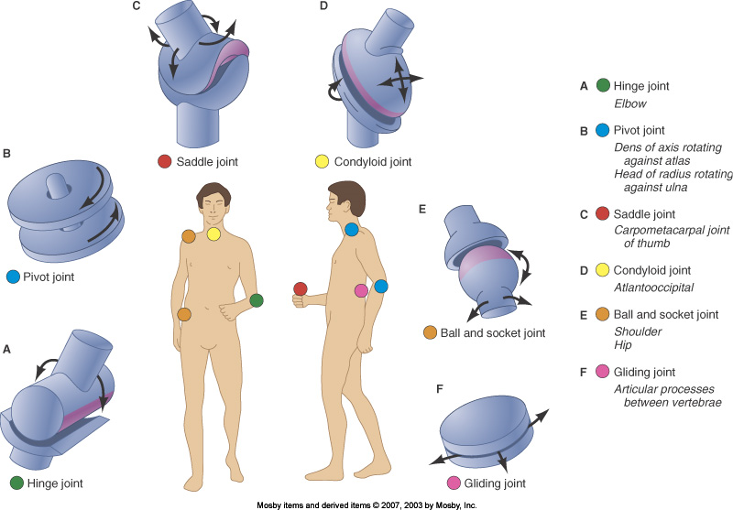
joints
where two bones meet
classified by range of motion allowed
immovable (sutures in skull)
slightly moveable (vertebrae)
freely moveable (hip, shoulder)
joint structure
ligaments, bursae
four types of freely moveable joints
ball and socket, hinge, pivot, saddle
ligaments
connective tissue that holds bones together
bursae
small sacs with synovial fluid (lubricates joint)
sprains
injury due to forcible twisting
arthritis
inflammation of joint
bursitis
inflammation of the bursa
rheumatoid arthritis
immune system attacks joints and deposits bone in them
muscular system
three types of muscle tissue
skeletal, cardiac, smooth
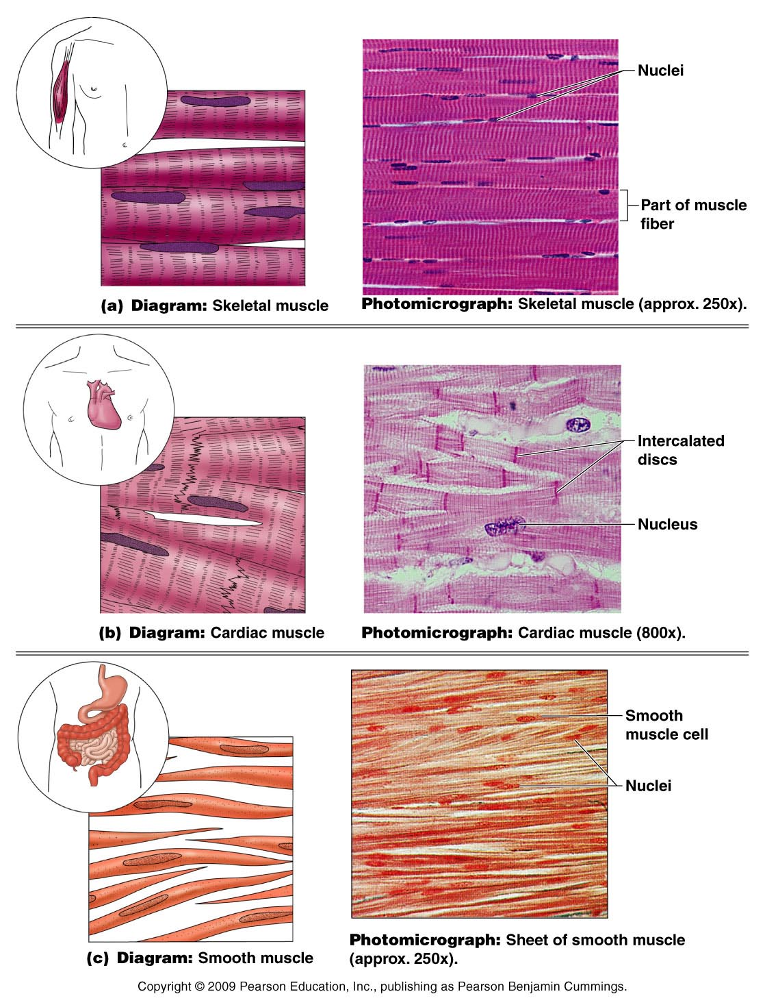
skeletal muscle
attached to bones
voluntary and striated
tendons
tendons
connective tissue that joins muscles to bones
cardiac muscles
in the heart
involuntary and striated
smooth muscles
hollow organs (blood vessels, stomach)
involuntary and nonstriated
muscle contraction
occurs when thin filaments slide over the thick filaments (shortens the sarcomere), atp is required
sarcomere
unit of a muscle fiber
thick filaments
myosin
thin filaments
actin
digestive system
food passes through, is broken down, and nutrients are absorbed; digestion begins in the mouth
mechanical digestion
chewing, physical breakdown into smaller pieces
chemical digestion
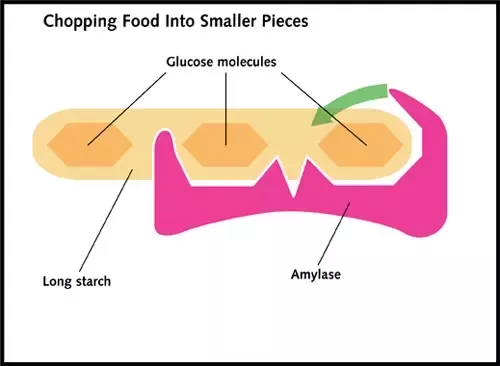
enzymes begin breakdown into smaller molecules; saliva contains amylase—breaks down carbohydrates
bolus
chewed clump of food that travels down esophagus to stomach
peristalsis
contraction of smooth muscle in esophagus—moves bolus to stomach
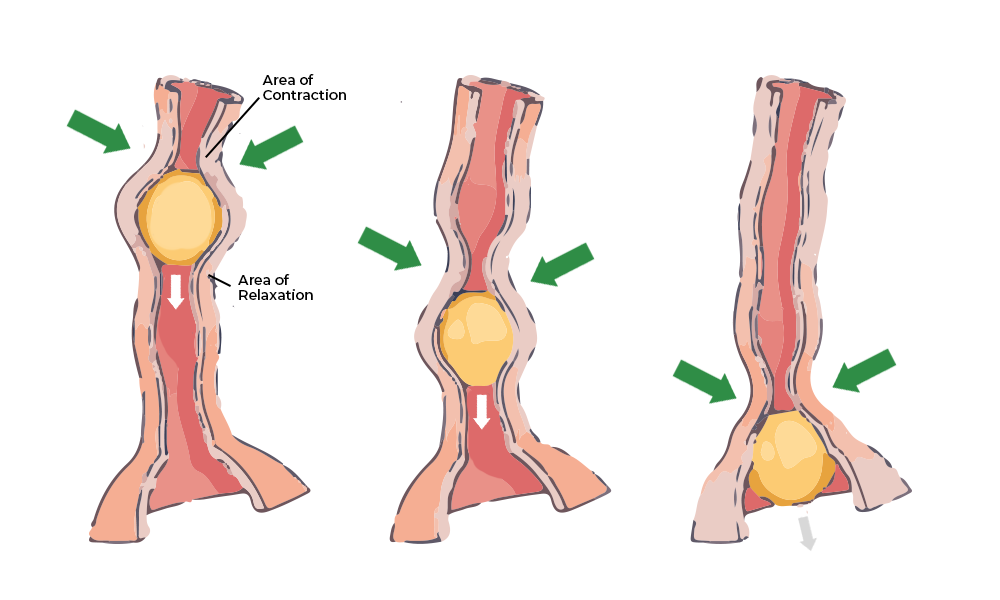
cardiac sphincter
closes esophagus once food has reached the stomach
stomach
performs chemical digestion using HCl (acid) and pepsin (digests proteins); performs mechanical digestion by churning food and fluids
chyme
churned food and fluids
pyloric valve
area where chyme is pushed through into the small intestines
small intestines
adds enzymes maltase, sucrase, lactase (carbs) and peptidase (protein); most absorption of nutrients occurs here
villi
increases surface area in small intestine
pancreas
behind stomach—produces insulin and glucagon which regulate blood sugar levels; produces enzymes that aid in digestion added to small intestine; produces sodium bicarbonate to raise pH
lipase
lipids
trypsin
protein
amylase
disaccharides
liver
above stomach; makes bile which dissolves lipids; bile is stored in gallbladder
emulsifier
for mechanical digestion
large intestine/colon
removes water from undigested material; bacteria help make vitamin k; waste material is left, passes through rectum out of body

