Chapters 8-12
 Call Kai
 Learn
Learn Practice Test
 Spaced Repetition
 Match
Match Flashcards
 Knowt Play
1/323

Earn XP
Description and Tags
This world ain't worth living
324 Terms
Each muscle is an organ, comprised of skeletal muscle tissue, connective tissue coverings, nervous tissue for contraction, and blood to nourish it.
Skeletal muscle
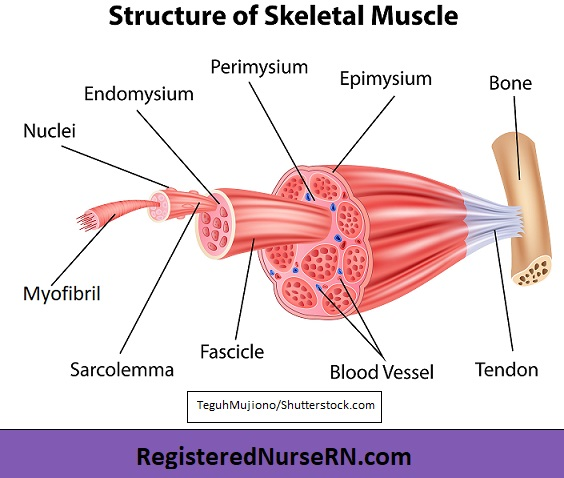
The muscle has several dense connective coverings. Layers of dense connective tissue— fascia, surround and separate each muscle.
This connective tissue extends beyond the ends of the muscle and gives rise to cord-like tendons that are fused to the periosteum of bones.
Sometimes muscles are connected to each other by broad sheets of connective tissue called aponeuroses.
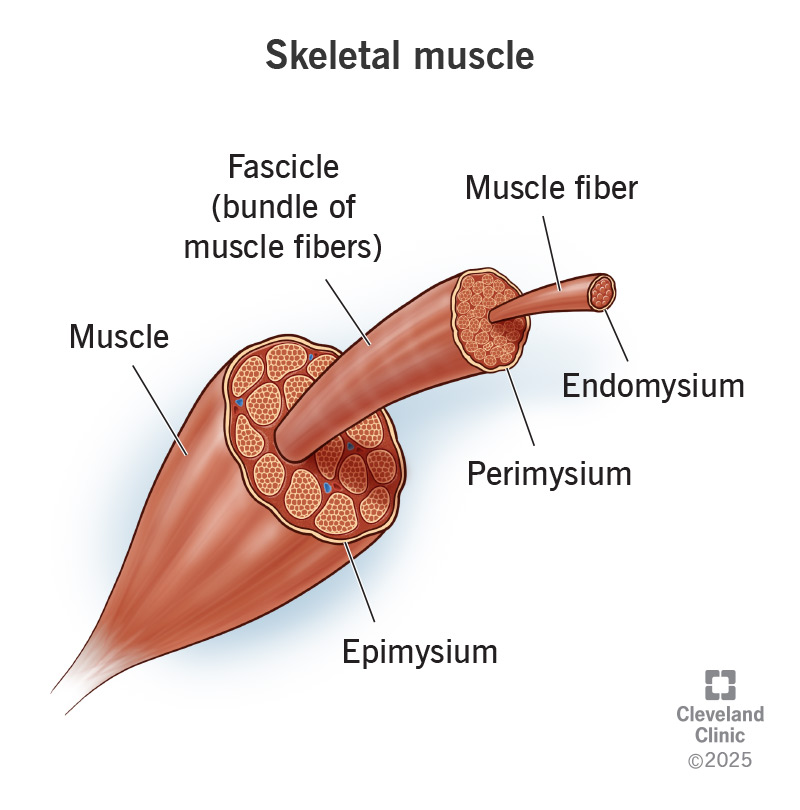
Under the outer layer another layer of connective tissue around each whole muscle is called the epimysium.
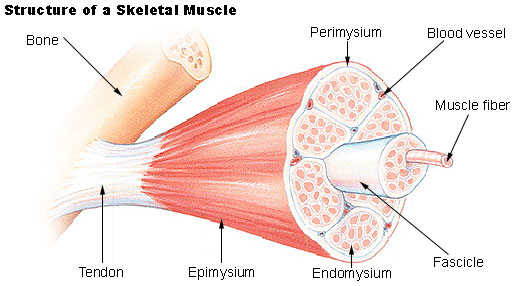
The perimysium surrounds individual bundles of fibers called fascicles within each muscle.
Each fascicle is covered by a connective tissue layer called endomysium.
The muscle fiber membrane is called the sarcolemma. The fiber contains the cytoplasm, called sarcoplasm.
Within the sarcoplasm are many parallel myofibrils, composed of smaller filaments called myofilaments.
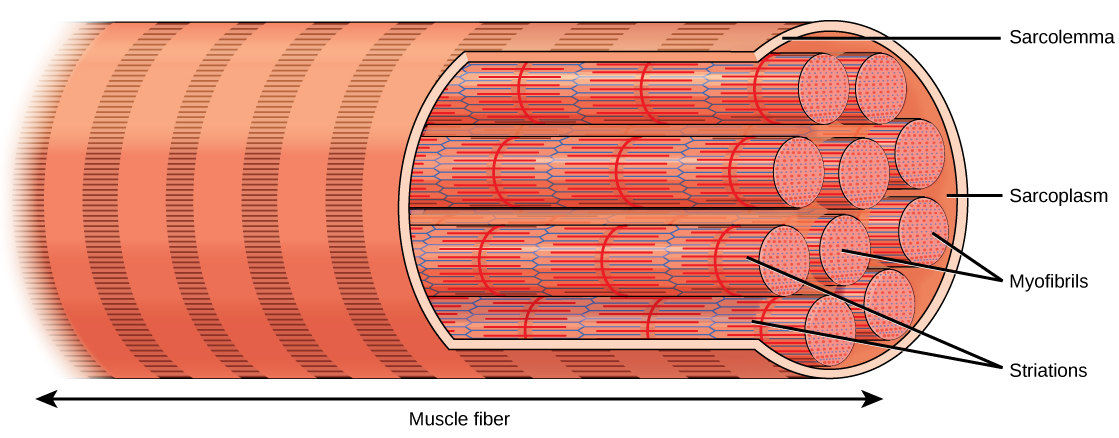
The muscle fiber membrane is called the sarcolemma. This fiber contains the cytoplasm — sarcoplasm.
Within the sarcoplasm are many parallel myofibrils, composed of smaller filaments called myofilaments.
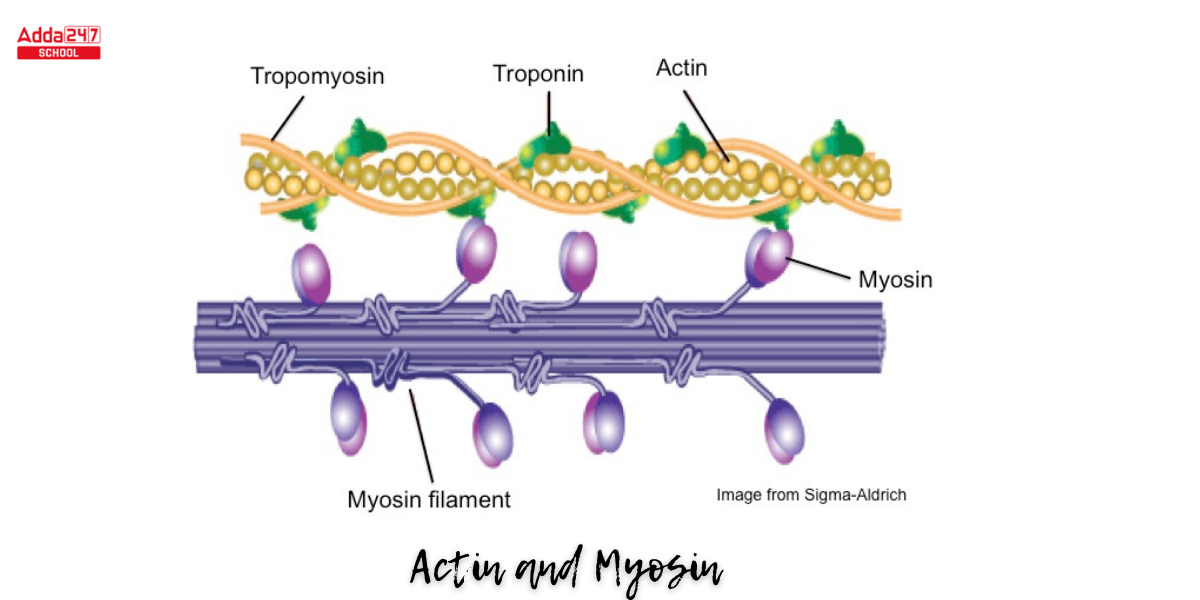
Thick filaments composed of the protein myosin.
Thin filaments mostly made of the protein actin.
The 2 types of protein filaments that make up the myofibrils
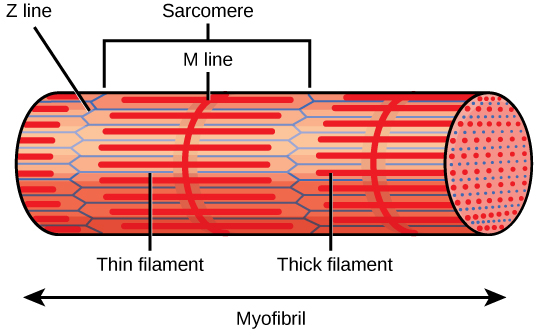
Striations in skeletal muscle are due to a pattern of overlapping thin and thick filaments, called sarcomeres.
A sarcomere is a functional unit extending from one Z line to the next (in the center of the light band). The dark stripes are called A bands. The light, I bands.
T tubules = transverse tubules. Located in the surface indentations of the sarcolemma. They open to the outside of the fiber
Associated with tubular structure Sarcoplasmic reticulum. They store and release calcium ions for muscle contraction.
The site where the motor neuron and muscle fiber interact, so that the motor neuron can control the muscle fiber.
Neuromuscular Junction
The muscle fiber membrane contains a motor end plate where sarcolemma is tightly folded. Also where nuclei & mitochondria are abundant.
Acetylcholine is a neurotransmitter released from the end of the motor neuron.
Muscle contraction involves several components that result in the shortening of sarcomeres, and the pulling of the muscle against its attachments.
The protein myosin consists of two twisted strands with globular cross-bridges projected outward along the strands.
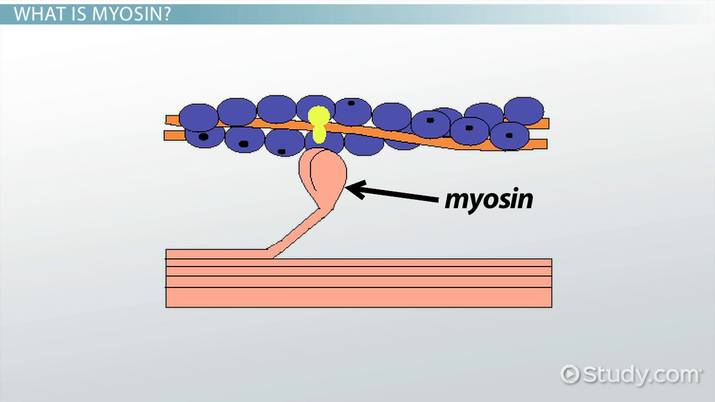
Actin is a globular protein with myosin binding sites. What two proteins are associated with it?
Troponin and tropomyosin.
If allowed to, the myosin will attach to the binding site on the actin filament and pull on the actin filament before releasing (targets every site). What prevents this from happening continuously?
It requires calcium ions and ATP to be present in order to occur. The sliding filament theory
Energy from the conversion of ATP to ADP is what?
Provided to the cross-bridges from the enzyme ATPase, causing them to be in a “cocked” position again.
1) The motor neuron must release the neurotransmitter acetylcholine from its synaptic vesicles into the synaptic cleft in order to initiate a muscle contraction. Protein receptors in the motor end plate detect the neurotransmitters.
A muscle impulse spreads over the surface of the sarcolemma and into the transverse (T) tubules where it reaches the sarcoplasmic reticulum.
2) Upon receipt of the muscle impulse, the sarcoplasmic reticulum releases its stored calcium ions into the sarcoplasm of the muscle fiber.
The high concentration of calcium in the sarcoplasm interacts with the troponin and tropomyosin molecules, which move aside, exposing the myosin binding sites on the actin filaments.
3) Myosin heads now bind and pull on the actin filaments, causing the sarcomeres to shorten. After the nerve impulse has been received, the enzyme acetylcholinesterase rapidly decomposes the acetylcholine.
Then calcium is returned to the sarcoplasmic reticulum, and the linkages between myosin and actin are broken.
Energy for contraction comes from molecules of ATP. This chemical is in limited supply and must often be regenerated.
ATP - Adenosine Triphosphate
As ATP decomposes, the energy from creatine phosphate can be transferred to ADP molecules, converting them back to ATP.
Creatine phosphate
The early anaerobic phase of cellular respiration yields few molecules of ATP, so muscle has a high requirement for oxygen, which enables the complete breakdown of glucose in the mitochondria.
Cellular respiration
Oxygen is carried in the blood, bound to the pigment hemoglobin.
In muscle tissue, oxygen is stored by combining with a similar pigment called myoglobin.
May develop during strenuous exercise, and lactic acid accumulates as an end product of anaerobic respiration. This acid diffuses out of muscle cells and is carried in the bloodstream to the liver.
Oxygen deficiency
Refers to the amount of oxygen that liver cells require to convert the accumulated lactic acid into glucose, plus the amount that muscle cells need to resynthesize ATP and creatine phosphate to their original concentrations.
Oxygen debt. May take several hours to repay
When a muscle loses its ability to contract during strenuous exercise, it is referred to as fatigue. This usually arises from the accumulation of lactic acid in the muscle causing a lowered pH.
A muscle cramp occurs due to a lack of sufficient ATP required to return calcium ions back to the sarcoplasmic reticulum so muscle fibers can relax.
Why does muscle contraction produce so much heat?
More than half of the energy produced by cellular respiration becomes heat.
A muscle fiber remains unresponsive to stimulation unless the stimulus is of a certain strength is called the threshold stimulus.
When a muscle fiber contracts, it contracts to its full extent; it cannot contract partially. The all-or-none response.
The contractile response of a single muscle fiber to a muscle impulse.
Muscle twitch. A twitch consists of a period of contraction followed by a period of relaxation.
A motor neuron and the muscle fibers it controls make up a ____; when stimulated to do so, the muscle fibers of the ____ contract all at once.
Motor unit
A muscle fiber receiving a series of stimuli of increasing frequency reaches a point when it is unable to relax completely and the force of individual twitches combine by the process of summation.
If the sustained contraction lacks any relaxation, it is called a tetanic contraction.
An increase in activated motor units within a muscle at higher intensities of stimulation is recruitment.
Muscle tone is achieved by a continuous state of sustained contraction of motor units.
It is useful in maintaining posture.
smooth muscle cells are elongated with tapered ends. Are they voluntary or involuntary?
Involuntary
There are two types of smooth muscle: Multi-unit
Fibers occur separately rather than as sheets. (ex: blood vessels and iris of the eye)
There are two types of smooth muscle: Visceral
Occurs in sheets and is found in the walls of hollow organs; these fibers can stimulate one another and display rhythmicity. Responsible for peristalsis in hollow organs and tubes.
How is smooth muscle contraction like skeletal muscle?
Similar mechanism of actin and myosin binding, use of ATP, membrane impulses, and calcium ions.
How is smooth muscle unlike skeletal muscle?
NO striations, has underdeveloped sarcoplasmic reticulum, and slower to contract/relax than skeletal muscle.
How many neurotransmitters act on smooth muscle?
Acetylcholine and norepinephrine.
Describe cardiac muscle cells (only in the heart).
Cylindrical, branching cells with single nucleus, striated.
How is Cardiac Muscle Contraction like skeletal muscle contraction?
Involves a similar mechanism of actin binding to myosin, uses calcium ions and ATP, composed of sarcomeres.
What are the ways Cardiac Muscle Contraction differs from skeletal muscle contraction?
Involuntary, contracts for longer periods, has long refractory period which prevents tetanic contractions, and impulses are spread from cell to cell through intercalated disks.
The immovable end of a muscle is the origin, while the movable end is the insertion. How does muscle contraction change the position of the insertion?
It pulls the insertion towards the origin, causing movement.
The main muscle that causes an action
Prime mover
Muscles that assist the prime mover.
Synergists
Muscles that works against the action of a prime mover
Antagonists
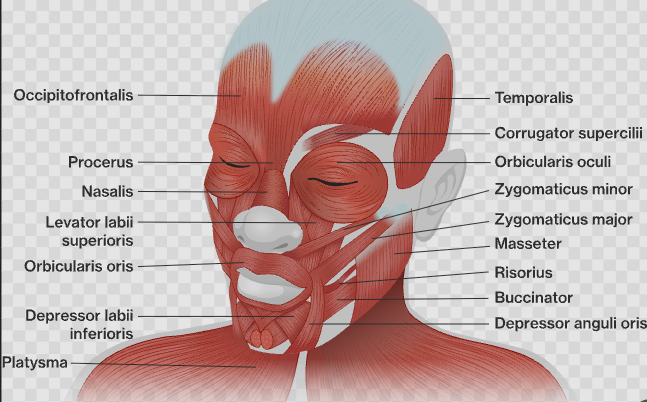
Muscles of Facial Expression attach to underlying bones and overlying connective tissue of skin, and are responsible for expressions.
Epicranius, orbicularis oculi, orbicularis oris, buccinator, zygomaticus, and platysma.
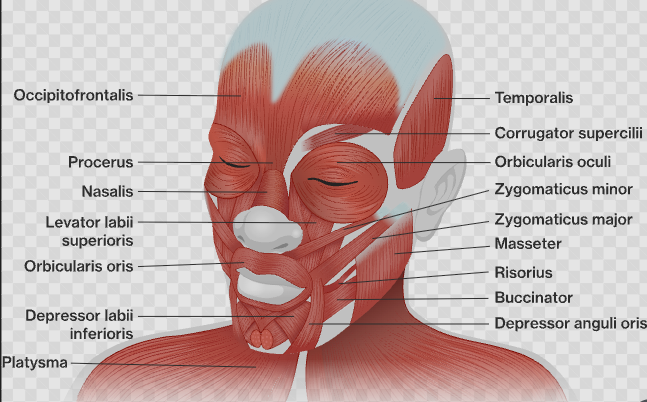
Muscles of Mastication (chewing/grinding) are the masseter and temporalis.
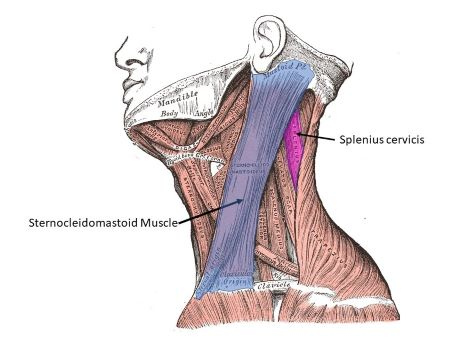
Muscles that Move the Head: Sternocleidomastoid, splenius capitis, and semispinalis capitis.
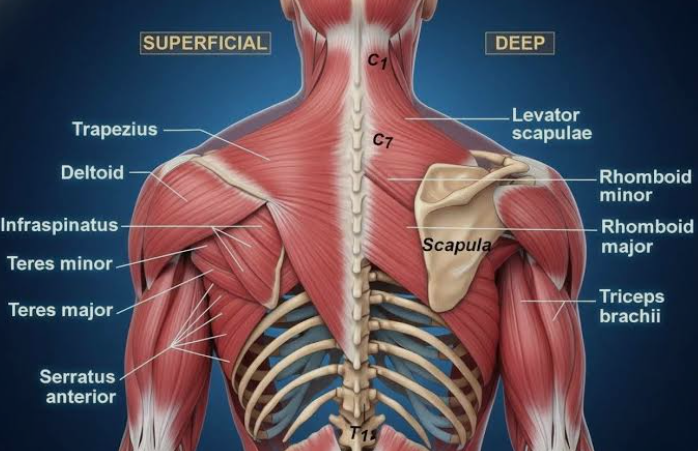
Pectoral Girdle Major muscles include
Trapezius, rhomboid major, levator scapulae, serratus anterior, and pectoralis minor.
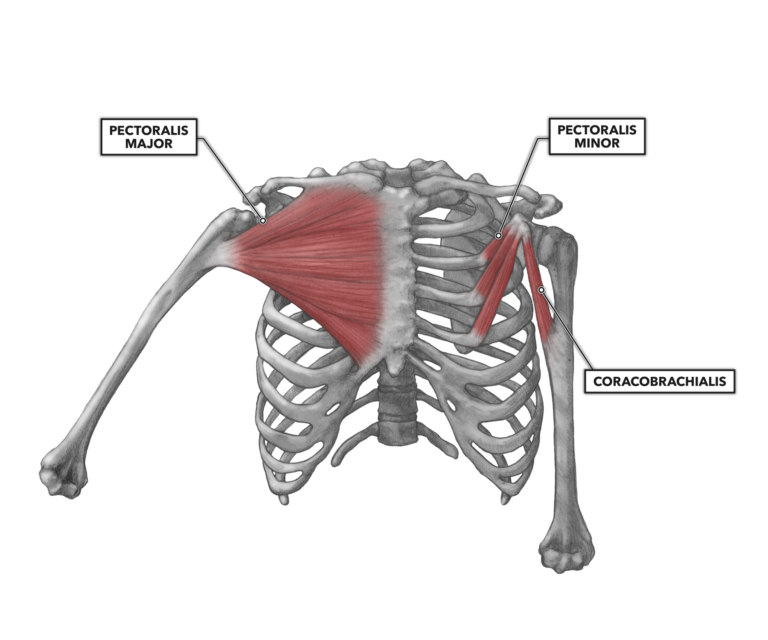
Shoulder Flexors
Coracobrachialis and pectoralis major.
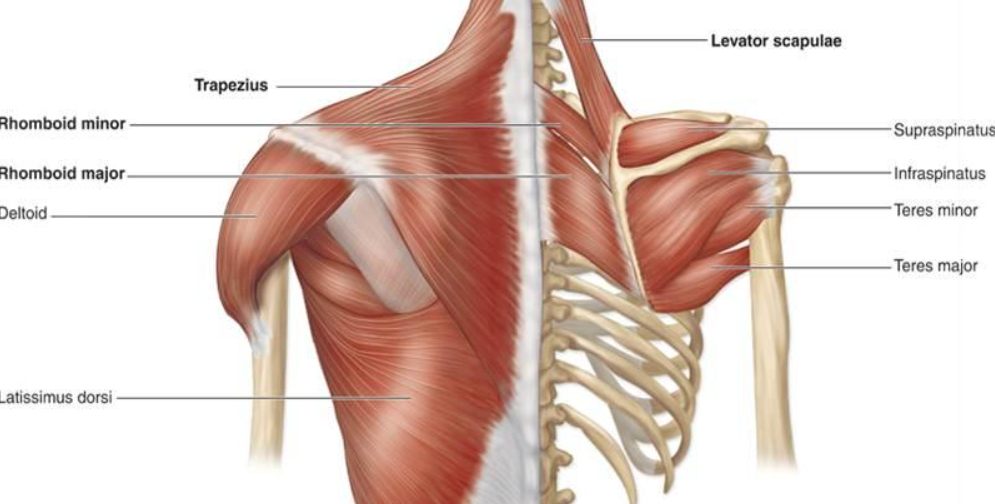
Shoulder Extensors
Teres major and latissimus dorsi.
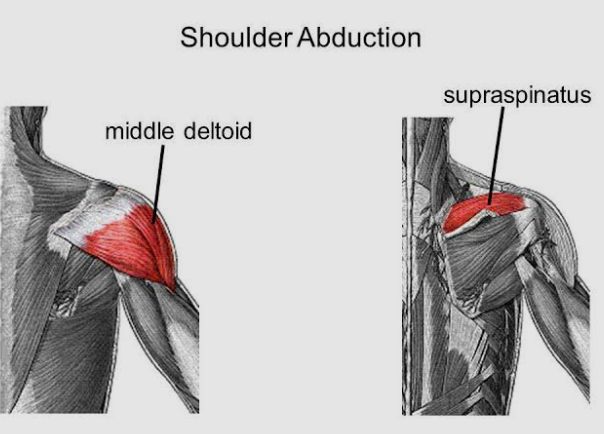
Shoulder Abductors
Supraspinatus and the deltoid.
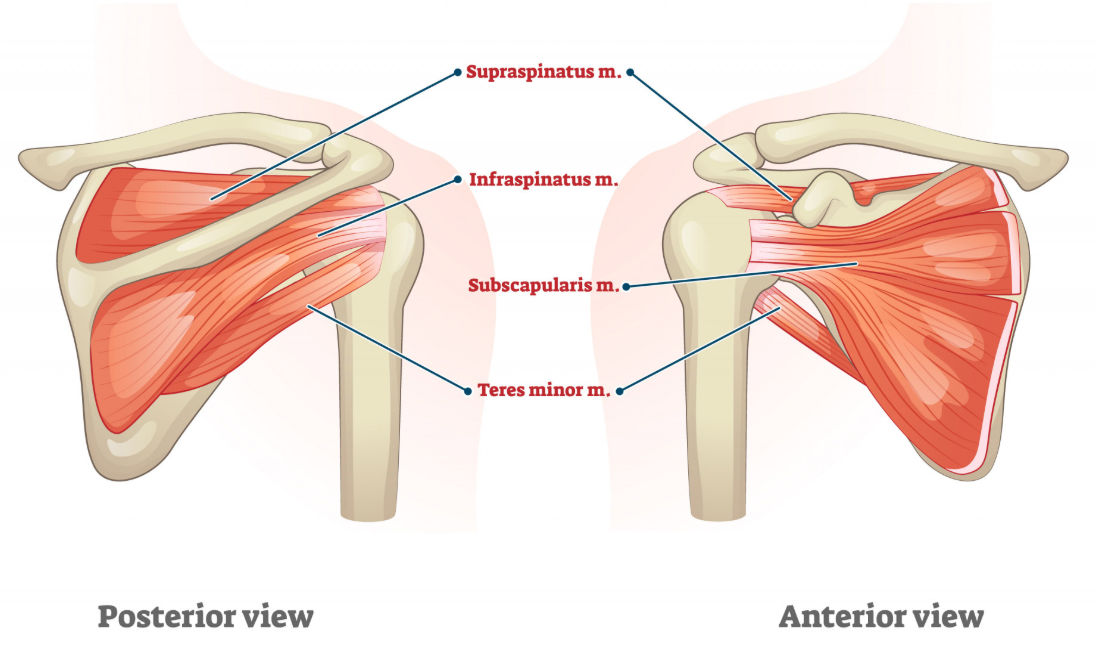
Shoulders Rotators
Subscapularis, infraspinatus, and teres minor.
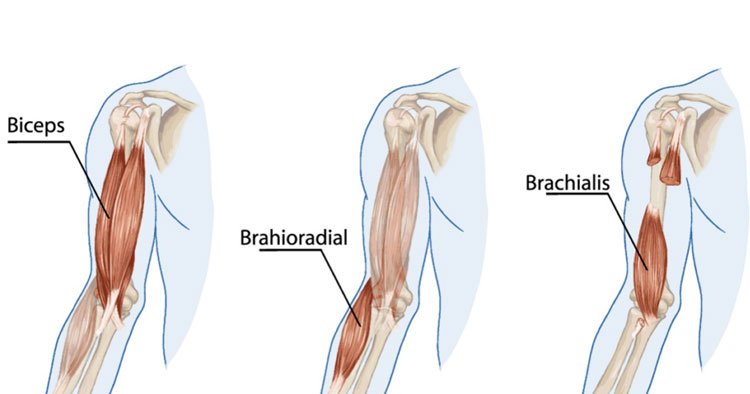
Arm Flexors
Biceps brachii, brachialis, and brachioradialis.
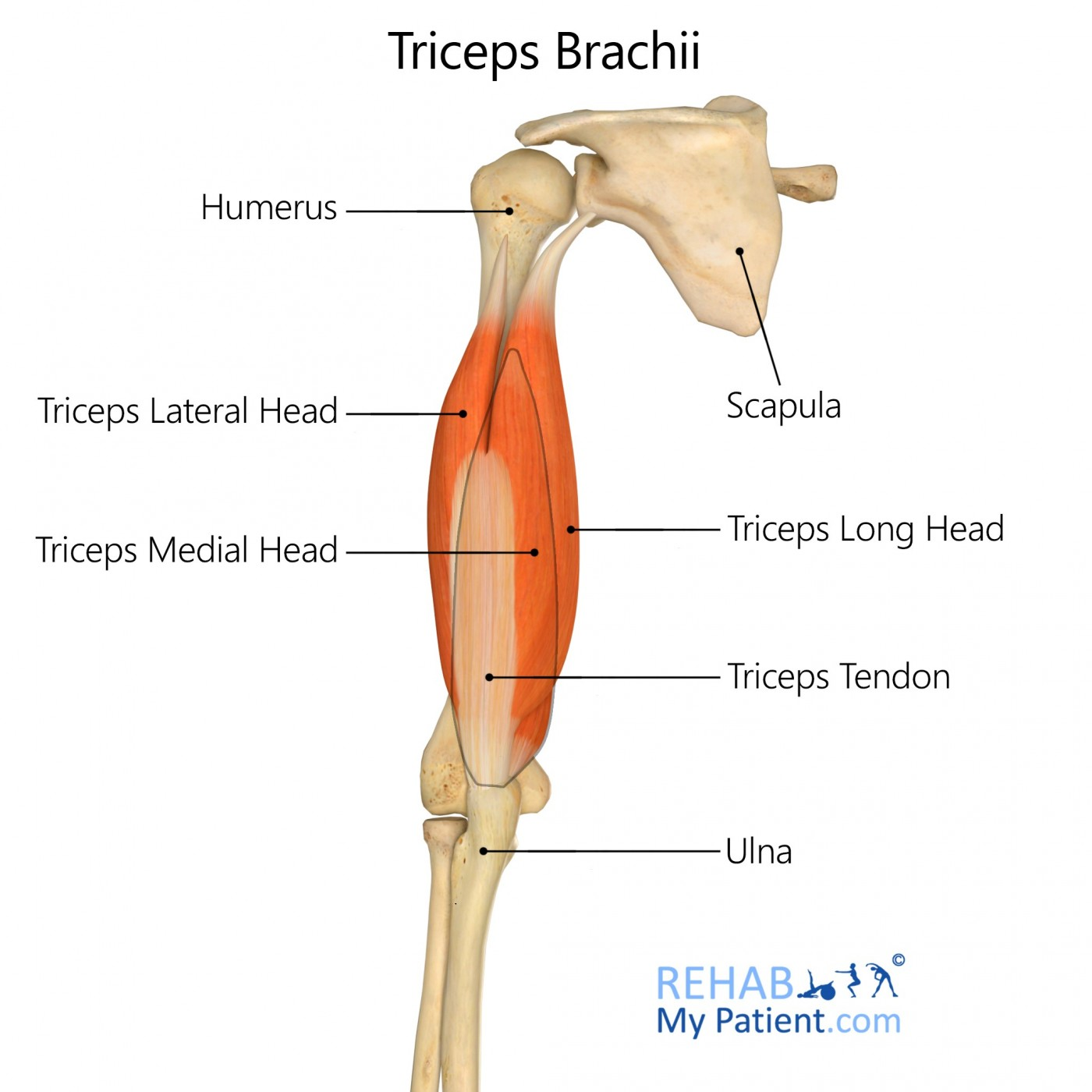
Muscles that Move the Forearm are also separated by movement. An extensor
The triceps brachii muscle.
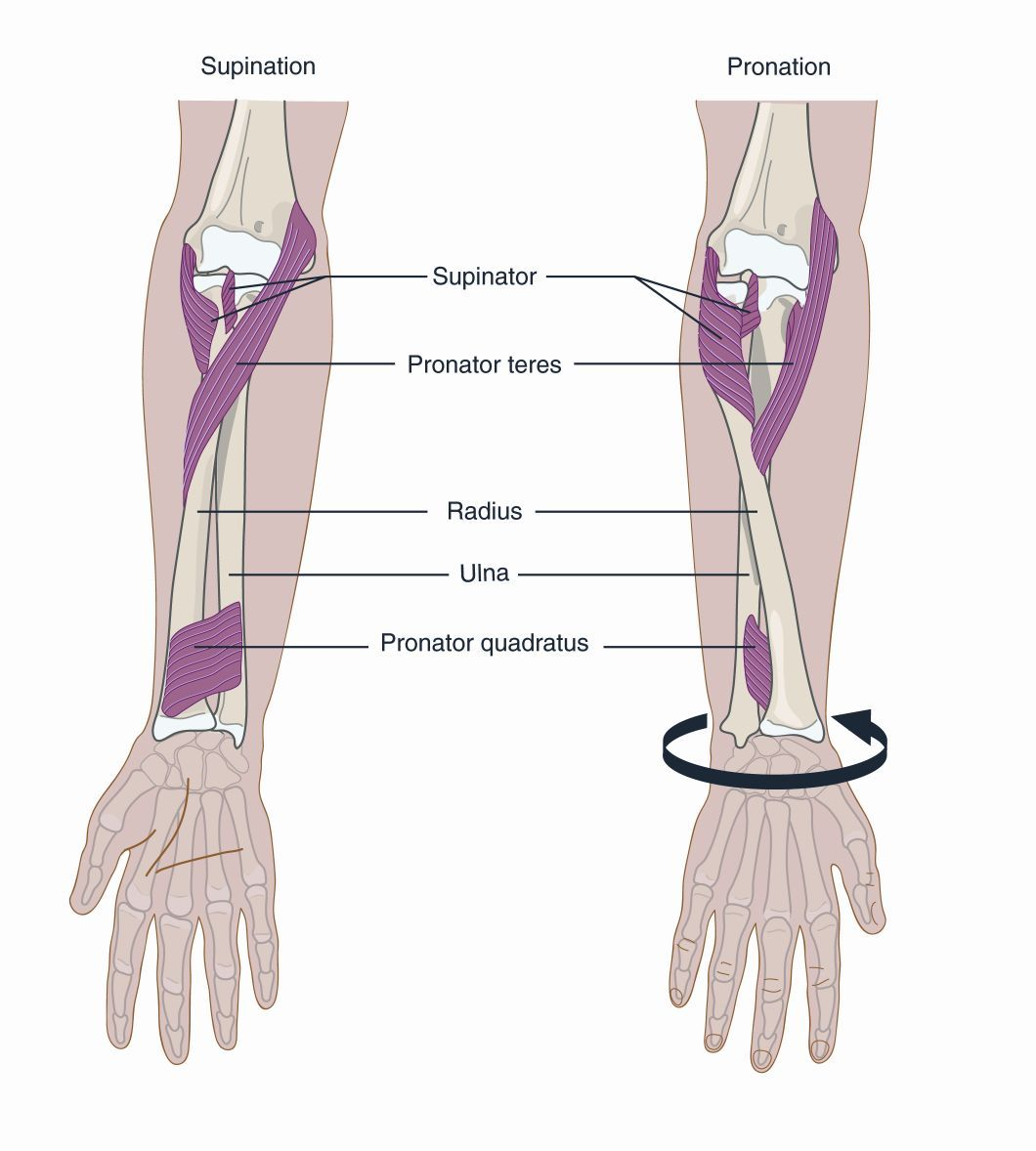
Hand rotators
The supinator, pronator teres, and pronator quadratus.
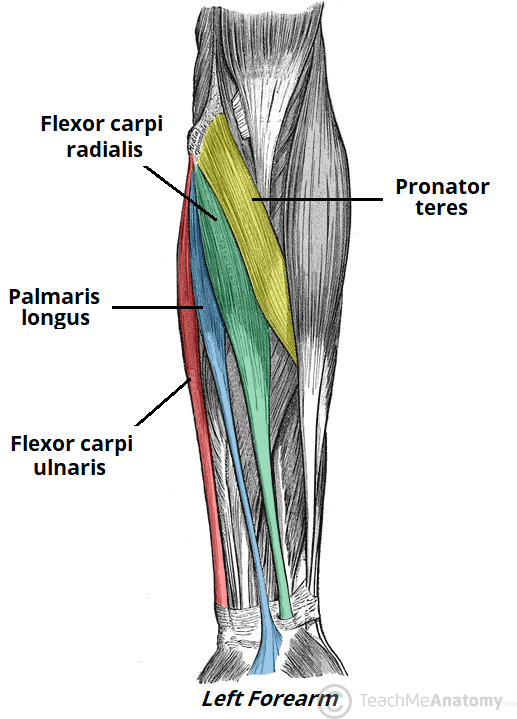
Fingers and hands: Flexors
Flexor carpi radialis, flexor carpi ulnaris, palmaris longus, and flexor digitorum profundus.
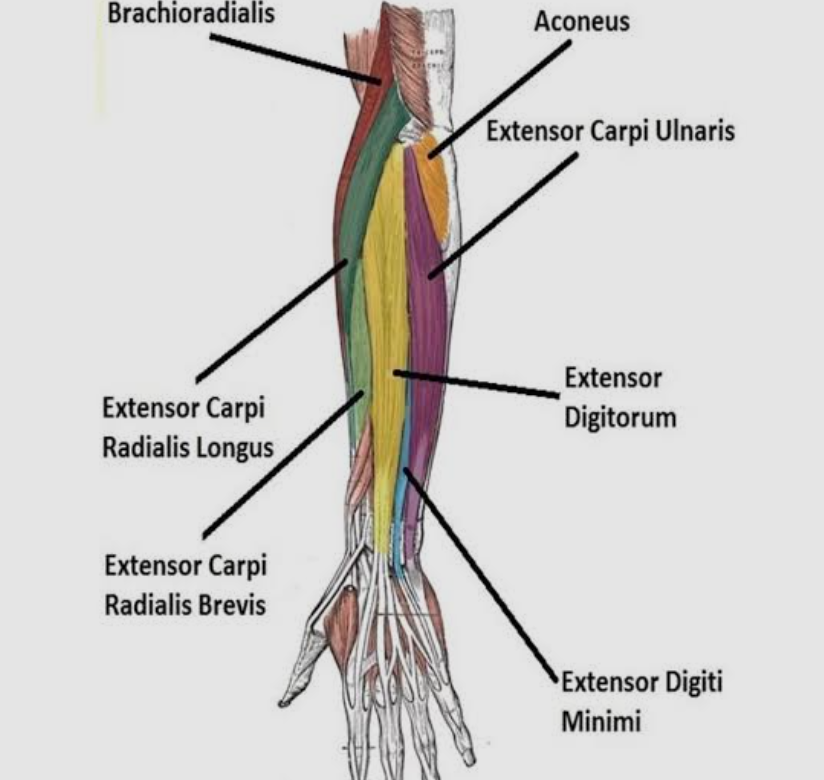
Fingers and hands: Extensors
Extensor carpi radialis longus, extensor carpi radialis brevis, extensor carpi ulnaris, and extensor digitorum
Muscles of the Abdominal Wall connect the rib cage. Vertebral column to the pelvic girdle. Muscles of the Pelvic Outlet are
The levator ani, the superficial transversus perinei, bulbospongiosus, and ischiocavernosus.
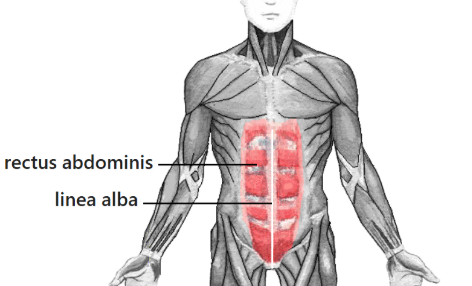
A band of tough connective tissue called the ____ , extends from the xiphoid process to the symphysis pubis and serves as an attachment site for certain abdominal wall muscles.
Linea alba
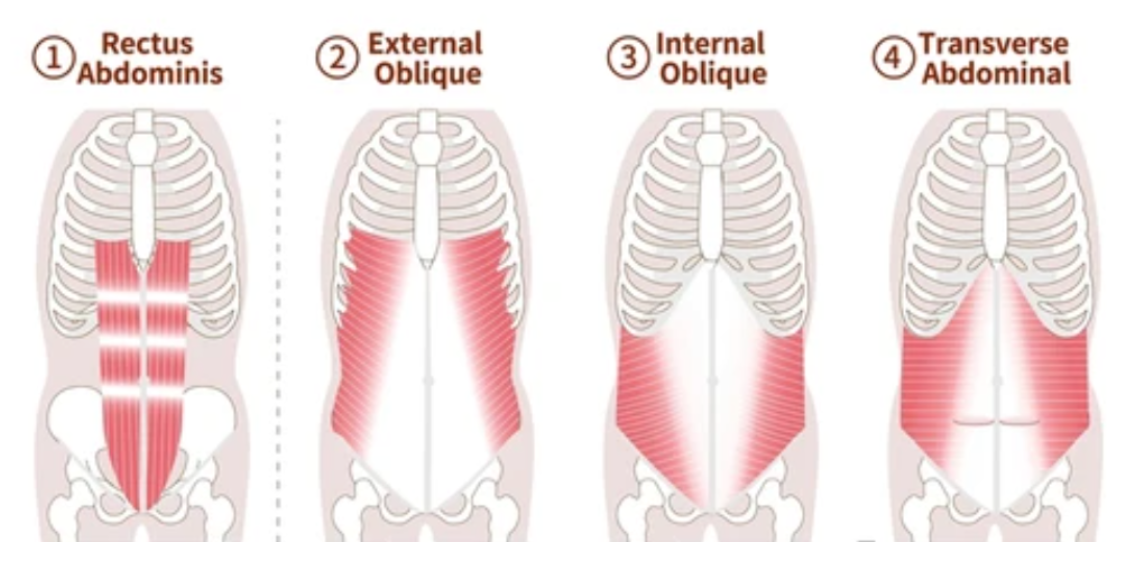
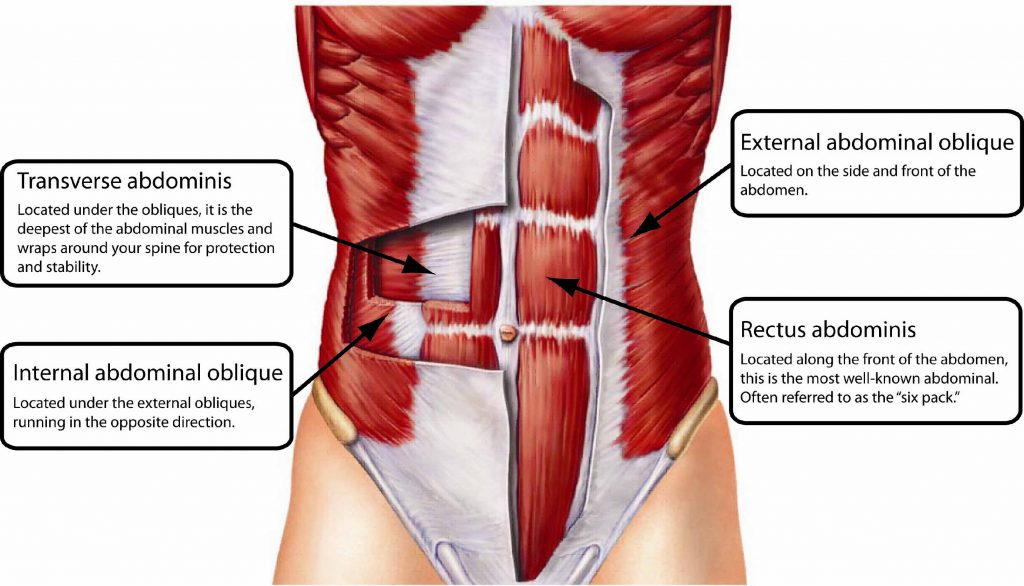
The four muscles of the abdominal wall include
External oblique, internal oblique, transversus abdominis, and rectus abdominis.
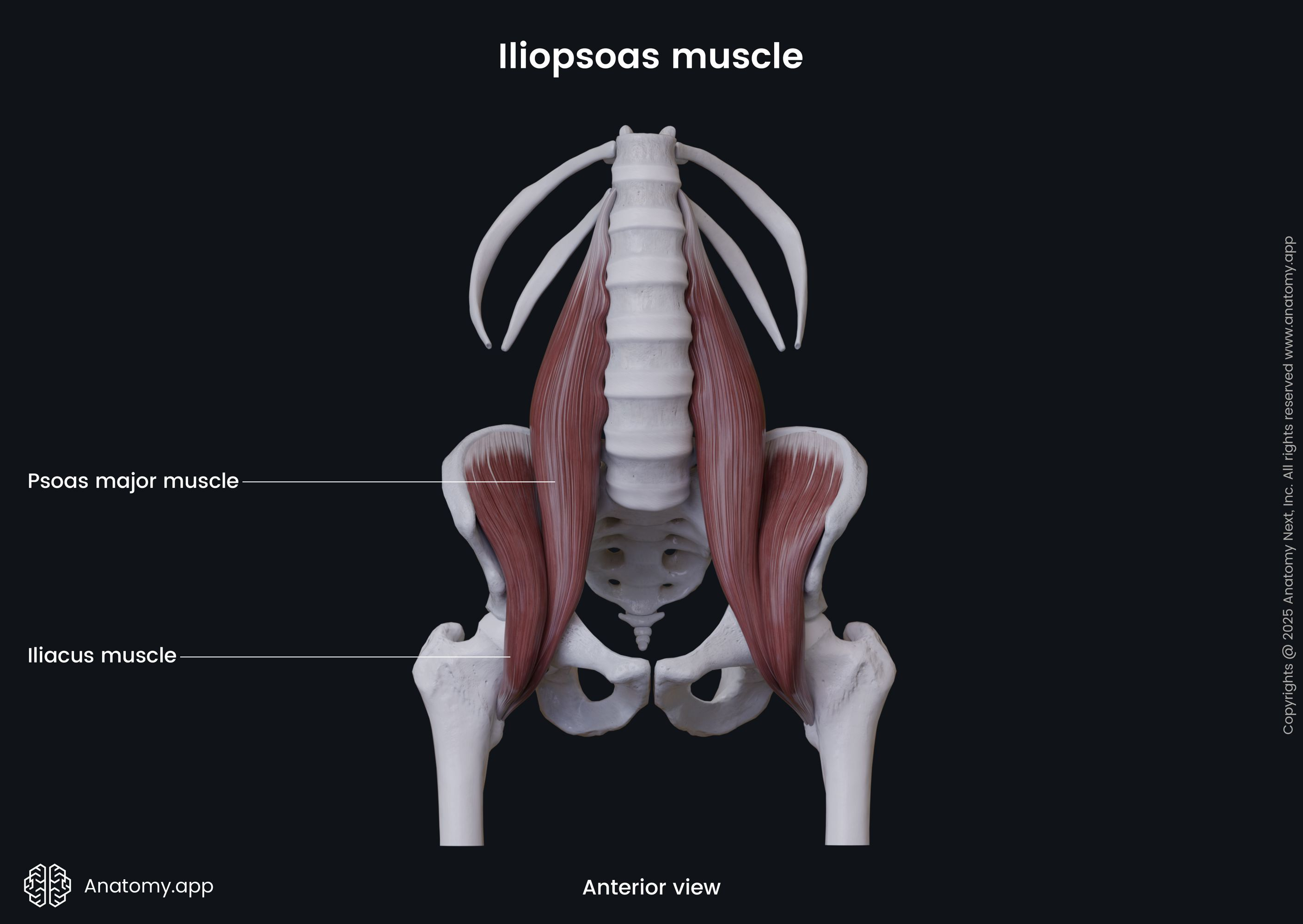
Thigh muscles are attached to the femur and pelvic girdle. Anterior group includes what?
Psoas major and iliacus
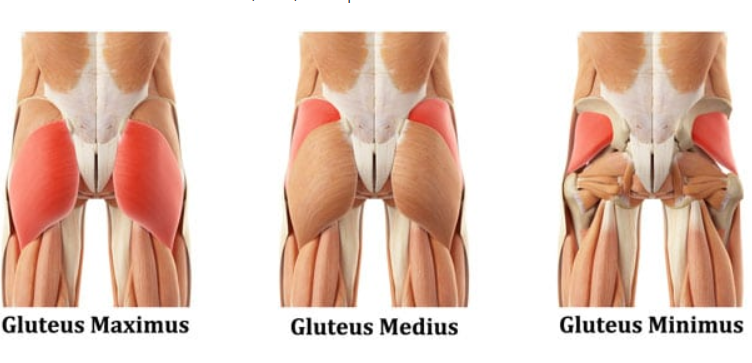
Thigh muscles are attached to the femur and pelvic girdle. Posterior group is made up of what?
Gluteus maximus, gluteus medius, gluteus minimus, and tensor fasciae latae.
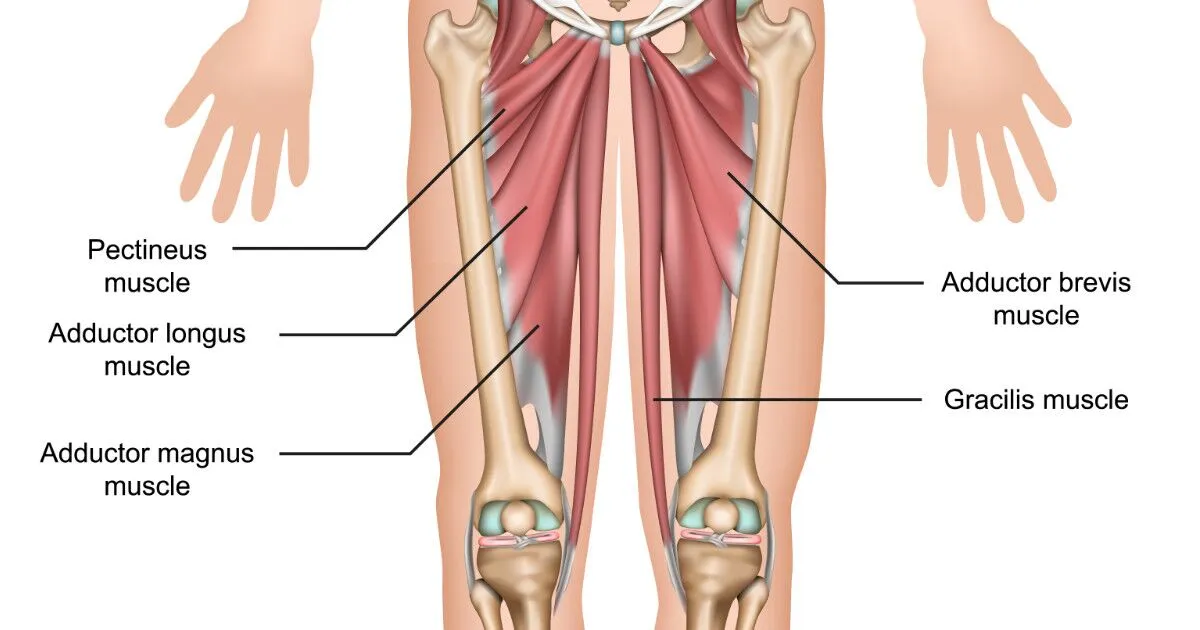
Thigh adductors include what?
Adductor longus, adductor magnus, and gracilis.
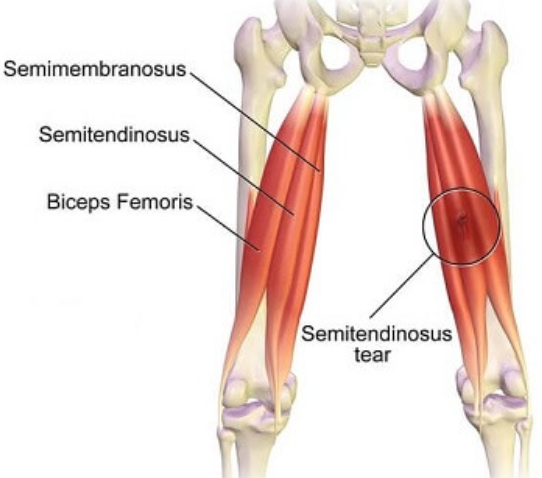
Leg muscles: Flexors are what?
Biceps femoris, semitendinosus, semimembranosus, and sartorius.
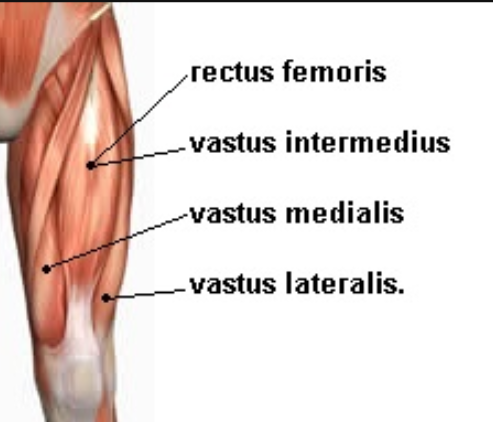
Leg: An extensor is the quadriceps femoris group, made up of four parts
Rectus femoris, vastus lateralis, vastus medialis, and vastus intermedius.
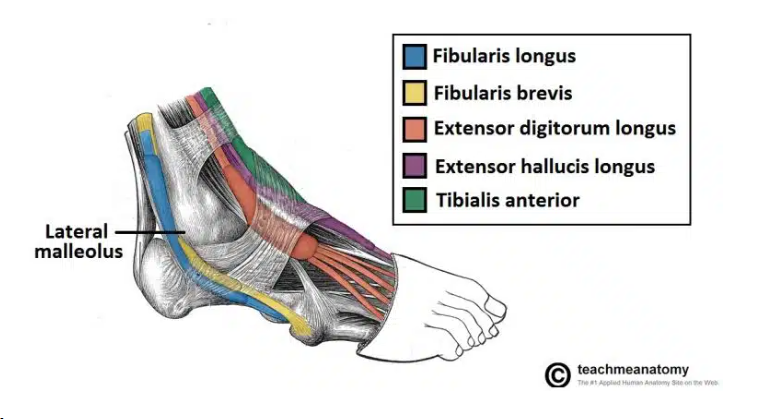
Dorsiflexors include the tibialis anterior, fibularis tertius, and extensor digitorum longus (toe muscles).
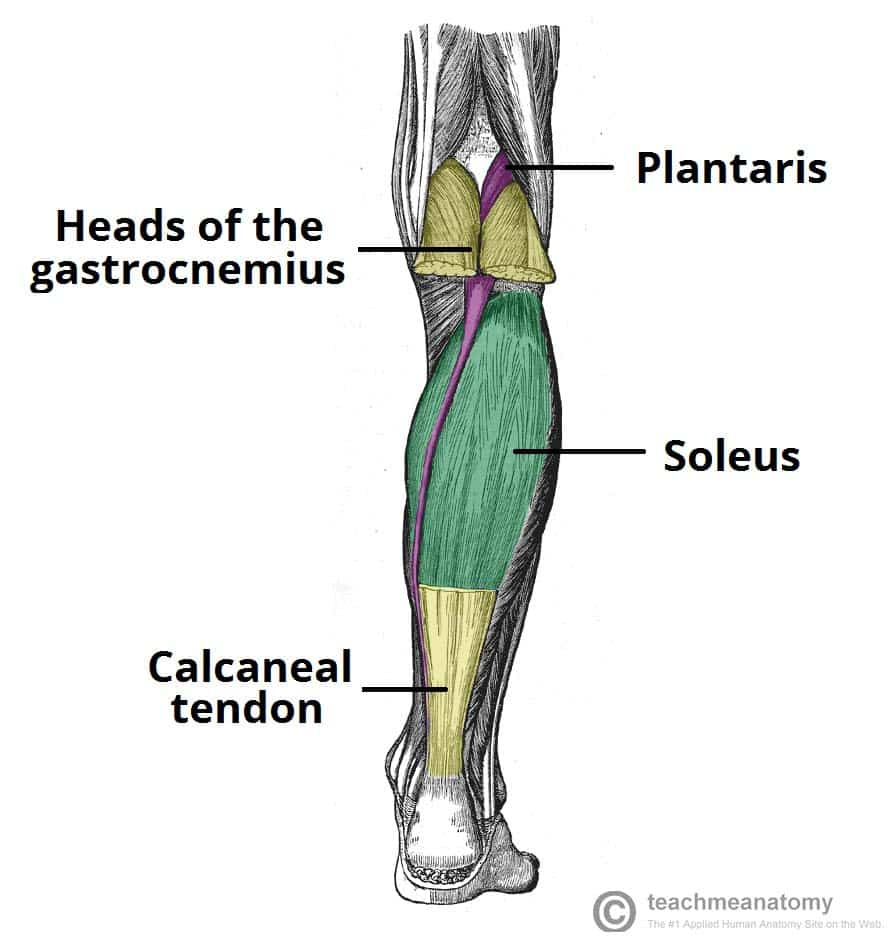
Plantar flexors are the gastrocnemius, soleus, and flexor digitorum longus.
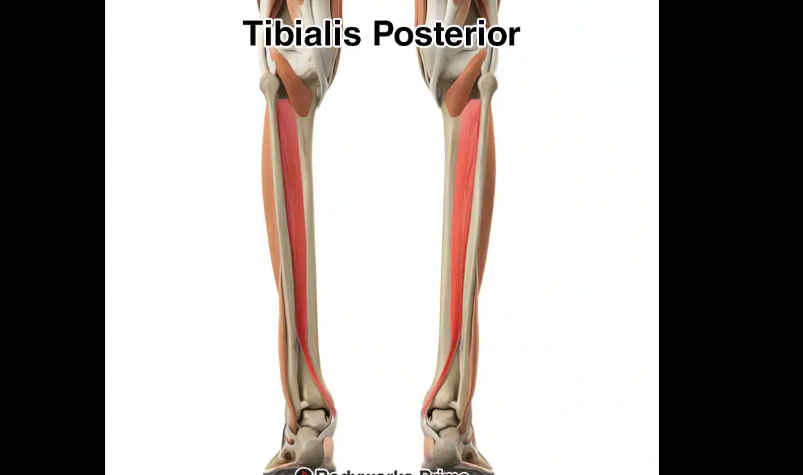
Leg: An invertor is the tibialis posterior.
An evertor is the fibularis longus.
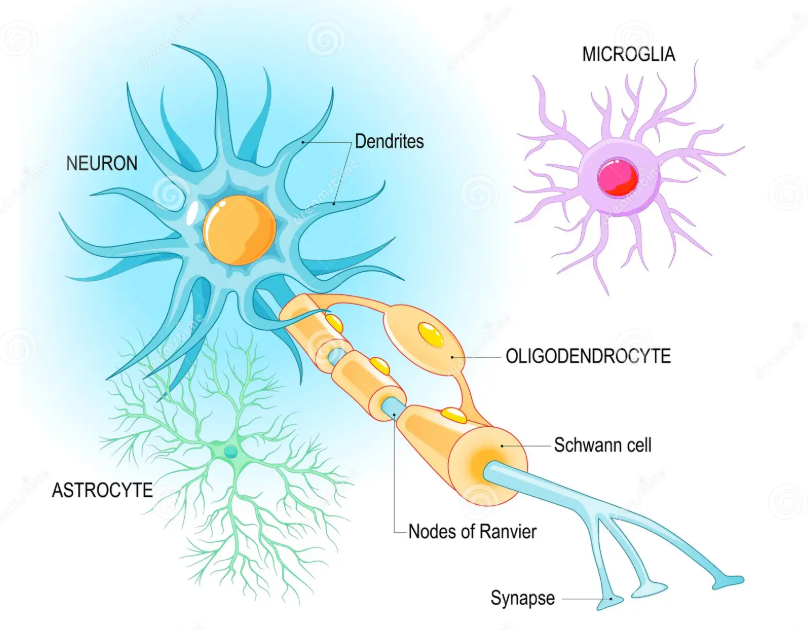
The nervous system contains specialized communicating nerve cells called neurons and supporting cells, neuroglia.
Supportive Neuroglial cells fill spaces, provide structural frameworks, produce myelin, and carry on phagocytosis.
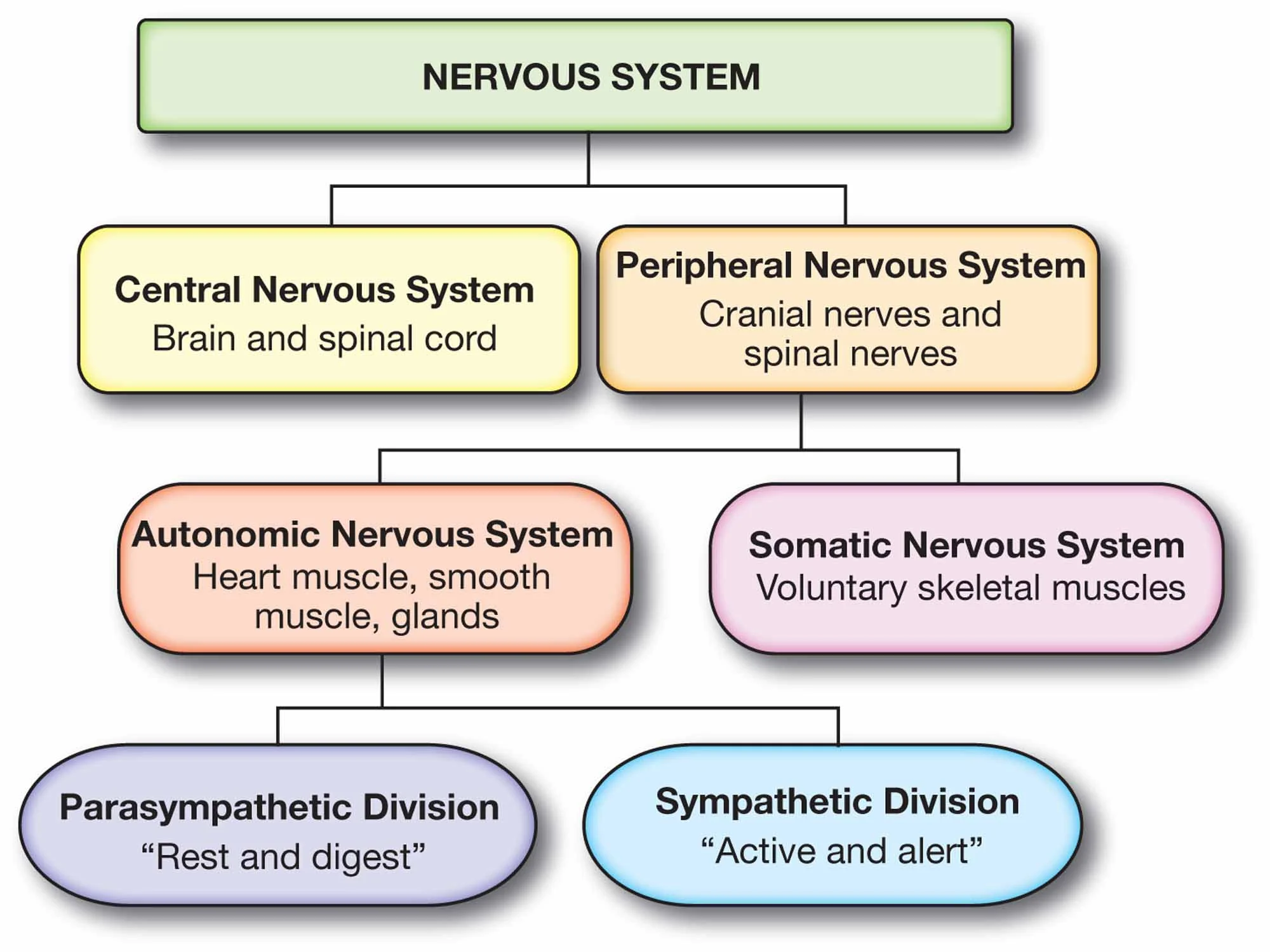
The Central Nervous System (CNS). Automatic nervous system and para-sympathetic division (Rest and Digest)
Brain & spinal cord.
The Peripheral Nervous System (PNS). Somatic nervous System and sympathetic division (Active and Alert)
Cranial and spinal nerves.
Four neuroglial cells are found in the CNS, and one main type in the PNS. What is Microglia?
Small cells that phagocytize bacterial cells and cellular debris.
Oligodendrocytes
Form myelin in the central nervous system
Astrocytes
Near blood vessels and support structures, aid in metabolism, and respond to brain injury by filling in spaces.
Ependyma
Cover choroid plexuses and form inner linings that enclose ventricles of the brain.
Schwann cells
The myelin-producing neuroglia of the peripheral nervous system.
A neuron has a cell body with mitochondria, lysosomes, and Golgi apparatus. Chromatophilic substance (Nissl bodies) contains rough endoplasmic reticulum & neurofibrils.
Nerve fibers contain a solitary outgoing axon and numerous dendrites, which bring in impulses from receptors.
Larger axons in the PNS are enclosed by myelin sheaths provided by Schwann cells.
Narrow gaps in the myelin sheath are called nodes of Ranvier.
The outer layer of covering in myelinated peripheral neurons is called the neurilemma.
Its function is to assist in the repair of damaged axons.
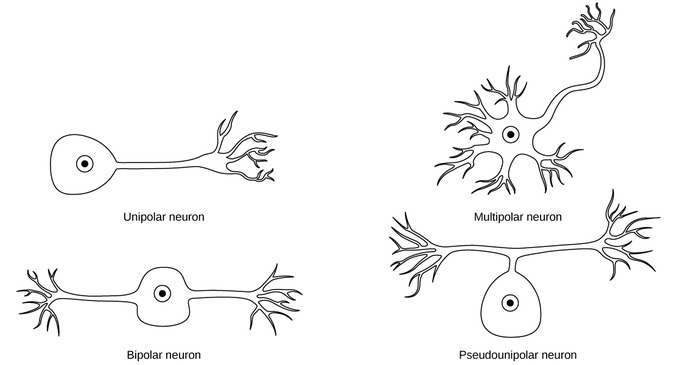
Unipolar neurons
Have one process extending from the cell body, which divides into two branches
Multipolar neurons
Have multiple processes (many dendrites and one axon) extending from the cell body.
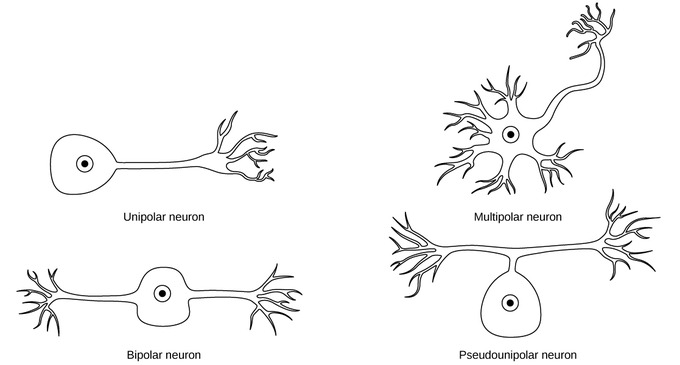
Bipolar neurons
Have two processes (one dendrite and one axon) extending from the cell body.
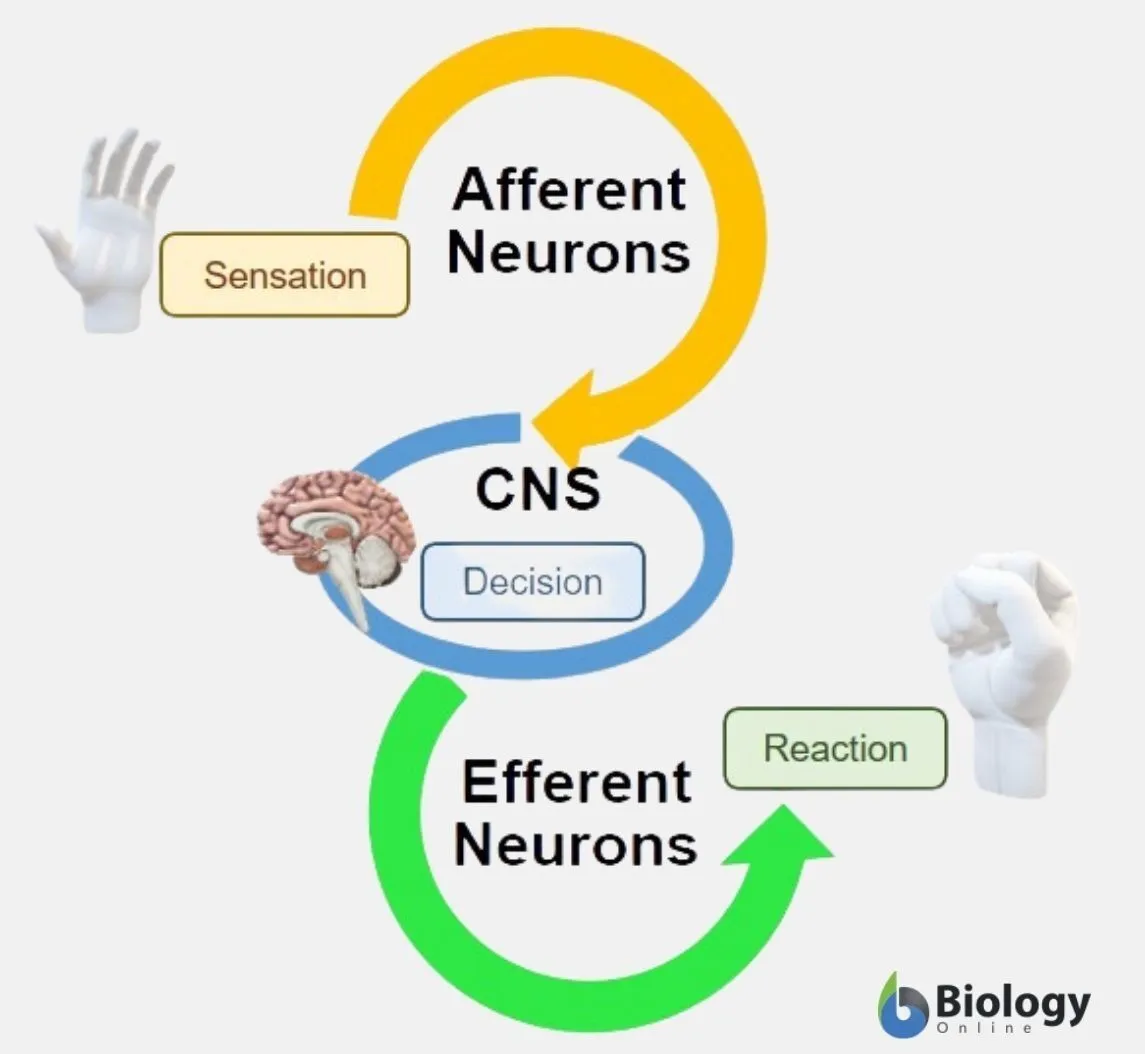
Sensory neurons (Afferent neurons). AHHHHH! (Sensation)
Conduct impulses FROM peripheral receptors to CNS. Usually unipolar but may also be bipolar.
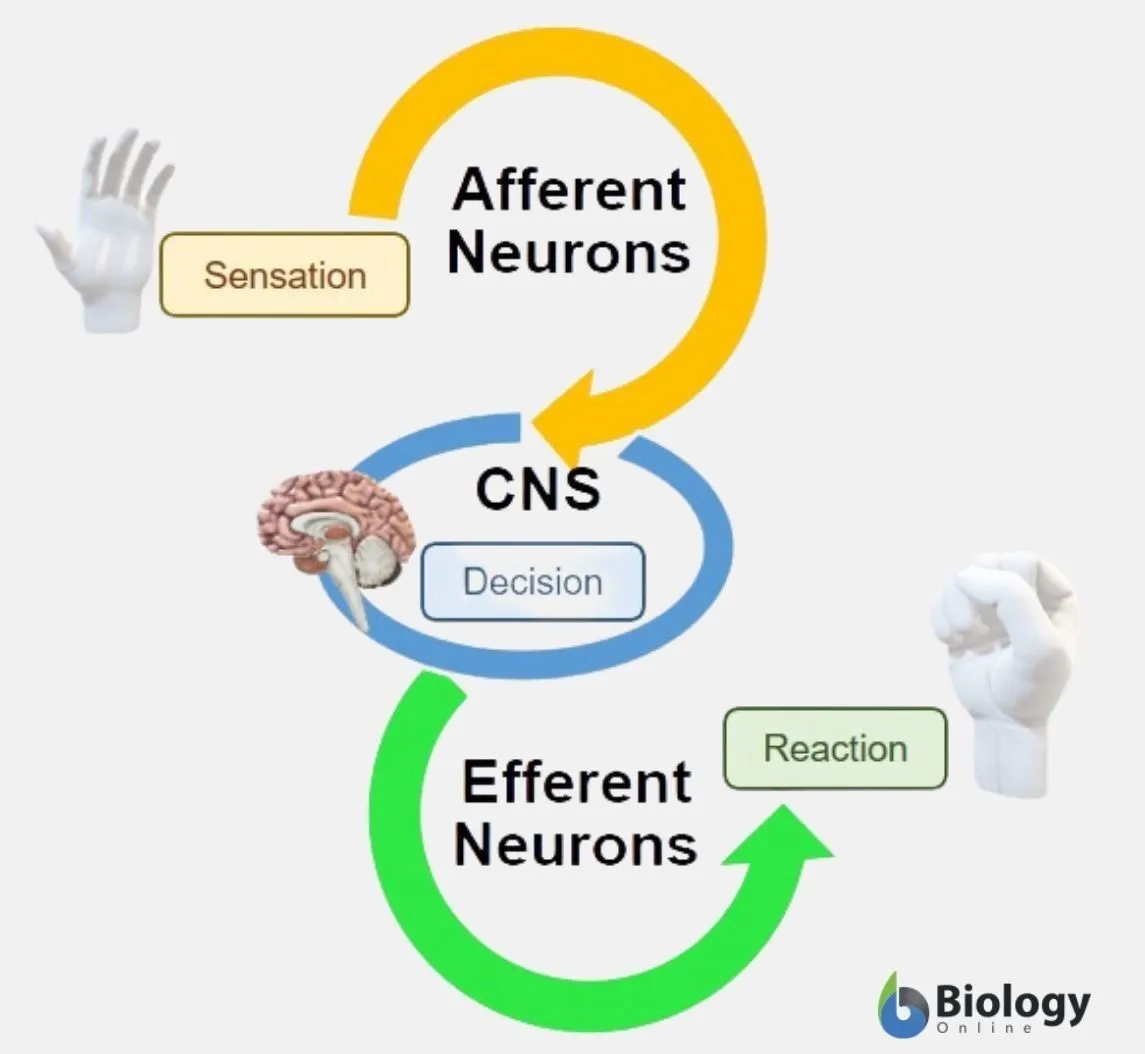
Motor neurons (Efferent neurons). REaction
Multipolar neurons that conduct impulses FROM the CNS to effectors.
Interneurons
Multipolar neurons within the CNS that form links between other neurons.
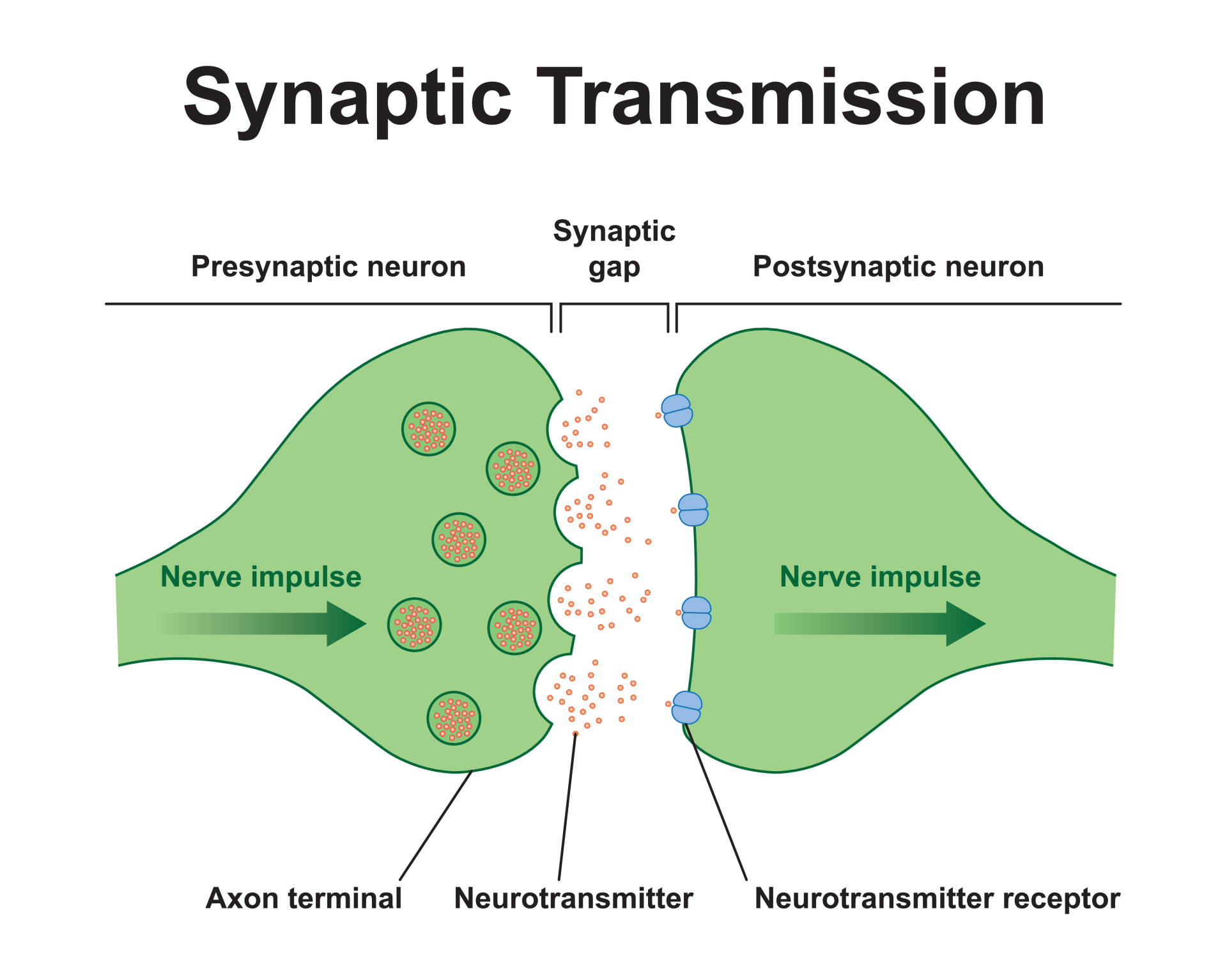
The junction between two communicating neurons is called a ___; there is a ____ cleft between them across which the impulse must be conveyed.
Synapse; Synaptic
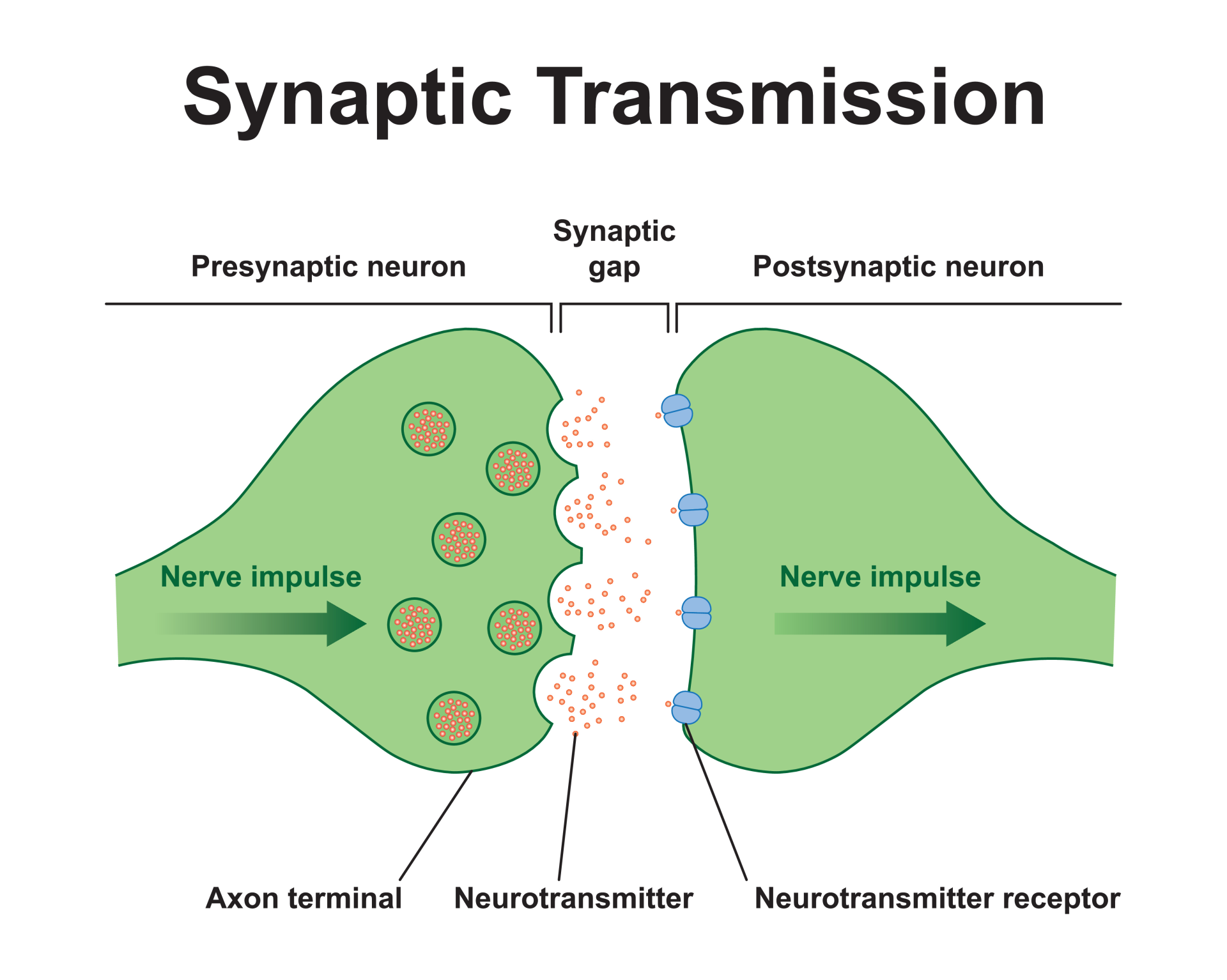
When the impulse in the presynaptic neuron is transmitted across the synaptic cleft TO the postsynaptic neuron.
Synaptic transmission
When an impulse reaches the synaptic knob of an axon, synaptic vesicles releases neurotransmitters into the synaptic cleft.
These chemicals react with specific receptors on the postsynaptic membrane.
A cell membrane is usually polarized, due to an unequal distribution of positive and negative ions across the membrane
Polarization is important to the conduction of nerve impulses.
Distribution of ions is determined by membrane channels that are selective for certain ions. Potassium ions pass through the membrane more readily than do sodium ions—
Making the former a major contributor to membrane polarization.
Due to active transport, the cell maintains a greater concentration of sodium ions outside and a greater concentration of potassium ions inside the membrane.
Inside membrane has excess negative charge, while the outside has more positive charge. The difference in charge is called potential difference.
Because neurons can respond to changes in their surroundings they are excitable. If the resting potential decreases, the membrane becomes depolarized.
Local potential changes are graded. This means the magnitude of change is proportional to the intensity of the stimulus.
During an action potential, the membrane of the neuron undergoes depolarization, then repolarization, followed by a brief hyperpolarization, before returning to its resting potential.
When a neuron reaches its threshold potential, it generates an action potential.
Unmyelinated axons conduct impulses over their entire membrane surface.
Myelinated axons conduct impulses from node of Ranvier to node of Ranvier, a phenomenon called saltatory conduction.
This conduction is many times faster. The greater the diameter of an axon, the faster the impulse
A(n) action potential is not graded, therefore it is an all-or-none response.
A greater intensity of stimulation does not produce a stronger response; instead, it produces more action potentials per second.
Neurotransmitters that increase postsynaptic membrane permeability to sodium ions may trigger impulses and are thus excitatory.
Other neurotransmitters may decrease membrane permeability to sodium ions, reducing the chance that it will reach threshold (inhibitory).
When an action potential reaches the synaptic knob calcium ions rush inward. Dome synaptic vesicles fuse with the membrane and release their contents to the synaptic cleft.
The effect on the postsynaptic neuron depends on which presynaptic knobs are activated.
Enzymes in some synaptic clefts and on postsynaptic membranes rapidly decompose the neurotransmitters after their release.
Destruction or removal of neurotransmitter prevents continuous stimulation of the postsynaptic neuron.
How impulses are processed is dependent upon how neurons are organized in the CNS.
Impulse processing
Neurons within the CNS are organized into neuronal pools with varying numbers of cells.
These groups of neurons make synaptic connections with each other to perform a common function.
A neuron of a pool might receive excitatory or inhibitory stimulation; if the net effect is excitatory but subthreshold, the neuron becomes more excitable to incoming stimulation
A condition called facilitation
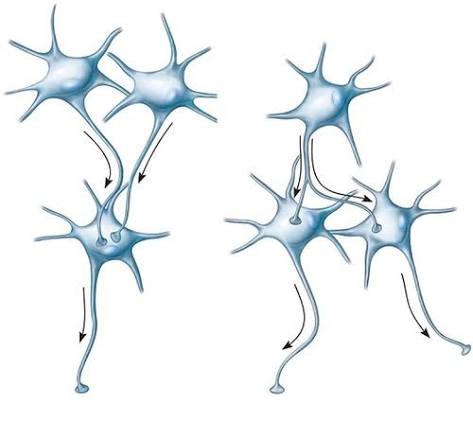
When a neuron within a pool receive impulses from two or more fibers. This makes it possible for the neuron to summate impulses from different sources.
Convergence