starch + cellulose
 Call Kai
 Learn
Learn Practice Test
 Spaced Repetition
 Match
Match Flashcards
 Knowt Play
1/11

There's no tags or description
Looks like no tags are added yet.
Name | Mastery | Learn | Test | Matching | Spaced | Call with Kai |
|---|
No analytics yet
Send a link to your students to track their progress
12 Terms
starch
storage polysaccharide of plants
where is starch stored
as granules in plastids and amyloplasts
amylose structure
unbranched helix shape
1,4 glycosidic bonds between alpha-glucose molecule
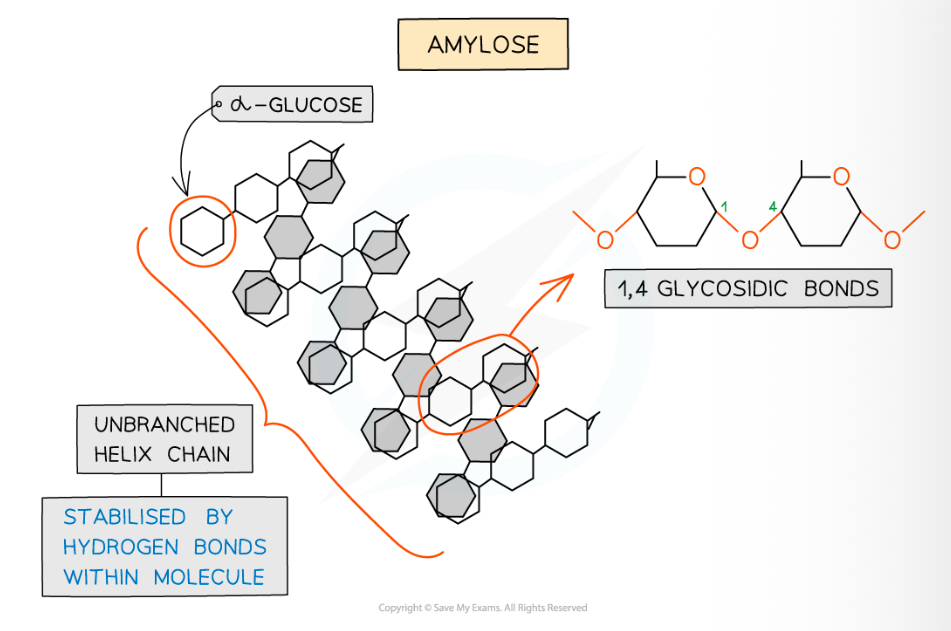
why is amylose helix shaped
more compact so more digestion-resistant
structure of amylopectin
1,4 glycosidic bonds between alpha-glucose molecules
also 1,6 glycosidic bonds between glucose molecules
= branched molecule
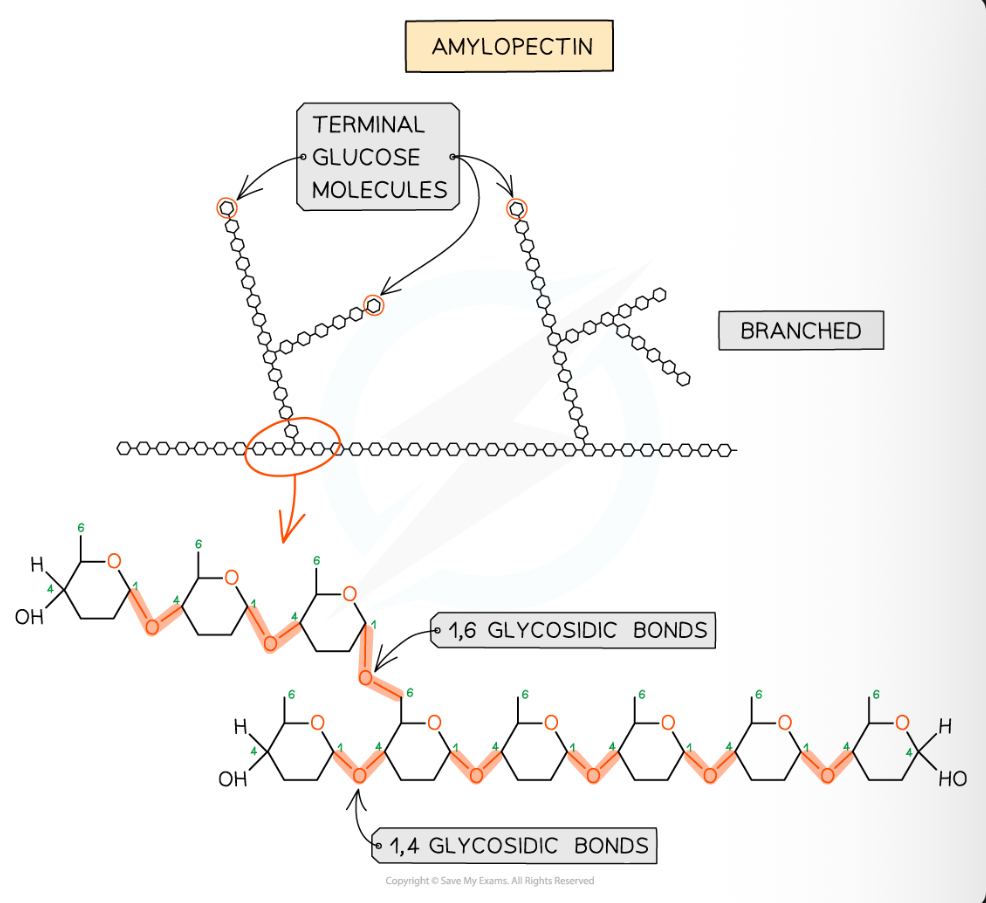
why are terminal glucose molecules good
can be easily hydrolysed during cellular respiration/added to for storage
why is starch a storage polysaccharide
compact (store large quants)
insoluble (no osmotic effect, no movement of water)
cellulose structure
polymer with long chains of beta-glucose
joined by 1,4 glycosidic bonds
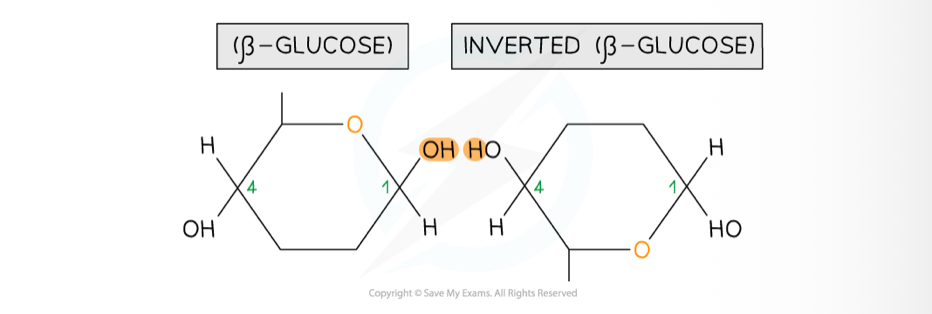
what is beta-glucose
isomer of alpha-glucose
is rotated 180 to previous molecule, then forms 1,4 glycosidic bond
inverted beta-glucose = hydrogen bonds form in long chains, give cellulose its strength
functions of cellulose
main structural component of cell walls
high tensile strength
cellulose fibres + etc in cell walls = strong matrix
strengthened cell walls = plant support
why is cellulose strong
many hydrogen bonds between parallel chains of microfibrils

