Chapter 20: Developmental genetics
 Studied by 4 people
 Call Kai
 Learn
Learn Practice Test
 Spaced Repetition
 Match
Match Flashcards
 Knowt Play
1/30

There's no tags or description
Looks like no tags are added yet.
Name | Mastery | Learn | Test | Matching | Spaced | Call with Kai |
|---|
No analytics yet
Send a link to your students to track their progress
31 Terms
What does development mean?
a series of changes in the state of a cell, tissue, organ, or organism
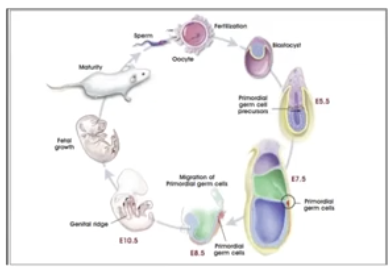
What does developmental genetics mean?
how gene expression controls this process
What is the most helpful model organism?
Fruit fly
What happens during development?
Each cell receives positional information that tells it where to go and what to become
What happens when cells receive positional information?
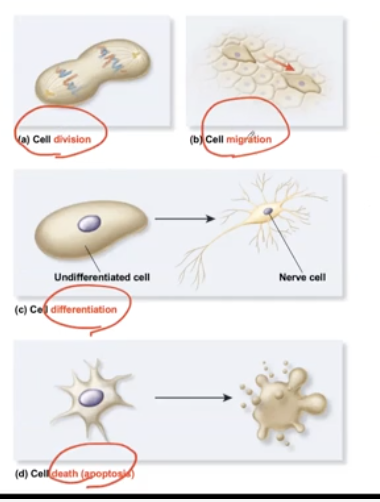
4 things that the cell can do:
divide, migrate, differentiate, or die
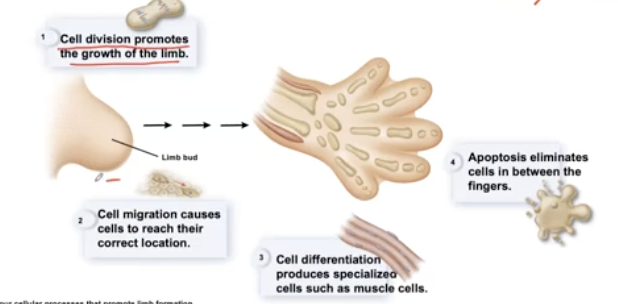
Development of hand
Cell division promotes the growth of the limb
Cell migration causes cells to reach their correct location.
Cell differentiation produces specialized cells such as muscle cells.
Apoptosis eliminates cells in between the fingers
How is this positional information provided?
by morphogens and cell adhesion molecules
What are morphogens?
signaling molecules during development
substances that govern the pattern of tissue development
Are morphogens distributed symmetrically or asymmetrically?
Asymmetrically
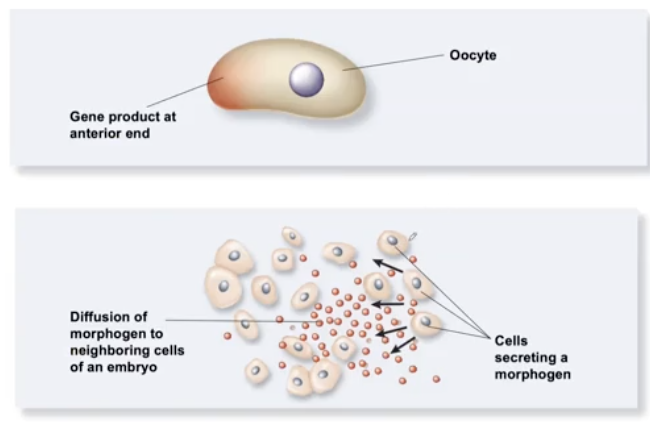
How are morphogens distributed?
in the oocyte or egg precursor
In the embryo by secretion and transport
How do morphogens act?
Act in a concentrated dependent manner with a critical threshold concentration
Give positional information and promote cellular changes.
What does anterior end mean?
head side
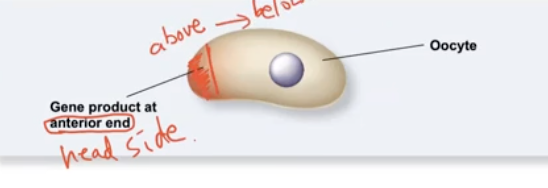
What does posterior mean?
tail side
What does Dorso mean?
back side
What are the cell adhesion molecules responsible for?
cell stickiness
How does cell adhesion provide positional information?
like adhesion molecules come together. (cell sorting)
Case Study: Development of Drosophila (Fruit fly)
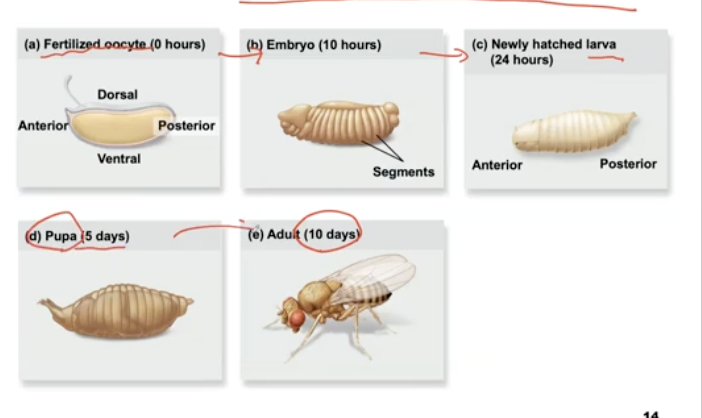
What is phase one?
establishment of body axes
How are body axes determined?
based on the concentration of morphogens (ex: Bicoid tsc factor)
morphogens are distributed prior to fertilization
Why does the oocyte have asymmetrical bicoid?
because the nurse cell produces bicoid mRNA to the oocyte from one side
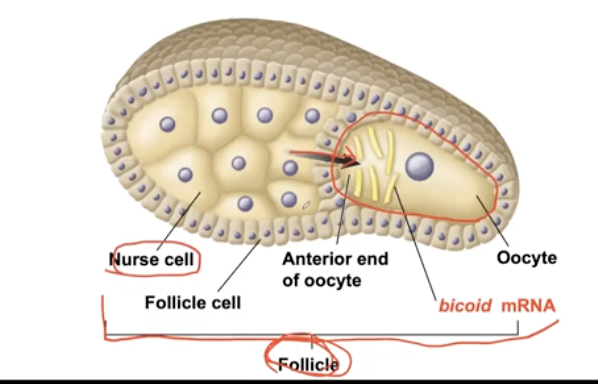
What is Bicoid?
Functions as a transcription factor
What does asymmetrical distribution mean?
activated only in certain regions
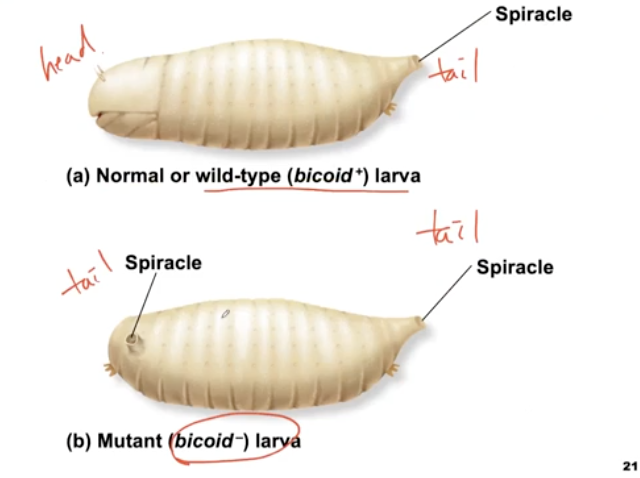
Bicoid morphogen determines anterior position. What happens if Bicoid is mutated?
No head structure
What is the Phase 2?
When phase 2 is completed, we see body segments.
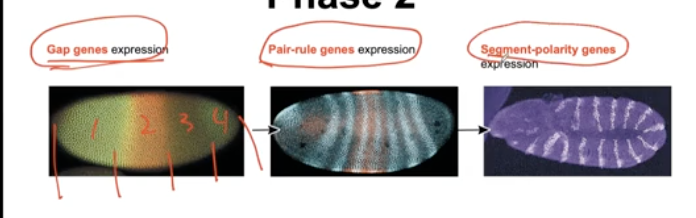
What are the three kinds of segmentation genes in Phase 2?
Gap genes, pair-rule genes, and segment-polarity genes
they are all transcription factors
get more complicated as the name gets longer
What is phase 3?
Segment characteristic
each segment produces characteristic structure
What type of genes are acting in phase 3?
Homeotic genes→ responsible for segment characteristics/ cell fate
What if there are mutations in the homeotic genes?
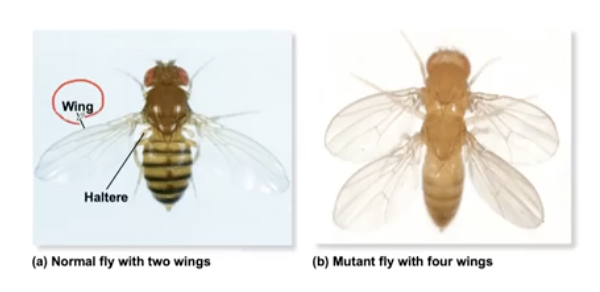
It will alter the cell’s fate/segment structure
What is an example of a mutation in homeotic genes?
Bithorax mutant
What do Homoeotic genes encode?
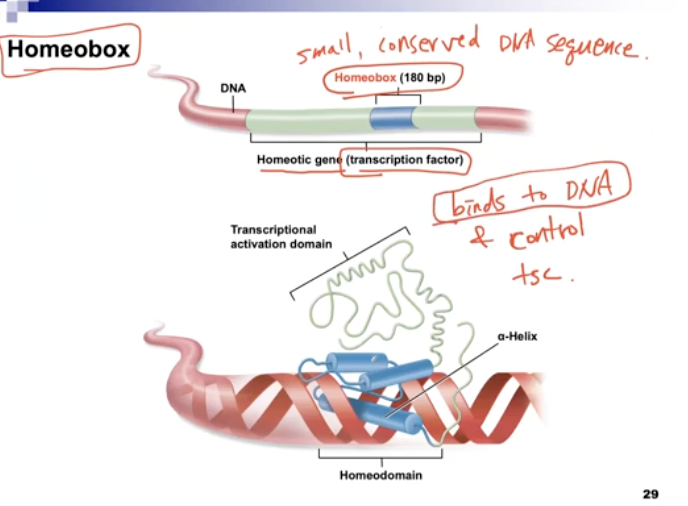
Homeotic proteins that function as transcription factors
regulate transcription of specific genes that promote developmental changes
What is the homeobox?
Homeobox binds to DNA to control transcription. DNA-binding domains of all homeotic genes are conserved.
 Note
Note  Flashcards (78)