BSCI202 Lab: Blood Vessels
 Call Kai
 Learn
Learn Practice Test
 Spaced Repetition
 Match
Match Flashcards
 Knowt Play
1/108

Earn XP
Description and Tags
Not finished, have to clean up unnecessary information
Name | Mastery | Learn | Test | Matching | Spaced | Call with Kai |
|---|
No analytics yet
Send a link to your students to track their progress
109 Terms
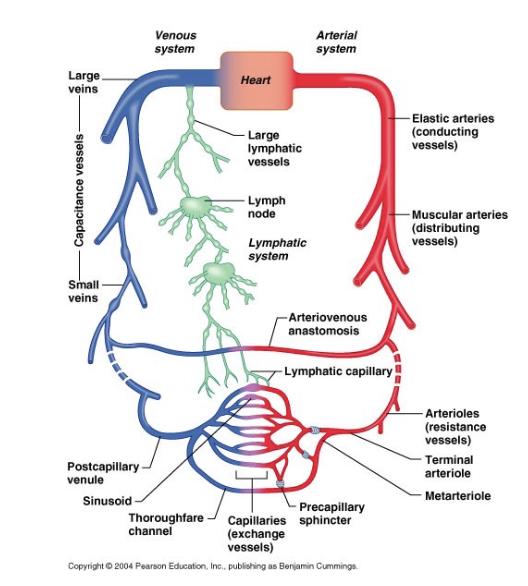
What is the closed transport system in order?
Heart → large arteries → medium arteries → arterioles →capillary beds → venules → medium veins → large veins → heart
What substances diffuse across the capillary walls from the blood to tissues?
O2 and nutrients
What substances diffuse across the capillary walls from the tissues to blood?
Waste and CO2
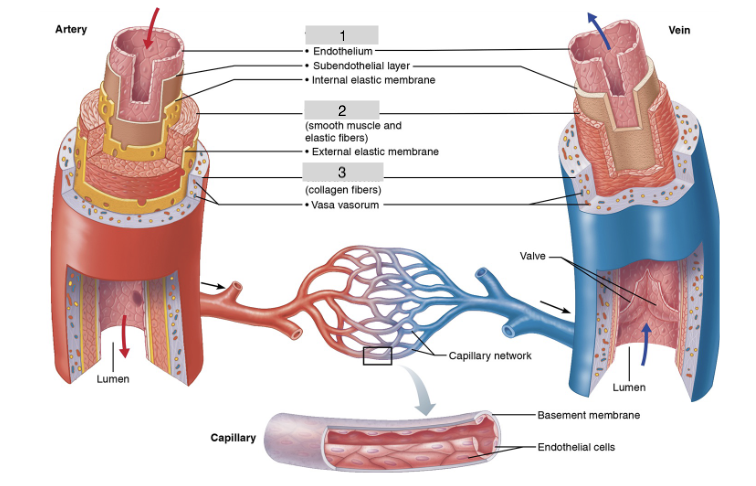
What are the microscopic structures of the blood vessels?
Tunica intima/interna, tunica media, tunica adventitia/externa
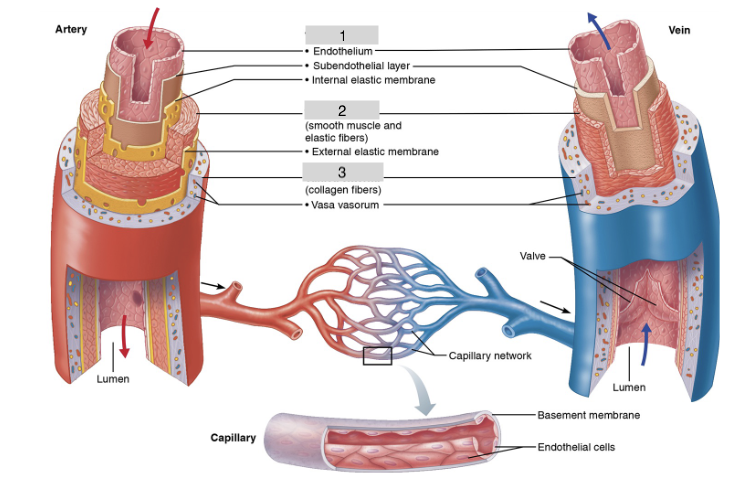
The innermost layer of blood vessels; a thin layer of endothelium with a CT basement membrane
Tunica intima/interna
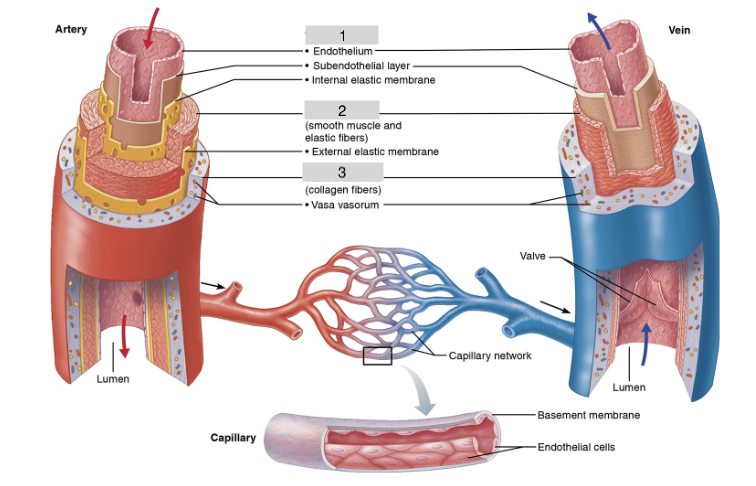
The middle layer of blood vessels, circularly arranged smooth muscle and elastic CT, allows for changes in lumen diameter
Tunica media
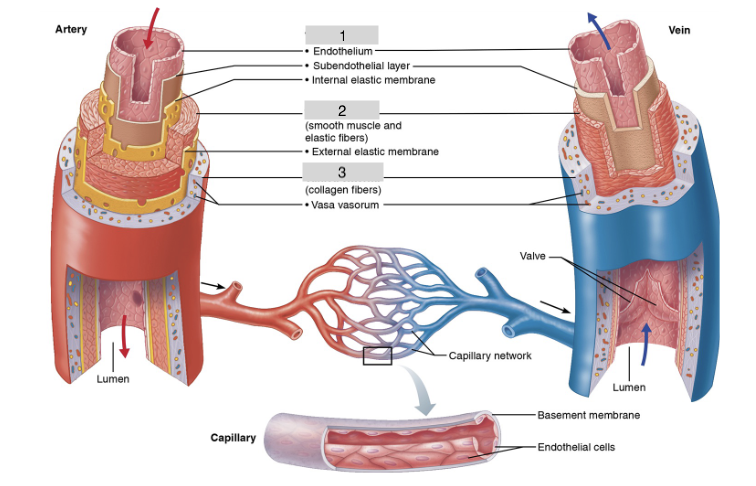
The most superficial layer of blood vessels, protects and anchors vessels, made of areolar or fibrous CT
Tunica adventitia/externa
Which tunic is a thin layer of endothelium with a CT basement membrane?
Tunica intima/interna
Which tunic is made of smooth muscle and elastic CT?
Tunica media
Which tunic is made of areolar or fibrous CT?
Tunica adventitia/externa
Which tunic helps decrease resistance to blood flow?
Tunica intima/interna
Which tunic allows for changes in lumen diameter?
Tunica media
Which tunic protects and anchors vessels?
Tunica adventitia/externa
What are the 3 types of blood vessels?
arteries, capillaries, veins
What transports blood away from the heart?
Arteries
What are close to the heart, large, “conducting vessels,” and most expandable?
Elastic arteries
What are the medium-sized “distributing vessels”?
Muscular arteries
What are the smallest “resistance vessels” (that empty into capillary beds)?
Arterioles
What do arteries also do?
Expand during systole, recoils passively during diastole
What provides for the exchange of material in tissues and is one layer thick?
Capillaries
What transports blood toward the heart?
Veins
What is formed by folds of the tunica intima and prevents backflow?
Valves
65% of the blood volume is in the what?
Veins
Are veins low-pressure or high-pressure and why?
Low-pressure because of thin walls and large lumens
What is highly concentrated in the limbs?
Vavles
Skeletal muscle pump
contraction that squeezes the veins to promote venous return to the heart
During inspiration, a decrease in intra-thoracic pressure and an increase in intra-abdominal pressure cause blood to flow from veins in the abdominal region to veins in the thoracic region. What mechanism of venous return is this?
Respiratory pump
What is the largest artery in the body?
Aorta
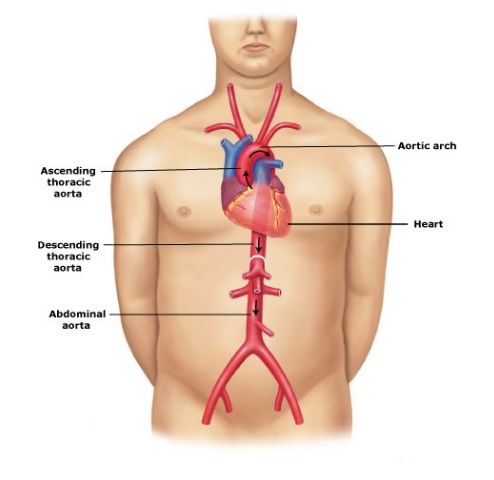
What region leaves the left ventricle?
Ascending aorta
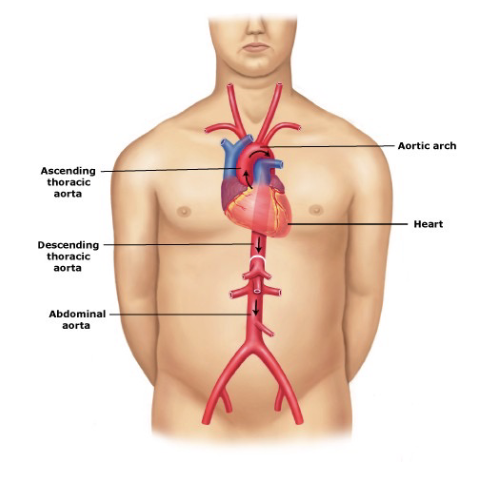
What region arches to the left?
Aortic arch
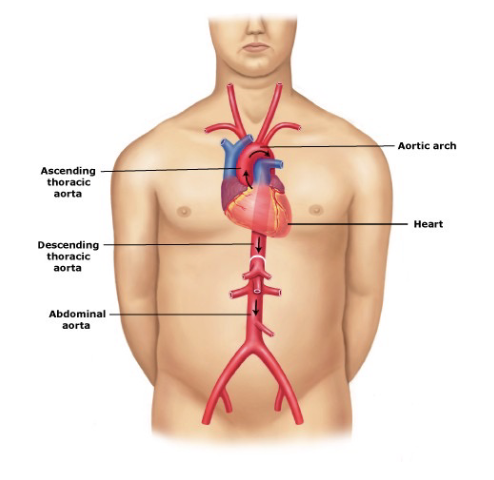
What region travels downward through the thorax?
Thoracic aorta
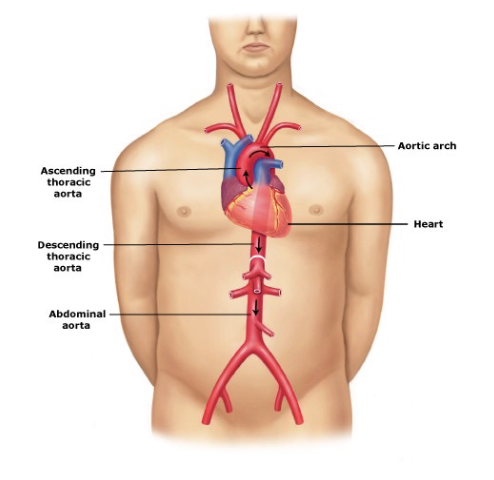
What region passes through the diaphragm into the abdominopelvic cavity?
Abdominal aorta
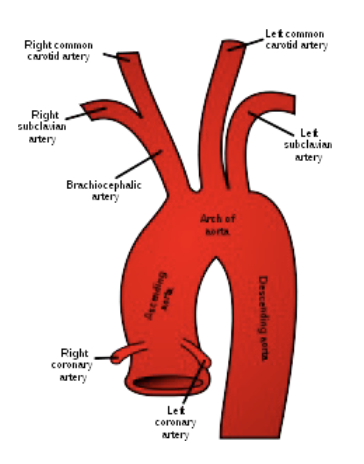
What are the arterial branches of the ascending aorta?
Right and left coronary arteries that serve the heart
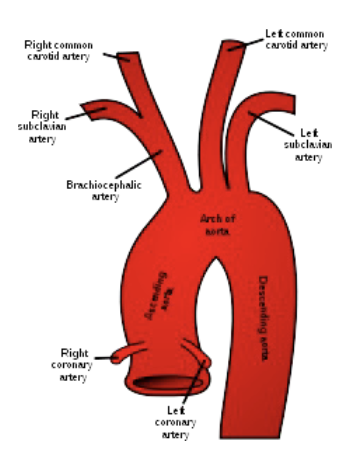
What are the arterial branches of the aortic arch?
Brachiocephalic trench → left common carotid artery → left subclavian artery
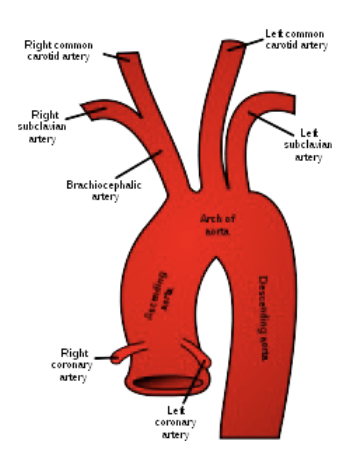
Aortic arch → Brachiocephalic trunk, what does it split into?
right common carotid artery and right subclavian artery
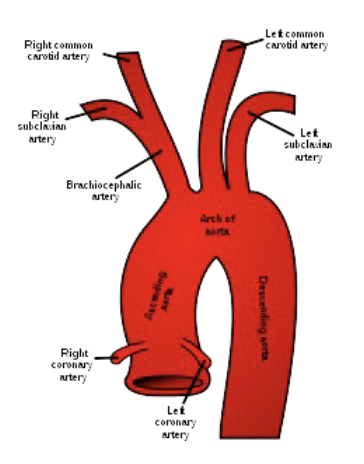
What does the left common carotid artery split into?
left internal and external carotid arteries
What does the left subclavian artery split into?
left vertebra; artery and left subclavian artery
What arteries does the subclavian artery become?
axillary artery → brachial artery → radial and ulnar arteries
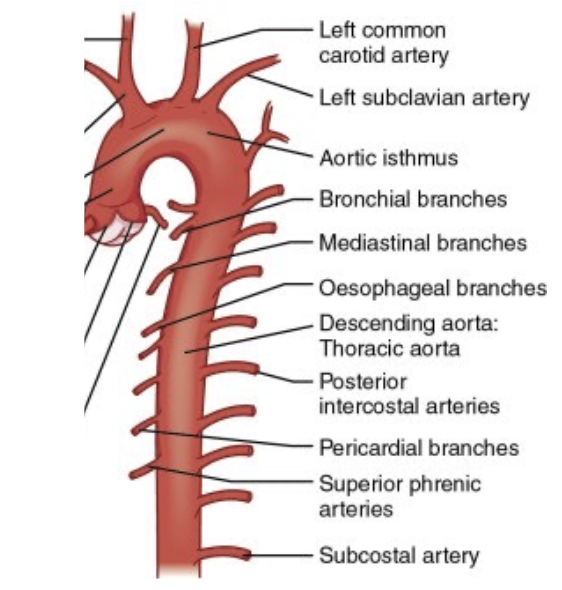
What are the arterial branches of the descending thoracic aorta?
Intercostal arteries, bronchial arteries, esophageal arteries, phrenic arteries
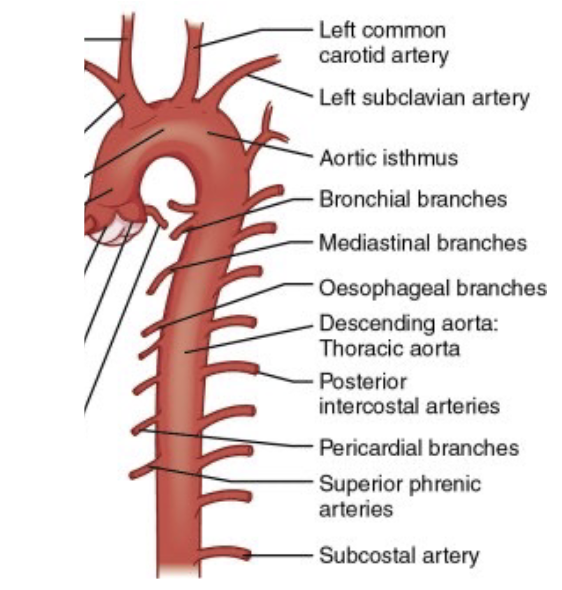
What artery supplies the muscles of the thorax wall?
Intercostal arteries
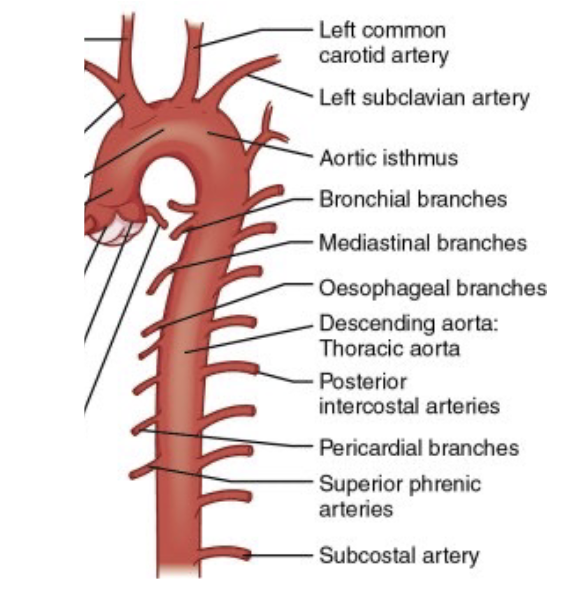
What artery supplies the lungs?
Bronchial arteries
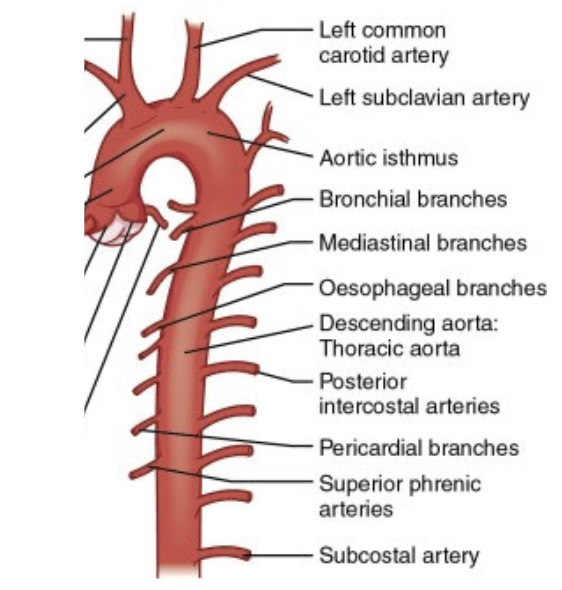
What artery serves the esophagus?
Esophageal arteries
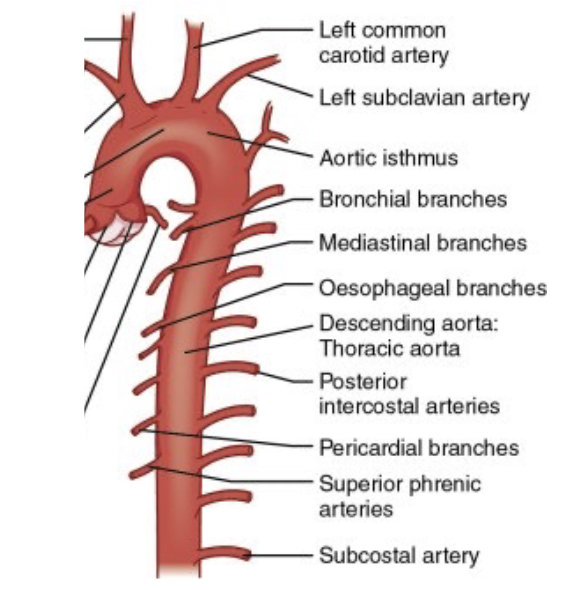
What artery serves the diaphragm?
Phrenic arteries
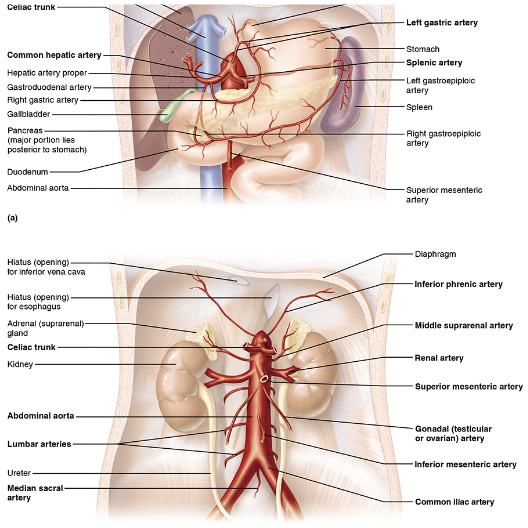
What are the arterial branches of the abdominal aorta?
Celiac trunk, superior mesenteric artery, left and right renal artery, left and right gonadal arteries, lumbar arteries serve the muscles of the abdomen and trunk, inferior mesenteric artery, left and right common iliac (final branches)
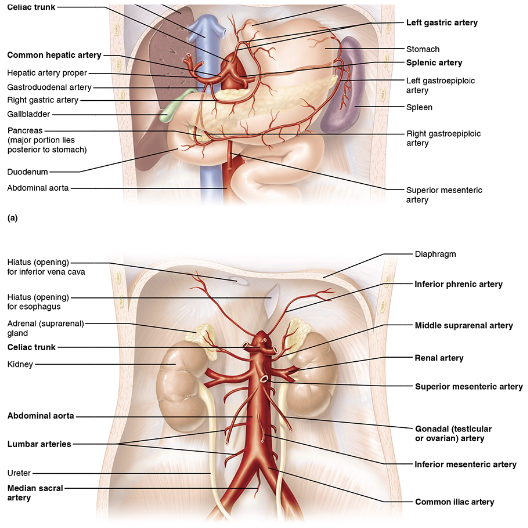
What is the first branch from the abdominal aorta?
Celiac trunk
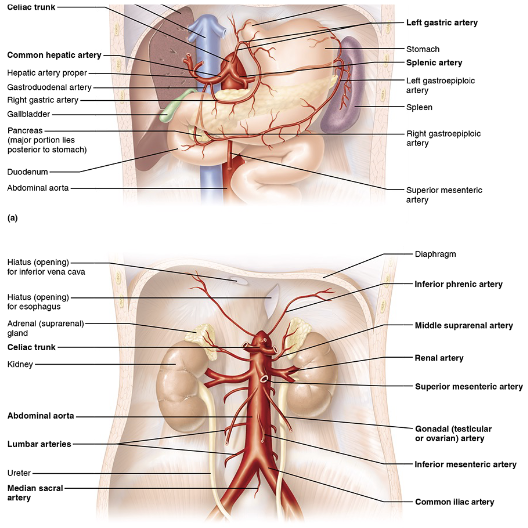
What are the three branches of the celiac trunk?
Left gastric artery, splenic artery, common hepatic artery
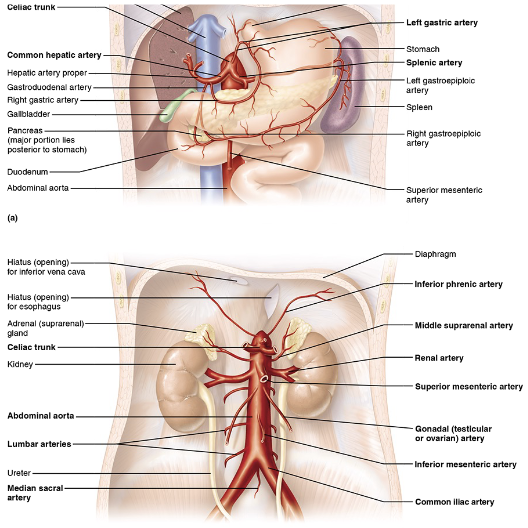
What artery serves the stomach?
Left gastric artery
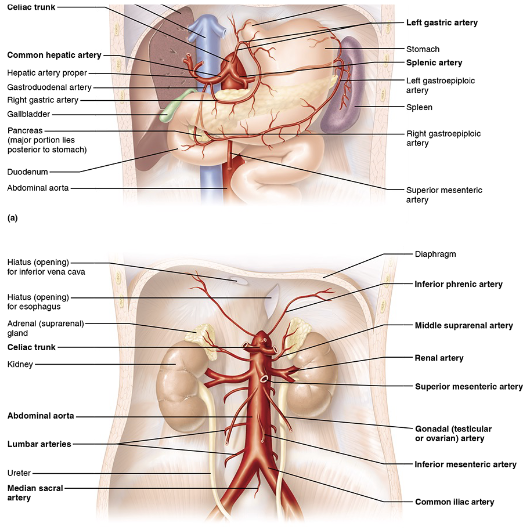
What artery serves the spleen?
Splenic artery
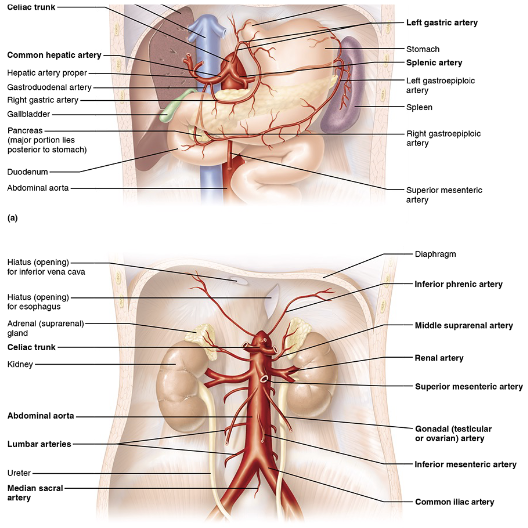
What artery serves the liver?
Common hepatic artery
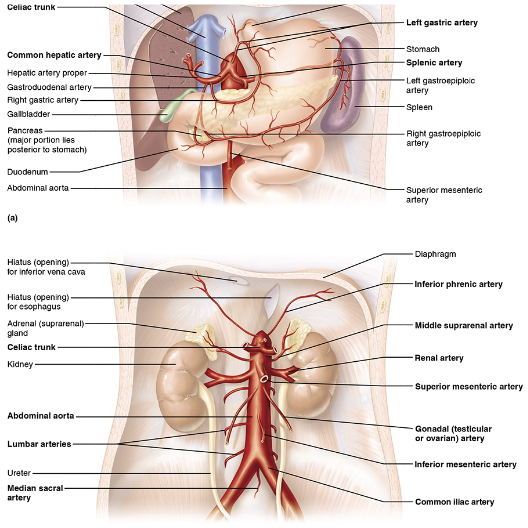
What artery supplies most of the small intestine and first half of large intestine?
Superior mesenteric artery
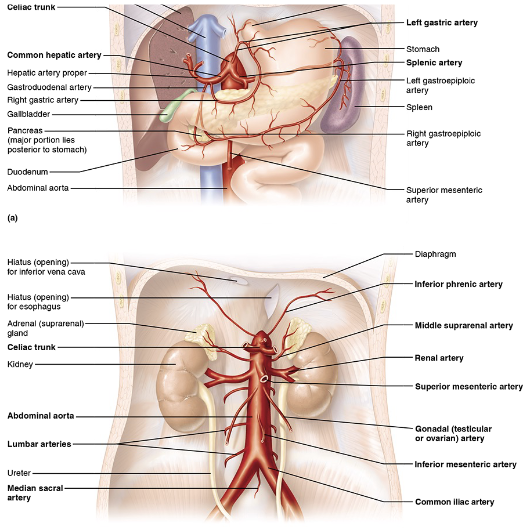
What arteries serve the kidneys?
Left and right renal arteries
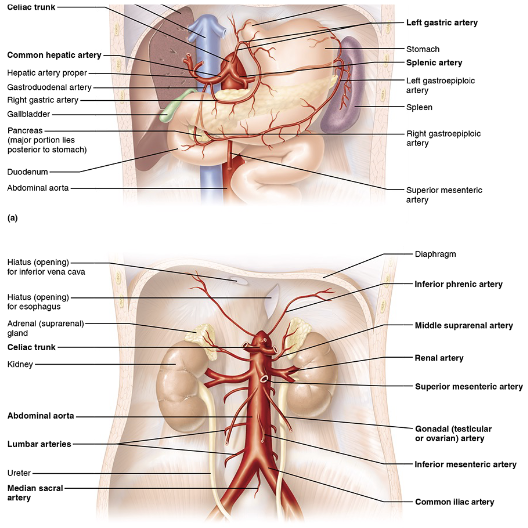
What arteries are called ovarian in females, testicular in males?
Left and right gonadal arteries
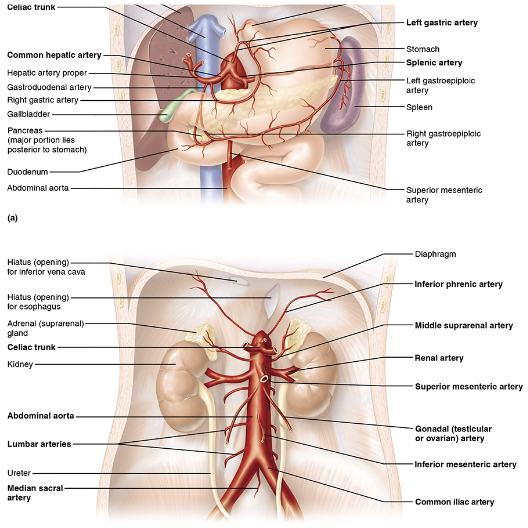
What arteries serve the muscles of the abdomen and trunk?
Lumbar arteries
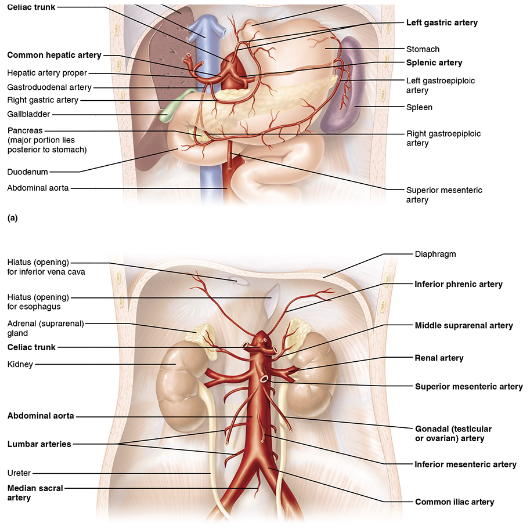
What arteries are the final branches of the aorta?
Left and right common iliac arteries
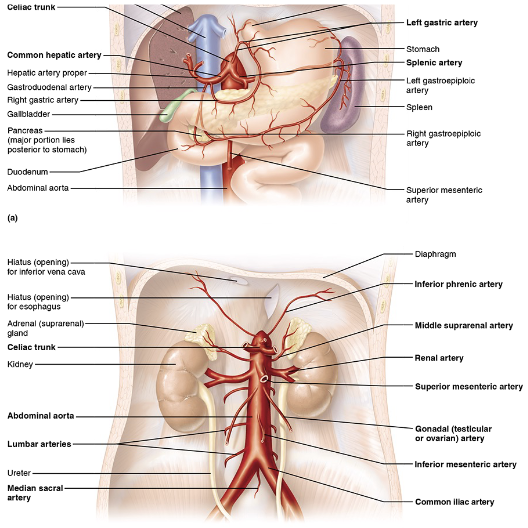
What arteries serve the pelvic organs?
Internal iliac arteries
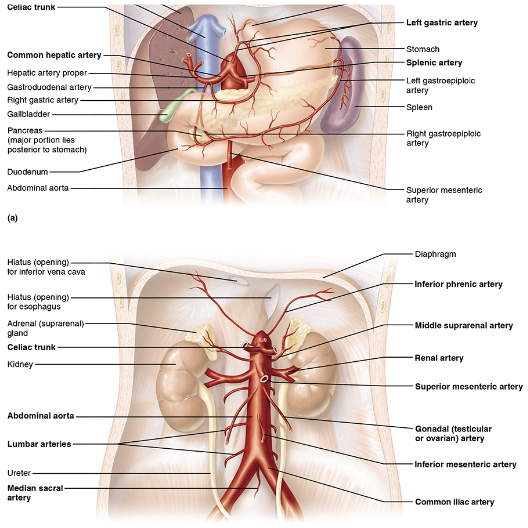
What arteries enter the thigh → femoral artery → popliteal artery → anterior and posterior tibial arteries?
External iliac arteries
Do blood in the heart chambers nourish the myocardium?
No
What are the parts of the heart’s own nourishing circulatory system?
Coronary arteries, cardiac veins, coronary sinus
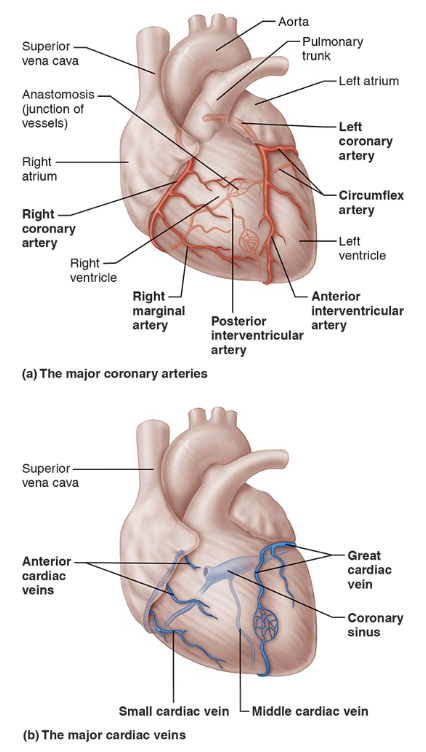
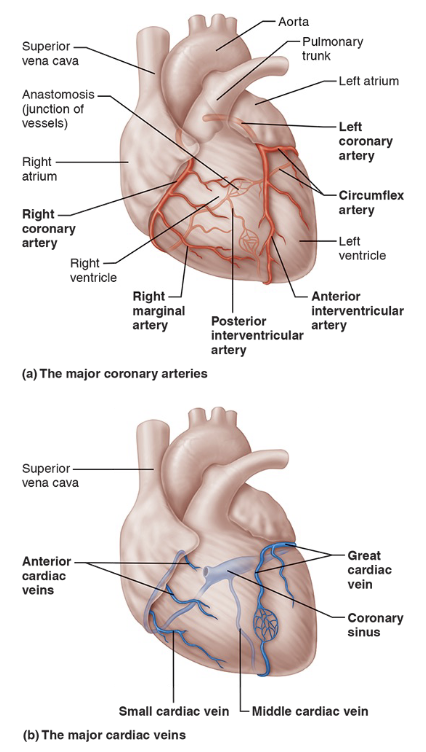
What supply the heart muscle with oxygenated blood?
Coronary arteries
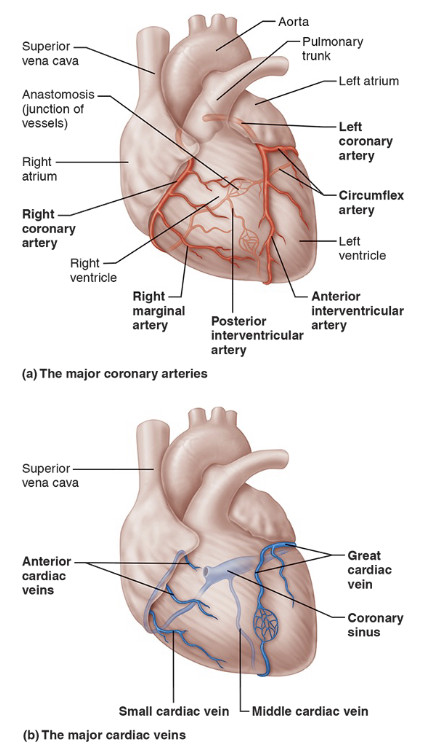
What drains the myocardium of blood?
Cardiac veins
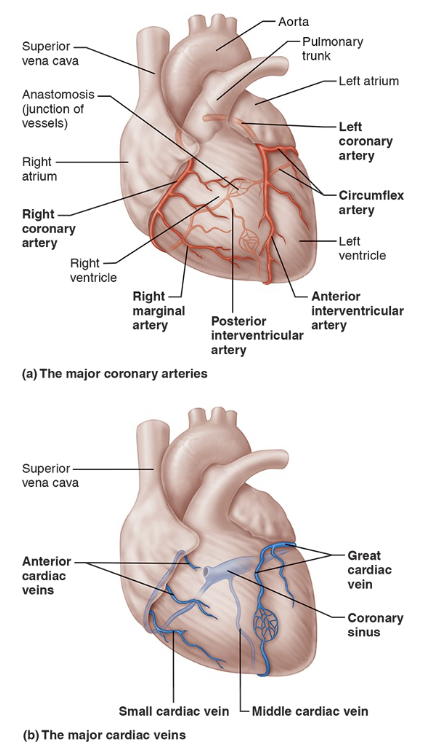
What is a large vein on the posterior of the heart recieves blood from cardiac veins?
Coronary sinus
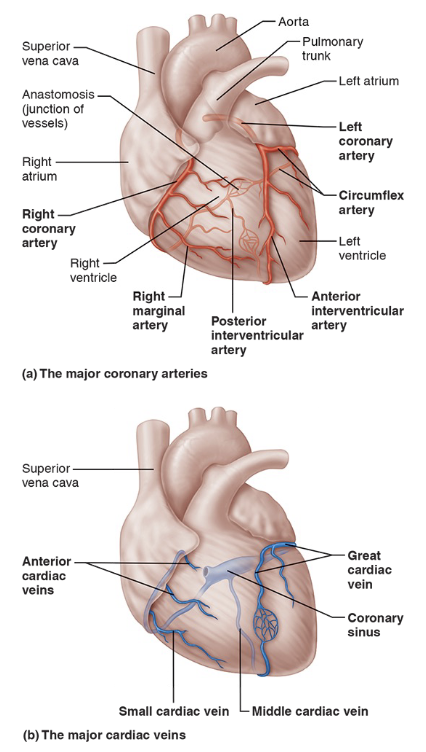
Where does blood empty into the right atrium?
Coronary sinus
Where do arteries originate from?
Behind aortic SL valves
What assures a continued blood supply despite partial occlusions of individual arteries?
Interarterial anastomoses
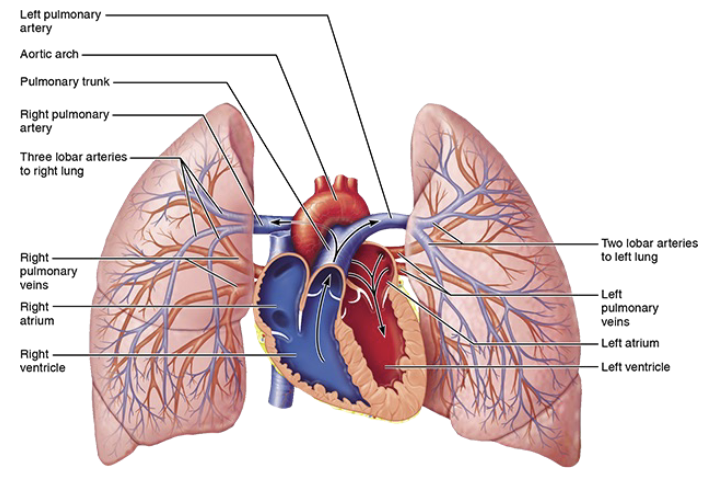
What is involved in pulmonary circulation?
Capillary beds around alveoli permit gas exchange (exchange CO2 for O2)
_____ _____ provide a nourishing blood supply for the lungs, pulmonary circulation does not.
Bronchial arteries
Veins of the hepatic portal circulation drain what areas?
Digestive organs, spleen, pancreas
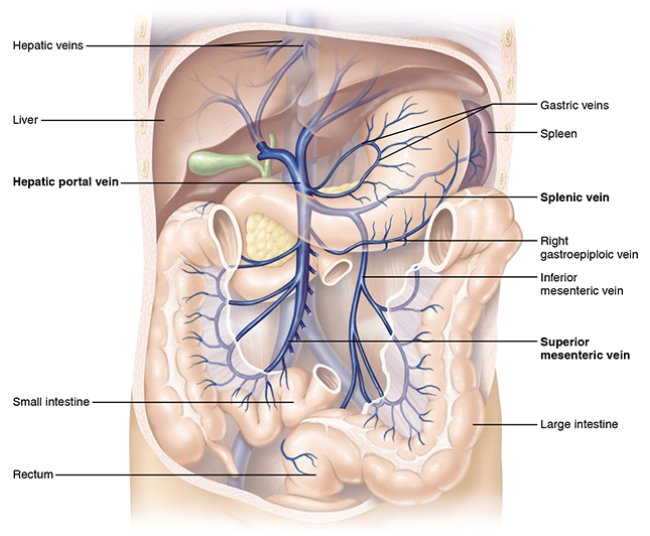
Major vessels of hepatic portal circulation include what?
Inferior and superior mesenteric veins, splenic vein, left gastric vein
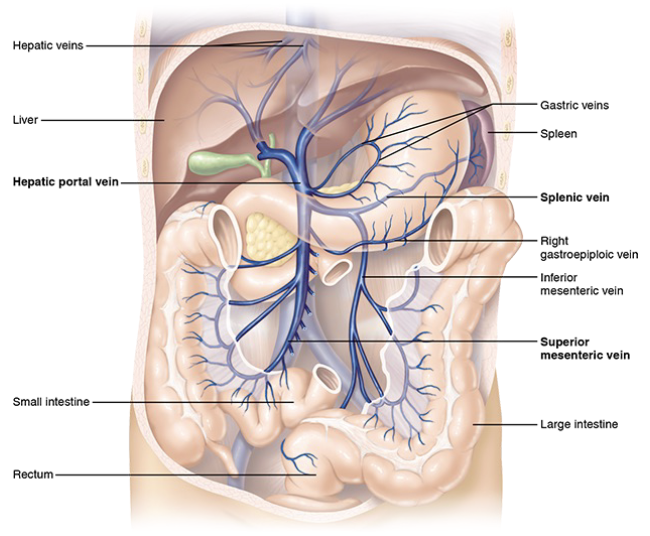
What absorbs nutrients and toxins within the digestive system?
Capillary beds
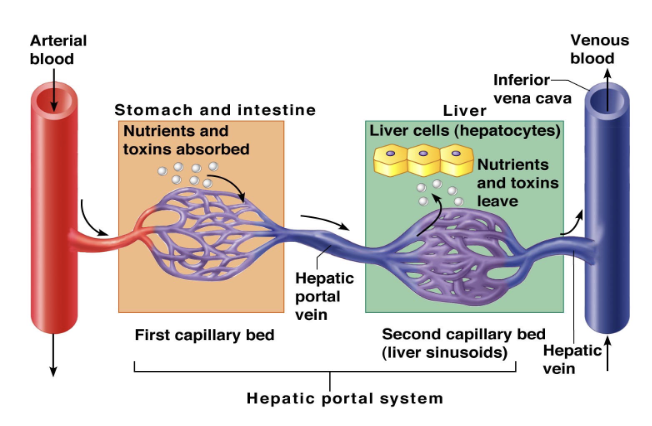
What vein carries blood to the liver?
Hepatic portal vein
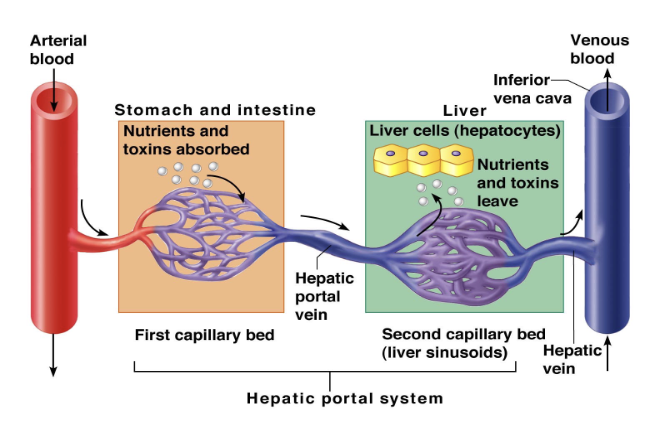
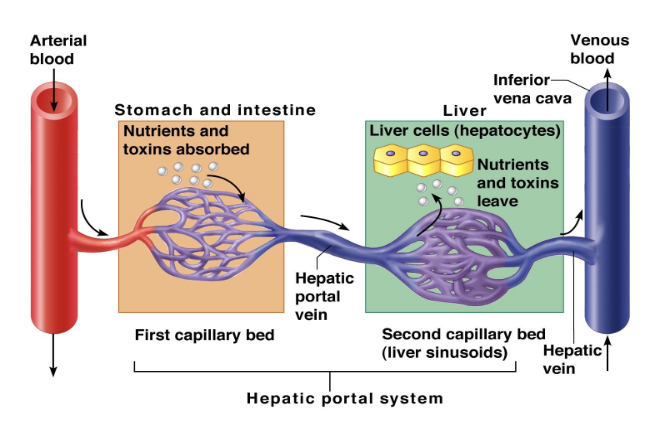
What helps maintain proper glucose, fat, and protein concentration in the blood? It also filters toxins from the blood.
Liver
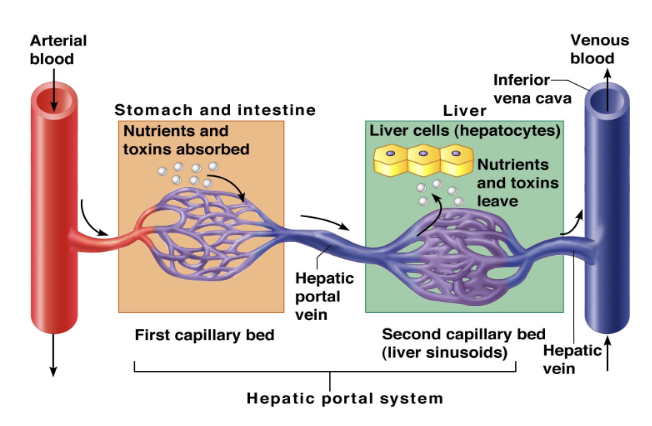
Blood drains into what vein as it leaves the liver?
Hepatic vein
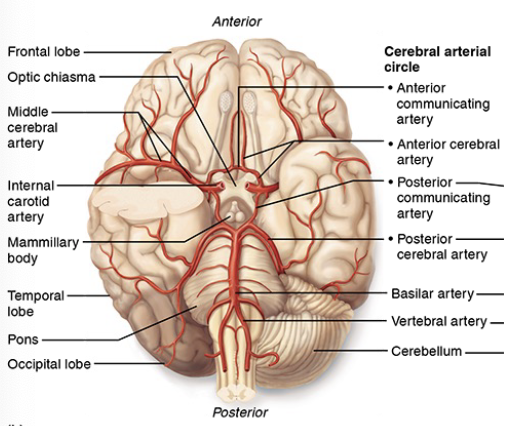
What is the arterial anastomosis at the base of the brain surrounding the pituitary gland and the optic chiasma?
Cerebral arterial circle (circle of Willis)
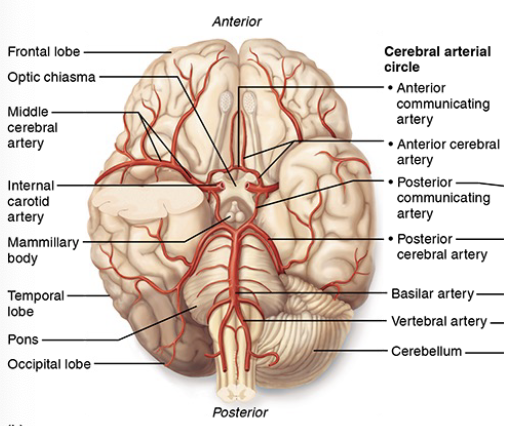
The internal carotid arteries divide into what that supply most of the cerebrum?
Anterior and middle cerebral arteries
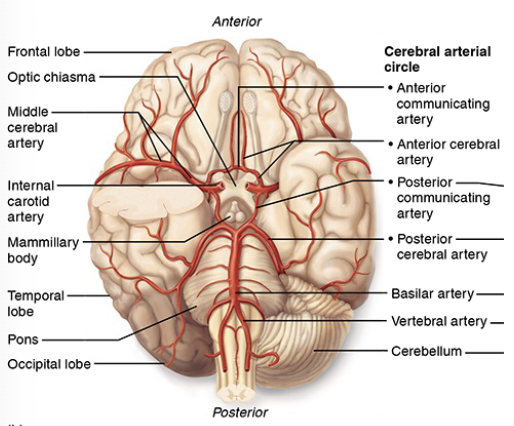
The vertebral arteries join once within the skull to form what? This serves the brain stem and cerebellum.
Basilar artery
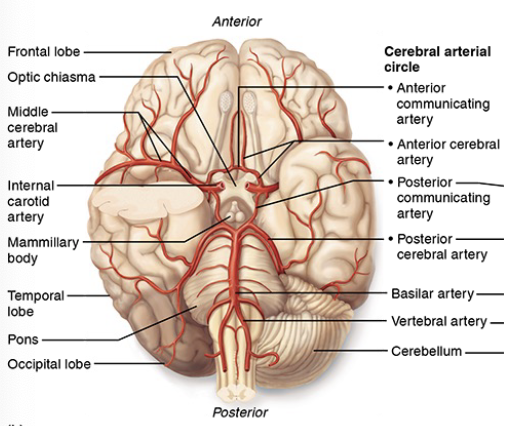
What forms from the division of the basilar artery that supply the posterior cerebrum?
Posterior cerebral
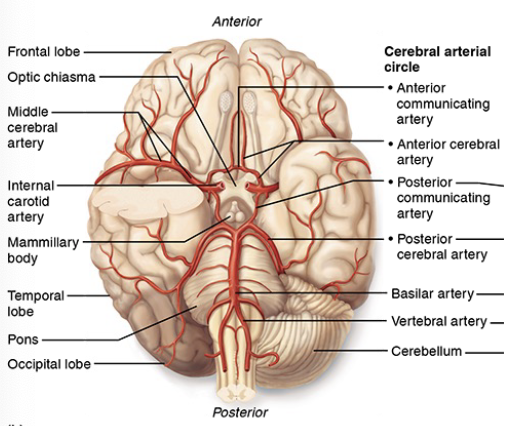
Anterior and posterior blood supplies are united by what?
Small communication arterial branches
Superior and inferior vena cavae enter the right atrium of the heart. What part of the body does the superior vena cava drain?
head and arms
Superior and inferior vena cavae enter the right atrium of the heart. What part of the body does the inferior vena cava drain?
lower body
What is the path of vein draining into the superior vena cava of the arm?
Radial and ulnar veins → brachial vein → axillary vein
What drains the lateral aspect of the arm and empties into the axillary vein?
Cephalic vein
What drains the medial aspect of the arm and empties into the brachial vein?
Basilic vein
Where are the basilic and cephalic veins joined at?
Medial cubital vein
What receives venous blood from the axillary vein, skin and muscles of the head, and neck via the external jugular vein?
Subclavian vein
What drains the posterior part of the head?
Vertebral vein
What drains the dural sinuses of the brain?
Interal jugular
What receives venous blood from the subclavian veins, vertebral veins, and internal jugular veins?
Left and right brachiocephalic veins
What veins join to form the superior vena cava?
Brachiocephalic veins
What vein drains the thorax?
Azygous vein
What is the path of veins draining into the inferior vena cava?
Posterior tibial vein → popliteal vein → femoral vein → external iliac vein
What veins drain the legs?
Anterior and posterior tibial veins and fibial veins
What vein (the longest vein of the body) receives the superficial drainage of the legs?
Great saphenous veins
What veins are formed by the union of the internal and external iliac veins on their own side?
Common iliac veins
What vein drains the right ovary in females and the right testicle in males?
Right gonadal vein
What vein empties into the left renal vein?
Left gonadal vein
What veins drain the kidneys?
Left and right renal veins
What vein drains the digestive organs and travels through the liver before it enters systemic circulation?
Hepatic portal vein
What vein drains the liver?
Left and right hepatic veins
Fetus recieves exchanges of what through the placenta?
Gases, nutrients, and wastes
Umbilical cord contains how many vessels?
3 = 1 vein and 2 arteries

