HRO 100 Ch. 4 - Body Structures
 Studied by 0 people
 Call Kai
 Learn
Learn Practice Test
 Spaced Repetition
 Match
Match Flashcards
 Knowt Play
1/37

Earn XP
Description and Tags
Levels of organization, anatomical position, body planes, directional terms, body cavities, quadrants and regions, diseases and conditions, diagnostic and surgical procedures
Name | Mastery | Learn | Test | Matching | Spaced | Call with Kai |
|---|
No analytics yet
Send a link to your students to track their progress
38 Terms
name the levels of organization
cells → tissues → organs → organ systems → organism
word root/combining form for cell
cyt-, cyt/o-
word root/combining form for tissue
hist-, hist/o
sum of all physical and chemical changes in a cell or organism
metabolism
anatomical position
standing erect facing forward, arms at the side, palms turned forward, feet parallel to each other
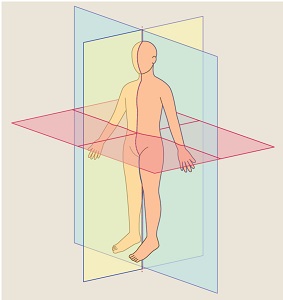
name all body planes
yellow = midsagittal (median)
blue = coronal (frontal)
red = transverse (horizontal)
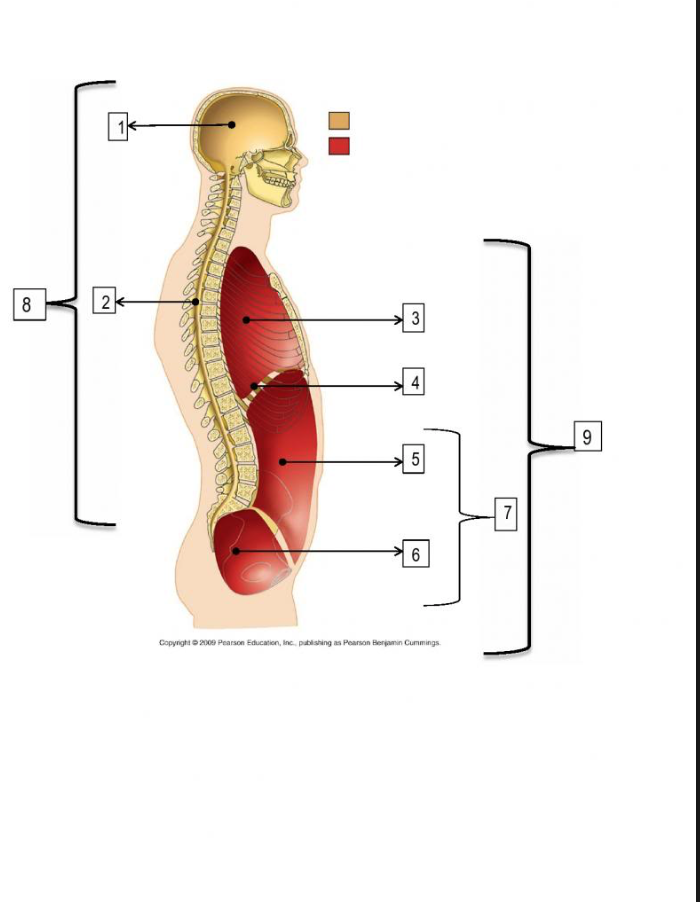
name all body cavities
cranial
spinal
thoracic
diaphragm
abdominal
pelvic
abdominopelvic
dorsal
ventral
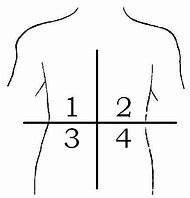
name all quadrants
right upper quadrant (RUQ)
left upper quadrant (LUQ)
right lower quadrant (RLQ)
left lower quadrant (LLQ)
abduction
movement away from the body
adduction
movement towards the body
medial
pertaining to the middle
lateral
pertaining to the side
superior
towards the head or upper part of the body
inferior
away from the head or towards the bottom of the body
proximal
near to the center (trunk of the body)
distal
away from the center (trunk of the body)
anterior/ventral
front of the body
posterior/dorsal
back of the body
prone
lying on abdomen, face down
supine
lying on back, face up
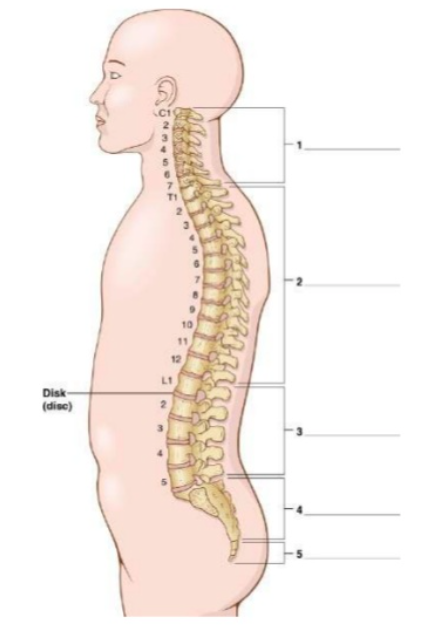
name all five divisions of the spine
cervical (neck)
thoracic (chest)
lumbar (loin)
sacral (lower back)
coccyx (tailbone)
path/o/logy
study of diseases
which of the following combining forms mean “yellow”?
jaund/o-
which of the following combining forms mean “red”?
erythr/o-
which of the following combining forms mean “gray”?
poli/o-
combining form for form, shape
morph/o-
combining form for dry
xer/o-
A “neur/o/logist” is what?
specialist in the study of the nerves
suffix for disease
-pathy
physical things that a healthcare provider sees
signs
things that the patient experiences, but not seen by healthcare providers unless told
symptoms
____ means the study of the cause of a disease.
etiology
A disease is considered ___ if we don’t know the cause.
idiopathic
A ____ is the name given to the cause and nature of a disease while a ___ is the estimated prediction.
diagnosis; prognosis
what is the medical term for abnormal build up of fluid within tissues?
edema
what is the medical term for having or showing symptoms of a fever?
febrile
The body’s ways of defending itself from injury, infection, or allergies, characterized by redness, swelling, heat, and pain, is known as ___.
inflammation
To determine a diagnosis, doctors will need to examine a ____ or a sample of removed tissue of an assigned organ.
biopsy
 Note
Note  Flashcards (24)