Chapter 5 Geometry Test theorems
 Studied by 0 people
 Call with Kai
 Learn
Learn Practice Test
 Spaced Repetition
 Match
Match Flashcards
 Knowt Play
1/31

There's no tags or description
Looks like no tags are added yet.
Name | Mastery | Learn | Test | Matching | Spaced | Call with Kai |
|---|
No analytics yet
Send a link to your students to track their progress
32 Terms
Defn of a Trapezoid and its bases and legs
A quadrilateral with exactly one pair of parallel sides. The parallel sides are called bases and the other sides are the legs.
Defn of an Isosceles Trapezoid
A trapezoid with congruent legs
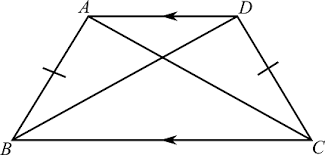
What theorem has to do with the bases of this isosceles trapezoid?
Base angles of an isosceles trapezoid are congruent
The median of a trapezoid
The segment that joins the midpoints of the legs of a trapezoid
The median of a triangle
The line segment from a vertex to the midpoint of the opposite side
The altitude of a triangle
The perpendicular segment from a vertex to a line that contains the opposite side
The perpendicular bisector of a triangle
A line, segment, or ray that is perpendicular to a segment and its midpoint
Properties of the median of a trapezoid are:
Parallel to the bases
Have the length equal to the average of the base lengths
Defn of a parallelogram
A quadrilateral with both pairs of opposite sides parallel
Properties of a parallelogram
Opposite sides of a parallelogram are congruent
Opposite angles of a parallelogram are congruent
Diagonals of a parallelogram bisect each other
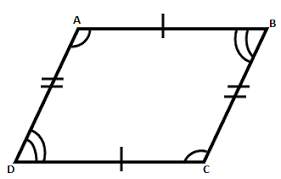
How would you prove that this is a parallelogram
If both pairs of opposite sides of a quadrilateral are congruent then the quadrilateral is a parallelogram.
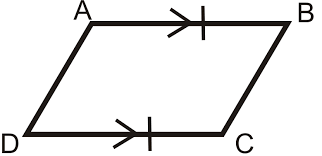
How would you prove that this is a parallelogram
If one pair of opposite sides of a quadrilateral are both congruent and parallel then the quadrilateral is a parallelogram
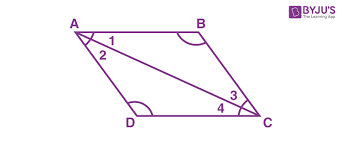
How would you prove that this is a parallelogram
If both pairs of opposite angles of a quadrilateral are congruent then the quadrilateral is a parallelogram
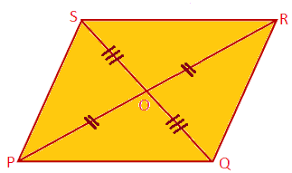
How would you prove that this is a parallelogram
If the diagonals of a quadrilateral bisect each other then the quadrilateral is a parallelogram
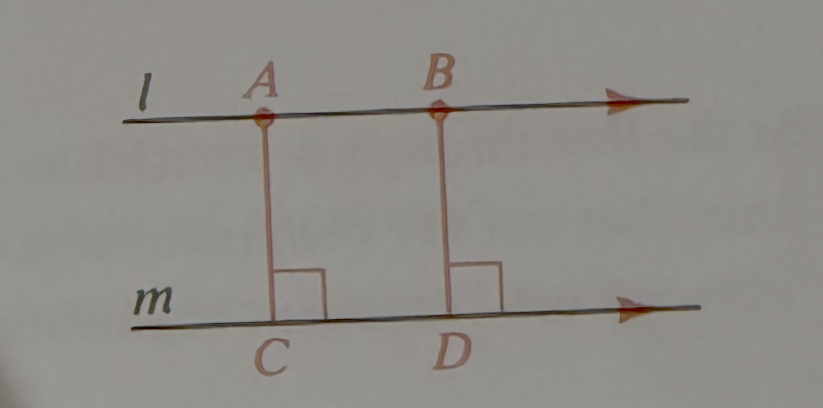
What can you conclude from this diagram about the two points on the parallel lines?
If two lines are parallel then all points on one line are equidistant from the other line
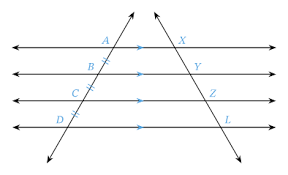
What can you conclude from this diagram about the transversal?
If three parallel lines cut off congruent segments on one transversal then they cut off congruent segments on every transversal
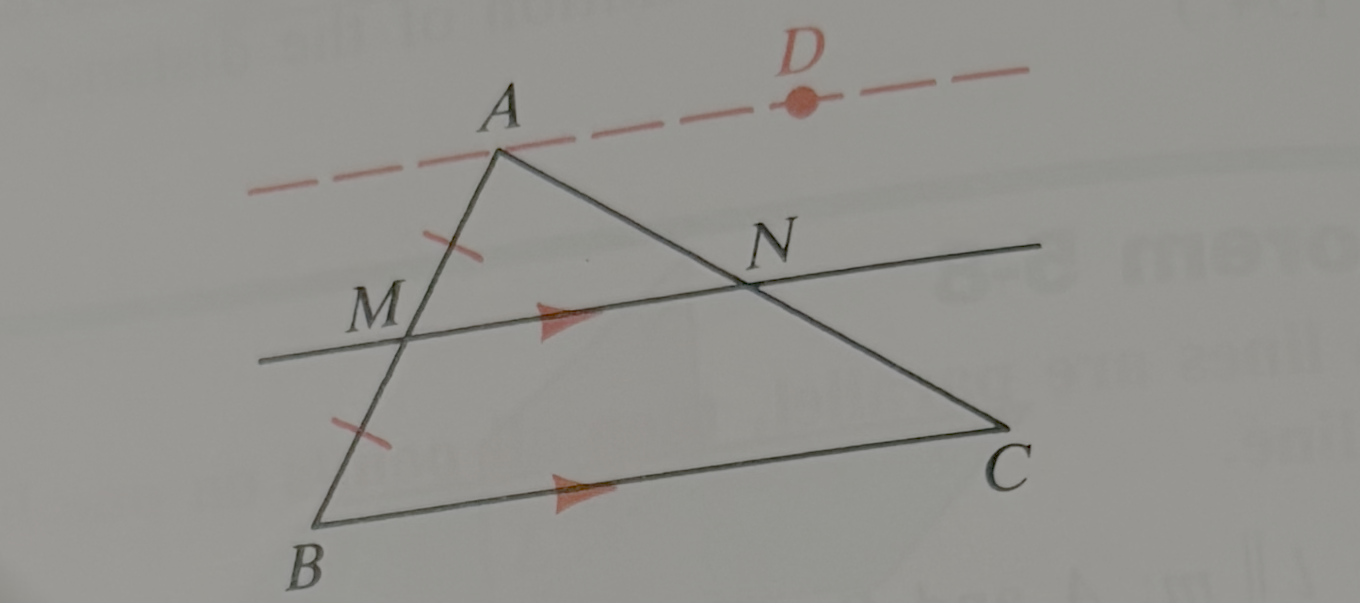
What can you conclude about point N (hint it has to do with a midpoint)
A line that contains the midpoint of one side of a triangle is parallel to another side passes through the midpoint of the third side
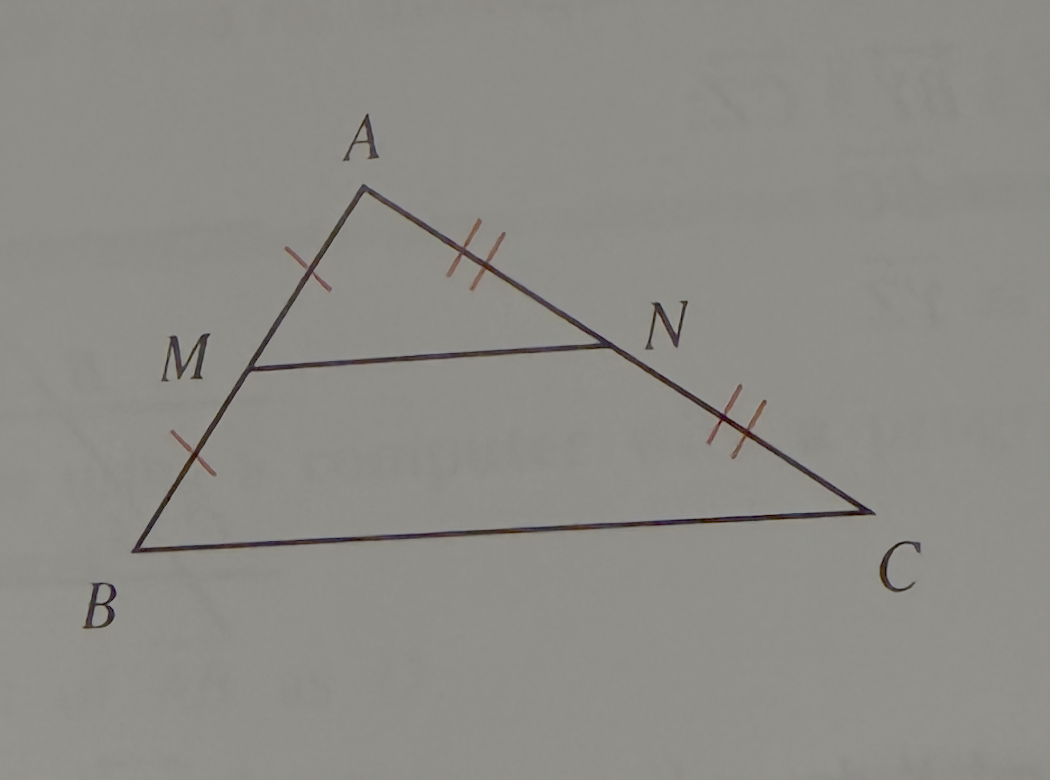
The segment that joins the midpoint of two sides of a triangle are:
Parallel to the third side
Half as long as the third side
Defn of a rectangle
a quadrilateral with four right angles
Defn of a rhombus
a quadrilateral with four congruent sides
Defn of a square
a quadrilateral with four right angles and four congruent sides
Extra property of a rectangle aside from it being a parallelogram
The diagonals of a rectangle are congruent
Extra properties of a rhombus aside from it being a parallelogram
The diagonals of a rhombus are perpendicular to each other
Each diagonal of a rhombus bisect two angles of the rhombus
Extra properties of a square aside from it being a parallelogram
a square is a rectangle
A square is a rhombus
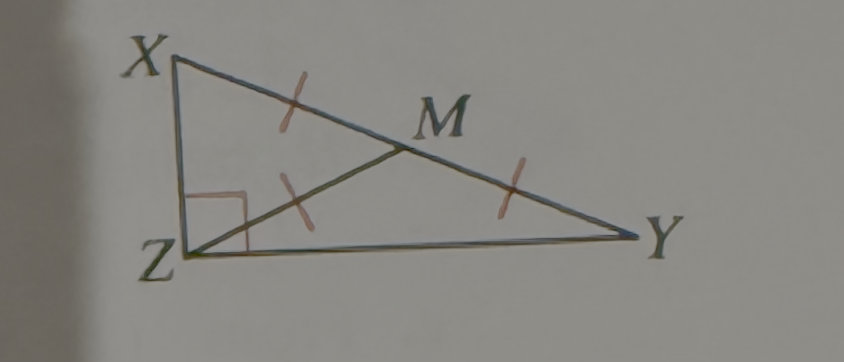
What can you conclude about point M
The midpoint of the hypotenuse of a right triangle is equidistant from the three vertices
How can you conclude if a parallelogram is a rectangle?
If an angle of a parallelogram is a right angle then the parallelogram is a rectangle
How can you conclude if a parallelogram is a rhombus
If two consecutive sides of a parallelogram are congruent then the parallelogram is a rhombus
What happens when the transversal of 2 parallel lines are perpendicular to one of the two parallel lines?
If the transversal is perpendicular to one of two parallel lines then it is perpendicular to the other also
How to say that the angles of an isosceles triangle are congruent
If two sides of a triangle are congruent then the angles opposite those sides are congruent.
What is true about the bisector of a vertex angle of an isosceles triangle
The bisector of the vertex angle of an isosceles triangle is perpendicular to the base at its midpoint
What is true about a point on the perpendicular bisector of a segment? What is the inverse
If a point lies on the perpendicular bisector of a segment then the point is equidistant from the endpoints of the segment
If a point is equidistant from the endpoints of a segment then the point lies on the perpendicular bisector of the segment
What is true about a point on the bisector of an angle? What is the inverse
If a point lies on the bisector of an angle then the point is equidistant from the sides of the angle
If a point is equidistant from the sides of an angle then the point lies on the bisector of the angle
 Note
Note  Flashcards (30)