Cells & Mitosis Extra cuz im a chud (copy)
 Call Kai
 Learn
Learn Practice Test
 Spaced Repetition
 Match
Match Flashcards
 Knowt Play
1/35

There's no tags or description
Looks like no tags are added yet.
Name | Mastery | Learn | Test | Matching | Spaced | Call with Kai |
|---|
No analytics yet
Send a link to your students to track their progress
36 Terms
Cell theories
All living things are made of cells, The cell is the basic unit of life, All cells came from pre existing cells
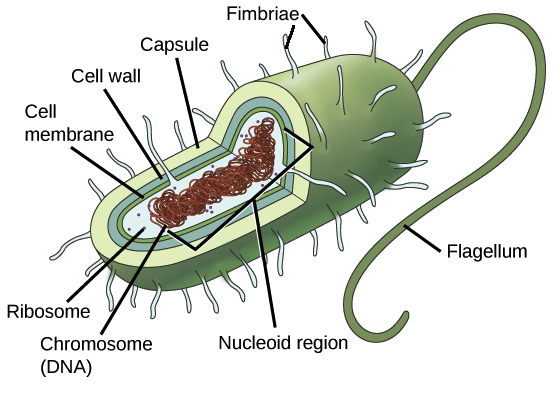
Prokaryote
No nucleus, less complex structure,
Has cell wall, cell membrane, cytoplasm, DNA, ribosomes, flagella, capsule.
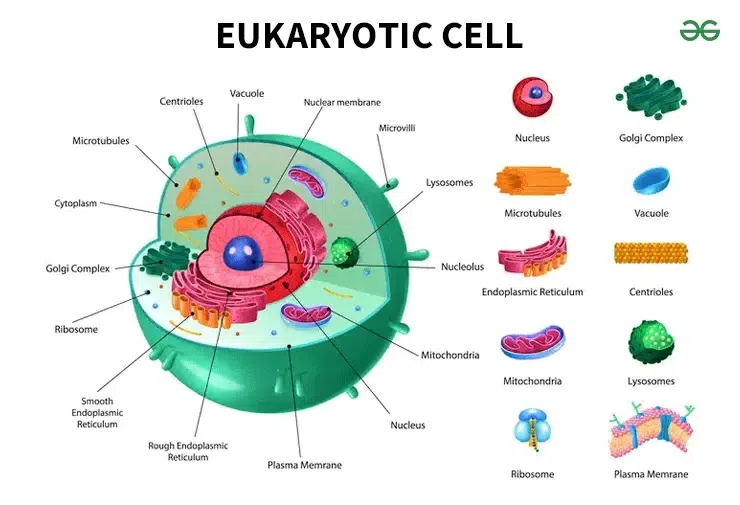
Eukaryote
Has nucleus, complex structure
Has organelles, cell wall, cytoplasm, cell membrane, DNA, ribosomes, cilia, cytoskeleton, nucleus
Is uni, and multi cellular
Chromatin
Made of tightly packed DNA + Proteins
Ribosomes
Made of RNA & proteins
Pro: Float freely in cytoplasm
Euka: Some float freely, some attached to ER
Endoplasmic Reticulum
Network of membranes that help more proteins through the cells
Rough ER
Has ribosomes, makes proteins
Smooth ER
More attached, makes lipids, breaks down toxic substances
Golgi Apparatus
Vesicles carry proteins/lipids from ER through cytoplasm to golgi. Golgi is flattened, membrane bound sacs, distributed proteins & lipids to final destination.
Cell Division
Growth, Repair, Maintenance
Golgi Enzymes
Modify proteins as they pass through, modified proteins are put into new vesicles, where they travel through the cytoplasm to deliver the proteins where needed
Lysosomes
Some vesicles are formed into small organelles, they break down the cell’s used components (proteins, lipids, carbs, nucleic acids) remain in the cytoplasm.
Vesicles
tiny, membrane-bound sac that acts like a cellular delivery truck, transporting, storing, and processing substances like proteins, lipids, and waste within a cell or moving them in and out of the cell
Vacuole
Large part of cell, membrane bound organelle that stores water and nutrients for cell
Cell wall
protective outer layer outside the cell membrane, providing structural support, shape, and defense
Cell membrane
surrounds every cell to separate its internal contents from the outside environment, regulates what enters and exits, and maintains cell structure and communication
Mitosis
Division of nucleus, creates new cells that allows growth and development. Provides large number of cells
Cytokinesis
Division of cytoplasm
Every cell has..
46 Chromosomes, 23 pairs
Chromosomes
Structures made of DNA, proteins, carries genetic instructions that contains a cell’s growth, function, and development
IPMAT stands for?
I (Interphase) I
P (Prometaphase) Play
M (Metaphase Minecraft
A (Anaphase) At
T (Telaphase) Tyler’s
Interphase consists of..
G1 Phase, S Phase, G2 Phase
G1 Phase (Interphase)
The cell grows, synthesizes proteins and organelles, and carries out its normal functions, collecting nutrients and checking for DNA damage before committing to division.
S Phase (Interphase)
The cell replicates its entire DNA, resulting in two identical sister chromatids joined at the centromere, and duplicates its centrosomes
G2 Phase
The cell continues to grow, produces more proteins and organelles, and prepares its machinery (like the mitotic spindle) for the upcoming division.
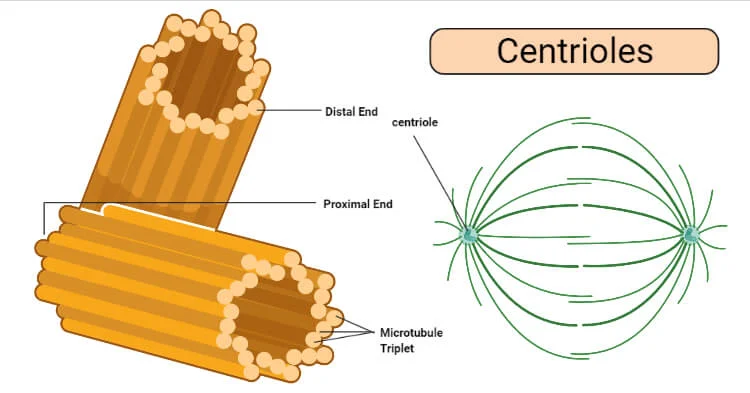
Centrioles
Tiny structures located in cytoplasm near nuclear envelope, organisms which are only active during cell division
Nuclear envelope
double-membrane barrier that encloses the nucleus in eukaryotic cells, separating its contents from the cytoplasm and defining the eukaryotic cell
Spindle Formations
a football-shaped structure to separate chromosomes equally into daughter cells
Prophase (Mitosis)
1st and longest phase of mitosis, chromosomes condense & become visible, centrioles in cytoplasm move to opposite poles of the nucleus, the region they move to is the centrosome
Centrosome
An organelle near the nucleus of a cell which contains the centrioles (in animal cells) and from which the spindle fibers develop in cell division
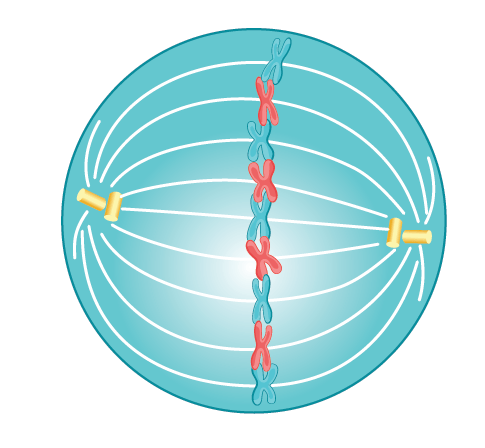
Metaphase (Mitosis)
Chromosomes line up along the middle of the cells, spindle fibers attach to centromeres
Anaphase (Mitosis)
The centromeres that connect the sister chromatids split, sisters pulled to opposite poles of the cell, each chromatid is now considered an individual chromosome.
Telaphase (Mitosis)
Final stage of mitosis, nuclear membranes reform around the separated molecules, chromosomes uncoil back into chromatin. Spindle fibers break down, nucleolus forms in each daughter cell. Cleavage burrow forms until chromatids separate, nuclear envelope forms
Cytokinesis (After mitosis)
Cytoplasm divides, forming 2 identical daughter cell. Each daughter cell has 46 chromosomes
Internal Regulators
Proteins that respond to events happening inside the cell, regulates phases of mitosis, cells cannot move onto next phase until prerequisites are complete. Determines when a stage of mitosis is over
External Regulators
Speeds/slows the cell cycle, includes growth factors, helps regulate wound healing, and embryonic development

