Bio 125 M.1
0.0(0)
 Studied by 1 person
 Call Kai
 Learn
Learn Practice Test
 Spaced Repetition
 Match
Match Flashcards
 Knowt Play
Card Sorting
1/164

Earn XP
Description and Tags
Last updated 9:17 PM on 2/12/23
Name | Mastery | Learn | Test | Matching | Spaced | Call with Kai |
|---|
No analytics yet
Send a link to your students to track their progress
165 Terms
1
New cards
What is a phylogenetic tree?
a graphical summary of a group of organisms evolutionary history. Shows the relatedness of the organisms
2
New cards
Define Monophyletic
The group contains a single common ancestor and all of its descendants. The members relation to each other is greater than any members relations to any member of a different group
3
New cards
Define Paraphyletic
The group is composed based on primitive characteristics. Only some of the descendants are present in the group.
4
New cards
Define Polyphyletic
The group of descendants that do not share the most recent common ancestors. Contains 2 or more lineages
5
New cards
Hard Polyphyletic vs Soft Polyphyletic?
Hard- Cannot be solved
Soft- Is fixable
Soft- Is fixable
6
New cards
What is a primitive trait? Can it tell us about relatedness?
a trait that that existed in the ancestor, therefore it does not tell us about relatedness
7
New cards
What is a derived trait? Can it tell us about relatedness?
A modified form of the ancestral trait found in the descendant, it can tell us about relatedness
8
New cards
How does a cladistic analysis work?
the cladistic approach is based n the idea that the relationships between species can be reconstructed to identify shared derived traits called synapomorphies
9
New cards
Define synapomorphies. Is it primitive or derived?
A trait found in 2 or more taxa that is present in the most recent common ancestor but is missing in more distant ancestors. **Shared derived trait**
10
New cards
Define autapomorphies. Is it primitive or derived?
A **derived trait** that is unique to only one taxa
11
New cards
Define synplesiomorphies. Is it primitive or derived?
A shared **primitive** trait
12
New cards
True or False: synplesiomorphies, autapomorphies, synapomorphies all tell us about relatedness
False. Only synapomorphies can tell us about the relationship between taxa
13
New cards
Homology vs Homoplasy vs Analogy
Homology-occurs when traits are similar **due to shared ancestry**
Homoplasy- Occurs when traits are similar for **reasons other than common ancestry**
Analogy- traits that serve similar functions (no shared ancestry)
Homoplasy- Occurs when traits are similar for **reasons other than common ancestry**
Analogy- traits that serve similar functions (no shared ancestry)
14
New cards
What is a common cause of homoplasy convergence?
Convergent evolution- the independent evolution of similar traits due to adaption to similar environments or lifestyles
15
New cards
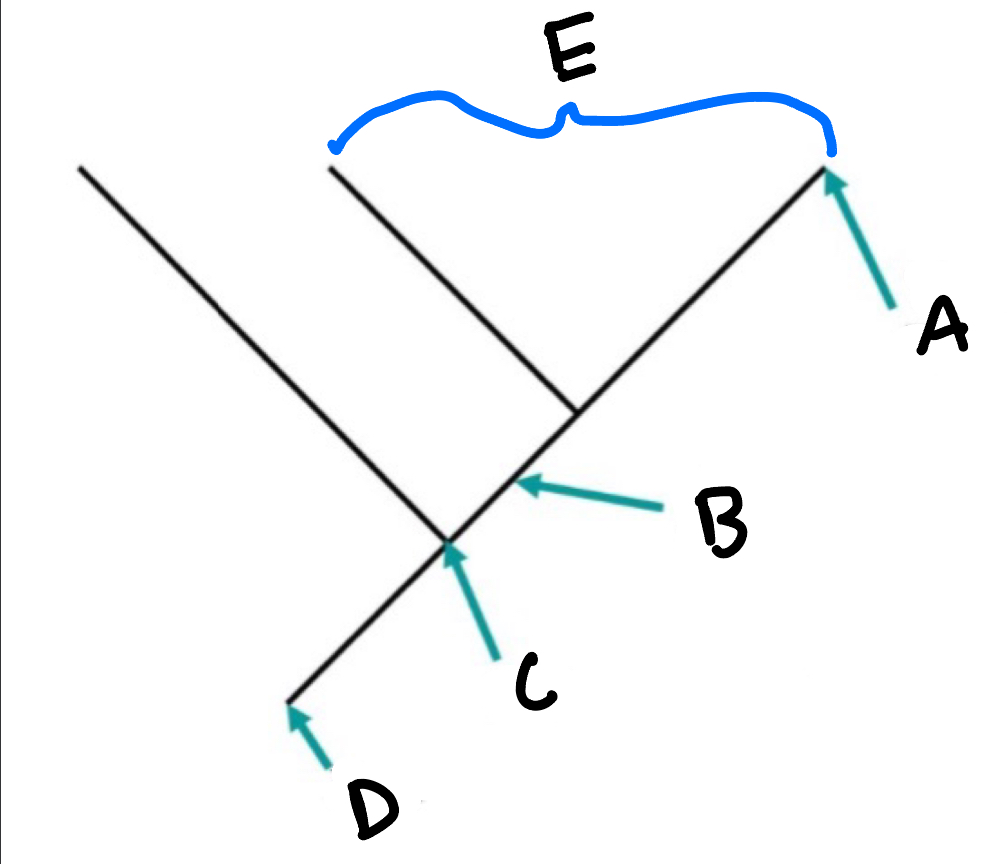
Name parts A-E of the phylogenetic tree
A- Taxa (tip)
B- Branch
C- Node
D- Root
E- Sister Taxa
B- Branch
C- Node
D- Root
E- Sister Taxa
16
New cards
Define parsimony
Tells us that the likely configuration/pattern of the tree is the one that requires the least steps
17
New cards
What is polytomy?
When there are multiple results that have the equal (least) amount of steps. As a result each tree is equally as likely and all possible trees must be shown
18
New cards
Explain the steps of the Wagner method for creating a phylogenetic tree
1. using a character chart count the steps
2. start with the taxa that has the fewest steps from the outgroup
3. Then go to the one with the second least steps and so on, place them on the tree n relation to the other taxa they have the least differences with
4. Each time you create a new node, add its characters to the character trait by comparing the sister taxas
\*if there is a tie in differences this is a polytomy and both trees must be shown
19
New cards
Define outgroup, what use does it have?
A sister group that shares a recent common ancestor with the group of studied taxa. Used to establish the relative timing or evolution for each taxa
20
New cards
What is an area cladogram? What use does it have?
A tree representing geographical data that is laid over a tree of organisms. If they match it proves that the reason for the organisms relation is geographical drift.
21
New cards
What are the 7 major clades of Eukarya?
1. Rhizaria
2. Alveolata
3. Stramenopila
4. Ameobozoa
5. Opisthokonta
6. Excavata
7. Archeaplastids/plantae
22
New cards
Which clade of eukarya are Kingdom Animalia and Kingdom Fungi in? (animals, humans & fungi)
Kingdom Animalia and Fungi both reside in clade Opisthokonta
23
New cards
What are the three domains? Which are the most closely related?
Domain Eukarya
Domain Bacteria
Domain Archaea (sister to eukarya)
Domain Bacteria
Domain Archaea (sister to eukarya)
24
New cards
How does gram staining work? What is gram positive vs negative?
Gram staining is based on the cell wall composition of bacteria. Specifically the peptidoglycan
Gram positive- cell walls that have high peptidoglycan composition, typically lacking an outer membrane
Gram negative- peptidoglycan layer is thinner and is wedged between 2 membranes of phospholipid bilayers
Gram positive- cell walls that have high peptidoglycan composition, typically lacking an outer membrane
Gram negative- peptidoglycan layer is thinner and is wedged between 2 membranes of phospholipid bilayers
25
New cards
Which clades of Domain Bacteria are mainly gram positive?
Actinobacteria - high-GC gram positives
Firmicutes - low-GC gram positives
Firmicutes - low-GC gram positives
26
New cards
What are the 2 major groups of plants?
1. Bryophytes/Non-Vascular plants:
* no roots
* no vesicles to carry water/sugar throughout the plant. This results in them being aquatic or very small land plants
2. Vascular plants
* contain vesicles to carry water/sugars throughout the plant
* very successful on land
27
New cards
What are the 3 divisions of Bryophytes?
**A. Division Hepaticophyta**
* examples - liverworts (Marchantia)
* grow along surface with broad leafy appearance
* reproduce with gemmae cups
**B. Division Bryophyta**
* true mosses
* dominant gametophyte, nutritionally dependent sporophyte.
**C. Division Anthoceraphyta**
* examples - hornworts
* examples - liverworts (Marchantia)
* grow along surface with broad leafy appearance
* reproduce with gemmae cups
**B. Division Bryophyta**
* true mosses
* dominant gametophyte, nutritionally dependent sporophyte.
**C. Division Anthoceraphyta**
* examples - hornworts
28
New cards
What are the 3 groups (the largest divisions) of Vascular plats
1. Pteridophytes
not monophyletic
2. Gymnosperms:
no fruits
ex. bushes/trees
not monophyletic
3. Angiosperms:
have fruits, flowering plants
monophyletic if only considering the plants that still exist today
29
New cards
What are the divisions of Pteridophytes
**A. Division Lycophyta**
**B. Division Pterophyta**
* examples - ferns and horsetails
* nutritionally independent sporophyte and gametophyte
**B. Division Pterophyta**
* examples - ferns and horsetails
* nutritionally independent sporophyte and gametophyte
30
New cards
What are the divisions of Gymnosperms
**A. Division Ginkgophyta**
* examples - ginkgo
* woody
* previously large division
**B. Division Cycadophyta**
* examples - queen sago palm
* reminiscent of palm trees
* previously large division, now restricted mainly to the tropics
**C. Division Gnetophyta**
* examples - gnetae, Ephedra, “mormon tea”
* often found in semi-arid habitats
* formerly considered closest relatives to angiosperms; probably sister to the conifers
**D. Division Coniferophyta**
* examples - pines, firs, spruce, cypress, “hemlock” trees, yew, larch
* examples - ginkgo
* woody
* previously large division
**B. Division Cycadophyta**
* examples - queen sago palm
* reminiscent of palm trees
* previously large division, now restricted mainly to the tropics
**C. Division Gnetophyta**
* examples - gnetae, Ephedra, “mormon tea”
* often found in semi-arid habitats
* formerly considered closest relatives to angiosperms; probably sister to the conifers
**D. Division Coniferophyta**
* examples - pines, firs, spruce, cypress, “hemlock” trees, yew, larch
31
New cards
What are the divisions of Angiosperms
**A. Division Anthophyta**
* examples - flowering (fruiting) plants
1. __Monocotyledons (monocots)__
only one cotyledon in seeds
fibrous root systems
parallel venation in leaves
2. __Eudicots (Eudicotidae)__
two cotyledons in seeds
taproot system
reticulate venation
* examples - flowering (fruiting) plants
1. __Monocotyledons (monocots)__
only one cotyledon in seeds
fibrous root systems
parallel venation in leaves
2. __Eudicots (Eudicotidae)__
two cotyledons in seeds
taproot system
reticulate venation
32
New cards
List some of the main differences between monocots and dicots
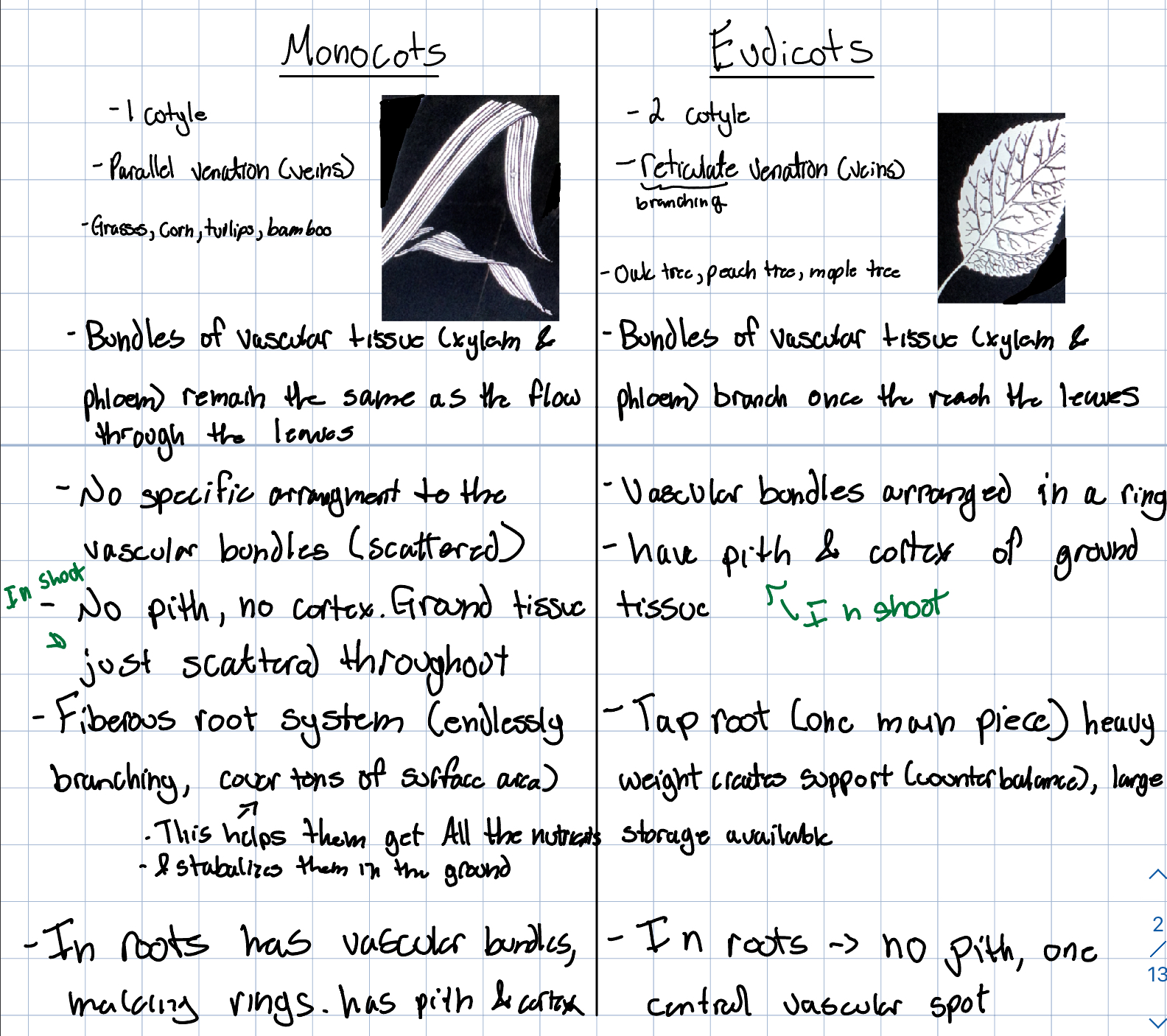
33
New cards
What are the genetic characters that define domain archaea?
1. **Size:** although all small the actual range is quite large
2. **Shape:**
filaments
cocci (spherical)
bacilli (rods)
spirilla (spiral)
3. **Motility:**
swimming movement (using flagella)
gliding (using proton movement in spin filaments)
34
New cards
what route of water transport is the fastest
35
New cards
True or false:
Monocots have 1 cotyledon and dicots have 2
Monocots have 1 cotyledon and dicots have 2
True!
36
New cards
True or false:
Monocots have 2 cotyledons and dicots have 1
Monocots have 2 cotyledons and dicots have 1
False: opposite opposite
37
New cards
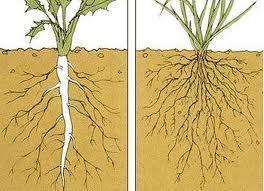
What type of root system to monocots have? what type do Dicots have?
Monocots- fibrous root system (right pic)
Dicots- tap root (left)
Dicots- tap root (left)
38
New cards
How are evolutionary relationships measured?
With respect to the most common ancestor
39
New cards
What does basal mean?
closer to the root on a phylogenetic tree
40
New cards
What does a node represent in a phylogenetic tree?
A common ancestor
41
New cards
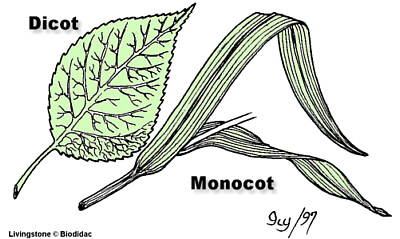
How can you determine in a plant is a monocot or dicot by looking at their leaves?
**Monocots: Parallel Venation**- In leaves of monocots the bundles of vascular tissue remain the same through the leaves (veins **straight from end to end**)
**Dicots: Reticulate Venation**- In leaves of dicots the bundles of vascular tissue **branch** in leaves
**Dicots: Reticulate Venation**- In leaves of dicots the bundles of vascular tissue **branch** in leaves
42
New cards
Describe the shoot structure monocot vs dicot
Monocots- scattered vascular bundles (no arrangement). No pith or cortex, ground tissue just fills space between bundles
\
Dicots- vascular bundles arranged in a ring surrounded by the cortex (ground tissue) with pith (ground tissue) in the middle
\
Dicots- vascular bundles arranged in a ring surrounded by the cortex (ground tissue) with pith (ground tissue) in the middle
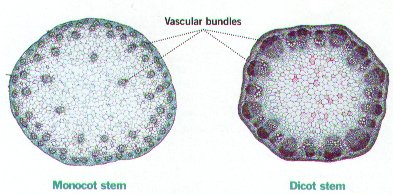
43
New cards
Describe the root structure (cross-section of inside) of monocots vs dicots
Monocots- vascular bundles arranged in a ring surrounded by the cortex (ground tissue) with pith (ground tissue) in the middle
Dicots- contains one central vascular bundle in the middle surrounded by the cortex (no pith)
Dicots- contains one central vascular bundle in the middle surrounded by the cortex (no pith)
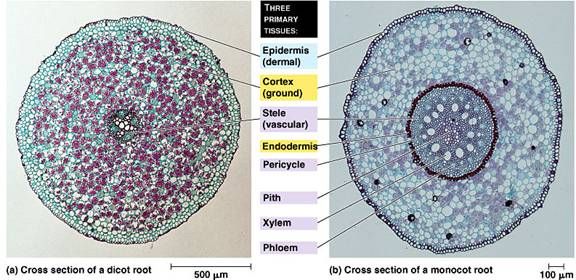
44
New cards
What are the two main organ systems of plants?
1. Shoot system
2. Root system
45
New cards
What are the three main tissue types of plants
Ground- Undifferentiated, basically in all the space/ is everything thats not vascular or dermal (pith, cortex)
Vascular- Carry water & sugar from one place to another inside the plant (xylem, phloem)
Dermal- single layer of cells that surround the body of the plant (epidermis)
Vascular- Carry water & sugar from one place to another inside the plant (xylem, phloem)
Dermal- single layer of cells that surround the body of the plant (epidermis)
46
New cards
Describe xylem’s components and function. What kind of tissue is it?
**Xylem- Vascular tissue** that **carries water** (+dissolved minerals inside) from the roots to the leaves (**unidirectional**, one way)
2 components:
Tracheids- have tapering ends that overlap with adjacent cells
Vessel elements- larger and stacking cells, transport more
2 components:
Tracheids- have tapering ends that overlap with adjacent cells
Vessel elements- larger and stacking cells, transport more
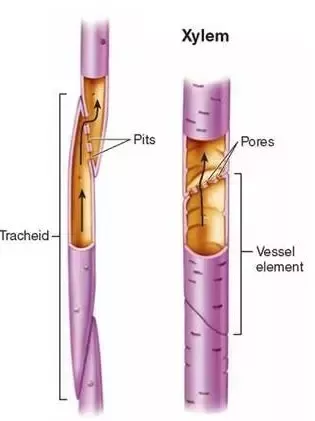
47
New cards
Describe phloems components and function. What kind of tissue is it?
**Phloem- Vascular tissue** that **carries sugars** all around the cell, moves in **both directions.**
2 components:
Sieve Tube members- main phloem cells, main conductors. Stacked end to end connected by a sieve plate. Cytoplasm is continuous between the cells, basically hollow aside from that.
Companion Cells- large elongated cells of phloem with large nucleus. It is attached to the lateral side of sieve tubes. These cells help in transport of food along with sieve (basically do all the work)
2 components:
Sieve Tube members- main phloem cells, main conductors. Stacked end to end connected by a sieve plate. Cytoplasm is continuous between the cells, basically hollow aside from that.
Companion Cells- large elongated cells of phloem with large nucleus. It is attached to the lateral side of sieve tubes. These cells help in transport of food along with sieve (basically do all the work)
48
New cards
What is lignin?
Helps hold in water in woody plants- xylem is often lignified
49
New cards
Describe the types of ground tissue?
1. Pith- basically anything in the middle of something else. ground tissue in the middle of a ring of xylem/phloem (vascular bundles)
2. Cortex- the ground tissue outside the vascular ring
3. Other- in monocots ground tissue fills the empty spaces between the scatter of vascular bundles (no specified arrangement)
50
New cards
What is the epidermis and its relation to the cuticle? What kind of tissue is it?
Epidermis- Dermal tissue that surrounds the outside of the plant. The cuticle is a non-living waxy layer over the epidermis that prevents water loss, **no cuticle on roots**.
51
New cards
What are the main cell types in plant tissues?
1. Parenchyma- average plant cell, do all the work and basic functions
2. Collenchyma- living cells with unevenly thick cell walls. Flexible and specialize providing support.
3. Sclerenchyma- have thick secondary cell walls, dead when functionally mature provide strength/support. When in bundles called sclereids or stone cells
52
New cards
What are the 4 main functions of roots?
anchor plant to ground (act as a counterbalance)
uptake water from soil
store food molecules (if taproot)
exchange of most nutrients
uptake water from soil
store food molecules (if taproot)
exchange of most nutrients
53
New cards
What are buttress roots?
roots at surface level, found in trees of moist soil
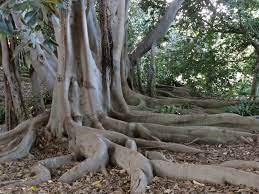
54
New cards
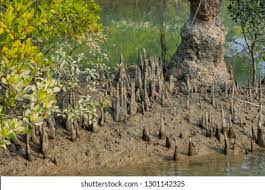
What are pneumatophores roots?
parts of the underground root system that grow up to surface level and begin growing up and out. Occurs when soil is too moist and roots are not getting enough oxygen
55
New cards
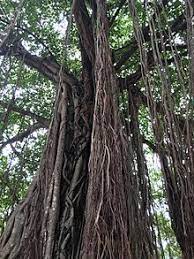
What are aerial roots?
roots that grow in the air. Might eventually go into the soil
56
New cards
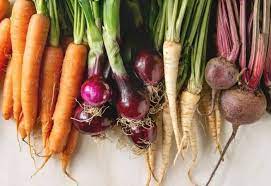
What are storage roots?
roots that specialize in storage of nutrients
57
New cards
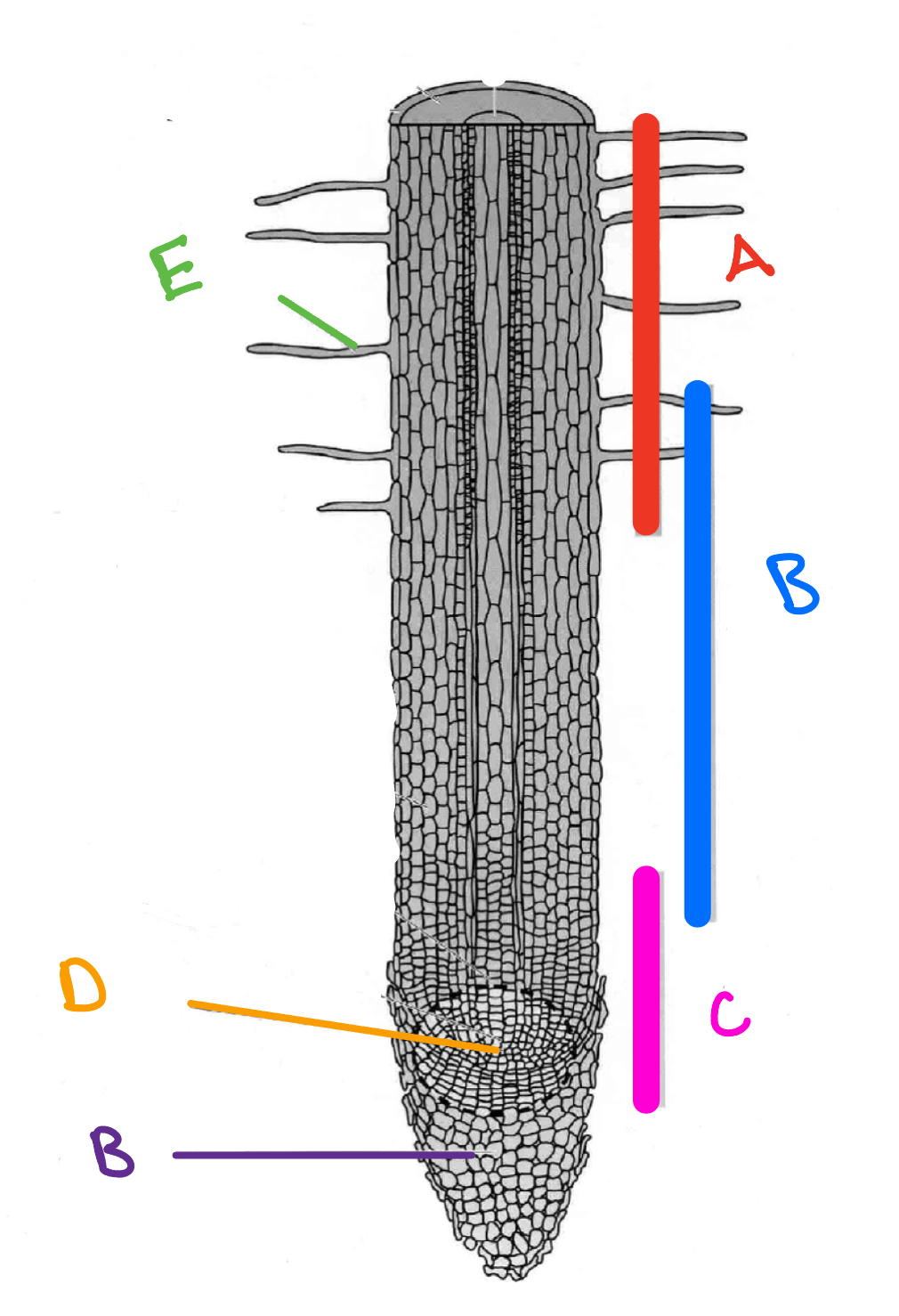
Label the parts of the root (A-E)
A. Zone of Differentiation-no growth here, cells maturing and then ready to work!
blue B. Zone of Elongation-cells growing and maturing here. Mitosis going on here
C. Zone of Cell Division-actively dividing cells
purple B. Root Cap- protective helmet as root pushes through soil. Constantly getting shredded and regrown (by maristem)
D. Apical Maristem- where growth happens: new cells+cell division. **Primary Growth. growth in both directions**
E. Root Hair- where most absorption happens
blue B. Zone of Elongation-cells growing and maturing here. Mitosis going on here
C. Zone of Cell Division-actively dividing cells
purple B. Root Cap- protective helmet as root pushes through soil. Constantly getting shredded and regrown (by maristem)
D. Apical Maristem- where growth happens: new cells+cell division. **Primary Growth. growth in both directions**
E. Root Hair- where most absorption happens
58
New cards
What are the 3 types of maristem?
1. Protoderm- gives rise to dermal tissue
2. Ground Meristem- gives rise to ground tissue
3. Procambium- gives rise to vascular tissue
59
New cards
What is the Quiescent Center?
The middle of the apical meristem where cells are dividing slower. Reserve cells
60
New cards
What is Primary Growth vs Secondary Growth
Primary growth- Happens first: all growth by aprical meristem (lengthening of stems/roots), development of leaves.
Secondary growth- occurs in plants that have lateral meristems. Thickening of plant
Secondary growth- occurs in plants that have lateral meristems. Thickening of plant
61
New cards
What is an indication of secondary growth?
When wood is on the plant (bark)
62
New cards
What does the vascular cambium produce? Is this primary or secondary growth?
Undergoes devision to produce secondary xylem to the inside (towards center of stem) and secondary phloem to the outside. This is secondary growth, thickening of plant.
63
New cards
What is the cork cambium? What does it produce?
The cork cambium is a single layer of cells that developed from the epidermis. Undergoes division to produces cork cells to the outside. These cork cells layer to create the Pariderm (secondary growth)
64
New cards
What does the pariderm consist of
layers of cork cells + the cork cambium.
65
New cards
What does bark consist of?
the paraderm and secondary phloem
66
New cards
What is apical dominance
Meaning that primary growth (growing taller) happens first via the apical maristem and that the lateral maristem cannot begin secoundary growth (growing thicker) until that primary growth is done. **The prevention of lateral bud growth lower down, so that the plant can continue to grow vertically.**
67
New cards
What accounts for the majority of the cells in a piece of wood? (the heartwood)
Secondary xylem produced by the vascular cambium
68
New cards
What are the ways that water can move from the root hair to xylem?
1. **Transmembrane route**- travels **through each cell (each cell membrane)** slowest route
2. **Symplast route**- travels **through the symplast (the channel that connects each protoplast of each cell)** cells (does not enter cells)
3. **Apoplast route**- travels **through the apoplast (the space inside the cell wall)** until reaching the endodermis (blocked by casparian strip), must change to another one of the routes from there **fastest route**
69
New cards
What are the three levels of transport that occur in plants?
1. Uptake of water and solutes by individual cells (soil-roots)
2. Cell-to-cell transport, lateral transport (throughout roots)
3. Long-distance transport (root-rest of plant)
70
New cards
Which level of transport only occurs in vascular plants?
Long distance transport (roots to rest of plant)
71
New cards
By what form of transport does the transport system of uptaking water and solutes from the soil occur?
Most of the solutes will require some form of protein transport, as they are minerals--ions, this could either be by carrier or selective channel proteins. This is passive transport and moves with the gradient.
However some solutes will require secondary active transport. This is typically the cations and because of this can use a proton pump in response to a charge differential in the cell. (pumping protons out of the cell against the gradient allowing other positively charged ions to enter with the gradient)
The water itself can easily enter using aquaporons (protein channel for only water)
However some solutes will require secondary active transport. This is typically the cations and because of this can use a proton pump in response to a charge differential in the cell. (pumping protons out of the cell against the gradient allowing other positively charged ions to enter with the gradient)
The water itself can easily enter using aquaporons (protein channel for only water)
72
New cards
What are the 3 aspects of water potential
Osmotic potential
Pressure potential
Matrix potential- adhesion potential of water to solid surfaces
Pressure potential
Matrix potential- adhesion potential of water to solid surfaces
73
New cards
Why is water potential important to discuss in plants
because plant cell size is fixed, constarined by its cell wall (in the short term).
74
New cards
Describe how turgor pressure occurs
If water is favored to enter the plant cell eventually the cell wall will constrain the continuation of water entering the cell (gets too full and has no way of expanding because of cell wall). The membrane pushing on the cell wall creates pressure on the wall= turgor pressure
75
New cards
What is plasmolysis? When does it occur?
The contracting of the cell membrane causing it to pull away from the cell wall and turgor pressure being lost. Occurs when water is leaving the cell membrane (hyperosmotic conditions). Likely flowing into the water vacuole (tonoplast)
76
New cards
What is the tonoplast in a plant cell?
The tonoplast is the membrane surrounding the water vacuole and everything in it (space inside), all this is the tonoplast
77
New cards
What are the long term effects of having turgor pressure?
The cell starts to elongate (cannot get wider so it lengthens instead)
78
New cards
True or False: Water moves into the cell until the concentration gradient is changed, only then will it stop flowing in
False- it is only able to move in until it becomes overwhelmed by the pressure the membrane places on the cell wall, it cannot keep moving in after this even though the concentration gradient wants it to
79
New cards
When is water potential 0, negative and positive?
0- pure water
negative- water with solutes or negative pressure (suction)
positive- water under positive pressure
negative- water with solutes or negative pressure (suction)
positive- water under positive pressure
80
New cards
What is the pathway of water?
soil--epidermis--root cortex--xylem
81
New cards
what is the protoplast in a plant cell?
everything enclosed by the plasma memberane
82
New cards
What is the aploplast in a plant cell?
the space inside the cell wall
83
New cards
What are Plasmodesmata in plant cells?
channels that connect the protoplasts of each cell to the protoplast of the next. They connect so the cytoplasm can stream cell to cell. The channel is reffered to as the symplast
84
New cards
Why is the casparian strip important
* serves as a barrier- gives endodermal cells control of whats going into the xylem and how much
* controls the speed at which water moves in
* stops water from leaking out in response to gravity
* controls the speed at which water moves in
* stops water from leaking out in response to gravity
85
New cards
What allows long-distance transport transport to occur?
The transpiration-cohesion -tension mechanism, transmission of pressure from leaves down to roots, this pressure pulls the water all the way up the plant.
86
New cards
What are the requirements for the the transpiration-cohesion-tension mechanism to establish long-distance transport
* continuous chain of water through entire plant
* **cohesion** **of water** (water wants to make hydrogen bonds with itself→water chain)
* **Adhesion of water** (waters want to adhere to other polar things. To solids. ex the microfibers in the cell walls)
* **cohesion** **of water** (water wants to make hydrogen bonds with itself→water chain)
* **Adhesion of water** (waters want to adhere to other polar things. To solids. ex the microfibers in the cell walls)
87
New cards
What is an air plug?
An air plug result when the constant chain of water through the plant is broken (ex. when you pick a flower) there then becomes an air plug in the stem that blocks the water from moving through and reaching the rest of the plant
88
New cards
What does xylem sap consist of? What does it do?
water + dissolved minerals (solutes). Provides water to all parts of plant, and moves nutrients to the plant
89
New cards
What happens to most of the water absorbed by the plant? Why?
Lost via transpiration (evaporating out of the plant).
One cause is positive pressure pushing the water out (not enough on its own) mainly the water that is built up over night (bcuz stomata are closed) is extruded out (guttation)
Main cause is the transpirational pull of water that has leaked out of the vascular bundle into the aploplast causing it to evaporate into the air spaces, a maniscus occurs so pulling continues (transpiration cohesion tension mechanism)
One cause is positive pressure pushing the water out (not enough on its own) mainly the water that is built up over night (bcuz stomata are closed) is extruded out (guttation)
Main cause is the transpirational pull of water that has leaked out of the vascular bundle into the aploplast causing it to evaporate into the air spaces, a maniscus occurs so pulling continues (transpiration cohesion tension mechanism)
90
New cards
How does the plant control water loss?
through the closing of stomata
91
New cards
What is the photosynthesis-transpiration compromise?
in order for photosynthesis to happen, the stomata must be open. However, if the stomata are open, water is also being lost to transpiration. Water takes precedent meaning the stomata will close and photosynthesis must wait if there is not enough water in the plant.
92
New cards
What is guttation?
the release of water from the stomata in the morning in response to root pressure build up from stomata being closed overnight
93
New cards
Why do the stomata close and how?
guard cells surrounding hole (stomata) will sag with loss of water (stomata closed) when there is lots of water they are puffed up (stomata open)
Close to avoid water loss
in response to stress (done by abscisic acid)
in response to time of day (closed at night)
Close to avoid water loss
in response to stress (done by abscisic acid)
in response to time of day (closed at night)
94
New cards
How do stomata know what time of day it is?
1. exposure to light induces the guard cells to take up potassium (which in turn causes them to take up water bcuz the gradient) and they open
2. when there is exposure to light, photosynthesis starts in the plant. As result there is a decrease of CO2 in the air spaces of the plant, the partial pressure of the air spaces decreases and the guard cells respond by opening
3. The guard cells have an internal (approx.) 24-hour clock (we don’t know how that works)
95
New cards
What are some reasons stomata might close even though its day time
High temperatures
Water deficiency
abscisic acid release triggered by stress
Water deficiency
abscisic acid release triggered by stress
96
New cards
What does phloem sap consist of?
sucrose, minerals, amino acids & hormones
97
New cards
What is translocation?
The movement of phloem sap, happens from source to sink (places it is being produced to places it is being used). Happens mainly through sieve tube members
98
New cards
What do we mean when we say phloem sap moves from source to sink
moves from places it (sugar) is being produced to places it is being used. The direction may change as the production site changes with the seasons. Typically a sink is supplied by the closest source.
ex. leaves are sources in the summer & tubers are sinks, they switch roles in the winter (less light→less photosynthesis by leaves")
ex. leaves are sources in the summer & tubers are sinks, they switch roles in the winter (less light→less photosynthesis by leaves")
99
New cards
How are phloem being “loaded” and “unloaded”
Loaded- the source produces sugar and **loads** it into the phloem and water from the xylem & cell are being loaded in there as well. This creates **positive pressure** which pushes the sap forward. The loading is typically done via proton pumps but sometimes active transport too using symplastic and apoplastic routes.
Unloaded- at sink the sugar is being unloaded from phloem via diffusion and the water diffuses out too. **Release of pressure.**
\
gradient created flowing sap from source to sink
Unloaded- at sink the sugar is being unloaded from phloem via diffusion and the water diffuses out too. **Release of pressure.**
\
gradient created flowing sap from source to sink
100
New cards
What are the main classes of hormones in plants? Which hormones are in which class?
1. Growth Hormones- Auxin, Gibberellins, Cytokinins, Brassinosteroids
2. Stress/Inhibitor- Abscisic acid, Ethylene
 Note
Note  Flashcards (30)