Genetics - Cell Cycle + Division
 Studied by 0 people
 Call with Kai
 Learn
Learn Practice Test
 Spaced Repetition
 Match
Match Flashcards
 Knowt Play
1/36

There's no tags or description
Looks like no tags are added yet.
Name | Mastery | Learn | Test | Matching | Spaced | Call with Kai |
|---|
No study sessions yet.
37 Terms
what do prokaryotic cells for genetics
serve as model organisms for research developments
what do eukaryotic cells for genetics
contain organelles that perform various functions
gametic mutations
inherited + occur in the testes & ovaries — affecting all cells
somatic mutations
occurs in body cells & are acquired so they don’t affect all cells
chromatid
1 strand of a duplicated chromosome
sister chromatids
2 chromatids joined by a centromere, each carrying identical genetic information
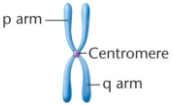
metacentric

submetacentric

acrocentric

telocentric
cell cycle phases
interphase & m phase
g1
cell grows
s
dna duplicates
g2
prep for mitosis
top arm
p arm
bottom arm
q arm
s checkpoint
checks if DNA replicated properly
g2
checks if the cell is ready to divide
metaphase checkpoint
checks if the spindle fibers attached
apoptosis
programmed cell death
necrosis
accidental cell death due to injury or some sort of trauma
g0
non-dividing cell phase
condensins
protein complexes that compact DNA during prophase
tubulins
proteins added to microtubules during prometaphase
synapsis
homologous chromosomes lining up in prophase 1
when in meiosis does the cell turn into n=
telophase 1/cytokinesis
cohesin
protein that holds chromatids together
separase
breaks down cohesin to separate chromatids in mitosis & homologs in meiosis
shugoshin
a protein complex that keeps cohesin intact during meiosis I, then degrades for separase to work in meiosis II
nondisjunction
failure of chromosomes separating during anaphase
what happens if nondisjunction occurs in meiosis I
all 4 gametes are abnormal
trisomy
extra chromosome resulting from nondisjunction
monosomy
1 less chromosome resulting from nondisjunction
what happens if nondisjunction occurs during meiosis II
only half the gametes are abnormal
spermatogenesis produces
4 haploid sperm cells
oogenesis produces
1 ova and 3 polar bodies
polar bodies
byproduct of oogenesis that holds extra DNA & ensures cell growth
 Note
Note  Flashcards (82)