Approach to pedal dx
 Call Kai
 Learn
Learn Practice Test
 Spaced Repetition
 Match
Match Flashcards
 Knowt Play
1/29

There's no tags or description
Looks like no tags are added yet.
Name | Mastery | Learn | Test | Matching | Spaced | Call with Kai |
|---|
No analytics yet
Send a link to your students to track their progress
30 Terms
What are the features of sterile pyograulomatous pododermatitis?
Interdigital folliculitis/furunculosis
+/- interdigital cysts or nodules
What causes sterile pyogranulomatous pododermatitis and what breed are predisposed?
Trauma from the environment (can have self induced - atopic dermatitis)
Weight bearing, particularly in heavy dogs, may be distributed to haired interdigital skin adjacent to paw pads
Most commonly in smooth, short-coated breeds - English bulldogs, Staffies and Labradors
Where would the pododermatitis be located if it is due to trauma?
Front feet take more weight and are more prone to trauma
Usually between digits 3 and 4, and 4 and 5
Which animals are more likely to have issues with weight bearing?
Flat foot and scoop-shaped web of some breeds
Wide-based paws i.e., more distance between pads
Orthopaedic problem
Describe how weight bearing causes pododermatitis to occur?
Friction + pressure → hair follicle damage → keratin release
Triggers inflammation (foreign body reaction)
May involve external debris (e.g. gravel)
Starts sterile, but often becomes infected
Repeated trauma → scarring and chronic disease
Describe the lesion associated with Sterile pyogranulomatous pododermatitis?
Lesions form on ventral interdigital surface, but rupture onto dorsal surfaces
Erythema, oedema, comedones, nodules, pustules, ulcers, haemorrhagic bullae, haemorrhagic draining tracts, pyogranulomas and callus formation
Scar tissue from recurrent episodes
Describe what is being shown here
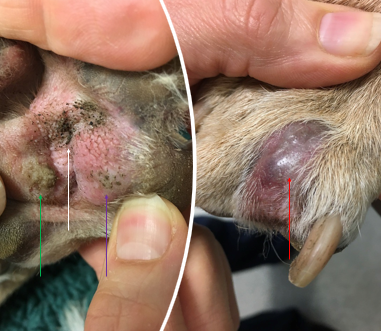
Dorsal interdigital space
Haemorrhagic nodule (red arrow) about to rupture
also, erythema, oedema, alopecia
Ventral corresponding surface
Erythema, alopecia, lichenification, comedones (purple arrow), pocket (white) and callus (green)
from lesion rubbing on adjacent skin
(sterile pyogranulomatous pododermatitis)
How would you treat pedal disease caused by atopic dermatitis?
Ciclosporin and topical steroid spray
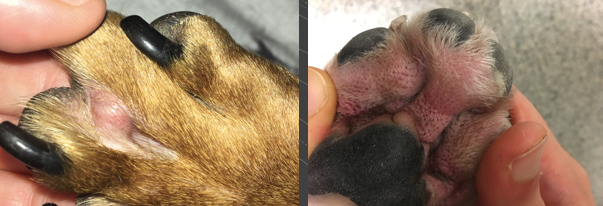
How would you have to treat pedal disease due to orthopaedic issues or abnormal conformation of legs?
Can start with ciclosporin and topical steroid cream
Would have to consider surgery
What is being shown here?
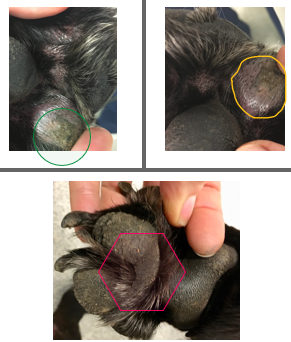
Conforming pads (pink circle)
Sterile pyogranuloma (green) and comedone formation (yellow)
What is being shown here?
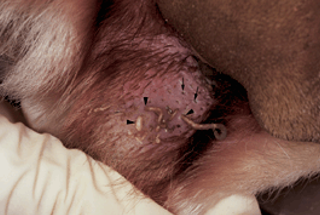
Expression of follicular contents (arrowheads) caused by pressure from the dorsal surface
What are the ddx for sterile pyogranulomatous pododermatitis?
Demodicosis
Primary infections - atypical bacterial or fungal
What are the comorbidities for sterile pyogranulomatous pododermatitis?
Atopic dermatitis
Endocrine disease e.g. hypothyroidism
Why should you consider body condition score when you are investigating pedal disease?
Overweight patients are predisposed
Describe this cytology from unruptured cyst in a sterile pyogranulomatous pododermatitis?
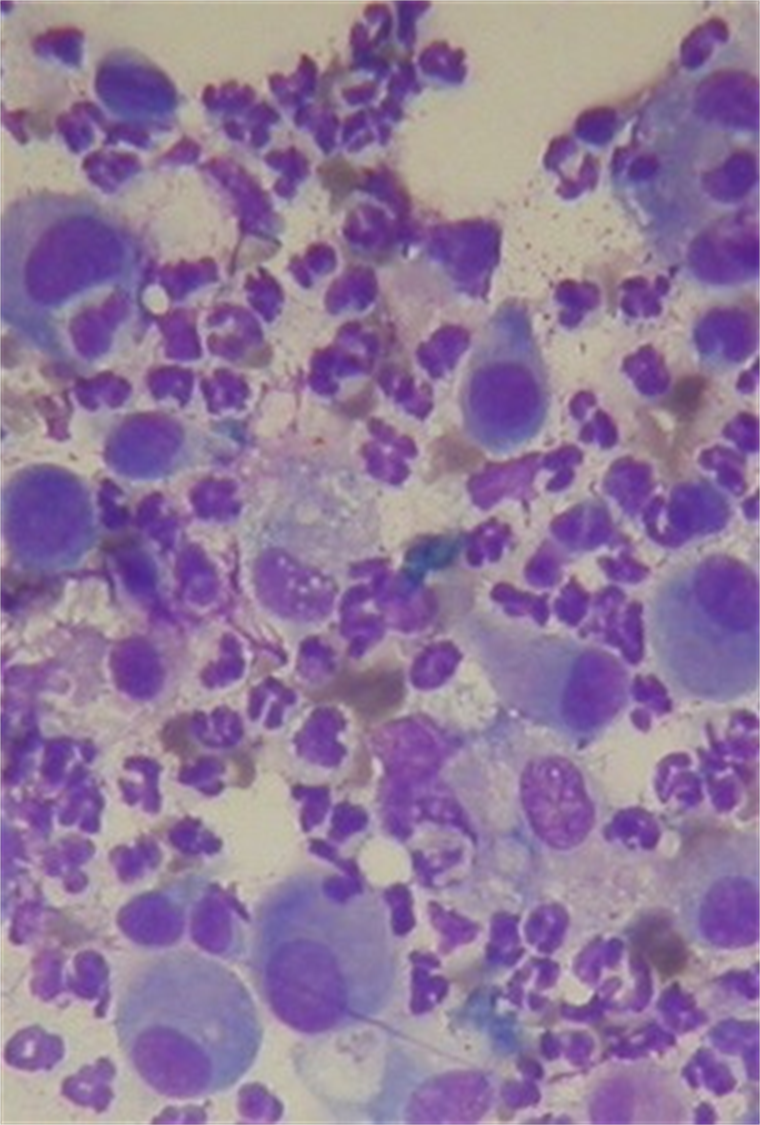
Neutrophils
Macrophages (larger more blue cells)
Why may you need to biopsy rather than carry out plucks and scrapes?
Plucks and scrapes may be difficult if chronically scarred and thickened tissue
What lab test can confirm diagnosis and exclude the other ddx?
Histopathology
also send fresh tissue for cultures
How do you treat interdigital follicular cysts with medication?
Treat aggressively early on to prevent scarring and perpetuation
Immune-modulation - ciclosporin and steroids
Topical antiseptics (particularly for chronic and draining lesions) - chlorhexidine
Antibiotics if there is secondary infection - base on culture
How do you treat interdigital follicular cysts by altering behaviour?
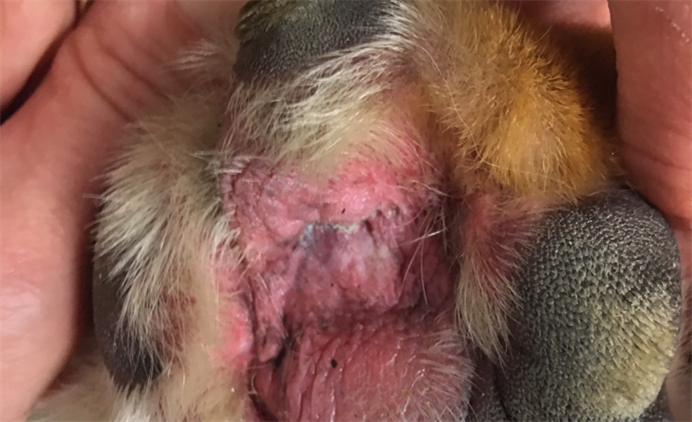
(plantar comedones and large interdigital lesions)
Restrict activity to smooth surfaces
Protect paw from trauma (external surface and self-trauma) by using booties (measured to fit)
Dogs with advanced disease, particularly non-responsive to medical management, benefit from surgery
laser or fusion podoplasty may be curative and/or improve response to medical management
What investigations would you do with this dog?
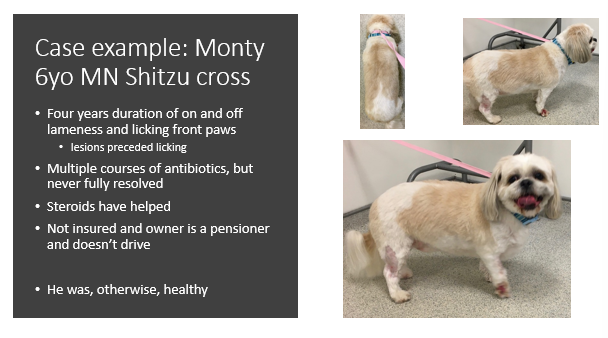
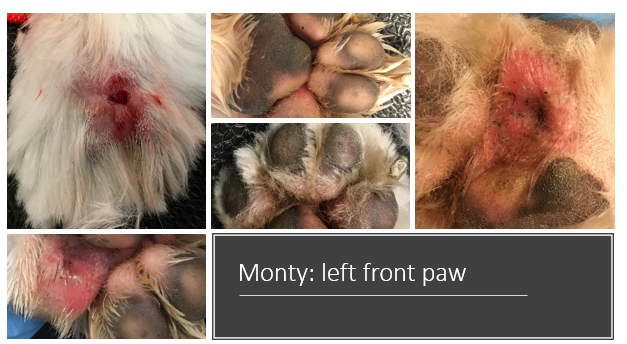
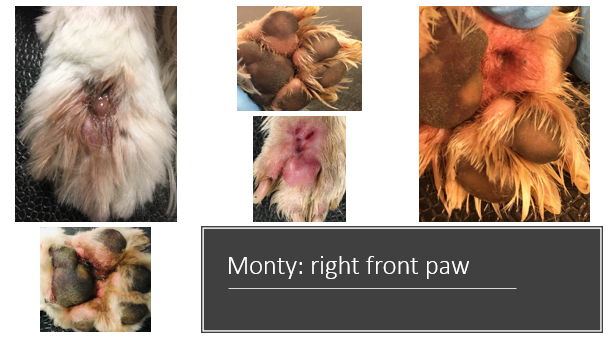
Orthopedic examination
Cytology and culture swabs from the sinus tracts
Plucks and scrapes
Baseline bloodwork
Clip and clean
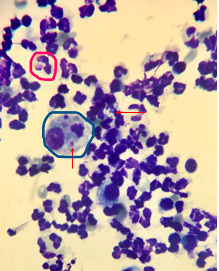
Interpret this cytology result
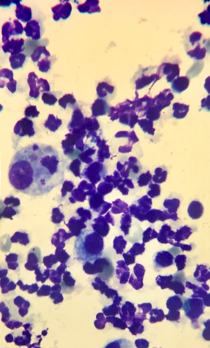
Pyogranulomatous inflammation with cocci (red arrows)
Degenerative neutrophils (pink circle); macrophage (blue circle; again, also digesting a neutrophil)
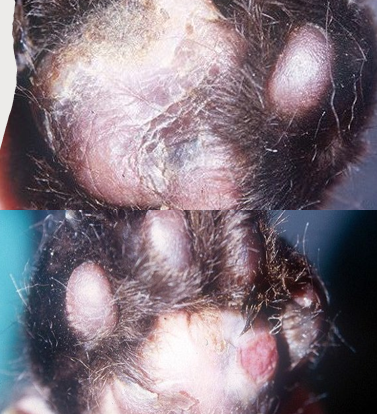
What is the characteristic presentation of feline plasma cell pododermatitis?
What other lesions may be present on the animal?
Mainly metacarpal and metatarsal pads
Usually, >1 pad
Swollen pads, scaling, ulceration, haemorrhage
Some cats are lame
Deep bacterial or fungal infections may rarely occur alongside PCP, especially if patient is on immune-modulatory treatment
Some cats may have gingivitis-stomatitis and/or dorsal nasal lesions with or without pad lesions
Some cats may have concurrent eosinophilic granuloma complex lesions
What species does feline PCP affect and what causes it?
Any age, breed or sex
Unknown aetiology (immune mediated?)
What are the ddx for feline pcp?
Eosinophilic, bacterial, or fungal granulomas
Usually single paws:
Neoplasia
Inflammatory reaction to a foreign body
How do you differentiate eosinophilic granulomas from PCP?
Clinical presentation and cytology
What specific lab test would you do for diagnosis of feline pcp and what would it show?
Fine needle aspirate cytology
Shows plasma cells
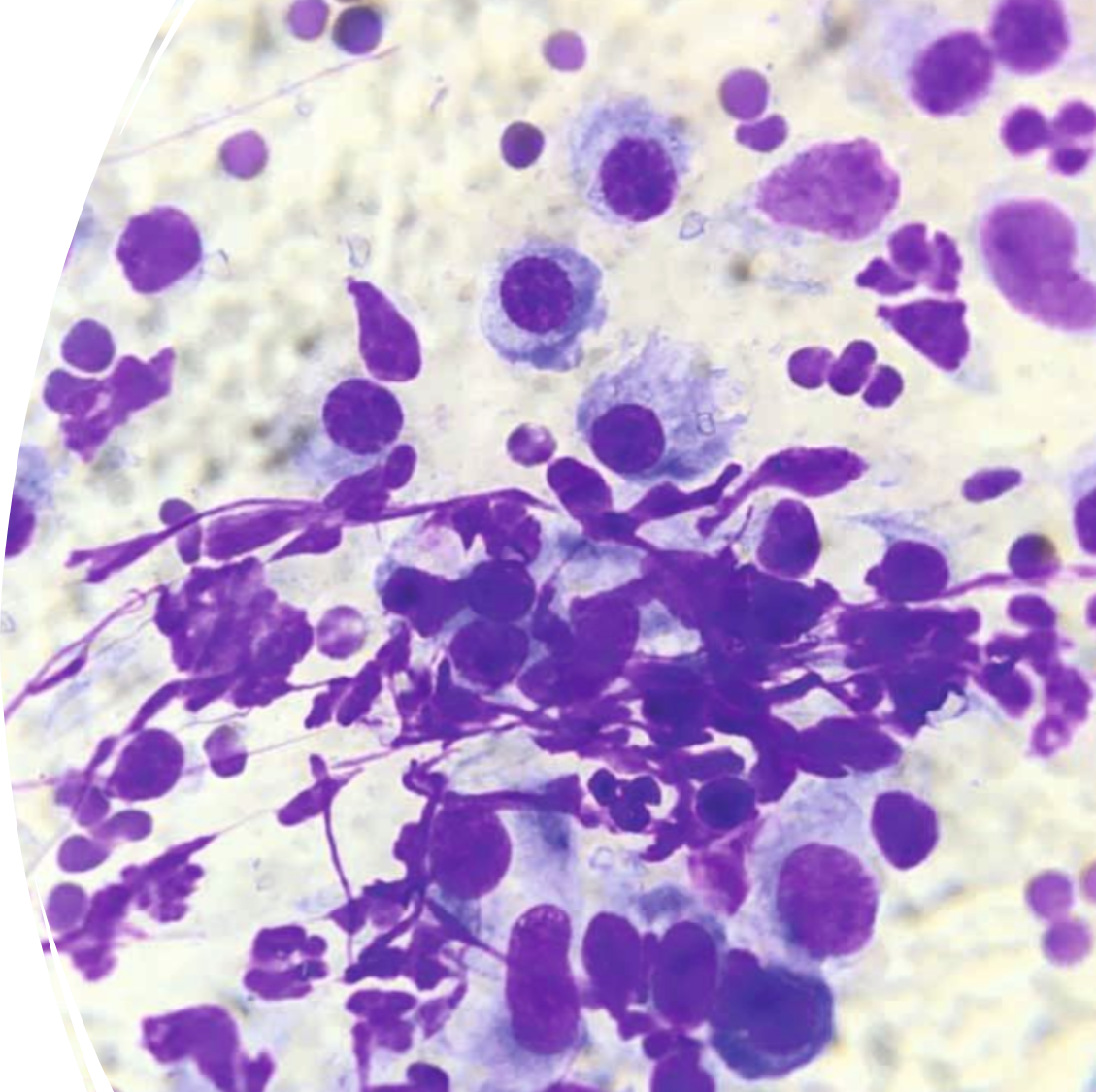
What else should you check when investigating feline PDP?
Check FIV status in all cats
Suggested to check FeLV, haematology, biochemistry and urinalysis
What are the treatment options for feline PDP and what is the prognosis?
Immune-modulatory treatment e.g., steroids, ciclosporin
Response to therapy may be slow and relapses are possible after treatment tapered to stop
Prognosis usually good with medical treatment
Some cases require surgical excision of prolapsed material
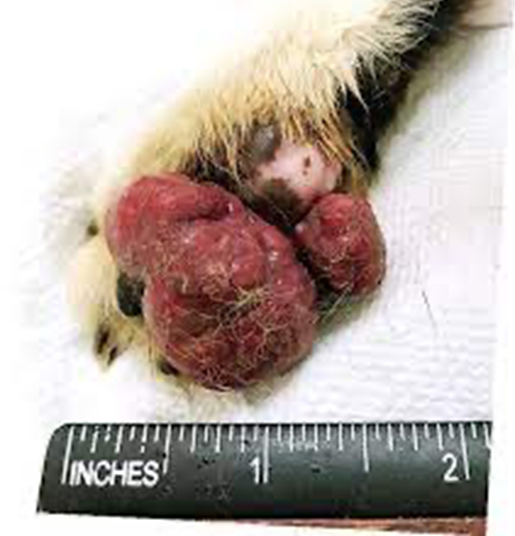
What is feline lung-digit sydrome?
Primary lung tumours (often bronchogenic adenocarcinoma), which may be clinically silent, present because of metastatic lesions in one or more digits
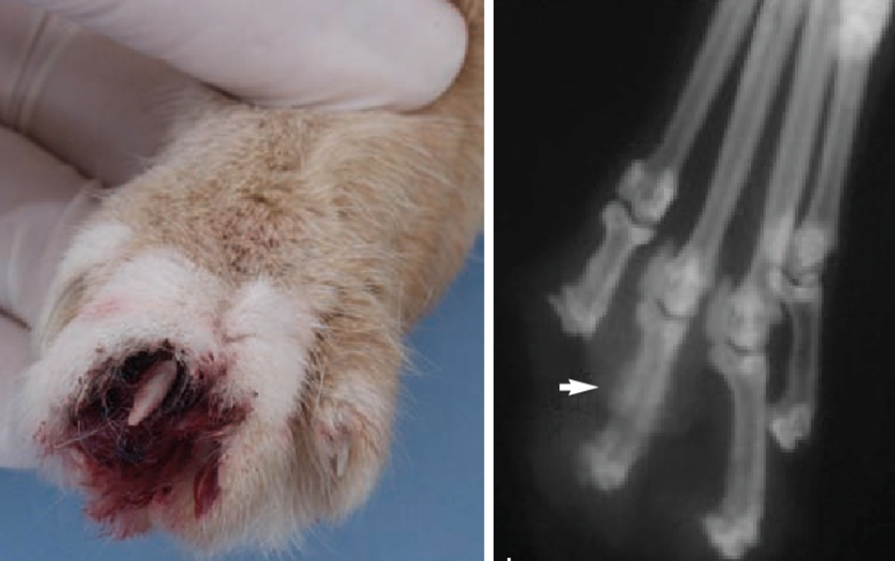
What is being shown here and what is it a sign of?
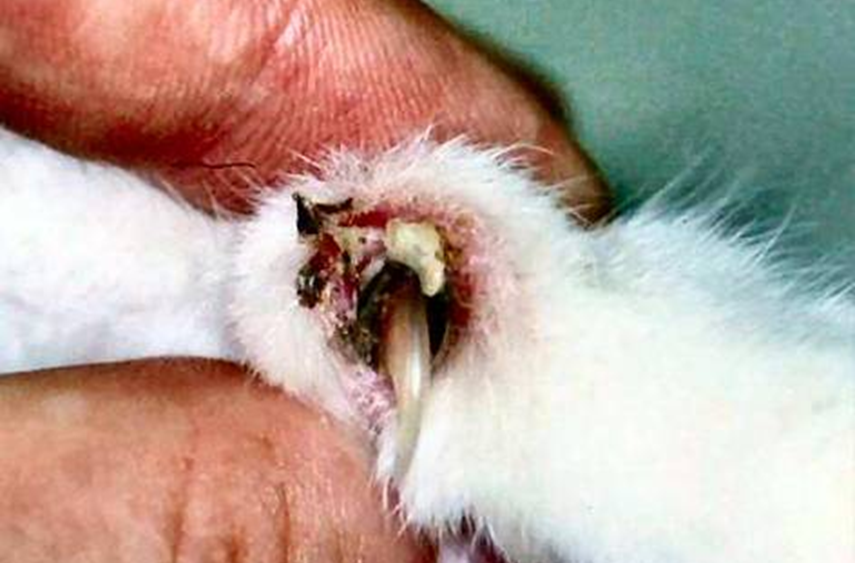
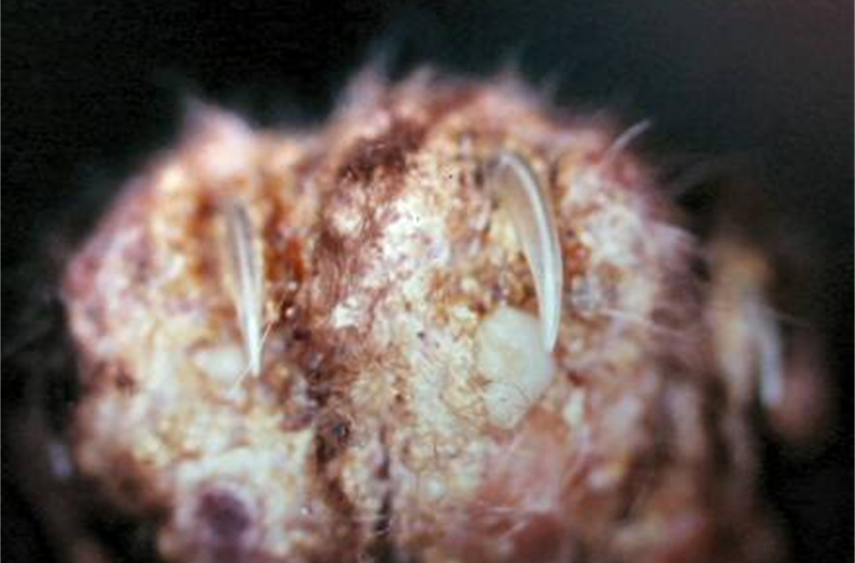
Cat paronychia - inflam around the skin of the nail/ claw
Pemphigus foliaceus

