BIOL 2111-02 Chapter 3 (Organs of a Cell, Histology)
 Call Kai
 Learn
Learn Practice Test
 Spaced Repetition
 Match
Match Flashcards
 Knowt Play
1/101

Earn XP
Description and Tags
(Organs of a Cell, Organelle Functions, Membrane Permeability, Passive Transport, Active Transport (ATP))
Name | Mastery | Learn | Test | Matching | Spaced | Call with Kai |
|---|
No analytics yet
Send a link to your students to track their progress
102 Terms
“The cell is…
… The structural/functional unit of life.”
Cell Diversity
Over 200 different types of human cells
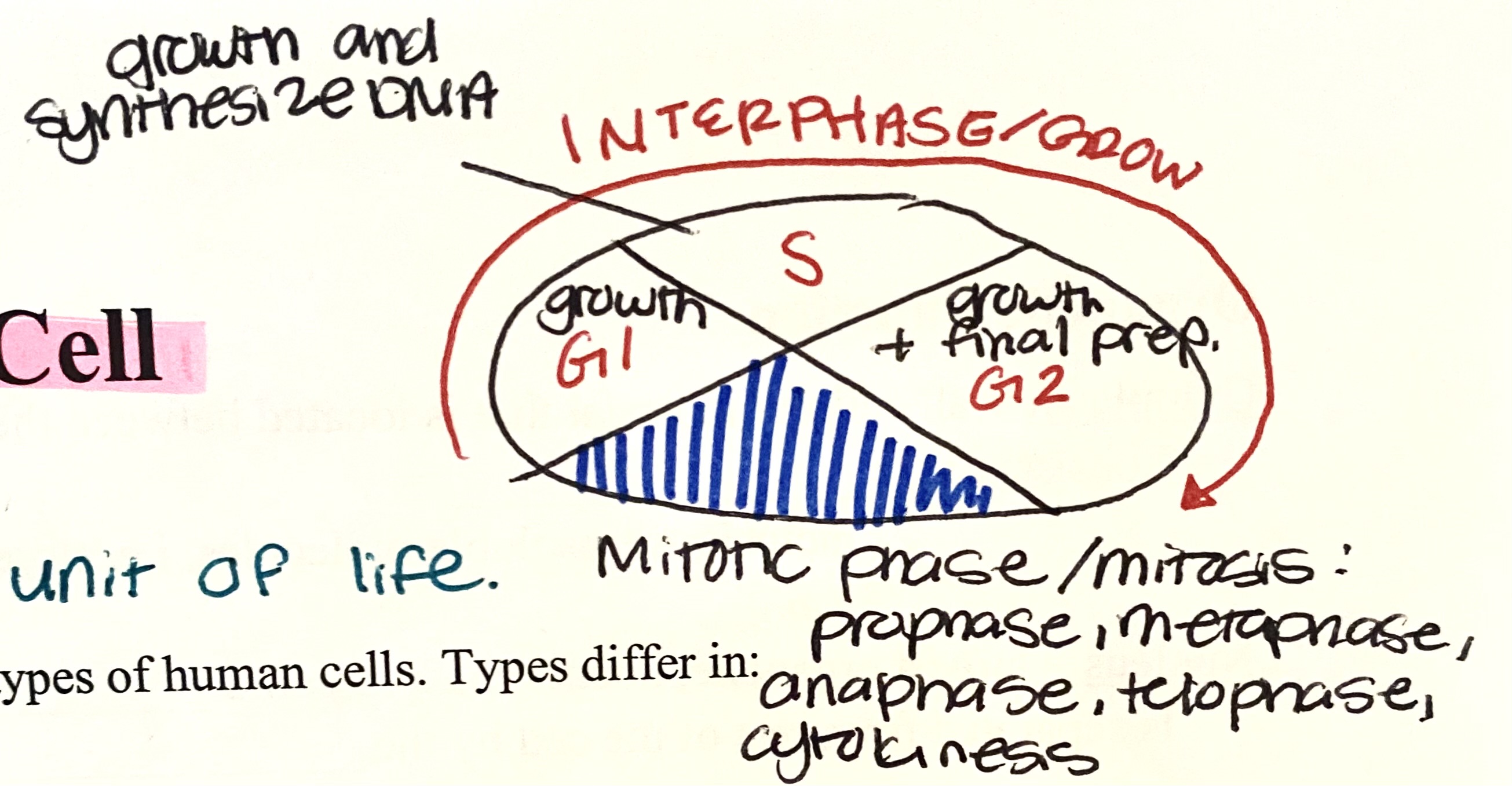
Cell Life Cycle
Series of changes a cell undergoes from the time it is formed until it reproduces (Interphase and Mitotic Phase)
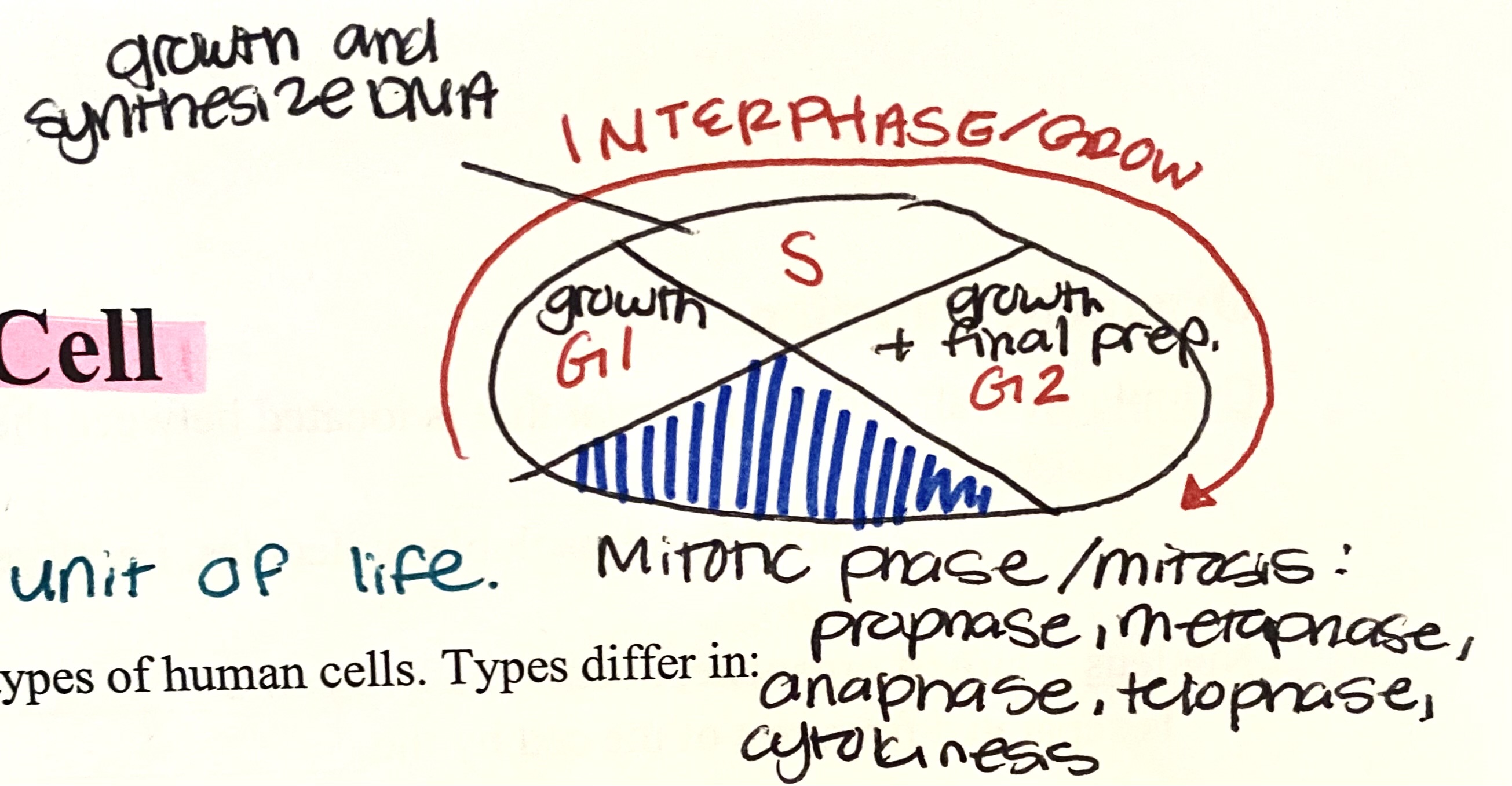
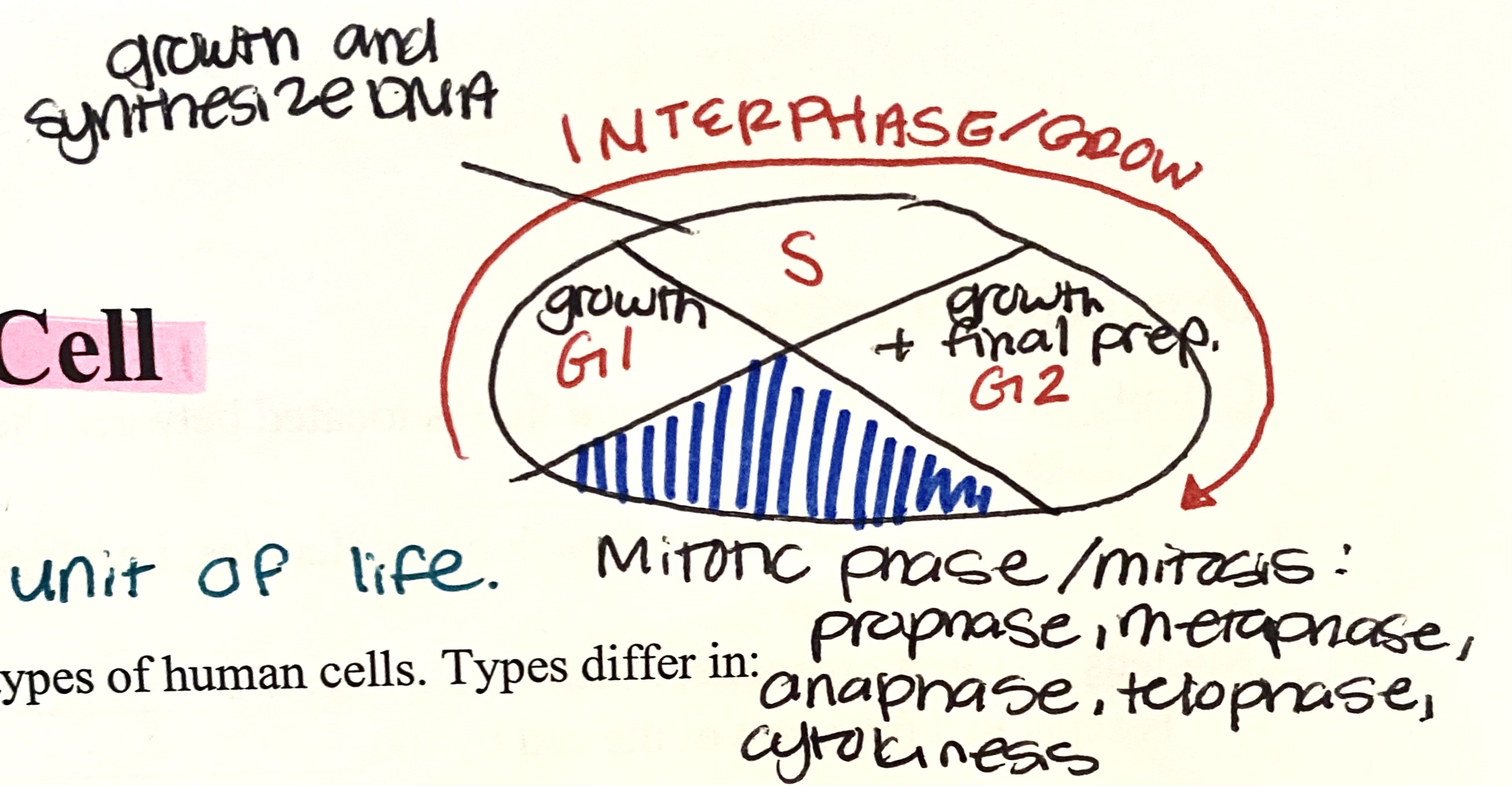
Interphase
The cell grows and carries out its usual activities
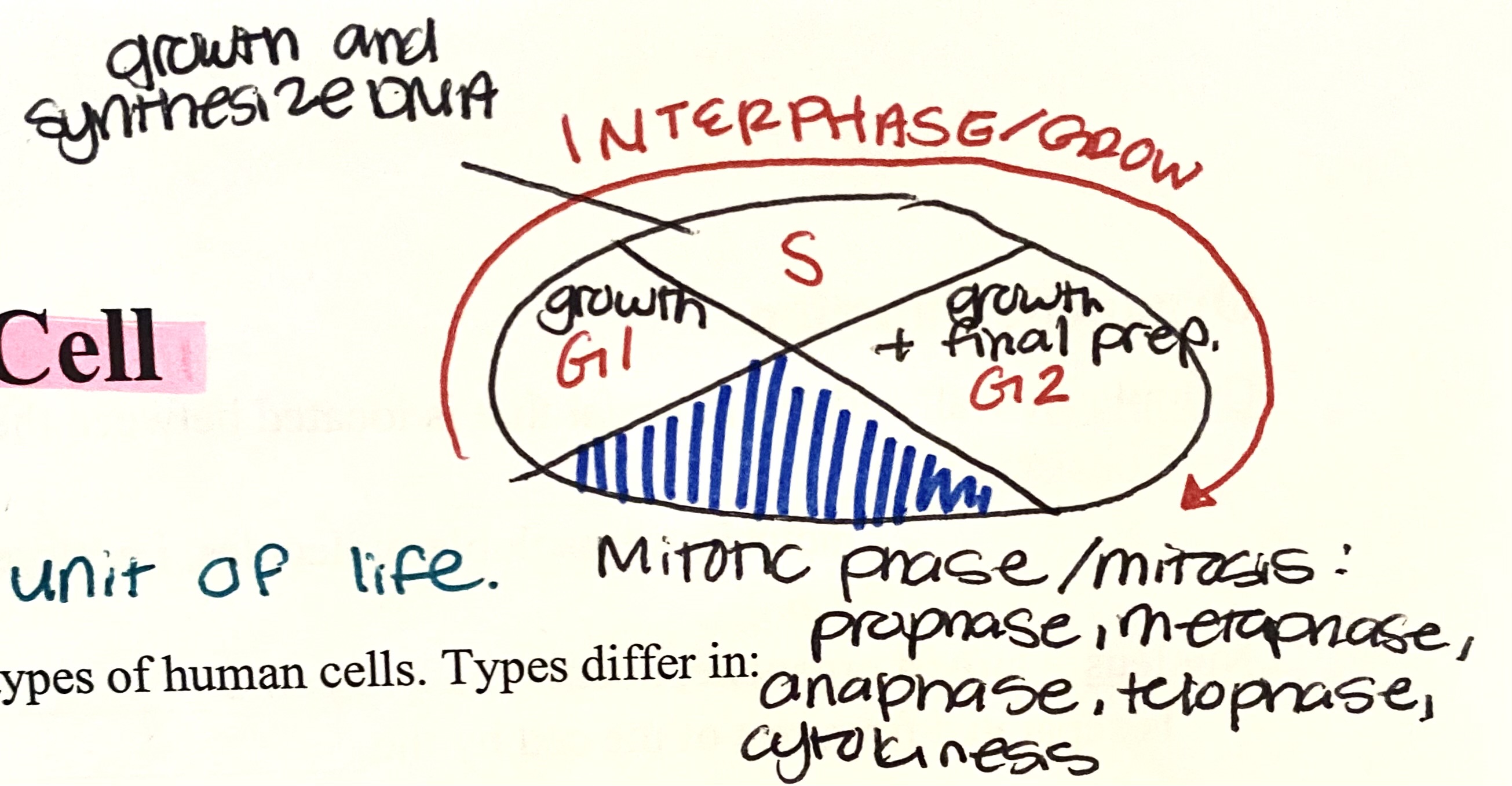
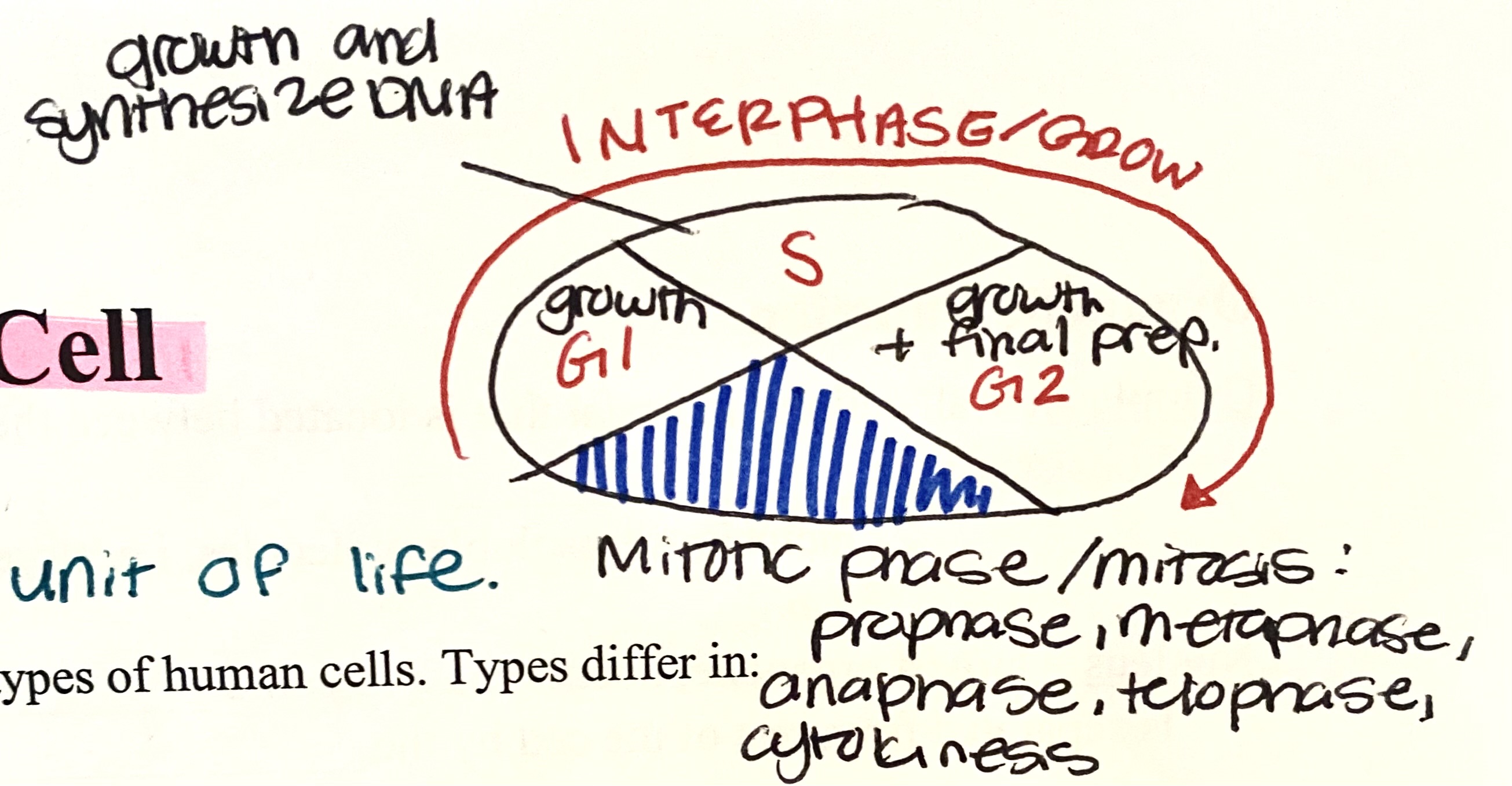
Mitotic Phase
Phase where cell divides
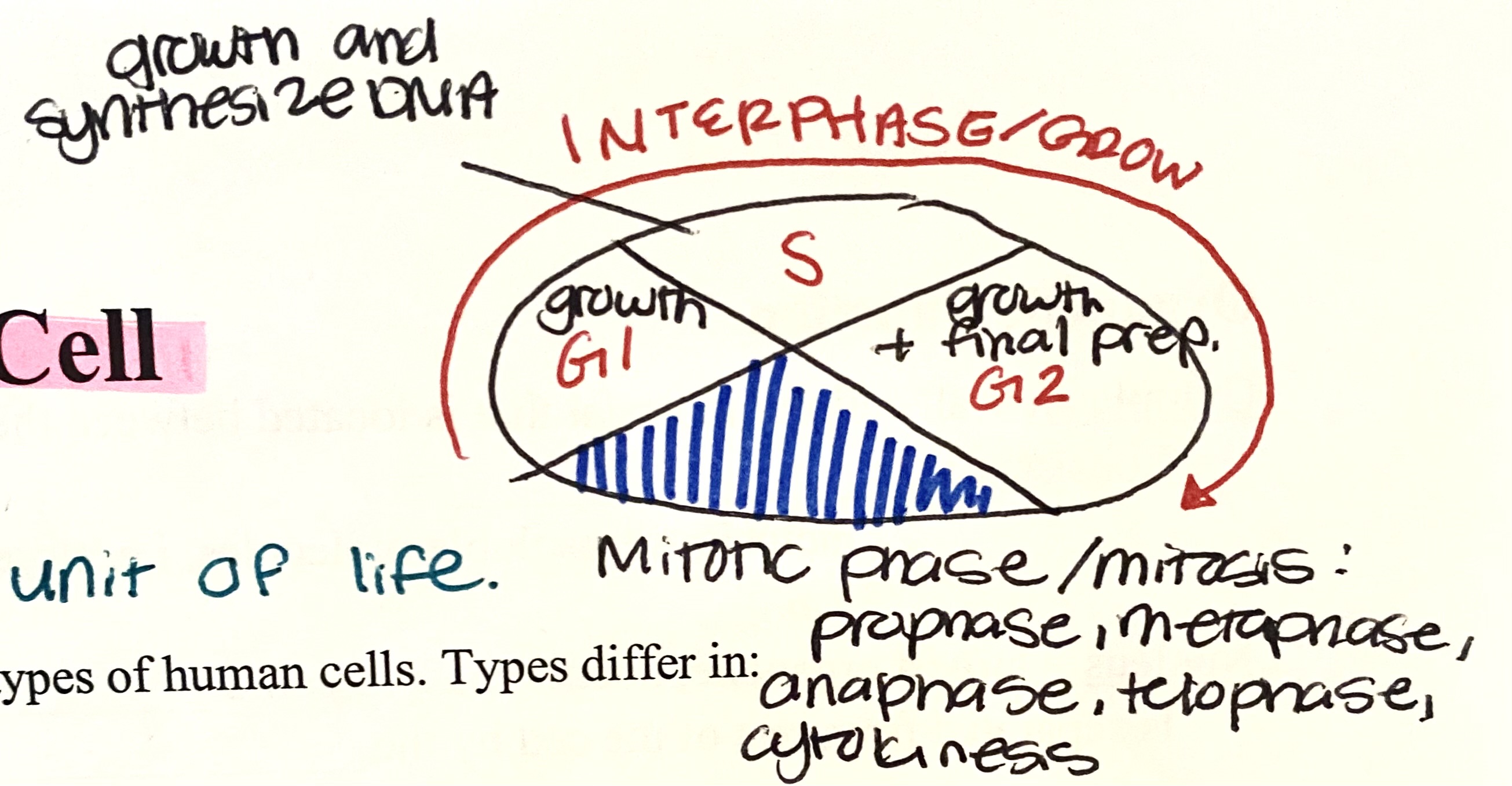
Mitosis
Cell replacement and growth
Diploid (2n)
two sets of chromosomes (one from each parent)
Haploid (n)
Contain one set of chromosomes (half the number of diploid cells)
Meiosis
Form gametes (eggs/sperm) for reproduction
Information Pathway
DNA
Trasncription
RNA
Translation
Protein
Function of a Protein…
Determines the cells functions
Plasma Membrane
Acts as a barrier, separating intra cellular fluid from extracellular fluid.
Plasma Membrane Structure
Fluid mosaic pattern (composed of a double layer of phospholipids embedded with cholesterol and proteins)
Membrane Functions
Phospholipids
Cholesterol
Glycocalyx
Proteins
Phospholipids
Provide a fluid, flexible area or barrier
Cholesterol
Stabilize the membrane and reduce membrane fluidity
Glycocalyx
Surface sugars, either glycolipids or glycoproteins, play a role in cell recognition
Proteins in Membrane Functions
Act as transporters, receptors in signal transduction, attachment to cytoskeleton, enzymes, intracellular joining, and cell-cell identifiers.
Integral Proteins
Firmly inserted into the membrane, most completely span membrane, so also called transmembrane proteins.
Peripheral Proteins
Loosely attached edge membrane.
Membrane Receptor Proteins
Serve as binding sites for chemical ligands to indirectly initiate activity change inside the cell. When chemical ligand binds, receptor protein changes shape and thereby becomes activated.
G Protein-Couple Receptors (GPCR)
Receptor binds largest and most diverse group of membrane receptors in eukaryotes.
Cytoplasm
All cellular material that is located between the plasma membrane and the nucleus.
Nucleus
Largest organelle and houses most of the cell’s DNA
Uninucleate
One nucleus, found in majority of cells
Multunucleate
Many nuclei per cell, found in skeletal muscle
Anucleate
No nucleus, found in red blood cells
Mitochondria
Produces most of the cell’s energy molecules (ATP), which is produced via aerobic cellular respiration, and contains its own DNA
Ribosomes
Is the site of protein synthesis
Free floating ribosomes
produces soluble proteins.
Ribosomes bound to the RER
Produces proteins for the membrane or out of the cell
Rough Endoplasmic Reticulum
Series of parallel, interconnected flattened membranous tubes that are studded with ribosomes. Ribosomes synthesis into proteins and are modified and then sent to the golgi apparatus.
Smooth Endoplasmic Reticulum
Network of looped tubules and site of lipid synthesis.
Function of SER
Detox chemicals, stores calcium, converts glycogen into free glucose and ATP.
Golgi Apparatus
Stacked and flatted membrane sacs which receives vesicles from the RER and modifies/packages proteins.
Three pathways after the Golgi Apparatus
Secretory Vesicle, Plasma Membrane, Lysosome
Lysosome
Membrane bound sac that contains digestive enzymes.
Lysosome Functions
Digest ingested bacteria (virus/toxins), degrade old organelles
Peroxisomes
Membrane bound sac that contains powerful detoxifying substances that neutralize free radial toxins and break down fatty acids.
Cytoskeleton
Elaborate network of rods that run throughout the cytoplasm.
Microfilaments
Shape microvile
Intermediate Filaments
Resist pulling forces and acts as an ancor
Microtubules
Large tubes which determines a cell’s shape and movement
Cellular Extensions
Certain cells have structures extending from the cells surface.
Cilia Hair
Extensions with whip-like action, used to move things along the surface
Flagella
Long extensions which are used to propel the whole cell
Microvilla
Small fingerlike extensions of the plasma used to INCREASE SURFACE AREA and for absorption.
Membrane Junctions
Tight junctions, desmosomes, gap junctions
Tight Junctions
proteins on adjacent cells fuse to form tissues and organs
Desmosomes
Rivet-like junction, similar to a zipper which opens between cells.
Gap Junctions
Proteins form tunnels to allow small molecules to pass between cells.
Membrane Permeability
Plasma membrane is selectively permeable, which means, it allows some materials to move freely and restrict others.
Permable
small molecules, non-polar, non-charged, liquid soluble, and hydrophobic
Impermable
large molecules, polar, charged, and hydrophilic.
Examples of what CAN PASS through the membrane
oxygen, small gases and lipids, ethanol, and some vitamins
Examples of what CANNOT PASS through the membrane
Amino Acids, Glucose, Nucleotides, Water, and Ions
The plasma membrane is a…
Semipermeable Membrane
Membrane transport is determined by…
THE CONCENTRATION GRADIENT
The two types of transport in the membrane
Passive and Active Transport
Passive Transport
going ACROSS the gradient from HIGH TO LOW, going DOWN the gradient
Active Transport
Going AGAINST the gradient from LOW TO HIGH, going UP the gradient
Transport requires ATP
Active Transport
Types of Passive Transport
Simple diffusion, facilitated diffusion, and osmosis.
Type of passive membrane is determined by
Determined by the membrane permability
Diffusion
Random mixing of particles, where movement occurs until equilibrium.
Simple Diffusion
Movement of molecules DIRECTLY through a PERMABLE MEMBRANE, does not require transport proteins, and no ATP.
Facilitated Diffusion
Utilizes an TRANSPORT PROTEIN to allow IMPERMABLE MOLECULES to be transported across the plasma membrane.
Types of Transport Proteins
Carriers and Channels
Carrier Proteins
Changes shape to SHUTTLE SOLUTES across the outer membrane
Channel Proteins
Tunnel and corridor inside the outer membrane
Characteristics of Transport Proteins
Specific to each molecule with competition, molecules move DOWN the concentration gradient, and NO ATP is required.
Osmosis
diffusion of WATER across a selectively permeable membrane,
Characteristics of Osmosis
AQUAPORIN CHANNEL, special kind of FACILITATED DIFFUSION, WATER FOLLOWS SOLUTES
Osmotic Pressure
Water Movement
Tonicity
The ability of a solution to change the shape/tone of a cell by ALTERING internal WATER VOLUME due to IMPERMABLE SOLUTES.
Three types of solutions
Isotonic, Hypertonic, Hypotonic
Iso
The same
Isotonic
SOLUTION CONCENTRATION is EQUAL to the concentration INSIDE THE CELL.
Hypertonic
SOLUTION CONCENTRATION is GREATER than the concentration INSIDE THE CELL.
Hypotonic
SOLUTION CONCENTRATION is LESS than the concentration INSIDE THE CELL.
Cell shape in a Hypertonic solution
Cell’s shape will shrink
Example of a hypertonic solution
The solution’s concentration is greater than the cell, so the cell must donate water to the solution, causing the cell to become small.
Cell shape in a Hypotonic Solution
Cell’s shape is large
Example of a hypotonic solution
The solution’s concentration is less than the cell, so the solution must donate water to the cell, causing the cell to become large.
Active Transport
Moves substances from an area of low concentration to high concentration (ATP required)
Transport Proteins are needed ALL THE TIME
Active Transport always needs
Primary Active Transport
Energy derived from direct hydrolysis of ATP
Example of Primary Active Transports
Proton pumps, Ca-pump, Sodium-potassium pump
Na-K pump moves…
3 Na+ out of the cell, and 2 K+ into the cell
Functions of a Na-K Pump
Maintains ion imbalance, cell volume, membrane polarity, and is the drive for secondary active transport
Secondary Active Transport
The kinetic energy from one molecule’s concentration gradient drives the active transport of another substance.
Example of secondary active transport
While sodium moves DOWN the gradient, another molecule is able to move UP the gradient.
Co-transporter
Secondary Active Transport always uses
Function of Secondary Active Transport
bringing nutrients into the body
Three Active Transports
Primary, secondary, and bulk transport
Bulk Transport
Named by the DIRECTION moving with the cell (exocytosis and endocytosis)
Exocytosis
Materials leave the cell
Endocytosis
Materials move into the cell
Exo
Exit
Endo
Enter

