BIOL 330 - Vertebrates
 Studied by 0 people
 Call with Kai
 Learn
Learn Practice Test
 Spaced Repetition
 Match
Match Flashcards
 Knowt Play
1/43

There's no tags or description
Looks like no tags are added yet.
Name | Mastery | Learn | Test | Matching | Spaced | Call with Kai |
|---|
No study sessions yet.
44 Terms
Traditional binominal nomenclature is based…
mainly on anatomical features
Limitations of traditional binominal nomenclature
species are static
Which similarities between species are more significant than others? (e.g. Paired limbs vs. mammary glands)
3 Goals of scientific naming of species
1. Uniqueness = no two species can share the same name
2. Universality = everyone agrees to use the same name
3. Stability = a species name cannot be changed once it is properly named
Phylogenetic systematics
classifying organisms based on shared ancestry
Cladistics
classifying organisms within phylogenetic systematics that is characterized by its use of shared derived characteristics.
parsimony
Any change in a structure is an unlikely event, so the most plausible phylogeny is the one requiring the fewest number of changes
apomorphy
features that have evolved and are different from the ancestral or primitive traits.
synapomorphy
shared, derived trait found in multiple species that was inherited by a recent common ancestor
Plesiomorphies
ancestral characteristics that are shared between all members of a clade (does not reveal anything about the relatedness of the taxa within the clade)
Homoplasy
analogous trait (similarities in characters that are not indicative of a common ancestry)
parallel evolution
Convergent evolution (similar characteristics that have evolved independently in separate evolutionary lineages)
Homology
similarity in traits due to shared ancestor
3 Synapomorphies of Chordata
1) Notochord-dorsal stiffening rod
2) Dorsal hollow neural tube
3) Segmented, postanal tail
2 subdivisions of shark mesoderm (developed from coelem)
pericardial cavity & peritoneal cavity
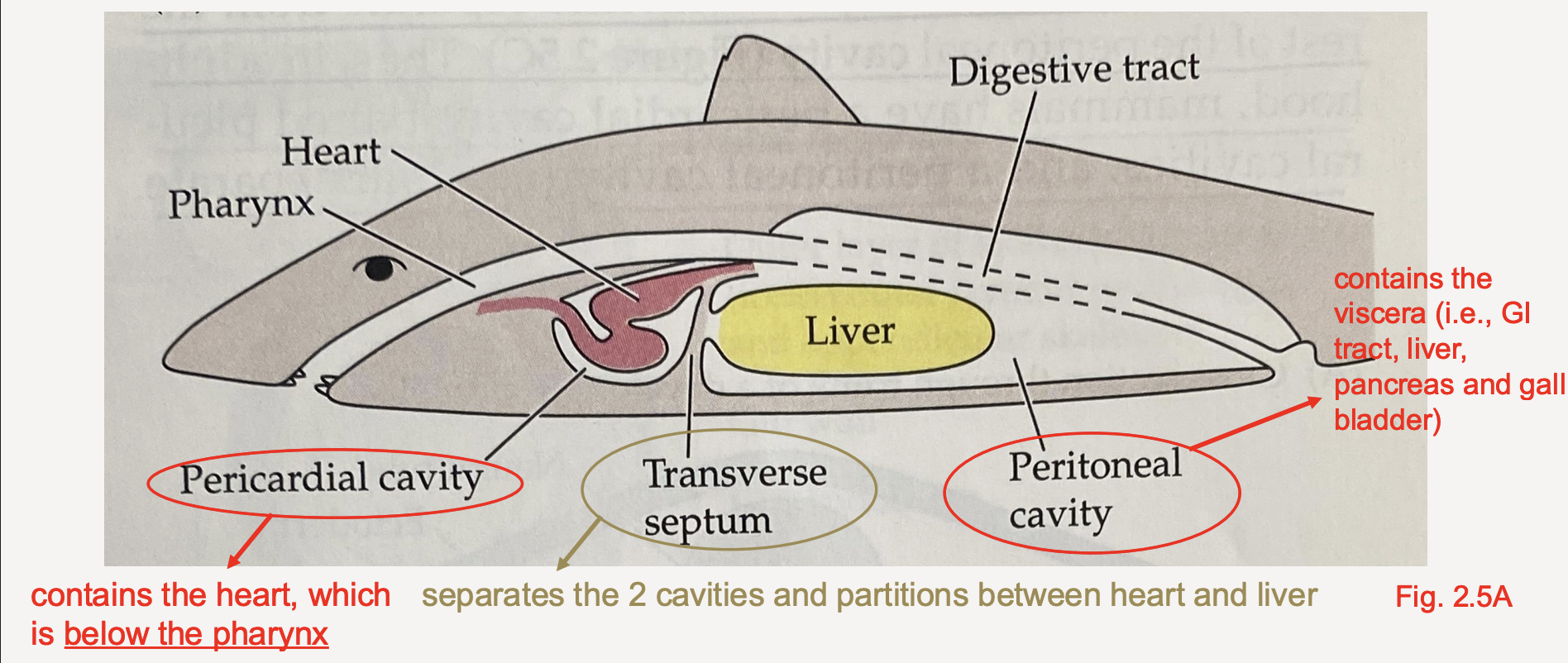
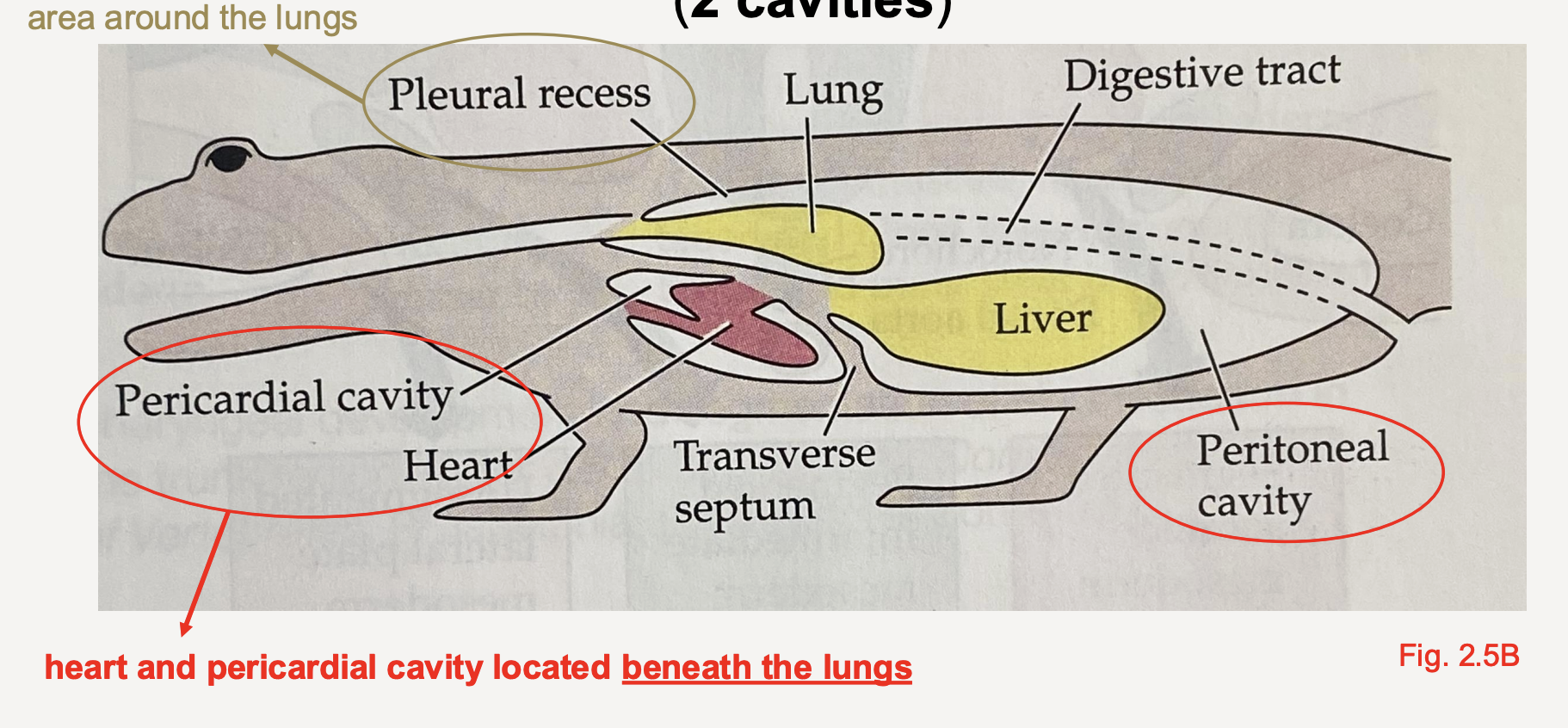
2 subdivisions of salamander coelom
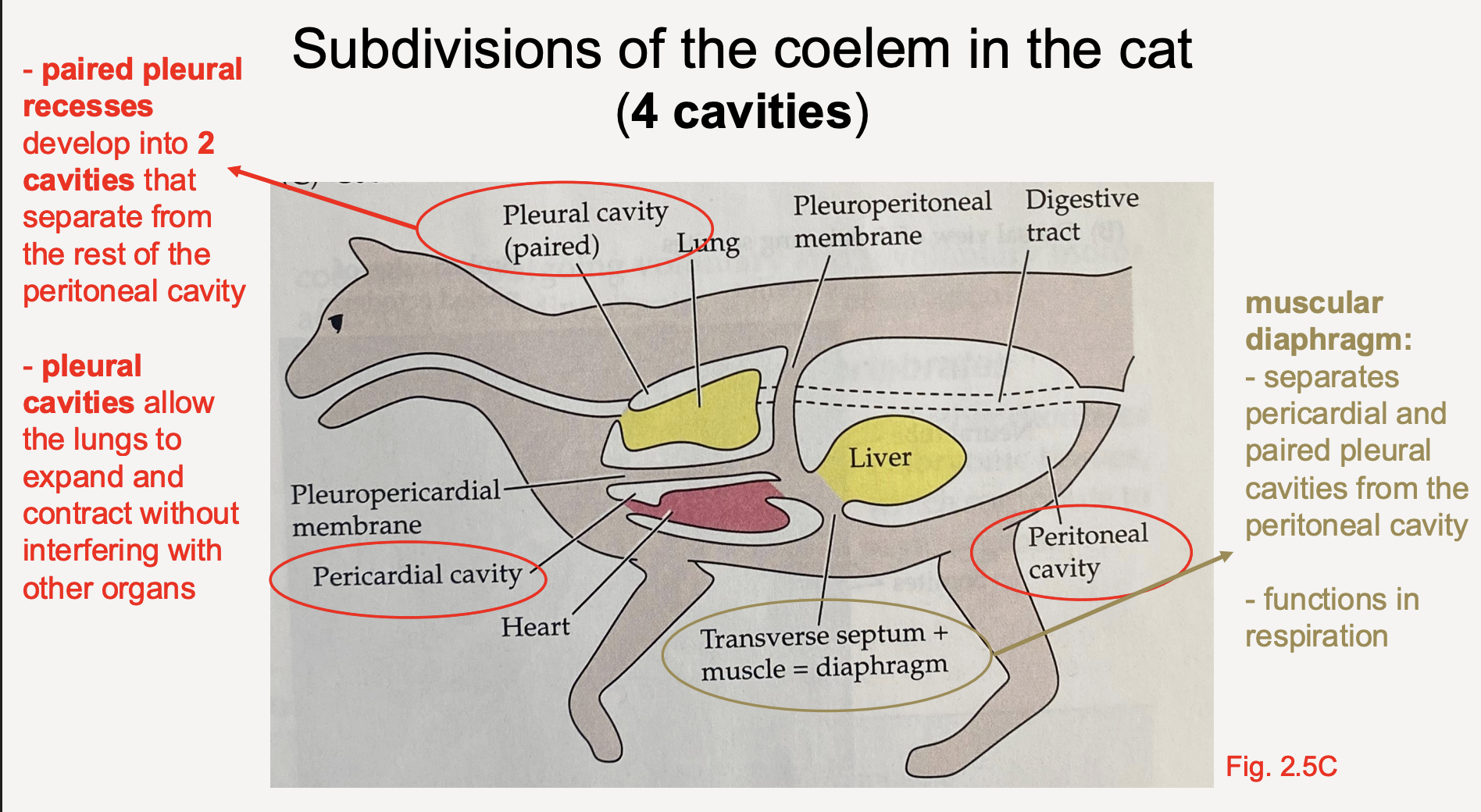
4 subdivisions of cat coelom
Mineralized connective tissue is made up of
collagen and crystals of calcium hydroxyapatite
Chondrocranium function
protects the brain, nose, inner ear
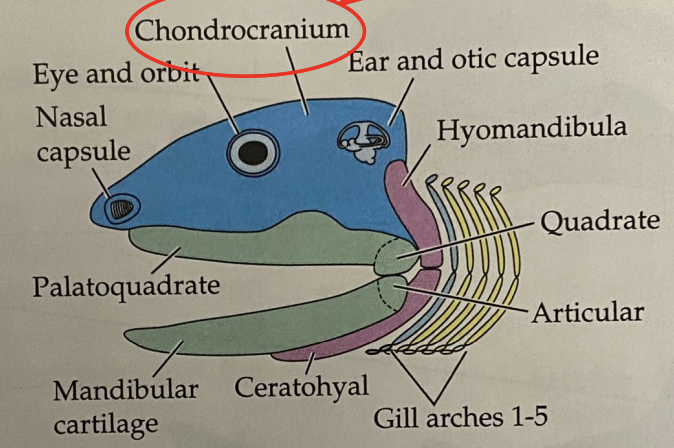
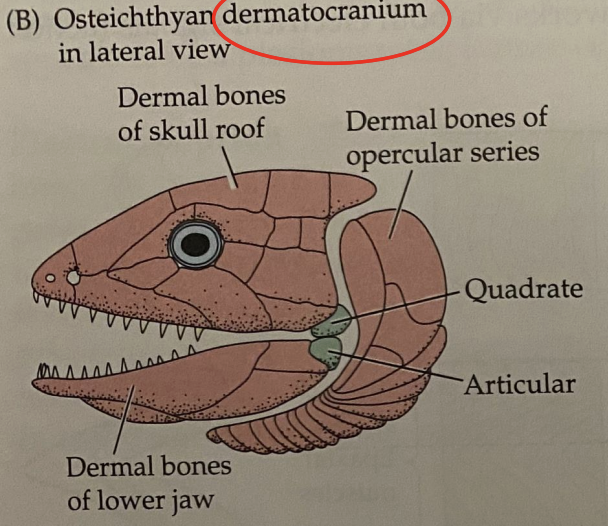
Dermatocranium function
protects the brain, anchors teeth, provides attachment sites for muscles
Splanchnocranium function
functions in feeding and respiration
Osteognathostomata
all vertebrates with bone
Odontodes
small, toothlike elements in the skin consisting of projections of dentine from a bony base covered with an outer layer of enamel in early vertebrates
advantages of mineralized tissues in vertebrates
Protection from predators
Storage and regulation of phosphorus and calcium
3 pieces of evidence for the marine origin of vertebrates
Earliest vertebrate fossils are from marine sediments
Invertebrate deuterostomes are exclusively marine, and have body fluids with about the same osmolal concentration as their surroundings
Hagfishes (early vertebrates) have concentrated body fluids like surrounding seawater
flowthrough ventilation
water is drawn into the mouth and pumped out over the gills (buccal pumping)
tidal ventilation
water is drawn in and expelled it out through the gill openings using muscles associated with their gill slits.
which lampreys use flowthrough ventilation
Larval lamprey and adults of nonparasitic species
which lampreys use tidal ventilation
Adult parasitic lampreys
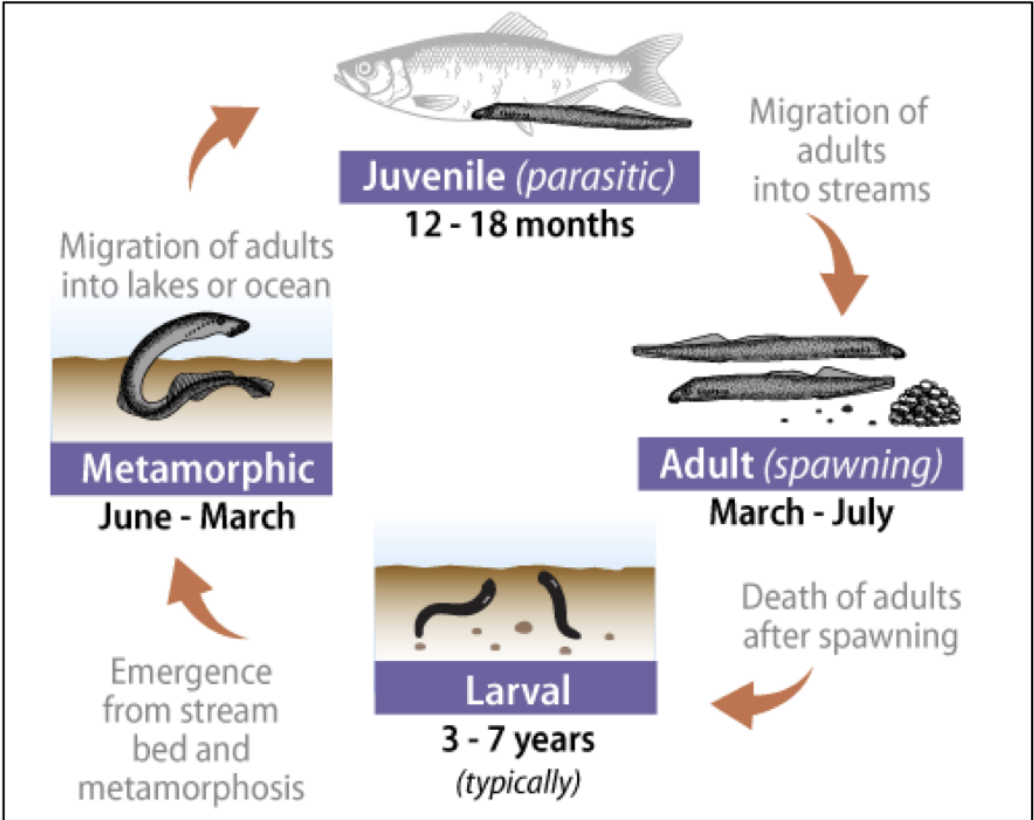
anadromous/anadromy
adults lampreys live in the ocean
potamodromous/potamodromy
adults lampreys live in large lakes
4 stages of lamprey life cycle
emergence of larva from stream bed and metamorphosis
migration of adults into lakes or oceans
migration of adults into streams
death of adults after spawning
4 new behaviours due to the development of jaws
Grasping and cutting prey & herbivory
Grasping of mates during courtship
Grasping of juveniles during parental care
Refuge and nest building
4 uses of paired fins (pectoral, pelvic) in gnathostomes
Improved locomotion for predation (braking, tilting, thrust)
Anti-predator defenses (e.g. spines)
Visual signals to mates & predators
Reproduction
secondary lamellae
microscopic projections from gill filaments for gas exchange
What do fish living in low oxygen environments use to supplement oxygen needs
lungs or accessory respiratory structures (vascularized ‘labyrinth’ chambers)
Why do fish maintain neutral buoyancy (same density as water)?
1. Reduces energy consumption when ascending/descending
2. Weightless body requires less energy to move at a given speed
how do fish maintain neutral buoyancy
swim bladders
how do fish go deeper in water
added pressure compresses gas, bladder becomes smaller, buoyancy reduced – fish secretes gas into bladder
how do fish go shallower in water
relaxed pressure expands gas, bladder becomes larger, buoyancy increased - fish removes gas
Two types of swim bladders
Physostomes & Physoclists
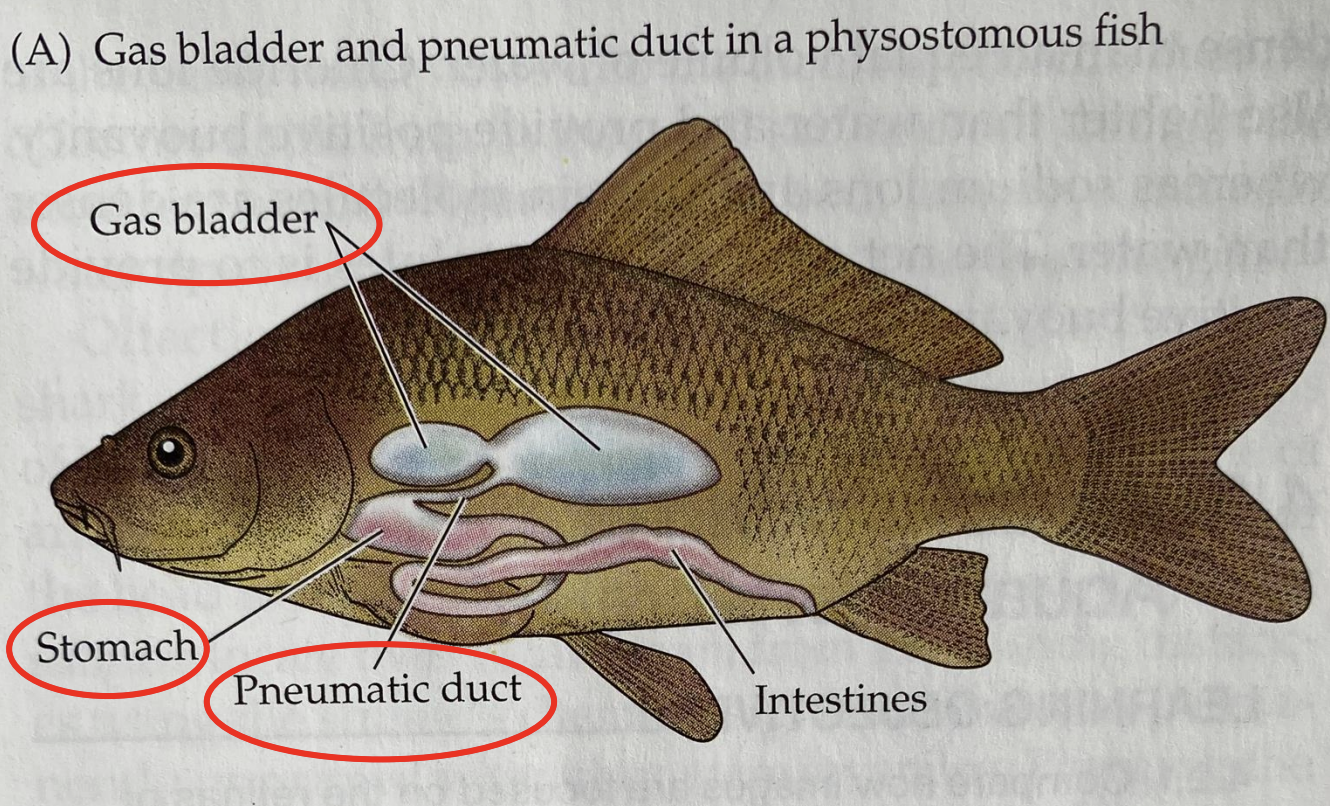
Physostomes
Retain a connection between the gut and bladder (pneumatic duct)
Permits gulping of air to fill bladder and burping to empty it E.x Basal teleosts
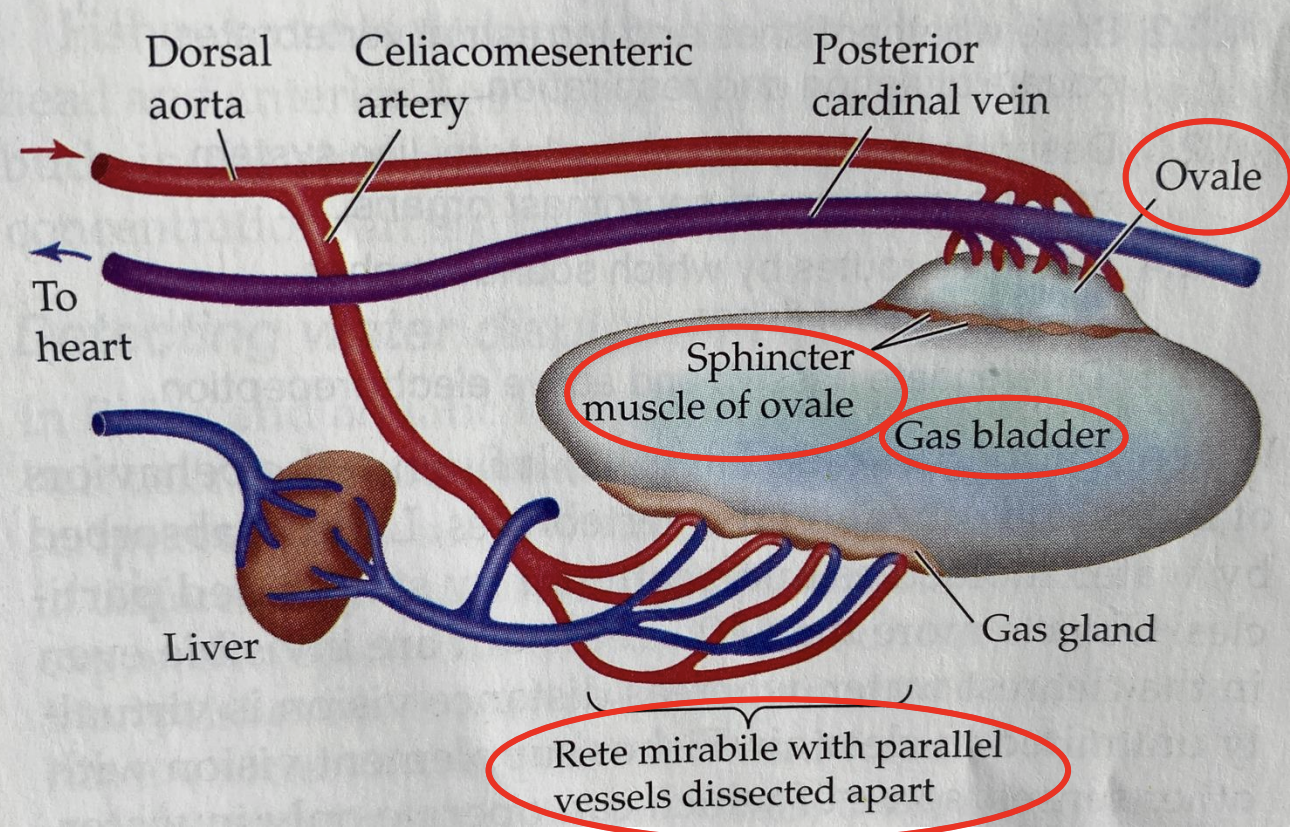
Physoclists
Increase gas bladder volume by secreting gas from blood into the bladder
Decrease gas bladder volume by absorbing gas from the bladder and releasing it at the gills
Rete mirabile moves oxygen from the blood into the gas bladder
Ovale allows oxygen to diffuse into the blood when the ovale sphincter muscle is open
how do Cartilaginous fishes maintain buoyancy?
they use their liver to create neutral buoyancy
 Note
Note  Flashcards (66)