Latin Grammar Cheat Sheet
 Studied by 0 people
 Call Kai
 Learn
Learn Practice Test
 Spaced Repetition
 Match
Match Flashcards
 Knowt Play
1/30

There's no tags or description
Looks like no tags are added yet.
Name | Mastery | Learn | Test | Matching | Spaced | Call with Kai |
|---|
No analytics yet
Send a link to your students to track their progress
31 Terms
Comparative Adj
-ior endings
Superlative Adj
-double letter e.g difficillimus
Adverbs
end with either a ‘e’ (1st and 2nd declension) or ‘iter’ (for 3rd declension)
Comparative adverbs
neuter singular of comparative adjective, ending with -ius
superlative adverb
same as superlative adjective, but end in ‘e’ instead of ‘us’ e.g ;letissime
is,ea,id
that, those, and can also mean he she it
hic, haec, hoc
this, these, he, she, it
ille,illa,illud
that,thoes,he,she,it
idem, eadem, idem
the same
ipse, ipsa, ipsum
myself yourself ect
ego
me
meus, tuus ect
possesive - my your ect
time how long
accusative - for 3 days
time when
ablative - at first light (this one can only be singular, as it is grammatically wrong to say I will leave at 3 hours)
time during or within
ablative - i will come back within 3 days
present participles
like adding -ing, they follow ingens, execpt the abl singular ends in a ‘i’ instead of ‘e’
furture participles
ends with -urus, a, um ; translate as about to do smth
perfect participles (passive)
the perfect participle is PASSIVE. add us, a, um to the supine ; translate as having been verbed
Abl Absolute
spot both a ablative participle and noun. translate as with the noun having been verbed
Deponent Verbs
tense stay the same, but flip the voice
Imperfect Sub
Present Inf, with m,s,t,mus,tis,unt / the passive equivalent of the endigns
Pluperfect Sub
with -isse-
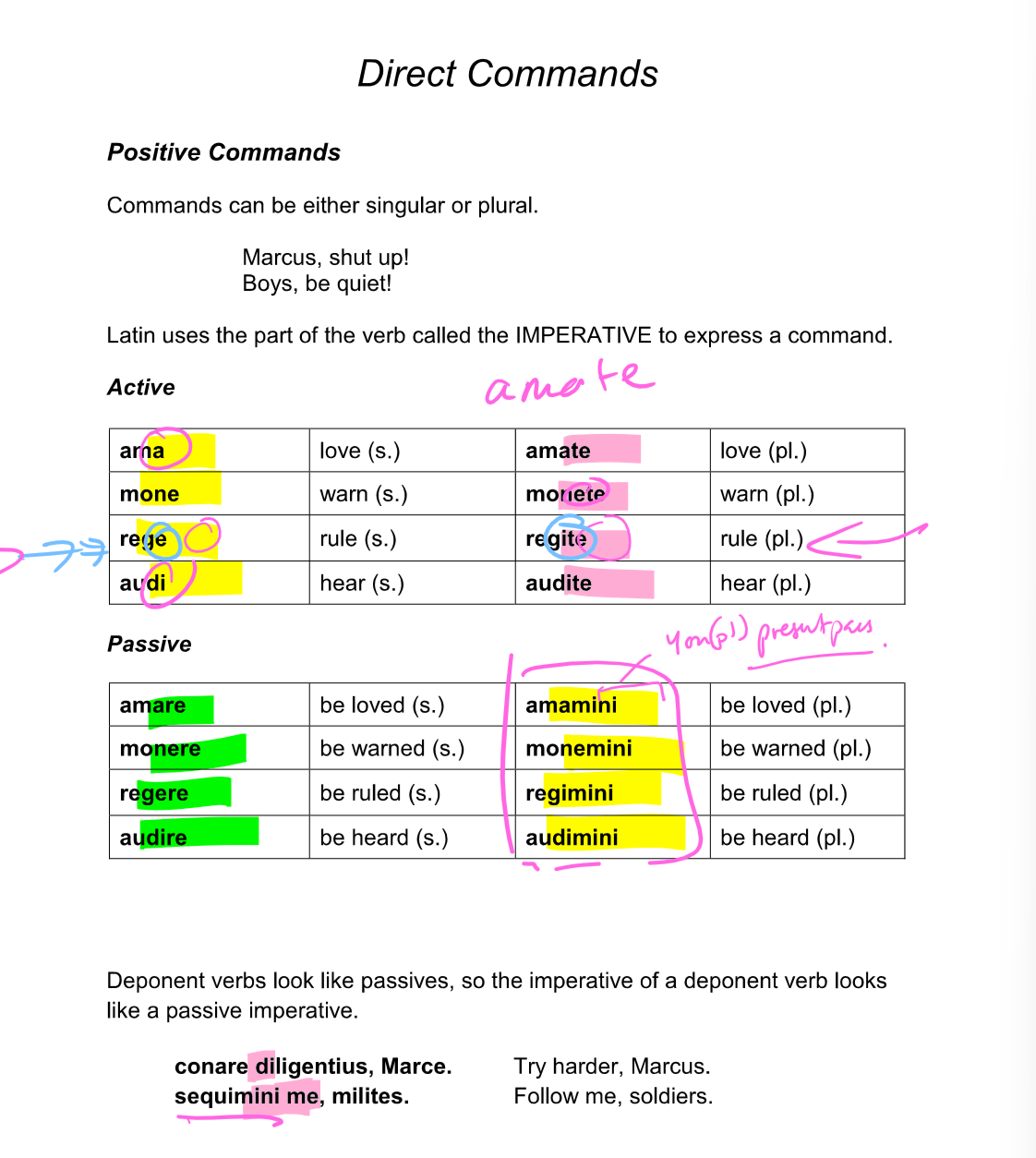
Direct Command
negative command
noli / nolite + pres inf
Direct Question
-ne at the end ; nonne is surely '; num is surely not and expects no as answer (look out for a ?, and don’t confuse with num which can also mean whether)
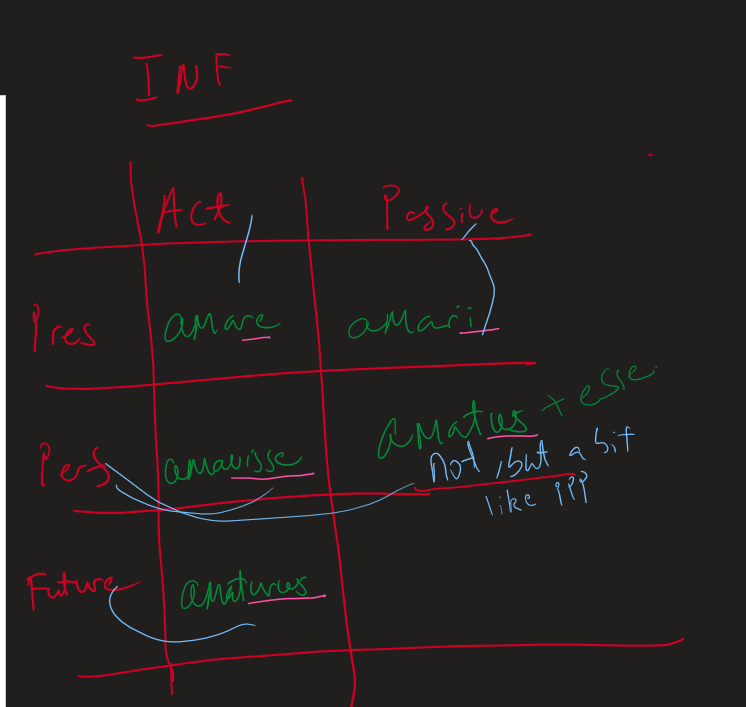
Infinitives
Ind statement
go one tense back, except for future which you say about to verb
Conditional
You simply translate the verb as it stands, because the meaning of the conditional comes from the tense pairing itself.
But if it is future it goes like this Si+future= if x verbs, y will verb. So it remains present in future
In other constructions of that uses the subjunctive, how is the verb translated?
if Pluperfect Subj - translate in pluperfect, ‘had’
if Imperfect Subj - translated in past, ‘was,were’
The verb in fear clause
if it is passive add the word ‘would’, if not just translate the subjunctive
Verb in temporal clauses
just translate it as it is, but the imperfect subj, translate it as imperfect not past
 Note
Note  Flashcards (71)