american political ideologies and beliefs
 Studied by 0 people
 Call with Kai
 Learn
Learn Practice Test
 Spaced Repetition
 Match
Match Flashcards
 Knowt Play
1/26

Earn XP
Name | Mastery | Learn | Test | Matching | Spaced | Call with Kai |
|---|
No analytics yet
Send a link to your students to track their progress
27 Terms
political party
has to run candidates to try and influence policy for their party’s benefit
political culture
the shared set of values, beliefs, and attitudes that a society holds defining how they view their political system.
Alexis de Tocqueville
wrote “democracy in America”
found that America is very religious
America is a nation of joiners
political ideology
A specific set of beliefs about the rule of the government and how those beliefs should be applied and protected by the government
Americans can have drastically different political ideologies and yet share a common political culture
textbook definition:
a party’s philosophy about the proper role of the government and its set of positions on major issues
Low political efficacy
refers to a citizen's belief that they cannot understand or influence political processes
leads to reduced civic participation
external efficacy
belief that government officials and institutions are responsive to citizens' demands and that the political system will properly consider the public's needs
belief that we can change things
people come together
when you vote, it matters
internal efficacy
the internal belief that one has the skills to understand politics and make a difference.
knowledge/understanding of government and systems
mistrust
is often a consequence of low efficacy
political party
many different political ideologies contained within
coalitions
in order to win a party election, parties form coalitions
Parties form coalitions by creating a temporary, strategic alliance of two or more independent political groups to work together for a common purpose, such as winning elections, forming a government, or pushing specific legislation.
Big tent party
A "big tent" party is a political party that seeks to attract a broad, diverse range of voters and factions, rather than focusing on a narrow, specific ideology. These parties, often described as "catch-all" parties, aim to represent a wide spectrum of public opinion
Example:
New Deal Coalition: brought together groups that had never before been together
what makes a party a party?
a party runs candidates

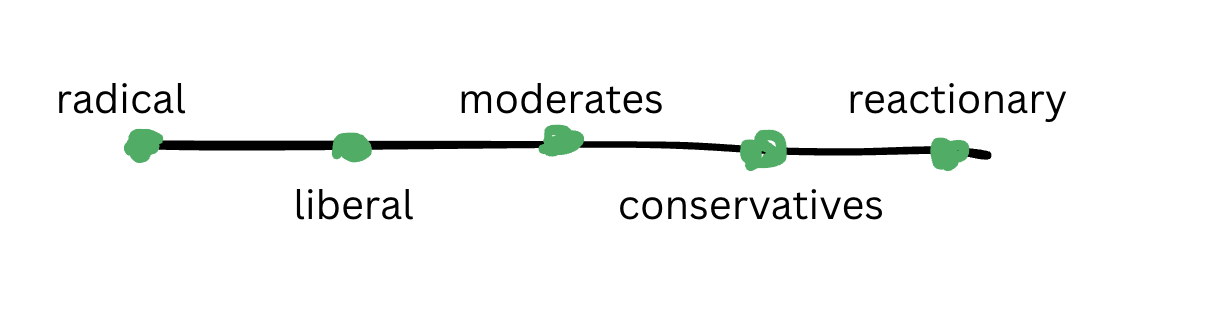
political ideologies
political socilization
the process by which we gain our political identity
direct socialization
when family members tell you their political ideology (coversation)
indirect socilization
overhear political conversation between family members
reading favial expressions when a political candidate/ politician comes on screen
nonverbal communication
what is the most important agent of political socilization
family
list all the agents of political socilization
family
school
religion
peers
gender and ethnicity
media
gender gap
women are more likely to be liberal and men are more likely to be conservative
party identification
an individual’s party attachment to a political party
conservatism
an ideology favoring more control of social behavior, fewer regulations on businesses, and less government interference in the econogy
liberalism
an ideology favoring less government control over social behavior and more greater regulation of business and of the economy
libertarianism
an ideology favoring very little government regulation and intervention beyond protecting private and individual liberty
partisanship
less interested in fostering cooperation than they are in criticizing the ideological beliefs of their opponents
define demographics
statistical characteristics of a population
age
race/ethnicity
gender
education
socioeconomic status
who can’t vote?
felons
non citizens
under 18
not registered
certain territories
what factors impact voting intensity?
saliency
 Note
Note  Flashcards (30)