Unit 11- Electric Circuits
 Call Kai
 Learn
Learn Practice Test
 Spaced Repetition
 Match
Match Flashcards
 Knowt Play
1/18

There's no tags or description
Looks like no tags are added yet.
Name | Mastery | Learn | Test | Matching | Spaced | Call with Kai |
|---|
No analytics yet
Send a link to your students to track their progress
19 Terms
Capacitor
Storage devices for charge.
When storing charge, they also store electrical potential energy
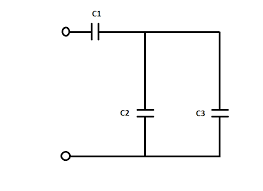
Parallel-Plate Capacitors
Two parallel conductive sheets separated by some distance
These are the most common types of capacitors
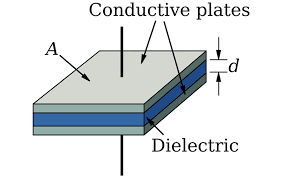
Capacitance
The capacitance of a capacitor measures the capacity for holding charge at a given voltage.
The greater the capacitance, the more charge can be stored
Farad
One coulomb per volt is renamed one farad (abbreviated F): 1 C/V = 1F
Dielectric
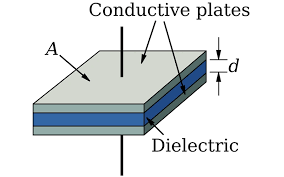
One method of keeping the plates of a capacitor apart, which is necessary to maintain charge separation and store potential energy, is to insert an insulating material (a dielectric) between the plates.
An insulating material placed between capacitor plates to increase capacitance.
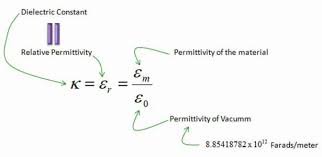
Dielectric Constant
The dielectric constant, κ, is a property of insulators that determines how much they affect the capacitance.
The κ of vacuum is 1, and all other insulators have a value greater than 1.
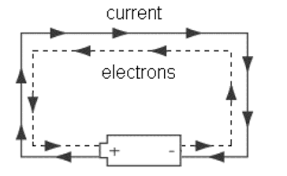
Current
The overall amount of charge that moves per unit time.
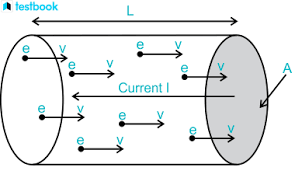
Drift Velocity
The overall motion of particles (e.g. electrons)
It can be found by averaging all the velocity vectors of each particle.
Voltage
Refers to the change in electric potential across a circuit element or between two points. It is measured in units of volts.
Can be referred to as the potential difference, voltage drop, voltage, or EMF
Direct Current
Occurs when the electricity is always flowing in the same direction in a circuit.
Resistance
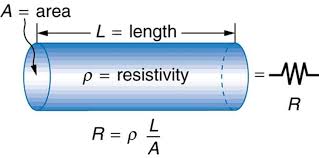
The impedance to the flow of electricity through an entire object.
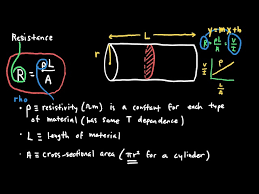
Resistivity
Denoted by ρ
A property of a material that describes the general impedance to the flow of electricity through that type of material
Can be thought of as the density of the nuclei the electrons may strike
Ohms
Measures resistance
Denoted by Ω, omega
Ohm-meters
Measures resistivity
(Ωm)
Ampere
One coulomb per second
Abbreviated A
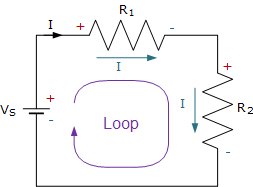
Kirchoff’s Loop Rule
States that the voltage drop across any complete loop in a circuit is 0 V.
Kirchoff’s Junction Rule
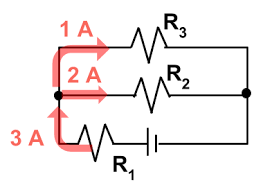
States that the sum of all current flowing into any junction is equal to the current flowing out of the junction.