AP Art History Content Area 3 (Early Europe)
 Studied by 2 people
 Call with Kai
 Learn
Learn Practice Test
 Spaced Repetition
 Match
Match Flashcards
 Knowt Play
1/19

There's no tags or description
Looks like no tags are added yet.
Name | Mastery | Learn | Test | Matching | Spaced | Call with Kai |
|---|
No analytics yet
Send a link to your students to track their progress
20 Terms
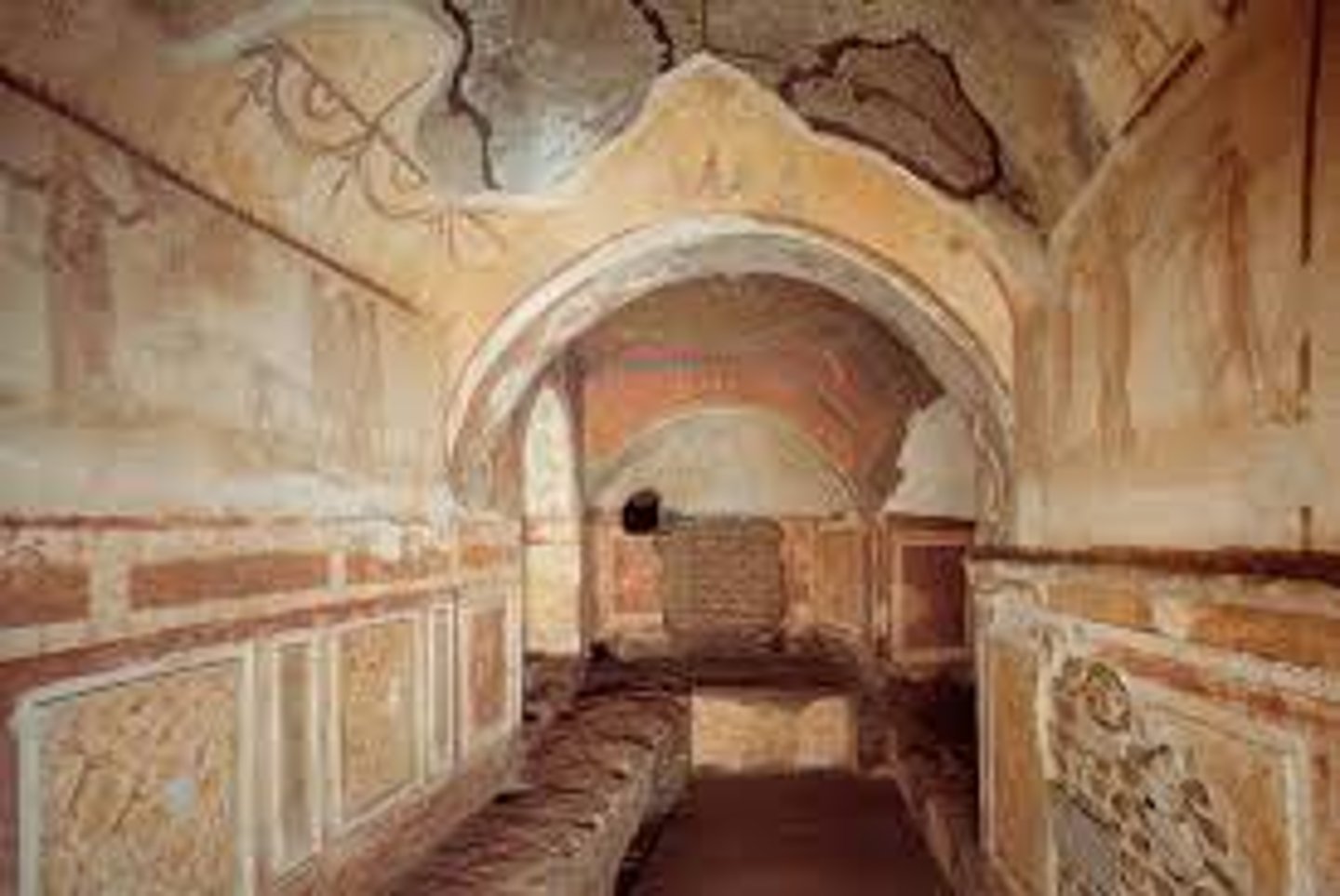
Catacomb of Priscilla (Greek Chapel)
Date: 200-400 C.E.
Period/Movement: Late Antique Europe
Original Location:
Material/Technique: Excavated tufu and fresco
Function: People practiced their beliefs in the catacombs and burial places for Christians.
Context: Greek chapel contains saints from the Old Testament and saints from the New Testament. Asymmetrical balance and is decorated with paintings in the Pompeiian style. Catacombs under Rome have over 4 million dead. Contains the tombs of early Christian martyrs and seven popes. This was a place where the earliest forms of Christian Art are found. Also features narratives from the Old Testament and the New Testament.
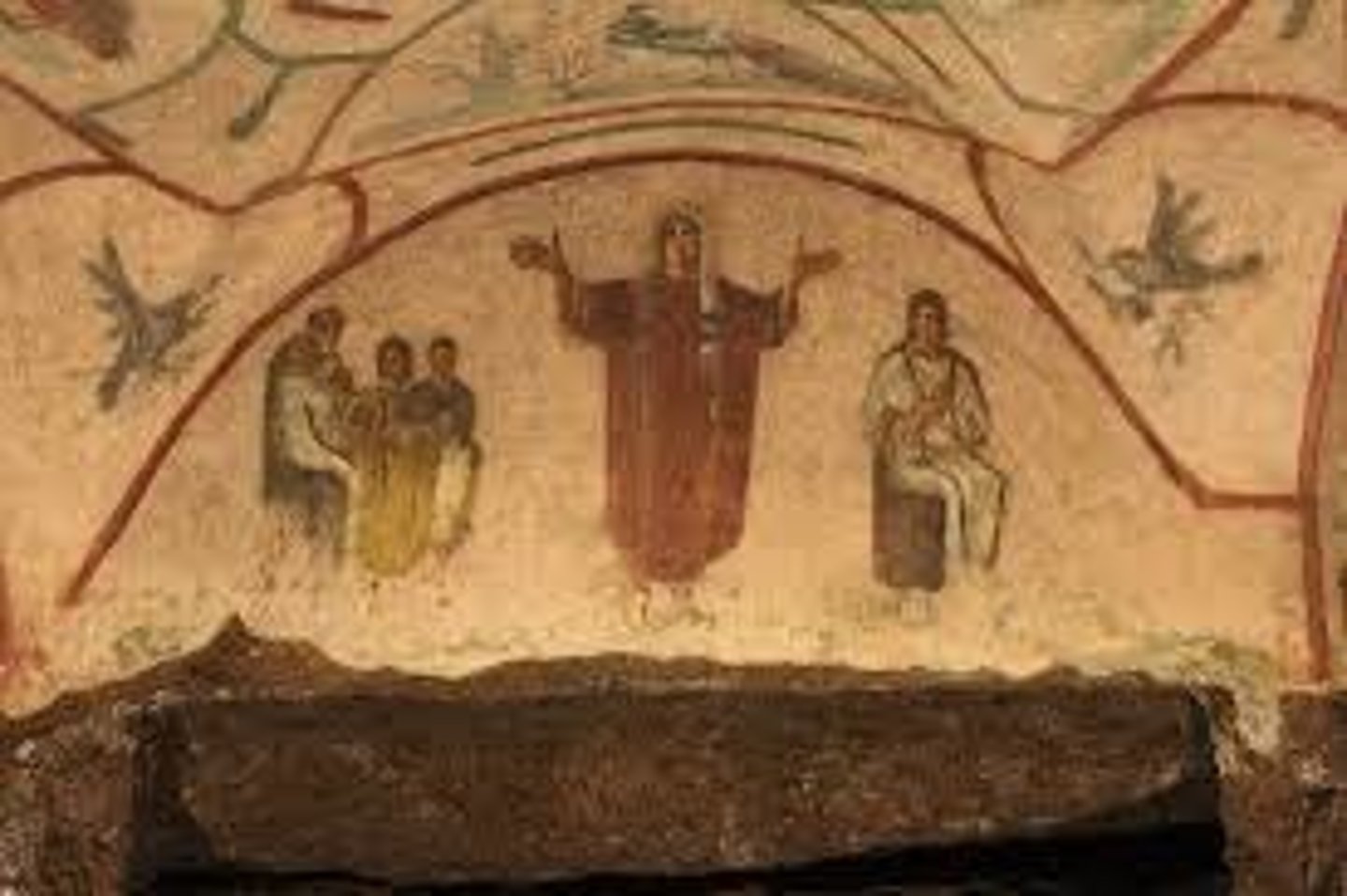
Catacomb of Priscilla (Orant Fresco)
Orant fresco emphasizes faith and afterlife. Depicts a woman with her arms raised. Pagan symbol for the soul, to achieve glory after death. Figure alludes to faith and afterlife.
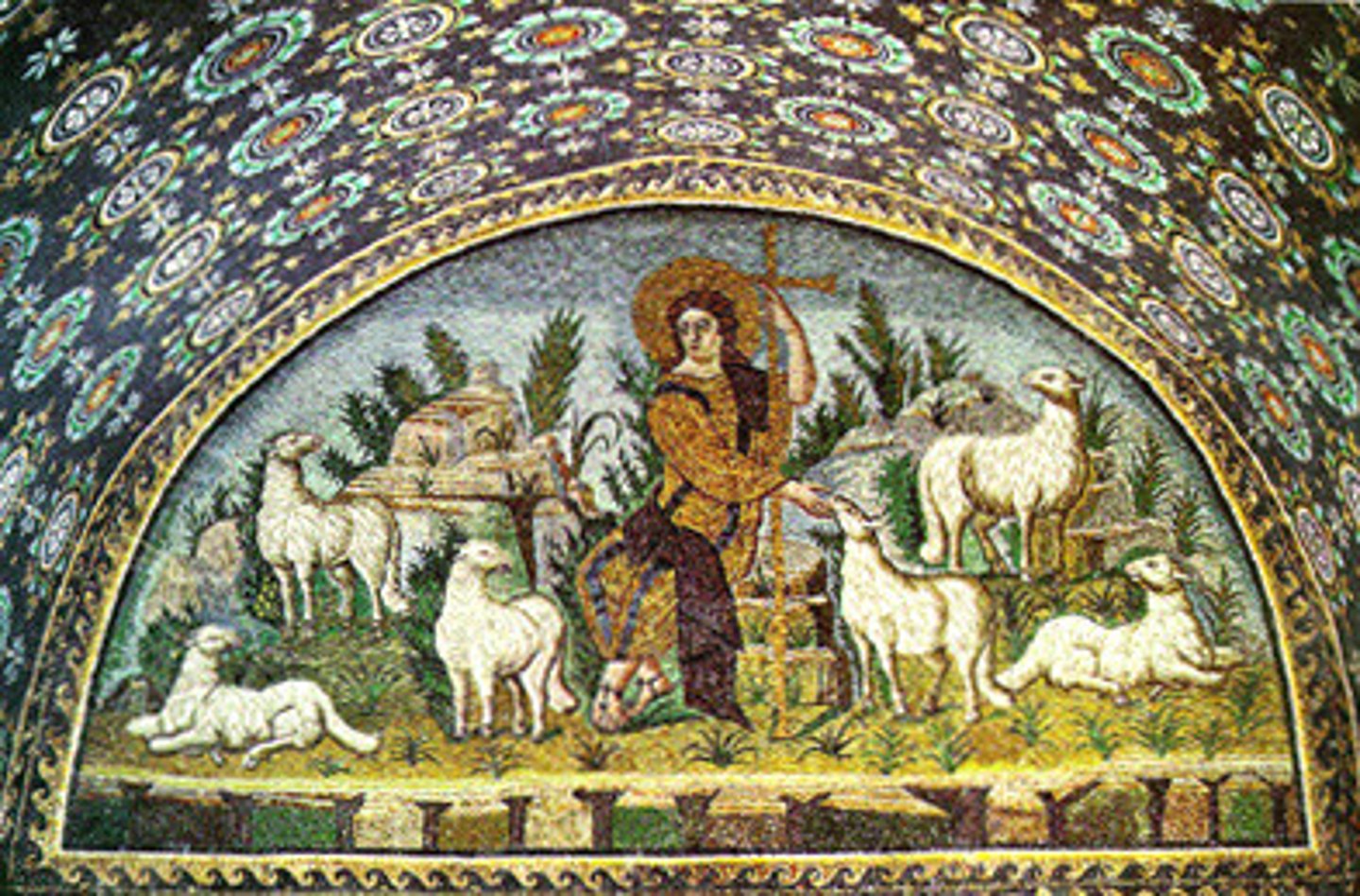
Catacomb of Priscilla (Christ as the Good Shepherd fresco)
Mosaic. Jesus as the "Good Shepherd" was a recurring theme in the catacomb. Shepherds were a sacred symbol to the Christians. Jesus holds lost sheep on his shoulders. "Good Shepherd" was a Pagan term adopted by Christians. Adoption of Pagan symbols represents syncretism.
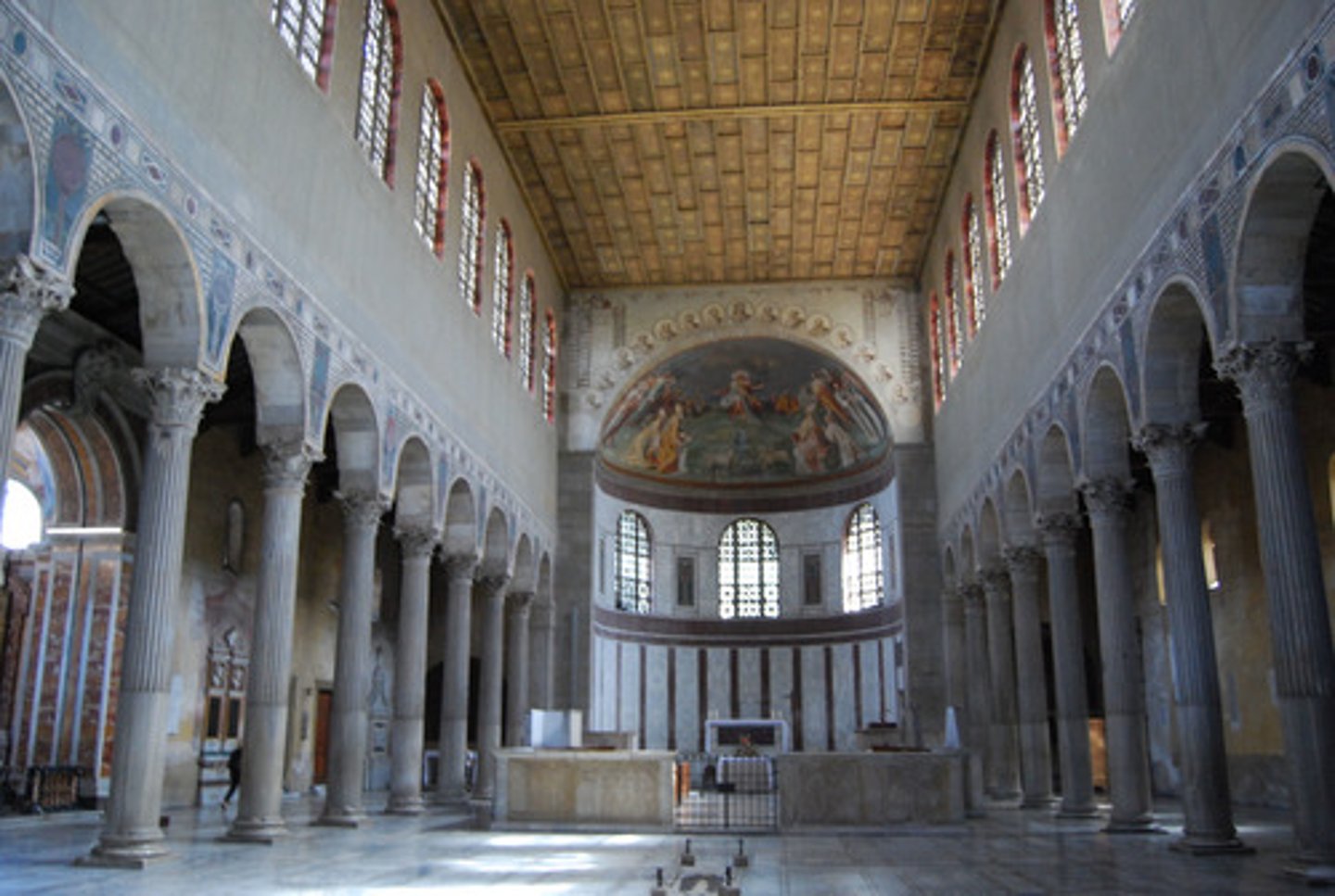
Santa Sabina
Date: 422-432 C.C.E
Period/Movement: Late Antique Europe
Original Location: Rome, Italy
Material/Technique: brick and stone, wooden roof
Function: Created to be a place of worship of Christians. This church was created to help people understand the important features of an early Christian basilica.
Context: Church, large interior, door contained with biblical scenes, longitudinal axis plan, crystal windows (gypsum), stone with a wooden roof, chalice and bread bowl in-lade in columns. This is a symbolic pictorial object; columns (spolia).
Lunettes
Arch-shaped formations in the walls of the catacomb.
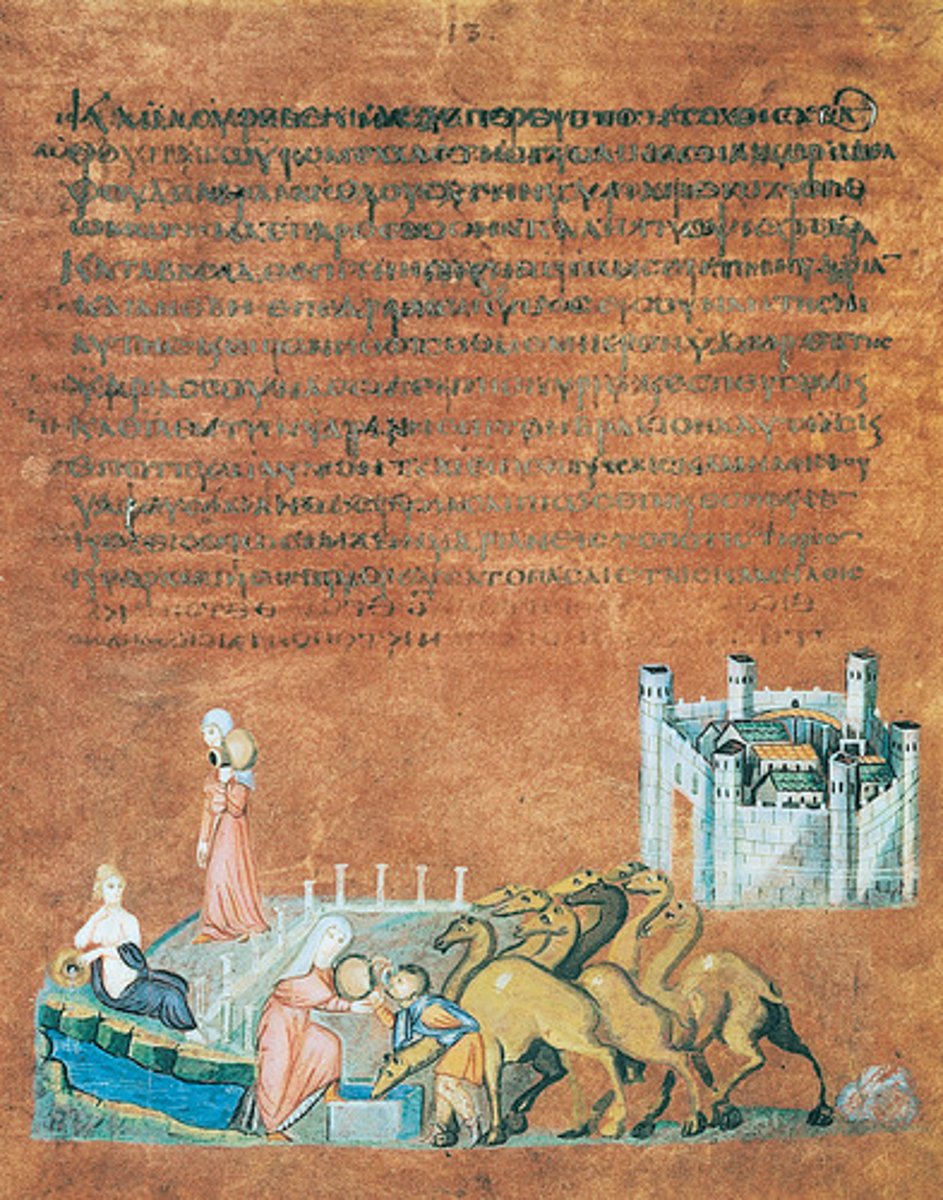
Rebecca and Eliezer at the Well, from the Vienna Genesis
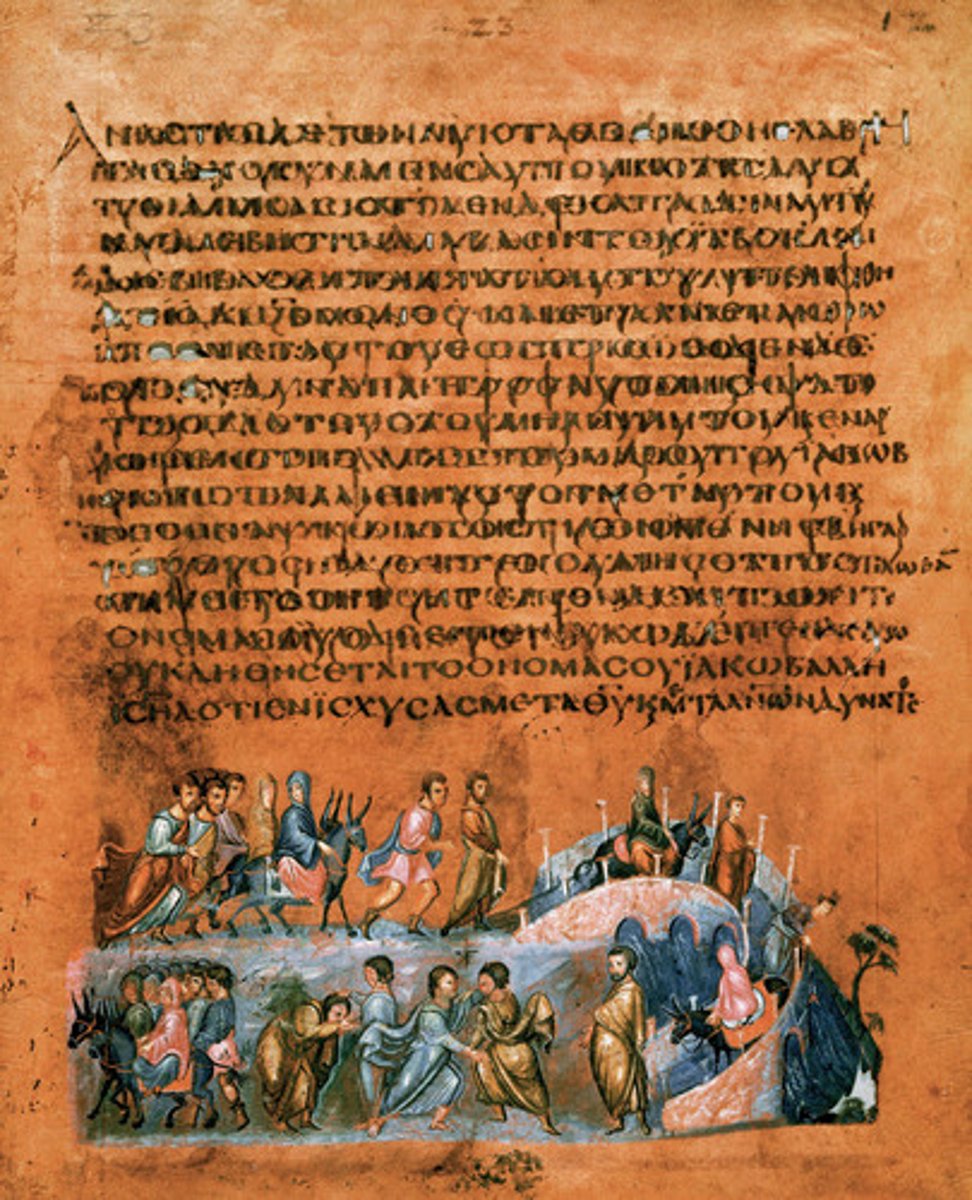
Early Byzantine. Early 6th Century CE. Vienna Genesis. Pigment on Vellum.
Oldest well-preserved illustrated manuscript. Calfskin dyed with imperial purple and decorated with silver ink Belonged to a once complete book of Genesis. Continuous narrative. Transitioned from idealized realism of the Classical age to spiritual and simplistic style of Middle Ages. Focused on narrative over naturalistic portrayal.
Jacob Wrestling the Angel, from the Vienna Genesis
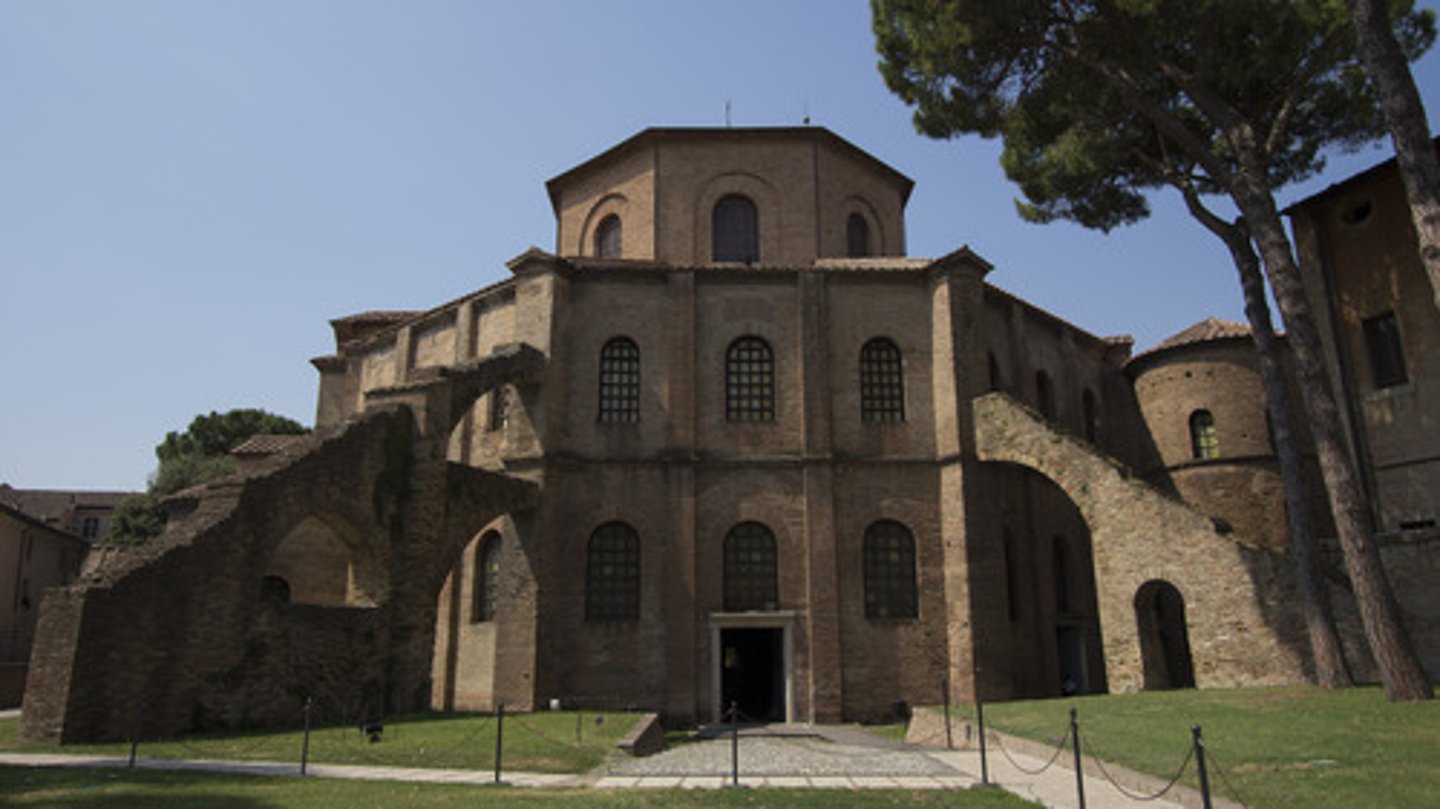
San Vitale (Exterior)
Ravenna, Italy. Early Byzantine Europe. c. 526-547 C.E. Brick, marble, and stone veneer; mosaic.
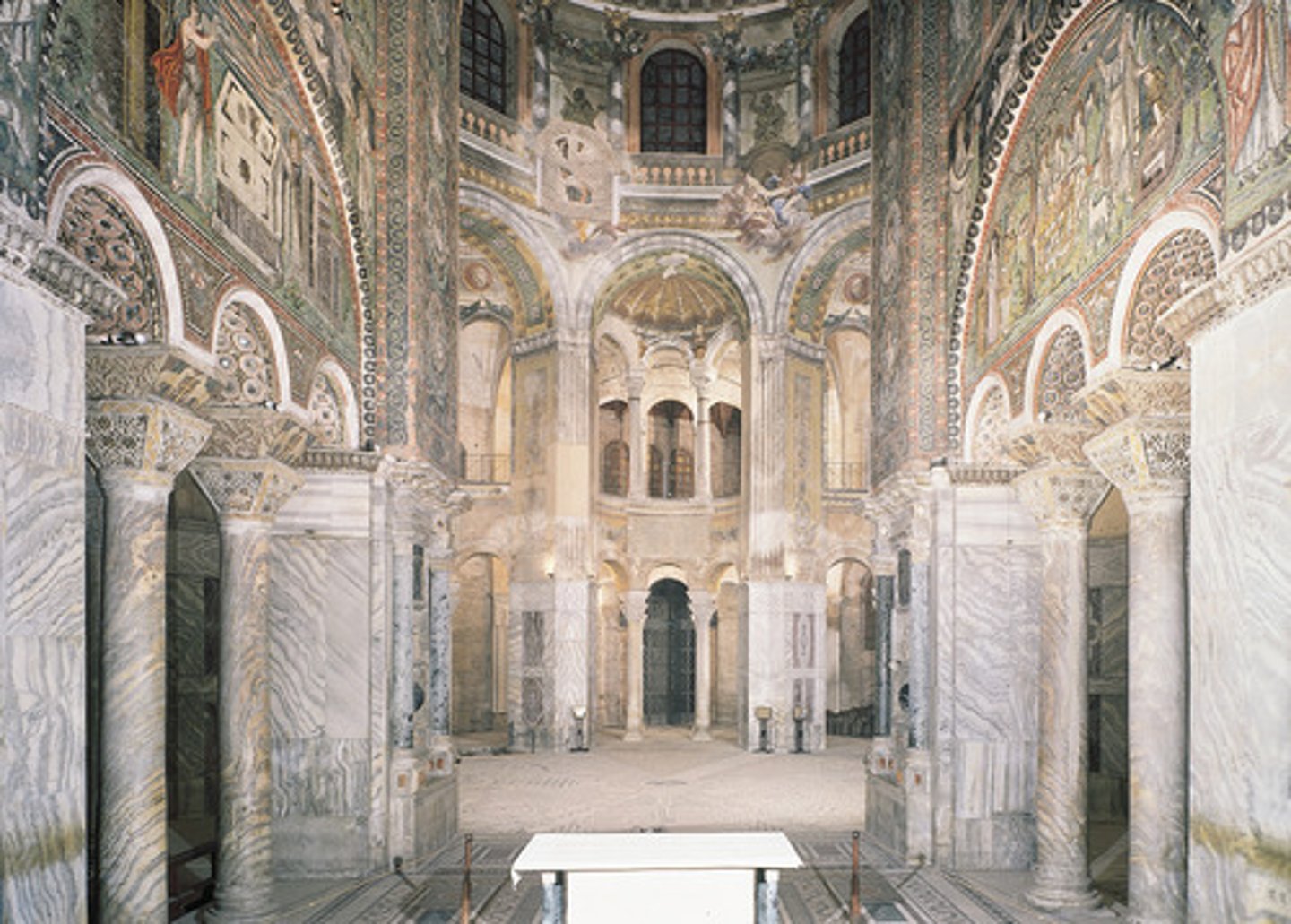
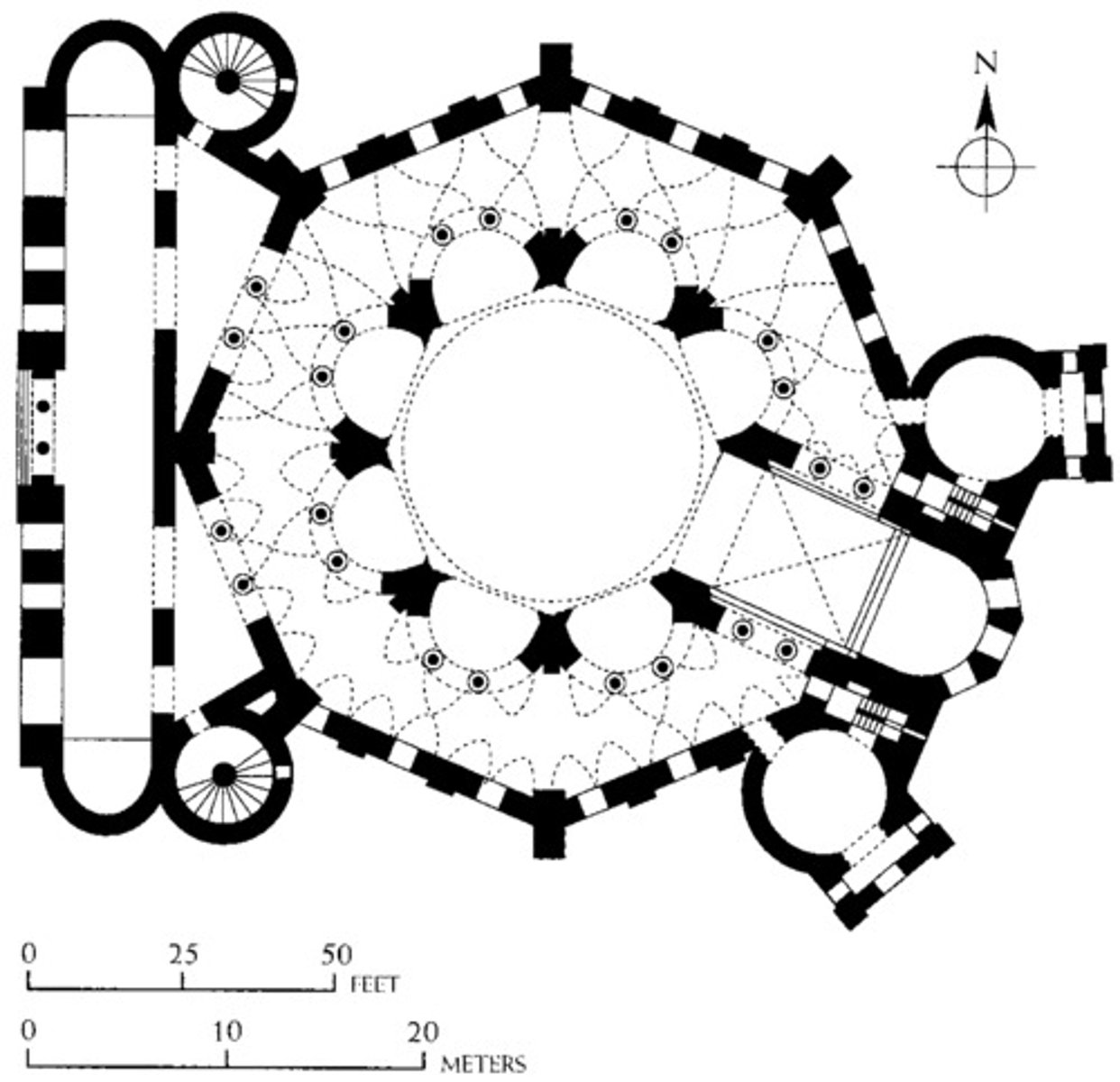
Octagonal plan. 2-story ambulatory enclosing central space. Narthex and apse. Mosaics display youthful and clean-shaven Jesus. Romanesque. Ornate interior, plain exterior. Thin columns.
San Vitale (interior)
San Vitale (Justinian I panel)
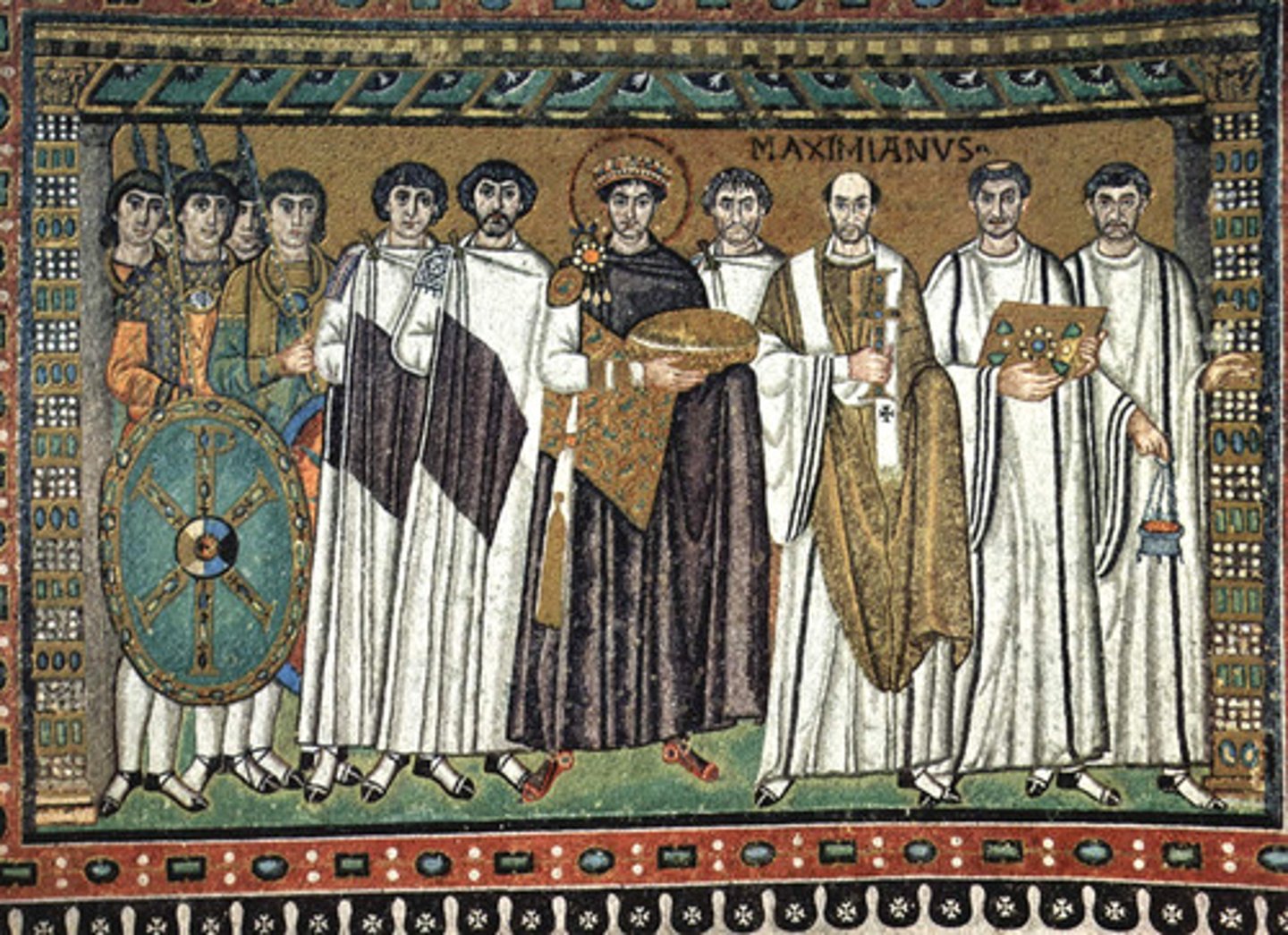
Depicted in royal Roman purple. Halo atop head. Features Bishop Maximianus. Alludes to Justinian's state, military, and church power. Alludes to Eucharist (communion.)
San Vitale (Theodora Panel)
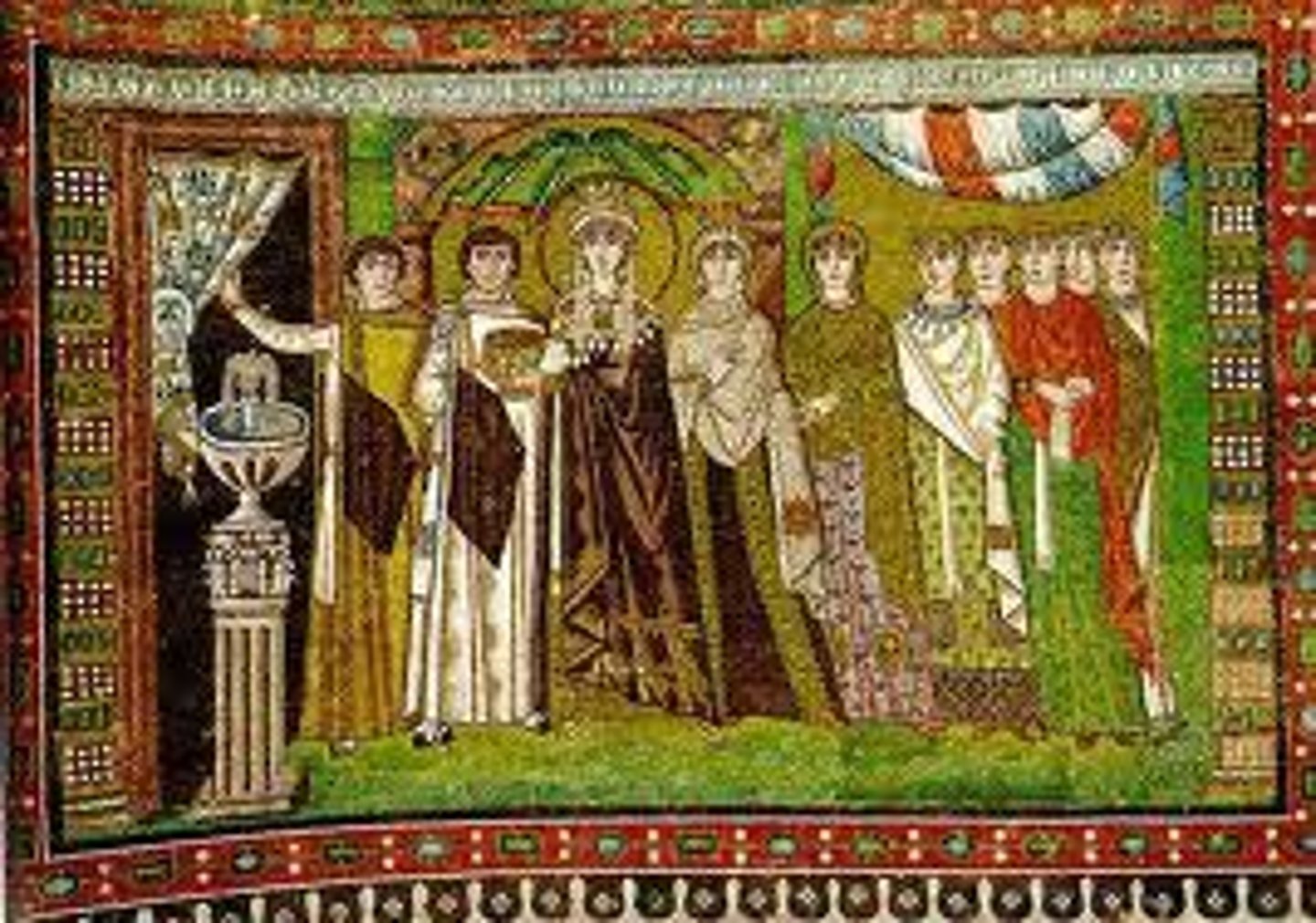
Embroidered magi on her robe allude to biblical status. Slight displacement but still positioned next to Justinian to represent her power. Justinian and Theodora never visited San Vitale.
San Vitale (plan)
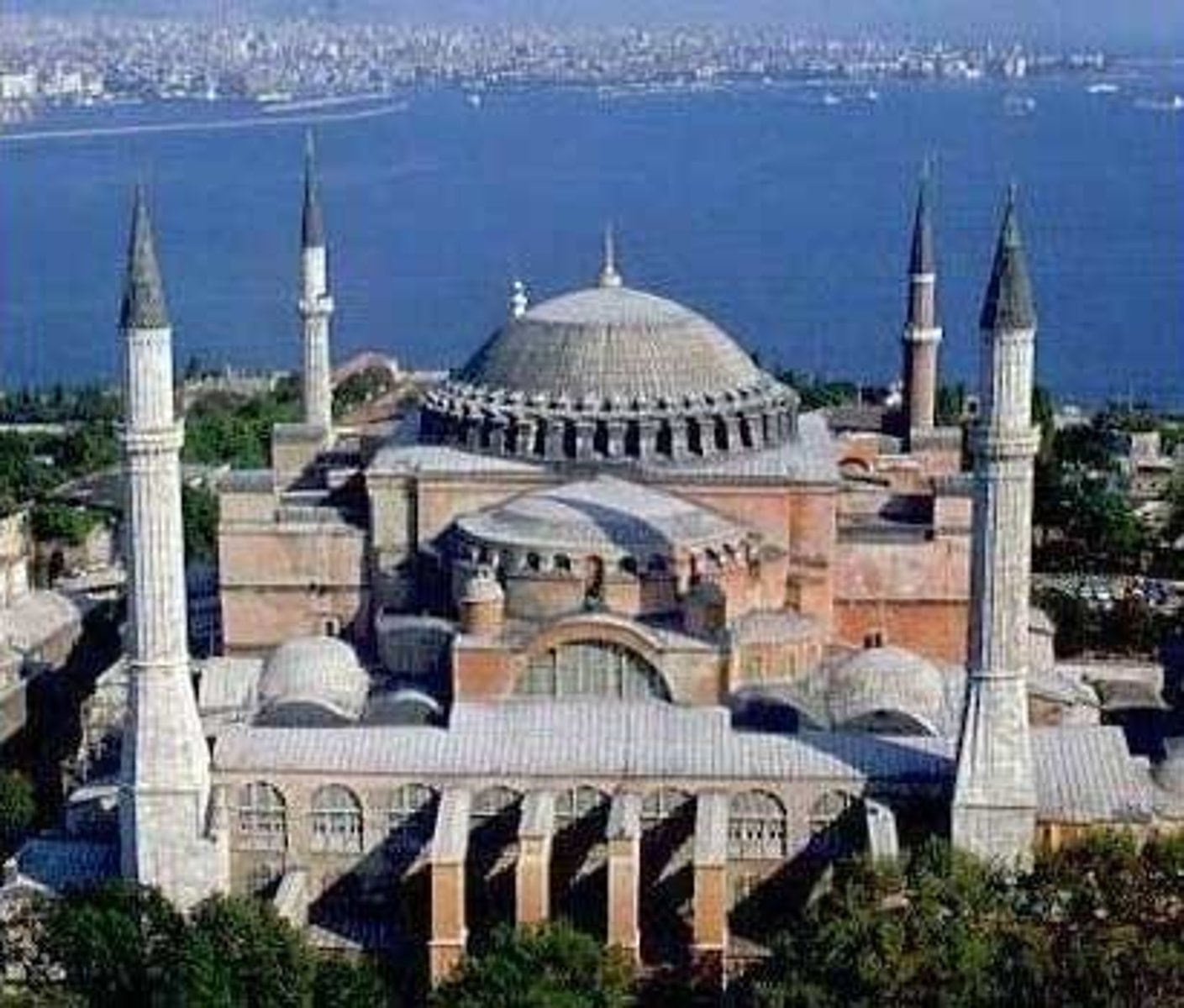
Hagia Sophia
Constantinople (Istanbul). Anthemius of Tralles and Isidorus of Miletus. 532-537 C.E. Brick and ceramic elements with stone and mosaic veneer.
Anthemius and Isidorus were architects as well as mathematicians. Rectangular nave covered by a dome. Pendentives were Byzantine innovation used in Hagia Sofia. Interior adorned by mosaics. As a mosque, Ottoman Turks added minarets. Arabic inscriptions replaced Christian mosaics. Central axis plan. The new structure since the original dome collapsed. Converted from Christian to Islamic by addition of minarets.
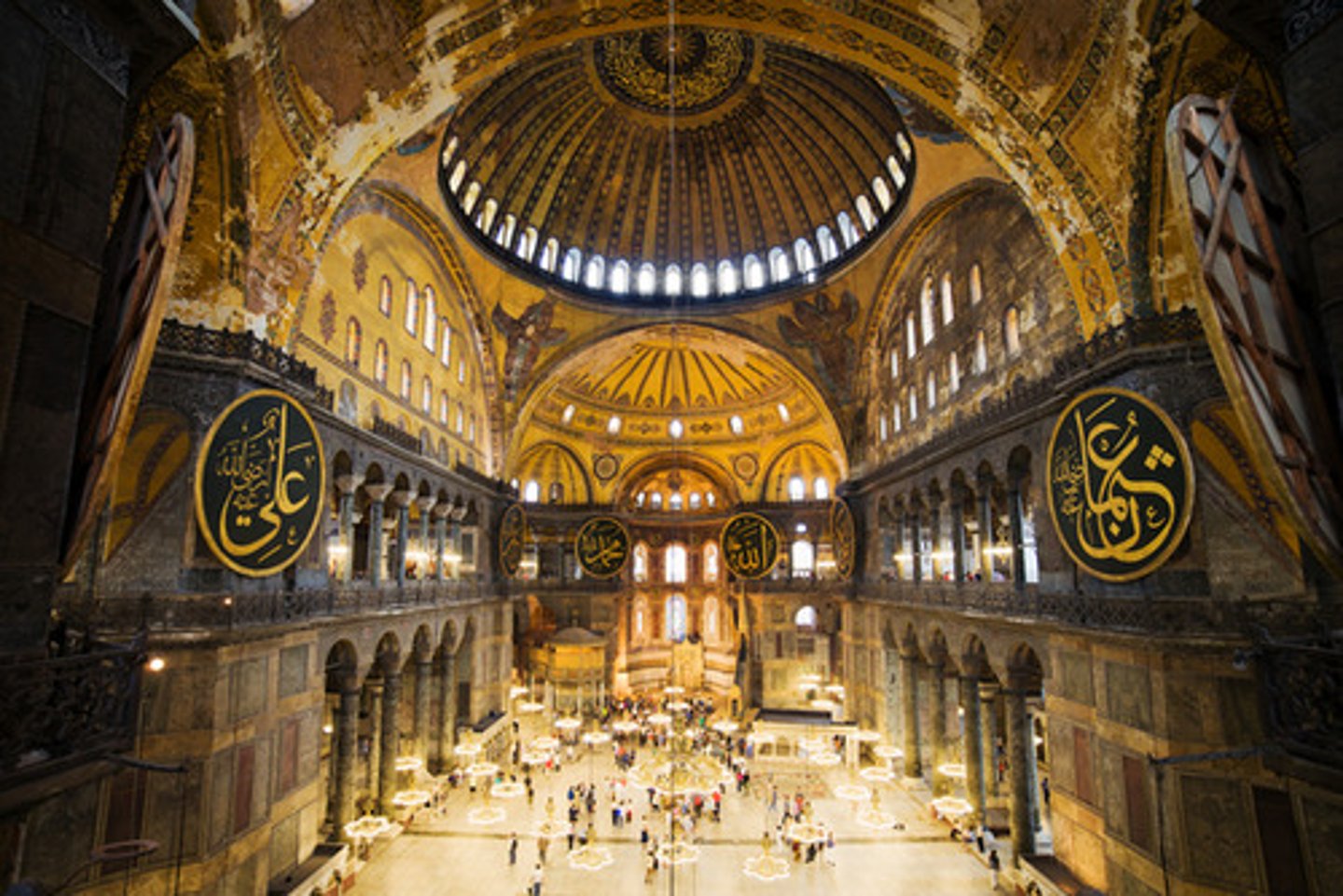
Hagia Sofia (interior)
-no supporting columns or similar pieces anywhere near the center
-interior of central dome is well-lit by virtue of a ring of windows around its lower circumference
-ornate mosaics were originally a substantial aspect of the interior, however, many were altered, covered or destroyed after Turkish invasion
-some mosaics survived including the lunette above the south doorway depicts Justinian presenting a model of the church to the Virgin and her child
-rendition of the Virgin and her child decorates the conch of the sanctuary apse
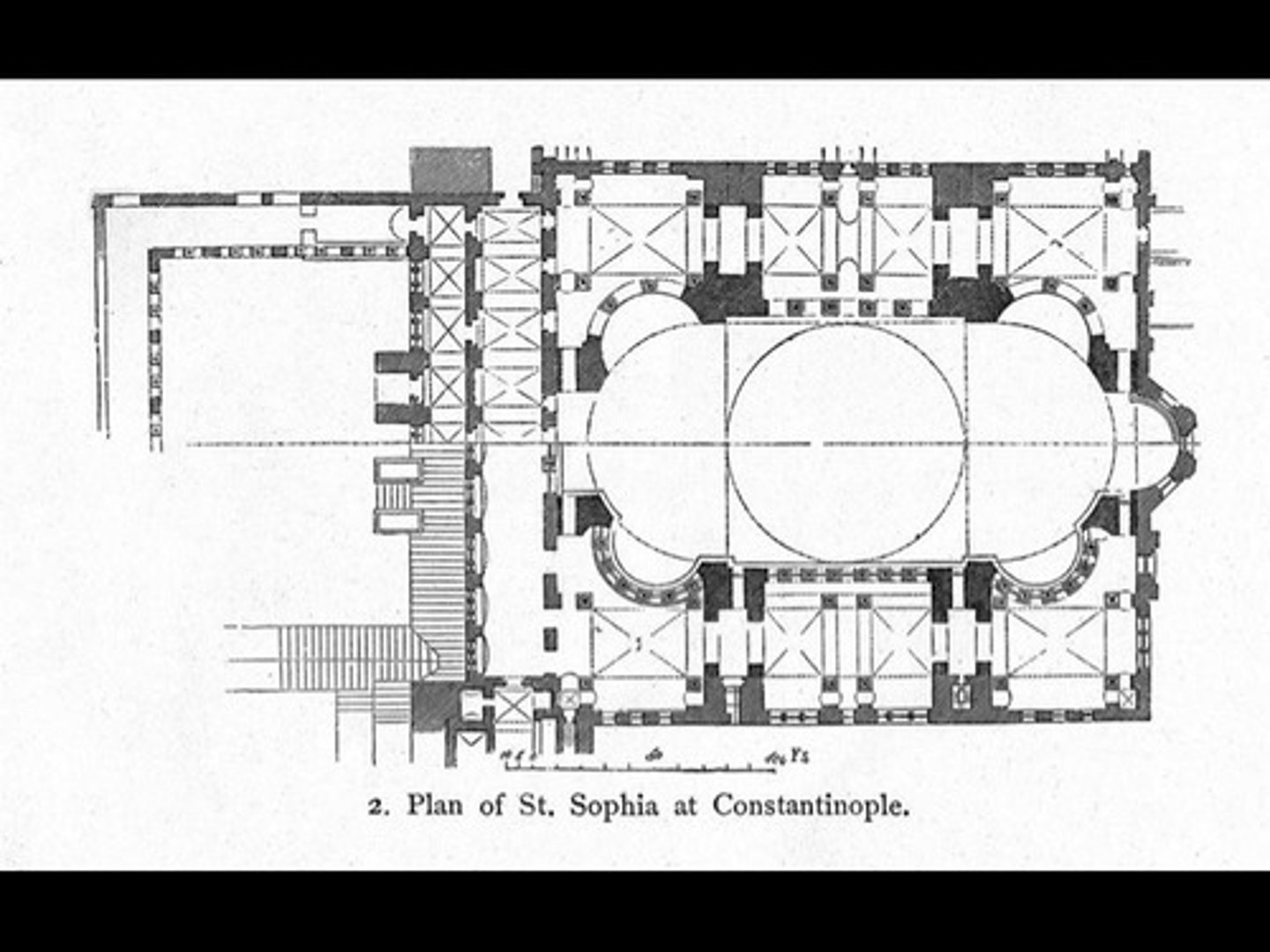
Hagia Sofia (plan)
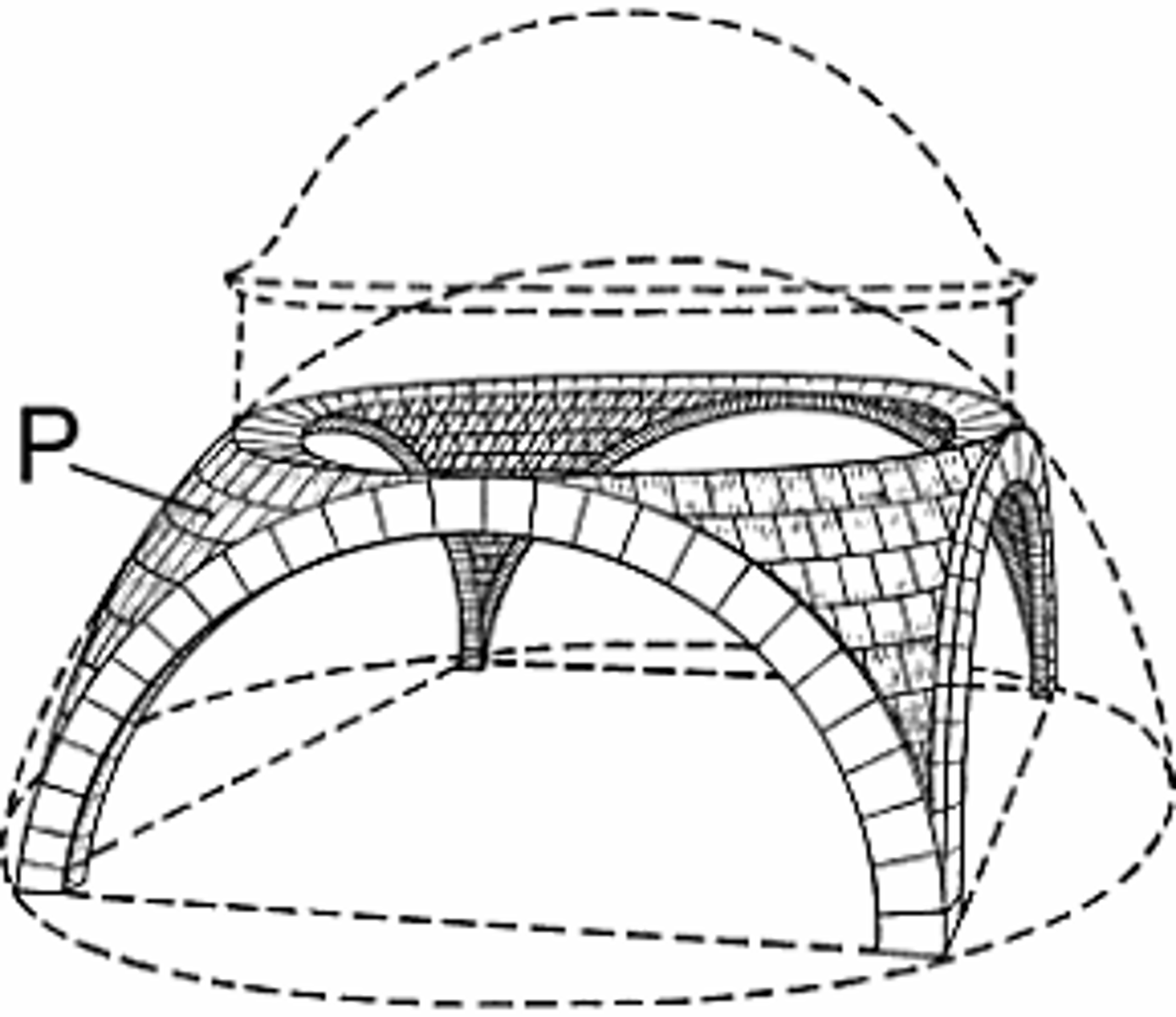
Pendentive
Rounded triangle sets dome (Hagia Sophia) by inserting into barrel vaults.
Central plan
A church having a circular plan with the altar in the middle; any structure designed with a primary central space surrounded by symmetrical areas on each side. Used in baptistries, mausoleums, and chapels.
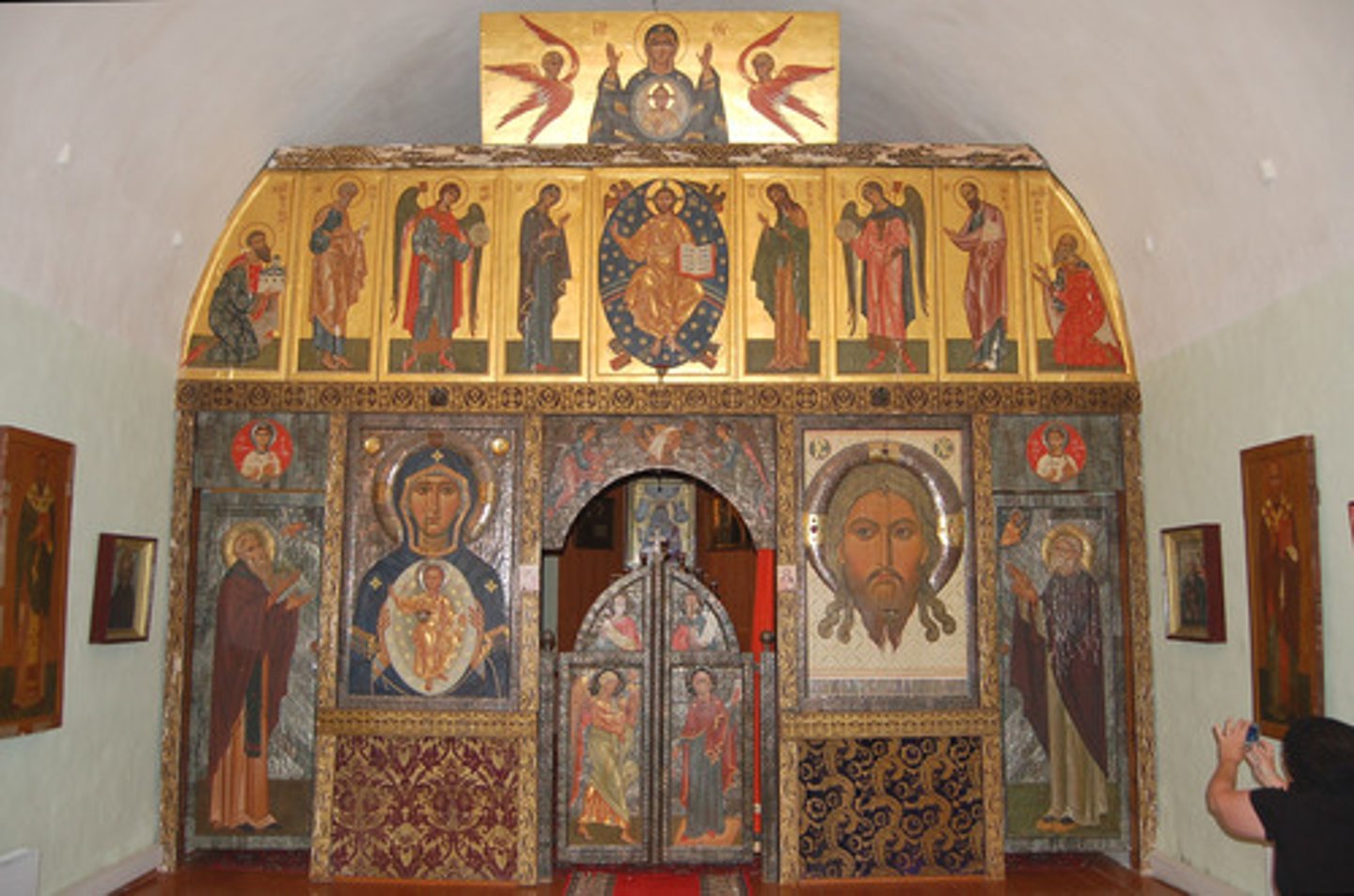
Iconostasis
A curtain decorated with icons, which separates the apse from the transept of a church.
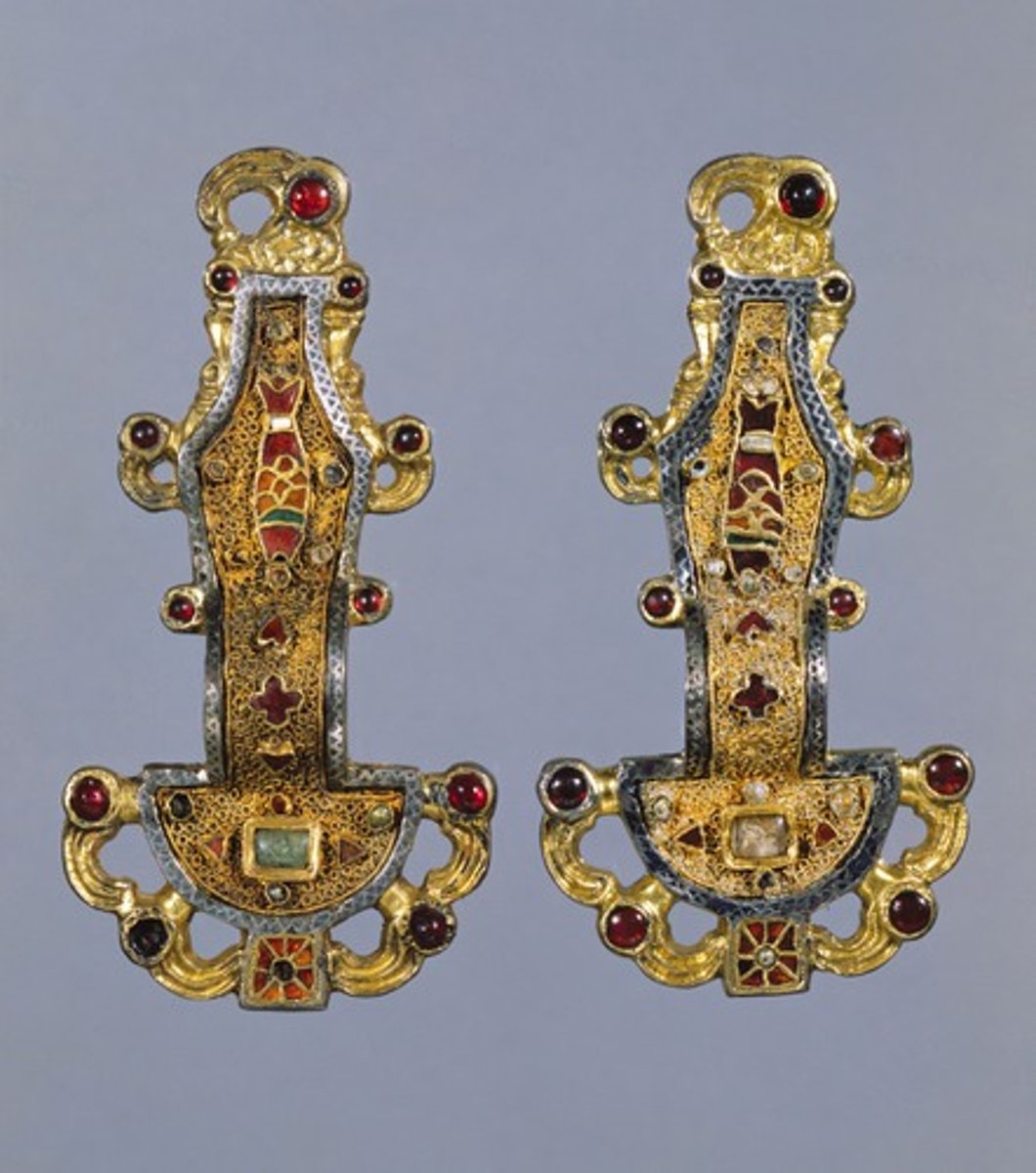
Merovingian looped fibulae
Early medieval Europe. Mid-6th century C.E. Silver gilt-worked in filigree, with inlays of garnets and other stones.
Zoomorphic elements (eagle and fish). A fibula is used as a pin or a brooch to fasten garments; Showed the prestige of the wearer. Generally symmetrical. Northern jewelers carefully crafted their molds to produce a glittering surface on the cast metal.
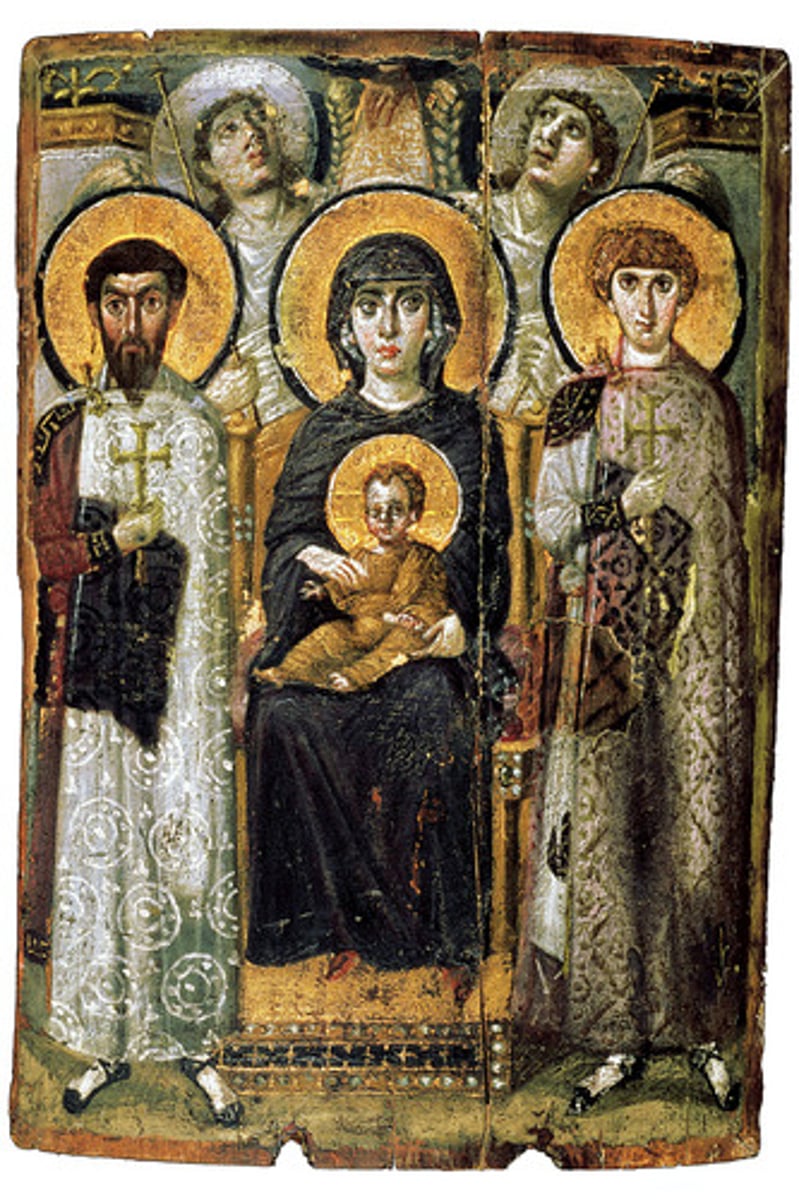
Virgin and Child between Saints Theodore and George
Early Byzantine Europe. 6th-7th century C.E. Encaustic on wood.
Monastery of St. Catherine, continuously inhabited Christian monastery protected by Islamic rulers. Mary represents the Byzantine symbol of purity (Theotokos) since she has a small mouth, large eyes, and concealed under a blue robe. Angels are depicted behind her.
 Note
Note  Flashcards (76)