consultation skills
 Studied by 0 people
 Call Kai
 Learn
Learn Practice Test
 Spaced Repetition
 Match
Match Flashcards
 Knowt Play
1/10

Earn XP
Description and Tags
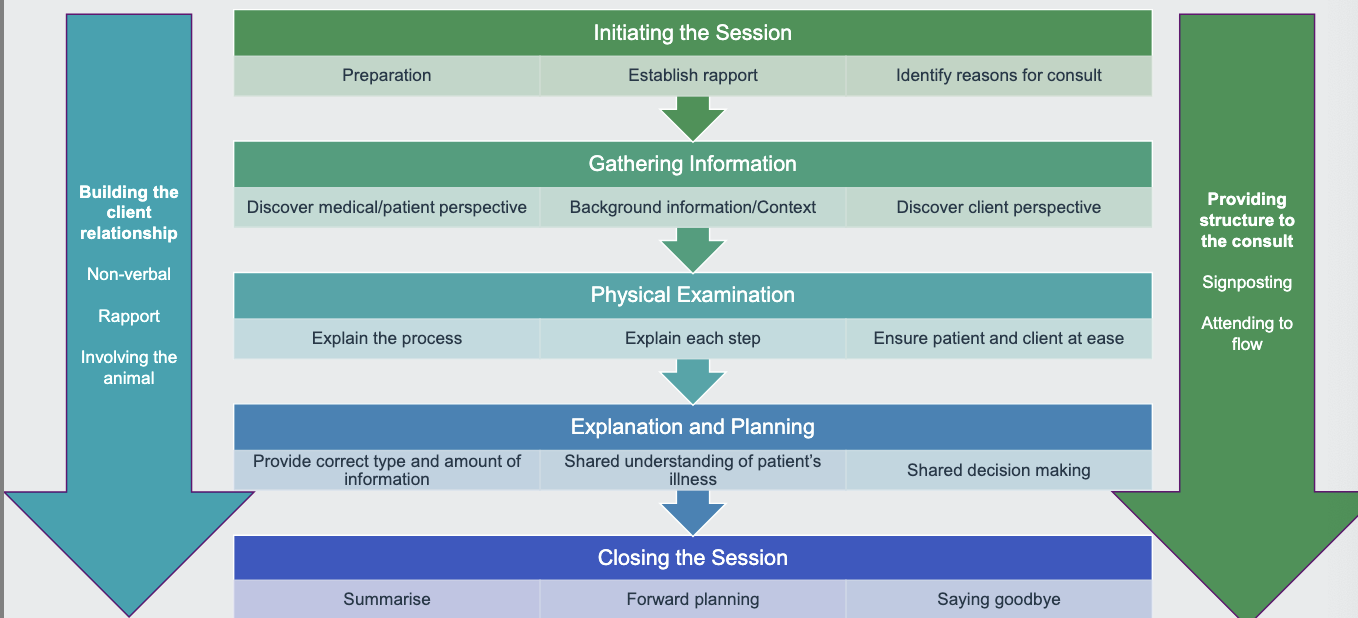
• Recognise the importance of relationship centred care. • Describe the five stages and two themes of the Calgary- Cambridge guide. • Apply skills from the Calgary-Cambridge guide to a routine consultation
Name | Mastery | Learn | Test | Matching | Spaced |
|---|
No study sessions yet.
11 Terms
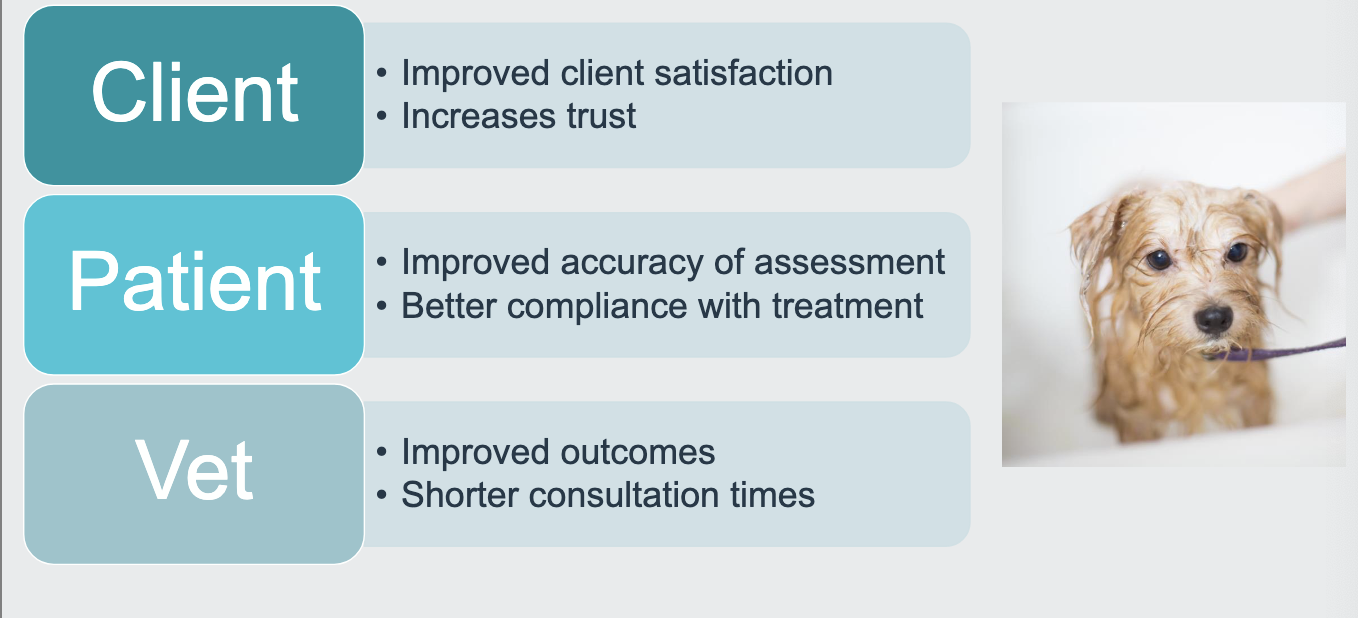
what is relationship centred care
Relationship-centred care
involves engaging the client
in a shared decision-making
process, considering their
perspective and the human-
animal bond, to achieve the
best outcomes for the
animal
benefits of relationship centred care
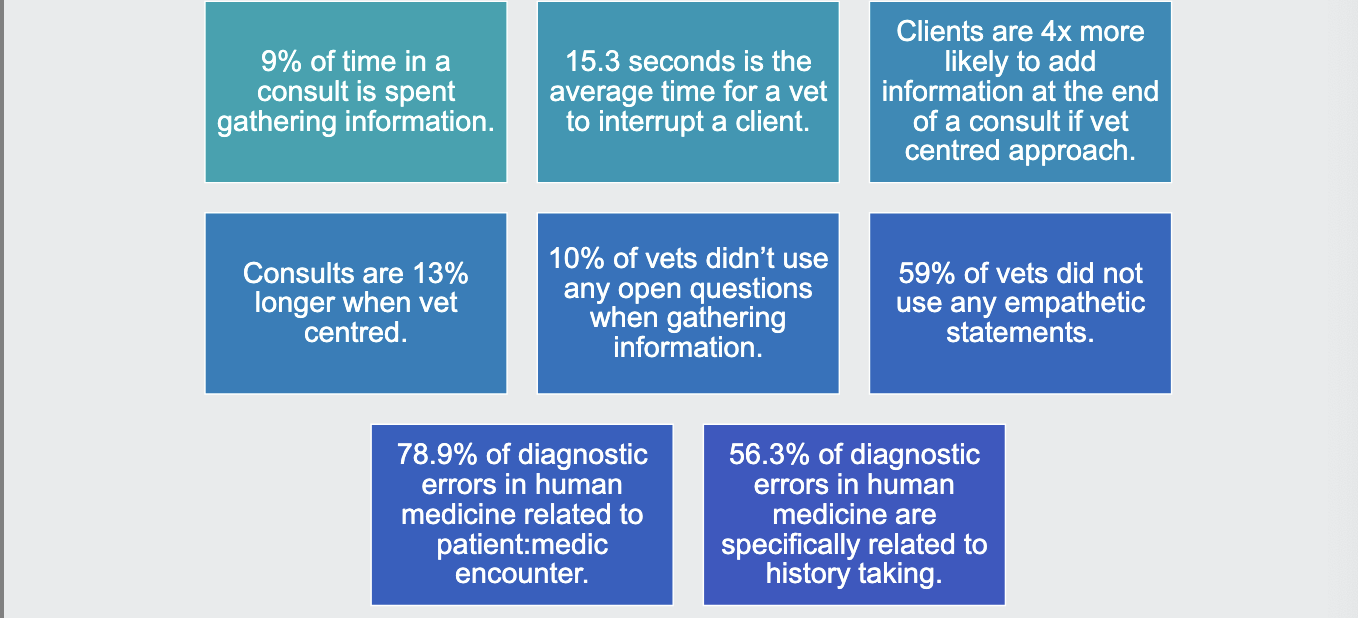
why are consultation skills so important
what is the calgary camrbidge guide
how do we build a relationship
Non-verbal communication
• Eye contact
• Open body language
Developing rapport
• Establish a connection with your client.
• Provide empathy and support.
Involving the animal
• Greet and interact with the patient.
how do we provide structure
Signposting
• Explain to owner how consult will be structured.
• “I am going to start by asking you some general questions about Buster’s routine, then there will be more specific questions to fill in any gaps. Then I will examine Buster to ensure he is in good health for his vaccination today.”
• “There are three options for treating Fluffy’s condition, with a range of costs associated with them. I will take you through each option in turn, and you are welcome to ask for more information as we go through them.”
Attending to flow
• Structure the consult in a logical sequences e.g. history taking, clinical exam.
• Ensure you keep to time (10–15-minute consults are routine in the UK for companion
animals).
how do we initiate the session
Preparation
• Create a professional, safe environment.
• Check previous patient history.
Establish rapport
• Introductions – vet, client and patient!
• “Chit chat” – how was your journey, summer holiday, weather etc.
Identify reason for consult
• Open question – e.g. “What can we do for Buster today?”
• Listen to the answer – The Golden Minute
• Follow up question “Is there anything else you are worried about
how do we gather information
Medical/patient perspective
• Specifics of presenting complaint(s) e.g. duration, frequency, progression
• Start with open question and move to closed questions to fill any information gaps.
Background information
• Past medical history, management at home (e.g. feeding, exercise)
• This step is often just confirming or clarifying information we already have on our records – “I can see Buster is 6 months old and I believe he was already vaccinated when you got him, is that correct?”
Client perspective
• Every client has different ideas, concerns and expectations.
• Client ultimately will make the decisions, the more information we have, the better we can help them with this
what should we do in physical examination
Explain the process
• “I am now going to examine Buster, starting at his head and working my way back to his tail.”
• “I am going to give Fluffy her physical examination now. As Fluffy’s injured right forelimb may be painful to examine, I will leave that part of the examination until last to give Fluffy a chance to get settled.”
Explain each step
• “I am now checking Buster’s mouth for signs of dental disease or infection, and I will check his
ears and eyes as well.”
• “I am now going to listen to Fluffy’s heart and lungs. This might take a minute or so, and as I will be listening through my stethoscope, I won’t be able to ask or hear any questions during this part of the check.”
Ensure patient and client at ease
• “I am going to examine Buster now; is there anywhere in particular he might be more sensitive or worried about me checking?”
• “I am going to check Fluffy’s painful ear now. There is a chance she may react to this part of the exam, but I assure you it won’t damage Fluffy’s ear, and if she does get stressed, we will stop.”
explanation and planning
Providing the correct amount and type of information
• Find out the client's current knowledge base.
Shared understanding of patient’s illness
• Give opportunities for clients to ask questions to check understanding.
• Acknowledge the emotional load of information: “I realise this is a lot to take in. Would you like a minute to process this information, or is there anything you want to ask me?”
Shared decision making
• Clients need to be able to make an informed decision for their pet’s treatment.
• Client should contribute their thoughts, ideas, suggestions and preferences.
• Give choices, not directive
how do we close the session
Summarise
• Check client understands agreed plan “Would you mind repeating our plan back to me so I can check we’ve covered everything?”
• Check client is happy with outcome from consultation “Have I missed anything?”
Forward planning
• When do we want to see the patient again? “Buster seems in great health today, so unless you
have any concerns, we will see him back in 6 months for his next health check.”
• What to do if agreed plan is not working “If Fluffy seems to be getting worse before your next appointment, please call so we can get her seen earlier.”
Saying goodbye
• Lead client to consult room door or take to reception to collect medications or book next appointment.
• “I’ll see you again in one week but please do contact us sooner if you are worried. If you are happy waiting at the reception desk, one of our team will be out with Fluffy’s medications shortly.
 Note
Note  Flashcards (38)