Myers Edition 4 AP Psychology - Exam 2 (Unit 0-2)
 Studied by 4 people
 Call Kai
 Learn
Learn Practice Test
 Spaced Repetition
 Match
Match Flashcards
 Knowt Play
1/238

There's no tags or description
Looks like no tags are added yet.
Name | Mastery | Learn | Test | Matching | Spaced | Call with Kai |
|---|
No analytics yet
Send a link to your students to track their progress
239 Terms
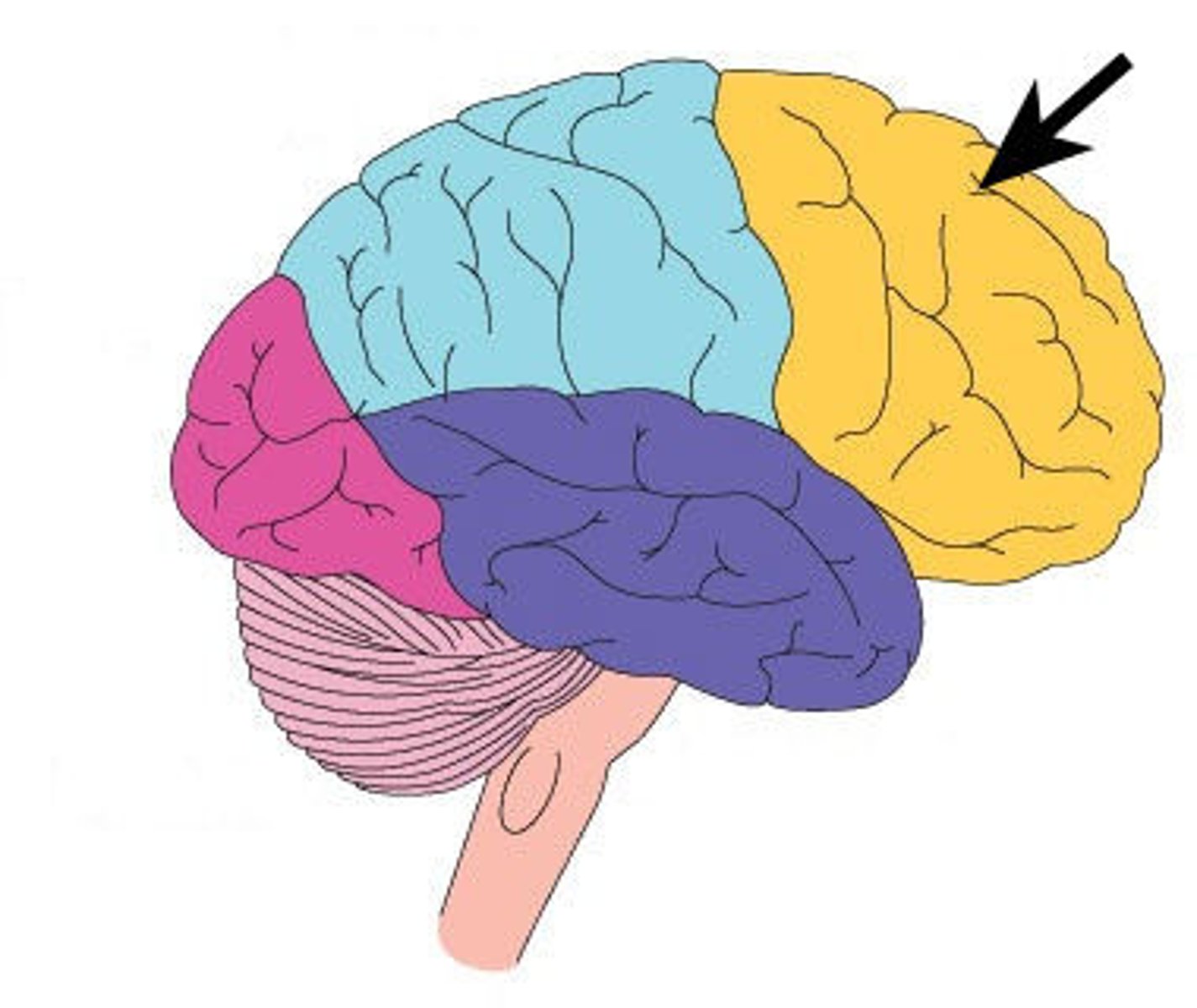
Frontal Lobe
"CEO of the brain"
Controls:
Personality, critical thinking/judgement, consciousness, and emotions.
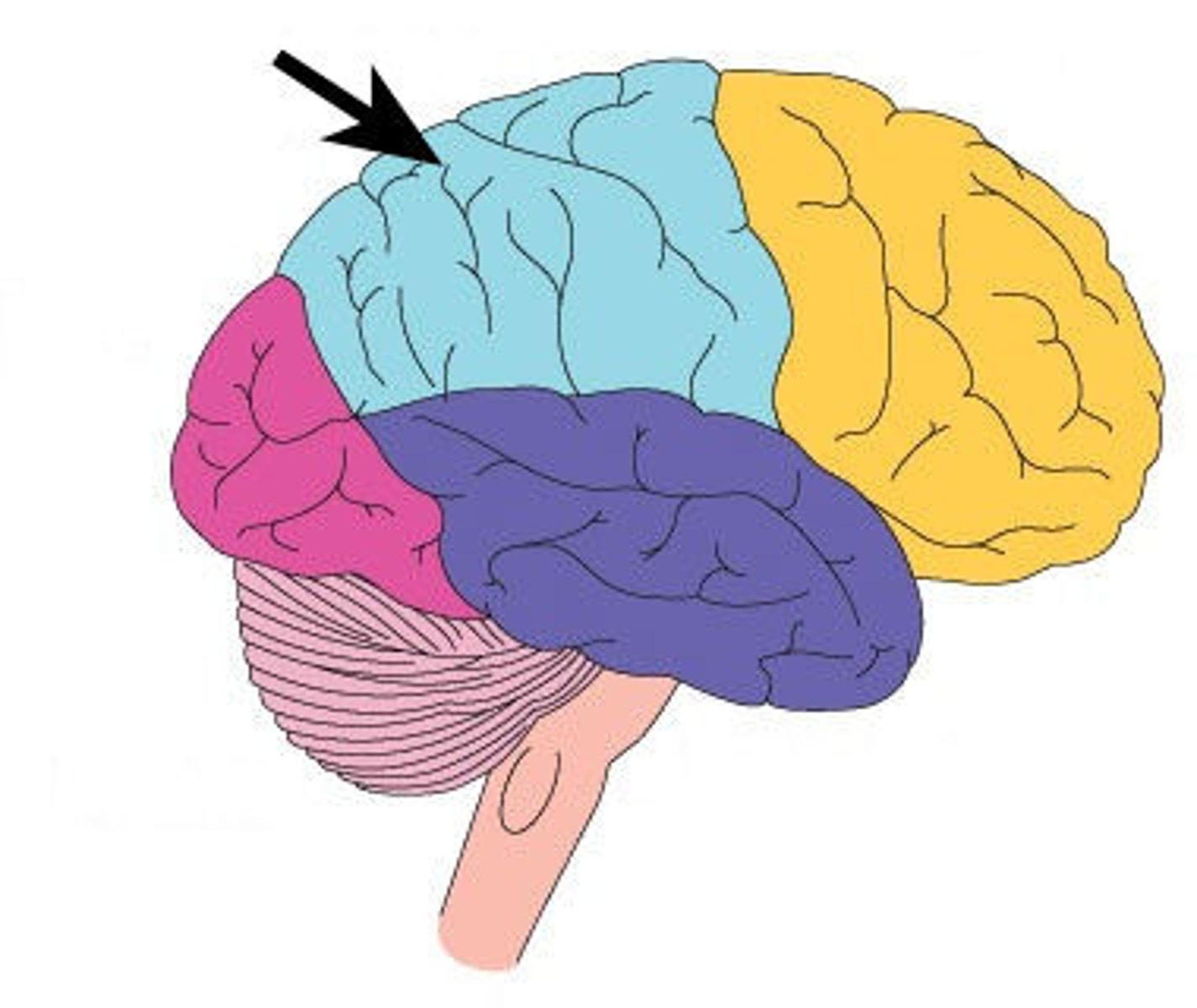
Parietal Lobe
Controls:
Mathematic Reasoning, Info Processor, Spacial orientation and reasoning
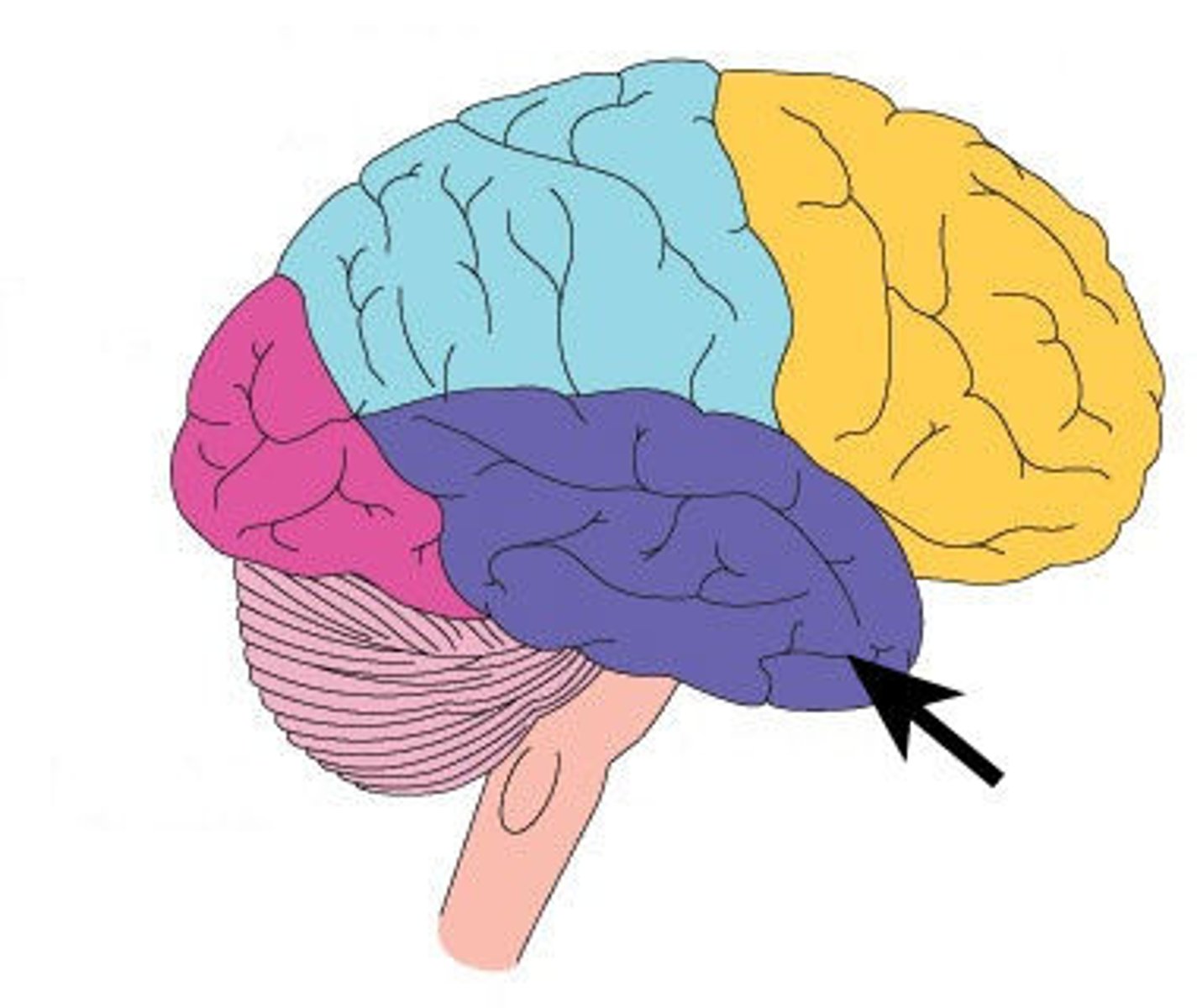
Temporal Lobe
Controls:
Hearing, categorization of object, Mystical Experiences 'god'
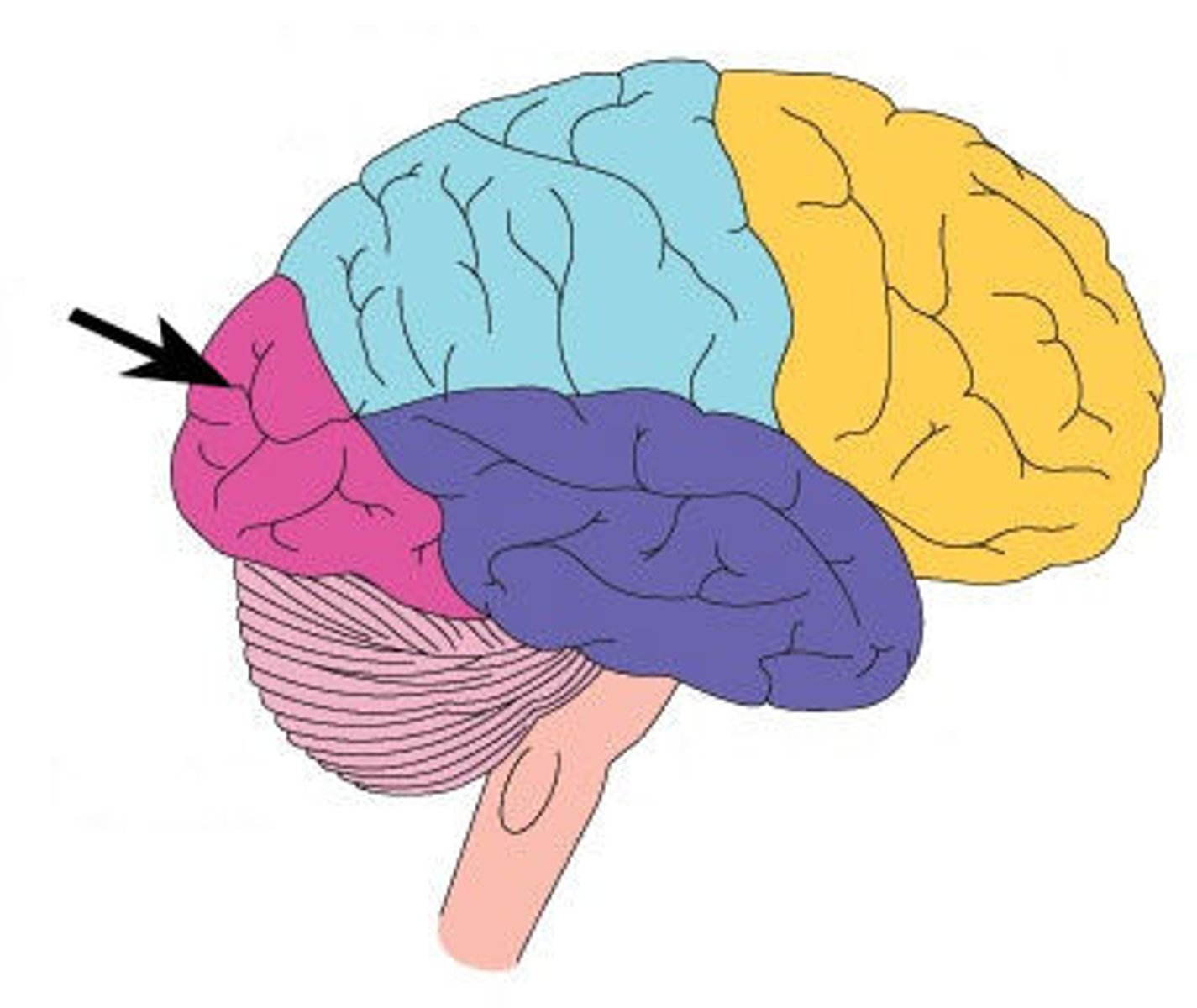
Occipital Lobe
Controls:
Vision!
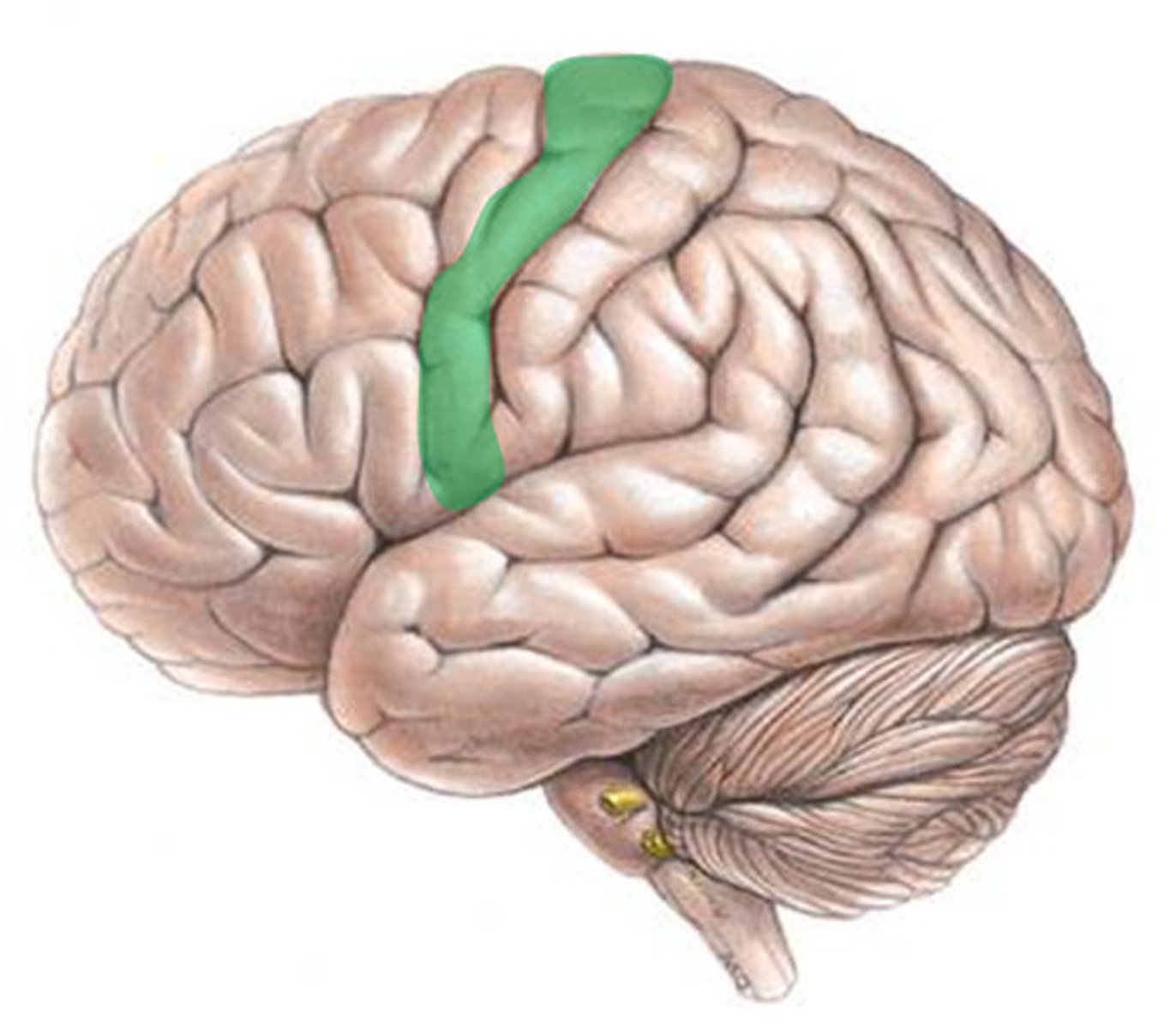
Motor Cortex
A strip that controls movement of the face and limbs
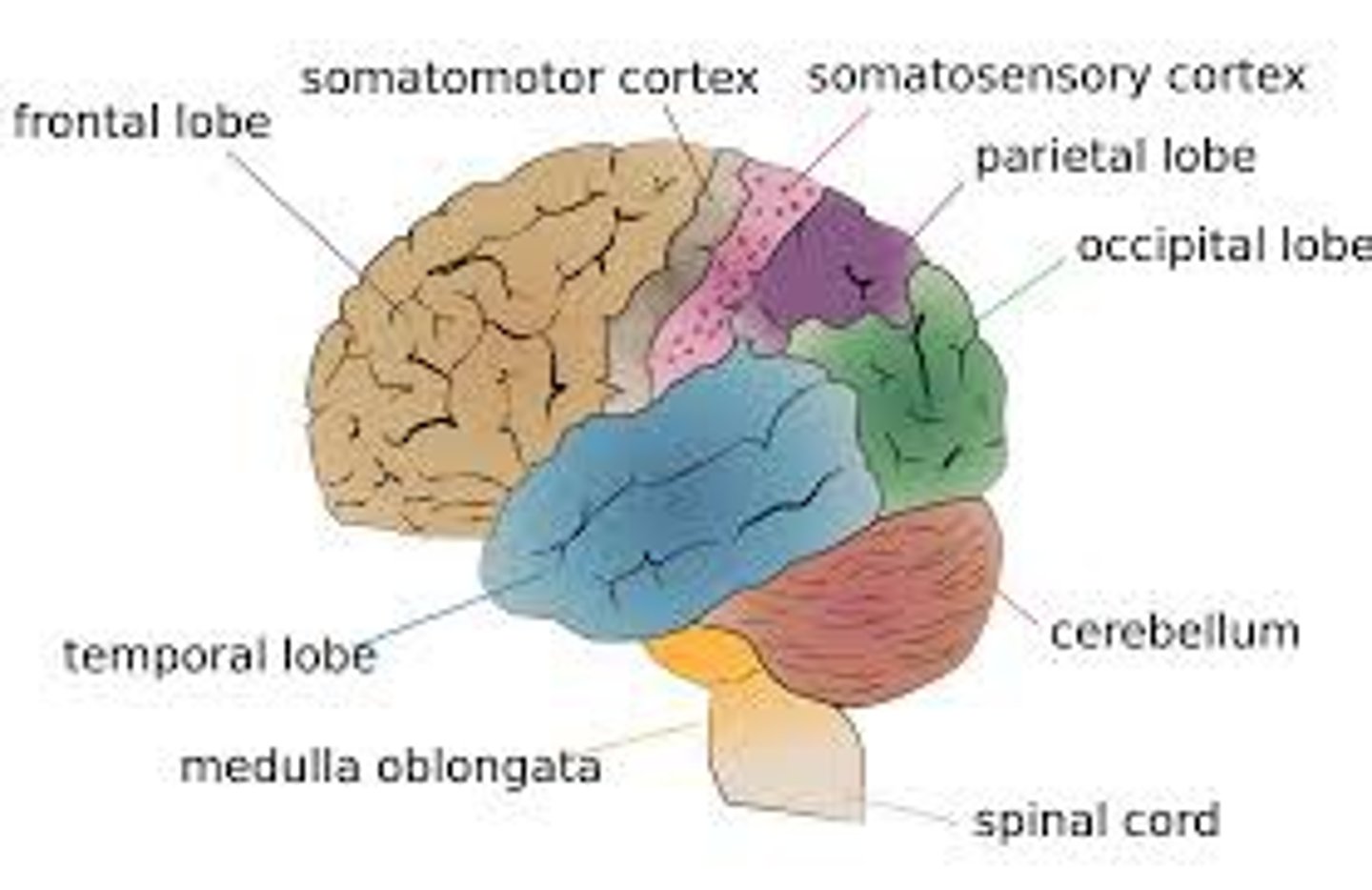
Sensory Cortex
A strip that registers and processes bodily sensations. Integrates all senses into one perception.
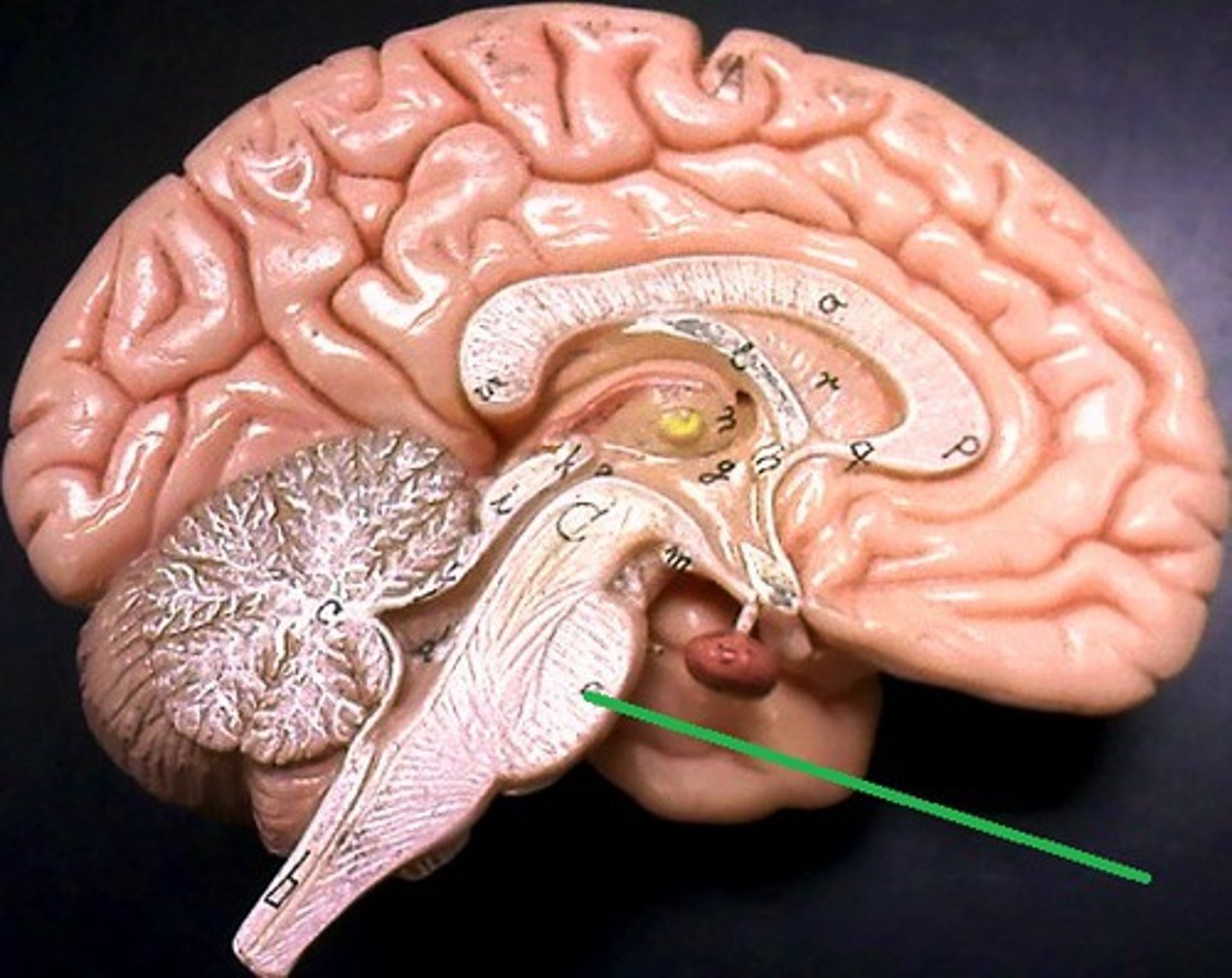
Pons
Coordinates functions like arousal, staying awake, to dreaming, states of consciousness.
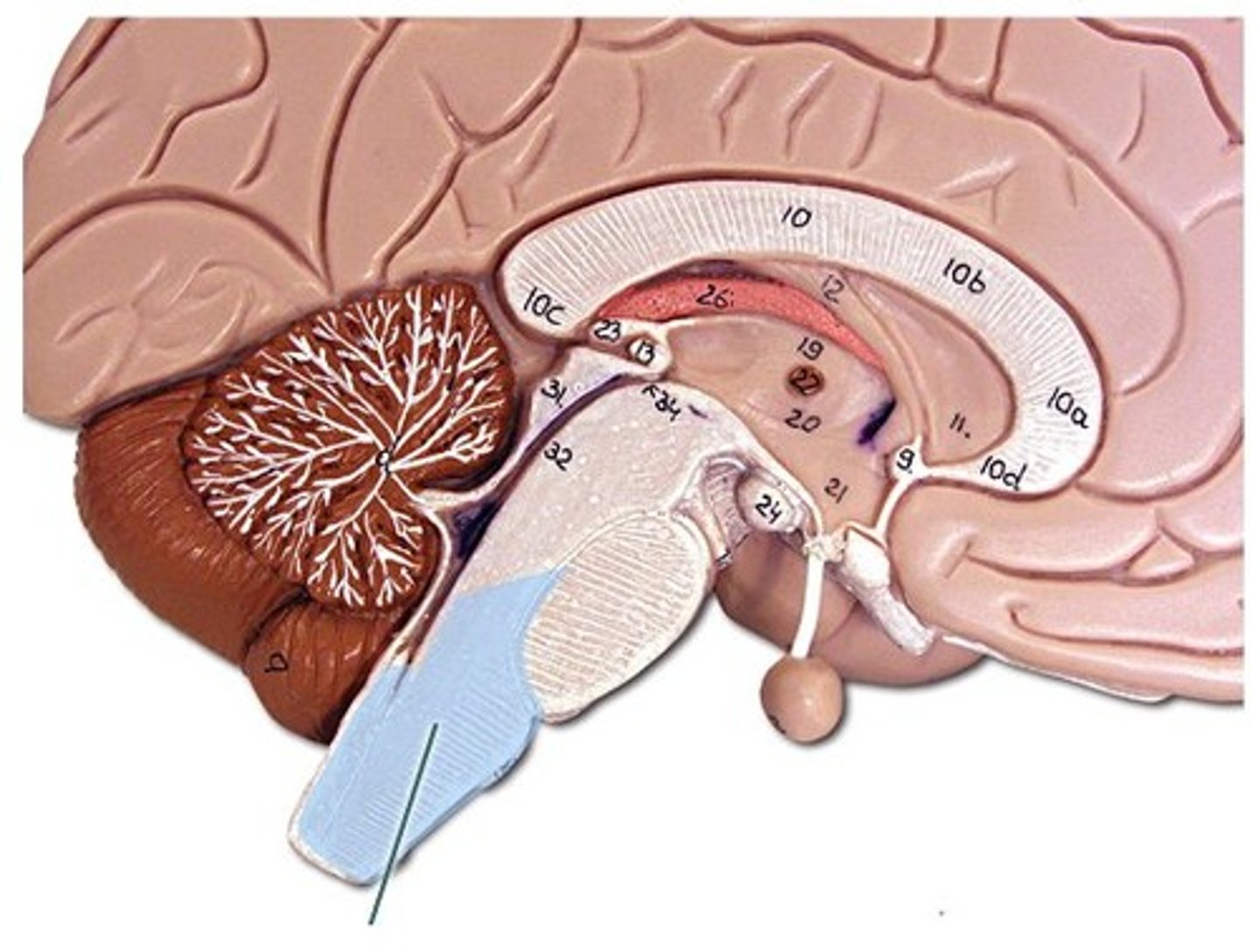
Medulla
Underneath the Pons. Deals with automatic functions like:
Breathing, heart rate, blinking, salivating, swallowing and vomiting.
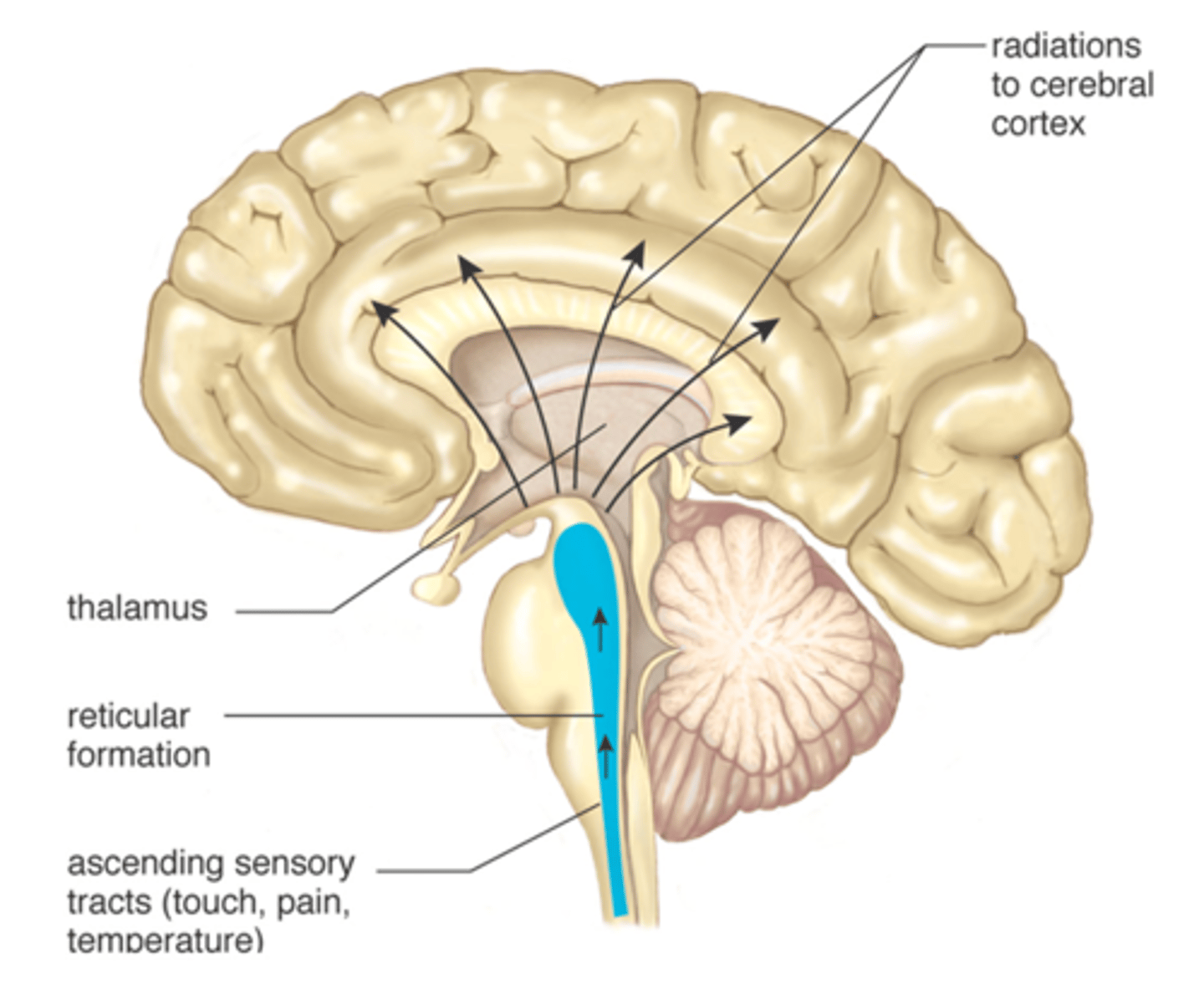
Reticular Formation
This region controls:
Arousal/sleep (consciousness), filters all incoming sensory information to determine what's important. Either passes info on from the lower centers to the upper brain or blocks it.
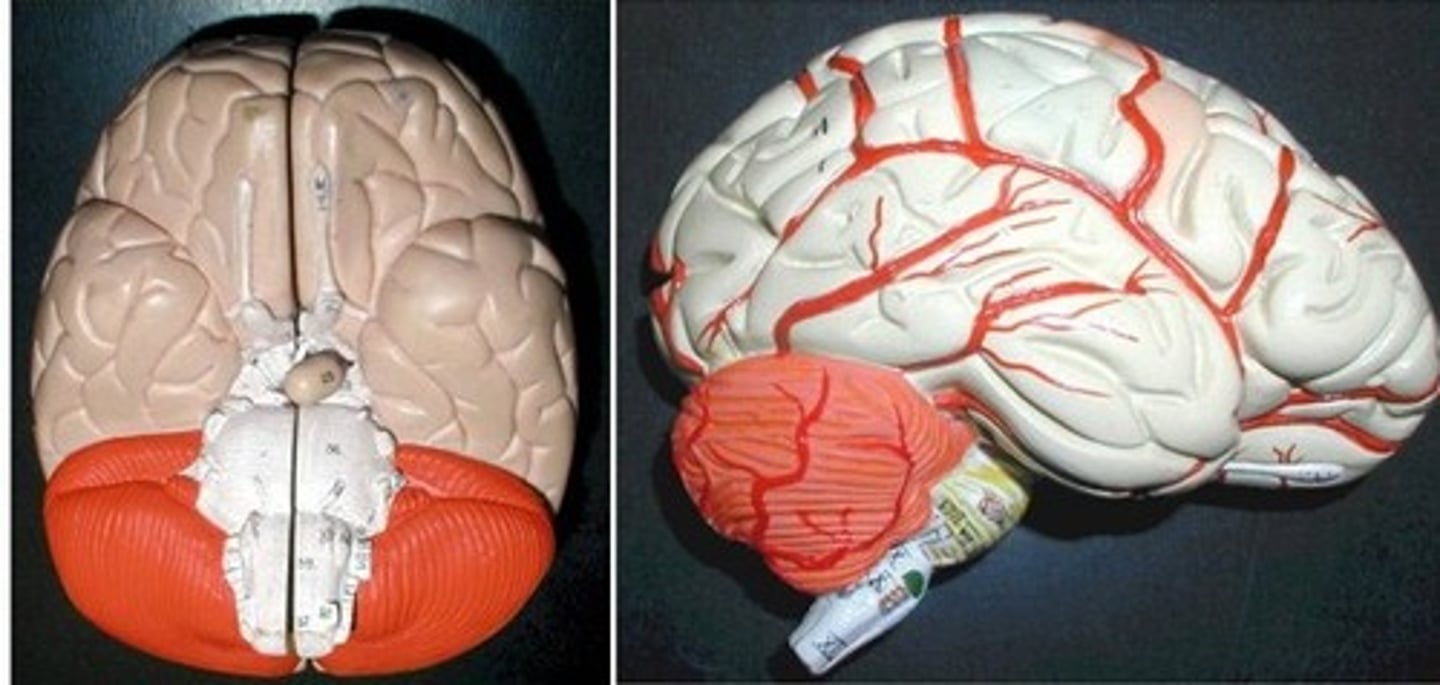
Cerebellum
Known as "little brain" due to it's shape. Controls voluntary movements like:
Balance, Posture, Coordination, motor movements, Memory of Kinesthetic Skills, muscle memory.
Hippocampus
Emotional Powerhouse. Transfers memories from the short term to long term. Makes/stores maps of the physical spaces. Detects new objects.
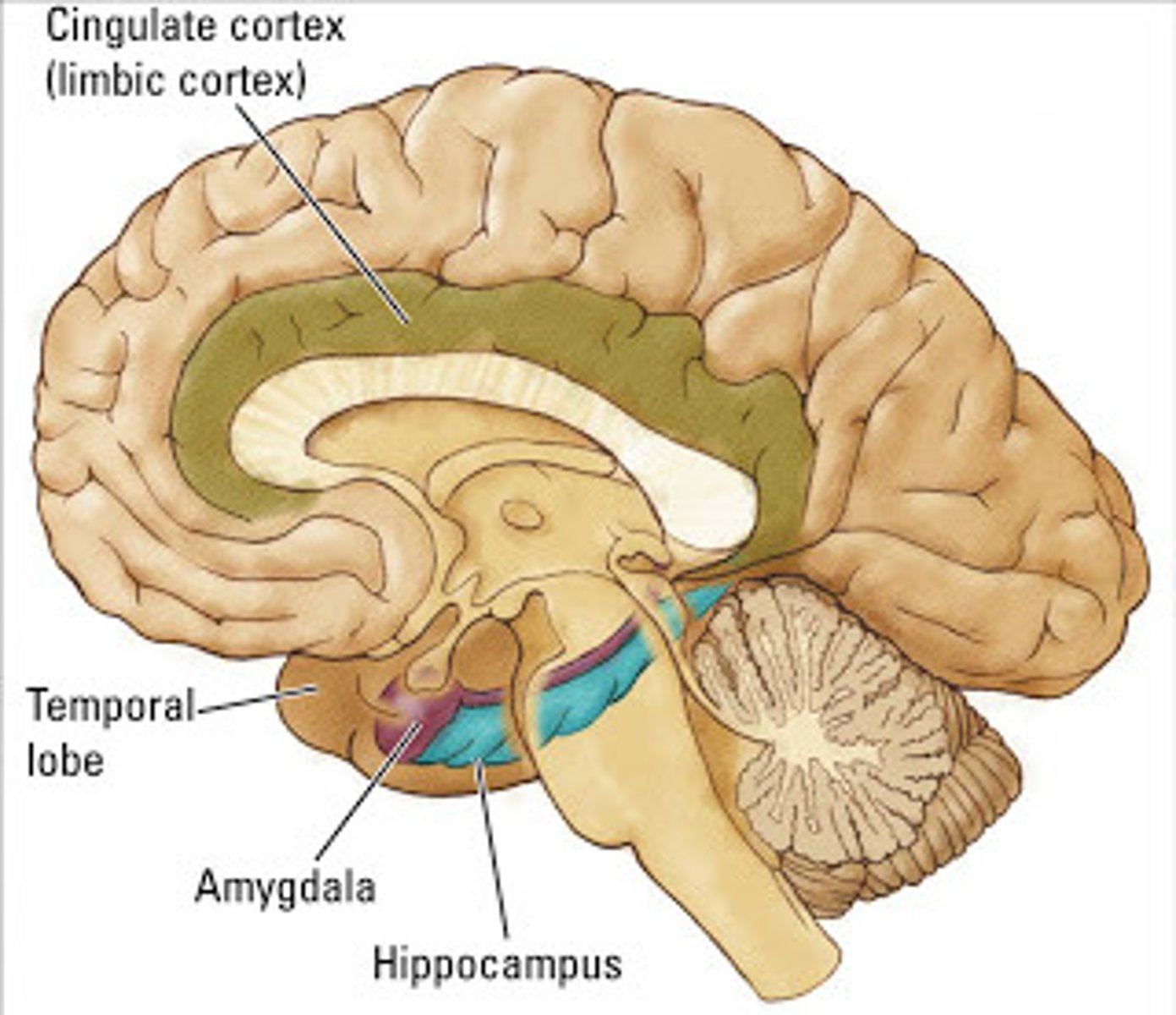
Amygdala
Attaches emotional significance to stimuli. Emotions are started here, usually anger/fear, fight or flight.
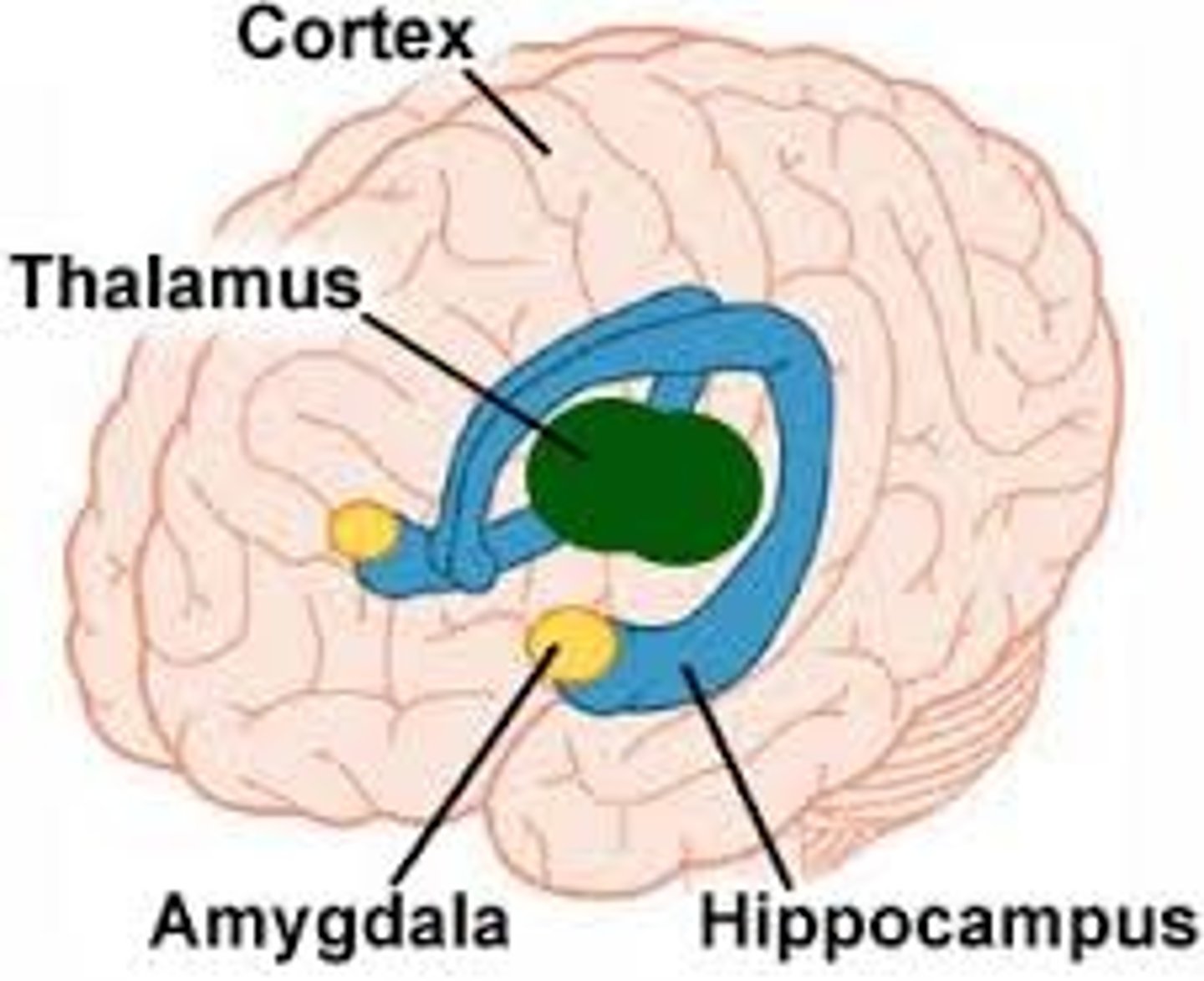
Thalamus
'Post office' Directs sensations, except smell, to the appropriate cortex.
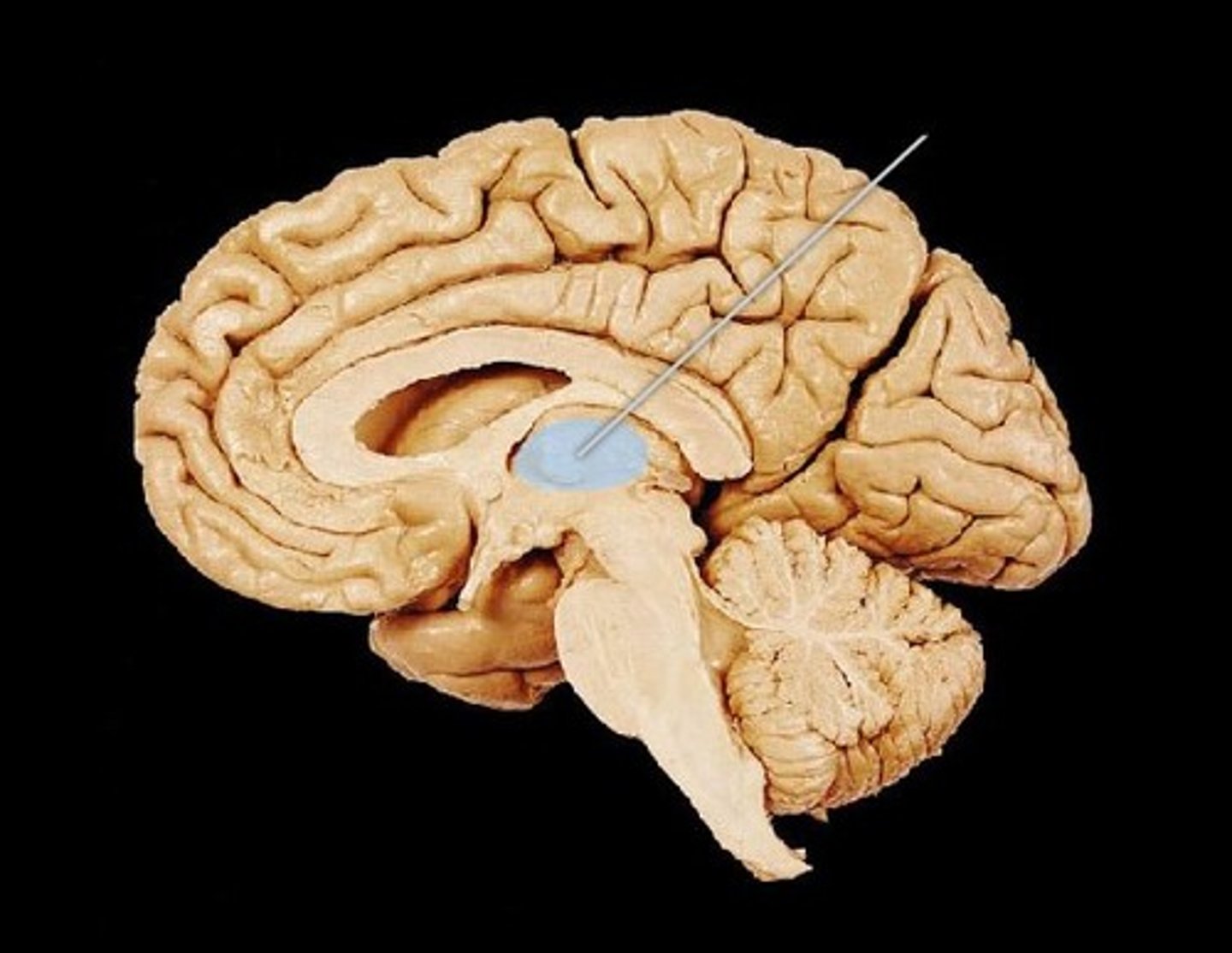
Hypothalamus
Directly below the thalamus
Regulates mediative behavior, sex, hunger, thirst, aggression, sleep, body temp (homeostasis things).
The 4 F's
Feeding, Fleeing, Freezing, and F*cking.
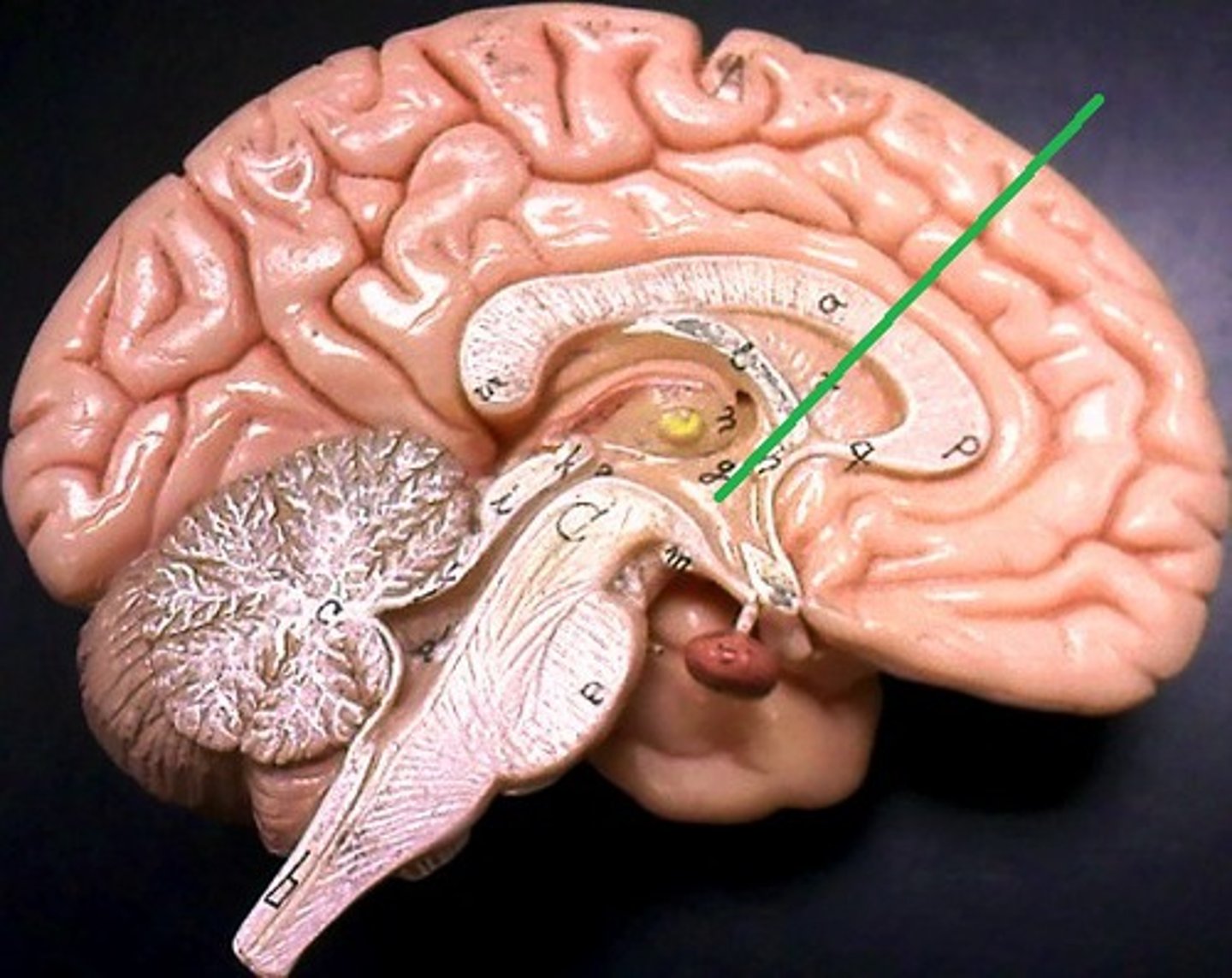
Broca's Area
Controls Speech, frontal lobe. Remember Tom Brokaw. If your right handed likely on the left side.
Wernicke's Area
Controls language. Without it, you couldn't understand auditory language. Temporal lobe.
Pituitary Gland
Master gland of the Endocrine System. Controls the amount of growth hormone and testosterone/ Estrogen. Connected to Hypothalamus.
Corpus Callosum
The highway between brain hemispheres. Transfers information across the hemispheres.
Dual Processing
The brain's ability to work on 2 different levels simultaneously, conscious level (controlled) and unconscious level (automatic)
absolute threshold
The minimum stimulation needed to detect a particular stimulus 50% of the time.
accomodation
In vision, the process by which the lens of the eye shifts to focus on a particular object.
acetylcholine
A neurotransmitter involved in muscle activation, memory, and learning.
action potential
A brief electrical charge that travels down the axon of a neuron, generated by the movement of positively charged atoms in and out of channels in the neuron's membrane.
Activation-Synthesis Theory
A theory of dreaming that suggests dreams are the brain's attempt to make sense of random neural activity.
addiction
A complex condition characterized by compulsive drug use or behaviors despite harmful consequences.
agonist
A drug or chemical that enhances the activity of neurotransmitters.
Alcohol
A depressant that slows down the central nervous system, impairing cognitive and motor functions.
all-or-none response
The principle that a neuron either fires completely or does not fire at all.
alpha waves
The relatively slow brain waves associated with relaxation and wakefulness.
Amplitude
The height of a wave, which determines the loudness of a sound.
amygdala
A limbic system structure involved in processing emotions, particularly fear and aggression.
antagonist
A drug or chemical that inhibits or blocks the action of neurotransmitters.
Aphasia
A condition characterized by the loss of ability to understand or express speech.
association areas
Areas of the cerebral cortex that are not involved in primary motor or sensory functions but are involved in higher mental functions such as learning, remembering, thinking, and speaking.
audition
The sense of hearing.
Auditory Cortex
The part of the brain that processes auditory information.
autonomic nervous system
The part of the peripheral nervous system that controls involuntary functions like heart rate, digestion, and glandular secretion.
axon
The extension of a neuron through which neural impulses are sent.
barbiturates
A class of drugs that depress the activity of the central nervous system, reducing anxiety but impairing memory and judgment.
behavior genetics
The study of the relative power and limits of genetic and environmental influences on behavior.
biological psychology
A branch of psychology concerned with the links between biology and behavior.
biopsychosocial approach
An integrated approach that incorporates biological, psychological, and social-cultural levels of analysis.
blind spot
The point at which the optic nerve leaves the eye, creating a small gap in the field of vision.
blindsight
A condition in which a person can respond to visual stimuli without consciously experiencing them.
bottom-up processing
Analysis that begins with sensory receptors and works up to the brain's integration of sensory information.
brainstem
The oldest part and central core of the brain, responsible for automatic survival functions.
Caffeine
A stimulant found in coffee, tea, and many soft drinks that increases alertness and reduces fatigue.
central nervous system
The brain and spinal cord, responsible for processing and coordinating information.
cerebellum
A structure in the hindbrain that helps coordinate voluntary movement and balance.
cerebral cortex
The outer layer of the brain responsible for complex cognitive processes such as thinking, planning, and language.
Charles Darwin
An English naturalist who proposed the theory of evolution by natural selection.
circadian rhythm
The biological clock; regular bodily rhythms that occur on a 24-hour cycle.
Cocaine
A powerful stimulant drug that increases levels of dopamine in the brain, leading to intense euphoria and increased energy.
cochlea
A coiled, bony, fluid-filled tube in the inner ear through which sound waves trigger nerve impulses.
cochlear implant
A device for converting sounds into electrical signals and stimulating the auditory nerve through electrodes threaded into the cochlea.
cognitive neuroscience
The interdisciplinary study of the brain activity linked with cognition (including perception, thinking, memory, and language).
computed tomography (CT)
A scanning technique using multiple X-rays to construct a 3D image of the brain's structure.
conduction hearing loss
Hearing loss caused by damage to the mechanical system that conducts sound waves to the cochlea.
cones
Photoreceptor cells in the retina that are responsible for color vision and fine detail.
consciousness
Our awareness of ourselves and our environment.
Consolidation Theory
The theory that sleep helps strengthen the neural connections that form our memories.
Contralateral Control
The principle that each hemisphere of the brain controls the opposite side of the body.
cornea
The transparent outer layer of the eye that covers the pupil and iris and helps focus incoming light.
corpus callosum
The large band of neural fibers connecting the two brain hemispheres and carrying messages between them.
David Hubel
A Canadian neurophysiologist known for his work with Torsten Wiesel on the processing of visual information in the brain.
delta waves
The large, slow brain waves associated with deep sleep.
dendrites
Branchlike extensions of a neuron that receive messages and conduct impulses toward the cell body.
Depolarization
The process by which a neuron's membrane potential becomes less negative, leading to the firing of an action potential.
depressants
Drugs that reduce neural activity and slow body functions.
Dichromatism
A type of color blindness where one of the three basic color mechanisms is absent or not functioning.
difference threshold
The minimum difference between two stimuli required for detection 50% of the time; also known as just noticeable difference (JND).
dream
A sequence of images, emotions, and thoughts passing through a sleeping person's mind.
dual processing
The idea that information is simultaneously processed on separate conscious and unconscious tracks.
electroencephalogram (EEG)
A recording of the electrical waves sweeping across the brain's surface, measured by electrodes placed on the scalp.
embodied cognition
The theory that cognition is influenced by the body's interactions with the environment.
endocrine system
The body's "slow" chemical communication system, consisting of glands that secrete hormones into the bloodstream.
endorphins
Neurotransmitters that are natural painkillers produced by the brain.
environment
Every nongenetic influence, from prenatal nutrition to the people and things around us.
epigenetics
The study of environmental influences on gene expression that occur without a DNA change.
Ernst Weber
A German physician credited with the formulation of Weber's law, which describes the relationship between the magnitude of a physical stimulus and the intensity of its perceived sensation.
eugenics
A controversial and unethical movement aimed at improving the genetic quality of the human population.
evolutionary psychology
The study of the evolution of behavior and the mind, using principles of natural selection.
Excitatory Neurotransmitter
A neurotransmitter that promotes the firing of neurons.
Farsightedness (Hyperopia)
A condition where distant objects can be seen clearly, but close objects appear blurry.
feature detectors
Nerve cells in the brain that respond to specific features of the stimulus, such as shape, angle, or movement.
fMRI
A technique for revealing blood flow and, therefore, brain activity by comparing successive MRI scans.
forebrain
The largest and most prominent part of the brain, including the cerebral cortex and subcortical structures.
fovea
The central focal point in the retina, around which the eye's cones cluster.
fraternal (dizygotic) twins
Twins who develop from separate eggs and are no more similar genetically than non-twin siblings.
frequency
The number of complete wavelengths that pass a point in a given time.
frequency theory
The theory that the rate of nerve impulses traveling up the auditory nerve matches the frequency of a tone, thus enabling us to sense its pitch.
frontal lobes
The portion of the cerebral cortex lying just behind the forehead, involved in planning and judgment.
GABA (Gamma-Aminobutyric Acid)
The main inhibitory neurotransmitter in the brain.
Ganglion Cells
Neurons in the retina that relay information from the photoreceptors to the brain.
gate-control theory
The theory that the spinal cord contains a neurological "gate" that blocks pain signals or allows them to pass on to the brain.
genes
The biochemical units of heredity that make up the chromosomes; a segment of DNA capable of synthesizing a protein.
genome
The complete instructions for making an organism, consisting of all the genetic material in that organism's chromosomes.
glial cells
Cells in the nervous system that support, nourish, and protect neurons, and play a role in learning and thinking.
gustation
The sense of taste.
Gustav Fechner
A German psychologist known for his work in psychophysics, particularly his development of Weber's law and the concept of the just noticeable difference.
 Note
Note  Flashcards (24)