Origin of Species and Macroevolution PPT 1, 2, 3
 Studied by 0 people
 Call with Kai
 Learn
Learn Practice Test
 Spaced Repetition
 Match
Match Flashcards
 Knowt Play
1/60

There's no tags or description
Looks like no tags are added yet.
Name | Mastery | Learn | Test | Matching | Spaced | Call with Kai |
|---|
No analytics yet
Send a link to your students to track their progress
61 Terms
Macroevolution
occurs at or above the species level
Speciation
the process of species formation
Species
a group of organisms that maintains a distinctive set of attributes in nature
genus (capitalized) + specific epithet (uncapitalized) [italisized or underlined]
Subspecies
groups of the same species that have somewhat different traits but not different enough to be called a separate species
Ecotypes
bacterial species
genetically distinct population adapted to local environment
5 Characterization factors of species
characteristcs that a biologist uses to identify a species
morphological traits are most commonly used
ability to interbreed (biological concept)
molecular features
eco factors
evolution relationships
Morphological species concept
all individuals of a species share measureable traits that distinguish them from individuals of other species
Linnaeu’s classification system
genus + specific epithet
what is a downside for determining species using morphology alone?
members of the same species can look very different
members of different species can look very similar
Biological species concept
a biological species is a group of interbreeding individuals that is reproductively isolated from other such groups
developed by ernst mayr
example: group with potential to interbreed produce viable offspring, but cannot interbreed with other species
what is a downside of the biological species concept
difficult to determine in nature
can interbreed and don’t
doesn’t apply to asexual organisms or extinct organisms
molecular traits concept
compares features to identify similarities and differences among different population
dna within genes
genes along chromosomes
chromosome number and structure
downside to molecular traits concept?
may be difficult to draw the line when separating groups
Ecological factors concept
variety of factors of organism’s habitat can be used to distinguish species
bacterial species have been organized based on eco factors
what is the downside to ecological factors concept?
different groups of bacteria sometimes display similar growth characteristics, and even the same species may show great variation in the growth conditions it will tolerate
Evolutionary relationships concept
based on phylogenies
evolutionary trees describe relationships between ancestral species and modern species
fossil record
dna sequences
intraspecific mating
intra = within
Reproductive isolating mechanisms
prevent interbreeding between different species
consequence of genetic changes as species adapt to environment
Interbreeding
inter = between
interspecies hybrid
when 2 different species are able to produce offspring (often w/reduced fitness)
reproductive isolating mechanisms
prevent gene pools mixing
prezygotic
postzygotic
prezygotic isolating mechanisms
occur before zygote formation
zygotic = 2n
postzygotic isolating mechanisms
occur after zygote formation
5 types of prezygotic isolating mechanisms
ecological isolation
temporal isolation
behavioural
mechanical
gametic
ecological prezygotic isolation
from habits
geographic barrier prevents contact
example: northern vs southern squirrels
temporal prezygotic isolation
from mating timing
reproduce at different times of day or year
example; spring and fall field crickets
behavioural prezygotic isolation
from mating signals
s3xual selection
behaviours important in mate choice
example: changes in bird song
mechanical prezygotic isolation
from reproductive structures
size or incompatible g3nitalia prevents mating
example; shell shapes of snails
gametic prezygotic isolation
from gamete incompatibility
gametes fail to unite successfully
important in species that release gametes into water or air
3 Postzygotic isolating mechanisms
hybrid inviability
hybrid sterility
hybrid breakdown
interspecies offspring reproductively isolted if less fit than intraspecies offspring
Hybrid inviability
species hybrids not surviving
Hybrid sterility
species hybrids not producing functional gametes
example: mating a female horse and a male donkey produce a mule, which have a short life span
Hybrid breakdown
reduced fitness of F2
example; tiglons and ligers (crossing male/female lions and tigers)
Speciation
formation of a new species
underlying cause of speciation
the accumulation of genetic changes that ultimately promote enough differences so that we judge a population to constitute a unique species
Why does life often diversify into species?
abrupt events, like changes in chromosome number, causing reproductive isolation
consequence of adaptation to different ecological niches
2 patterns of speciation
cladogenesis
allopatric speciaiton
Cladogenesis
division of a species into 2+ species
requires gene flow between populations to be interrupted
Allopatric speciation
most prevelent method for cladogensis
occurs when some members of a species become geographically separated
Allopatric Speciation
physical barrier dividing a large population or when a small population becomes separated from a species’ main geo. distribution
species cluster
hybrid zones
can also occur when a small population moves to a new location that is geographically separated from main population
Species cluster - allopatric speciation
group of closely related species
founder effect
genetic drift
Hybrid zones - allopatric speciation
from secondary contact
natural selection affecting allopatric speciation
may rapidly alter the genetic composition of the population, leading to adaptation to the new environment
adaptive radiation affecting allopatric speciation
single species evolves into array of descendants that differ greatly in habitat, form or behaviour
Sympatric Speciation
occurs when members of a species that are within the same range diverge into 2+ different species though there are no physical barriers to interbreeding
4 mechanisms
what are the 4 mechanisms of sympatric speciation?
polyploidy
hybrid speciation
adaptation to local environments
sexual selection
Genetic diverage in allopatric speciation
genetic differences from allopatric populations can lead to speciation
in the absence of gene flow, geographically separated populations inevitably accumulate genetic differences through the action of mutation, genetic drift and natural selection
reproductive isolation:
postzygotic
prezygotic
s3xual
Sympatric speciation
occurs when members of a species within the same range diverge into 2+ species even though there are no physical barriers to interbreeding
sym = same
patric = homeland
mechanisms:
polyploidy
hybrid speciation
adaptation to local environments
s3xual selection
Polyploidy
organism has 2+ sets of chromosomes
plants are more tolerant of polyploidy than animals
nondisjunction
2 types
autopolyplouds
allopolyploids
Autopolyploids
increased number of sets of chromosomes from the same parental species
auto = same
Allopolyploids
contains chromosomes from 2+ different species
formation can abruptly lead to reproductive isolation and speciation
2 or more sets of chromosomes from 2+ different species
allo = different
hybrid speciation
interspecies plants that have become polyploid may be fertile and reproductively isolated from the original populations
interspecies hybrids may become a new species even if they’re not polyploid
galeopsis tetrahit
Adaptation to local environments
geographic area may have variation so that some members of a population may diverge and occupy different local environments that are continuous with each other
eg; microhabitat partitioning
the division of precise, small-scale environments (e.g., specific spots on a tree, under rocks) by coexisting species to reduce competition for resources like food or shelter
S3xual selection
females choose which male to mate
related to courtship behaviours, songs, colouration
certain females prefer males w/one colour pattern, while other females prefer males w/different colour pattern
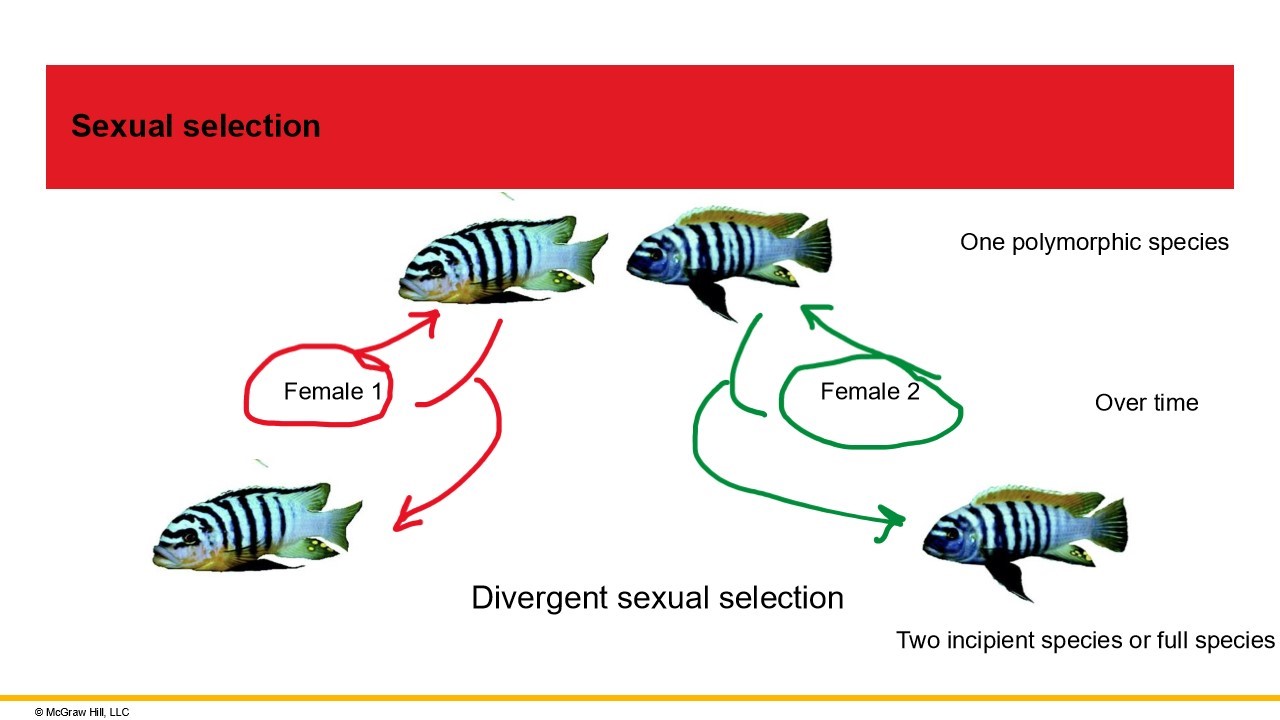
influences to the pace of speciation
influenced by 2 things
gradualism
punctuated equilibrium
Gradualism
each new species evolves continuously over long spans of time
large phenotypic differences that produce new species are due to the accumulation of many small genetic changes
Punctuated equilibrium
tempo more sporadic
species in equilibrium for long periods and then short rapid bursts of changes
the pace of speciation
large animals with long generation times evolve much more slowly than microbial species w/short generations
many new species of bacteria will come into existence during our lifetime; new species arise on longer timeline
important because bacteria have great environmental effects
Evo-devo: evolutionary developmental biology
compares the development of different organisms to understand
ancestral relationships between organisms
developmental mechanisms that bring about evolutionary change
involves the discovery of genes that control development and how their roles vary in different species
Key developmental genes in the role of development
cell division
cell migration
cell differentiation
cell death / apoptosis
interplay makes organisms with specific body pattern (pattern formation)
developmental genes are very important to the phenotypes of individuals
chicken vs. duck feet
changed expression of BMP4
nonwebbed feet are favoured in terrestrial settings
webbed feet are favoured in aquatic settings
Developmental genes that affect growth rate
genetic variation can influence morphology by controlling relative growth rate of different parts of the body during development
heterochrony - evolutionary changes in the rate or timing of developmental events
compare head growth between humans and chimp.
at the fetal state they are similar
after, growth rates become different
 Note
Note  Flashcards (76)