BIOL Lecture 13 - Third Line of Defense
 Studied by 0 people
 Call Kai
 Learn
Learn Practice Test
 Spaced Repetition
 Match
Match Flashcards
 Knowt Play
1/20

There's no tags or description
Looks like no tags are added yet.
Name | Mastery | Learn | Test | Matching | Spaced |
|---|
No study sessions yet.
21 Terms
The Third Line of Defense
The adaptive or learned immune response activated when innate immunity fails to eliminate a pathogen
“Superhero Response” → specialized team that comes into action, only when the second line of defense couldn't handle the invader.
Could be activated due to parasites, cancer cells, novel viruses, and different bacteria
What does MHC stand for and what is its role? (hint,hint)
Major Histocompatibility Complex; it labels cells as "self" (support) or "non-self" (attack!) to help immune recognition and responses
Markers are proteins expressed on the surface of a cell
“Identity Badge”
Allows the cell to label itself as a “friend!”, meaning the cell is healthy, not a pathogen that needs to be destroyed
If the MHC displays a non-self antigen, which would come from, if the cell were to engulf a pathogen, then that signals the immune system to respond, or to attack
“I’ve been hijacked!” Telling the immune system it needs to attack
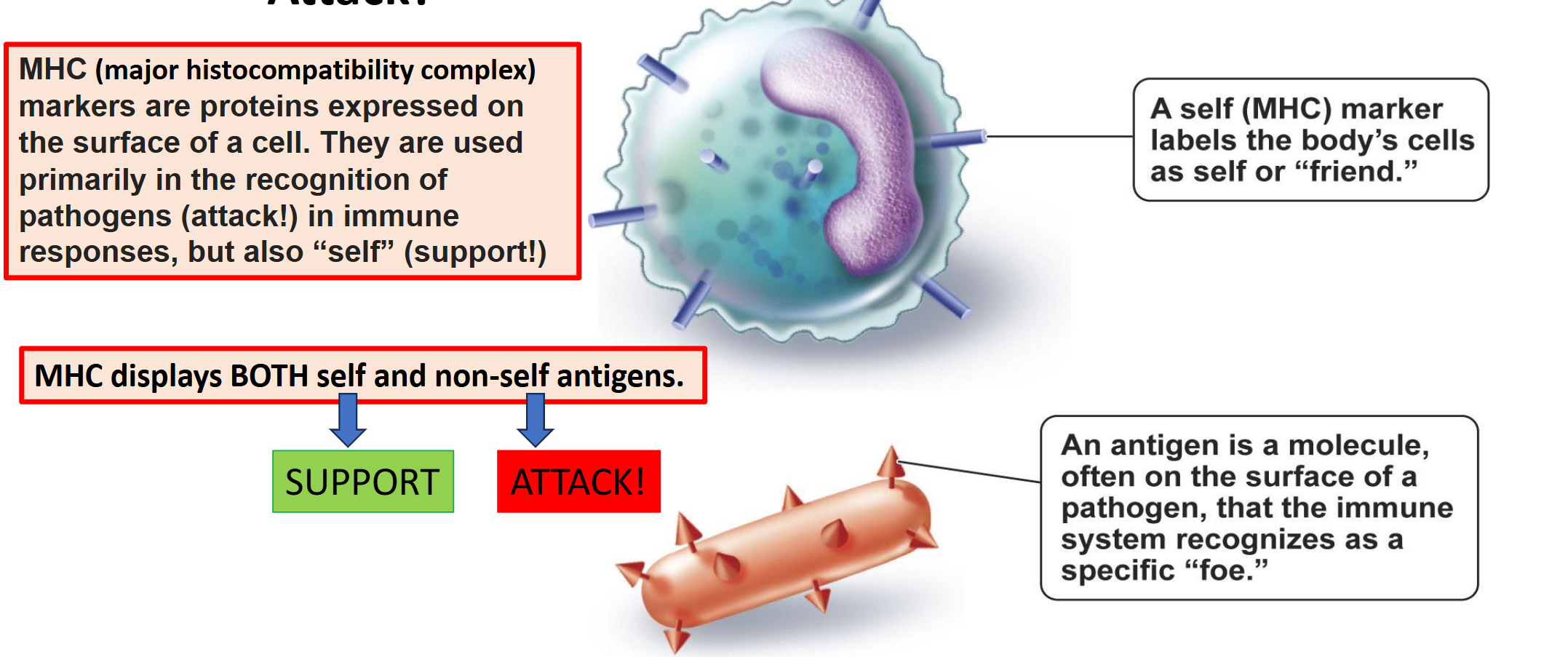
What happens if MHC displays non-self antigens?
Step 1: Threat → Invader enters body
Step 2: Detection → Cells will try to destroy that bacteria in some way. For example, macrophages engulf that foreign particle to try to digest it and destroy it
But if the pathogen is too strong…the antigen will be displayed on the self MHC marker
Signals to the body that it needs to initiate this third line of defense, a stronger immune response to try to rid this pathogen from the system
Step 3: Alert —> The macrophage displays antigen to a helper T cell and secrets a chemical to activate the T cell
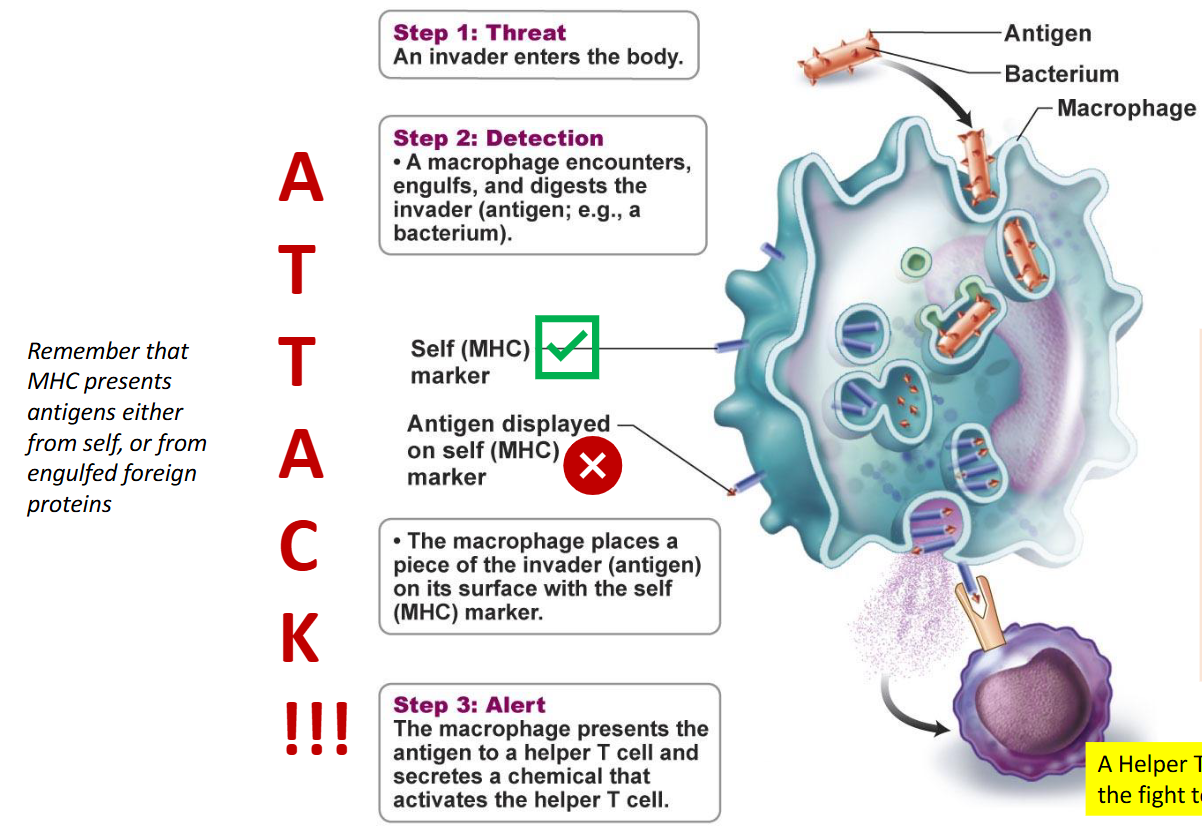
What is the role of helper T cells in adaptive immunity?
They recognize antigens presented by MHC and activate further immune responses, including cell-mediated and antibody-mediated responses
It has a receptor on its cell surface that then attaches to that antigen, and it triggers, an entirely new or next-level immune response
Involves two signals…Recognition and verification
Verification → Double check to make sure that this is actually an antigen from a non-self matter

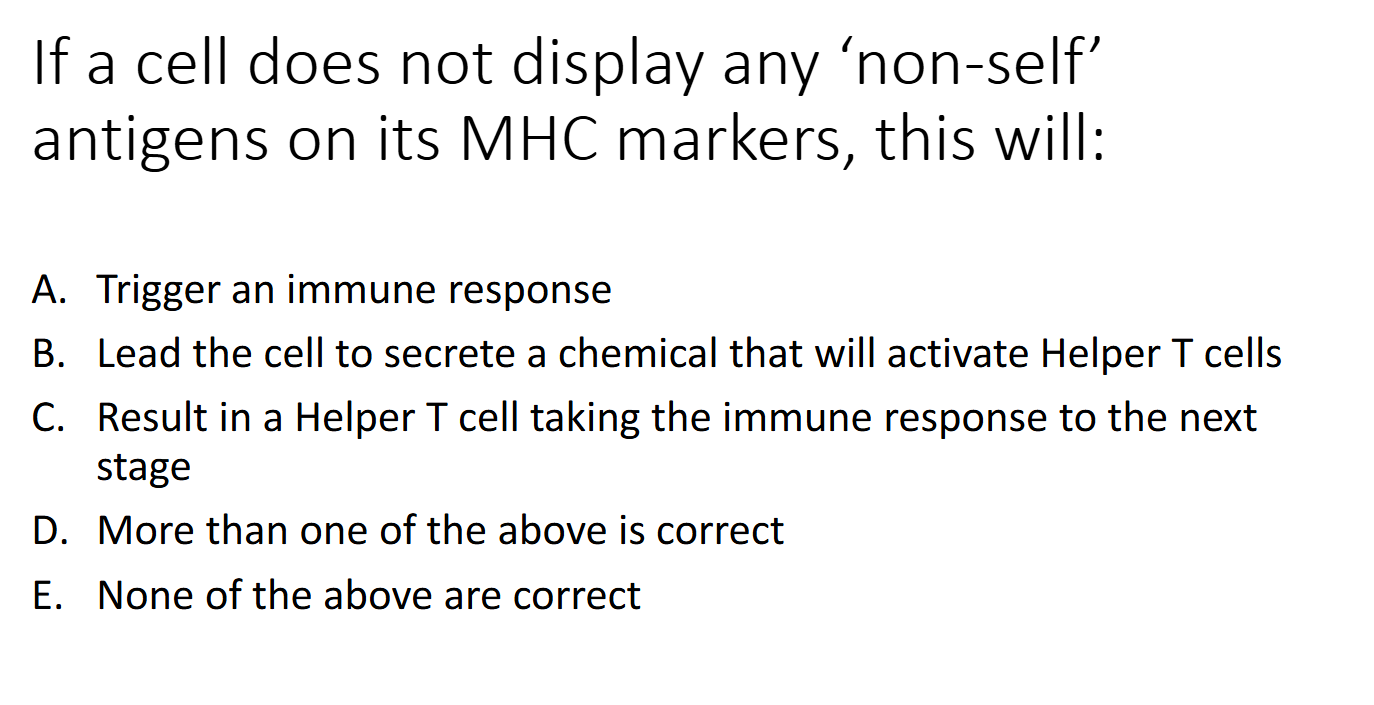
Lecture Question
Answer is E
What are the two immune response pathways that can occur if a T-Cell detects an Antigen?
Leads to the transformation of a helper T cell into an effector-helper T cell.
Strategist to a frontline soldier
Leads to cell meditated response (T-Cell Response) and an Antibody-Meditated Response (B-Cell Response)
These responses happen at the same time
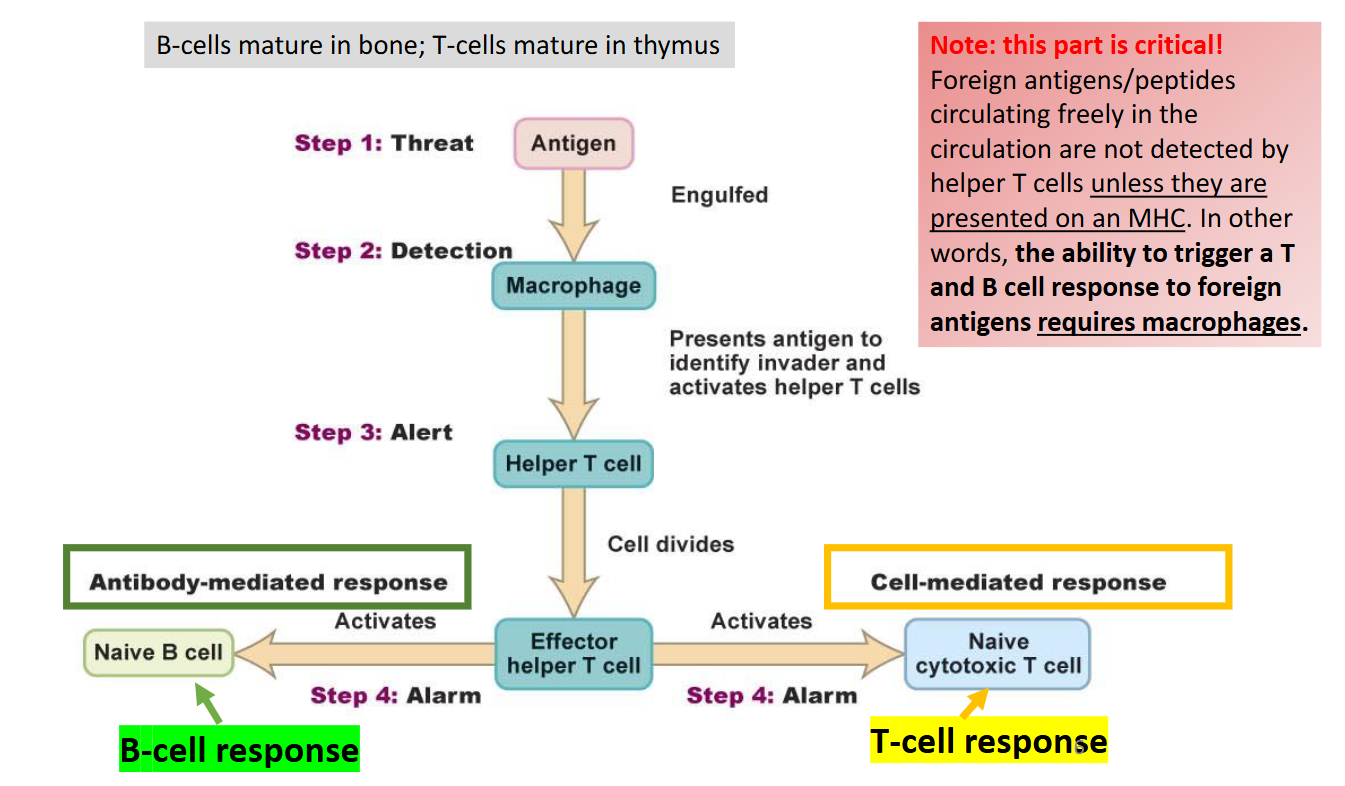
What occurs during the cell based immunity (T cell) route of attack?
Effector T Cell activates Naive Cytotoxic T Cell
The naive cytotoxic T cell divides → amplification
The process of increasing signal strength by dividing immune cells to enhance the attack against pathogens (Turning a dimmer light brighter)
Turns into two different cells → Memory cytotoxic T cell and Effector cytotoxic T cell

What are Memory cytotoxic T cells?
Continued Surveillance
Will stay in the body for years
Allows the body to remember a pathogen that it's encountered before
The immune response will be better the second time it faces the same pathogen/virus
How do Effector cytotoxic T cells kill infected or abnormal cells?
Through chemical means by releasing perforin proteins that create pores in target cell membranes causing cell death
Involved in the attack
Effector cytotoxic T cells find cells displaying foreign antigen (like a game of hide and seek!)
Will target cells that are infected with pathogens, cancer cells, or even cells of organ transplants
Why do organ transplant patients take immunosuppressant drugs?
To prevent their immune system from attacking the transplanted organ, which is recognized as foreign.
What occurs during the antibody-based immunity (B cell) route of attack?
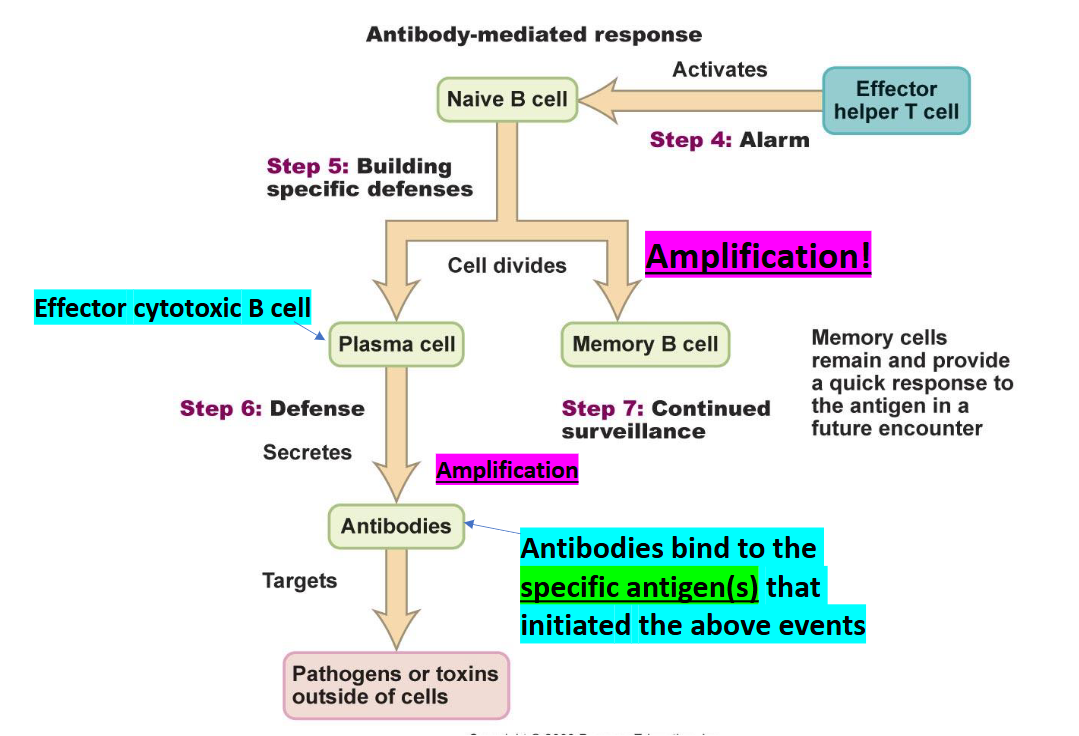
Effector T Cell activates Naive B cells
Through cell division, amplification occurs (the attack grows stronger) → There's more cells involved, there's more cells who are fighting against the invader.
Divides into Plasma Cells (Effector Cytotoxic B Cell) and Memory B Cells
How do memory B cells contribute to immunity?
They provide long-term surveillance and quick response if the same pathogen invades again.
Learned immunity, body knows how to respond to threat and so it will be better at attacking that pathogen the second time
Stored for long periods of time
How do the Effector Cytotoxic B Cell contribute to immunity?
Effector Cytotoxic B Cells secrete antibodies (amplification)
Antibodies bind to the specific antigen(s) that initiated the above events
Antibodies that are binding to our non-self antigens, and targeting them for destruction
It is antibodies specifically that are engaging and that are attacking on the B cell side of things (hint, hint)

What functions do antibodies serve?
Neutralize foreign proteins (toxins), trigger release of more complement (protein), attract more macrophages.
Note that antibodies attack the foreign antigens wherever they find them – circulation, tissues, etc.
B cells themselves don’t “engage”
What happens after the pathogen has been destroyed?
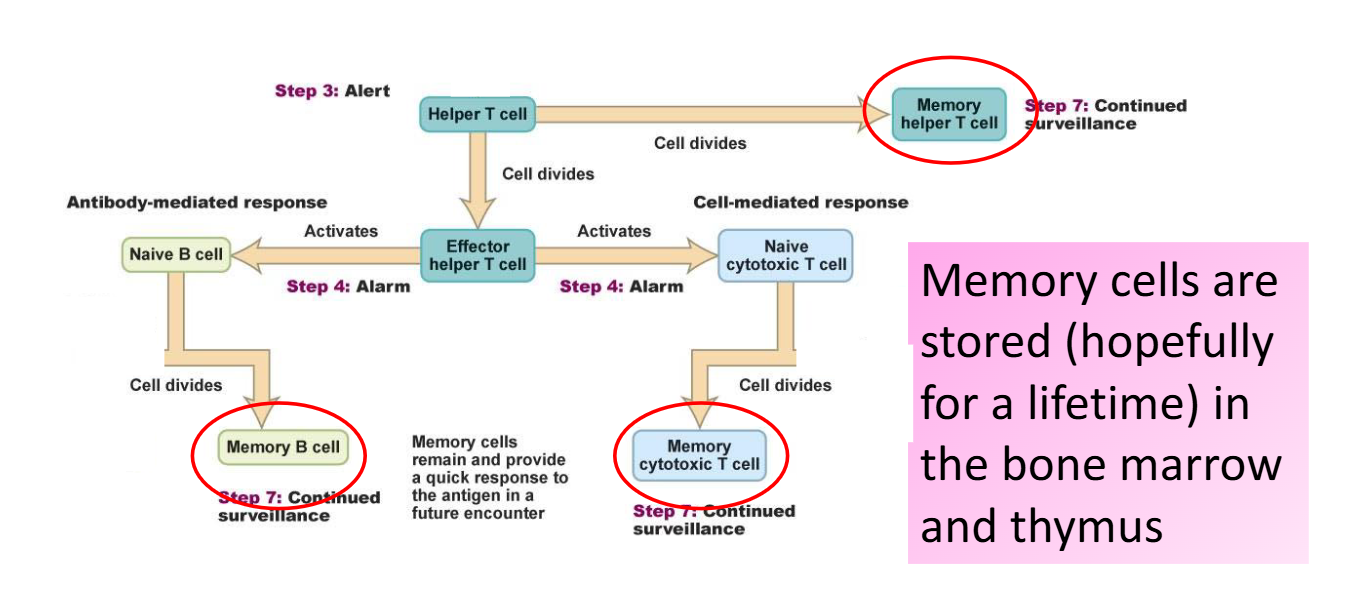
The Encounter is Remembered in the form of the Memory Cells
Ex. Memory Helper T Cells, Memory Cytotoxic T Cells, and Memory B Cells
Continued Surveillance
Memory cells are stored (hopefully for a lifetime) in the bone marrow and thymus
The duration that memory cytotoxic T cells last depends on the type of pathogen or virus exposure—some lead to only short-term memory, while others produce memory cells that persist for a lifetime
Ex. Kids who are exposed to less germs growing up get sick more frequently and for longer periods of time compared to kids exposed to more germs
What is the difference between primary and secondary immune responses?
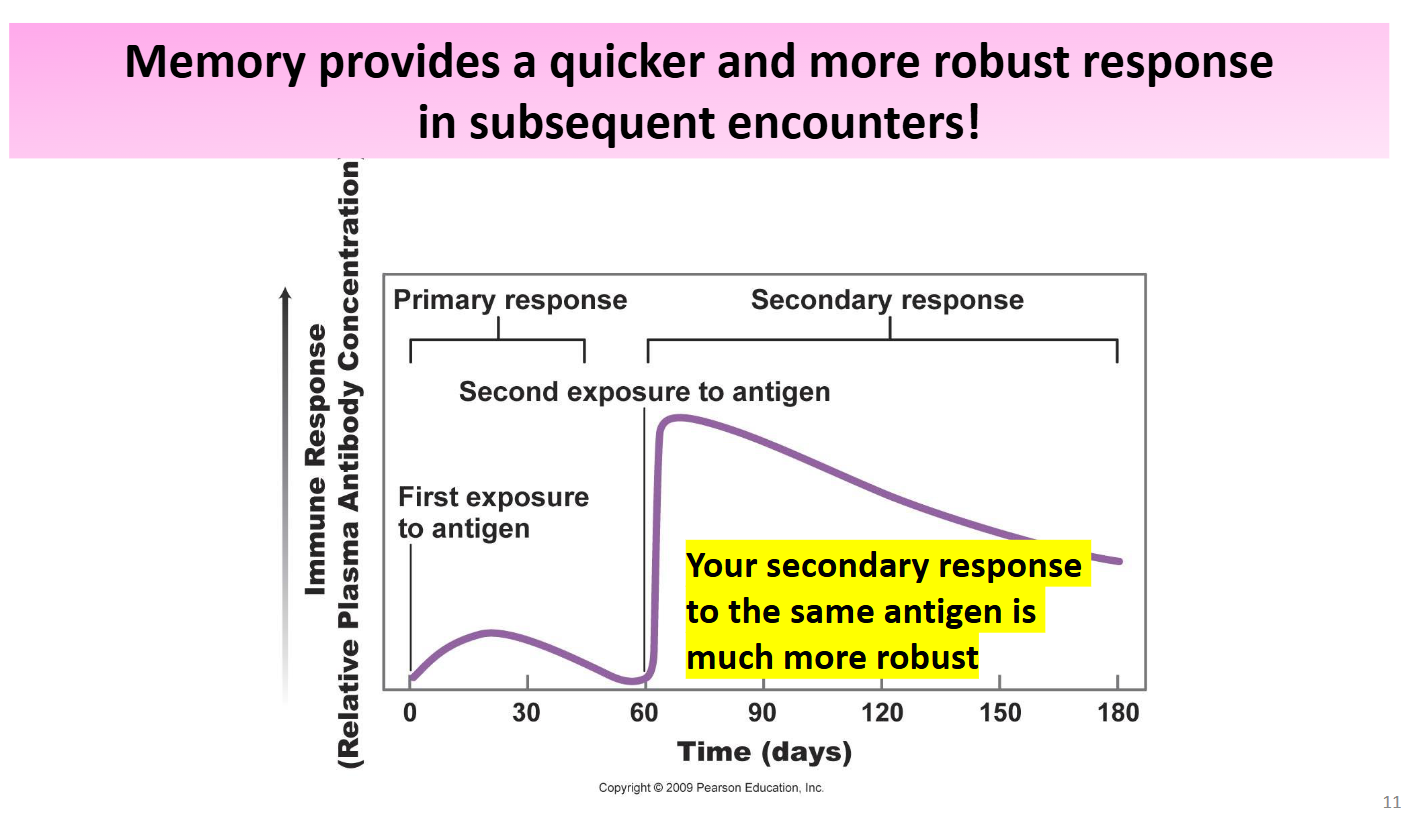
Primary is the initial response with moderate strength; secondary is a faster, stronger response due to memory cells.
Greater immune response → more amplified response → stronger attack.
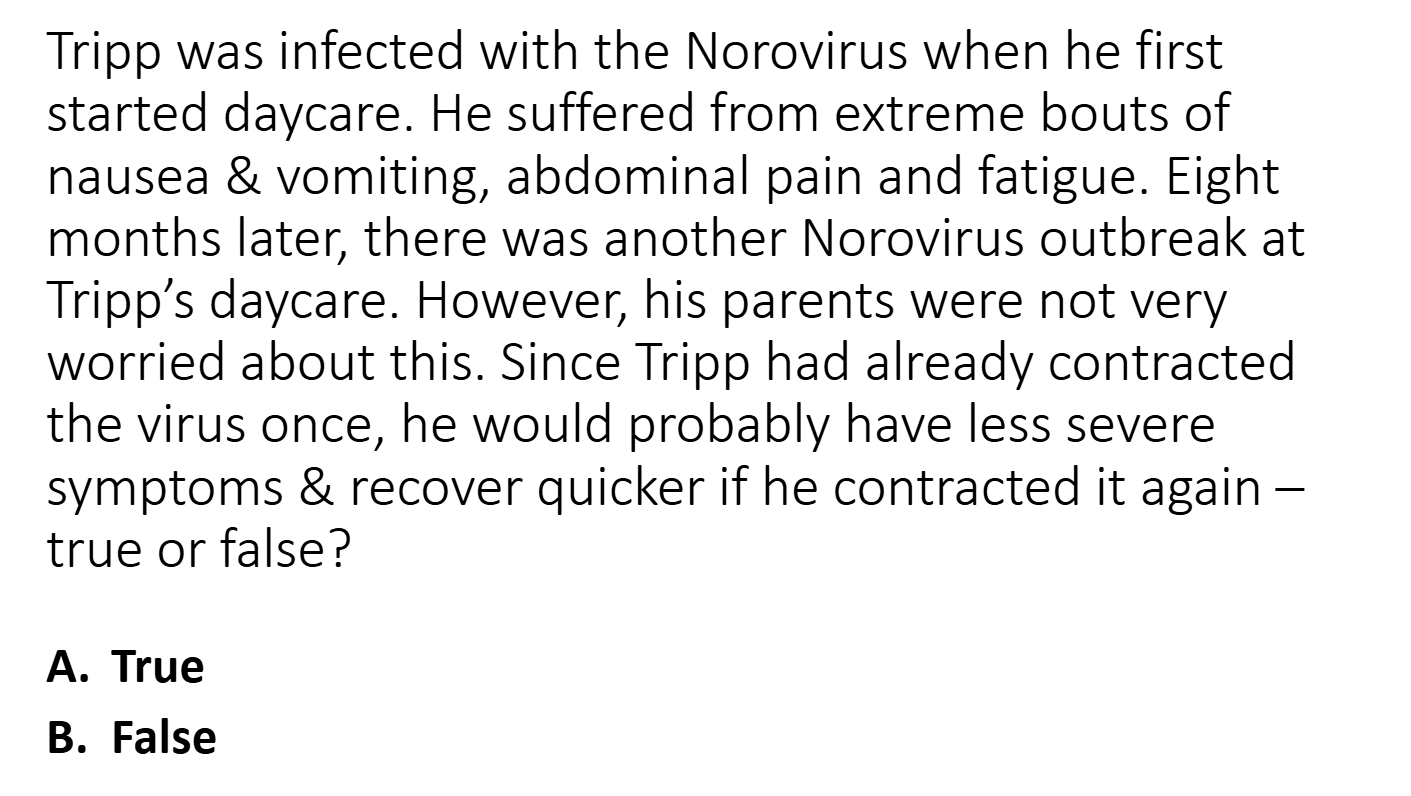
If the body is attacking a pathogen more strongly then it will fight it off quicker → Less Severe Symptoms → Recover Quicker
Lecture Question
Answer is True
What are T-suppressor (T-regulatory) cells?
Every time there are responses that are being turned on, we also need to put the brakes on (turning the signal down, not off completely)
Cells that downregulate (suppress) the immune response to prevent attacks on healthy cells and maintain tolerance (hint, hint)
Particularly, it's aiming to suppress the production of T helper cells, so this will be important in allowing tolerance to self-antigens, which means that it's important for the body to not attack its own healthy cells.
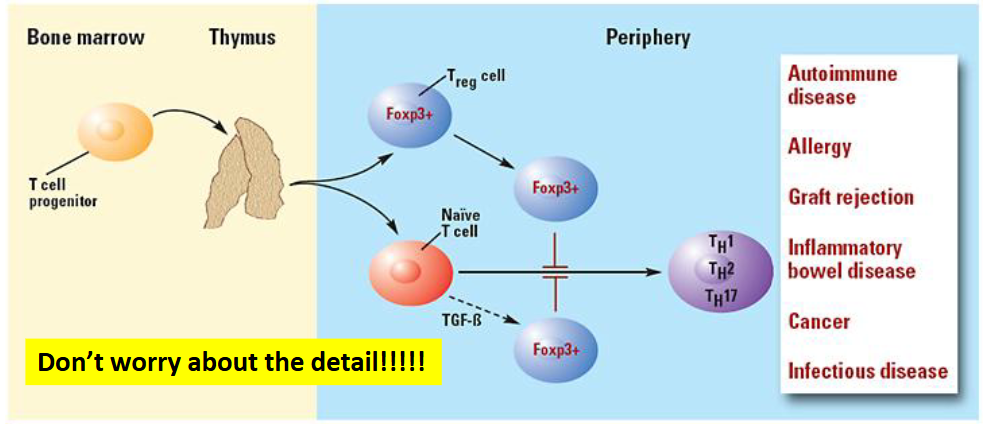
What is an autoimmune condition? And how does it occur?
When the body's immune system will attack and destroy healthy body tissue by mistake
Error in the system
Occurs when there is too little of a T-Suppressor response
Body will start to attack cells that are healthy, and that shouldn't be attacked
Association with autoimmune disease, allergies, graft rejection, inflammatory bowel disease
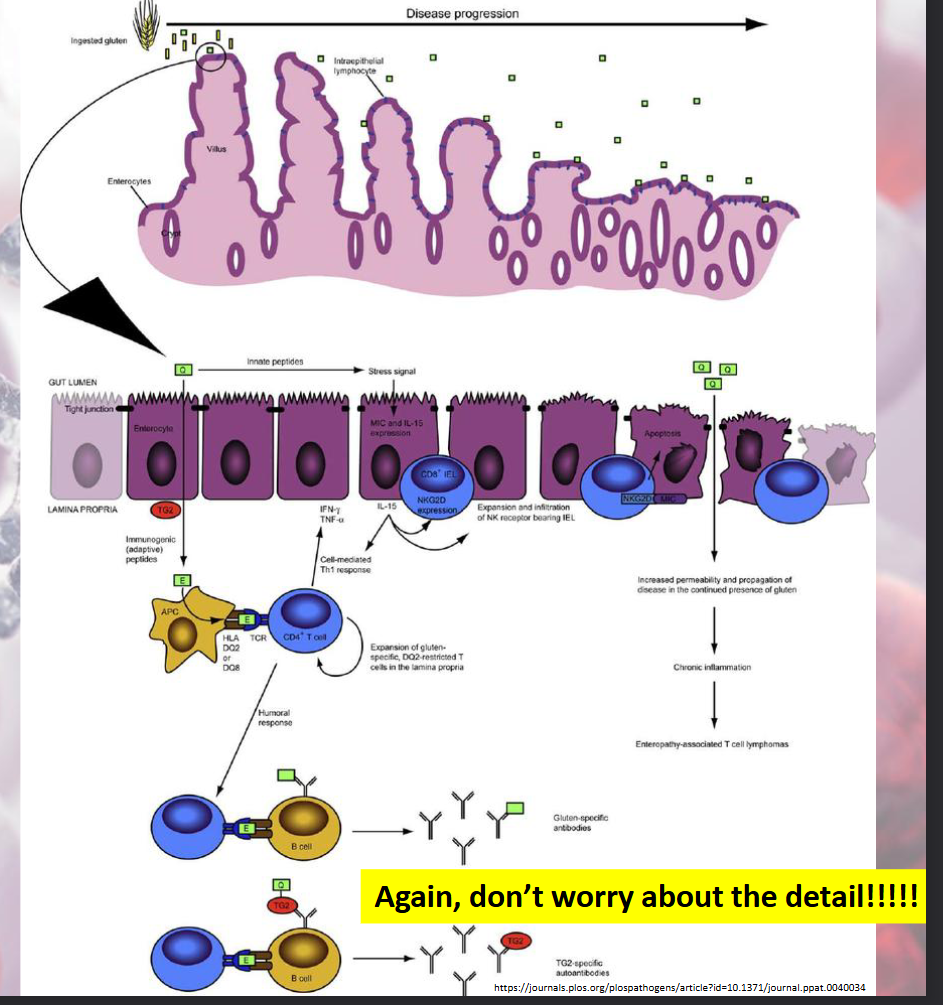
What is celiac disease?
Celiac disease = autoimmune disorder triggered by eating gluten (protein in wheat, rye, barley).
Different from food intolerance: celiac involves an immune attack, not just digestive discomfort.
Immune system attacks the small intestine, specifically the villi (finger-like projections that absorb nutrients).
Healthy villi = tall, finger-like → good nutrient absorption.
In celiac disease + gluten exposure → villi become flattened → reduced surface area → malabsorption & nutrient deficiencies.
Gluten contains glutamine & proline (hard to fully digest).
Partially digested gluten peptides trigger immune response in genetically predisposed people.
Symptoms come from autoimmune damage in the GI tract.
Gluten-free diet → immune response stops → villi heal → nutrient absorption returns to normal → symptoms improve.
What can excessive T-suppressor activity lead to?
Too much of a break on the system
Baseline level of attack so if the T-suppressor response is inflated the body might miss attacking some of those non-self or unhealthy cells that it needs to attack
Possible connection to cancer and increased incidence of infectious diseases
 Note
Note  Flashcards (28)