Safely Restraining Difficult Dogs
 Studied by 0 people
 Call Kai
 Learn
Learn Practice Test
 Spaced Repetition
 Match
Match Flashcards
 Knowt Play
1/7

Earn XP
Description and Tags
Make sure to check the videos which show you how to restraint the dogs properly.
Name | Mastery | Learn | Test | Matching | Spaced |
|---|
No study sessions yet.
8 Terms
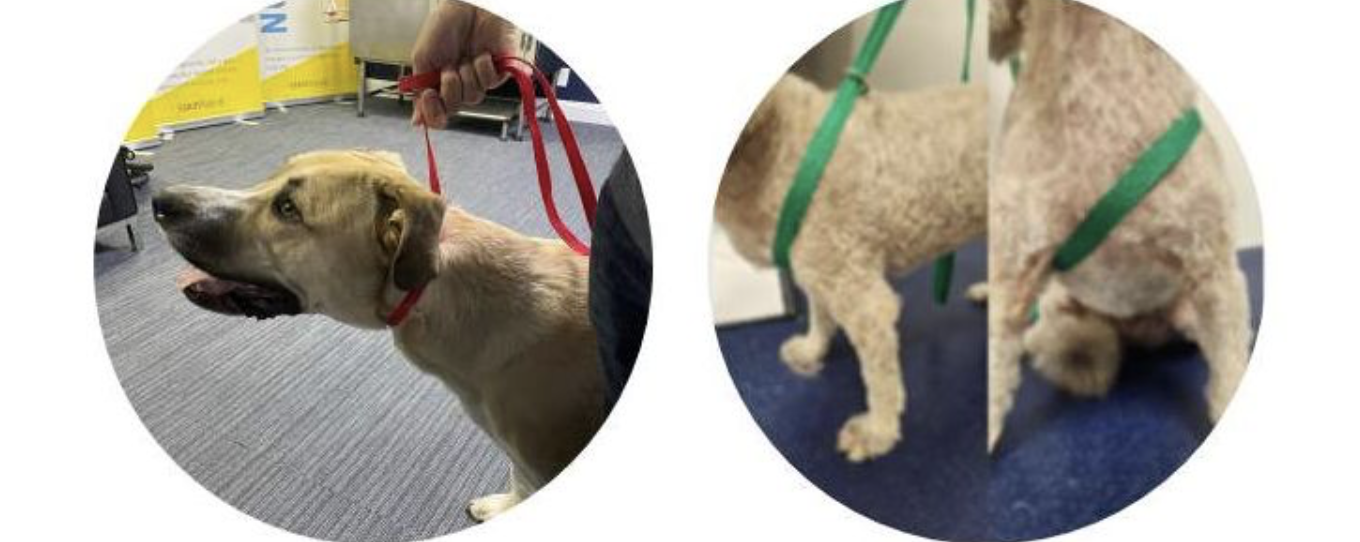
What are the steps to properly used the lead?
Loop the slip lead through the metal ring to create the lead and secure it firmly behind the dog's ears and around the chin/neck area for best control.
For safety, secure your thumb through the fabric loop at the end of the lead and hold the slack close to the dog. Do not wrap the lead around your wrist or hand, as this can be hazardous.
Wherever the head goes the body follows. Lead the dog by keeping the dog’s head close to your legs and walking in a clear direction.
For better control, and to avoid accidental nose-to-nose interactions with dogs, walk through doors first when leading a dog. For best control do not allow slack in your lead.
Use the “Seatbelt” position for breed specific dogs or dogs with trachea problems or problems breathing. Use two leads together if necessary for larger breeds.
When do you consider alternative approaches when restraining difficult dogs?
1) Reset or Gain Momentum: Consider this when the dog is not following you and is generally happy or jittery, but then halts or turns away from the tub, kennel, or table. Circle around and get him or her very excited to come with you, then quickly use that momentum to go where you want.
2) Take a Break: Use when a dog is showing extreme signs of stiffness, defensiveness, or aggression that they don’t normally display. Take a 5-minute break from performing services and provide comfort. Consider a 10-15 minute break in a kennel if the dog isn't kennel aggressive or fearful.
3) Ask for help: Ask for help when the dog is showing extreme signs of jittery or other response types that pose a safety risk to you or the dog, and you need an extra staff member to help calm or restrain the dog.

For larger dogs only, the ____ hold is ideal to service the back legs.
Captain
Use the ____ holds for both front and backnails – can work on smaller dogs and bigger dogs.
Primary
Only use the ____ hold for small dogs who are displaying extreme jittery behaviors.
Beta
Only use the ____ hold on the ground with bigger dogs, and with a second tech.
Lateral
Tuck the tail while servicing the back paws with the Dremel so you don’t get the dog’s hair wrapped up.
Adding a bit of pressure and assurance for the dog’s stability helps keep them calm.
1)Use the dog’s ____ by being excited to get them in a tub or table if they are displaying withdrawn or stiff behaviors.
2) Only ___ dogs when absolutely necessary.
3) __ a dog ___ from the ___ if ____.
4) Stop a dog from ___ in the tub by ____ the restraint and ___ the slider.
5) Stop a dog from jumping out by having a hand on the its body and adjusting the restraint.
6) Stop a dog from biting the water by keeping it facing in one direction and using the off-hand to block the head.
1) momentum
2) lift
3) Lift, upward, abdomen, seated.
4) spinning, tightening, moving
4)
 Note
Note  Flashcards (20)